• Skip to primary navigation
  • Skip to main content
  • Skip to primary sidebar
  • Home
  • Recipes
  • Features
    • Cookbook Reviews
    • Ingredient of the Week
    • Sunday Dinner
    • Fitness Goals
  • Travel
  • About
    • Privacy Policy
    • Cookie Policy
  • Work With Me

Katie at the Kitchen Door

Globally-inspired, seasonal recipes

Blog Page

8 May 27, 2014 Food

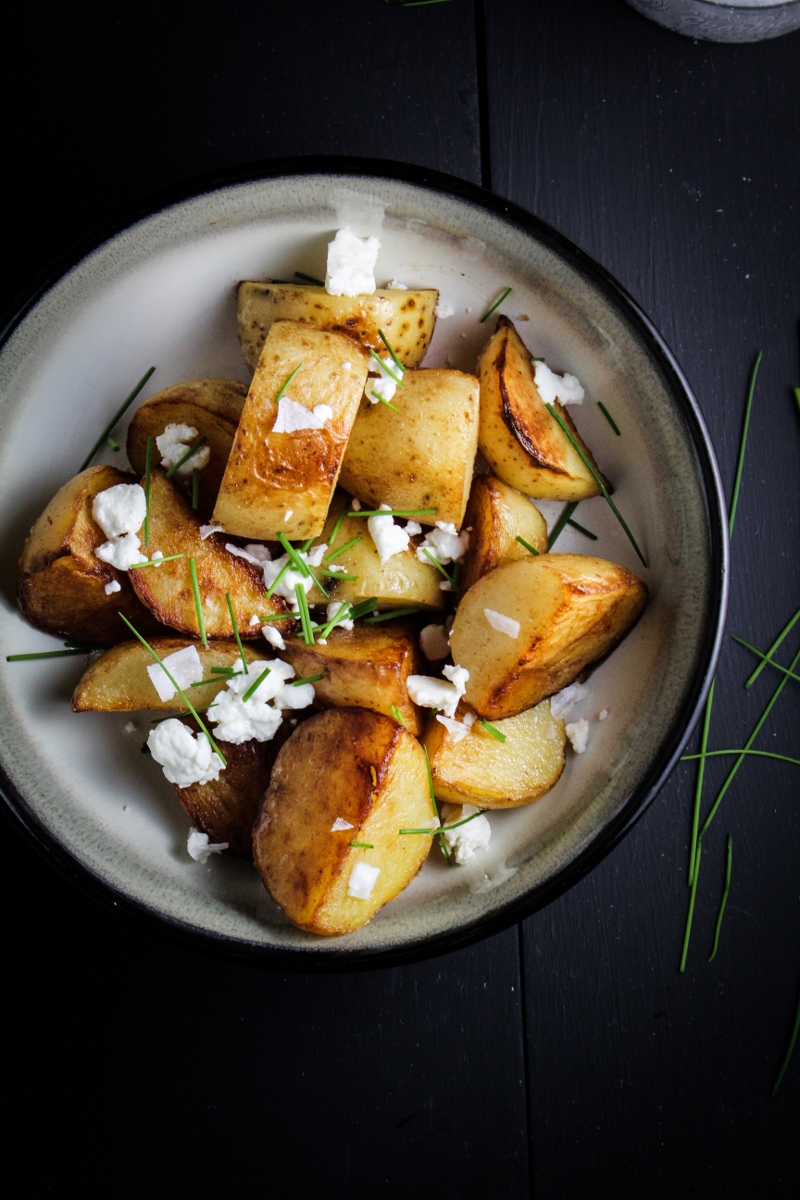
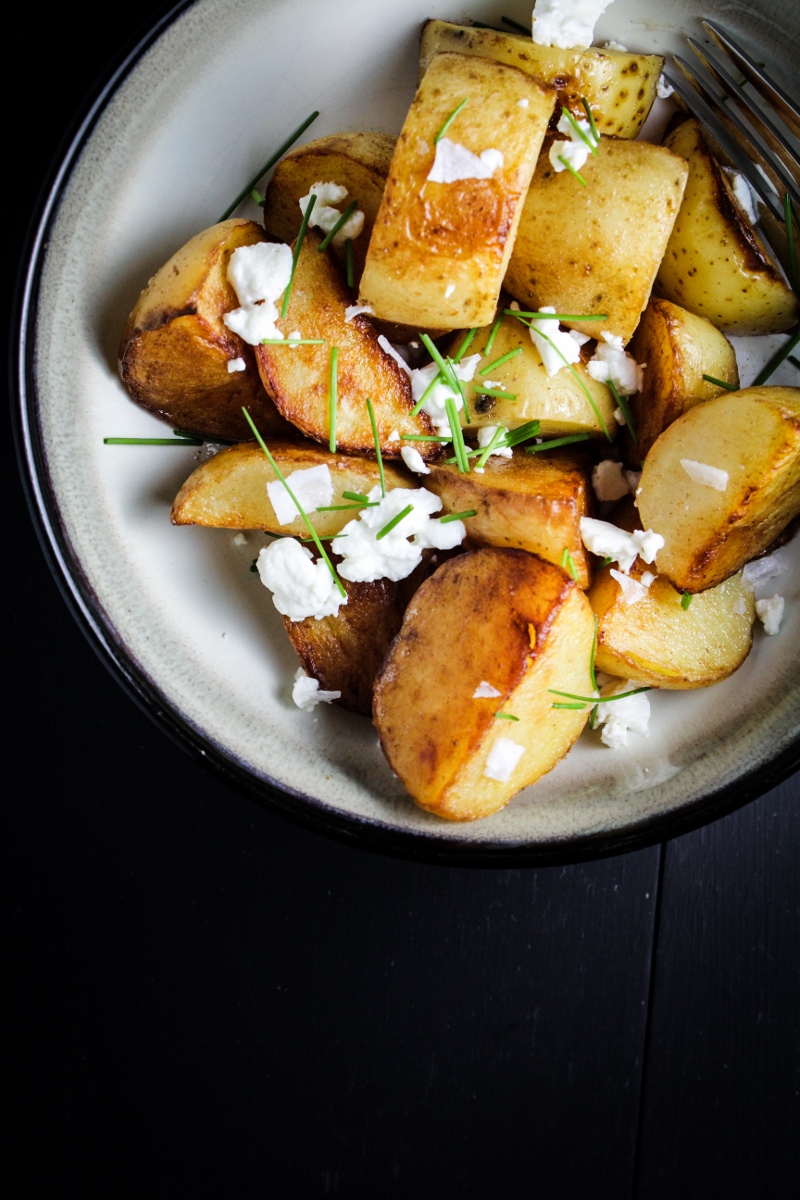
Crispy Sea Salt and Vinegar Potatoes with Goat Cheese and Chives

Crispy Sea Salt and Vinegar Potatoes with Goat Cheese and Chives {Katie at the Kitchen Door}

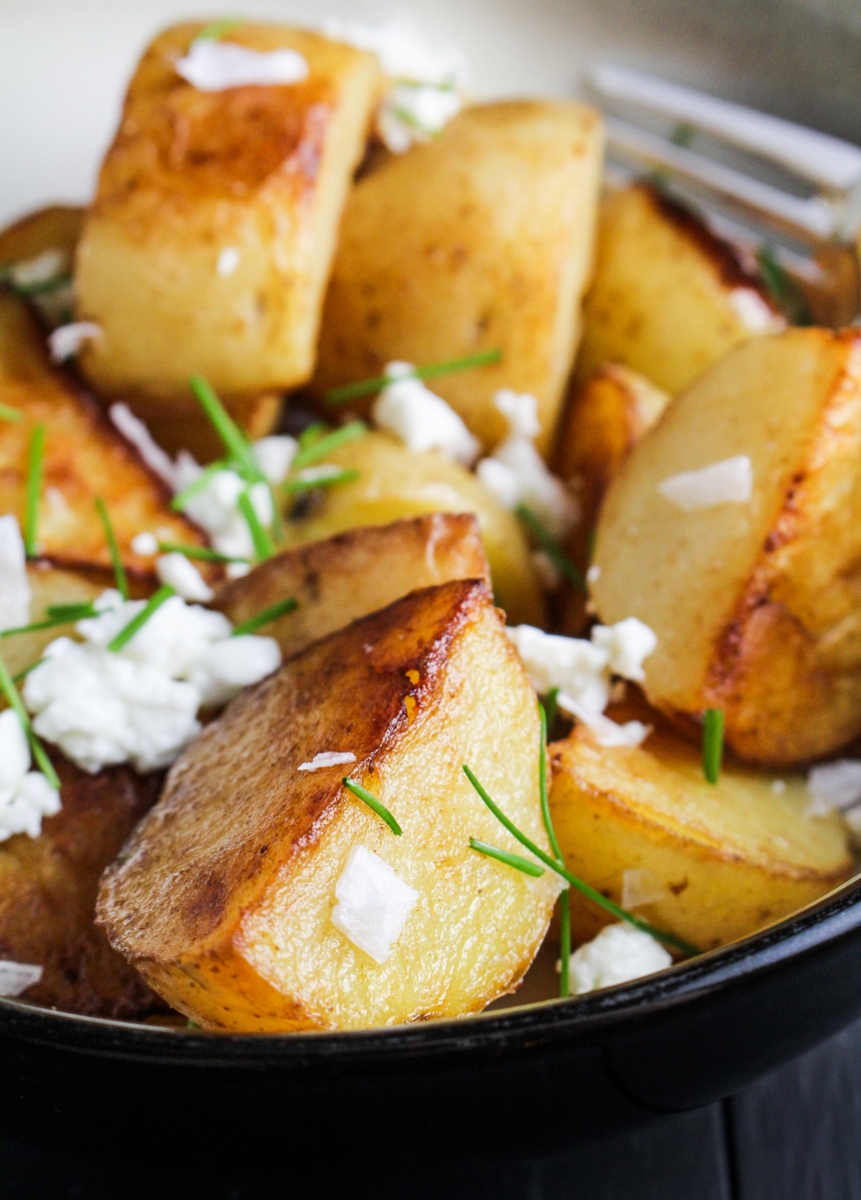
Crispy Sea Salt and Vinegar Potatoes with Goat Cheese and Chives {Katie at the Kitchen Door}

I just have a quick little side dish recipe for you today, but I promise, it’s a good one. I made these crispy salt and vinegar potatoes the same day that I saw them in Bon Appetit, and I’ve since tweaked the recipe to get them just how I like them. I used to find salt and vinegar chips to be too strong, but now I find the combination addictive, and this recipe embodies the combo well. In order to get creamy-on-the-inside, crispy-on-the-outside potatoes, you boil them until just tender and then pan-fry them until golden brown. Served hot and dotted with fresh goat cheese and chives, they’re a very satisfying and craveable side dish. Or, if you’re the kind of person who considers a bowl of potatoes to be a perfectly acceptable dinner, like I am, they make a very satisfying dinner.
Crispy Sea Salt and Vinegar Potatoes with Goat Cheese and Chives {Katie at the Kitchen Door}

In other news, I’m on the second-to-last day of a 10 day business trip, and I have to run out and enjoy the generous free afternoon I’ve been given to explore Rome (!). If you want to follow along, come join me on Instagram, but be warned, I’m doing my best to make everyone I know jealous. I swear I’m going to make up for it by doing lots of real work on the plane tomorrow, though. I’ll be back with another recipe at the end of the week once I’m home – I hope everyone had a great Memorial Day Weekend!

Like what you just read? Subscribe to Katie at the Kitchen Door on Feedly or Bloglovin‘, or follow along on Facebook, Twitter, Pinterest, Instagram, or Google+. Thanks for reading!
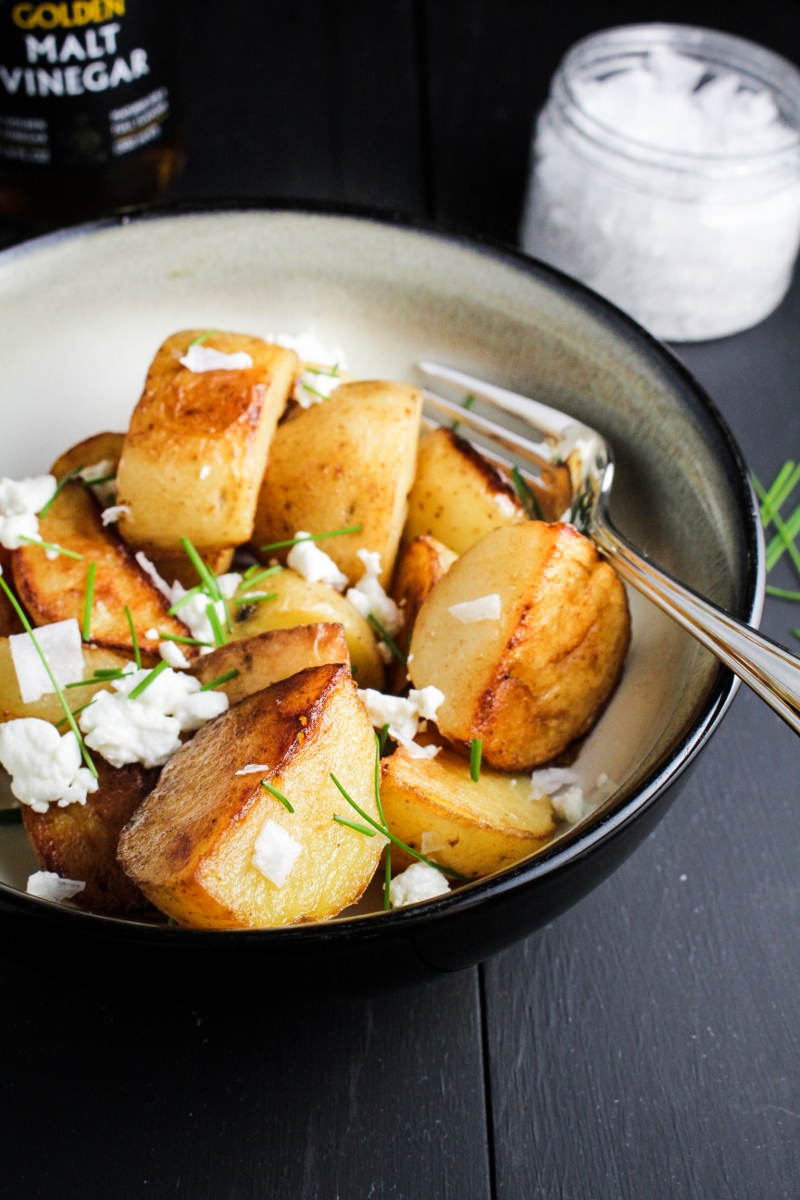
Crispy Sea Salt and Vinegar Potatoes with Goat Cheese and Chives {Katie at the Kitchen Door}

Crispy Sea Salt and Vinegar Potatoes with Goat Cheese and Chives

Adapted from Bon Appetit. Serves 3-4 as a side.

  • 2 lb. small Yukon gold potatoes, quartered
  • 1 cup distilled white vinegar
  • 1 TBS sea salt
  • 2 TBS butter
  • 1 TBS malt vinegar
  • 2 oz. goat cheese crumbles
  • 1 TBS chopped fresh chives
  • flaky sea salt, for finishing
  1. Place the potatoes, vinegar, and sea salt in a large saucepan, and cover by one inch with cold water. Bring to a boil over medium heat. Keep at a gentle boil until potatoes are just tender when poked with a fork, about 20 minutes. Drain.
  2. In a large frying pan, melt butter over medium heat. Add potatoes and saute, stirring occasionally, until they are golden brown and crispy on all sides, about 15 minutes. Remove from heat and stir in malt vinegar.
  3. Serve the potatoes sprinkled with goat cheese, chives, and flaky sea salt. Serve hot.
9 May 23, 2014 Food

Back in Ecuador // Pan de Yuca with Guava-Chile Butter

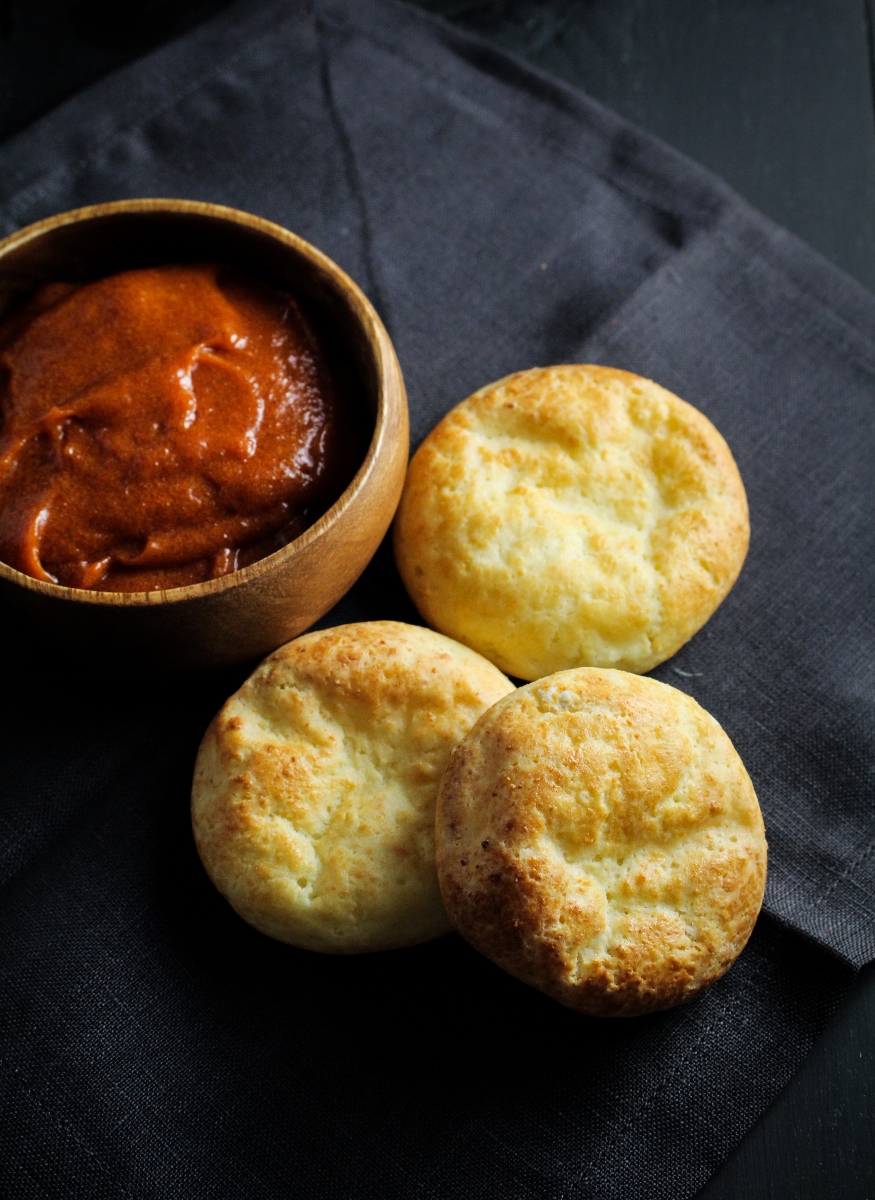
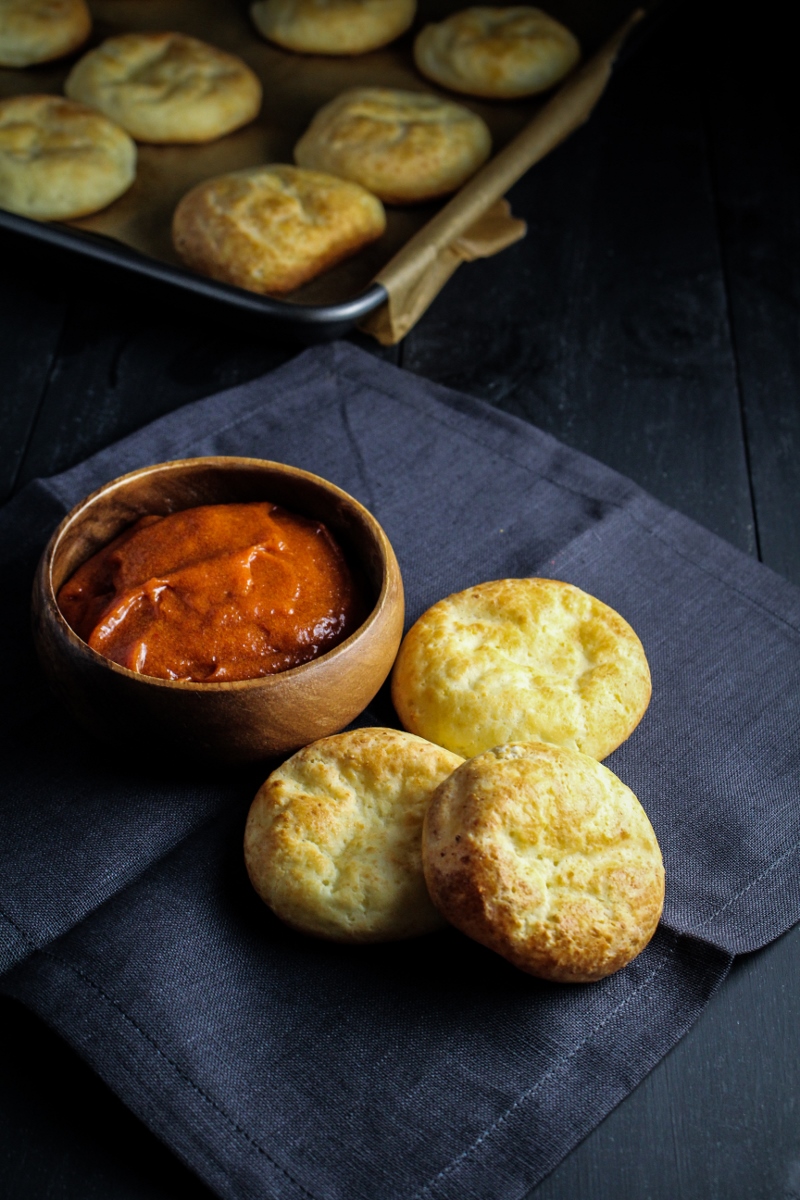
Pan de Yuca with Guava-Chle Butter {Katie at the Kitchen Door}I’m back in Ecuador this week for a quick business trip, so I thought now would be an appropriate time to start sharing some Ecuadorian recipes. I wrote about the things we did on our trip in detail (see: Quito, The Amazon, Banos, Cotopaxi), but I haven’t shared any Ecuador-inspired recipes yet. To be honest, I haven’t had any meals in Ecuador that have really blown my mind, but they do have some solid recipes that are worth sharing. One of my favorites is locro, a creamy potato soup, often served with large chunks of boiled potato and an entire avocado sitting on top. I also love the traditional drink canelazo, a mixture of sour orange juice, cinnamon, and aguardiente, served piping hot to warm you up on cold mountain nights. And the fresh juices made from every fruit imaginable are an amazing addition to the breakfast table.

Pan de Yuca with Guava-Chle Butter {Katie at the Kitchen Door}

Pan de Yuca with Guava-Chle Butter {Katie at the Kitchen Door}

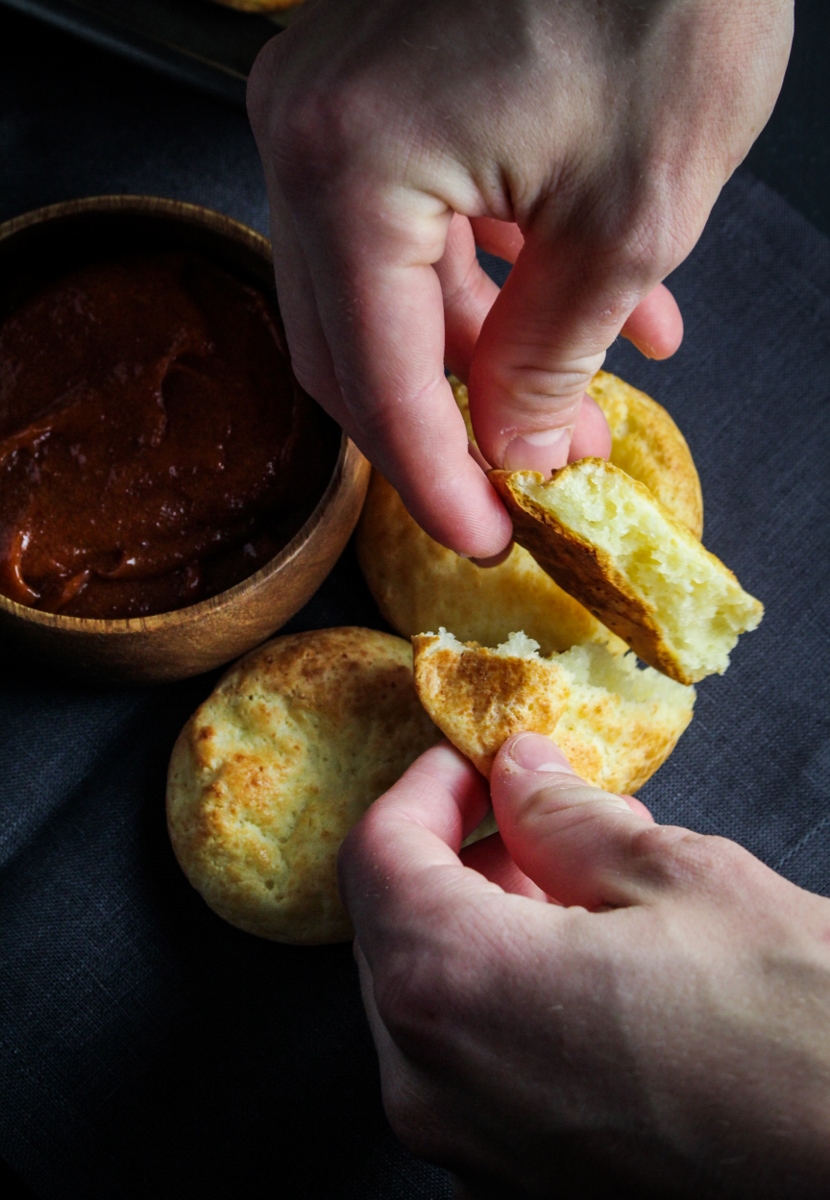
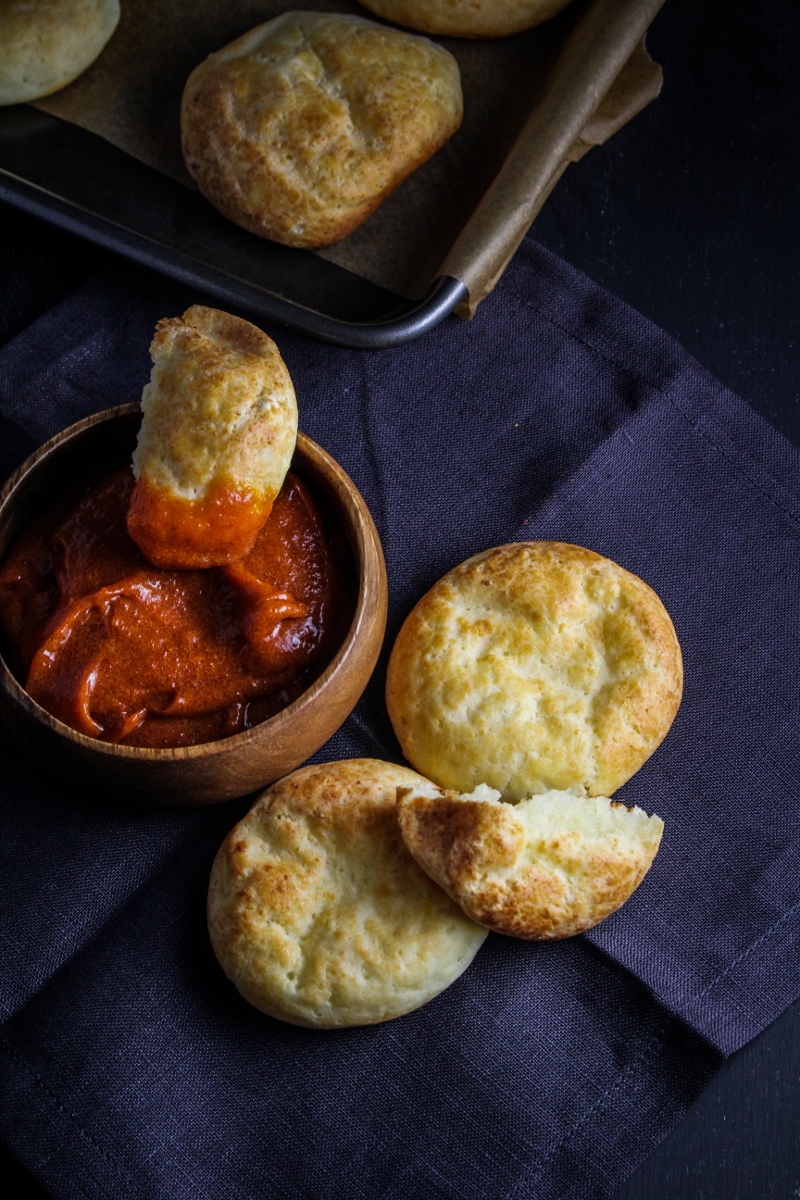
This recipe for Pan de Yuca with Guava-Chile Butter is actually not something I’ve tried while in Ecuador, but when I saw the recipe in the Ecuadorian section of Jose Garces’ book The Latin Road Home, I wanted to give it a try. Although I can’t say from personal experience whether this is a particularly common recipe in Ecuador, all the ingredients – yuca, queso fresco, guava – are very typical. These rolls are a tasty little snack, salty and savory from the addition of an entire pound (!) of queso fresco to the dough. Served with the sweet guava paste, which is tempered by the deeply savory flavor of black vinegar and the spice of sriracha, it’s a new and interesting way to dress up your pre-dinner bread and butter.

Like what you just read? Subscribe to Katie at the Kitchen Door on Feedly or Bloglovin‘, or follow along on Facebook, Twitter, Pinterest, Instagram, or Google+. Thanks for reading!

Pan de Yuca with Guava-Chle Butter {Katie at the Kitchen Door}

Pan de Yuca (Yuca-Queso Bread)

Recipe adapted slightly from The Latin Road Home. Makes 16-20 rolls.

  • 1 c. yuca flour (yuca starch)
  • 1 tsp baking powder
  • 1 tsp granulated sugar
  • 1 lb. queso fresco, finely grated
  • 1 large egg, beaten
  • 2 TBS whole milk
  • 1 TBS unsalted butter, melted
  • Guava-Chile Butter (recipe below)
  1. Preheat the oven to 375°F. Line a baking sheet with parchment paper.
  2. Whisk together the flour, baking powder, and sugar until evenly mixed. Add the queso fresco, egg, milk, and melted butter and knead with your hands until thoroughly mixed and fairly smooth. Form the dough into 16-20 small round balls. Place on the baking sheet (with space in between, they will spread out as they bake). Bake for 20-25 minutes until golden brown. Serve warm with guava-chile butter.

Guava-Chile Butter

Recipe from The Latin Road Home. Makes 4 cups.

  • One 21-oz can guava paste
  • 1/4 c. Chinese black vinegar, such as Chinkiang
  • 1/4 c. sriracha sauce
  • 2 TBS salted butter, at room temperature
  1. Put the guava paste in a bowl or stand mixer and beat until it is smooth and has lightened in color (this will take some effort if doing by hand!). Add the vinegar, sriracha, and salted butter and beat in until evenly mixed. Store the butter in the fridge in an airtight container.

2 May 19, 2014 Cookbook

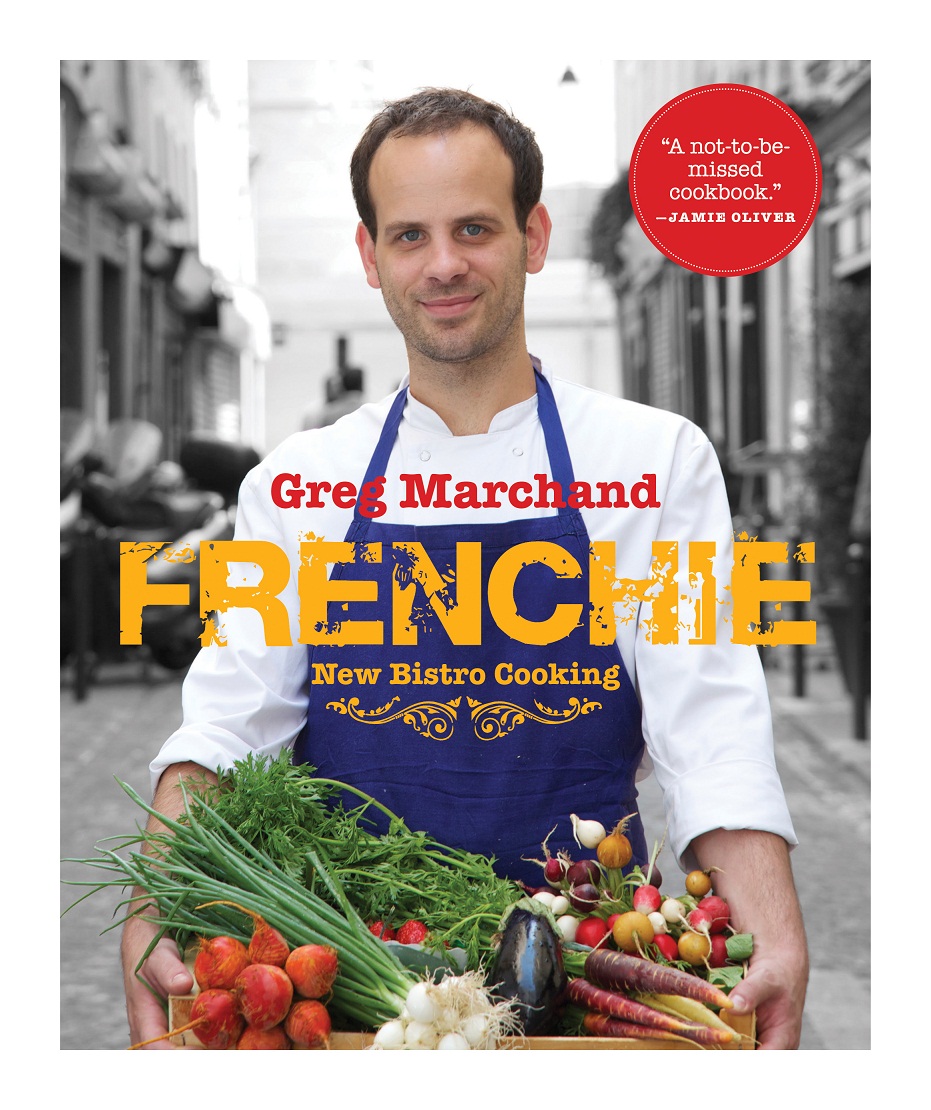
Book Club: Frenchie // Grilled Lamb with Fava Beans, Sweet Peas, and Mint Chutney

Frenchie Cover

The Book: Despite the title, Frenchie is not about French food in the classic sense, so anyone looking for a great Boeuf Bourginon or Chocolate Mousse recipe will likely be disappointed. Rather, it’s a collection of recipes from Marchand’s restaurant Frenchie, which with main ingredients like mussels, duck breast, and quince, are certainly influenced by French cuisine, but are not in and of themselves particularly French. Many of the recipes have ingredient combinations that push the envelope even for today’s creative restaurant norms – pairings like blood sausage, burrata, and apple; beef, beets, and horseradish; and quince, chestnut, and chocolate. Certainly not classics, and perhaps a bit unusual sounding at first, but definitely intriguing. There’s lots of page space devoted to the evocative photography, with most recipes getting at least 3 pages dedicated to pictures. Like the recipes, the pictures are not traditional, and are more oriented to the process than glossy shots of the finished dishes. To be honest, some of the appeal of restaurant cookbooks is lost on me when I haven’t had the opportunity to visit the restaurant itself. Frenchie doesn’t have me rushing to the kitchen, but the recipes are solid, creative, and impressive while still being relatively easy to execute at home. It’s not a huge investment in today’s cookbook market, so if you’re a fan of the restaurant, you’ll likely be happy to snag a copy of this little book. Since it’s a slim book, with only 32 recipes in total, if you’re not familiar with Marchand, take a glance at some of the recipes first, to make you see a few things that catch your eye.

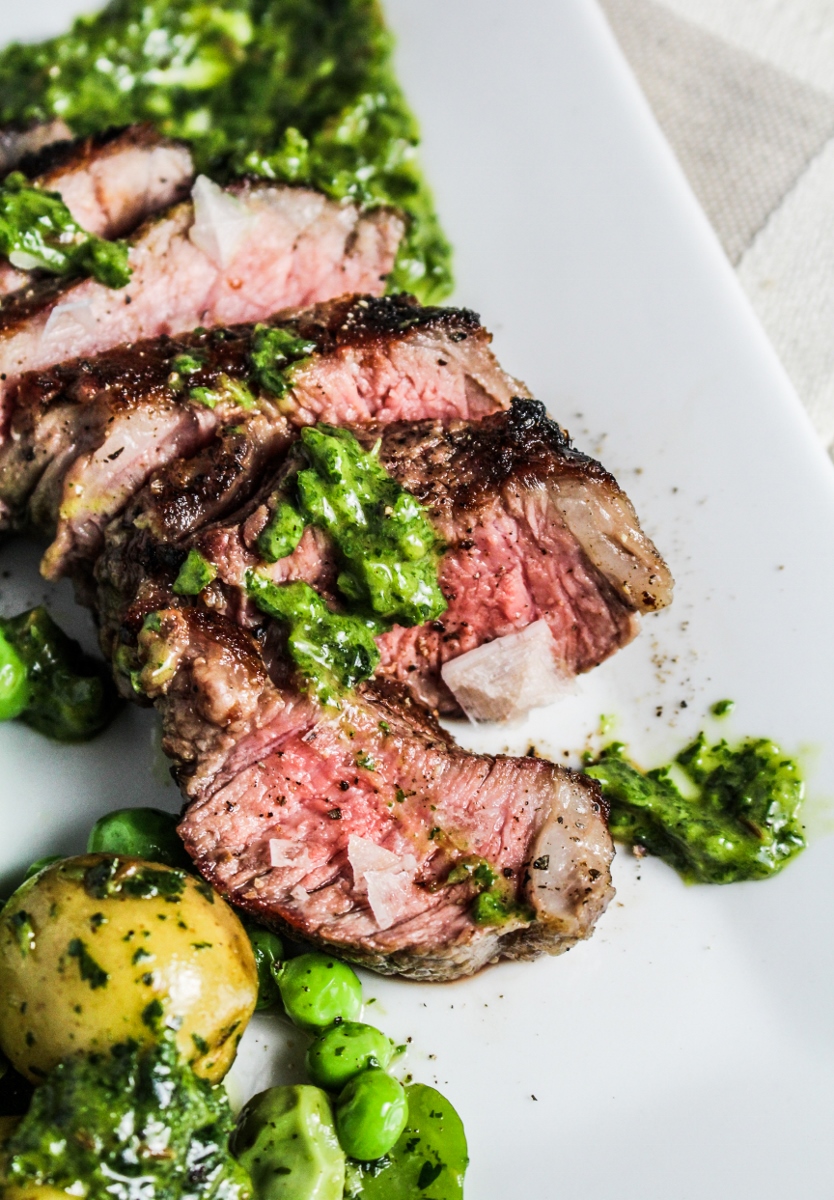
Grilled Lamb with Fava Beans and Mint-Mango Sauce {Katie at the Kitchen Door}

Grilled Lamb with Fava Beans and Mint-Mango Sauce {Katie at the Kitchen Door}

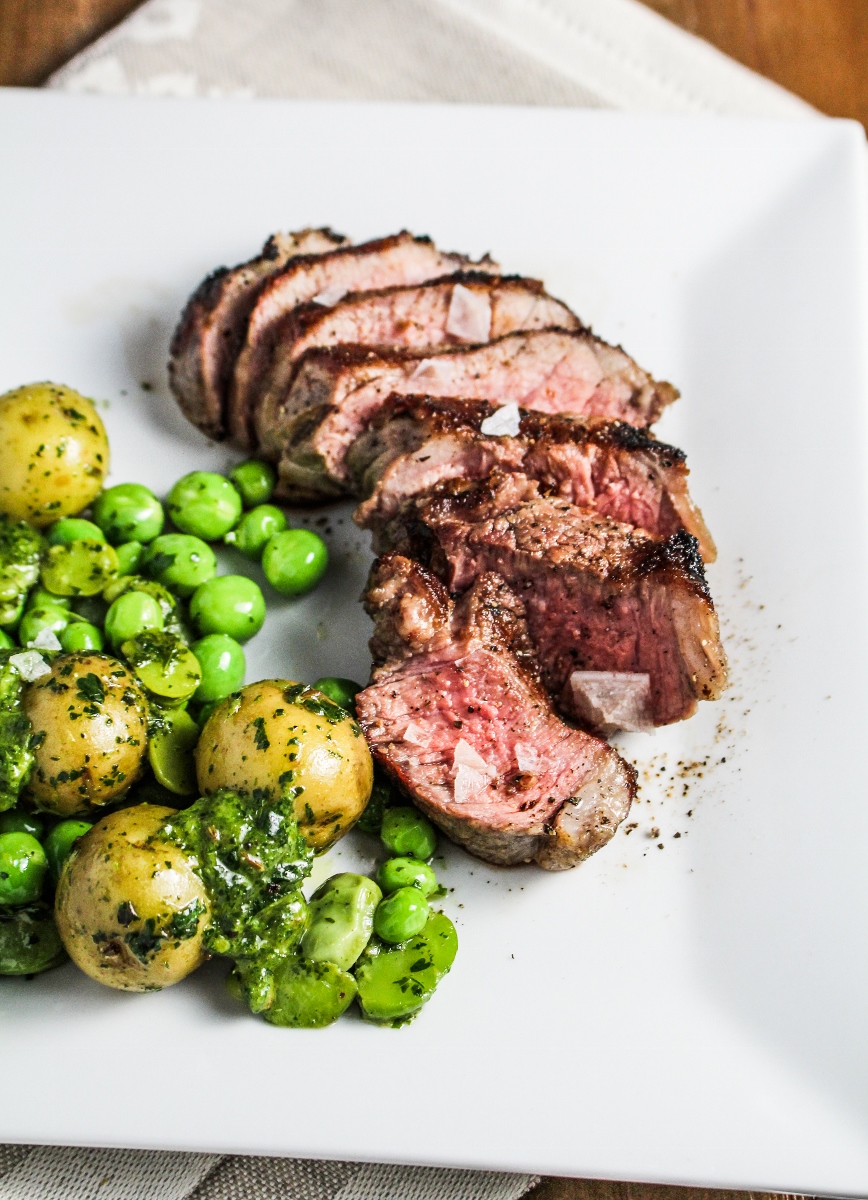
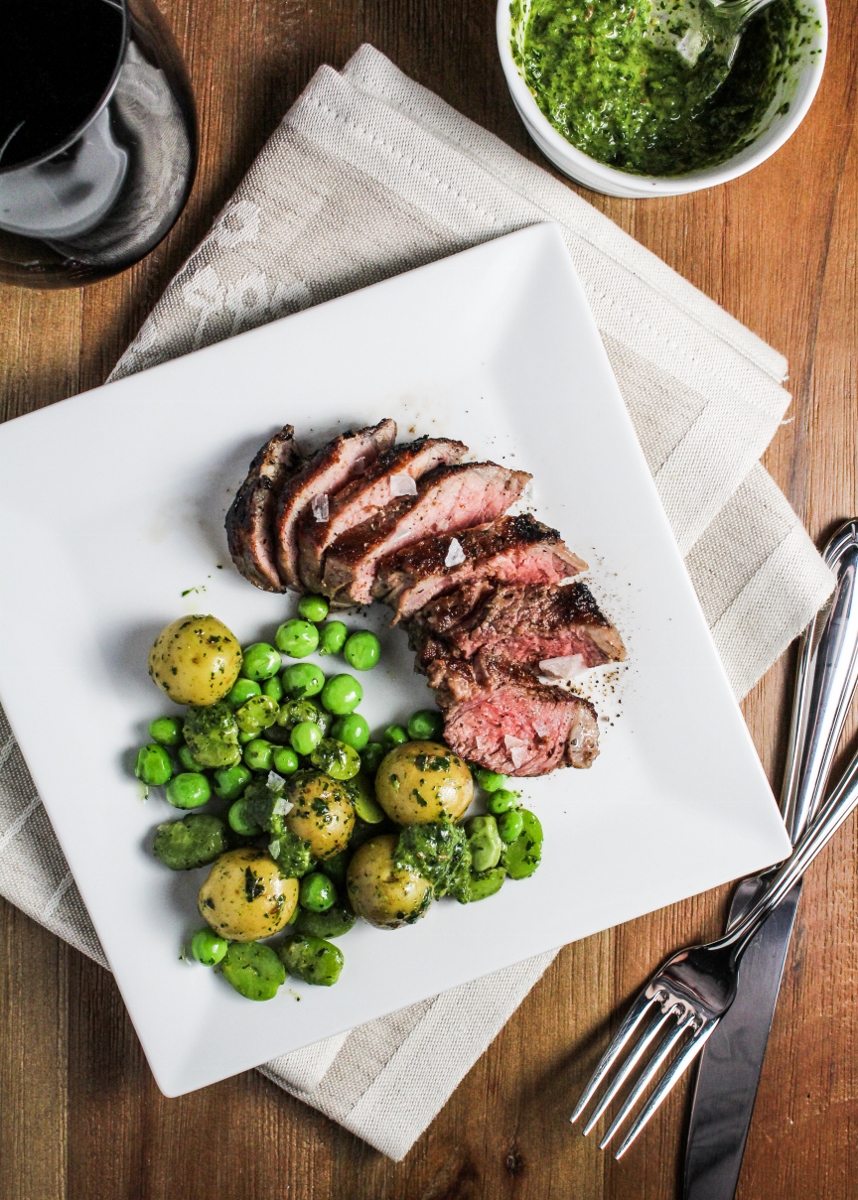
The Food: Since we’ve been giving our new grill a pretty good workout since we purchased it a few weeks ago, we decided to continue putting it through its paces with the grilled lamb recipe from Frenchie. It’s a very spring-appropriate dish, with lamb, peas, favas, mint, and tiny new potatoes all on the ingredient list. Most of the preparation is fairly straightforward – a lemon and rosemary marinade for the lamb, a quick blanch for the new potatoes and favas, a butter sauce for the veggies – but the twist comes in the mint chutney used to dress everything. The chutney has faint Indian accents from the toasted cumin seeds and green mango, and really elevates the otherwise staid pairing of lamb and mint to something unique, not to mention delicious. We loved the meal, and also loved how quickly and easily a very balanced dinner came together. I was pleasantly surprised by both the ease and flavor of this recipe, and would certainly make it again, especially for company or a special occasion.

Recipe Shortlist: Wild Garlic Broth with Fresh Crabmeat; Grilled Mackerel with Cauliflower Farrotto and Trout Roe; Smoked Trout with Avocado Puree and Marinated Cucumbers; Bittersweet Chocolate and Wild Strawberry Tart; Spanish Ham, Corn, Bell Peppers, and Kaffir Lime; Pork Braised in Milk with Marinated Fennel; Poached Quinces with Chestnut Cream and Chocolate Shavings; Blood Sausage with  Burrata and Apple Chutney

Like what you just read? Subscribe to Katie at the Kitchen Door on Feedly or Bloglovin’, or follow along on Facebook, Twitter, Pinterest, and Instagram. Thanks for reading!

Disclaimer: I received a review copy of Frenchie from Artisan, but I was not otherwise compensated and all thought and opinions are my own.

Grilled Lamb with Fava Beans and Mint-Mango Sauce {Katie at the Kitchen Door}

Grilled Lamb with Fava Beans, Sweet Peas, and Mint Chutney

Excerpted from Frenchie by Greg Marchand (Artisan Books). Copyright © 2014. Serves 4.

For the lamb:

  • 1 rosemary sprig
  • 2 garlic cloves, crushed
  • Grated zest of 1 lemon
  • 1 teaspoon crushed black pepper
  • 2 tablespoons olive oil
  • 4 pieces boneless lamb leg or loin (about 8 ounces/225 grams each)
  • Salt and freshly ground black pepper

For the vegetable garnish:

  • 16 tiny new potatoes
  • Coarse sea salt
  • Olive oil
  • 1¼ pounds (600 grams) sweet peas in the pod (about 1 cup/160 grams shelled peas)
  • 1¼ pounds (600 grams) fava beans in the pod (about 1 cup/160 grams shelled favas)

For the mint chutney:

  • ½ teaspoon cumin seeds
  • 1 small green mango
  • 1 bunch mint
  • ½ bunch cilantro
  • Extra virgin olive oil
  • Salt
  • 2 tablespoons (28 grams) unsalted butter
  • Piment d’Espelette
  • Salt
  • Fleur de sel
  • Crushed black pepper 

The lamb marinade:

  1. Combine the rosemary, garlic, lemon zest, crushed pepper, and olive oil in a baking dish. Add the lamb, turning to coat and rubbing the marinade into the meat. Cover and marinate for at least 4 hours in the refrigerator.

The vegetable garnish:

  1. Meanwhile, put the potatoes in a large pot of cold salted water, bring to a boil, and cook for about 15 minutes, until tender: the tip of a knife should enter the flesh without resistance. Drain the potatoes thoroughly, transfer to a bowl, and add a drizzle of olive oil. Set aside at room temperature.
  2.  Shell the peas and refrigerate. Shell the fava beans.
  3. Bring a medium pot of salted water to a boil. Blanch the fava beans in the boiling water for 30 seconds, then drain and immediately transfer to a bowl of ice water to cool. Drain again and peel off the outer skin.
  4.  Refrigerate.

The mint chutney:

  1. Toast the cumin seeds in a dry skillet over low heat until fragrant, about 3 minutes; be careful not to burn them.
  2.  Peel and pit the mango and cut enough of the flesh into 1⁄2-inch dice to make 1⁄3 cup (the green mango will bring acidity to the chutney without darkening its bright green color); reserve the remaining mango for another use. Remove the leaves from the mint and cilantro stems.
  3.  Combine the cumin, mango, and herbs in a blender and blend until finely chopped, while drizzling in about 2 ½  tablespoons olive oil. Season with salt and refrigerate.

Cooking the lamb:

  1. Remove the lamb from the refrigerator about 1 hour before cooking. Fire up an outdoor grill.
  2.  Season the lamb with salt and pepper and grill it for about 5 minutes or so on each side, depending on the thickness: when blood starts to bead up on the surface, the lamb will be cooked to medium-rare. Transfer to a plate and let rest for 10 minutes.

Finishing touches:

  1. Meanwhile, melt the butter in a large skillet over low heat. Add the peas and cook for 1 minute, then add the potatoes and favas and heat, stirring and tossing the vegetables, until the potatoes are warmed through. Remove from the heat and toss with 1 tablespoon of the chutney. Add a pinch of piment d’Espelette and season with salt to taste.
  2. For the most tender meat, slice the lamb crosswise against the grain.
  3. Divide the vegetables among four plates and add a spoonful of mint chutney to each plate. Arrange the meat alongside and season it with fleur de sel and crushed black pepper.

3 May 16, 2014 Drink

Cheers, It’s Friday // Roman Holiday Cocktail

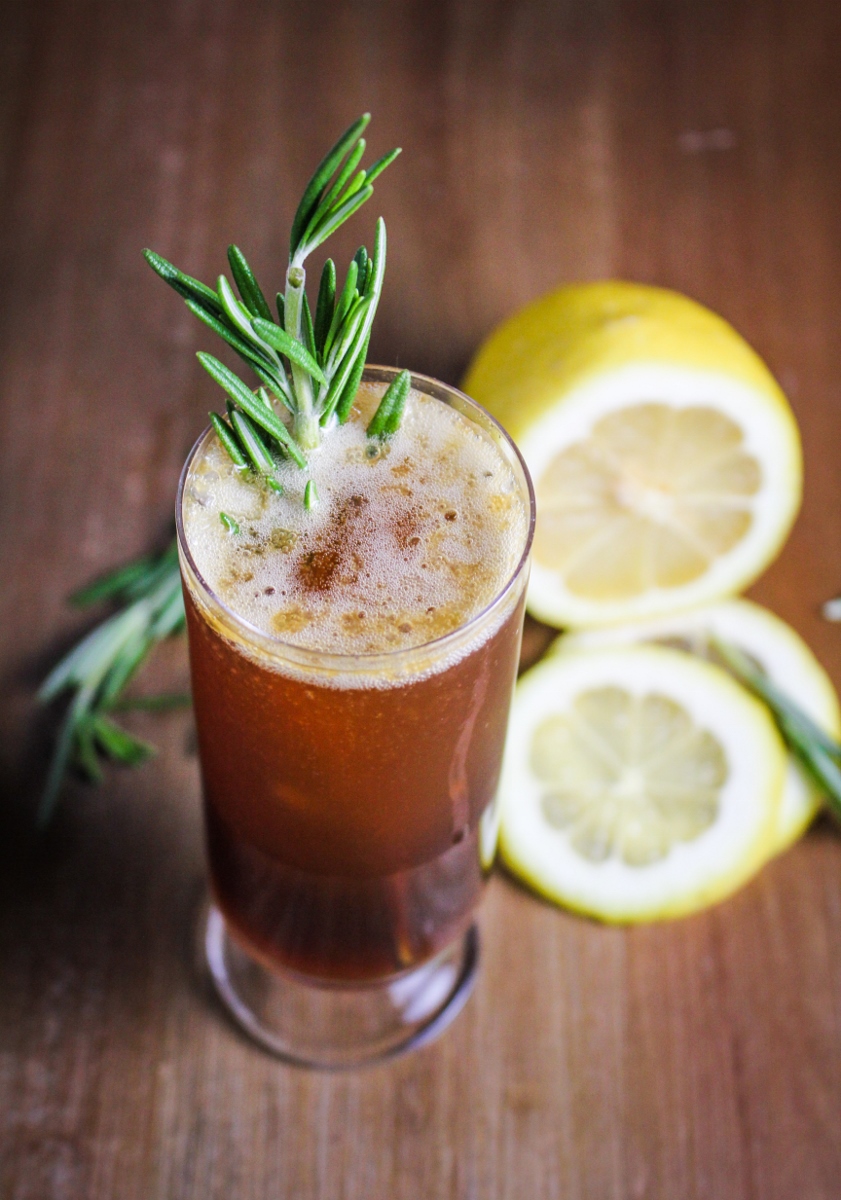
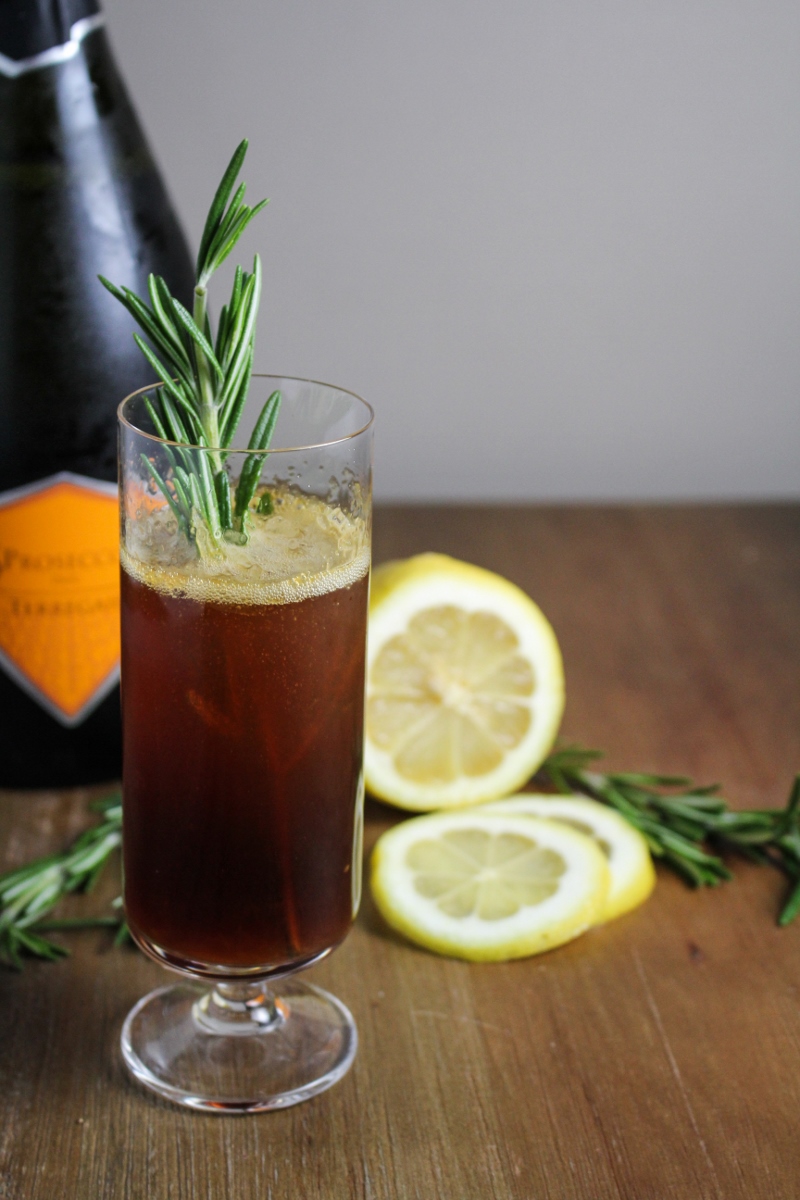
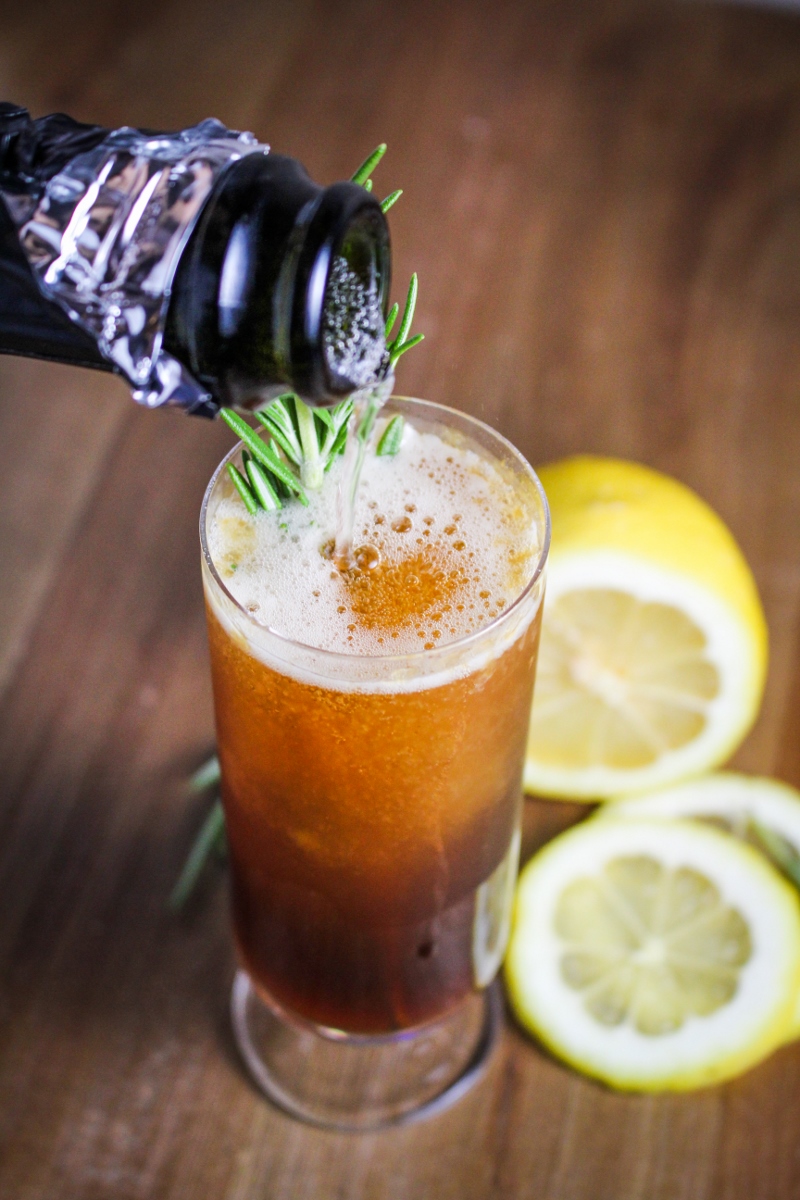
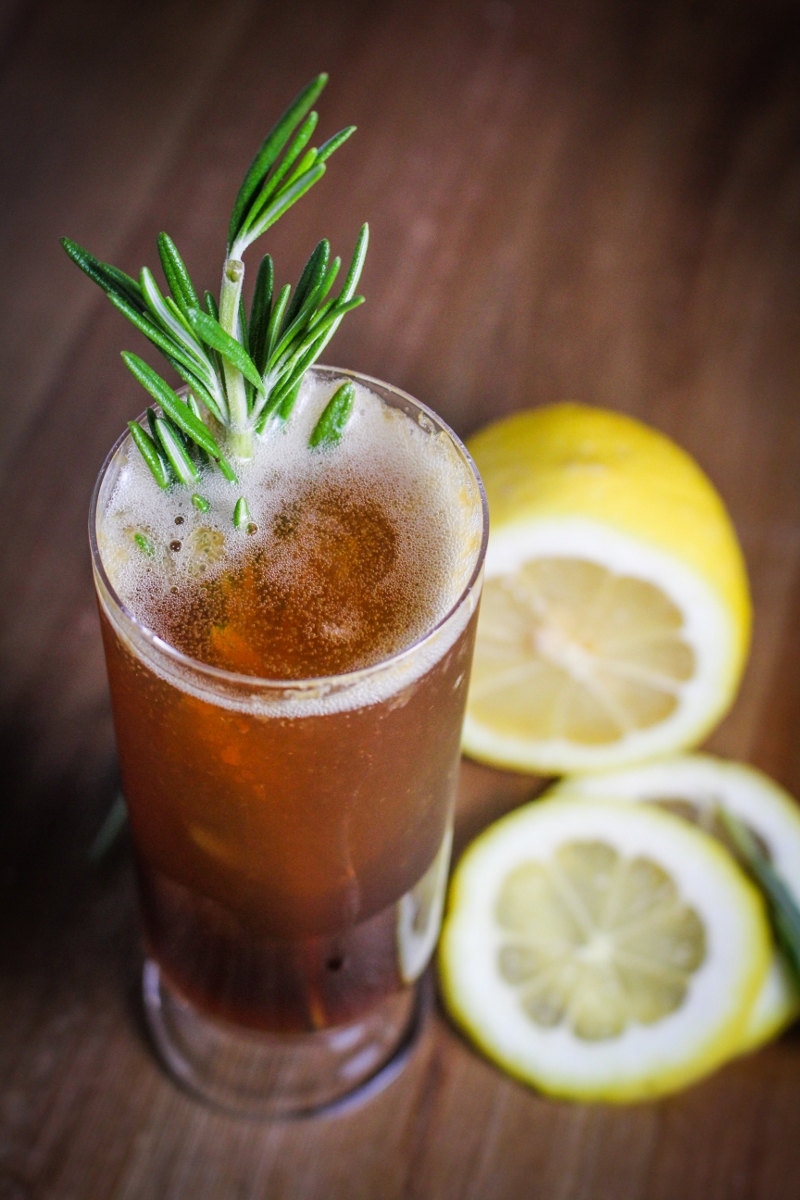
Roman Holiday Cocktail: Lemon, Honey, Amaro, Prosecco {Katie at the Kitchen Door}

Roman Holiday Cocktail: Lemon, Honey, Amaro, Prosecco {Katie at the Kitchen Door}

Hey! It’s Friday! And in honor of Friday, I have a nice fizzy cocktail for you. Actually, it’s a riff on a cocktail I had on Monday (because starting the week is as hard as ending it is relieving) at Coppa, where I enjoyed Trevor’s birthday dinner while he died of allergies across the table from me. I couldn’t recreate the duck prosciutto or the liverwurst platter for him to try with renewed, allergy-free tastebuds, but I could make him another lemony Italian cocktail.

Roman Holiday Cocktail: Lemon, Honey, Amaro, Prosecco {Katie at the Kitchen Door}

This drink is made from amaro, honey-lemon-rosemary syrup, and a good splash of cold prosecco. I first discovered amaro only a few months ago, but since then I seem to be noticing it on cocktail menus all over the place. It’s an intensely flavored, dark, semi-sweet Italian liqueur that is great when mixed with lighter alcohols and flavors. Trevor said this was the best drink I’ve ever made for the blog – it falls right in the category of dark, not-too-sweet, fairly strong drinks that he likes best. It’s easy to whip up, so get to it – happy hour is almost over.

Roman Holiday Cocktail: Lemon, Honey, Amaro, Prosecco {Katie at the Kitchen Door}

Roman Holiday Cocktail

Serves 4.

  • juice from 3 lemons (about 3/4 c. total)
  • 1/3 c. honey
  • 1 sprig rosemary
  • 4 shots (1.5 oz) amaro
  • 1 bottle chilled prosecco
  • more rosemary, to garnish
  1. Mix lemon juice, honey, and rosemary together in a small pan. Bring to a simmer over medium heat, then immediately remove from heat, stirring to dissolve honey. Let sit 5 minutes, then refrigerate until chilled.
  2. To make each cocktail, add 1/4 c. of the lemon-honey syrup and 1 shot of amaro to a tall glass. Top  off with prosecco, garnish with rosemary, and serve immediately.

5 May 14, 2014 Cookbook

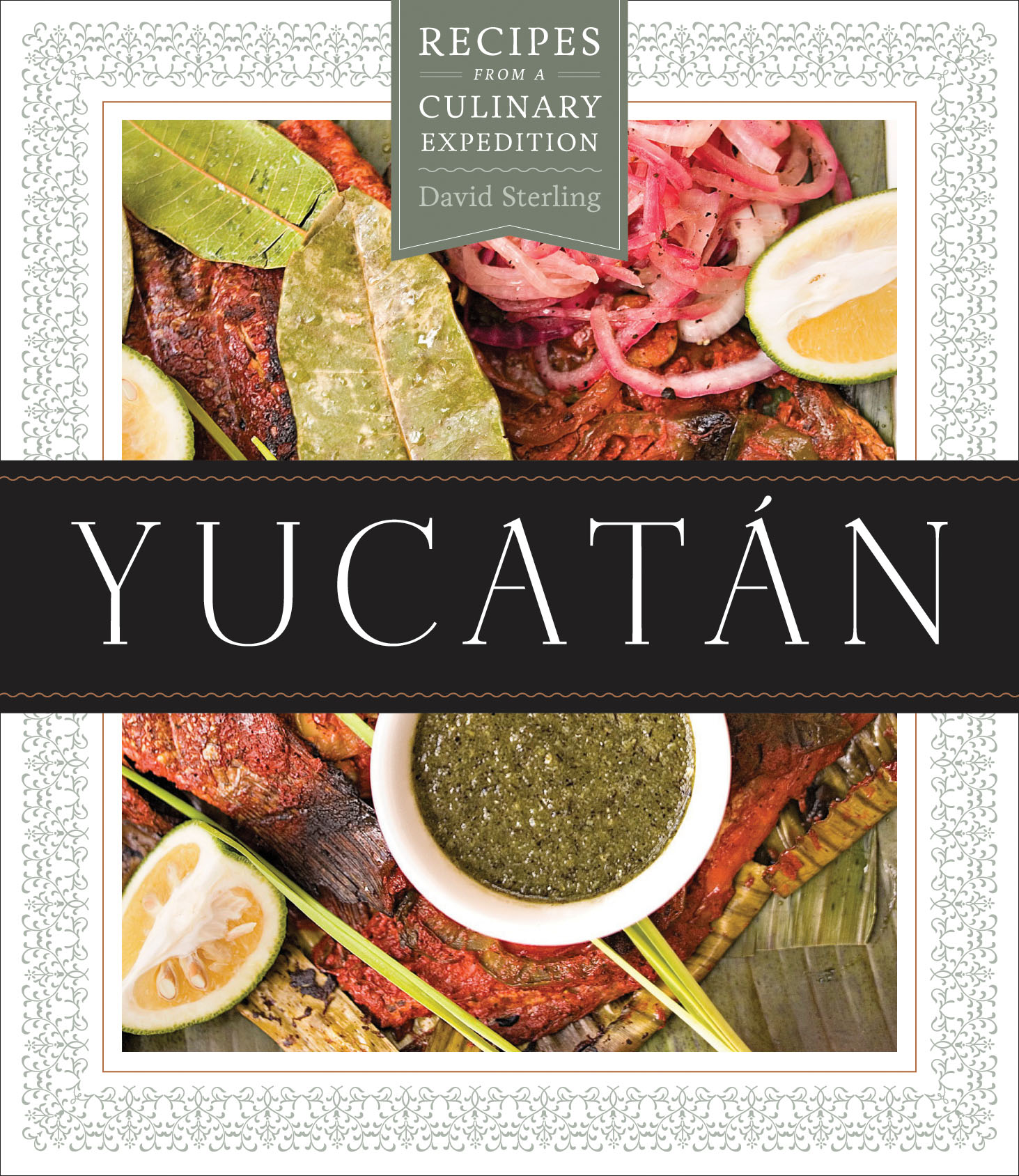
Book Club: Yucatan, Recipes from a Culinary Expedition // Mayan Chocolate Frozen Custard

Yucatan: Recipes from a Culinary Expedition

The Book: It seems that at least once a year, a cookbook that is more aptly described as an encyclopedia of a particular culture and cuisine is released. Gran Cocina Latina is a good example, as is The New Book of Middle Eastern Food, and to a certain extent even Dorie Greenspan’s Around My French Table. These books are much more than just exciting cookbooks, they’re reference books for chefs and travelers and budding anthropologists that contain hundreds of classic recipes along with a thorough communication of the culinary culture and history of a particular region of the world. Often these books become instant classics, essential books for any cook seriously interested in learning about other cuisines. This season I have two books of this type in my review pile, and the first is about a very specific place – the Yucatan peninsula in Mexico. Yucatan: Recipes from a Culinary Expedition, written by David Sterling, is the product of his decades of culinary experience living in the Yucatan while running a cooking school there.

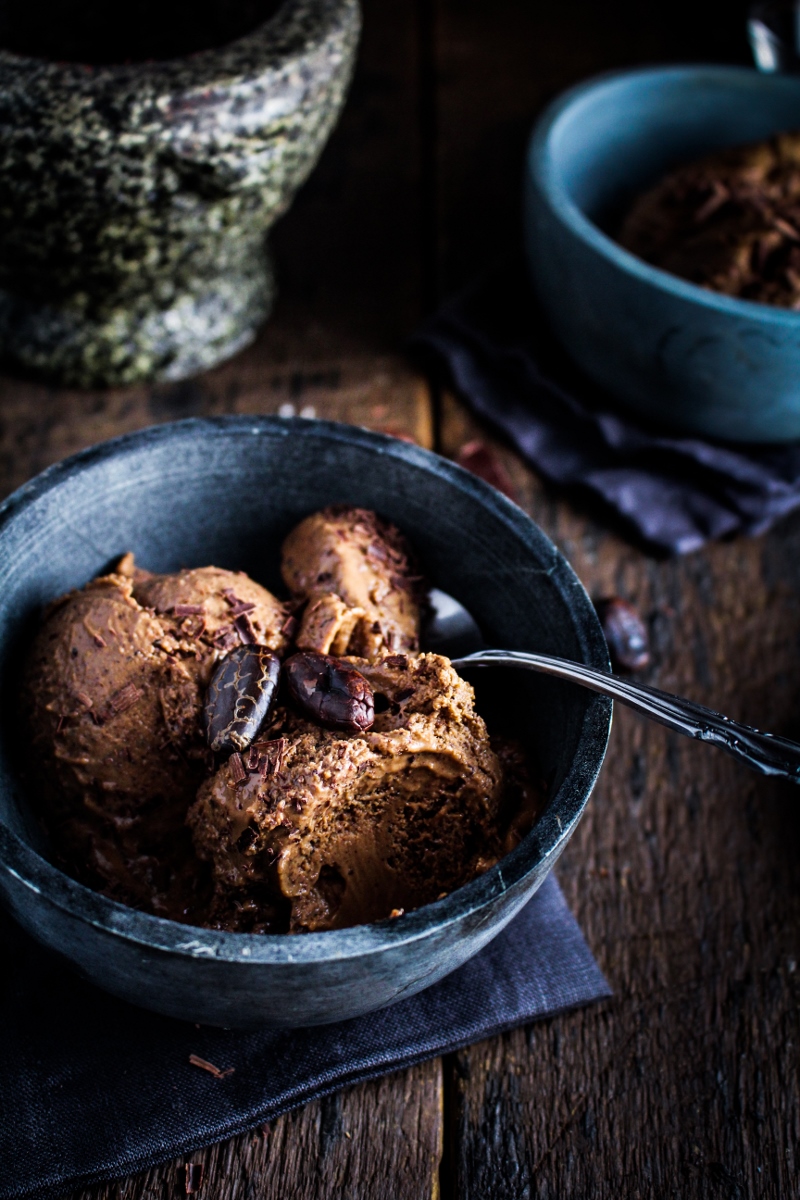
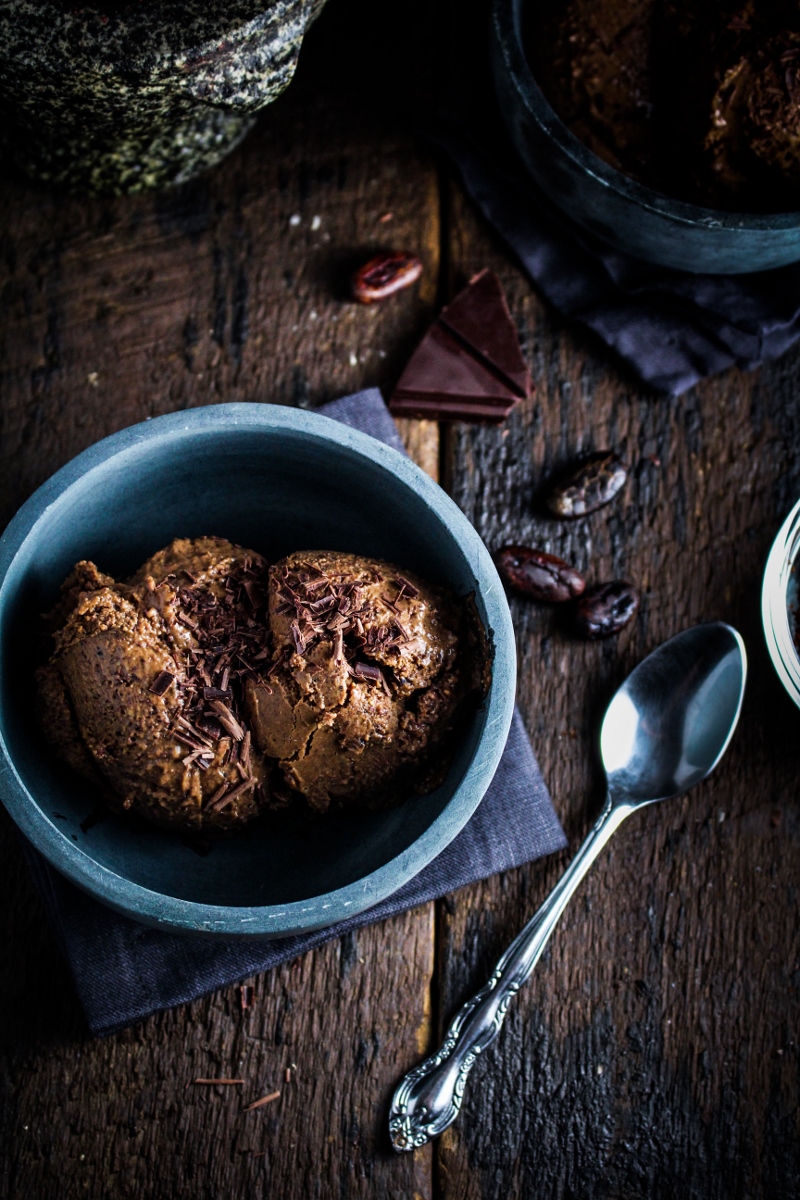
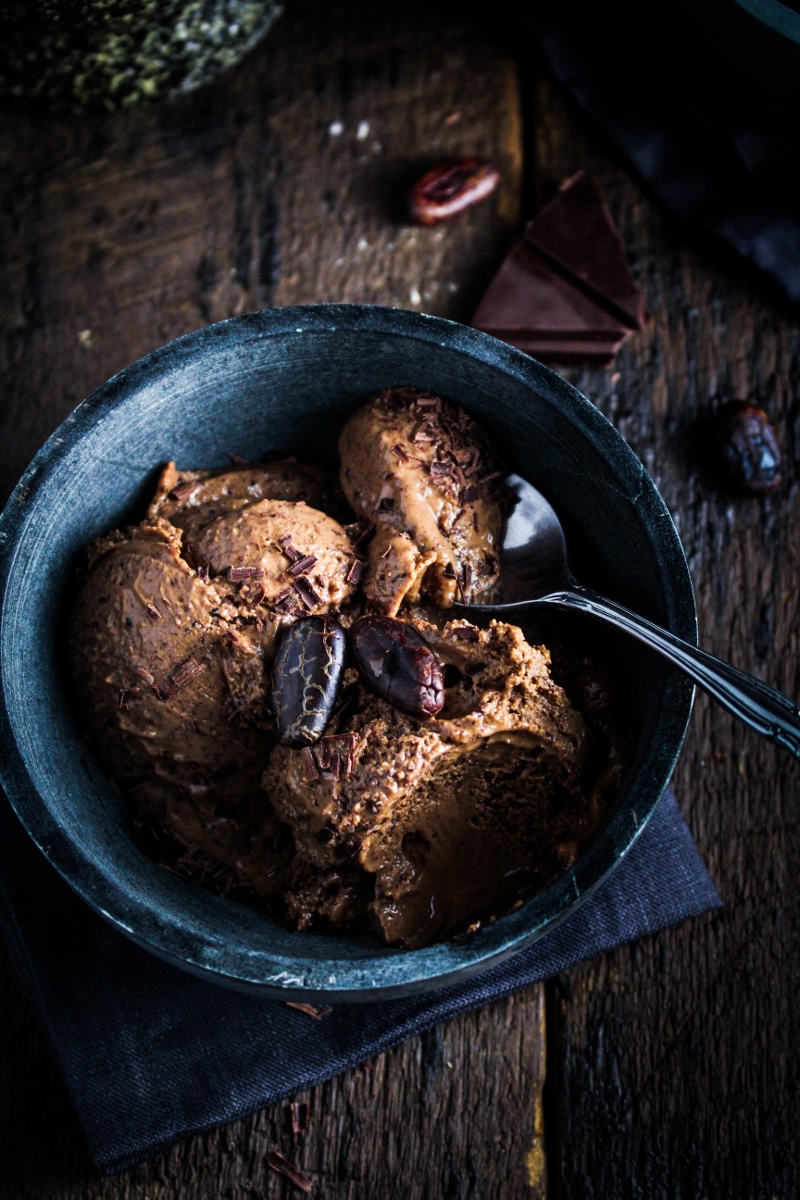
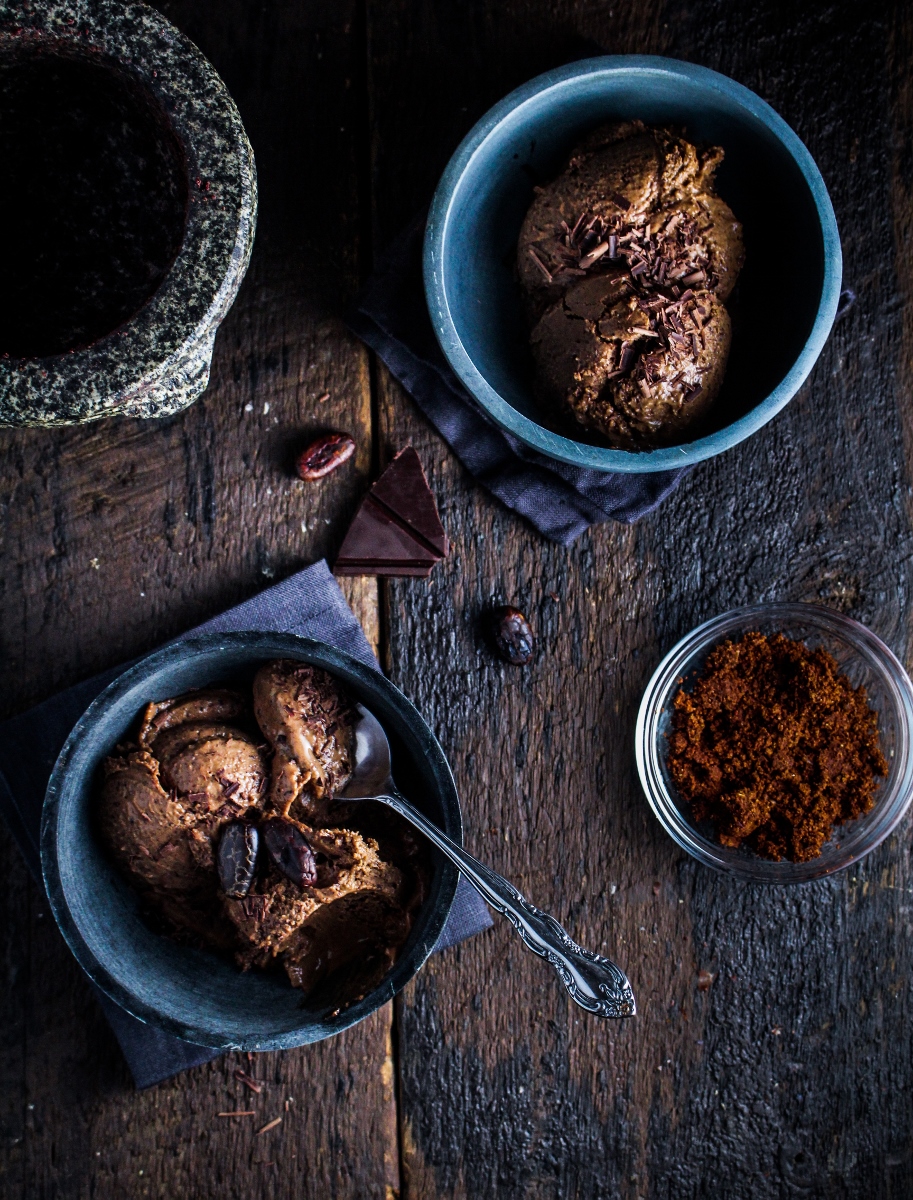
Mayan Chocolate Frozen Custard {Katie at the Kitchen Door}

Starting the book knowing nothing about the Yucatan, except that it looks like a nice place to go on vacation, I quickly realized I was in the hands of an expert. I was easily drawn into the narrative of this ideologically isolated peninsula, even when that narrative had nothing whatsoever to do with food. History, geography, biology – you’ll get a little bit of everything with this book. Of course, eventually it all ties back to food and cooking, and I don’t know if there was a single recipe in this book that I wasn’t interested in trying. The recipes are mostly traditional, yet still presented in a creative and intriguing way – combinations like Roasted Quail with a Puree of Squash Seeds, Chaya, and Habanero and Zucchini and Squash Blossom Stew with Tiny Corn Pancakes are representative of what people have eaten traditionally, but totally new to me. I should note that as much as the 60-page ingredient primer will help orient you to traditional ingredients, many will still be hard to find for American cooks. Beyond that, many of the recipes will be time-consuming for those not accustomed to cooking with the major base ingredients of the cuisine, as sourcing or preparing the spice mixes, flours, and fats that are traditionally used will add to the total preparation time. However, once you have a few of the key pantry items built into your repertoire, I imagine the recipes become less daunting – there’s just a bit of a learning curve.

Mayan Chocolate Frozen Custard {Katie at the Kitchen Door}

Mayan Chocolate Frozen Custard {Katie at the Kitchen Door}

The Food: One of the goodies we brought back with us from Ecuador was a bag full of fermented cacao beans. As part of our trip we learned about the entire chocolate making process, even roasting and grinding our own beans before making the freshest hot chocolate ever. We picked up a half pound bag of the beans for $2.50 in a little souvenir shop later in our trip, and now I’m wishing we had brought more home with us, as whole beans go for $20 a pound on Amazon. When I saw the dessert recipes calling for freshly ground cacao paste in this book, I knew we’d found a way to put our beans to good use. This Mayan Chocolate Frozen Custard is one of the most intense ice creams I’ve ever tasted. Using a whole host of traditional ingredients – Mexican crema, freshly ground cacao, cayenne pepper, and a hand-ground spice mixture called recado rojo that includes achiote, garlic, and vinegar – it has a ton of different flavors, and a somewhat gritty texture from the ground cacao beans. And preparing all the components really gave our mortar and pestle a good workout. I realize that this description might not make it sound all that appealing, but it’s a really exciting recipe that’s definitely worth stepping outside of your comfort zone for. If you can find whole cacao beans, use them – the smell of freshly roasted cacao being mashed to a paste is otherwordly – but otherwise, you can use cacao nibs or bittersweet chocolate.

Recipe Shortlist: Venison in Red Squash-Seed Sauce; Maya Succotash of New Corn and Black-Eyed Peas; Mashed Plaintain Croquettes with Pork Cracklings and Goat Cheese; Lobster Tails in Charred Chili Sauce; Guava, Marschino Cherry, and Sherry Frozen  Custard; Chicken and Potatoes Stewed in Oregano-Black Pepper Sauce; Honey-Drenched Yuca Fritters

Like what you just read? Subscribe to Katie at the Kitchen Door on Feedly or Bloglovin’, or follow along on Facebook, Twitter, Pinterest, and Instagram. Thanks for reading!

Disclaimer: I received a review copy of Yucatan: Recipes from a Culinary Expedition from University of Texas Press, but I was not otherwise compensated and all thought and opinions are my own.

Mayan Chocolate Frozen Custard {Katie at the Kitchen Door}

Mayan Chocolate Frozen Custard

Recipe from Yucatan: Recipes from a Culinary Expedition. Makes about 1 1/2 quarts.

  • 2 c. whole milk
  • 2 TBS recado rojo (bought in a Latin grocery, or homemade)
  • 2 c. creme fraiche (or heavy cream)
  • 1 c. sugar
  • 1/4 c. honey
  • 3/8 tsp ground allspice
  • 1/8 tsp cayenne powder
  • 5 large egg yolks
  • 8 oz. fresh chocolate paste, recipe below (or bittersweet chocolate, chopped)
  • 1 TBS vanilla
  1. Place the milk and the recado rojo in a blender and blend for 30 seconds. Strain the milk through a fine-mesh sieve into a heavy saucepan, discarding the solids that get caught in the strainer. Add the creme fraiche, sugar, honey, allspice, and cayenne to the milk. Heat over medium heat, stirring frequently, until the sugar dissolves and the mixture has just reached a simmer, then remove from the heat.
  2. In a medium bowl, whisk the egg yolks until they are pale yellow and frothy. While whisking the eggs, slowly pour 1 cup of the hot milk into the eggs in a thin stream, whisking vigorously to temper the eggs. Repeat with another cup of hot milk, then pour the egg mixture back into the hot milk mixture, whisking the milk as you do so. Still whisking, return the custard to low heat and cook just until the mixture thickens enough to coat the back of a spoon. It will still be fluid – about the consistency of a creme anglaise.
  3. Once the mixture has thickened, strain through a fine mesh sieve into a bowl, discarding any solids. Stir in the chocolate paste or bittersweet chocolate until mixture is thick and chocolate is melted. Let cool, then stir in the vanilla. Cover and refrigerate for at least 6 hours, or overnight. Once thoroughly chilled, process according to your ice cream maker’s directions.

Fresh Chocolate Paste

Makes about 8 oz.

  • 1/2 lb. of whole fermented cacao beans
  1. Place the beans in a dry skillet over medium heat. Roast, stirring occasionally, until fragrant and skins are cracking, about 8-10 minutes. Remove from heat. As soon as beans are cool enough to handle, peel the skins away from the beans and discard the skins. Return any peeled beans that are still brown as opposed to a deep blackish brown to the pan for a minute or two, cooking until they are all deeply browned.
  2. Place peeled, roasted beans in a blender and blend until evenly ground. Transfer to a mortar and pestle in grind to a fine paste in batches.

0 May 11, 2014 Breakfast

Happy Mother’s Day! // Peach Scones with Bourbon Glaze

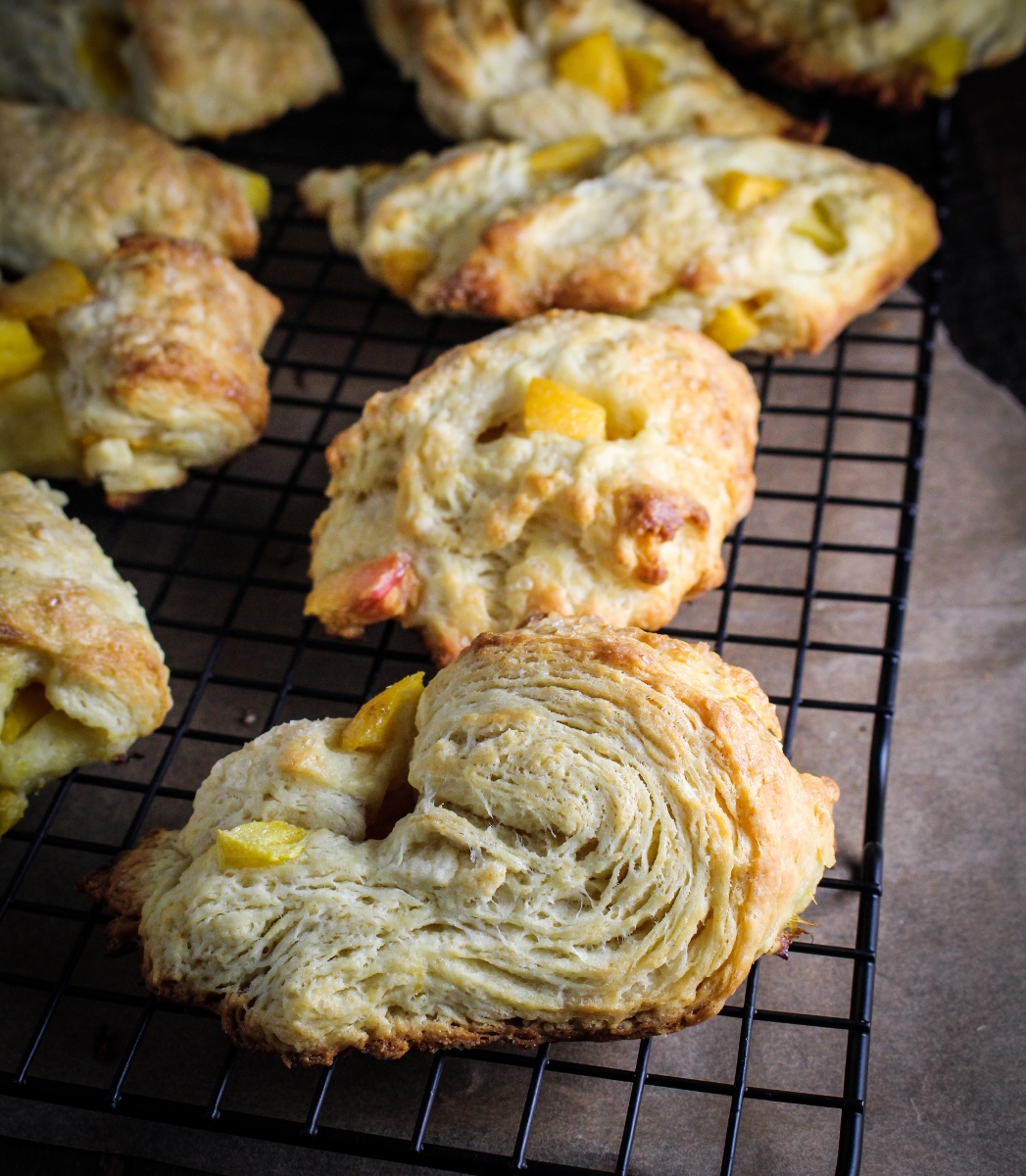
Peach Scones with Bourbon Glaze {Katie at the Kitchen Door}

It’s mother’s day! Which means every one of you should do something nicer than usual for your mom today. I’m lucky to be able to see my parents almost every week, something that I appreciate far more than I would ever have guessed at the end of high school when I couldn’t wait to flee the state of Massachusetts. It’s so nice to have an escape from the day-to-day only a short-ways a way, somewhere I can spend quiet afternoons outside (in a yard!) and sit down to family dinners with my parents, little brother, and Trevor. Although lots of other parts of the country (and world) appeal to me as destinations, the biggest deterrent to moving somewhere else permanently is being away from my family. Who knew I’d turn out to be such a momma’s girl?

Peach Scones with Bourbon Glaze {Katie at the Kitchen Door}

On my visit home yesterday, I brought my mom a batch of these scones, baked fresh that morning, because she really likes scones. We used to go to high tea for special occasions when I was little, and although I couldn’t bring my mom a personal waiter in black tie for the day, I could bring some sweet and flaky baked goods. These particular scones are peach and Bourbon flavored, because not only is my mom sweet and loving and adorable, she’s also a lot of fun, and never one to turn down a margarita or a glass of sangria at the end of a summer’s day. I love that we can now share a drink (and a cackle) and gossip about family and work and friends while rocking back and forth on the porch swing. It’s easy to be friends with my mom.

Peach Scones with Bourbon Glaze {Katie at the Kitchen Door}

These scones are quite different than others that I’ve had – whereas I usually think of scones as being a bit dry and crumbly and best served with gobs of jam and cream, these are more like flaky bites of pie crust, already soft and moist and flavorful without the addition of any condiments. I think the crumbly kind of scone has a lot going for it, namely its affinity for jam and cream, but these are a welcome addition to my ever-broadening definition of scones. One thing to note – don’t skip the Bourbon glaze, it’s essential for bringing out the best in these little pastries.

So, Happy Mother’s Day to all the mother’s out there, but especially to mine! I love you, mom.

Like what you just read? Subscribe to Katie at the Kitchen Door on Feedly or Bloglovin’, or follow along on Facebook, Twitter, Pinterest, and Instagram. Thanks for reading!

Peach Scones with Bourbon Glaze {Katie at the Kitchen Door}

Peach Scones with Bourbon Glaze

Adapted from Cook’s Illustrated via The Vanilla Bean Blog. Makes 10-12 scones.

  • 2 c. flour
  • 1 TBS baking powder
  • 2 TBS sugar
  • 1/2 tsp salt
  • 12 TBS butter, frozen
  • 1/2 c. creme fraiche
  • 1 tsp vanilla
  • 2 eggs
  • 1 1/2 c. diced frozen peaches (in 1/4 inch cubes)
  • 1/4 c. heavy cream for brushing
  • 1 TBS turbinado sugar for sprinkling

For the glaze:

  • 1 c. powdered sugar
  • 4 tsp heavy cream
  • 4 tsp Bourbon
  1. Preheat the oven to 400°F. Line a baking sheet with parchment paper and set aside.
  2. In a large bowl, whisk together flour, baking powder, 2 TBS of sugar, and salt until evenly combined. In a separate medium bowl, whisk together creme fraiche, vanilla, and eggs until evenly combined.
  3. Grate the frozen butter over the large holes of a box grater. Add the grated butter to the flour mixture, and use your hands to toss the mixture until all the butter pieces are fully coated with flour. Add the creme fraiche mixture to the butter and flour and use a spatula to stir just until flour is fully moistened – avoid overmixing.
  4. Lightly flour a work surface, and dump the dough onto it. Knead gently just until it forms a loose ball. Using a floured rolling pin, roll the ball into a 12 inch square, then fold the dough in thirds. Fold in thirds again in the other direction, leaving you with a tall, 4 inch square. Place on a plate and chill in the freezer for 5-10 minutes, until cold to the touch.
  5. Once dough is chilled, return it to your work surface and roll out into a 12 inch square. Sprinkle the diced peaches over the surface, pressing them down lightly into the dough. Roll the dough into a log (like a jelly roll), then use the rolling pin to flatten the log into a 4 inch by 12 inch rectangle. Cut into 5 or 6 rectangles, then cut each rectangle in half, resulting in 10 to 12 triangular scones. Place scones on prepared baking sheet, and brush each generously with heavy cream, then sprinkle with turbinado sugar. Bake for 18-25 minutes, until scones are golden brown on the top. Transfer to a wire rack and let cool.
  6. To make the glaze, whisk together the powdered sugar, 4 tsp of heavy cream, and Bourbon until smooth. Glaze should be a good drizzling consistency. If it’s too thick, add a splash more Bourbon; too thin, add a few tablespoons of powdered sugar. Once the scones are cool, use a fork to drizzle the glaze over the scones in thin lines. Let set for 10-15 minutes, then serve.

0 May 9, 2014 Travel

Ecuador Travelogue: Cotopaxi

Salasaca Market, Ecuador {Katie at the Kitchen Door} Salasaca Market, Ecuador {Katie at the Kitchen Door} Salasaca Market

On the road from Baños to the final destination of our trip, Cotopaxi, we made a quick but memorable stop in the market town of Salasaca. Otavalo is the most famous market town in Ecuador, known for it’s enormous Saturday market, but it’s a good two hour drive north of Quito, and since our route kept us South of Quito, we jumped at the opportunity to make a quick stop in Salasaca when our guide suggested it. The small town square has perhaps a dozen or so vendors, but the goods (and the prices) were amazing, and we promptly spent all of our remaining cash on thick alpaca blankets ($20 a piece), colorful woven hammocks ($26 for the biggest size), hats, and alpaca sweaters. The quality of everything we purchased is high, the colors beautiful, and the women selling us the blankets were lovely and appreciative of our purchases. After reading more about the Otavalo market after our trip, I’m glad we passed through Salasaca instead – whereas Otavalo seems to have become a tourist destination with all the accompanying tourist junk for sale, Salasaca provides a more authentic and more intimate market experience. Hacienda Santa Ana - Cotopaxi, Ecuador {Katie at the Kitchen Door} Hacienda Santa Ana - Cotopaxi, Ecuador {Katie at the Kitchen Door} Hacienda Santa Ana - Cotopaxi, Ecuador {Katie at the Kitchen Door} Hacienda Santa Ana

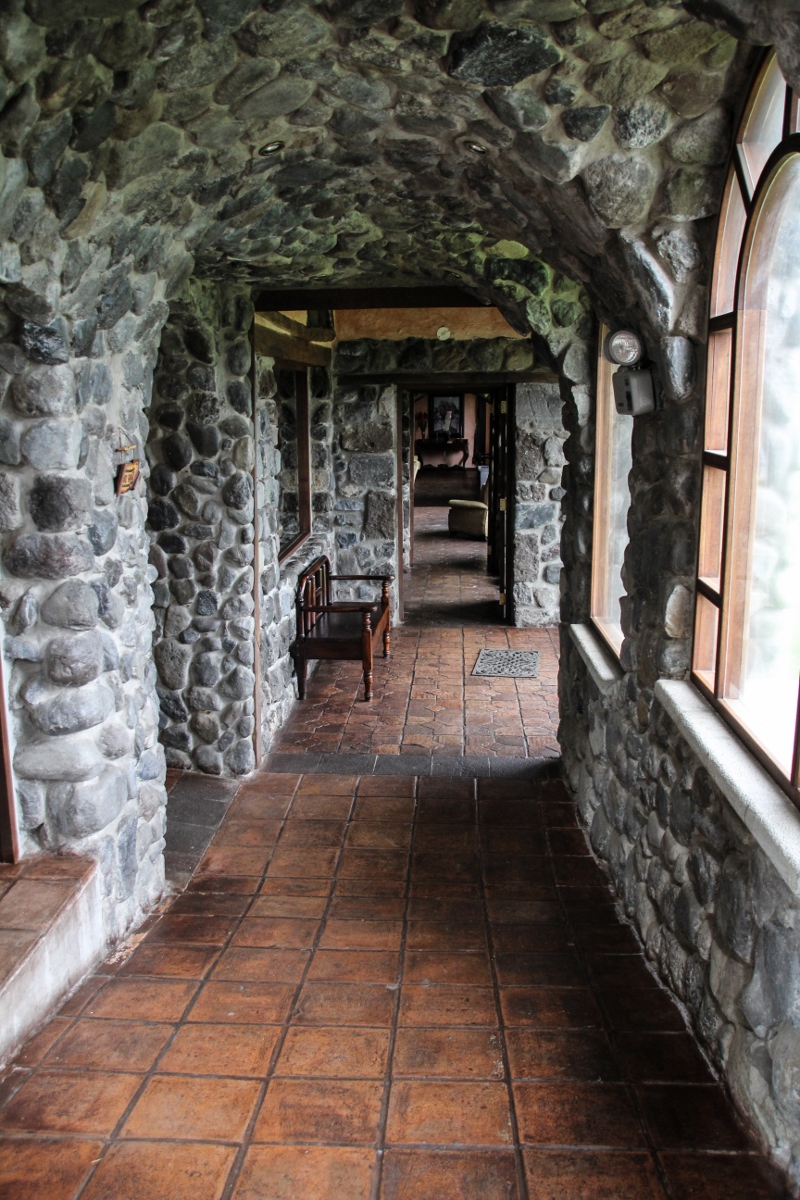
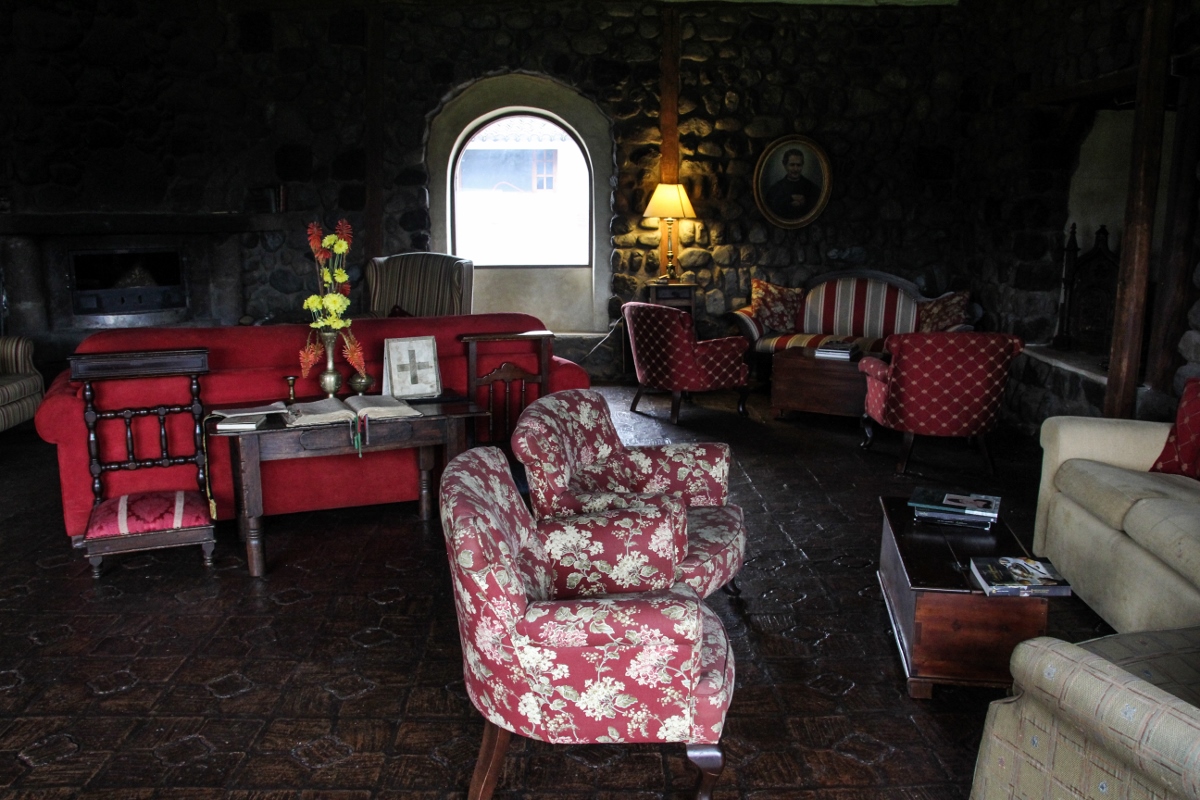
An extra suitcase worth of blankets in tow, we finished our drive from Baños, through the town of Machachi, and up a very long and very bumpy road to Hacienda Santa Ana, a beautifully restored hacienda-turned-inn right on the edge of Cotopaxi National Park. Santa Ana was our highest-end accommodation for the whole trip, and we luxuriated in the thick down comforters, the large couches by the stone fireplace, and the general atmosphere of elegant coziness. It’s a small inn on a huge property that once belonged to the Jesuits, and the decor still reflects its rich religious history. Shortly after we arrived (well, actually, shortly after our horseback riding adventure which happened immediately after we arrived), we were greeted with a canelazo, a warm clementine, cinnamon, and aguardiente cocktail that will almost certainly be making an appearance on this blog the next time it’s cold and gray. This and other little touches – hot water bottles to take to bed with us, gorgeous period furniture, a plentiful supply of hot tea, and walking through the grounds to say hi to the llamas – made our stay at Hacienda Santa Ana very pleasant. My only caution about staying at Santa Ana: it’s a long drive back to town, so be prepared to eat all your meals at the inn. Dinners were satisfying and tasty but not particularly inspiring, sort of overpriced but not exorbitantly so considering the fact that it’s the only option. It wasn’t a problem and wasn’t a highlight for us. All things considered, I’d highly recommend staying at Hacienda Santa Ana. Horseback Riding in Cotopaxi, Ecuador {Katie at the Kitchen Door} Horseback Riding in Cotopaxi, Ecuador {Katie at the Kitchen Door} Horseback Riding in Cotopaxi, Ecuador {Katie at the Kitchen Door} Horseback Riding at Santa Ana

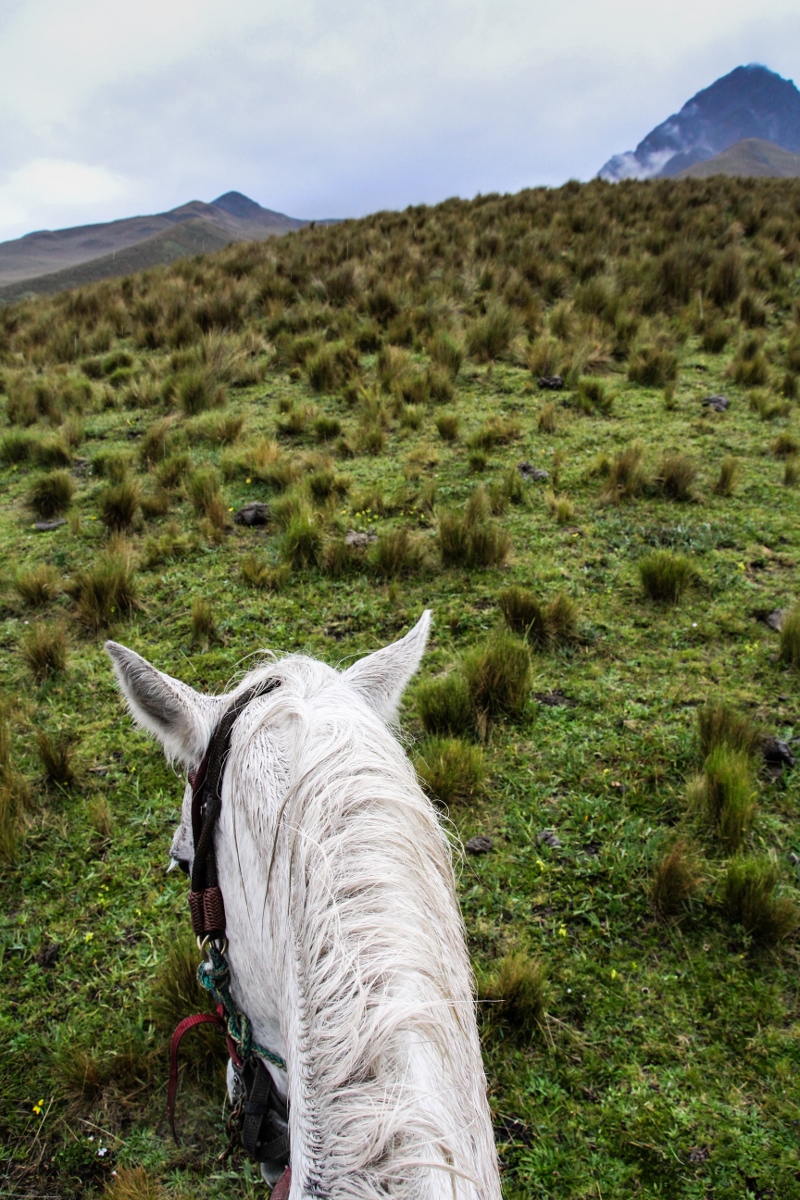
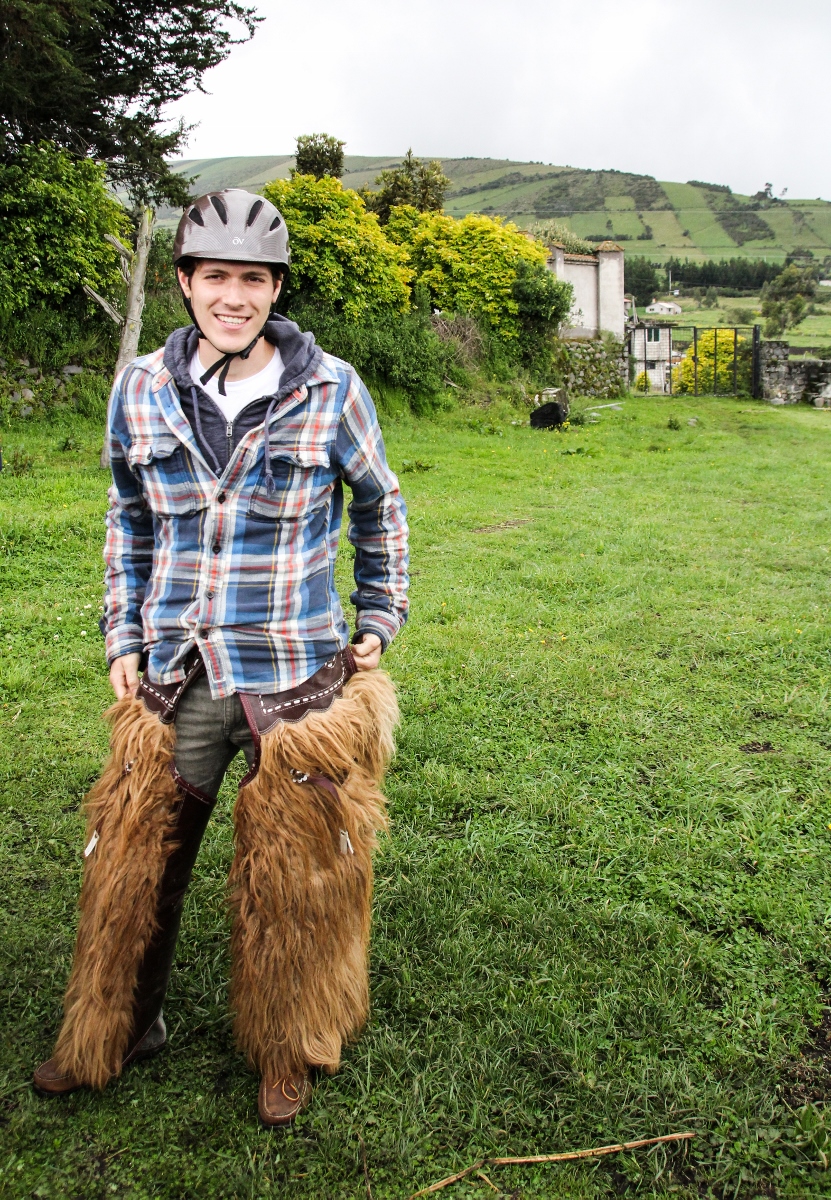
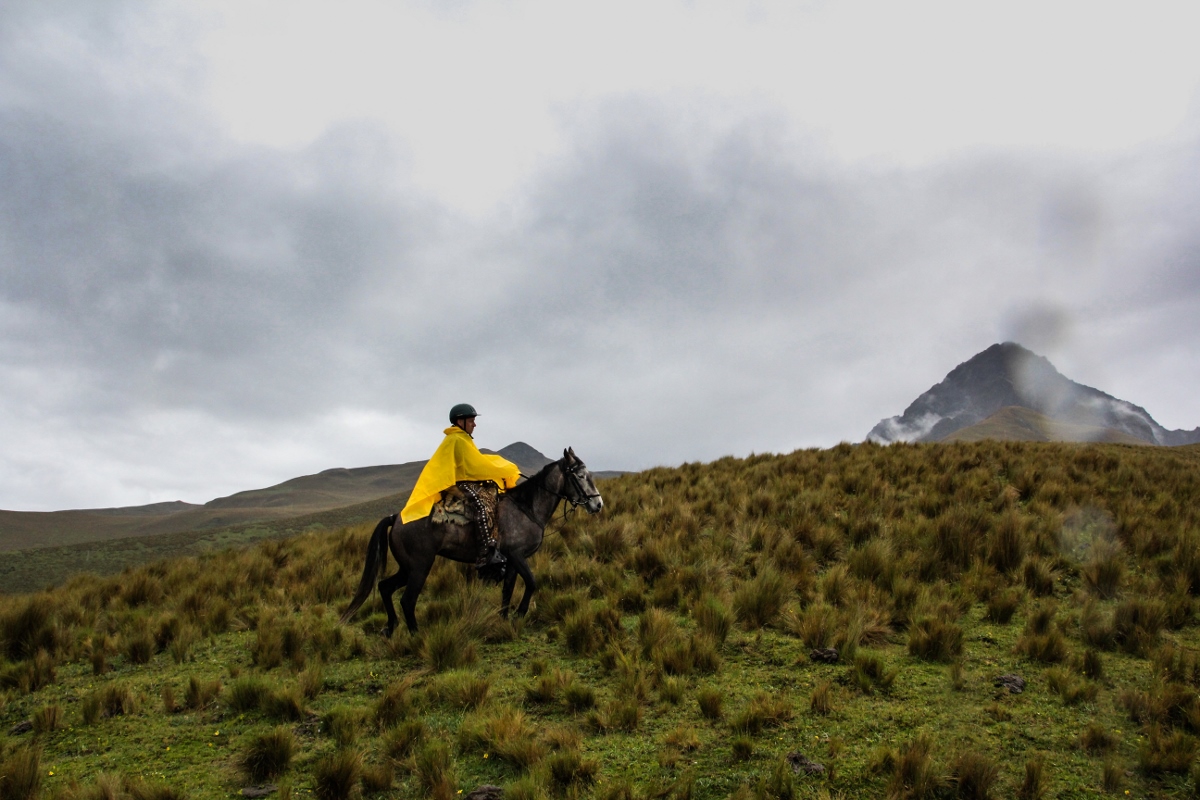
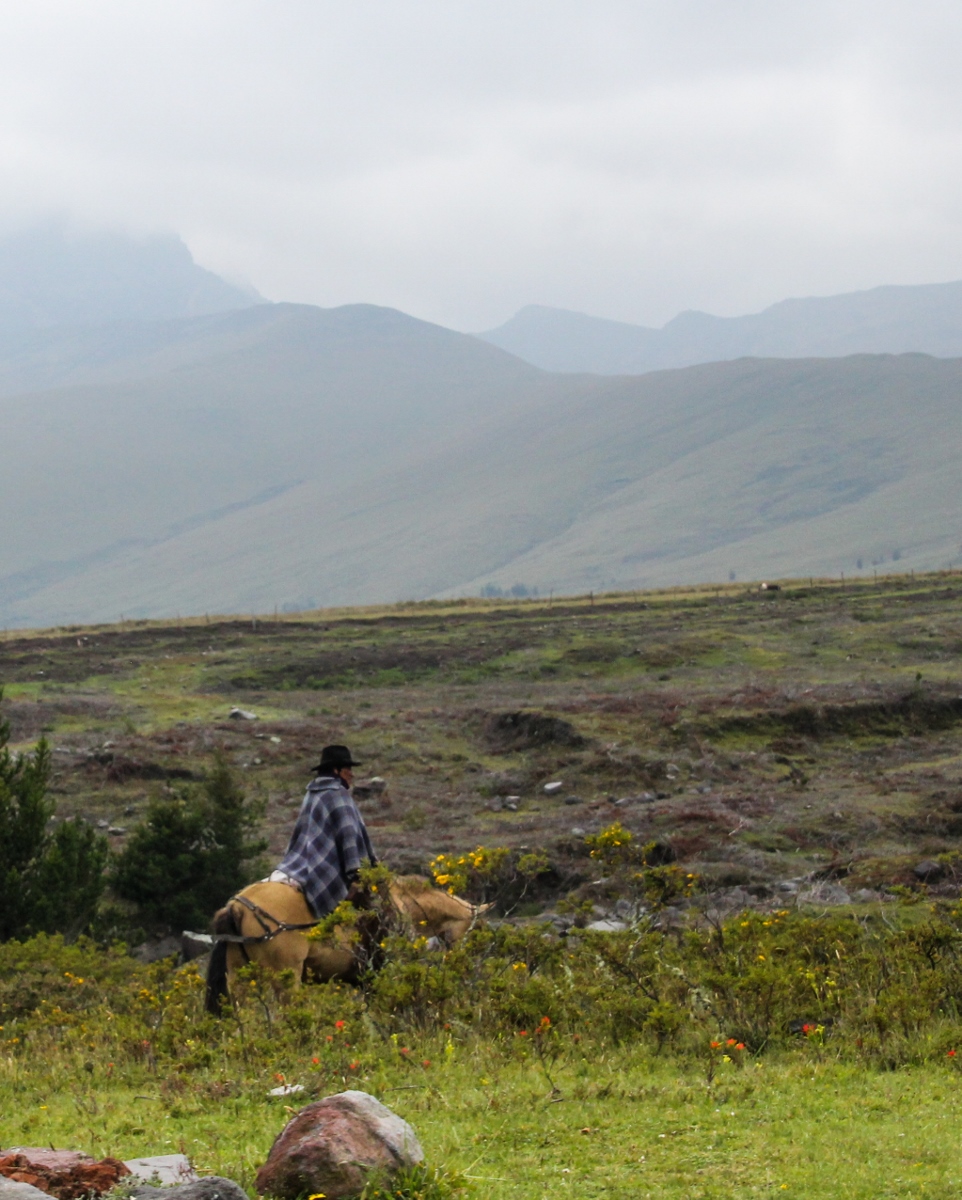
When my mom was planning this trip (thanks mom!), the one activity I was adamant that she include was horseback riding. I rode for a long time as a kid, but these days my opportunities to ride are very infrequent. We booked our ride for the afternoon we arrived at Santa Ana, but delays in the mornings and threatening weather had our guide worried about our choice. But I insisted. So as soon as we got out of the car at Santa Ana, Patricio, one of the chagras working at Santa Ana, handed us our chaps and ponchos, and we mounted up. It was raining lightly as we headed down the road, but I was still on cloud nine, chatting with Patricio using only my practically non-existent Spanish skills, and clopping down the cobblestone road. Trevor and my family were really just being good sports by coming along, but I was glad we were all there. At the end of the road, Patricio let us through a gate into the fields, and we rode through one of the coolest landscapes I’ve ever seen, giant tufts of dry grass clumped around our horses’ feet and the ragged edges of Ruminahui volcano in the background. I loved it. Things got a little hairy on our way back down – Trevor’s horse slipped down a muddy hill and rolled on top of his leg. Amazingly, he was fine, but it thoroughly freaked out my brother who decided that he would be walking the rest of the way home. Quite the adventure. But I’d do it again in a heartbeat. Cotopaxi National Park, Ecuador {Katie at the Kitchen Door} Cotopaxi National Park, Ecuador {Katie at the Kitchen Door} Cotopaxi National Park, Ecuador {Katie at the Kitchen Door} Cotopaxi National Park, Ecuador {Katie at the Kitchen Door} Cotopaxi National Park, Ecuador {Katie at the Kitchen Door} Cotopaxi National Park, Ecuador {Katie at the Kitchen Door} Cotopaxi Glacier

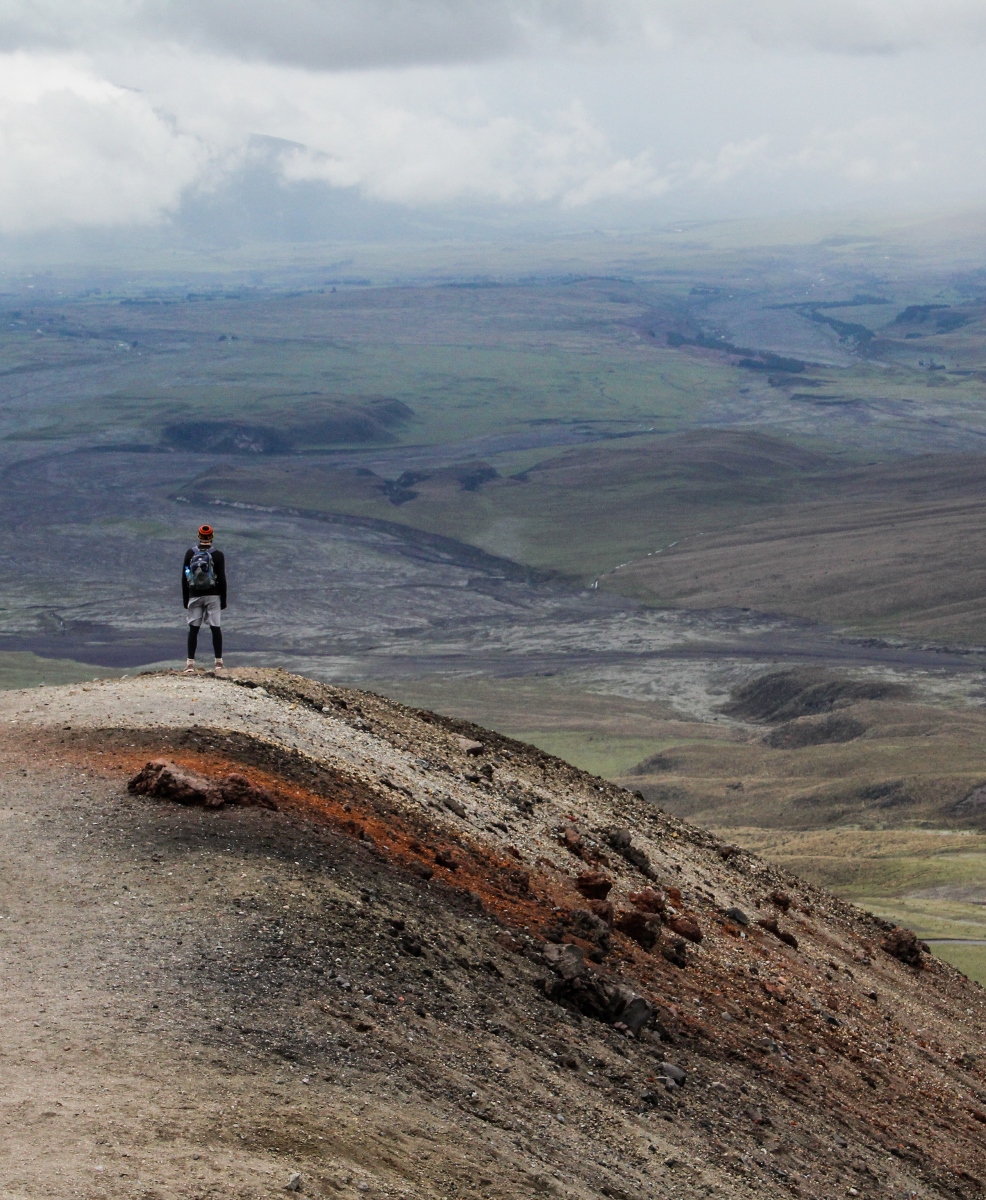
The main event of our time in Cotopaxi was, unsurprisingly, climbing Cotopaxi, the 19,000 foot tall active volcano that would dominate the landscape were it not usually shrouded in clouds. I’m exaggerating a little – we didn’t summit the mountain –  but we did climb past the base camp and up to the edge of the glacier at 16,400 feet. Even after a week at elevations of 9,000+ feet, being at an altitude that high is really hard, and I’ve never felt my body turn so sluggish with such tiny movements. It’s overwhelming. It was also bitterly cold as we climbed through the clouds that were spitting hail and rain at us, but we moved slowly, drank lots of water, rested frequently, and pushed through. As we neared the glacier, the sun peaked out from behind the clouds once or twice, illuminating the fascinating landscape and the colors of the plains below, and even though my mind was foggy, the experience was amazing. After touching the glacier (or building a snowman on it if you were Trevor), we hurried back down, and after a quick lunch at Tambopaxi refuge, we all collapsed back at the hotel, much more drained than we had expected to be. I’ve always dreamed about serious mountaineering – climbing Kilimanjaro, McKinley, etc. – but this brief encounter with true altitude made me question if I’d really enjoy it. Quechua Farmers, Cotopaxi, Ecuador {Katie at the Kitchen Door} Quechua Farmers, Cotopaxi, Ecuador {Katie at the Kitchen Door} Quechua Farmers

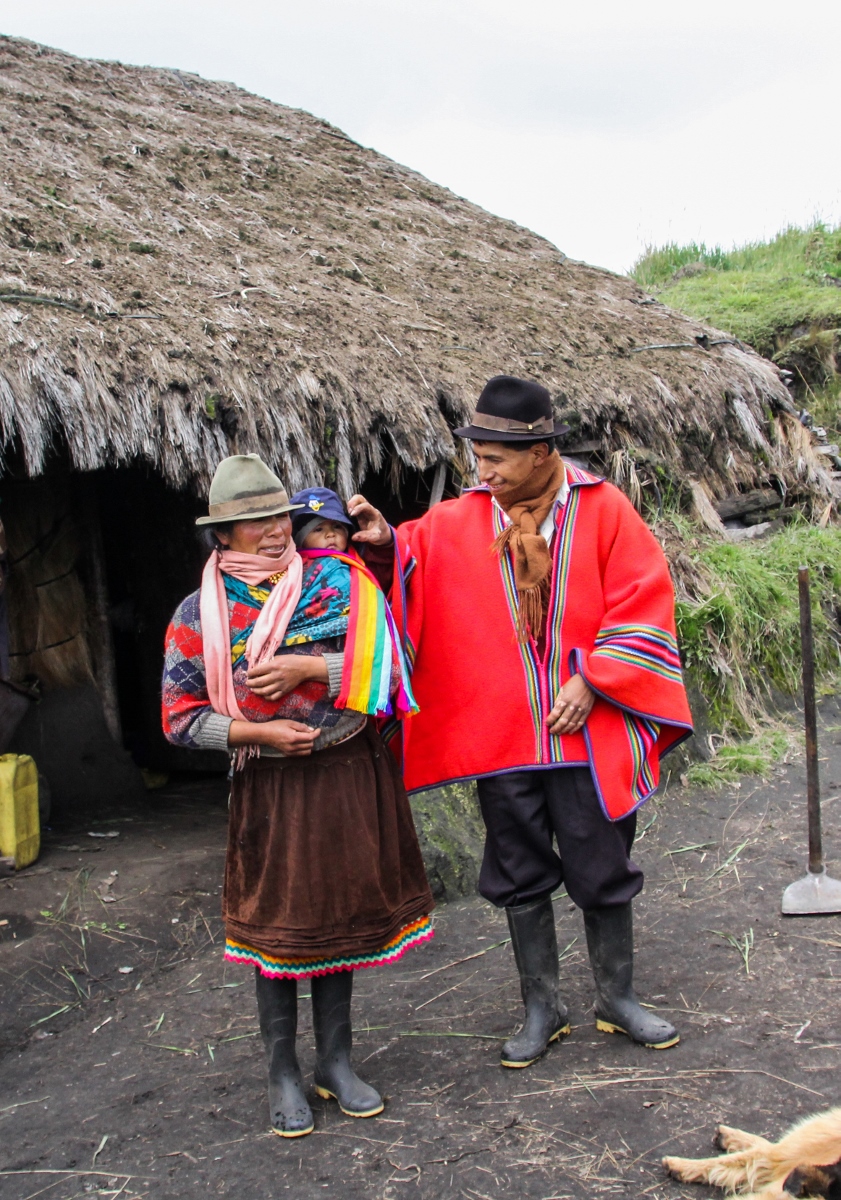
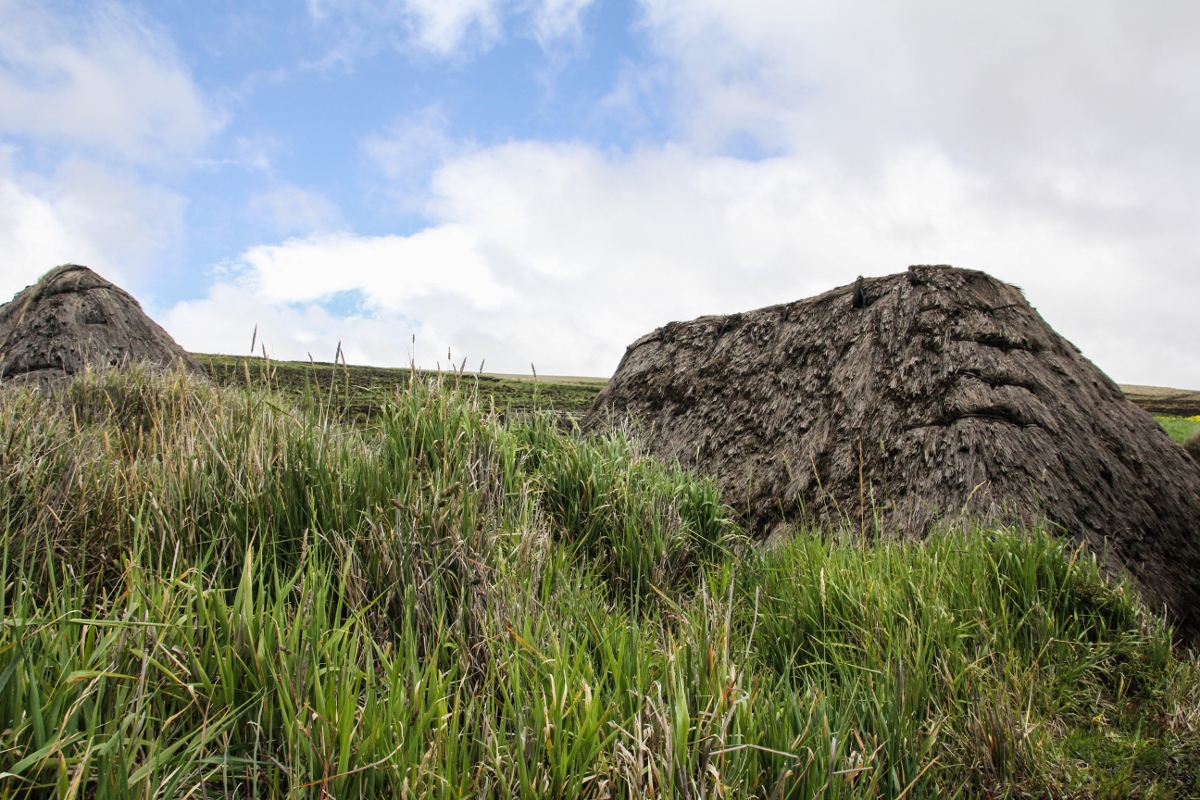
On our last “tour” day we left Hacienda Santa Ana and made the long drive west to Quilotoa lagoon. On our way, we stopped at the house of two local Quechua farmers, to see their traditional lifestyle. The houses are really dugouts, covered with long sloped roofs of dried grass, and the Quechua raise guinea pigs and vegetables for local markets to make their living. Their farm, spread out over the sloping mountainside, gave Trevor and me serious farm envy, especially their huge onion bulbs and dark loamy soil. The family was very welcoming during our short visit, and the experience didn’t feel pretentious or awkward like others geared towards indigenous culture can. It was a brief stop, but very memorable. Quilotoa Lagoon, Ecuador {Katie at the Kitchen Door} Quilotoa Lagoon, Ecuador {Katie at the Kitchen Door} Quilotoa Lagoon

Quilotoa lagoon is a water-filled caldera about 2 1/2 hours southwest of Machachi. If you see it in a brief moment of sun, the water is a brilliant emerald green, but our encounters with sun in Ecuador were few and far between. The lagoon is stunning, and when you arrive, you can hike down the dirt road to the edge of the lagoon, where you can rent a kayak if you still have the energy. My family is pretty active, so we refused the offer to reserve mules for the trip back up (at $8 per mule, and you have to decide before you hike down), but oh man, climbing back up out of that crater might have been the hardest thing I’ve ever done. Walking up the sliding sandy path, I was huffing and crying and counting my steps in sets of 50 just to get myself to keep moving. I don’t know if it was the altitude, or soreness from the previous day’s hike, or the fits of rain, or all three, but I felt pathetic, and the mules literally cantering past me every 20 minutes or so where like salt in the wound. It was a beautiful landscape, but my memories of the day are not overwhelmingly positive. On the other hand, Trevor and my brother and my mom were all totally fine climbing back up, so if you want to attempt it, go for it. Just trust your guide when he says that it’s not as easy as it looks from the top. After a quick lunch at one of the small hostels in town, we were back in the car for the long drive to Quito. If you’re planning a trip to Quilotoa, I’d recommend trying to fit it in on your way somewhere – we basically did an out and back, and it was a lot of time in the car. It looks like it’s about an hour off the main highway from Baños to Machachi/Quito, so if you’re headed along that path anyways, that would be the time to do it.

More from our Ecuador adventures…
Ecuador Travelogue: Quito
Ecuador Travelogue: The Amazon & Itamandi Lodge
Ecuador Travelogue: Baños

2 May 5, 2014 Dessert

Quarter-Century Celebration // Angel-Food Layer Cake with Whipped Cream Cheese Frosting

Angel Food Layer Cake with Whipped Cream Cheese Frosting {Katie at the Kitchen Door}

A Quarter-Century Celebration

Angel Food Layer Cake with Whipped Cream Cheese Frosting {Katie at the Kitchen Door}

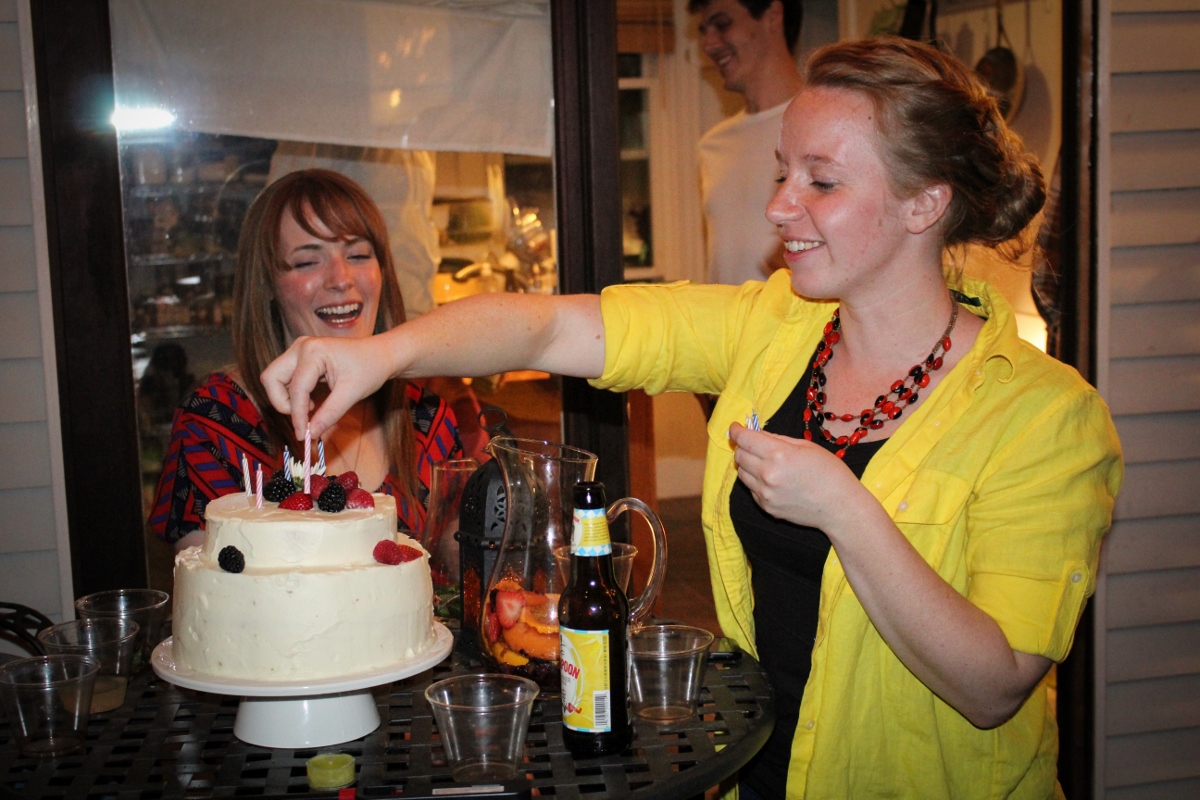
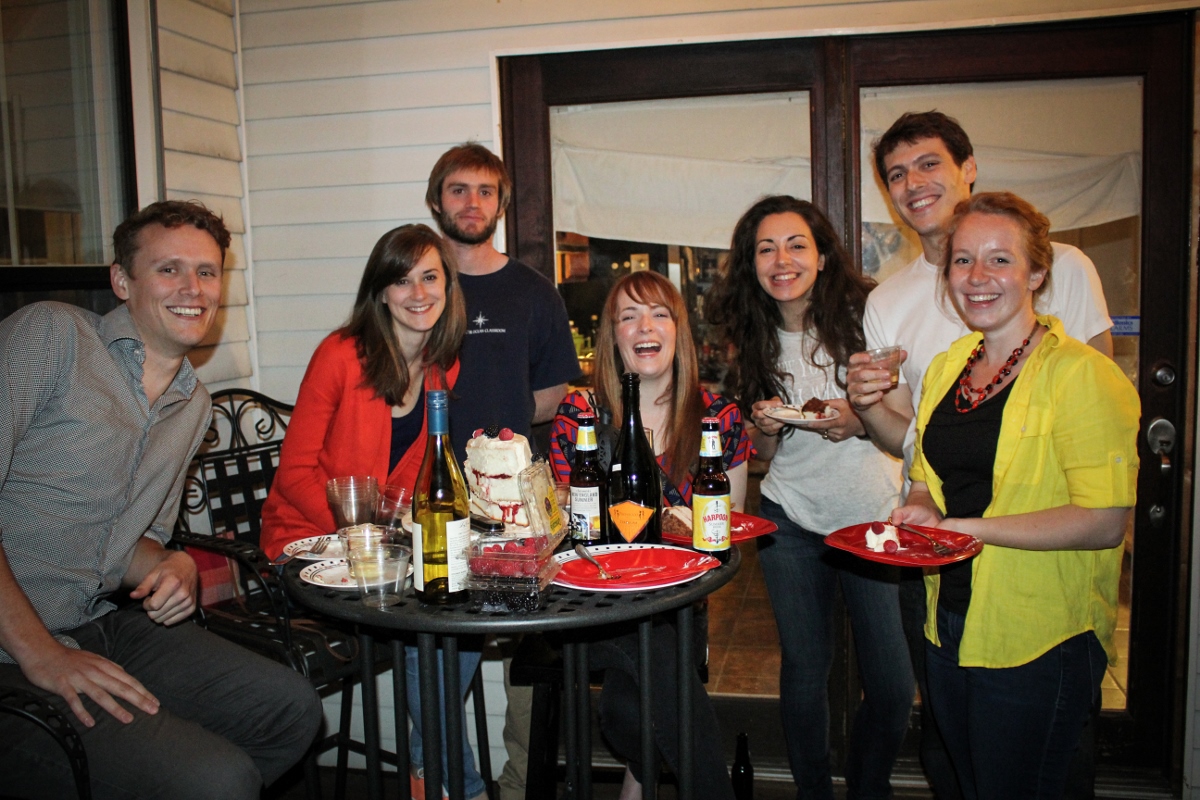
Although my 25th birthday was two and a half weeks ago, I’ve only just finished celebrating it, as per usual. This weekend we hosted a joint celebration at our house – the culmination of my birthday festivities and the kick-off of Trevor’s (one week from today!). It was a casual thing – grilled pizzas made-to-order and eaten on the porch, hot arancini dipped in tomato sauce to tide us over between pizzas, pitchers of mojitos, blackberry sangria, and a wealth of good beer. We managed to rally a crew to go out dancing afterwards, and it was a really fun night. I already like being 25; no quarter-century crises for me so far (I think I had mine when I was 21, anyway).

Angel Food Layer Cake with Whipped Cream Cheese Frosting {Katie at the Kitchen Door}

Angel Food Layer Cake with Whipped Cream Cheese Frosting {Katie at the Kitchen Door}

A Quarter-Century Celebration

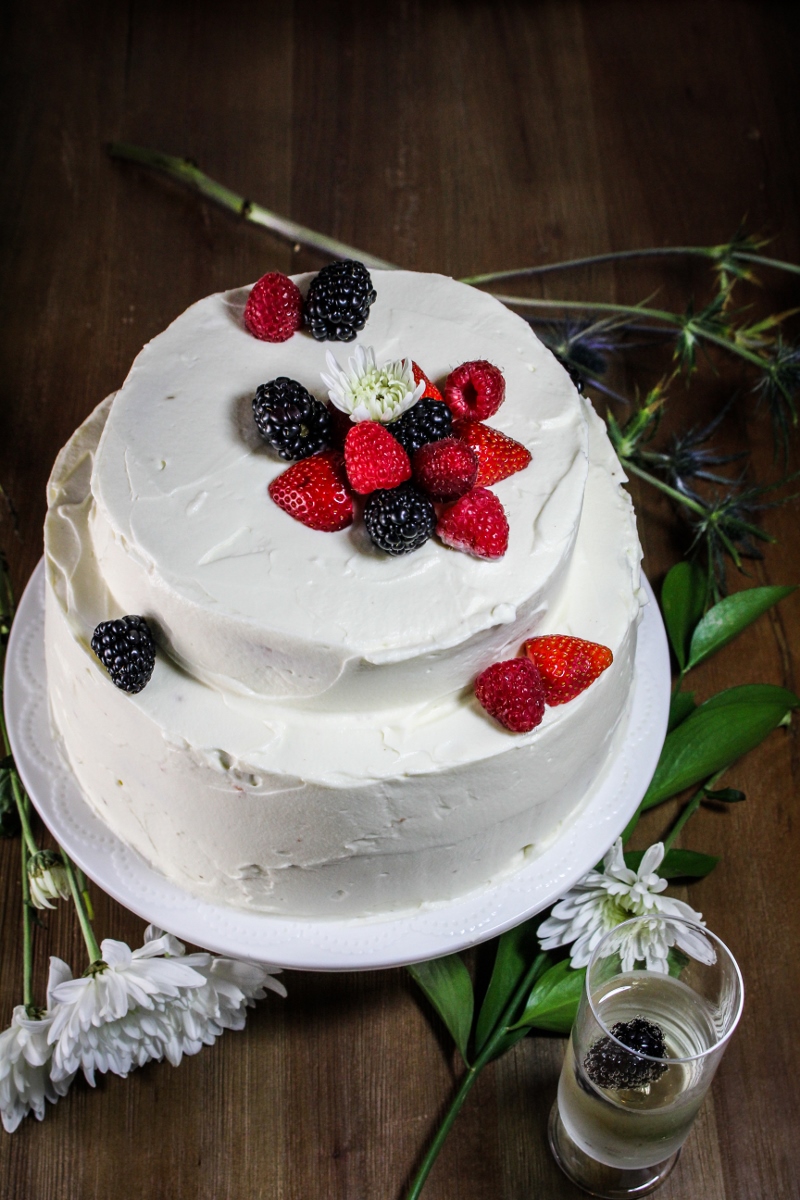
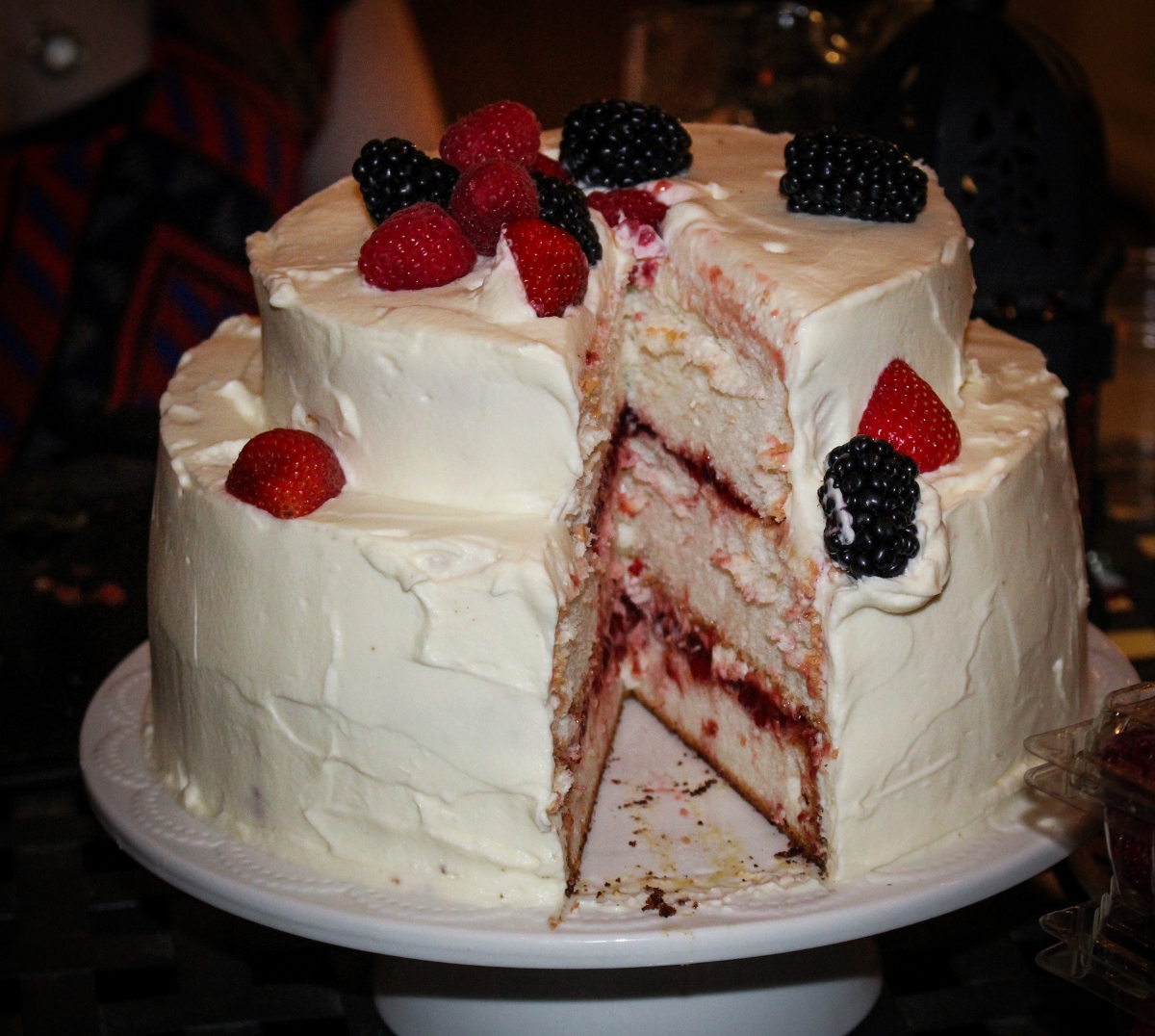
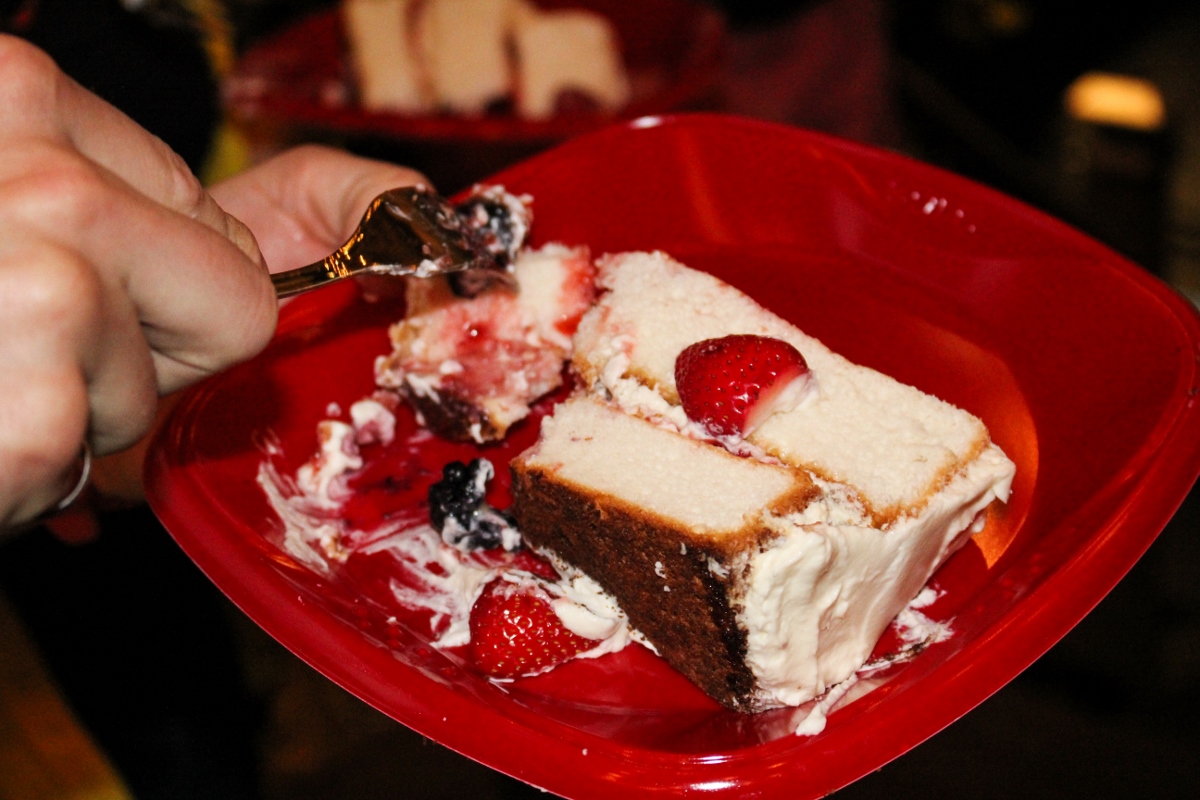
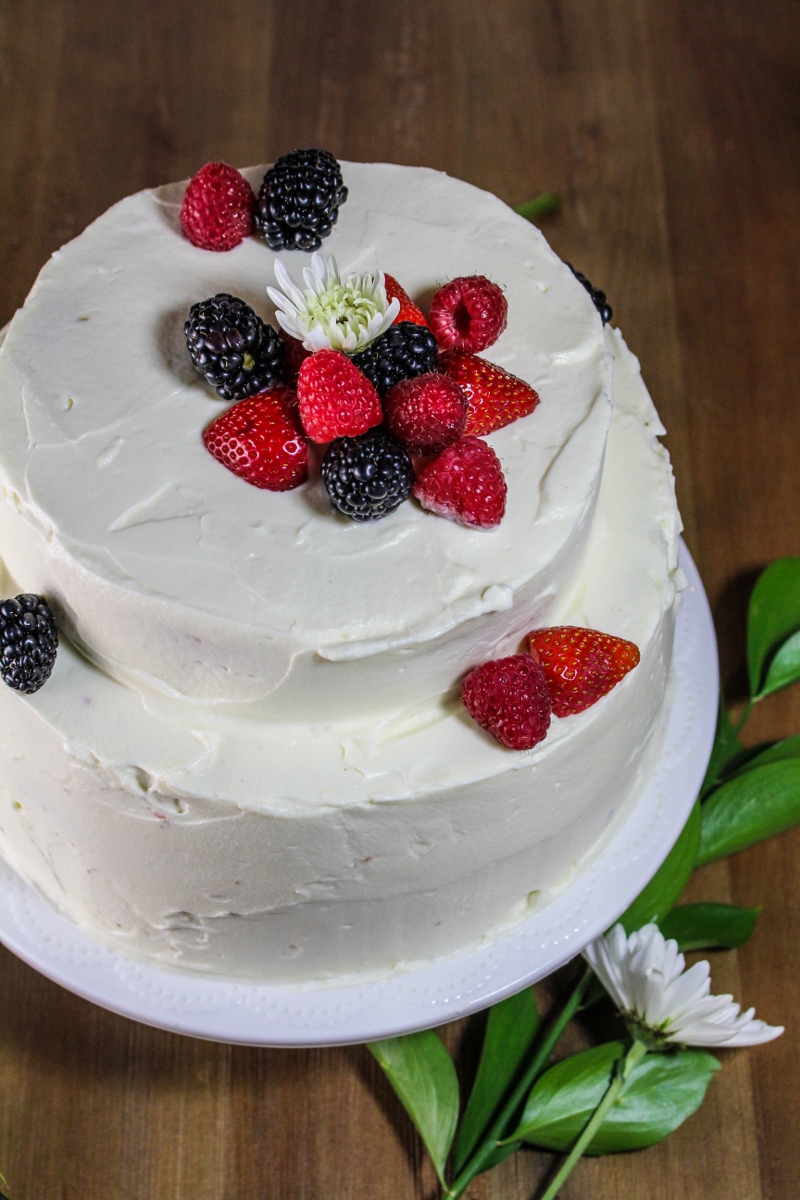
Everything was delicious, but the culinary highlight of the evening was undoubtedly this gorgeous cake that Trevor made – three layers of homemade angel food cake, spread with strawberry jam, an airy whipped cream cheese frosting, and mounds of fresh berries (best when swiped through the frosting on the top of the cake). It was stunning to look at and dreamy to eat, sweet and light and perfect. And it only took 20 egg whites to make. Now I just have to come up with something that tops it for next week.

Past Birthday Posts:
2013: Triple Lemon-Cake with Lemon-Mascarpone-Cream Cheese Frosting
2013: Sparkling Strawberry Sangria
2012: Mom’s Birthday Waffles with Strawberry Sauce

Angel Food Layer Cake with Whipped Cream Cheese Frosting {Katie at the Kitchen Door}

Angel-Food Layer Cake with Whipped Cream Cheese Frosting

Recipe based on The Fundamental Techniques of Classic Pastry Arts. Serves 12.

For the angel food cake:

  • 290 grams cake flour
  • 200 grams confectioners’ sugar
  • 400 grams granulated sugar
  • 2 tsp cream of tartar
  • 800 grams large egg whites (roughly a score of eggs [editorial note: that means 20])
  • Pinch of salt
  • 1 tsp vanilla extract

For the frosting:

  • 8 oz box cream cheese
  • 2 ½ cups of heavy cream
  • ¼ tsp cream of tartar
  • ½ tsp vanilla extract
  • 1/3 c. sugar

For the assembly:

  • ¾ cup jam of choice (I used strawberry)
  • 1 pint strawberries
  • ½ pint blackberries
  • ½ pint raspberries

Instructions for cake:

  1. Sift together cake flour and confectioners’ sugar. In a separate smaller bowl, mix together salt and cream of tartar.
  2. Preheat oven to 325°F.
  3. Separate egg whites (really make sure you don’t get any yolk in there), and add salt to them in the bowl of a stand mixer.  Whip using a stand mixer (or an immersion blender with a whisk attachment.) Beat on low until foaming, gradually raising the speed of the beaters while adding the granulated sugar in batches. Beat until stiff, foamy peaks are achieved.
  4. Add vanilla and gently fold in. Fold in the flour and sugar mixture in in several additions, being careful not to mix too vigorously, as the batter will deflate.
  5. Pour batter into two 9-inch springform cake pans and two 6-inch springform cake pans and bake for about 35 minutes, or until the top is light golden brown and firm to the touch. Do not grease the pans – the pans need to be ungreased so that the cake can climb up the sides and get that nice airy texture.
  6. Invert the cake pans on a wire rack. Run a knife around the edge when the cakes are cool and carefully unmold. Run a knife between the bottom plate and the cake before attempting to remove the bottom plate.

Instructions for frosting:

  1. Mix cream of tartar, sugar and vanilla into cream cheese. Gradually add heavy cream and whip until it is the consistency of dense whipped cream. Chill until

To assemble:

  1. Place the first large cake on a plate, and spread jam on the top of the cake. Spread frosting on top of the jam. Put each additional layer on with jam and frosting on top, leaving the last layer jamless.
  2. Frost the rest of the cake, and artfully arrange berries on top. And add a flower. Put additional berries on slices. Can’t have too many berries.


1 May 3, 2014 Recipe

Monthly Fitness Goals: May // Warm Arugula Salad with Maple-Mustard Dressing

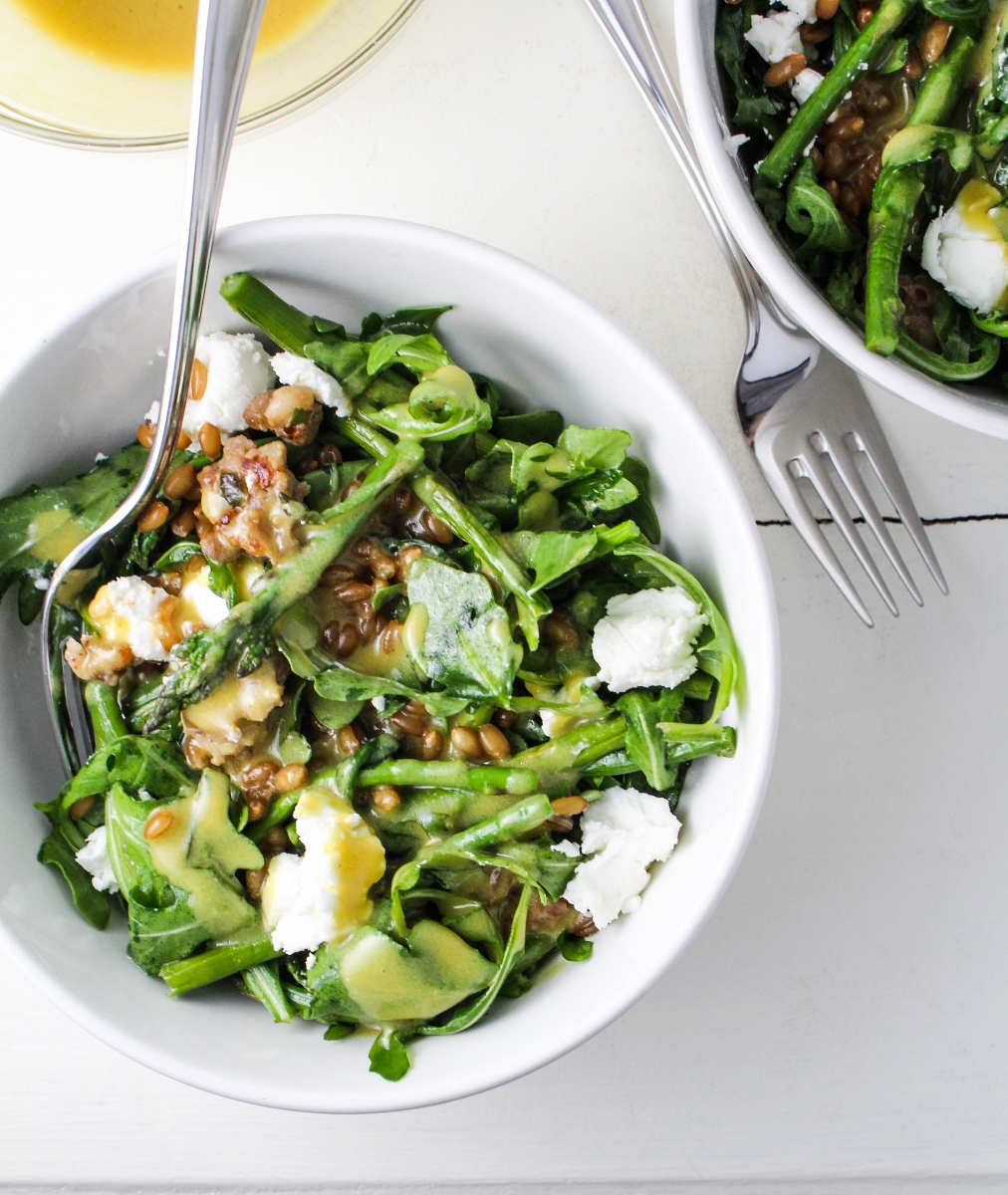
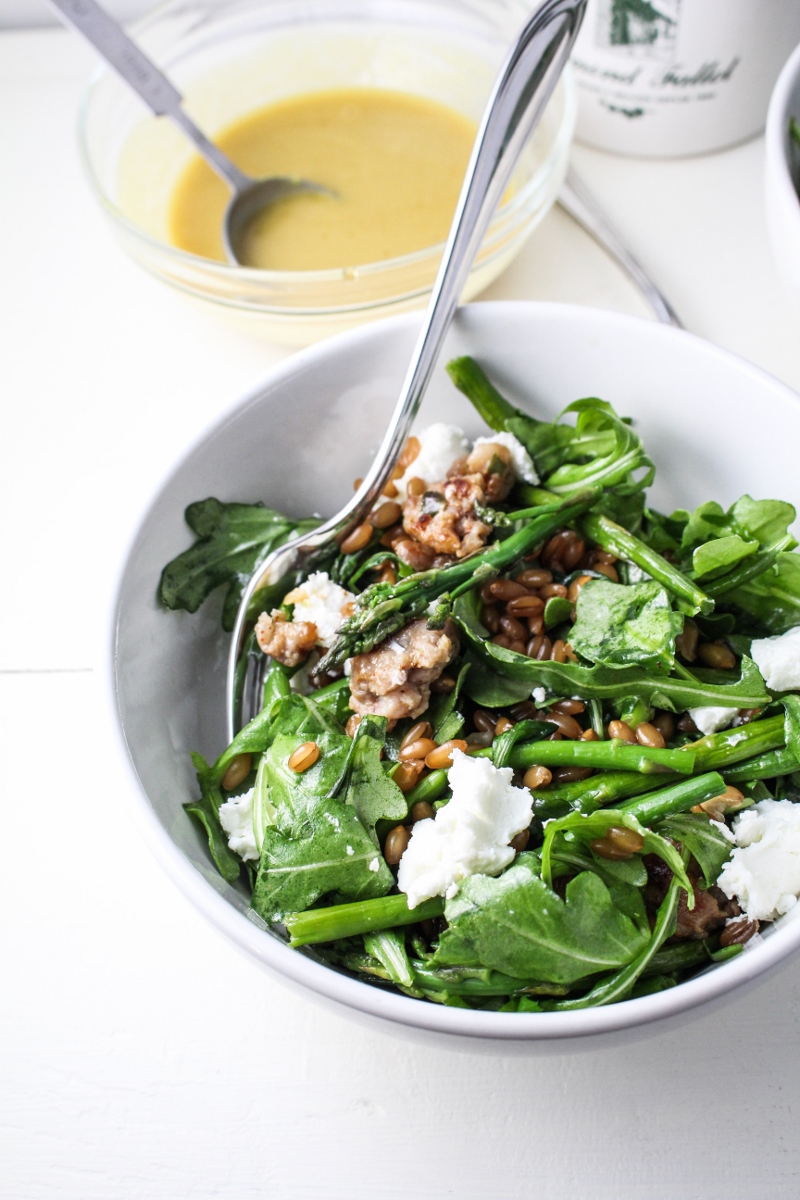
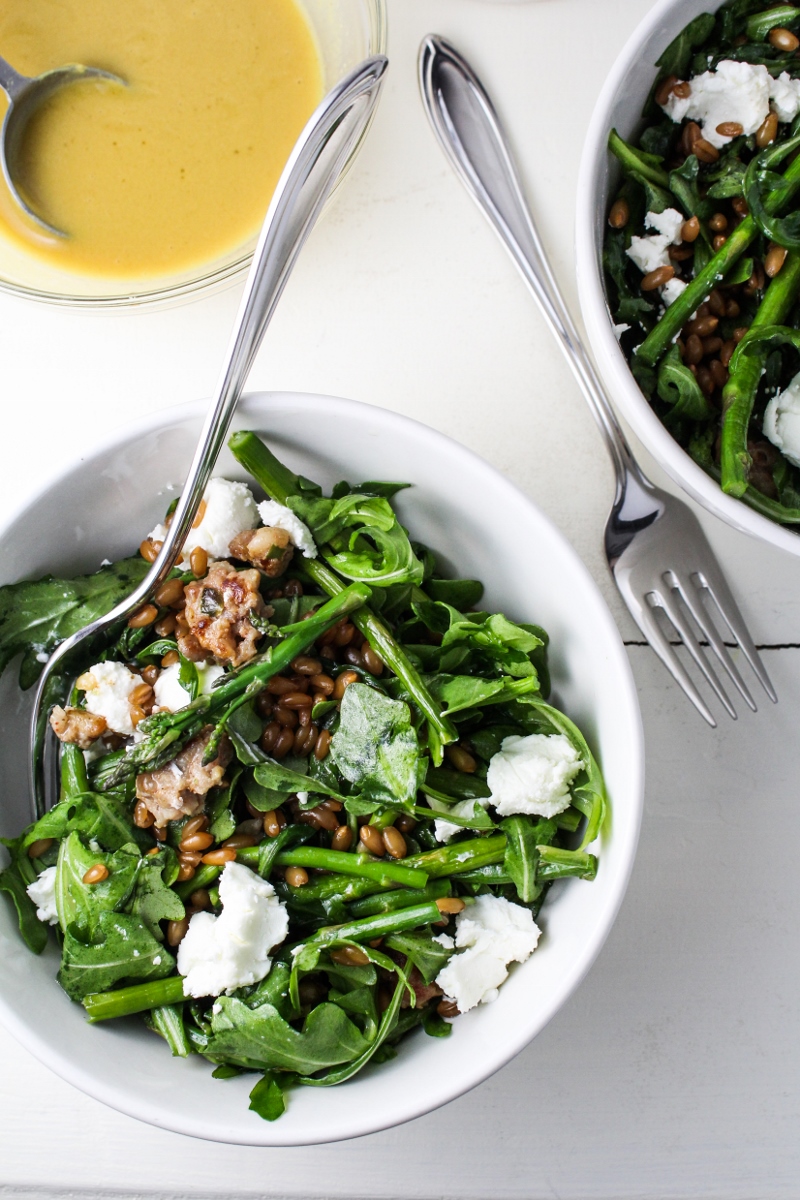
Warm Arugula Salad with Maple-Mustard Dressing {Katie at the Kitchen Door}

April’s goal was my least successful so far. It turns out that cumulative goals are much easier for me than daily goals, where you have no room to recover from a bad day and make up for it later. 8,000 steps a day seemed like an easy target, but weekends in particular – my sore spot to begin with – proved much more challenging than I expected. Some of the 11 days that I came in under 8,000 I’m excusing myself for: there were a few days where we spent all day outside in the garden, and although walking up and down a hill with watering cans and shoveling compost for hours may only count as 5,000 steps, it’s certainly more active (and exhausting), then taking a walk through the park. Other days I think my tracker app was a little glitchy – like when it thought I slept at the liquor store and drove for the entire 15 minute walk to the train. But really, I don’t want to make too many excuses. I just didn’t quite succeed, and I need to recognize that.

But failing doesn’t mean that it wasn’t a good goal – on the contrary, it means it was a hard goal and therefore a great goal. There’s no point in setting your sights too low. So although I have a new official goal for May, I’m not taking the 8,000 steps off my list, either. I know I won’t get it every day, but having it in the back of my mind makes me so much more conscious of how active I’m being, and even on the days that I fell short, I made an effort to get out at lunchtime, or walk through the park on my way home. So I want to keep doing that, and I’m considering ordering a real tracker to help with the technological frustration piece. Although, the idea should be the movement, not the number. We’ll see.

Warm Arugula Salad with Maple-Mustard Dressing {Katie at the Kitchen Door}

Moving forward… it’s May! How on earth did that happen so fast? I think my problem is that I spent so much of January, February, and March yearning for the next season, and then you get here and realize that the year is almost half gone. I’ve been doing a good job keeping up with my running, getting faster and feeling better, and I’ve been toying with the idea of making this summer another racing season (it’s been over a year since my last race). What I haven’t been doing so well with is my cross-training: I’ve only been to ballet twice in the last six weeks and I’ve completely abandoned my Nike Training Club strength workouts. And once you stop doing those, it’s really hard to start from scratch again. So that’s my goal for May, to work that stuff back into my routine, without letting the running slip either. Specifically, I want to do 180 minutes of NTC workouts this month: ideally, I’ll be building in 15 minute sessions to the end of my runs, but in case that isn’t working out for me, I can also do more intense 45 minute sessions once a week. I know the first few sessions are going to be killer, but it will be so satisfying to feel toned again.

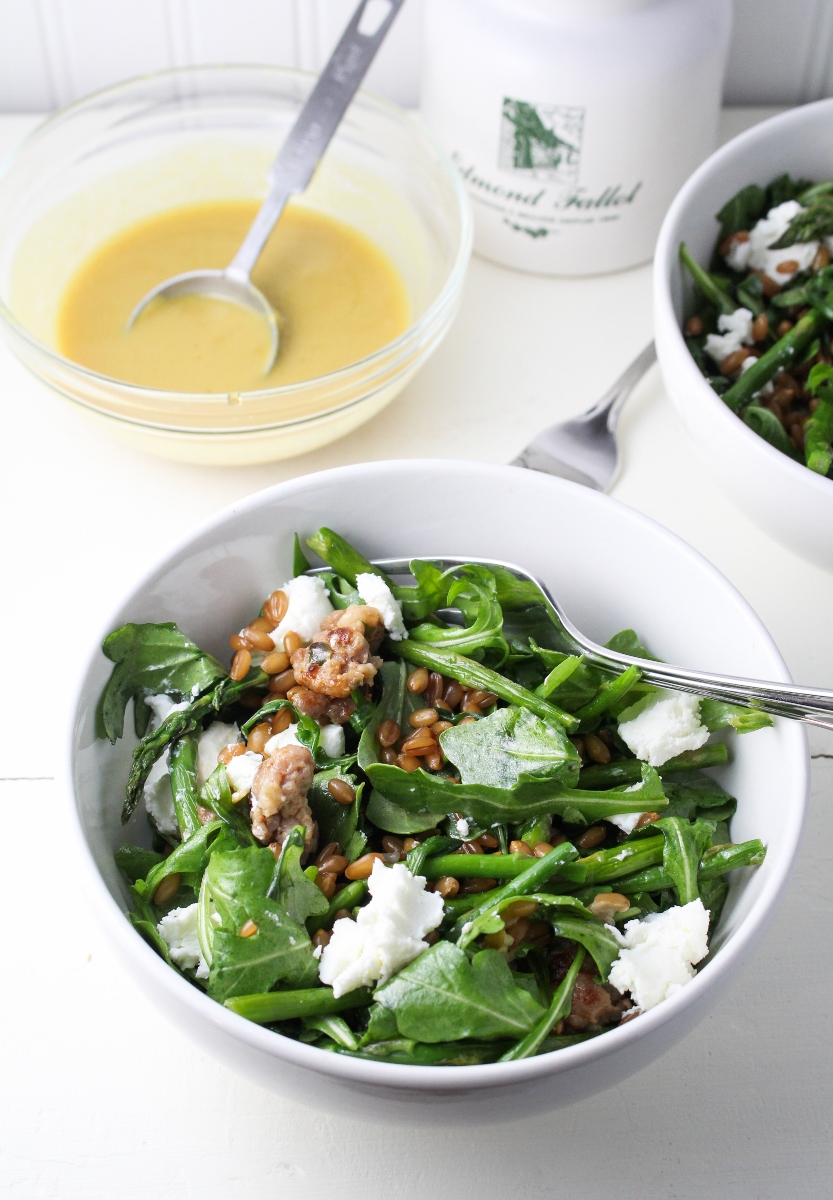
As for this month’s healthy recipe, Trevor and I are arguing about what to call it because I wanted to call it a “bounty bowl,” which he insists is vomit-inducing (his suggestion: “It’s A Fucking Salad, Get Over It.” So crass, that boy.) As you can see, we’ve compromised with Warm Arugula Salad (boring). But it doesn’t matter what you call it – what matters is that the maple-mustard dressing is so addictive, I would eat anything that you put underneath it. That said, I highly recommend this particular combination of ingredients: spicy arugula, warm crumbled Italian sausage, wheat berries, goat cheese, and roasted asparagus. It’s got spring freshness and zip from the arugula and asparagus, but with the warm sausage and wheat berries it’s hearty enough for chilly nights.

Past Fitness Challenges

January: 10 Visits to the YMCA; Recipe: Gluten-Free Olive-and-Feta Corn Muffins
February: One vegan meal every day; Recipe: Pakistani Chickpea Pulao with Sweet-Hot Date-Onion Chutney
March: Run 40  miles in 20 days; Recipe: Chocolate-Dipped Almond Butter Cookie Bites
April: Walk 8,000 steps a day; Recipe: Herb-Flecked Spring Couscous

Like what you just read? Subscribe to Katie at the Kitchen Door on Feedly or Bloglovin’, or follow along on Facebook, Twitter, Pinterest, and Instagram. Thanks for reading!

Warm Arugula Salad with Maple-Mustard Dressing {Katie at the Kitchen Door}

Maple-Mustard Bounty Bowl

Serves 2.

  • 2/3 c. wheat berries
  • 2 c. chicken broth
  • 1/2 bunch thin asparagus
  • 2 TBS olive oil, divided
  • sea salt
  • 1/3 lb. hot Italian sausage
  • 4 c. fresh baby arugula leaves
  • 2 oz. soft goat cheese
  • 2 TBS mustard
  • 1 TBS white wine vinegar
  • 1 TBS maple syrup
  1. Add the wheat berries and the chicken broth to a medium saucepan and bring to a boil over medium heat. Reduce heat and cover pan, and simmer for 40-50 minutes, until wheat berries are tender. Drain and set aside.
  2. Preheat the oven to 400°F. Remove the stem ends from the asparagus and discard. Chop the asparagus into 2-inch lengths, then toss with 1 TBS olive oil and sea salt. Place on a baking sheet and roast until bright green and tender, about 10 minutes. Remove from oven and set aside.
  3. Heat a small frying pan over medium heat and squeeze the sausage into the pan in small pieces. Break up further with the back of a spoon, and cook, stirring frequently, until cooked through and browned all over, about 5-7  minutes. Remove from heat and set aside.
  4. Assemble the salad. Toss the arugula with the wheat berries, roasted asparagus, and warm cooked sausage. Divide between two bowls, and dot each bowl with 1 oz. of goat cheese. In a small bowl, whisk together the mustard, white wine vinegar, maple syrup, and remaining 1 TBS of olive oil until smooth. Drizzle the dressing over the salads and serve.

8 April 30, 2014 Asian and Indian

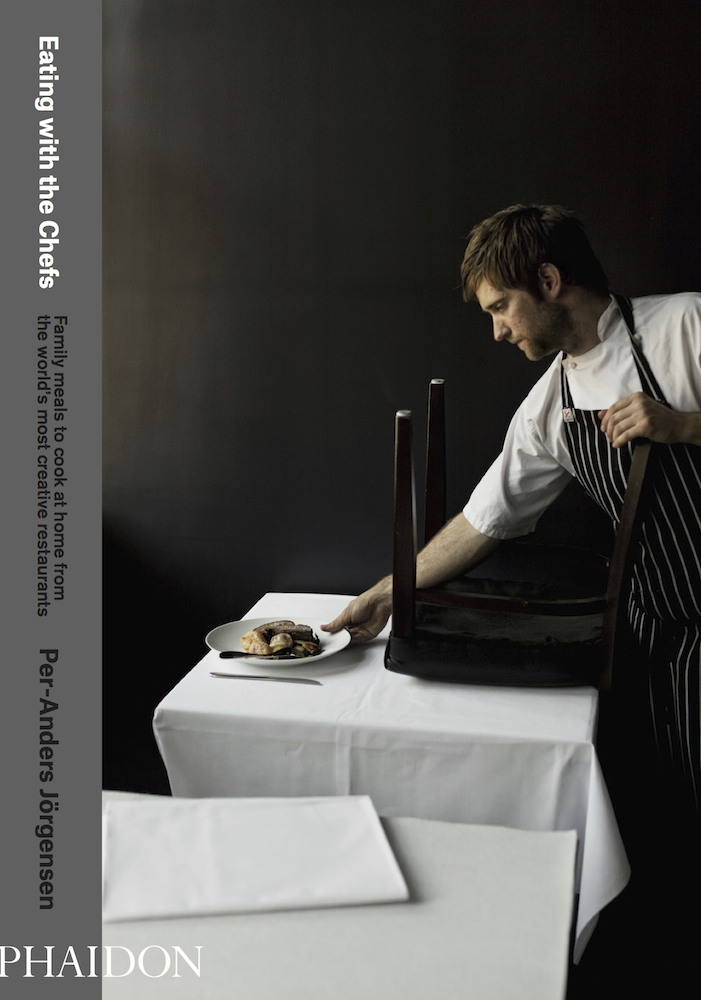
Book Club: Eating with the Chefs // Indian Butter Chicken

Eating with the Chefs

The Book: The newest cookbook on my shelf is Eating with the Chefs, a photography-driven book that documents the family meals served at the world’s greatest restaurants. The goal of the book: to take you behind the scenes, into the kitchens and after-hours, to experience the “family life” of the people who make these restaurants run, and the “honest, simple food” they make for each other outside of the dining room. From the pillars of America’s modern dining scene (The French Laundry, Chez Panisse, Blue Hill at Stone Barns), to the international innovators that have been making global headlines for the past few years (Noma, Attica, Mugaritz), you will get a little taste of the experience and flavors of each restaurant, without needing to hop on a plane and fly to Denmark/Australia/Spain (as nice as that would be if you could). Like all of Phaidon’s books, Eating with the Chefs is gorgeously designed, an art book as much as a cookbook, if not more. The pages are thick and matte, the text sparse, and the stories are told primarily through the gorgeous and subtle photographs of Per-Anders Jorgensen, the book’s creator. The restaurant stories and recipes are found interspersed between the pictures in text “inserts,” further emphasizing the focus on the photography. It’s a book you’ll want to leave out on the coffee table. As for the recipes themselves, between the seemingly universal unwritten rule that family meals should be straightforward and comforting and the immense talent and creativity of the chefs cooking them, the 50 recipes included in this book fall right in the sweet spot of how I love to cook.

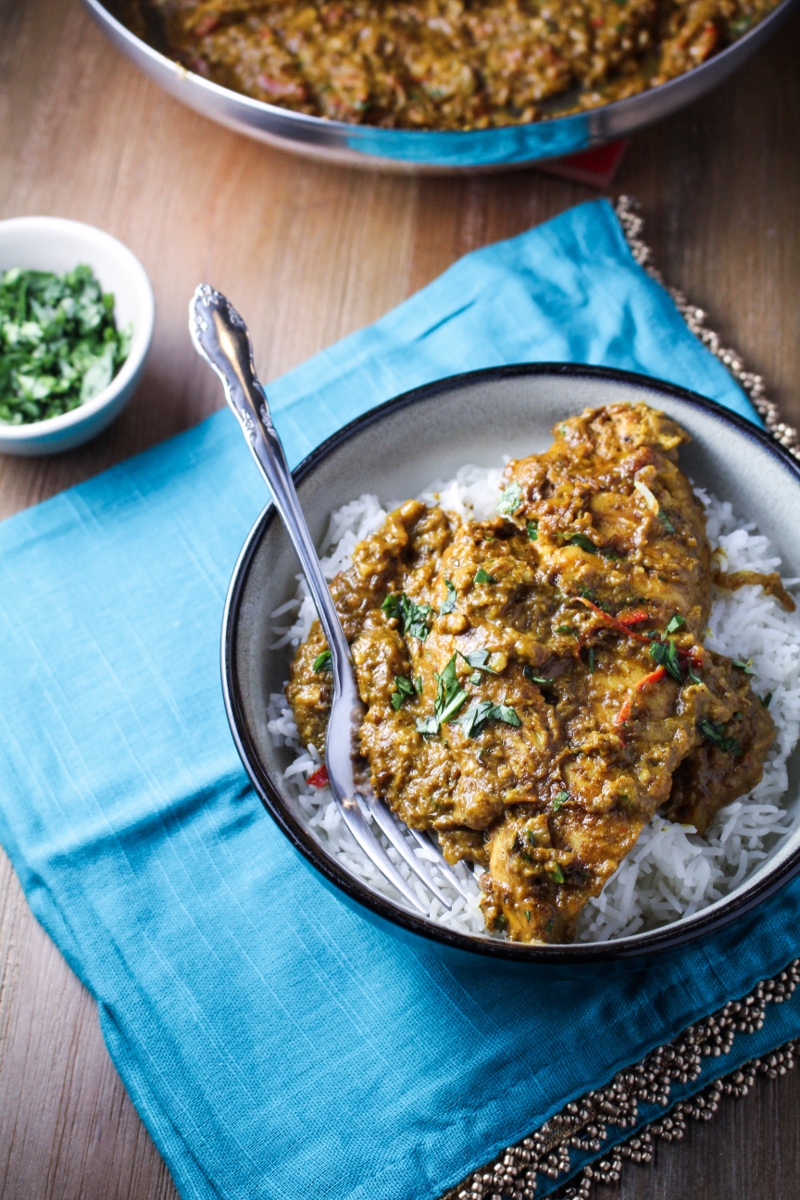
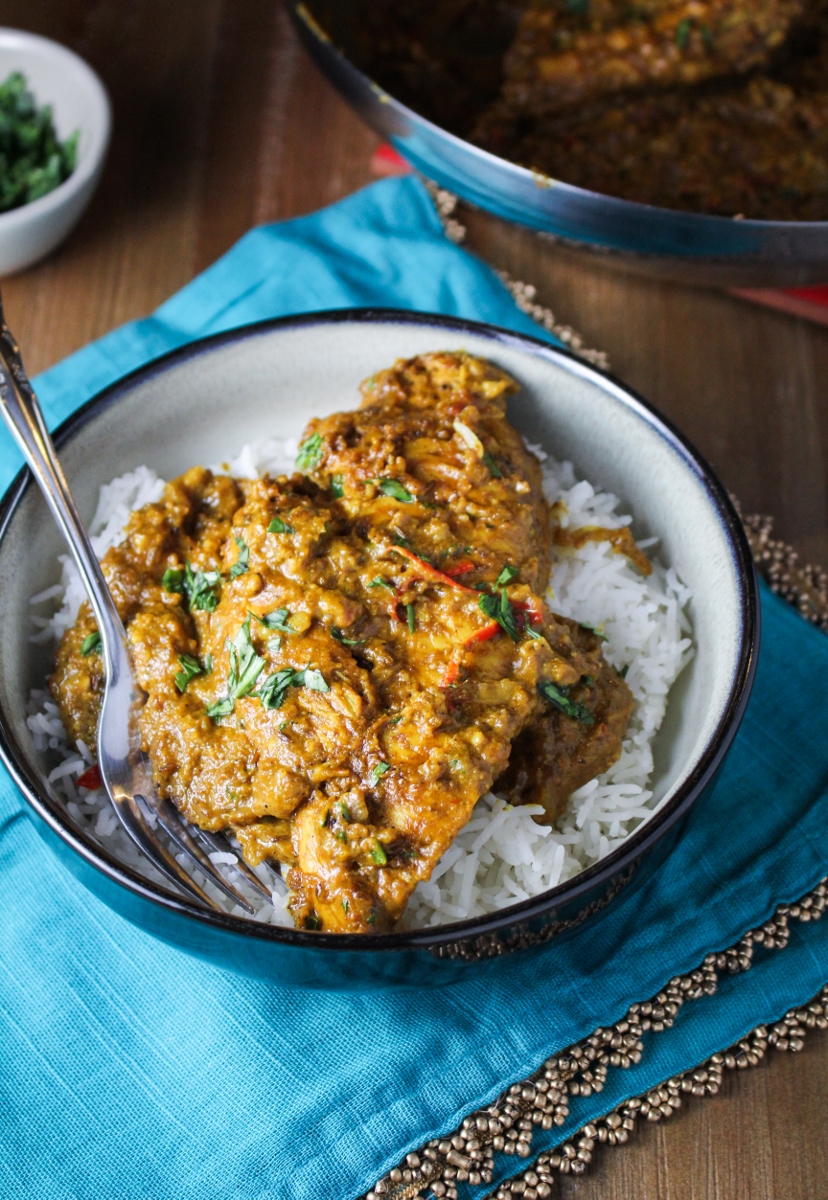
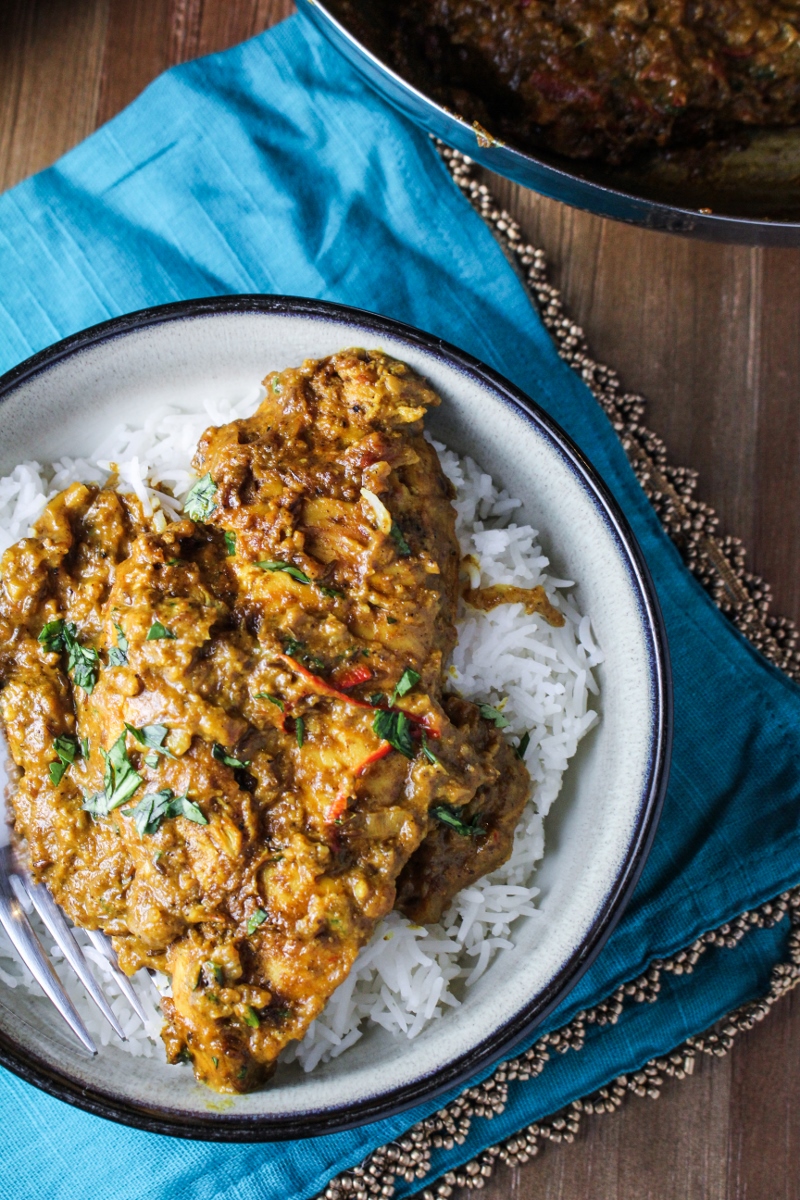
Indian Butter Chicken {Katie at the Kitchen Door}

The Food: As soon as I saw the recipe for Indian Butter Chicken in Eating with the Chefs, I knew it had to be the first recipe I tried. I’m forever on the hunt for recipes that accurately approximate my favorite Indian takeout dishes, but making good Indian food requires such a thorough study of cooking techniques and knowledge of Indian pantry ingredients that it can be a real challenge. I’ve had good success with recipes like these Pea and Potato Parathas and this Pakistani Chickpea Pulao, but none of them have been “takeout-y,” by which I mean over-the-top rich and spicy and addictive. As you might expect from one of Australia’s pre-eminent chefs, this recipe hit all the right notes of great Indian food – creamy, spicy, salty, savory – and was perfectly balanced. I’m really excited to have added this one to my repertoire, and if the other recipes in the book are as dead-on as this one was, I’m going to have a lot more dinners in my rotation.

Recipe Shortlist: Basque-Style Garlic Soup; Emmer Wheat Foccaccia; Quark Pillows with Corn and Grilled Peaches; Holiday Cannelloni; Squab Torte; Roast Chicken with Apple and Onion Confit and Pommes Mousseline; Lentil Stew with Pork Ribs; Quay’s Green Chicken Curry; Chocolate Ripple Cake

Like what you just read? Subscribe to Katie at the Kitchen Door on Feedly or Bloglovin’, or follow along on Facebook, Twitter, Pinterest, and Instagram. Thanks for reading!

Disclaimer: I received a review copy of Eating with the Chefs from Phaidon, but I was not otherwise compensated and all thought and opinions are my own.

Indian Butter Chicken {Katie at the Kitchen Door}

Indian Butter Chicken

Recipe from Eating with the Chefs. Serves 2.

  • 1/2 c. plain Greek yogurt
  • 2 tsp lemon juice
  • 1 1/2 tsp ground turmeric
  • 1 1/2 tsp garam masala
  • 1 1/2 tsp ground cumin
  • 1 lb. 2 oz. skinless chicken breasts or thighs
  • 3 TBS butter
  • 1 tsp vegetable oil
  • 1 small onion, peeled and finely chopped
  • 3 cloves garlic, peeled and finely chopped
  • 1 TBS grated fresh ginger
  • 1 TBS whole cumin seeds
  • 1 small cinnamon stick
  • 1/3 c. canned diced tomatoes
  • 1 fresh red chile, seeded and sliced
  • 1/4 c. chicken stock
  • 1/2 c. heavy cream
  • 1/2 tsp tomato paste
  • 1 TBS ground almonds
  • 3 sprigs fresh cilantro, to garnish
  • salt to taste
  1. Combine the yogurt, lemon juice, turmeric, salt (to taste, approximately 1/2 tsp), garam masala, and ground cumin in a small bowl and stir to combine. Pour over the chicken, making sure chicken is fully coated, cover, and refrigerate for 24 hours.
  2. When ready to cook, melt the butter and oil in a large pan over medium heat. Add the onions and cook for about 10 minutes or until translucent, stirring occasionally. Stir in the garlic, ginger, and cumin seeds, and cook for 3 minutes, until spices are fragrant and onions are lightly browned.
  3. Add the cinnamon stick, diced tomatoes, and sliced chile to the pan and season with salt, then cook over medium heat for 10 minutes. Add the chicken and it’s marinade to the pan and stir to combine, then cook for another 5 minutes.
  4. Add the chicken broth to the pan and bring to a boil. Reduce heat to medium-low and simmer for 30 minutes. Stir in the cream and tomato paste, and cook for another 10-15 minutes, or until the chicken is fully cooked through. Stir in the ground almonds and cook for a final 5 minutes. Serve with rice, garnished with fresh cilantro.
  • « Go to Previous Page
  • Go to page 1
  • Interim pages omitted …
  • Go to page 19
  • Go to page 20
  • Go to page 21
  • Go to page 22
  • Go to page 23
  • Interim pages omitted …
  • Go to page 57
  • Go to Next Page »

Primary Sidebar

Subscribe!

Get creative recipes and menu ideas delivered straight to your inbox.

Most Popular

A House // Sweet Potato and Coconut Milk Soup with Brown Rice and Lentils

Monthly Fitness Goals: July // Homemade Spinach Wraps with Chopped Greek Salad

A New Job // Classic Seven-Layer Bars

Butternut Squash Carbonara with Fried Sage and Caramelized Onions

Happy Birthday, Trevor! // Peanut Butter Fudge

Cookbook Review and Giveaway: Home Made Winter

Drizly

Please note!

Full disclosure: if you purchase anything at Amazon using the above links or any other links to Amazon on this site, I will receive a small commission. Just so you know!

Copyright© 2026 · Cookd Pro Theme by Shay Bocks

This site uses cookies: Find out more.