• Skip to primary navigation
  • Skip to content
  • Skip to primary sidebar
  • Home
  • Recipes
  • Features
    • Cookbook Reviews
    • Ingredient of the Week
    • Sunday Dinner
    • Fitness Goals
  • Travel
  • About
    • Privacy Policy
    • Cookie Policy
  • Work With Me

Katie at the Kitchen Door

Globally-inspired, seasonal recipes

Blog Page

Ingredient of the Week: Rhubarb // Around the Blogs

1 May 29, 2013 Food

Ingredient of the Week: Rhubarb // Around the Blogs

Obviously one week isn’t enough time to fully explore all the possibilities for using any particular ingredient, no matter how much I commit to cooking that week. But there are lots of other talented bloggers out there cooking with and blogging about rhubarb at this time of year, and they have plenty of delicious-sounding rhubarb recipes to share. Below are six of the most creative, not to mention most beautifully photographed, recipes using this pretty pink vegetable that have come across my radar recently. (As a side note, all of these blogs are beautiful and well-written spaces that you should check out whether or not you’re in the mood for rhubarb.)
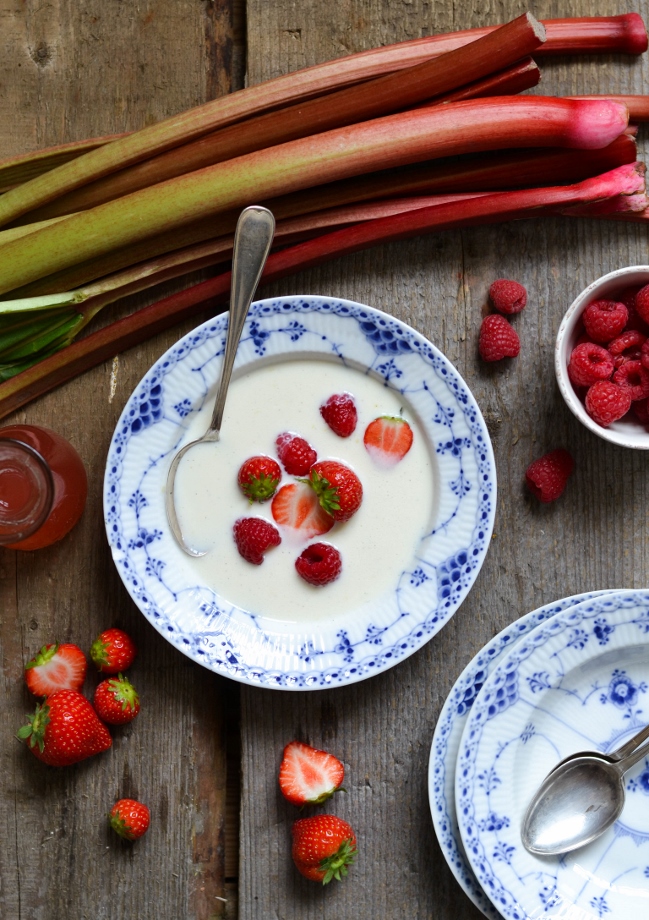
Ingredient of the Week: Rhubarb // Rhubarb Round-Up - Rhubarb and Buttermilk Bowl from A Tasty Love Story

Danish Buttermilk & Rhubarb Summer Bowl from A Tasty Love Story

I was fascinated to read Josephine’s post about koldskål, a Scandinavian summer treat she describes as falling somewhere in between ice cream and yogurt. Once she continued to explain that it’s made from pretty much all of my favorite dairy products – buttermilk, yogurt, heavy cream, and egg yolks – and flavored with sugar, lemon, and vanilla, then served with “sweet butter biscuits,” I was drooling. Her twist on this summertime specialty includes a drizzle of fresh rhubarb syrup and a bowl full of fresh red berries.
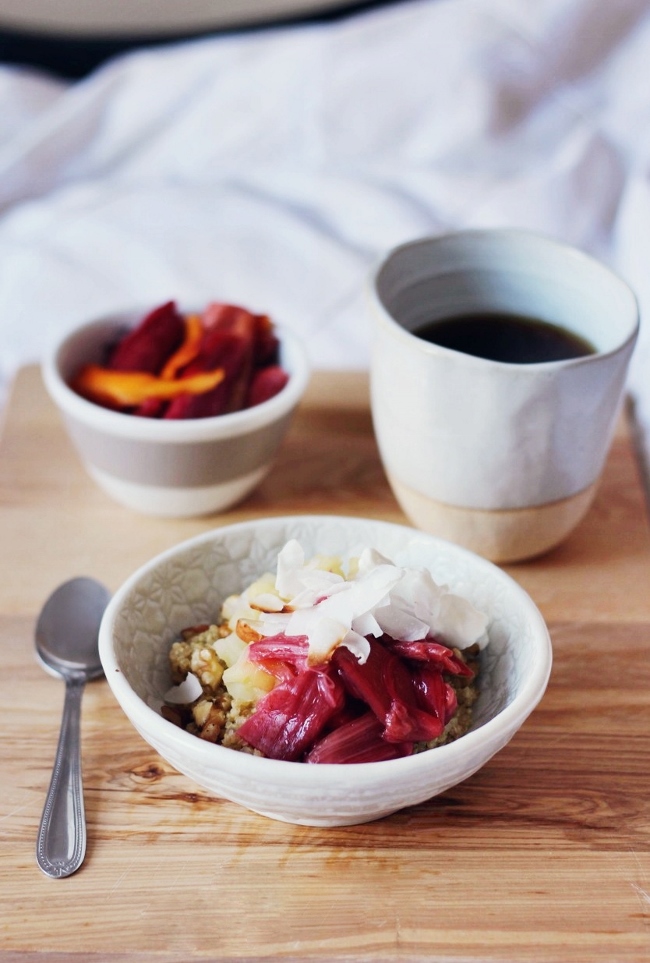
Ingredient of the Week: Rhubarb // Rhubarb Round-Up - Quinoa Porridge with Almond Milk and Rhubarb from Finger Fork Knife

Quinoa Porridge with Almond Milk, Rhubarb, Apple, Nuts, and Coconut from Finger Fork Knife

I am definitely a fan of breakfast porridges. Although simple cream of wheat served with butter and sugar will probably always be my favorite, I occasionally dabble in healthier recipes, and Kate’s Quinoa and Rhubarb breakfast bowl just moved to the top of my list. Not only is this recipe packed with healthy and filling ingredients – quinoa, nut milk, fresh fruit, nuts, coconut, and yogurt – it also sounds amazingly flavorful. The rhubarb is cooked down with orange and ginger, the quinoa is cooked in milk and cinnamon, and it’s all topped off with plenty of crunchies and a drizzle of honey. I’ve added all the ingredients to my shopping list for next week – just saying.
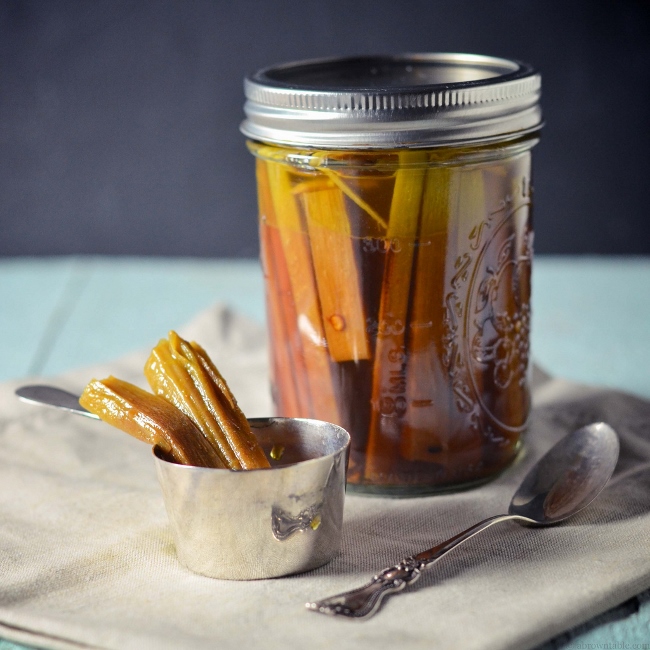
Ingredient of the Week: Rhubarb // Rhubar Round-Up - Indian-Style Sweet and Sour Rhubarb Pickles from A Brown Table

Indian-Style Sweet-and-Sour Pickled Rhubarb from A Brown Table

Most rhubarb recipes published these days are some form of dessert or sweet drink, but rhubarb can definitely hold its own in savory preparations as well. Nik’s sweet-and-sour rhubarb pickles are a perfect example – they take a week to age, but when you open up your jar you’ll have a sweet-tart condiment filled with the flavors of ginger, chili, cumin, turmeric, and fenugreek. Nik suggests using the pickles on sandwiches with roast lamb or beef, or in a simple bowl of rice and fish, and now that I’m thinking about it I can’t seem to get the idea of an Indian-spiced lamb burger with rhubarb pickles out of my head…
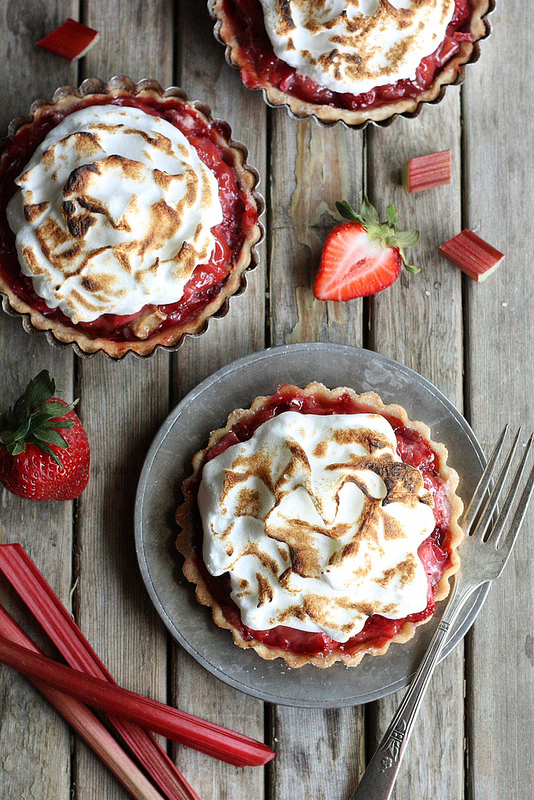
Ingredient of the Week: Rhubarb // Rhubarb Round-Up - Strawberry Rhubarb Meringue Tartlets from Completely Delicious

Strawberry Rhubarb Meringue Tartlets from Completely Delicious

A classic strawberry rhubarb pie is really one of the best uses of rhubarb there is, balancing sweet and sour and buttery for a nearly perfect spring dessert. But sometimes even classics can benefit from a little updating. These miniature pies from Annalise bring just enough novelty to the table with their pretty meringue topping. Plus, they’re so cute and little that it’s hard for me not to envision picking one up in my hands and taking a big bite (what a fun way to eat pie!).
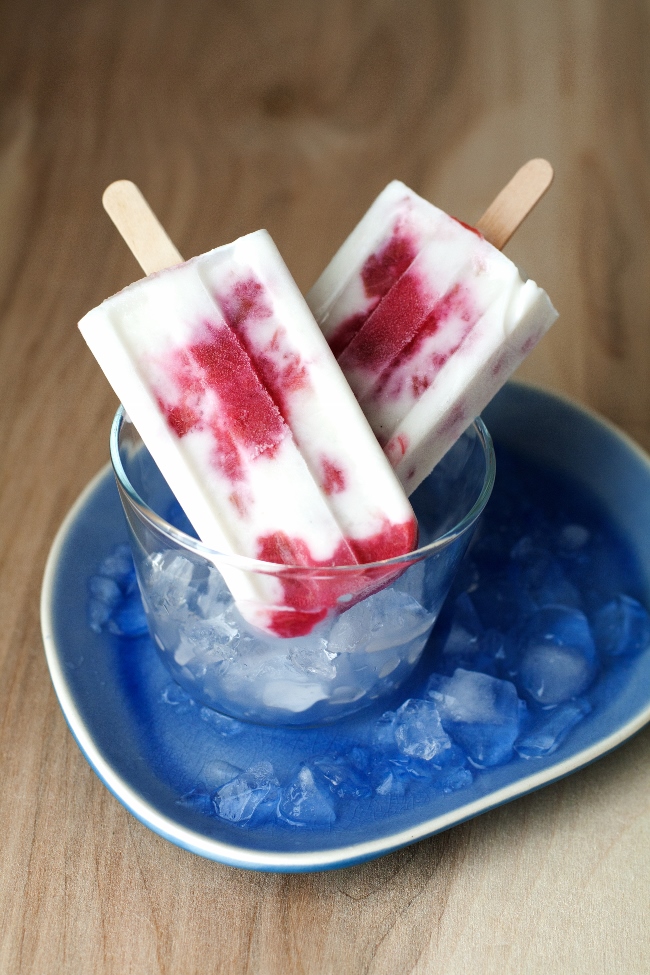
Ingredient of the Week: Rhubarb // Rhubarb Round-Up - Rhubarb and Coconut Swirl Pops from Hungry Girl Por Vida

Rhubarb Swirl Ice Pops from Hungry Girl por Vida

I have yet to give in to buying a popsicle mold (my kitchen is so full), but this might be the summer that does me in, especially if Cindy keeps posting delicious popsicle recipes like this one (and like these honeydew mint ones too!). Besides being pretty to look at, these make use of coconut milk for the base, which makes them that much more intriguing for me. Get me one of these and a sunny spot on a front porch and summer will be mine for the taking.
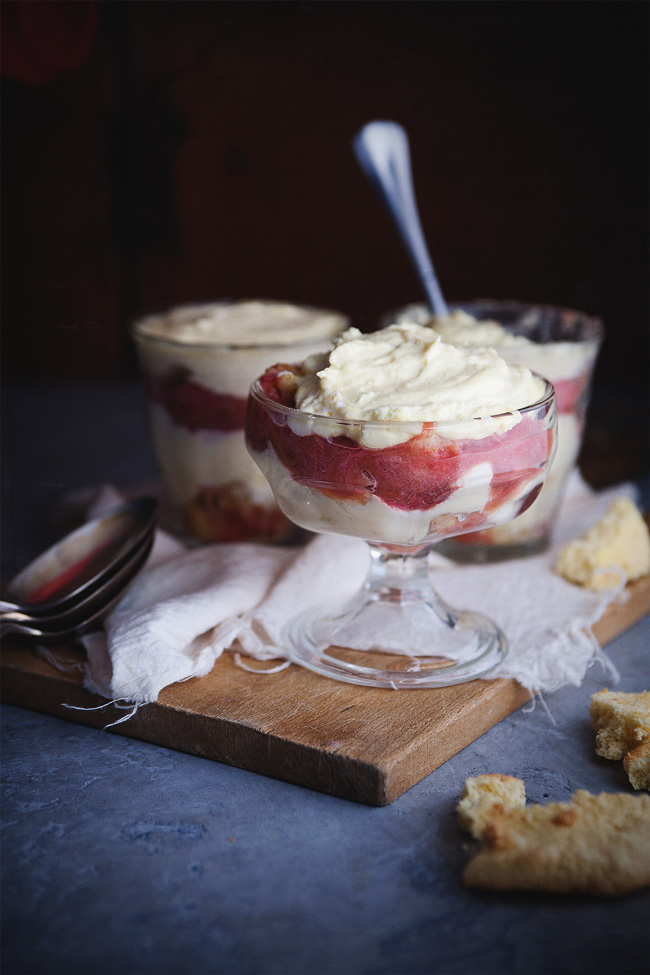
Ingredient of the Week: Rhubarb // Rhubarb Round-Up - Strawberry Rhubarb Tiramisu from The Tart Tart

Strawberry Rhubarb Tiramisu from The Tart Tart

I love this fresh (and pretty!) take on tiramisu by Linda, via her friend Luzia. I’m imagining that between the ladyfingers, mascarpone cream, and sweetened fruit it almost tastes like an elegant strawberry shortcake – but with a healthy splash of booze to make it more grown up. Bonus: Linda just posted another delicious rhubarb recipe for Strawberry Rhubarb Ginger Crumb Bars tonight… it’s also worth drooling over.

Rhubarb Week Part One: Rhubarb-Prosecco Spritzer
Rhubarb Week Part Two: Rhubarb Custard Fool
Rhubarb Week Part Four: Persian Rhubarb and Beef with Rice
Rhubarb Week Part Five: Rhubarb-Ginger Bars
Ingredient of the Week: Rhubarb // Rhubarb Custard Fool

0 May 28, 2013 Cookbook

Ingredient of the Week: Rhubarb // Rhubarb Custard Fool

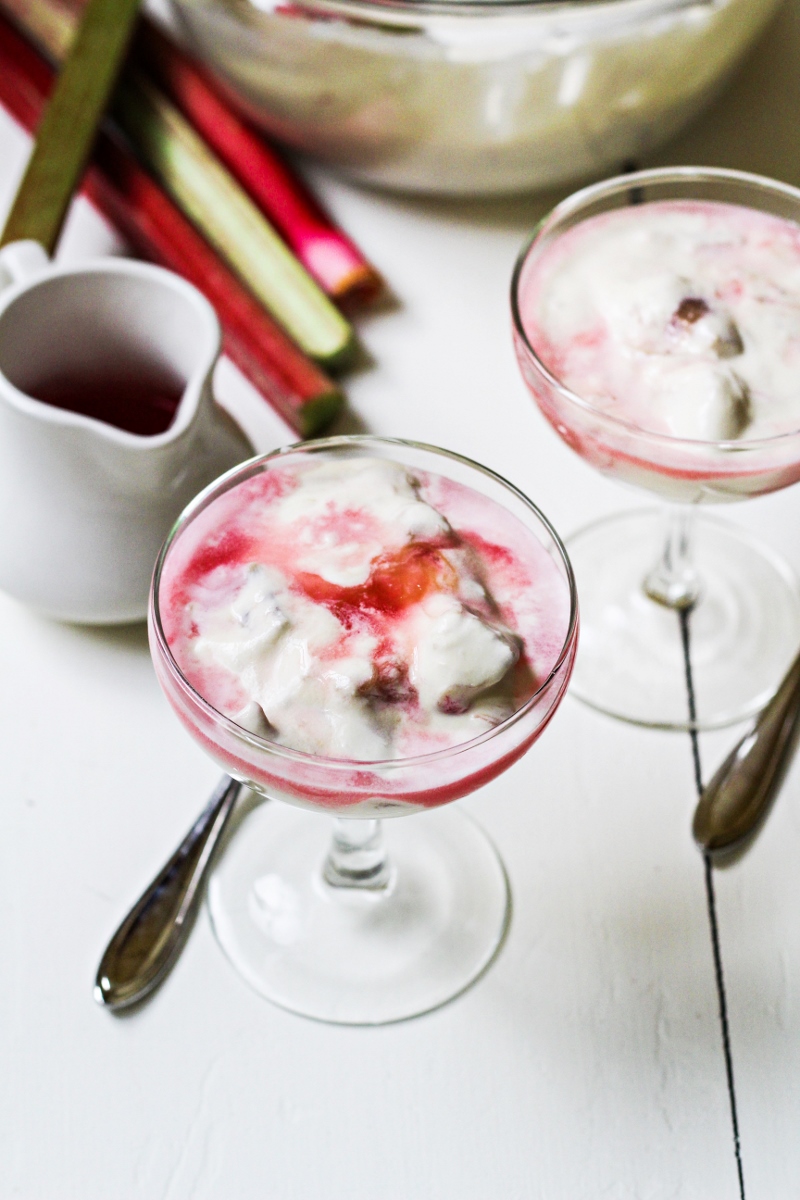
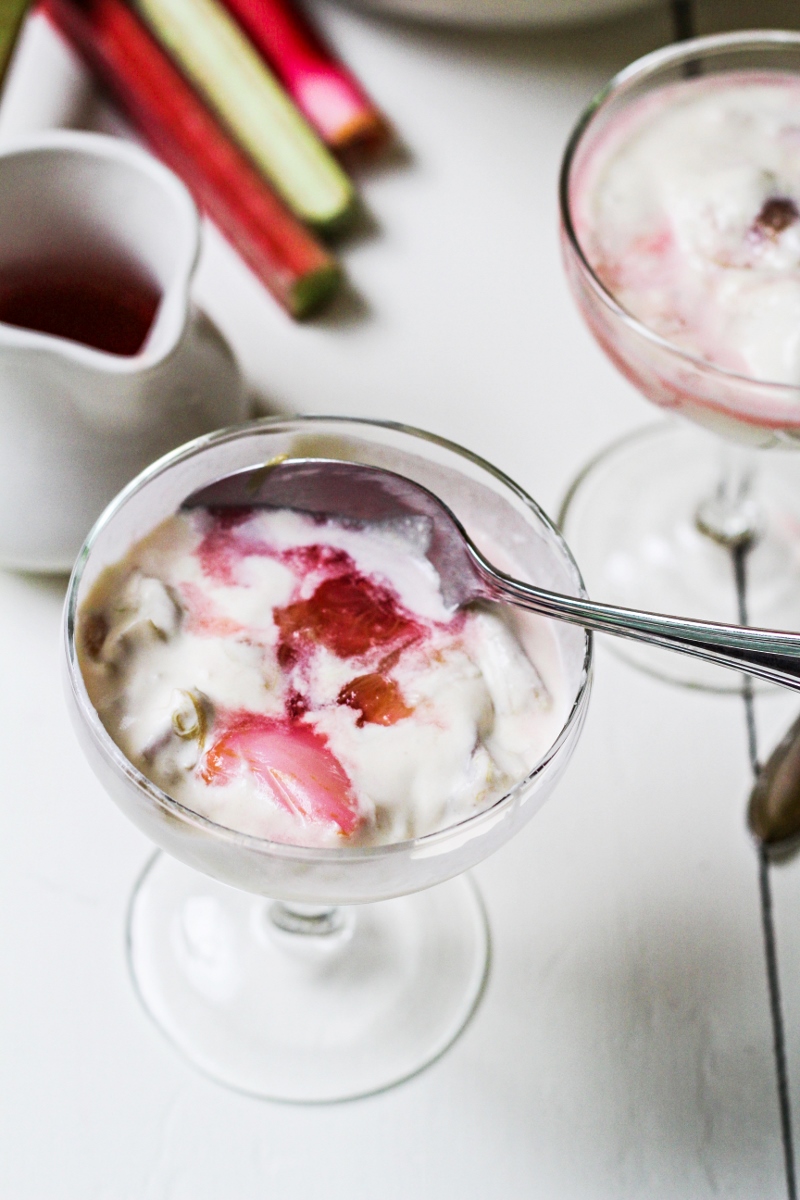
Rhubarb Custard Fool {Katie at the Kitchen Door}

Anytime I have a particular ingredient that I’m looking to use I have a few cookbooks that I immediately pull off the (overloaded) shelf for recipe inspiration. Lucid Food, The Modern Vegetarian, Vegetable Literacy, and of course, Nigel Slater’s Tender and Ripe are on that list, since they’re all books that use fresh produce as the star of their recipes. For a project like this, the Slater books in particular are a gold mine of inspiration – first of all, they’re organized by ingredient, making it pretty easy to flip through ways of using up strawberries or onions. Secondly, they’re gorgeous, with enticing photographs, whimsical writing, and homey recipes that make you want to run to the kitchen.

It shouldn’t come as a surprise, then, that Ripe was the first place I turned when putting together my list of recipes for rhubarb week. Slater has eight rhubarb recipes included in the book, and seems to favor the pairings of rhubarb and cinnamon (like the cocktail I made yesterday! And kept drinking tonight…) and rhubarb and cream. I made his rhubarb and cinnamon polenta cake a little over a year ago, so this time I decided to go for the rhubarb and cream pairing, making this rhubarb custard fool with rhubarb syrup.

A fruit fool is an English dessert made by folding cooked fruit into a light custard or whipped cream. This particular fool recipe uses both custard and whipped cream, and is very light on the sugar, using only 3 TBS for 6 servings. It makes for a very different rhubarb eating experience – rather than the tangy sweet-tart flavor I’ve come to expect from rhubarb desserts, this simple dessert really focuses your palate on the mild taste and thick texture of the cream, and the bright sourness of the softened rhubarb. It’s a very restrained and elegant dessert. That being said, you fully have my permission to double the amount of sugar used in both the custard and the fruit if you have a sweet tooth as bad as mine (or if you’re just not feeling restrained). Since this made a big batch, I froze the leftovers to see how it translates into a semifreddo – I’ll let you know how that comes out, too.

Rhubarb Week Part One: Rhubarb-Prosecco Spritzer
Rhubarb Week Part Three: Recipe Round-Up from Around the Blogs
Rhubarb Week Part Four: Persian Rhubarb and Beef with Rice
Rhubarb Week Part Five: Rhubarb-Ginger Bars
Rhubarb Custard Fool {Katie at the Kitchen Door}

Rhubarb Custard Fool

Recipe adapted slightly from Ripe. Serves 4-6.

Note: As written, this recipe is not very sweet. If you like sweeter desserts, increase the amount of sugar used in the custard to 2 TBS and use 4 TBS of sugar and 4 TBS of water in the rhubarb.

  • 2 c. heavy cream, divided
  • 2 egg yolks
  • 3 TBS sugar, divided
  • 1/2 tsp vanilla extract
  • 14 oz. fresh rhubarb, leaves removed
  • 3 TBS water
  1. Make the custard: heat 1 cup of the heavy cream in a small saucepan over medium-low heat, stirring frequently, until it has just begun to simmer. Immediately remove from the heat. In a small, heatproof bowl, vigorously whisk together the egg yolks and 1 TBS of the sugar, until yolks are pale yellow. Pour the hot cream into the egg mixture in a thin stream, whisking the eggs vigorously as you do so to temper the eggs. Pour the custard back into the saucepan and return to medium-low heat. Cook, stirring constantly, until custard is thick enough to coat the back of a spoon. Remove from heat, strain through a fine mesh sieve into a clean bowl, and stir in vanilla. Cover tightly with plastic wrap and refrigerate for at least one hour.
  2. Wash the rhubarb and slice into 1-inch lengths. Add the rhubarb, the water, and the remaining 2 TBS sugar to a medium saucepan and bring to a boil. Immediately turn down the heat and simmer the rhubarb gently until it is soft but not collapsing, about 4-6 minutes. Gently remove the rhubarb from the pan with a slotted spoon and place in a small bowl. Pour the leftover syrup into a separate small dish. Refrigerate both the fruit and the syrup until cool.
  3. About half an hour before serving, whip the remaining 1 cup heavy cream until soft folds form. Fold in the chilled custard and the fruit. Spoon into glasses and refrigerate for 20-30 minutes. Serve with a drizzle of the rhubarb syrup.
Ingredient of the Week: Rhubarb // Rhubarb-Prosecco Spritzer

1 May 27, 2013 Drink

Ingredient of the Week: Rhubarb // Rhubarb-Prosecco Spritzer

Rhubarb-Prosecco Spritzer {Katie at the Kitchen Door}

Every year from May to October, I freak out a little bit about making the most of seasonal produce.  And I don’t mean freak out in a good way – I mean I stress that I don’t get a chance to make every sweet corn recipe I bookmarked on a dreary February morning, and that cherries are only around for a few short weeks. This is probably a symptom of a larger aspect of my personality – the compulsive list-making aspect, most likely – but it seems like it should be an easy thing to resolve. So, this year, I’ll be taking a few different ingredients at their peak and dedicating an entire week to showcasing them on the blog. I’ll be making new recipes, talking about the way things grow, and sharing recipes from other bloggers. I think it will help me realize all the delicious ways that I am able to use fresh produce – and hopefully it will inspire you to make the most of the season as well.

Ingredient of the Week - Rhubarb {Katie at the Kitchen Door}

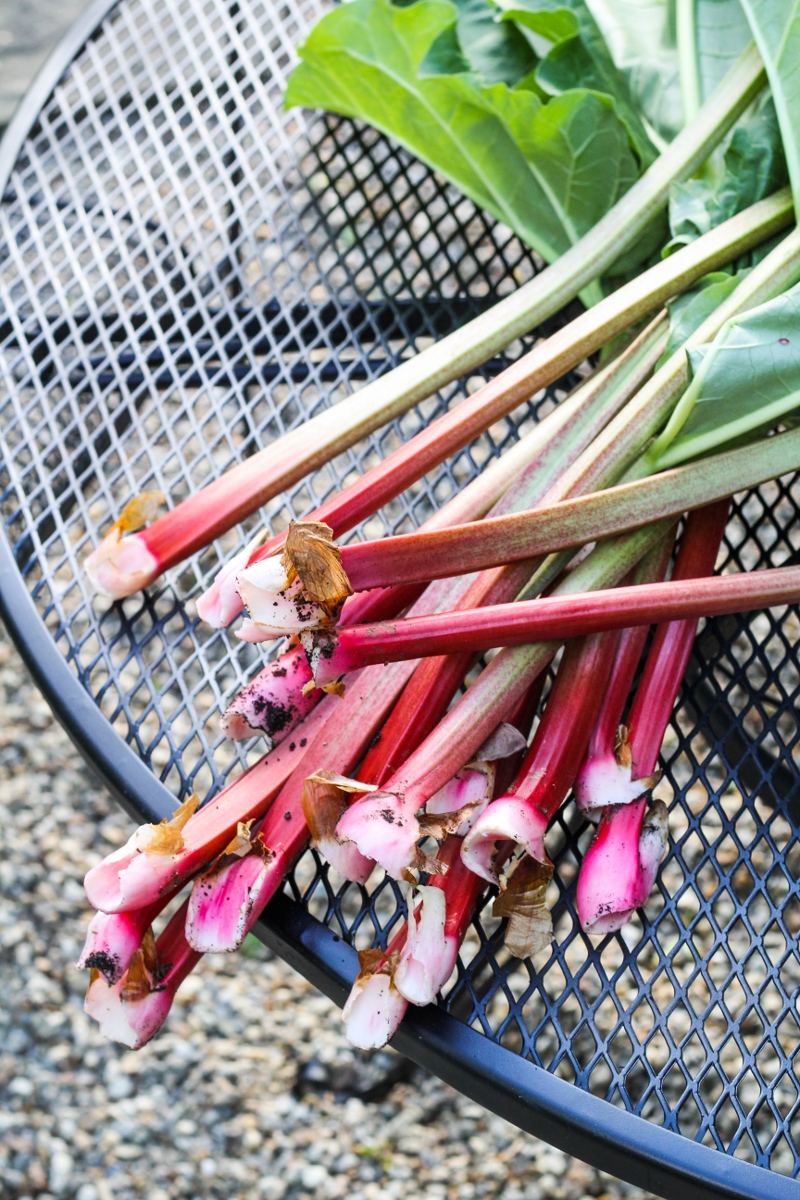
First up: rhubarb. When I think spring, my mind usually jumps right to peas and fava beans and asparagus, but honestly, peas and fava beans aren’t really ready until mid-June in our climate, and I think local asparagus might be a myth (I’m exaggerating, but asparagus is not an easy plant to grow). Rhubarb, however, pokes its little pink stalks up as early as the end of March, and by June, it’s huge and bushy and ready to be used in all sorts of drinks and cakes and jams.

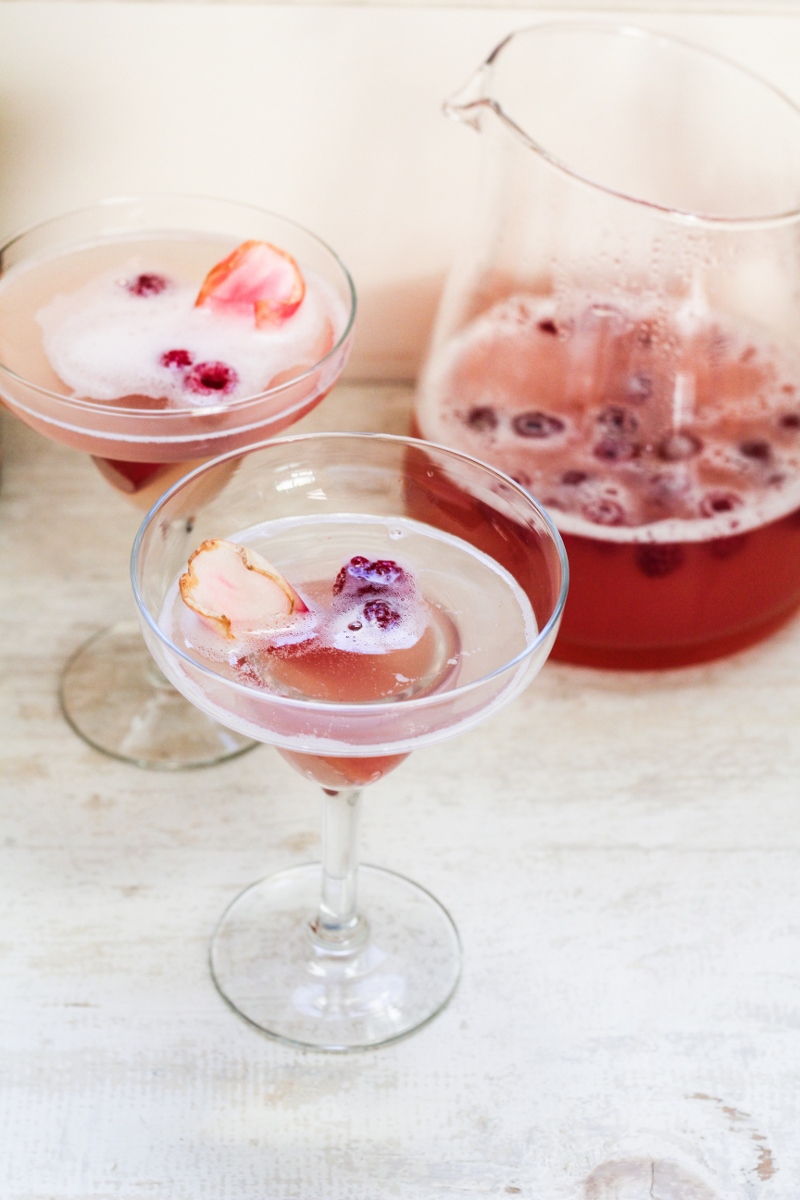
Rhubarb-Prosecco Spritzer {Katie at the Kitchen Door}

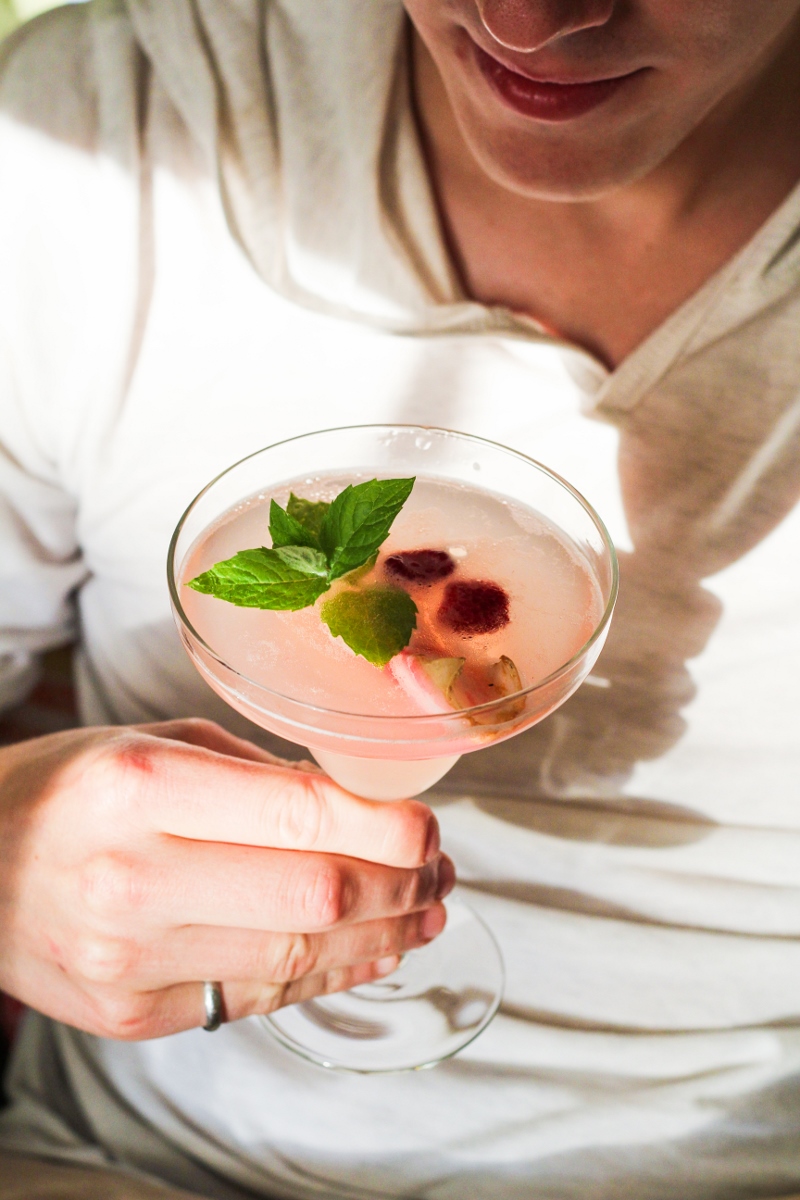
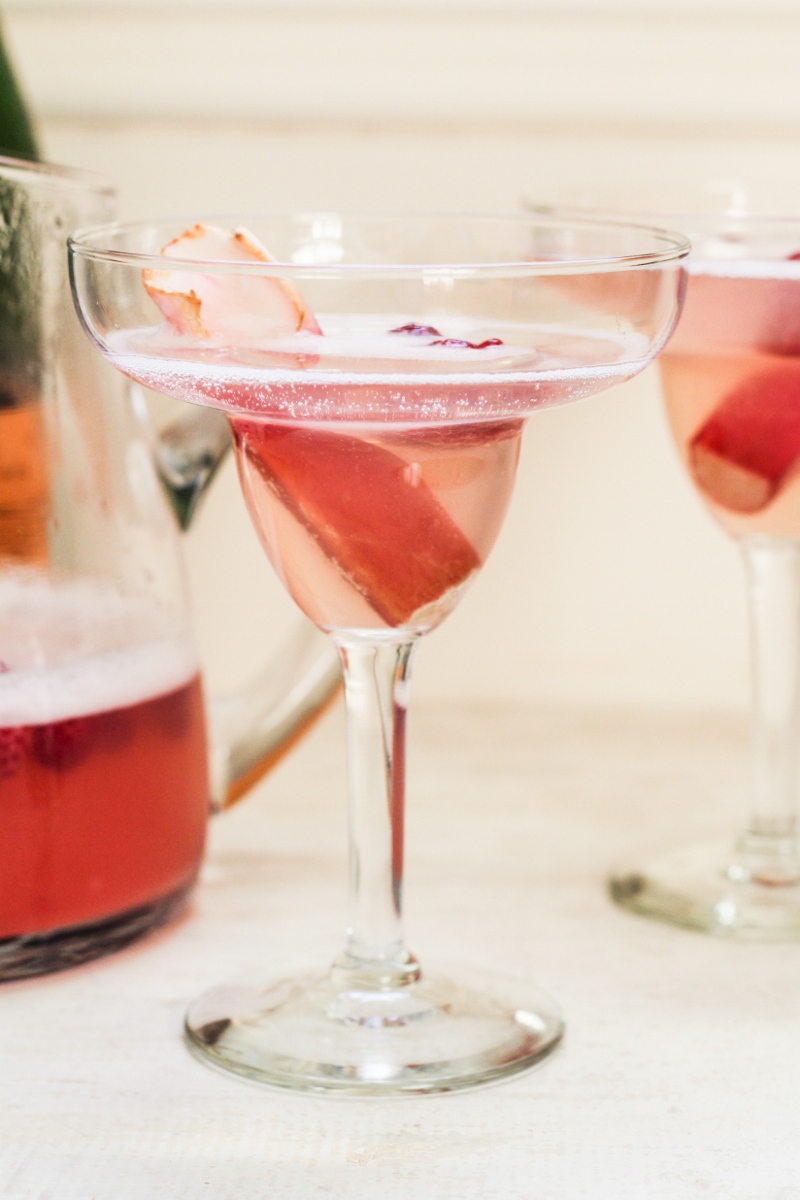
Trevor and I spent five hours this morning working in the garden – thinning plums, weeding strawberries, and digging squash hills. Our reward? Raiding the rhubarb patch, and leaving with three pounds of pretty red stalks to be used in all sorts of treats this week. Since we had a busy afternoon, the first recipe I’m sharing is a simple one, and the perfect thing for the end of a long and happy day – this Rhubarb and Prosecco Spritzer, spiked with a bit of honey, raspberries, and mint. It’s not too sweet and not too fruity, with just a hint of rhubarb’s tang and a pale pink color. It would make a gorgeous aperitif for a spring dinner party – or you could simply enjoy it on a sunny evening after a great long weekend.

Check back tomorrow for more rhubarb!

Rhubarb Week Part Two: Rhubarb Custard Fool
Rhubarb Week Part Three: Recipe Round-Up from Around the Blogs
Rhubarb Week Part Four: Persian Rhubarb and Beef with Rice
Rhubarb Week Part Five: Rhubarb-Ginger Bars
Rhubarb-Prosecco Spritzer {Katie at the Kitchen Door}

Rhubarb-Prosecco Spritzer

Adapted from Lucid Food. Serves 4-6.

  • 1/2 lb rhubarb (about 4-5 medium sized stalks), plus 1 stalk for garnish
  • 1 cinnamon stick
  • honey, to taste
  • 1 (750ml) bottle Prosecco, chilled
  • 1/2 c. fresh or frozen raspberries
  • 4-6 sprigs mint
  1. Wash the rhubarb and remove any leaves or brown spots. Slice the stalks into 2 inch lengths and place in a large saucepan with the cinnamon stick. Add water to cover by 1/2 an inch. Bring to a boil over medium-high heat, then immediately lower heat and simmer rhubarb until fruit is soft and water is pink, about 5-7 minutes. Remove from heat.
  2. Pour liquid through a fine mesh strainer or a cheesecloth into a large heatproof bowl, squeezing the fruit pulp to extract as much liquid as possible. Discard the fruit pulp and cinnamon stick. Stir honey into the warm liquid until it is sweet enough for your liking (I used about 3 TBS). Stir the honey until it is fully dissolved. Cover and chill for at least 30 minutes.
  3. Place rhubarb liquid into your serving vessel. Add chilled prosecco and raspberries to the rhubarb liquid. Pour the drink into glasses, and garnish with a small piece of rhubarb and a sprig of mint. Serve chilled.
Sunday Dinner // Coffee-Chile Strip Steaks, Grilled Endives, Strawberry-Sour Cream Ice Cream

0 May 26, 2013 Beef

Sunday Dinner // Coffee-Chile Strip Steaks, Grilled Endives, Strawberry-Sour Cream Ice Cream

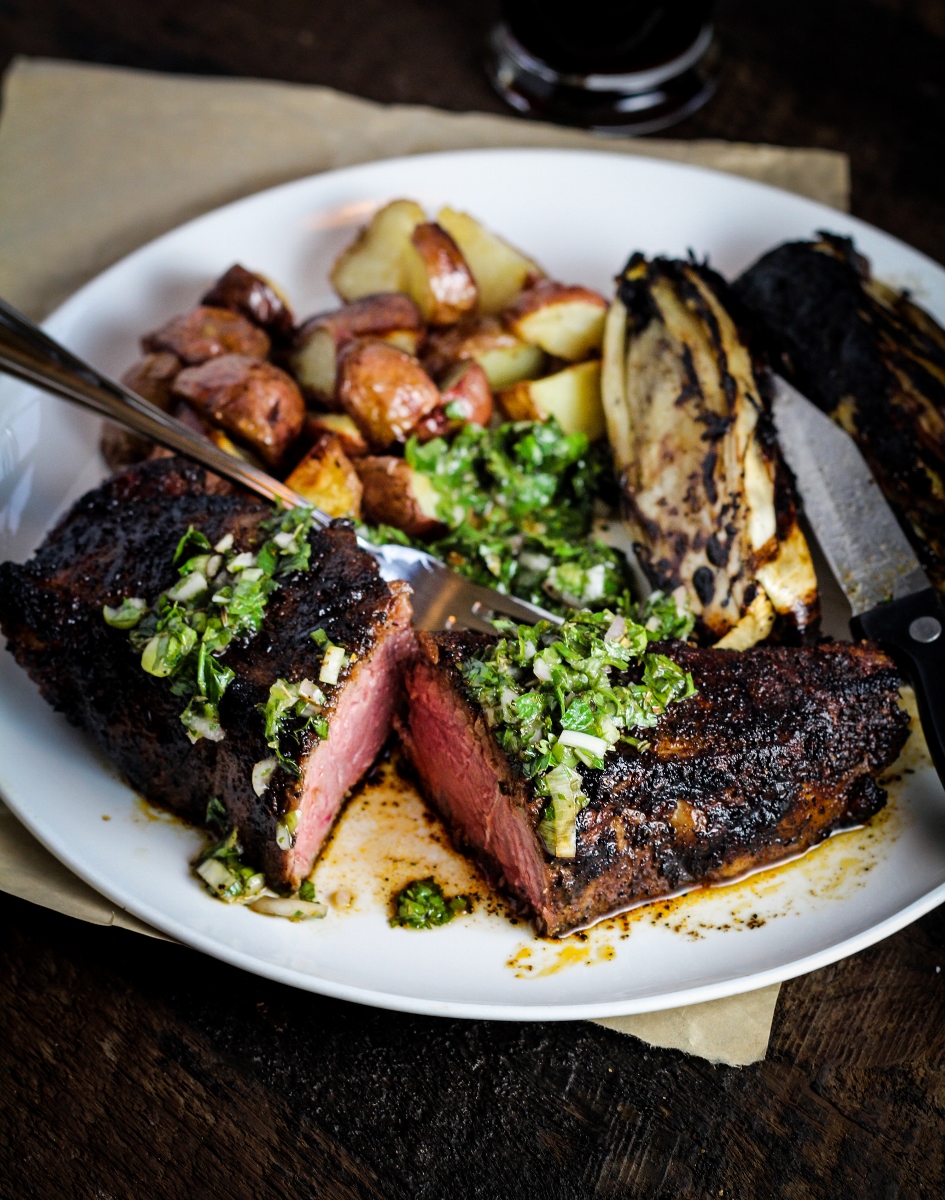
Sunday Dinner: Coffee-Chile-Rubbed Steaks, Smoky Endives, Chimichurri, Roast Potates {Katie at the Kitchen Door}

As you might imagine, I cook a lot. Like, a lot. Some weekends, I spend 4 or 5 hours each day in the kitchen, mixing batters, chopping veggies, frosting cupcakes, and styling photos. The output of my weekend cooking sprees becomes a hodgepodge of things – meals for the week, posts for the blog, and leftovers destined for the freezer. But this means that dinner is usually just that – a hodgepodge. I’ll defrost a container of soup and slice up some bread, or throw pasta on to boil to use up a batch of ratatouille, or I toss all the leftover cooked veggies and grains into a bowl, drizzle it with whatever sauce is currently in the fridge, and call it a night. And for the purpose of full disclosure, I have to admit that at least once a week, to the horror of my nurse roommate, dinner is a glass of red wine in front of the TV because even defrosting something seems like too much effort. It’s pretty rare that I actually sit down to a composed meal of the kind that I ate growing up – one with 3 or 4 different parts, a salad, a protein, a few sides, and dessert. On the one hand, I don’t really need to eat that way – I’m not trying to feed a family, and it’s usually just me eating, or Trevor will join me and we’ll cobble together our leftovers. On the other hand, it’s kind of nice to sit down to a real meal, one with parts that go together and that feels like dinner, not just eating. So I’m going to give Sunday dinners a try. Not every week. But once in a while.

Sunday Dinner: Coffee-Chile-Rubbed Steaks, Smoky Endives {Katie at the Kitchen Door}

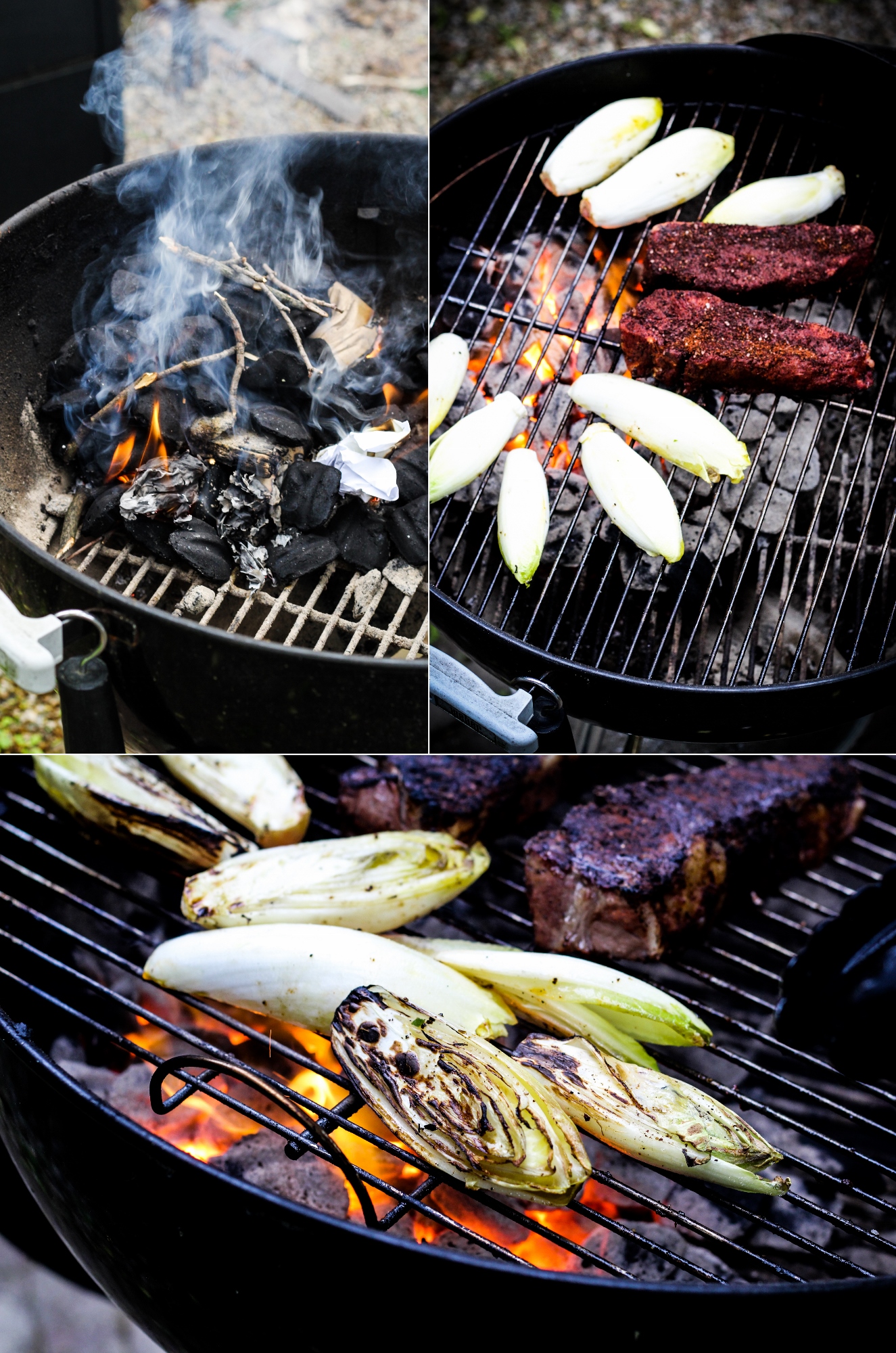
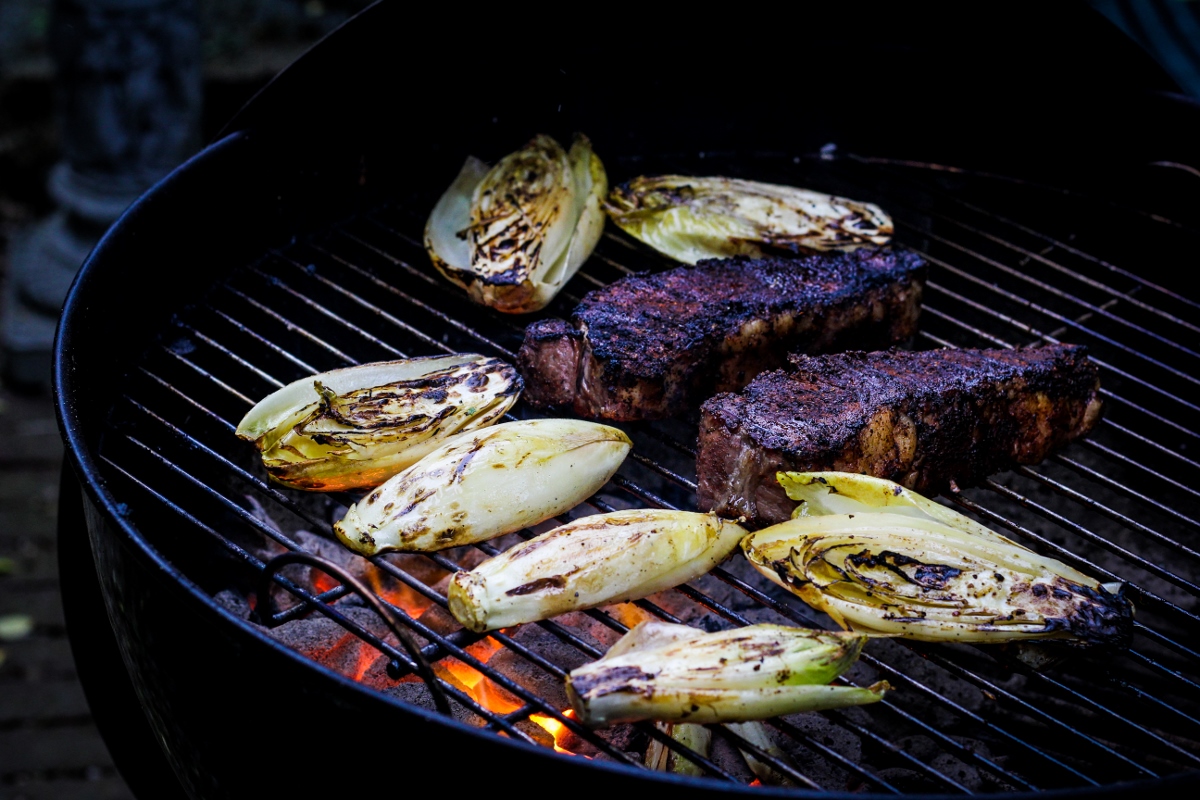
Last Sunday, we broke out the grill. Grilling is one of those things that I really want to learn how to do, but I’m kind of afraid of doing it wrong and burning myself or ruining a pair of $20 steaks or, worst-case-scenario, exploding the grill by doing the gas wrong. I put learning how to grill on my summer bucket list last year, but definitely failed at achieving it. Last week, I made a little progress – I cleaned out the ashes and lit the coals, all under Trevor’s careful supervision. Then he took over. But I’m committed to it this year – I even have two grilling books sitting on my window bench, waiting to be reviewed.

Strawberry Sour Cream Ice Cream {Katie at the Kitchen Door}

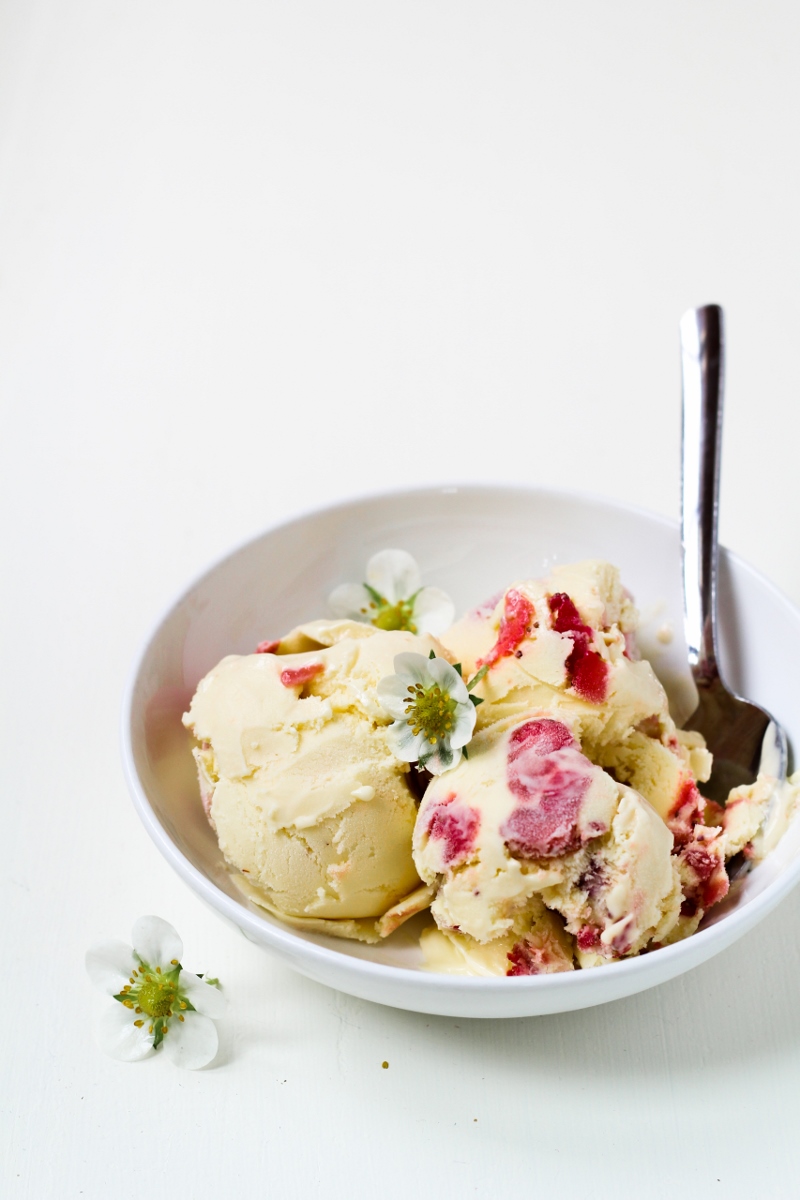
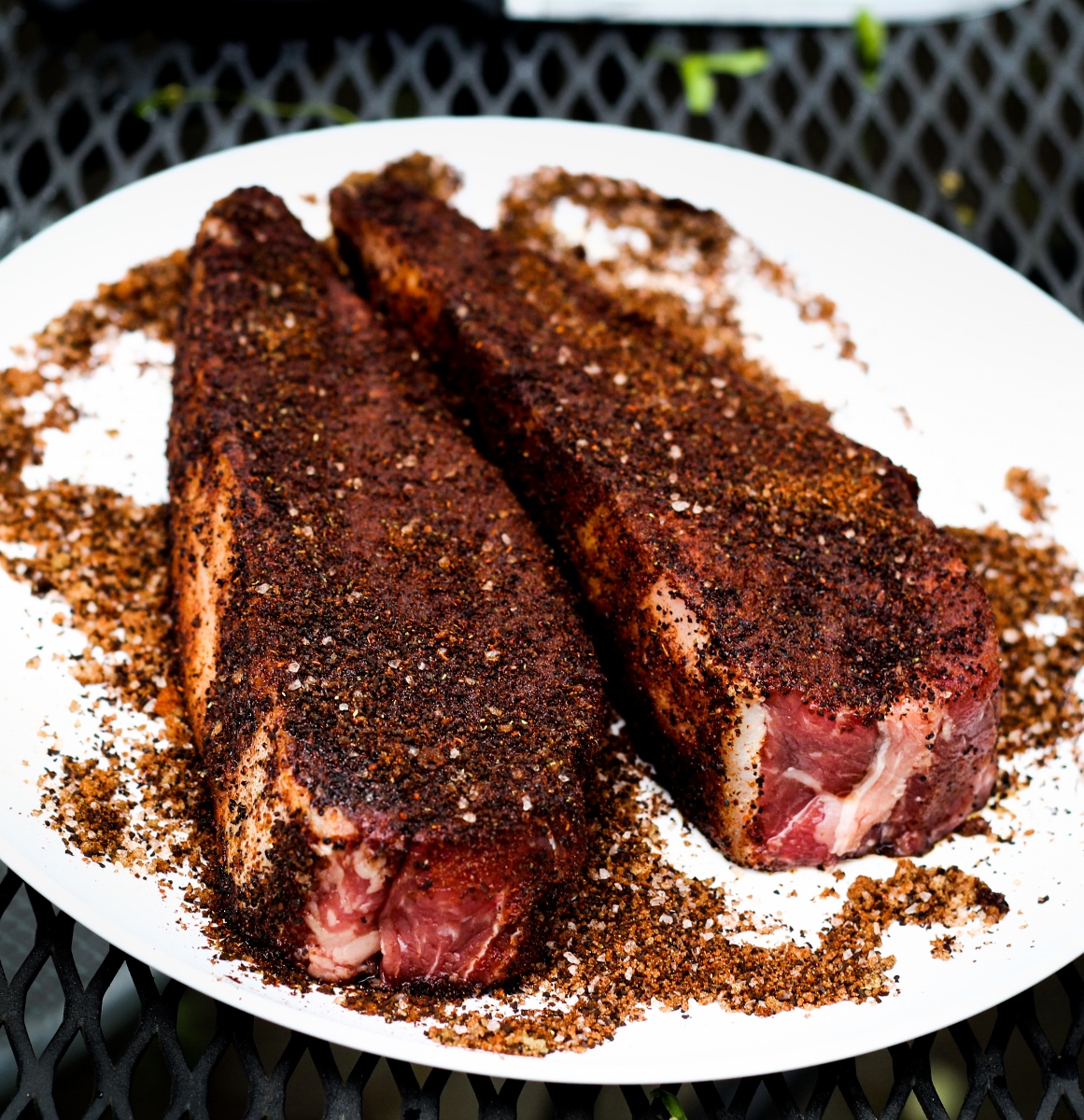
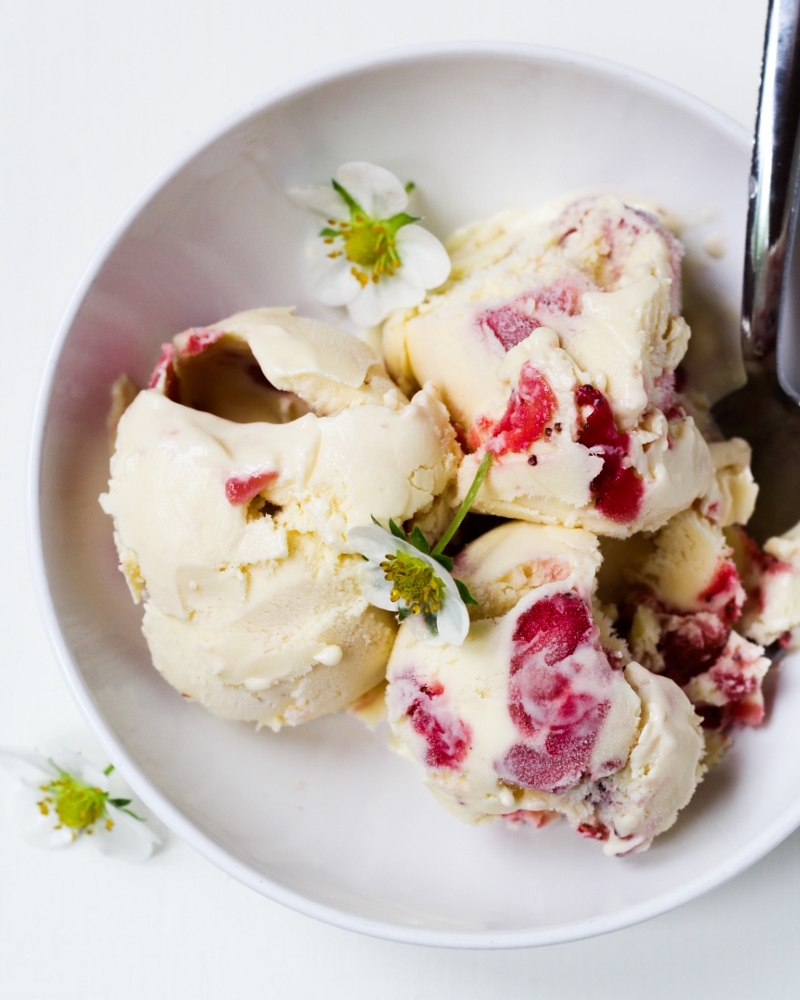
What we put on the grill last week was a little bit indulgent for us – two beautiful grass-fed strip steaks, rubbed with a coffee-chile-brown sugar mixture and Belgian endives, dressed simply with olive oil and salt and grilled until charred and smoky. To go with it we had chimichurri sauce, crispy oven-roasted potatoes, and the most delicious, decadent ice cream I’ve ever had – sour cream ice cream with a strawberry-brown sugar swirl. It tastes like cheesecake with strawberry sauce but even smoother and creamier. It’s insane. And over-the-top rich, but I’ll absolutely be making it over and over again. We threw in a few beers and a cranberry margarita and it definitely felt like a real meal – a really nice start to the week. Given that we had several different dishes on our plate, it was surprisingly easy to put it all together. The steak, potatoes, and endives were all very simple and quick, the chimichurri only took a bit of chopping and stirring, and the ice cream was already made. Plus, everything was good. Really good. Sometimes simple is the best! Most of you probably already have plans for grilling tomorrow, but if you don’t, I definitely recommend all of these recipes.

The Menu

Coffee-and-Chile-Rubbed Strip Steaks – see below (from Food and Wine)
Chimichurri Sauce – see below (adapted from Food and Wine)
Charred and Smoky Belgian Endives – see below (adapted from Food and Wine)
Oven-Roasted Potatoes – see below
Strawberry-Sour Cream Ice Cream – see below (adapted from The NY Times)

Coffee-and-Chile-Rubbed Strip Steaks {Katie at the Kitchen Door}

Coffee-and-Chile-Rubbed Strip Steaks

Recipe from Food and Wine. Serves 4.

  • 2 TBS finely ground dark roast coffee
  • 2 TBS chile powder
  • 2 TBS dark brown sugar
  • 1 TBS smoked paprika
  • 1 1/2 tsp cumin
  • 1 TBS kosher salt
  • Four 10-oz strip steaks
  1. In a small bowl, stir together the coffee, chile powder, brown sugar, paprika, cumin, and salt until evenly mixed. Rub the mixture on all sides of the steaks. Let steaks sit at room temperature for 30 minutes.
  2. Grill the steaks over moderate heat, turning once, until they are charred outside and medium-rare within, about 11-13 minutes. Transfer to a clean plate and let rest for 10 minutes before serving. Serve with chimichurri sauce.

Chimichurri Sauce

Adapted from Food and Wine. Makes about 1 1/2 cups.

  • 1/4 c. red wine vinegar
  • 1/4 c. white balsamic vinegar
  • 2 TBS olive oil
  • 1/2 tsp sugar
  • 1 small shallot, peeled and finely minced
  • 1/2 c. finely chopped parsley
  • 1/4 c. finely chopped cilantro
  • 4 scallions, thinly sliced
  • 1 tsp dried oregano
  • salt and pepper to taste
  1. Whisk the vinegars, olive oil, and sugar together in a medium bowl. Stir in the shallot, parsley, cilantro, scallions, and oregano. Season with salt and pepper to taste. Let chimichurri rest at least 20 minutes before serving. Keep chilled. 

Coffee-and-Chile-Rubbed Strip Steaks, Smoky Belgian Endives {Katie at the Kitchen Door}

Charred and Smoky Belgian Endives

Recipe from Food and Wine. Serves 4.

  • 4 Belgian endives, sliced in half lengthwise
  • olive oil
  • kosher salt
  • freshly ground pepper
  1. Brush the endive halves with olive oil on both sides, then season with salt and pepper. Grill over moderate heat on a charcoal fire, turning occasionally, until charred and tender, about 12-15 minutes. Transfer endives to a platter and tent with foil. Let steam for 5 minutes, serve warm.

Oven-Roasted Potatoes

Serves 4.

  • 1 1/2 to 2 lbs. small red new potatoes
  • 8 cloves garlic, peeled
  • olive oil
  • sea salt
  1. Preheat oven to 425°F. Wash potatoes and cut into quarters, or halves if they are very small. Toss potatoes and garlic with olive oil and salt in a large roasting pan. Spread potatoes on the bottom of the pan – they should have enough room so that they are not touching one another. Roast for 40-50 minutes or until golden brown with crunchy edges, flipping with a spatula halfway through.

Strawberry Sour Cream Ice Cream {Katie at the Kitchen Door}

Strawberry-Sour Cream Ice Cream

Adapted from The NY Times. Makes about 5 cups.

  • 1 c. sugar
  • 9 egg yolks
  • 1 c. heavy cream
  • 1/2 c. milk
  • 1 1/2 c. sour cream
  • 2 tsp vanilla extract
  • pinch salt
  • 1 lb fresh strawberries, hulled and diced into 1/4 inch pieces
  • 3 TBS brown sugar
  • 1 TBS brandy
  1. In a large heat-proof bowl, whisk together egg yolks and 1/2 c. of sugar until smooth. Set aside.
  2. In a medium sized saucepan, whisk together remaining 1/2 c. sugar, the heavy cream, and the milk. Heat over medium low heat, whisking all the while, until the mixture just reaches a simmer. Remove from the heat.
  3. Slowly pour about 1 cup of the hot cream into the eggs in a thin stream, whisking the eggs vigorously as you do so to keep them from scrambling. Pour yolk mixture back into saucepan with rest of cream, still whisking. Heat the custard over low heat, whisking constantly, until the mixture thickens enough to coat the back of a spoon. This will take 7-10 minutes. After it begins to thicken, it will continue to thicken fairly quickly, so remove from heat about 30 seconds to 1 minute after it starts to thicken.
  4. Strain custard through a sieve into a large, clean bowl, pushing through sieve with a spatula. Allow to cool for about 5 minutes, then whisk in sour cream, vanilla extract, and salt, whisking until smooth. Cover custard tightly with plastic wrap and refrigerate for at least 3 hours, or overnight.
  5. About 1 hour prior to churning the ice cream, prepare the strawberries: Place the chopped strawberries and the brown sugar in a large frying pan and stir. Let sit for 15 minutes to allow the strawberry juices to release. Heat over medium-low heat, stirring, and cook for 10-15 minutes, until berries are soft, and juices have evaporated enough to become syrupy. Remove from heat and stir in brandy. Transfer berries and syrup to a bowl and freeze for 20-30 minutes, until chilled but not frozen.
  6. Churn the ice cream in an ice cream maker according to directions. When the ice cream has reached a soft serve consistency, turn off the machine and fold in the chilled strawberry mixture so that there are streaks of berries. Freeze to further solidify.
The Spring Garden

0 May 25, 2013 Garden

The Spring Garden

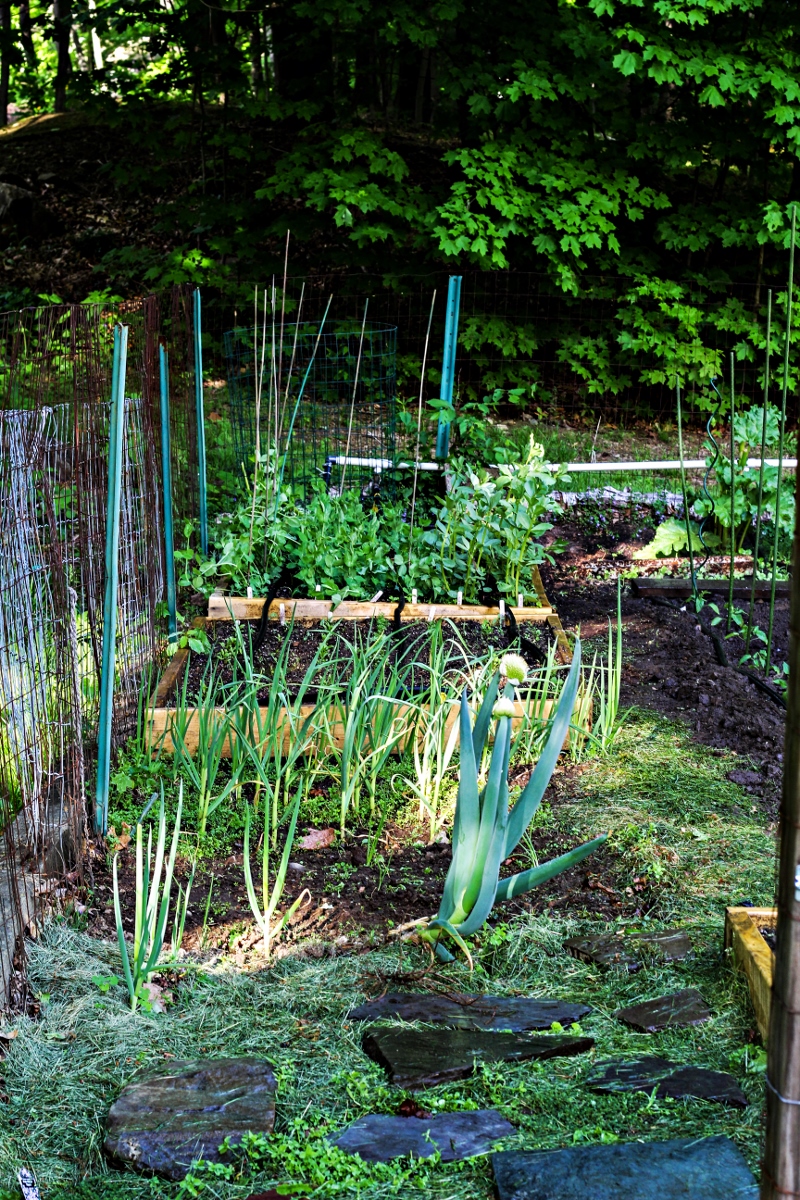
The Garden

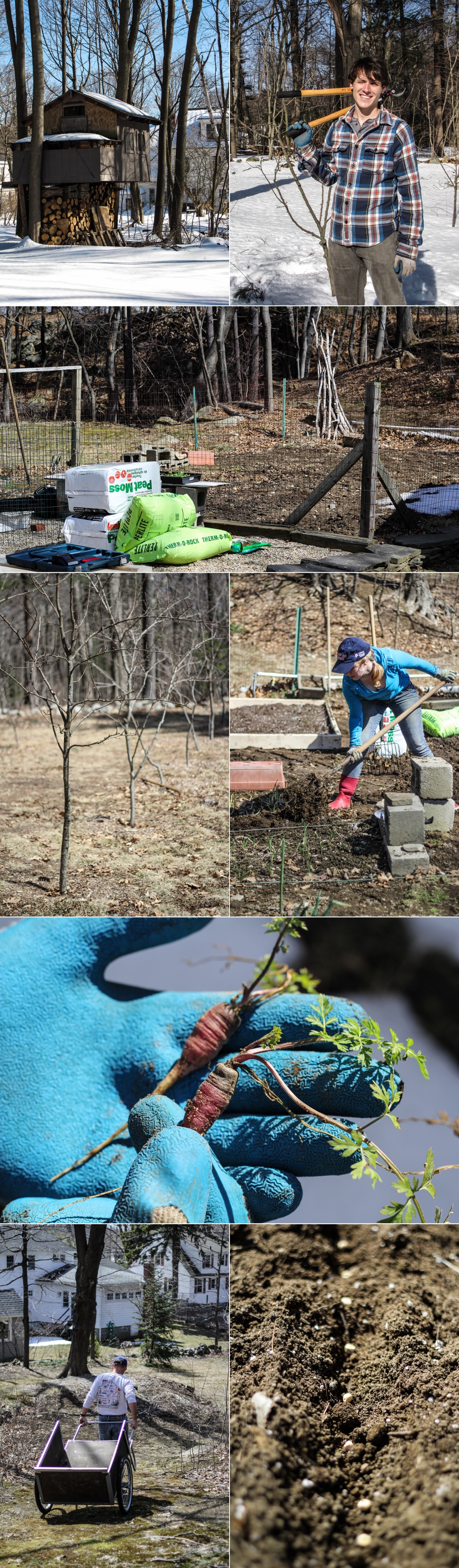
March in the garden means bleached out days where the sun feels like a forgotten gift from another lifetime. It means anxiously checking the brown earth for signs of green, and battling the elements to provide your baby seedlings with what they’ll need to survive these first temperamental weeks. It means frozen fingers and standing in the mud, turning the ground over and over, and daydreaming of those seemingly far off first tastes of fresh peas.

March in the Garden 1) The treehouse/wood-shed; 2) Trevor on pruning day; 3) Blank canvas; 4) Dormant fruit trees; 5) Turning over soil; 6) Last year’s straggler carrots; 7) Dad with the wheelbarrow; 8) Planting peas

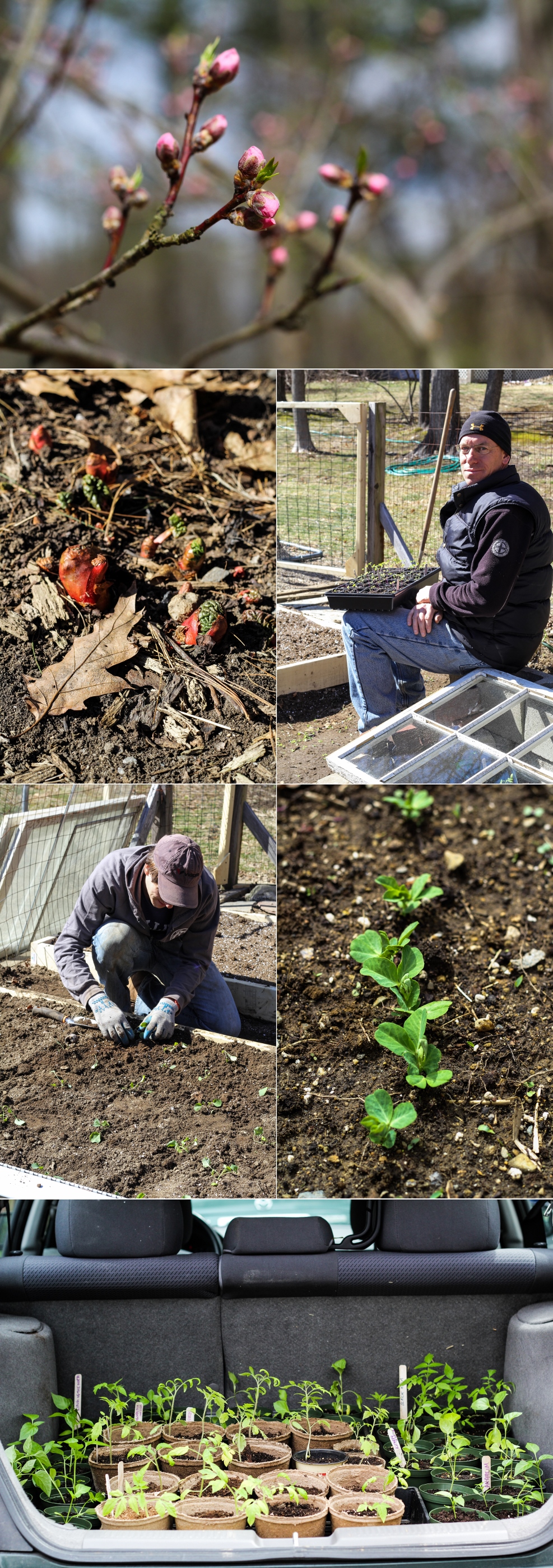
April in the garden means the first signs of life and color, rhubarb poking it’s bright red nubs through the ground, blossoms erupting on cherry and apple trees, a world of hope held within each small spot of color that emerges from the gray winter world. The weather is still temperamental, and the glass enclosures you’ve built for your tomato starts aren’t enough to protect them from a few hard freezes. But it’s supposed to be spring, you think, staring, heartbroken, at the scraggly and desperate plants that a week ago were so green and full of promise. You know, though, that this is what spring means. Spring in New England.

April in the Garden1) Peach blossoms ready to open; 2) First signs of rhubarb; 3) Dad, enjoying the sun; 4) Planting broccoli; 5) Peas sprouts; 6) Transporting seedlings

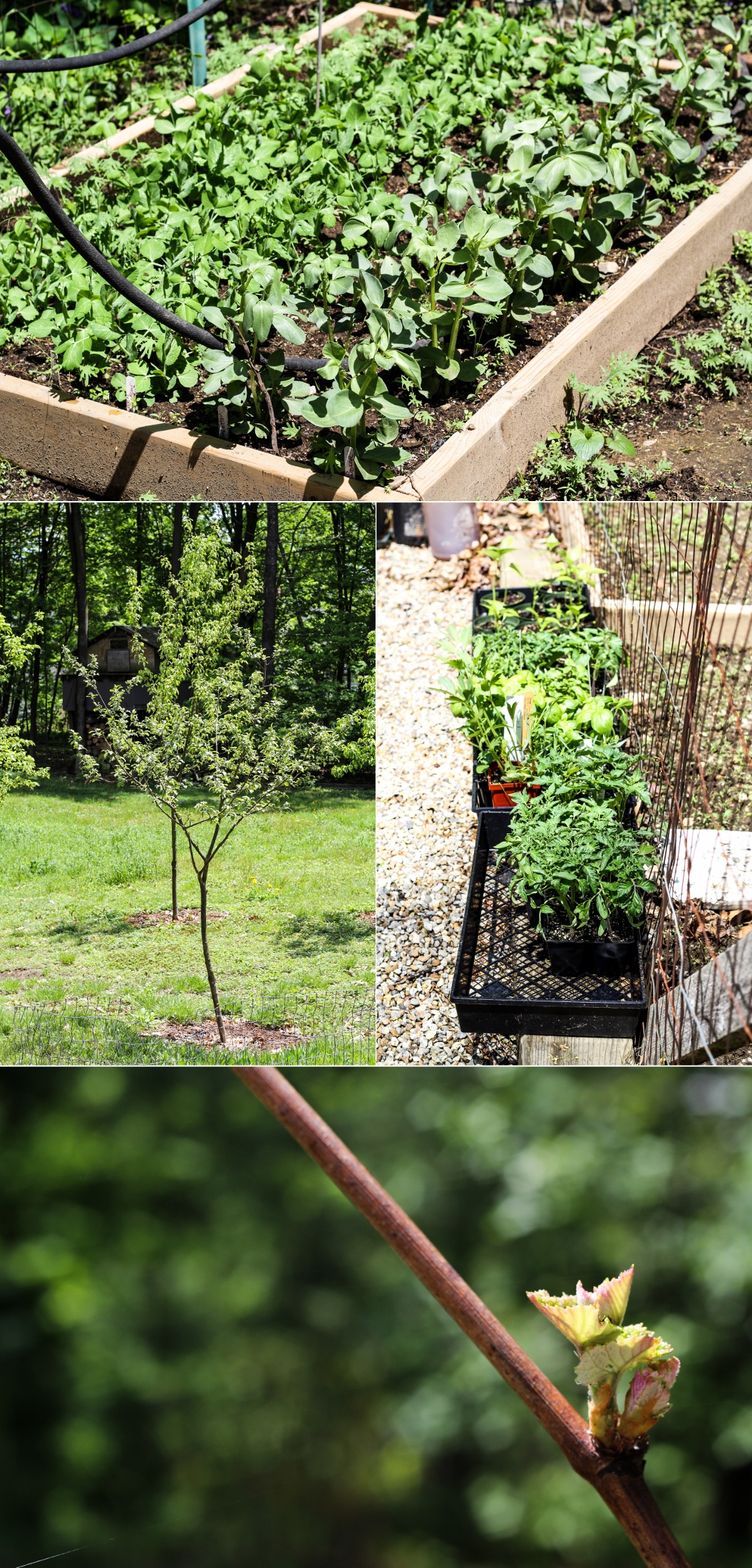
May in the garden means a flush of green, and this year at least, a corresponding flush of rain. Heat-loving plants – tomatoes, peppers, eggplants – get a slow start, but the peas and beans and broccoli are tangled from growing so fast. Weeds are already waging their war on your precious plants, seemingly popping up overnight. Bugs, too, make their debut, and once again you are astonished at how quickly a forest of caterpillars can munch through leaves. Squishing the odd one here or there gives you an unreasonable amount of satisfaction. On the bright side, you can now harvest a few stalks of rhubarb, and it seems it will only be a few more weeks before you are lugging baskets full of fat pea pods into the kitchen for shucking.

May in the Garden

1) Peas and fava beans; 2) The orchard in green; 3) Starts to be planted; 4) New grape growth

Last year was the first year we attempted gardening – you can read about it here, here and here. We started out small, with a 2’x8′ raised bed in my backyard, but quickly overran that space with a mess of too-small pots containing tomatoes, grapes, watermelon, and fruit trees, all fighting one another over the sunlight. At the end of last summer, we started working in the vegetable patch at my parent’s house, and my dad agreed to let us share the space with him this year. Now, most of our efforts are focused on that 20’x30′ vegetable garden, the dozen or so fruit tress up the hill, and the berry patch, with it’s productive rows of raspberries, blueberries, grapes, and strawberries. We’re there almost every weekend, with a full day’s worth of work cut out for us. I hope we don’t tire of it. And I hope that at least some of our plants do better than we expect – I think we started to learn last year not to expect too much when it comes to the fickle ways of gardening. And last, I’m excited to share all the adventures and food with you, here.

Book Club: Vegetarian Everyday // Quinoa, Cauliflower & Ramp Cakes, Flour-Free Banana & Coconut Pancakes

1 May 24, 2013 Breakfast

Book Club: Vegetarian Everyday // Quinoa, Cauliflower & Ramp Cakes, Flour-Free Banana & Coconut Pancakes

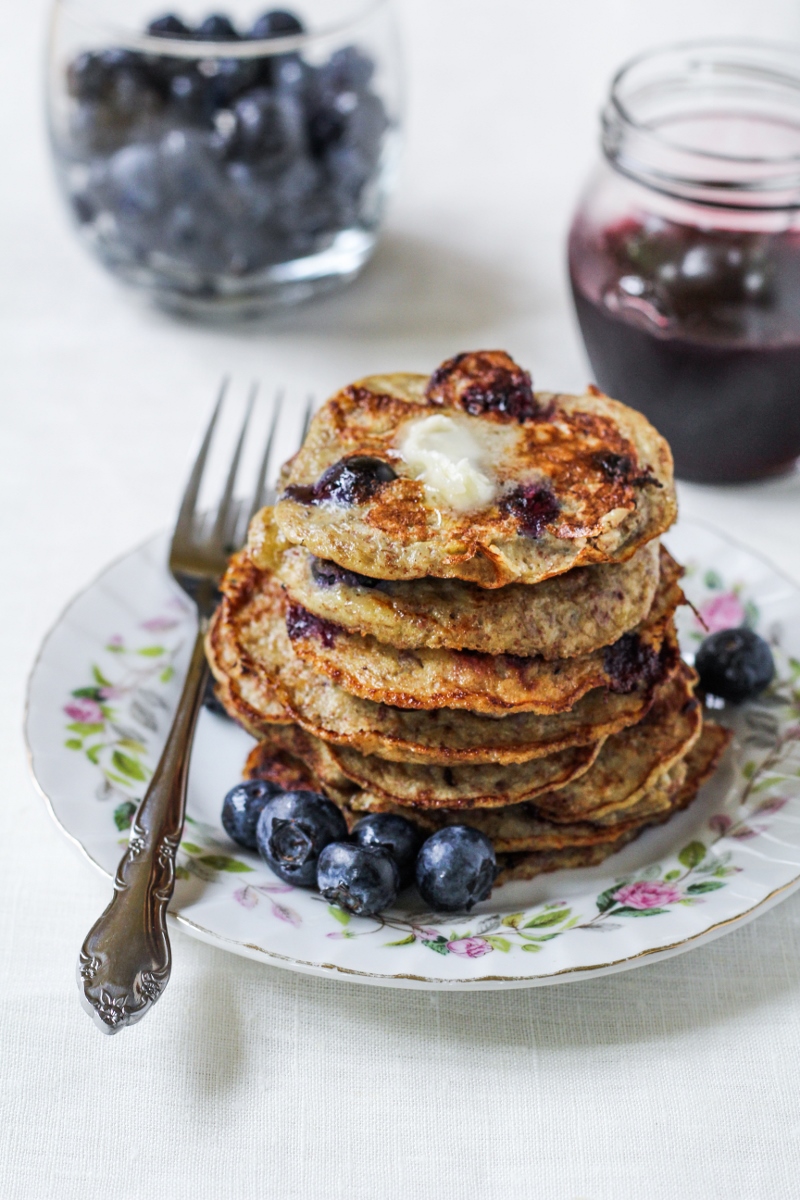
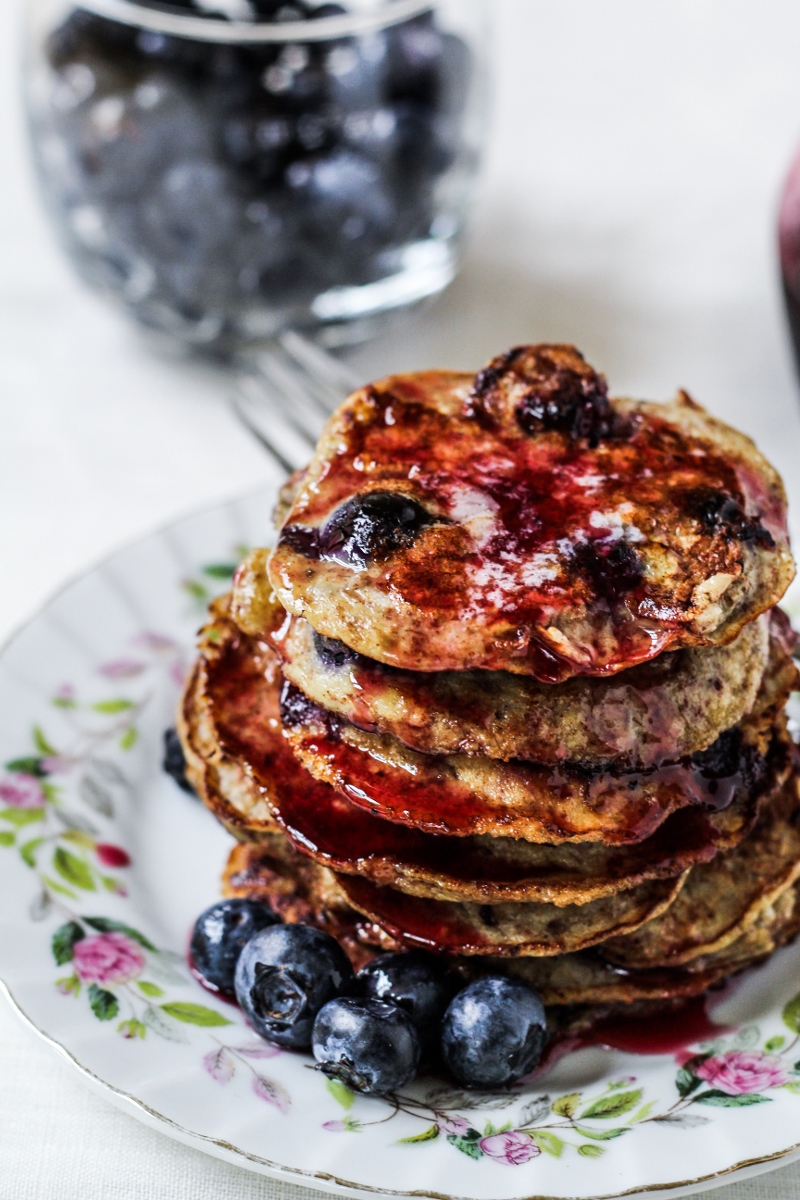
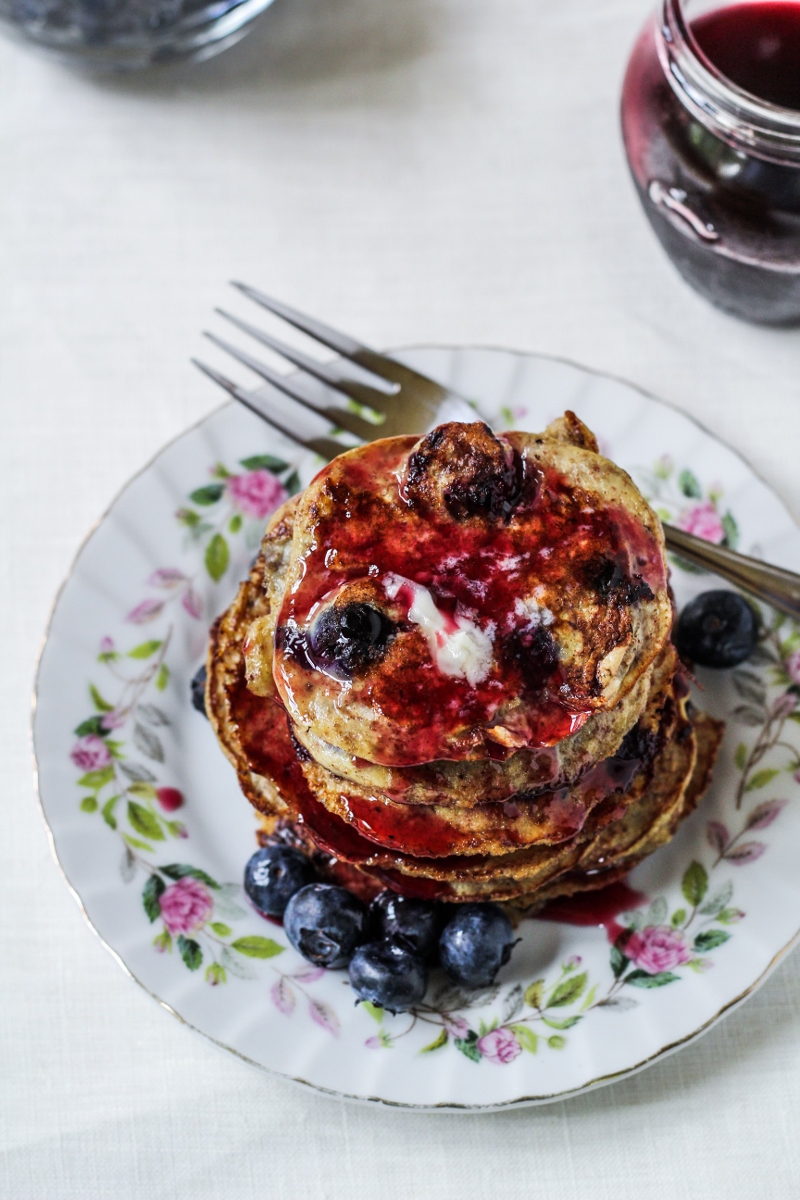
Flourless Banana, Coconut, and Blueberry Pancakes - A Gluten-Free Breakfast from Vegetarian Everyday {Katie at the Kitchen Door}

The blogger cookbook I’ve most looked forward to this spring is easily Vegetarian Everyday, the first book from David Frenkiel and Luise Vindahl, the talented couple behind the blog Green Kitchen Stories. Green Kitchen Stories is a beautiful space. I love their photographic aesthetic – brightly saturated food on dusky blue-gray backgrounds, just a little bit of organized mess in each photo. And their recipes? Really healthy. Not healthy like when I say it – I usually mean something along the lines of “I didn’t put any cheese on this! It’s so healthy!” No, their recipes are packed with things that are good for you – and only things that are good for you. Yet somehow, they still manage to read as modern, flavorful and appealing, not boring, earthy-crunchy and flavorless.

I was so happy to see that both their high-quality recipes and beautiful photography are still present in their book. Add to this the clean, open layout and the thick, matte paper and it really is a beautiful book. It reminds me a lot of Heidi Swanson’s two recent books – Super Natural Cooking and Super Natural Everyday. They have similar aesthetics and employ similar cooking styles and flavor combinations. Since Heidi’s books were extremely popular, I think this probably bodes well for Vegetarian Everyday.

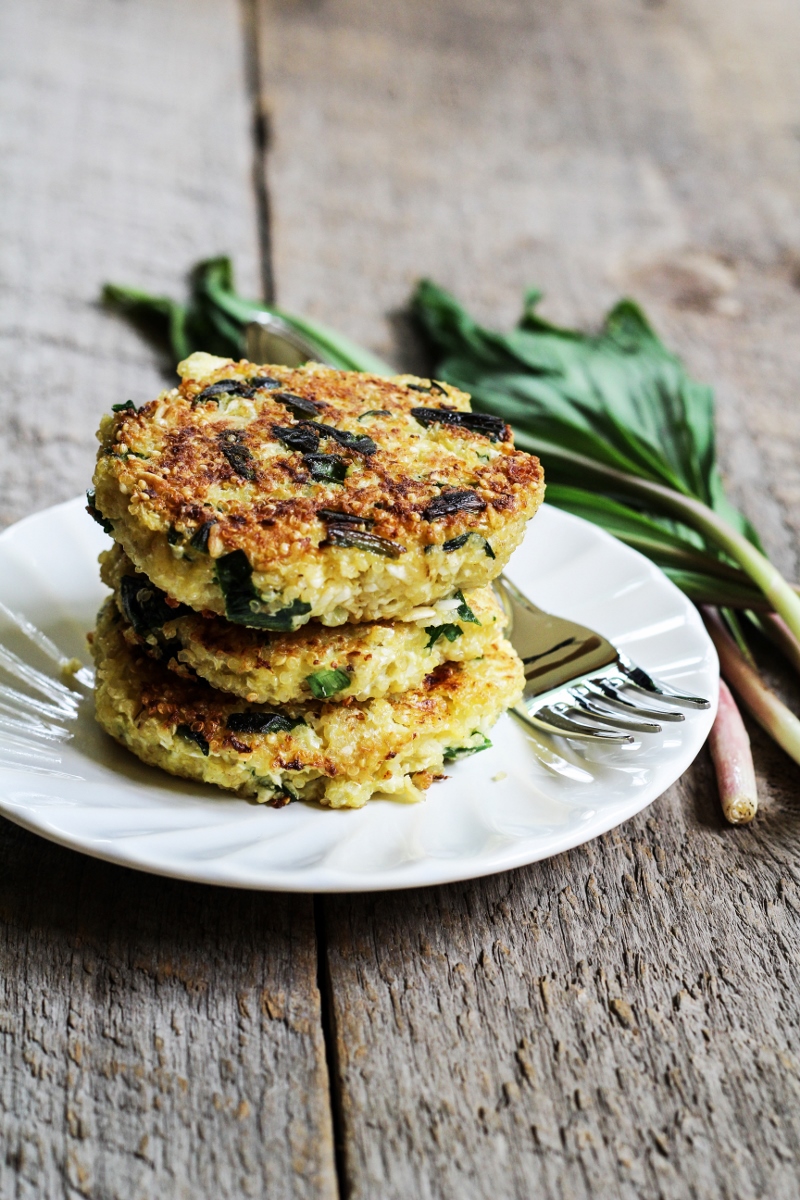
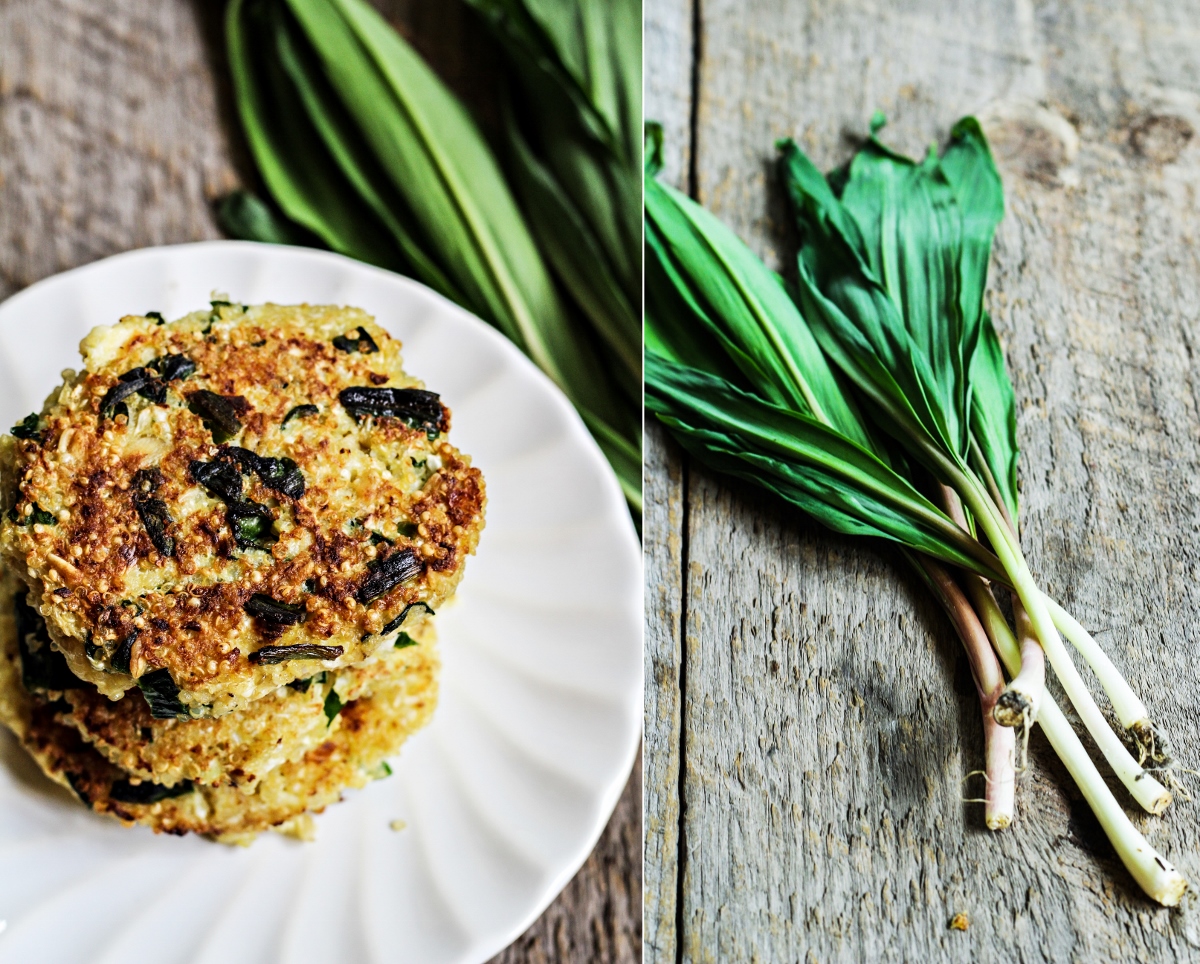
Quinoa and Cauliflower Cakes with Ramps and Feta {Katie at the Kitchen Door}

The recipes included in this book are suitable for people of all dietary persuasions (well, I suppose not for ravenous carnivores) – a surprising number of them are both vegan and gluten-free, and they’re clearly marked as such with little “V” and “GF” buttons. I usually shy away from vegan and gluten-free recipes because, well, I love cheese and bread, but many of those included here are quite appealing to me – the Roasted Tomato and Chickpea Soup, the Baked Herb and Pistachio Falafels, and the Chocolate and Blackberry Milkshake, all vegan and gluten-free, will all be finding their way onto my table in the near future. For someone just transitioning to a healthier eating routine – whether that’s vegetarian, vegan, or gluten free – this book would be a good one to pick up. Not only are the recipes easy to make, and for the most part pretty quick, the first 30 pages of the book is full of useful information on building a whole foods pantry and basic cooking techinques – cooking fresh beans, sprouting grains, making homemade nut butters, etc.

Flourless Banana, Coconut, and Blueberry Pancakes - A Gluten-Free Breakfast from Vegetarian Everyday {Katie at the Kitchen Door}

So far I have tried two recipes from this book – the Flour-Free Banana and Coconut Pancakes, and the Quinoa and Cauliflower Cakes with Ramps. The pancakes, I’ll admit, did not completely meet my definition of pancakes. I was really excited about making them, thinking how great it would be to be able to eat pancakes every day, guilt free! But… I was expecting to eat pancakes, and these, while tasty and filling and quick to make on a work morning, were not quite pancakes. Close, but the texture wasn’t there for me. Still, I really like the idea, and I have a few thoughts for how I might tinker with them to satisfy my own tastes. The quinoa/cauliflower/ramp/feta cakes however, were super delicious. I loved feeling like I was eating something decadent but knowing that I was getting lots of veggies and proteins in. And again, they were really filling.

The bottom line: Vegetarian Everyday, from the talented couple behind the blog Green Kitchen Stories, is a beautiful book full of truly healthy recipes. Many of the recipes are not only vegetarian, but also gluten free and vegan, yet they are still appealing and flavorful. This book would be an excellent choice for someone just transitioning to a healthier lifestyle, as the recipes are simple and easy to make, and the beginning of the book provides a good introduction to wholesome pantry items and basic vegetarian/vegan cooking methods.

Disclaimer: I received a review copy of Vegetarian Everyday free of charge from Rizzoli, but I was not otherwise compensated and all opinions are my own.

Flourless Banana, Coconut, and Blueberry Pancakes - A Gluten-Free Breakfast from Vegetarian Everyday {Katie at the Kitchen Door}

Flour-Free Banana and Coconut Pancakes

Recipe from Vegetarian Everyday. Serves 3-4.

  • 3 ripe bananas
  • 6 large eggs, lightly beaten
  • 1/2 c. shredded dried coconut, plus extra for sprinkling
  • 1 c. fresh blueberries, plus extra for serving
  • 1/2 tsp ground cinnamon
  • 2 tsp coconut oil, for frying [butter is fine too]
  • 2 TBS maple syrup or plain yogurt, for topping [I used leftover lilac-blackberry syrup]
  1. Mash the bananas with a fork in a medium sized bowl. Add the eggs and coconut and stir to blend evenly. Stir in the blueberries and cinnamon, and set aside.
  2. Heat the coconut oil or butter in a large skillet or on a griddle over medium heat. Spoon 2-3 tablespoons of batter per pancake into the hot pan. The batter is fairly thin, so using an actual tablespoon to do these helps keep it from spreading too much. Cook for about 2-3 minutes per side, flipping carefully (they’re a little fragile). Serve hot with extra blueberries and maple syrup.

Quinoa and Cauliflower Cakes with Ramps and Feta {Katie at the Kitchen Door}

Quinoa & Cauliflower Cakes with Ramps

Recipe from Vegetarian Everyday. Makes 12 cakes.

  • 1 c. white quinoa
  • 1 2/3 c. cauliflower florets, from one medium head of cauliflower
  • 6-8 ramps, cleaned and coarsely chopped
  • 4 large eggs
  • 1 1/3 c. crumbled feta cheese
  • 3/4 c. rolled oats
  • sea salt and freshly ground black pepper, to taste
  • 2 TBS Ghee, coconut oil, or olive oil for frying
  1. Combine 2 1/4 c. water, the quinoa, and a pinch of salt in a medium saucepan. Bring to a boil, reduce to a simmer, then cook for 15-20 minutes, until quinoa tails have unfurled. Drain and set aside.
  2. Pulse the cauliflower in a food processor until it has a rice-like texture. Scrape into a bowl and add the cooked quinoa, ramps, eggs, feta, oats, and salt and pepper to taste. Stir until evenly combined. Cover and place in the fridge for 30 minutes to 1 hour, to firm the mixture.
  3. Form the mixture into small patties with your hands, squeezing out any excess liquid. Heat the Ghee or oil in a large frying pan over medium heat, then add the patties a few at a time and cook for 3-4 minutes per side, or until golden brown. Drain on a paper towel. Serve warm or cold.
Italy Part 1: Rome and Florence // Cacio e Pepe with English Peas

7 May 21, 2013 Food

Italy Part 1: Rome and Florence // Cacio e Pepe with English Peas

Florence

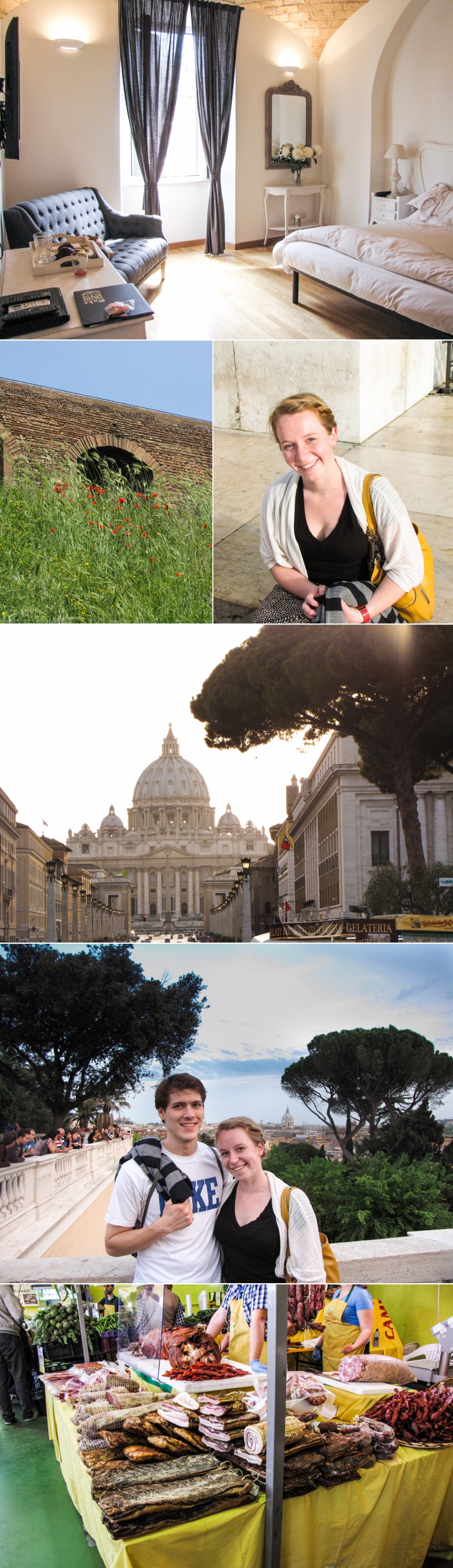
We’ve been back from Italy for about two weeks, and I’ve finally made it through the first half of my pictures and thoughts about the trip to share with you here. I’ll let the pictures do most of the talking, but I have a few notes about where we stayed and ate and adventured, in case you’re interested (or lucky enough to be going to Rome or Florence in the near future).

Sights of Rome

We spent the first two nights of our trip in Rome, then after a quick (and slightly nauseating) train ride, we spent two nights in Florence. In both cities, what we did the most was walk. We’d wake up, open up the map, circle the places we wanted to see, then set out for the day until it was time for our 4PM siesta. After siesta, we’d go back out in search of dinner. A pretty good daily routine; I’d happily live every day that way.

Wandering Rome

Rome was a bit of a jet-lagged whirlwind, but I liked the city much more than I remembered. The last time I was there, I was 14, and Rome seemed far too loud, overwhelming, and dirty. This time, for the most part we stayed away from some of the main sights, and even after two days I was starting to get the sense of the thriving city underneath the throngs of tourists. We stayed at the perfect inn/apartment, La Finestra Sul Colosseo, which checked off everything on my list – it was spotlessly clean, spacious, quiet, comfortable, and modern. We slept like rocks. A highlight of our trip was spending Sunday morning on a food tour with Irene from Vino Roma. It was a bit of a splurge for us, but great to wander more pointedly and have Irene there to teach us about local food culture, both past and present. She took us to a truly local farmer’s market, where I was thrilled that no one spoke English, meaning we had to stock up on fresh fava beans, bread, truffled sausage, cheese, and the tiniest, sweetest strawberries of all time using our terrible Italian and a lot of pointing. We ate porchetta sandwiches and drank local beer, then meandered through the Jewish Quarter where we tried a truly remarkable “burnt” sweet bread from a tiny store with no name and an incredibly long line. We wrapped up with a cheese and wine tasting for a memorably tasty morning. Two other highlights from Rome: one, dinner at Cuoco & Camicia, where everything was delicious, but the carbonara-stuffed tortelli and the fillet of beef with foie gras and pumpkin cream were astounding. Two, our Sunday evening stroll/marathon – we walked from our hotel near the Colosseum, to Piazza Venezia, to St. Peter’s, and finally to the hill above the Piazza del Popolo where we soaked in the view and picnicked on our market finds. It was a solid 5 mile walk, and it felt good to see so much of the city before moving on to Florence.

Florence highlights

I was less enamored with Florence, perhaps as predicted by Steve and Michelle. Given the small size of the city, and the large number of visitors, every corner we visited felt overrun with tourists. With this came an abundance of overpriced food, tacky “authentic” stores, and a lack of real charm. So, I didn’t love it, but we still had some great moments. Walking up the hill behind the Giardini di Bardini and finding ourselves in the midst of an olive grove felt kind of magical, as did being in the city for the Bianca Notte festival, during which all of the major museums were open for free all night, and bands and performers roamed the streets into the wee hours – it was a huge party, and the only time it felt like a living city. While walking through the Palazzo Vecchio that night, we happened to walk through an upper corridor as a horn concert began below us, and we watched/listened to the entire performance while standing in the center of that majestic building – that was a once in a lifetime experience, and it was incredible. We also ate at one good restaurant, Il Santo Bevitore, where dinner was delicious, if slightly dampened by the incredibly loud and rude Texans sitting next to us. (No offense meant to Texans in general, just these two in particular). And we found venison prosciutto and wild boar speck in the Central Market! So, so tasty. We might try and make some ourselves, just a warning.

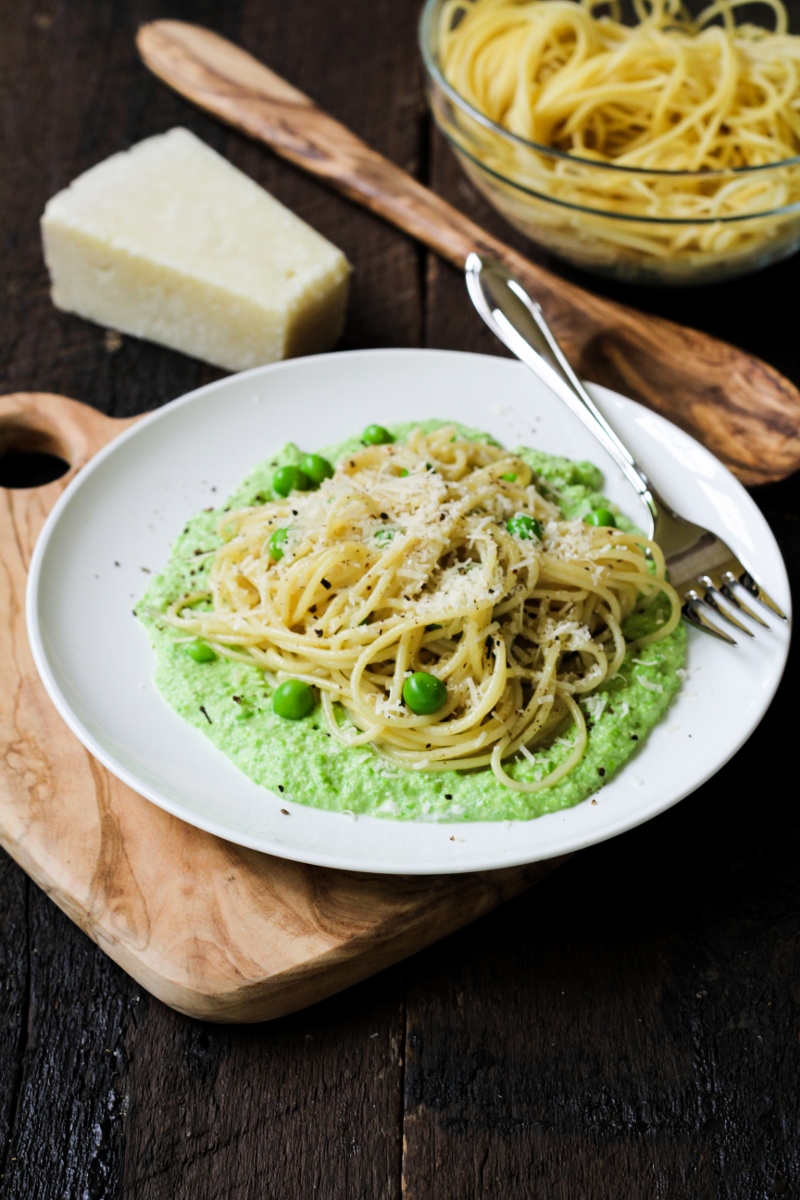
Cacio e Pepe with English Peas {Katie at the Kitchen Door}

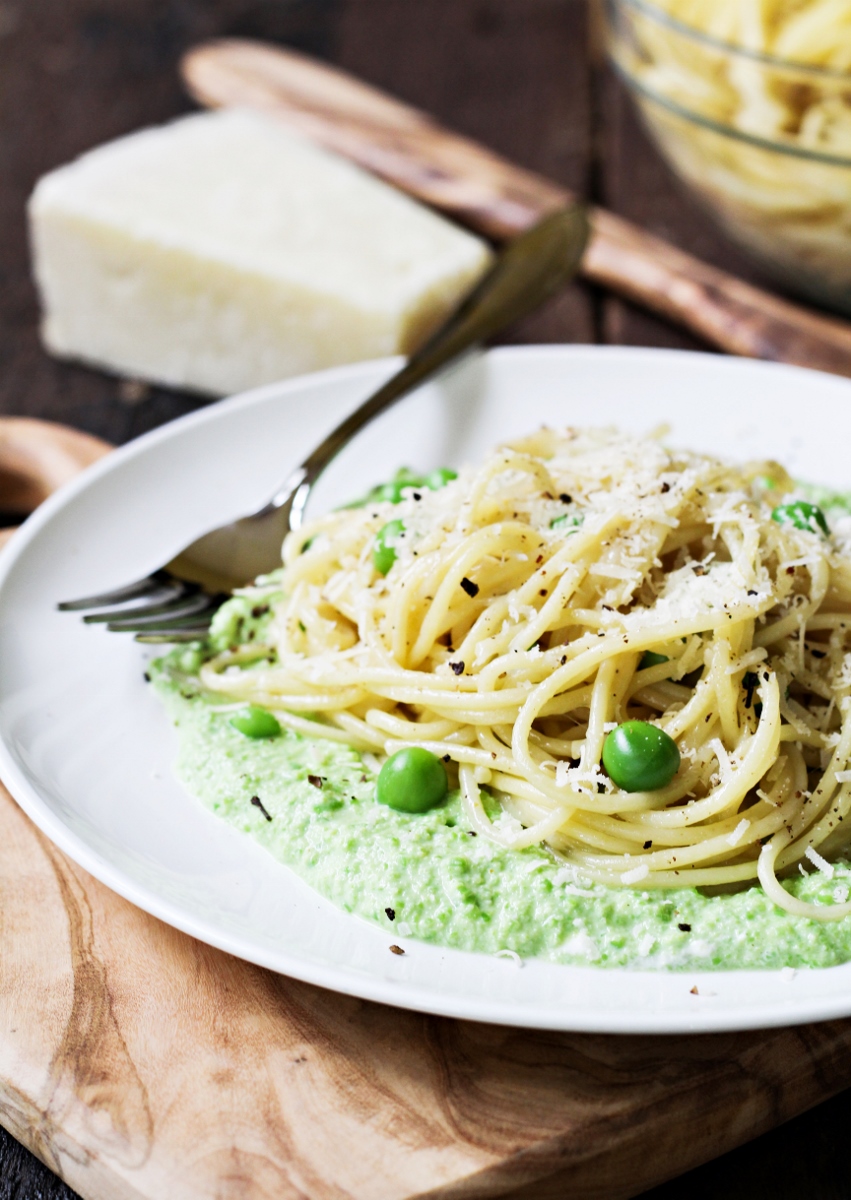
So maybe I lied about the pictures doing most of the talking – I guess I had more to say than I thought! It’s fun reliving our adventures. It may be another week or so before I get my act together on the second half of our trip, but the last four days, which we spent in the Maremman countryside, were easily my favorite, so hopefully it’s worth the wait! In the meantime, I cooked up some Cacio e Pepe with English Peas for you. Cacio e Pepe is a classic and delicious spaghetti dish coated with a rich cheese sauce and a healthy sprinkling of black pepper – it tastes like what I always want mac’n’cheese to taste like. I had a version in Florence served on a black bean puree, which I re-imagined here using a spring pea puree instead. Buon appetito!

Cacio e Pepe with English Peas {Katie at the Kitchen Door}

Cacio e Pepe with English Peas

Serves 3-4.

  • 1 1/2 c. fresh English peas
  • salt to taste
  • 1/2 pound spaghetti or bucatini
  • 2 TBS butter
  • 1 1/2 tsp freshly ground black pepper, plus more for garnish
  • reserved pasta water
  • 3/4 c. freshly grated Parmesan, plus more for garnish
  • 3/4 c. freshly grated Pecorino Romano
  • 2 TBS sour cream
  1. Bring a large pot of heavily salted water to a boil. Fill a large bowl with ice water, and set aside. When the water is boiling, add the peas to the water and boil for 1-2 minutes, until bright green and floating at the top. Use a skimmer to remove the peas and immediately plunge into the ice water to stop the peas from cooking. Set aside.
  2. Add the pasta to the boiling water and cook according to package directions. When the pasta is done, remove to a bowl with tongs and set the pasta water aside.
  3. In a large frying pan, melt the butter over medium heat. Add the black pepper and stir until fragrant, about 1-2 minutes. Add 3/4 c. of the reserved pasta water to the pan and bring to a boil, then add the cooked pasta and all of the cheese. Stir to melt the cheese until the pasta is evenly coated with a creamy sauce, adding more pasta water if necessary.
  4. Take 1 c. of the cooked peas and place in a blender with the sour cream and 1/4 c. of the pasta water. Blend until smooth, then season to taste with salt. Mix the remaining 1/2 c. of peas into the pasta.
  5. Place a circle of the pea puree on each plate. Top with a pile of spaghetti. Finish with freshly ground pepper and freshly grated cheese.
Book Club: Cooking with Flowers // Lilac and Blackberry Pavlovas

9 May 17, 2013 Cookbook

Book Club: Cooking with Flowers // Lilac and Blackberry Pavlovas

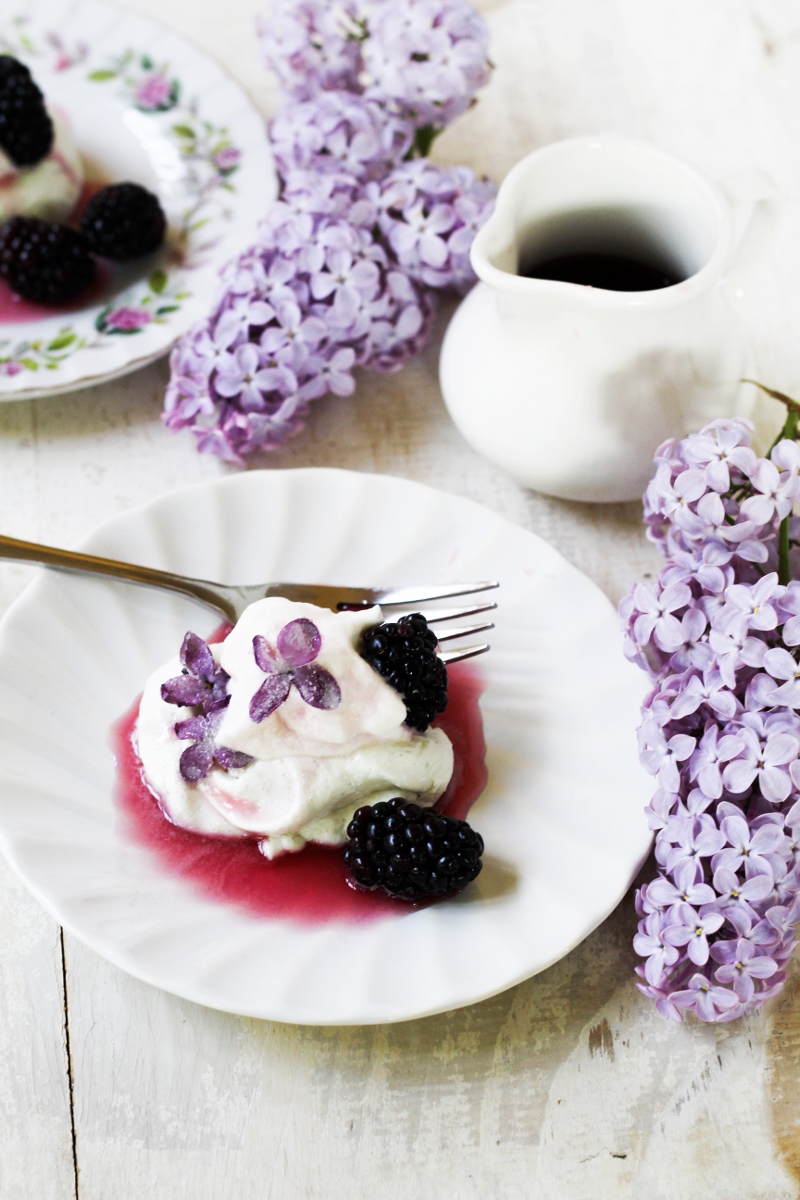
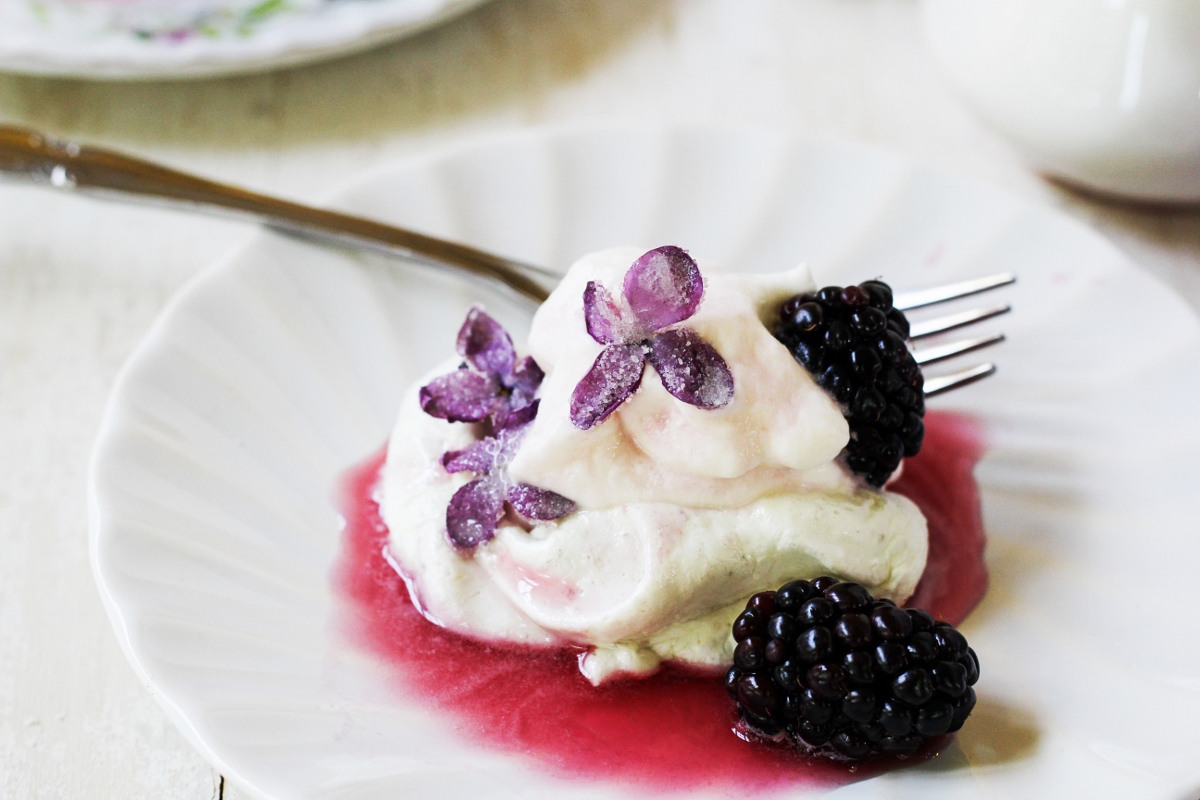
Lilac and Blackberry Pavlovas {Katie at the Kitchen Door}

When I agreed to review Cooking with Flowers, I was a little bit worried that the book wouldn’t quite be my speed. While I appreciated the unique concept, I was having a tough time picturing how I might incorporate flowers into my diet – where was I going to find food-safe flowers? Would it be expensive to source them? Would the recipes all be fussy and girly?

Turns out that I needn’t have worried, as the recipes and techniques in Cooking with Flowers are surprisingly inviting. Organized by flower type, there were only a handful of recipes where I struggled to imagine an easily accessible source. Marigolds are popular and easy to grow, dandelions grow like crazy in pretty much every backyard I’ve ever seen, our house in Maine has an abundance of daylilies each summer, and squash blossoms are a byproduct of something I already grow. Other commonly found flowers used in the book include geraniums, herb flowers, lilacs, nasturtiums, pansies, roses, sunflowers, tulips, and violets. The only flowers included in these recipes that would be challenging for me to get access to are elderflowers, hibiscus, dianthus, and orchids, and even those aren’t too much of a stretch. Learning that so many of these common flowers are edible was exciting in and of itself – think of all the expanded possibilities they could bring to the kitchen!

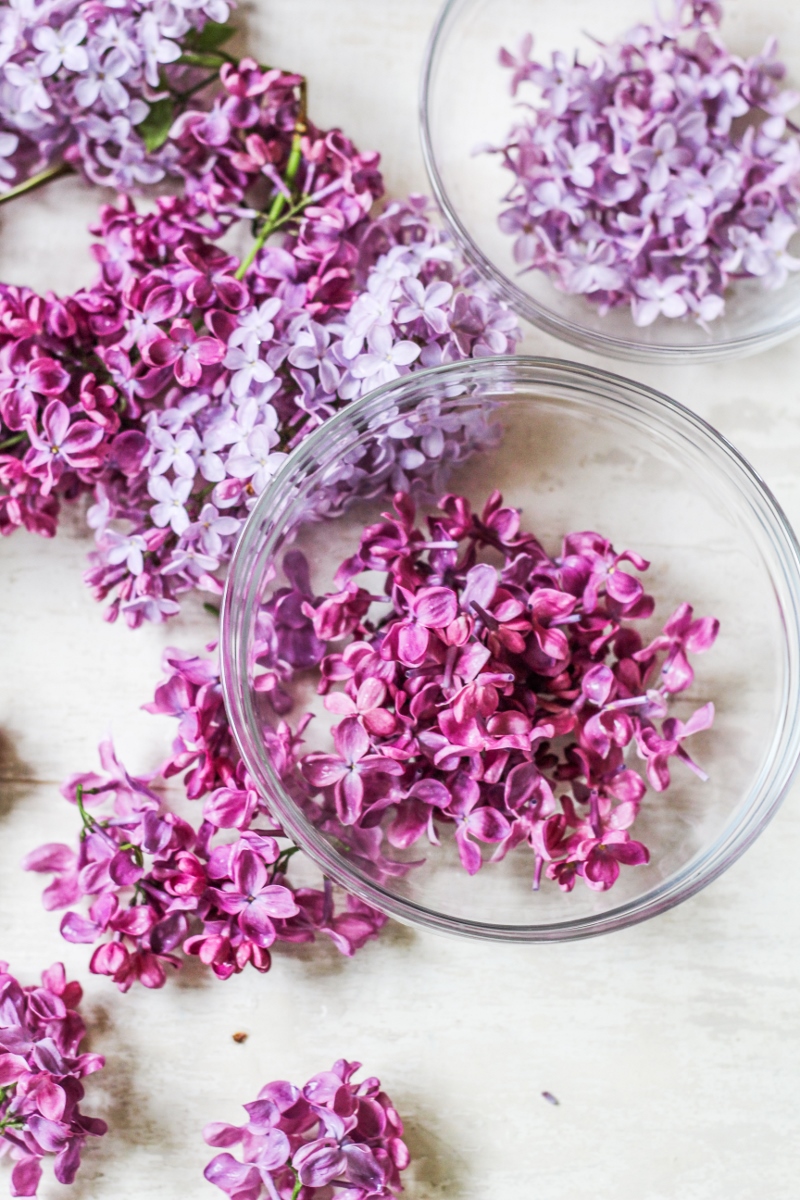
Prepping Lilacs for Baking {Katie at the Kitchen Door}

With my worries assuaged, I dove into the book. It’s a decidedly feminine book, with pastel colors and curlicue font, and in general, the recipes tend toward the sweet. Let’s just say that I probably wouldn’t give a copy to my dad (but I did give one to my mom for Mother’s Day!). While recipes for cakes, cookies, and jellies were somewhat expected, some of the recipes really surprised me – Daylily Curry, Rosemary-Flower Margaritas, Hibiscus Chili Caramel, and Thai Orchid and Beef Salad stick out as creative and exciting uses of ingredients often thought of as sweet. I wish there had been even more of these out-of-the-box savory recipes, but the simpler sweets – Hibiscus Cream Pie, Elderflower Lemon Cakelets, Pistachio Rose Shortbread, etc. – are still lovely.

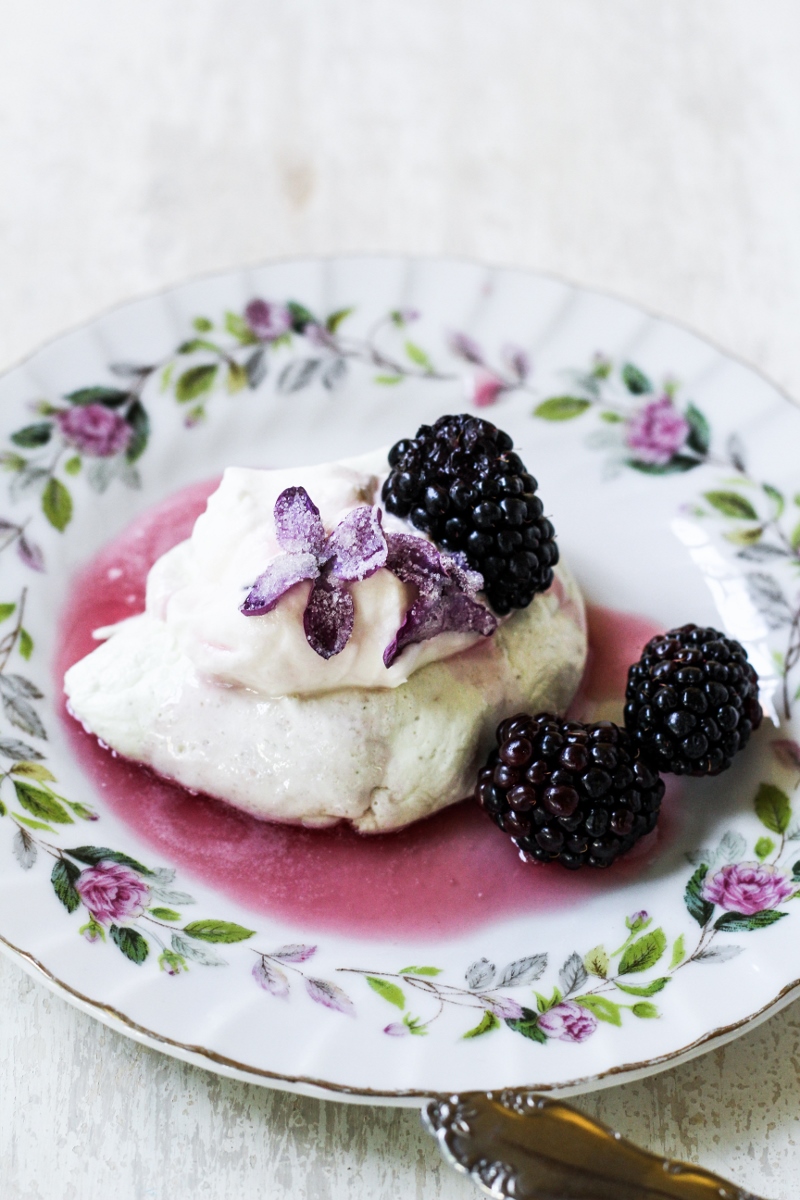
Lilac and Blackberry Pavlovas {Katie at the Kitchen Door}

I should point out two other things about the book. One, that some of the recipes are fairly time consuming. The time that it will take to find, clean, and process the blossoms of your flowers will vary with flower size, but it will almost always take longer than something like chopping an onion (especially since you frequently need a pretty large volume of flower blossoms). Two, a lot of the recipes rely on base flower recipes for their floral flavor – flower syrups, sugars, jams, and creams, the recipes for which are given in the back of the book, frequently need to be prepared before the main recipe. This is good and bad. Good, in that it allows you to preserve blossoms longer-term and think up other creative uses for them. Bad, in that it sometimes adds “hidden” time to the overall recipe time.

The fact that you can cook with lilacs was totally irresistible to me. Lilacs are one of my  favorite flowers, and their heady scent carries many fond memories of warm spring days. Since lilacs pass quickly, never staying open more than a week, being able to preserve their scent in sugars and sauces felt like a wonderful trick, and I sort of went all out with the lilac recipes to take advantage of this. A few hours of cleaning lilac blossoms later, I have lilac pavlovas, lilac-blackberry syrup, lilac sugar, candied lilacs, and dried lilacs, all ready to be used now or later in sweetly scented treats. The recipe I’m sharing here marries almost all of these components – lilac sugar is used to make distinctly floral pavlovas (with a really great, chewy interior texture), which are then topped with whipped cream, fresh blackberries, candied lilacs, and the lilac-blackberry syrup. In the book, they serve the pavlovas with the syrup and a homemade lime sorbet, which also sounds delicious, but I chose to go the classic berries and cream route. All together the dessert was elegant, light, and uniquely flavored – a perfect and effervescent ending to a spring dinner.

Lilacs

The bottom line: Cooking with Flowers introduced me to a completely new concept in a very accessible way. Many of the flowers used are easy to find in my backyard or around my neighborhood, and knowing their edibility is a revelation in itself. Generally the recipes tend toward the sweet, but the savory preparations are where the author’s creativity really shines through. Recommended for adventurous cooks and avid gardeners.

Disclaimer: I received a review copy of Cooking with Flowers free of charge from Quirk Books. As usual, I was not otherwise compensated for this review and all opinions are my own.

Lilac and Blackberry Pavlovas {Katie at the Kitchen Door}

Lilac and Blackberry Pavlovas

Adapted from Cooking with Flowers. Serves 4-6.

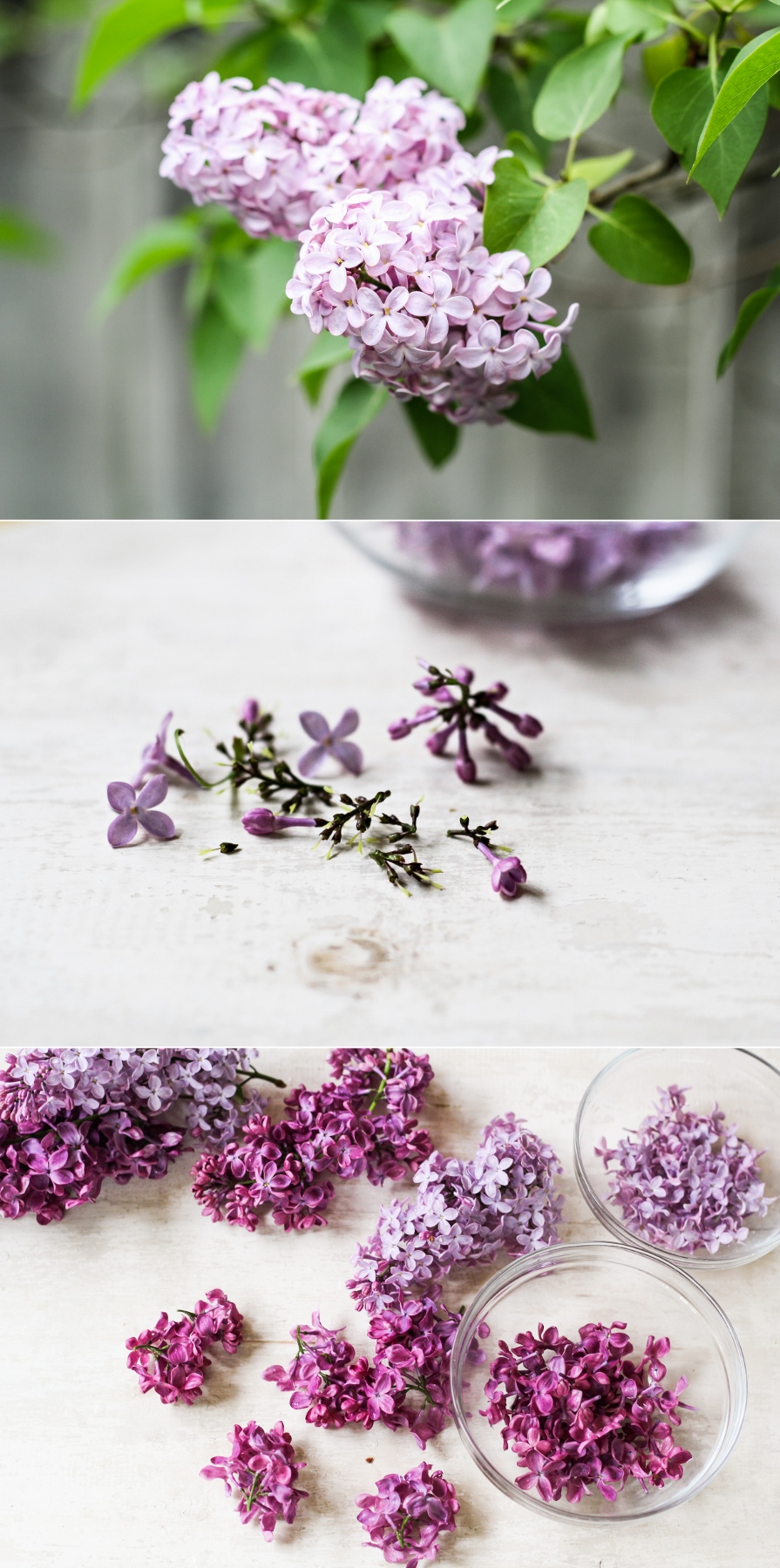
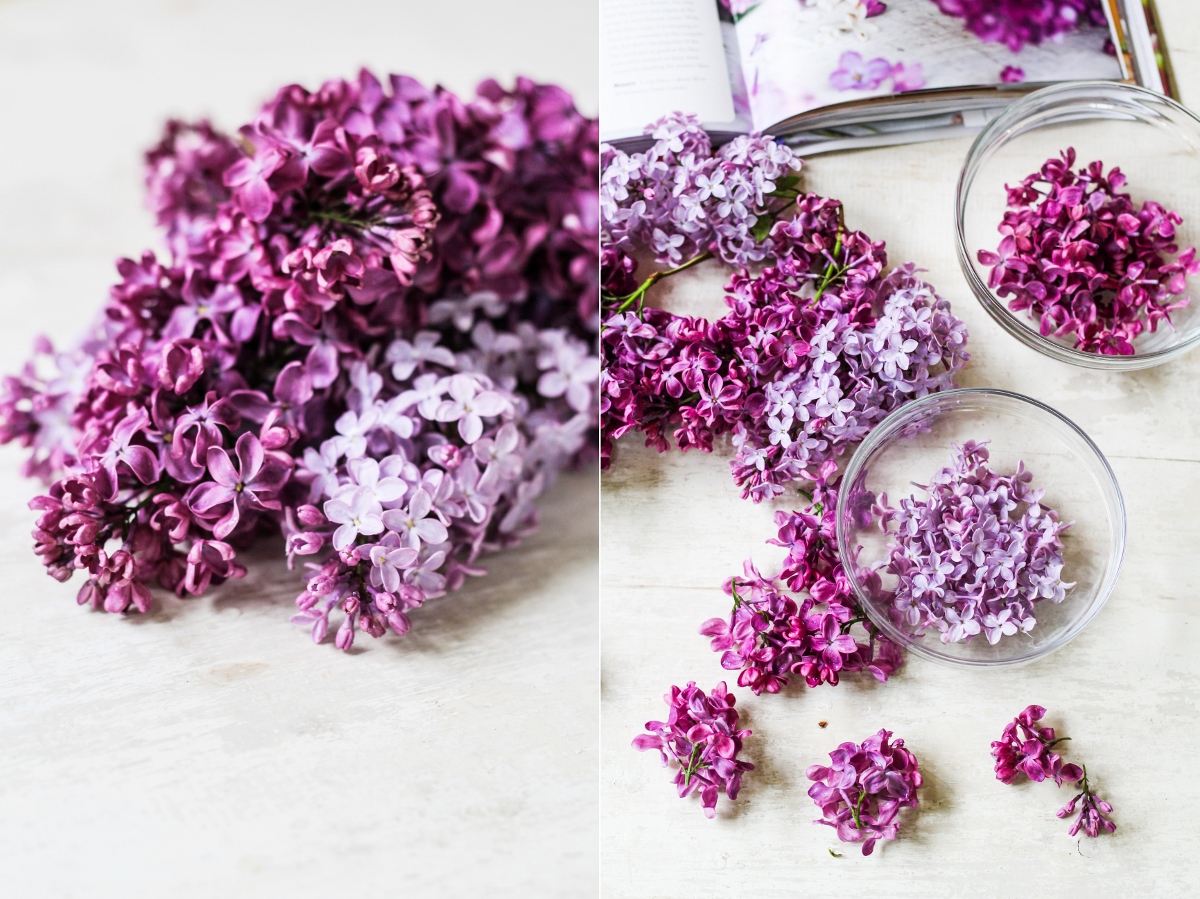
Note: How to select and clean lilacs (adapted from Cooking with Flowers) – first, only use flowers that have been grown organically. Do not use flowers that have been sprayed or that are growing by the side of the road, as they may have absorbed toxins. Cut lilac bunches from a bush to be used. Wash each bunch, being careful that any bugs are rinsed off. Further separate the flowers into smaller clusters on a thin stem. Gently pull each flower from it’s sepal (the green part at the base of the flower). The lilac blossom should separate from the light yellow-green interior (see pictures above). One cup of lilacs will contain 40 to 60 individual blossoms. A single lilac bunch will likely yield between 1/2 and 1 cup of blossoms.

For the lilac-blackberry syrup:

  • 2 c. water
  • 3 c. lilac blossoms (see headnote)
  • 1/2 c. sugar
  • 8-10 fresh blackberries
  1. Bring water to a boil. Place blossoms in a bowl and pour boiling water over them. Let stand for at least 2 hours and up to 24 hours.
  2. Add the flowers, flower water, sugar, and blackberries to a medium saucepan. Bring to a boil over medium-high heat. Boil for 6-8 minutes, stirring and squishing blackberries with the back of a wooden spoon. Remove from heat and strain into a glass container. Discard the solids.

For the lilac pavlovas:

  • 1/2 c. lilac blossoms (see headnote)
  • 1 c. sugar
  • 2 TBS cornstarch
  • 4 egg whites
  • 1/4 tsp cream of tartar
  • 1/2 tsp lemon juice
  1. Preheat the oven to 210°F. Line a large baking sheet with parchment paper and set aside.
  2. Place the lilac blossoms and the sugar in a food processor and blend until pulverized. Mix 2 TBS of the lilac sugar with the cornstarch in a small bowl. Set the rest aside.
  3. In a clean bowl, beat the egg whites on high until foamy. Sprinkle with the cream of tartar, then beat continually on high, gradually adding 1 cup of the remaining lilac sugar as you go. (You may have leftover lilac sugar – store it in a glass jar with a lid). Beat until the egg whites are stiff, shiny, and hold firm peaks.
  4. Fold cornstarch mixture and lemon juice into the whipped egg whites. Use a large spoon to dollop the egg whites into 3-inch rounds on the lined baking sheet, then use the back of the spoon to scoop out a small indentation in each pavlova. Bake for 1 hour, or until they feel dry to the touch. Turn off the oven and leave the pavlovas in there for another hour with the door closed.

To serve:

  • 12 small lilac pavlovas
  • 2 c. of freshly whipped sweetened whipped cream
  • 6-8 blackberries per person
  • 1 c. lilac-blackberry syrup
  • candied lilacs (optional)
  1. Place 2 pavlovas on each plate. Top each with a dollop of whipped cream and a few blackberries. Drizzle with lilac-blackberry syrup and top with candied lilacs.

Lilacs

Happy Birthday, Trevor! // Peanut Butter Fudge

50 May 13, 2013 Dessert

Happy Birthday, Trevor! // Peanut Butter Fudge

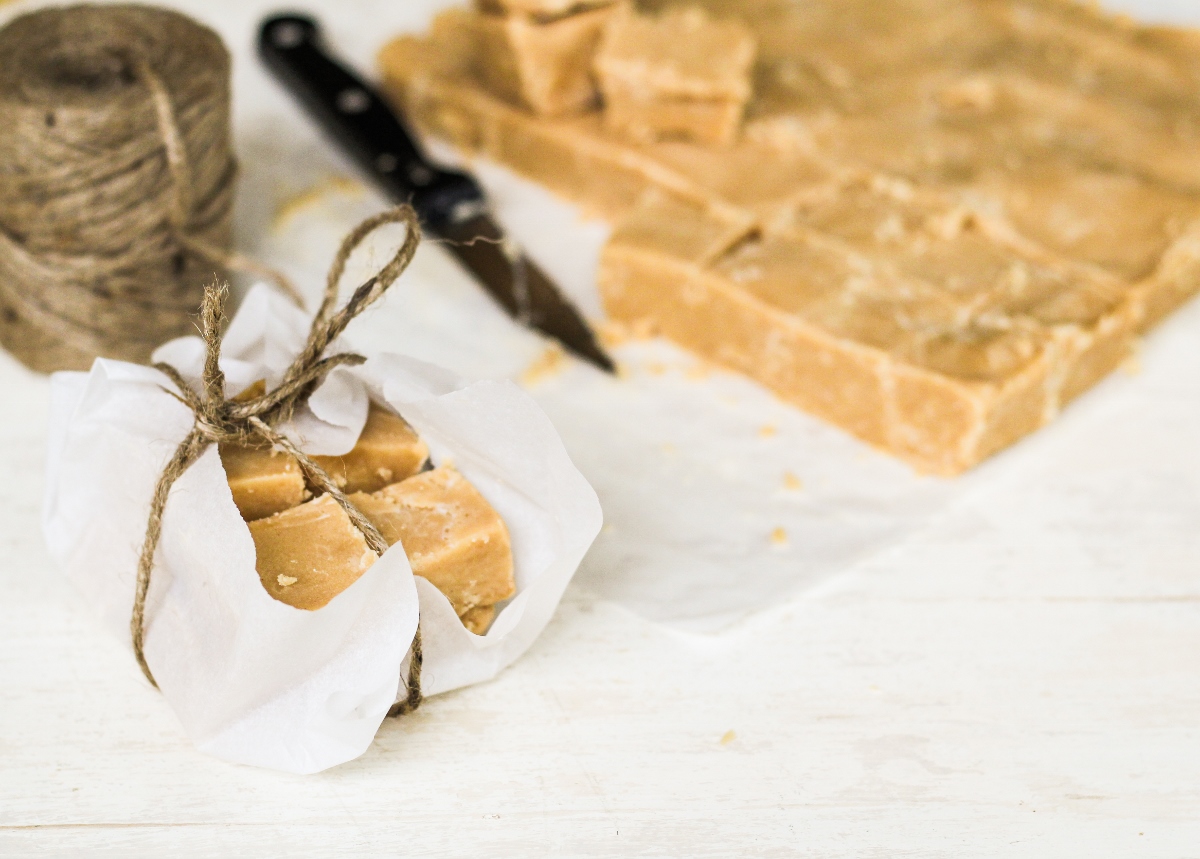
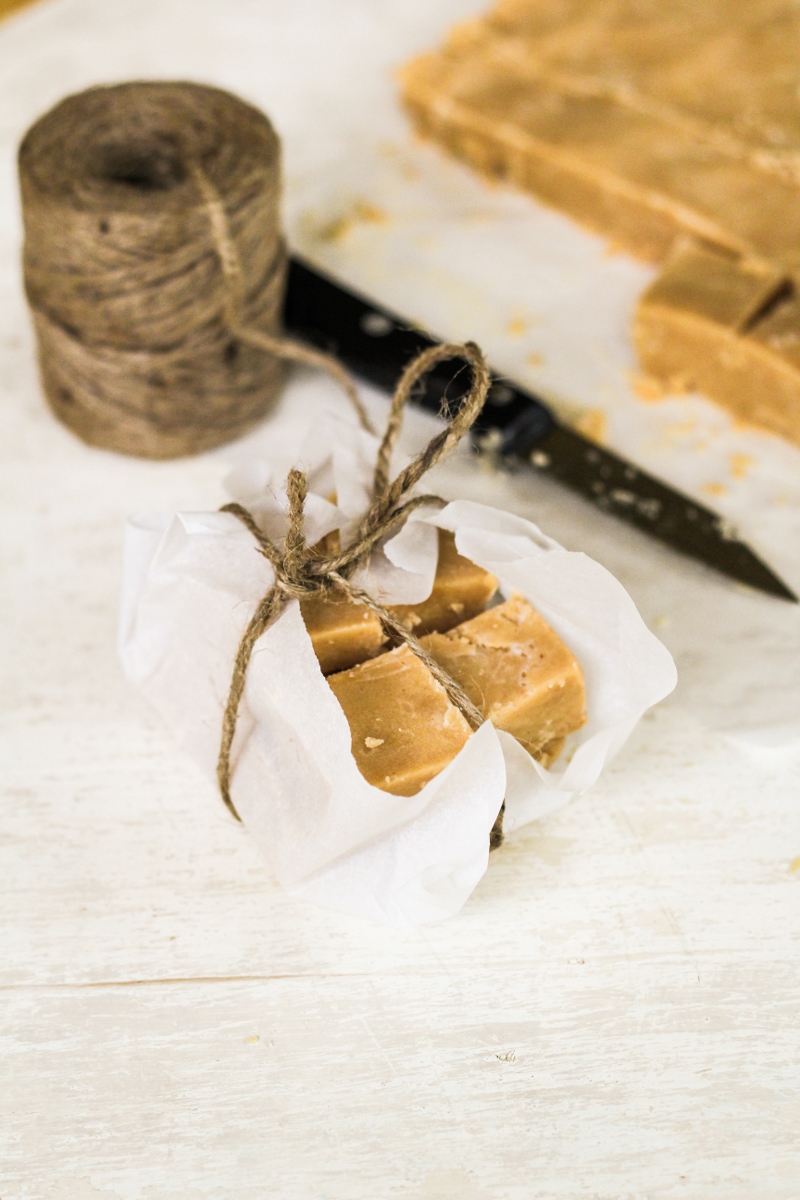
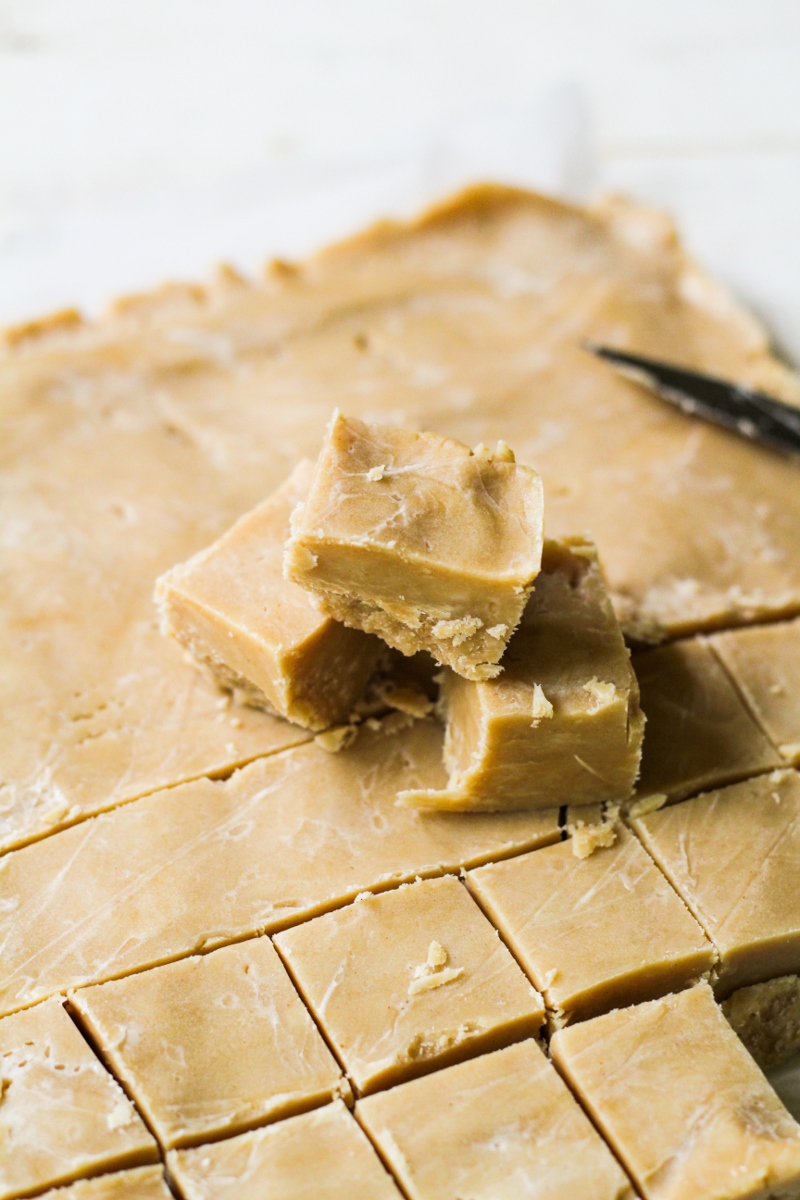
10-Minute Peanut Butter Fudge {Katie at the Kitchen Door}Yesterday marked three major events for people I love – Mother’s Day, my baby brother’s confirmation, and Trevor’s birthday. Since a confirmation happens only once, and since being at home killed two birds with one stone (kidding! I’m always happy to be home), I spent the day with my family, celebrating. Even though Trevor and I had a low-key night out Saturday (and I showered him with presents), not being around yesterday made me feel kind of like a bad girlfriend. So, to make up for it a little bit, the blog post of this weekend goes to Trevor.

10-Minute Peanut Butter Fudge {Katie at the Kitchen Doo}

So, Trevor. Happy Birthday, babe. It’s kind of crazy to think that I’ve already been around to celebrate your birthday with you five times. You should know that you’ve only gotten more awesome over those past five years. I still have as much fun with you as I did back when we used to flirt overtly at every possible opportunity – you know, frosting fights, chasing each other on the lawn, playing footsie in class, embarrassing stuff like that. And I still like the flirting, but now, you’re also my best friend. My favorite person to be with. I’m so excited about you, and about all our plans, and about all the things we haven’t planned that will take us by surprise. I’m going to stop, given that this is the internet equivalent of making out in a public park, but I love you. I tell you all the time but I really, really mean it. You are the best.

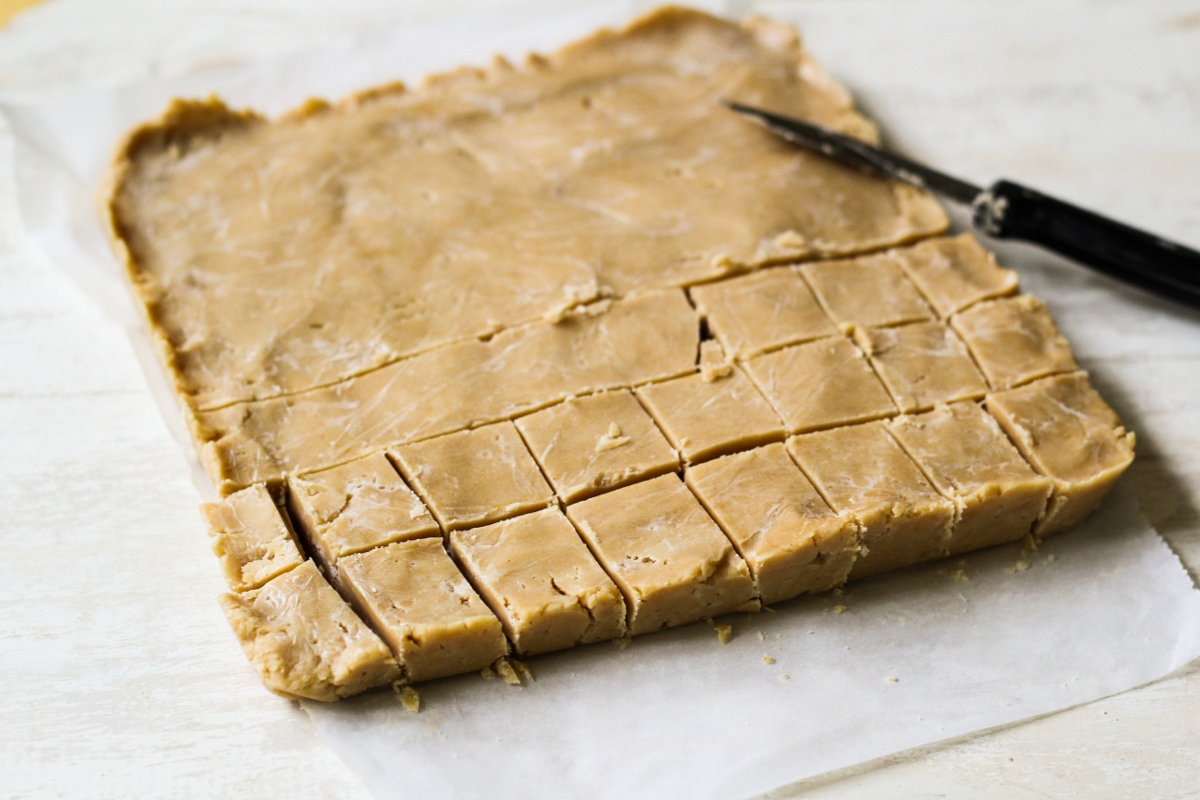
10-Minute Peanut Butter Fudge {Katie at the Kitchen Doo}

I’ve mentioned in previous years how much Trevor likes peanut butter desserts. Although he made me a fantastic cake this year, I went with something simpler, richer, and longer lasting – peanut butter fudge. This recipe, which is from Joy of Cooking via Brown-Eyed Baker, is super simple – it only takes ten minutes of stirring/measuring time, then you pop it in the fridge and it’s ready in an hour. That being said, it has two-and-a-half sticks of butter in it, so be careful. I’d give away as much of it as possible, after test-tasting all the crumbs and edge pieces, of course.

More like this…

Peanut Butter and Fluff Ice Cream

Peanut Butter and Fluff Ice Cream

Oatmeal Scotchies

Oatmeal Scotchies

Classic Seven Layer Bars
Classic Seven Layer Bars
10-Minute Peanut Butter Fudge {Katie at the Kitchen Doo}

Peanut Butter Fudge

Recipe from Joy of Cooking via Brown-Eyed Baker. Yields 64 1-inch-square pieces.

  • 2 1/2 sticks butter (10 oz.)
  • 1 1/4 c. smooth peanut butter
  • 1 1/2 tsp vanilla extract
  • 4 1/2 c. powdered sugar, sifted
  1. Line an 8×8 inch baking pan with parchment paper. Set aside.
  2. Place butter and peanut butter in a medium saucepan and melt over medium heat, stirring occasionally. Bring to a gentle simmer, then remove from heat.
  3. Stir the vanilla extract and powdered sugar into the hot peanut butter mixture until smooth and lump-free. It will be quite thick. Pour into the prepared baking pan and smooth the top to make it even. Press a piece of plastic wrap directly onto the fudge, then refrigerate for at least 1 hour.
  4. Cut the chilled fudge into pieces and serve. Store at cool room temperature or in the fridge in an airtight container.
Book Club: Try This At Home // Cinnamon Brioche “French Toast” Skewers

0 May 7, 2013 Breakfast

Book Club: Try This At Home // Cinnamon Brioche “French Toast” Skewers

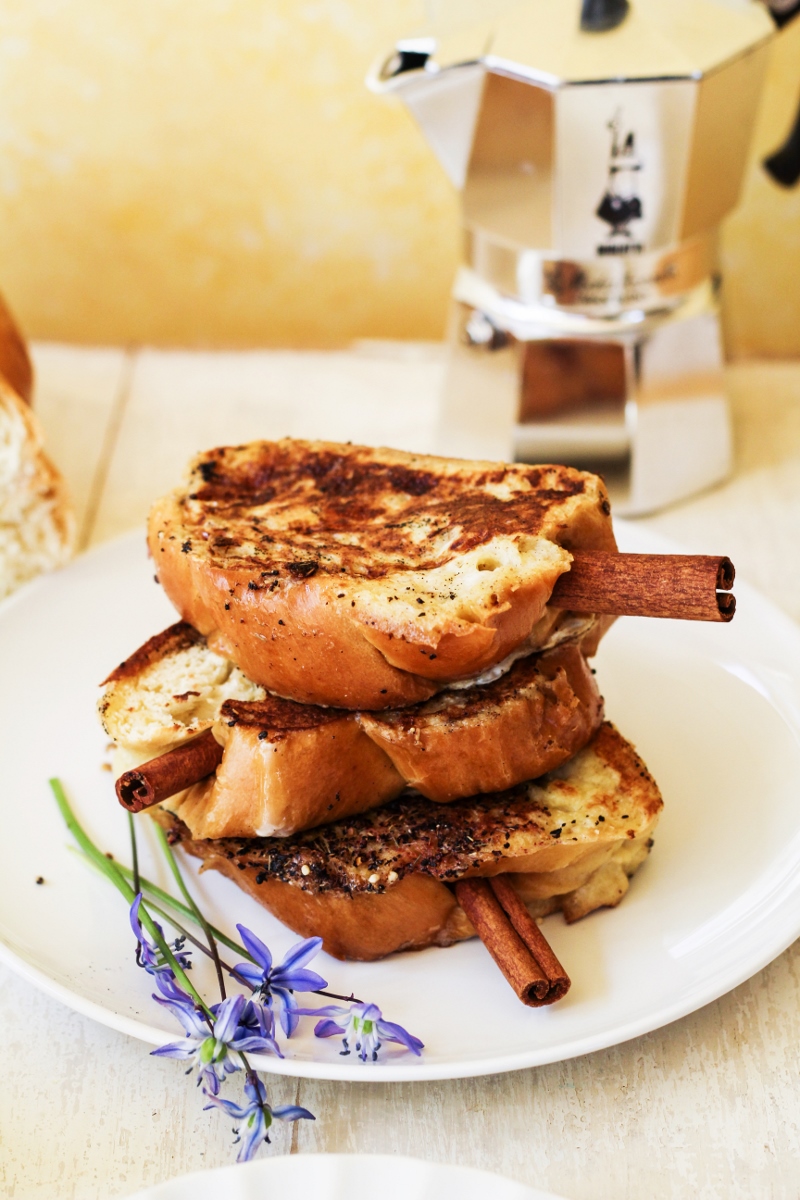
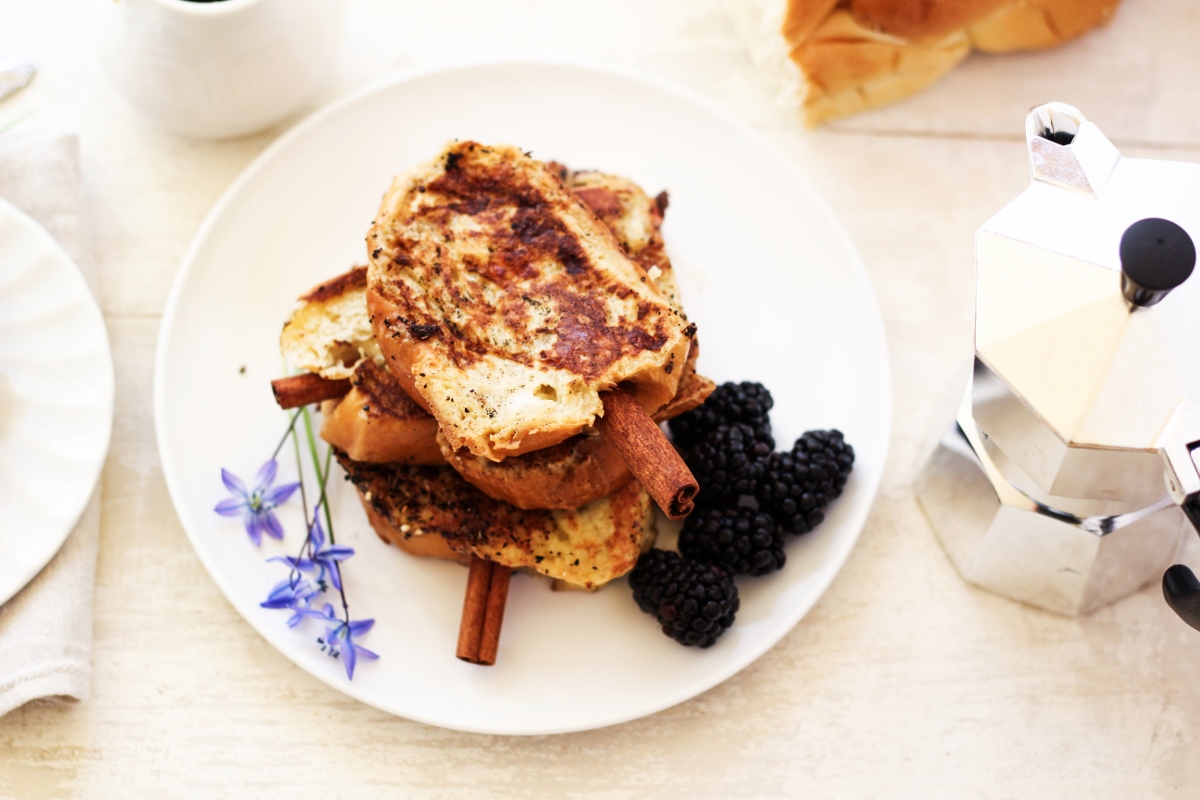
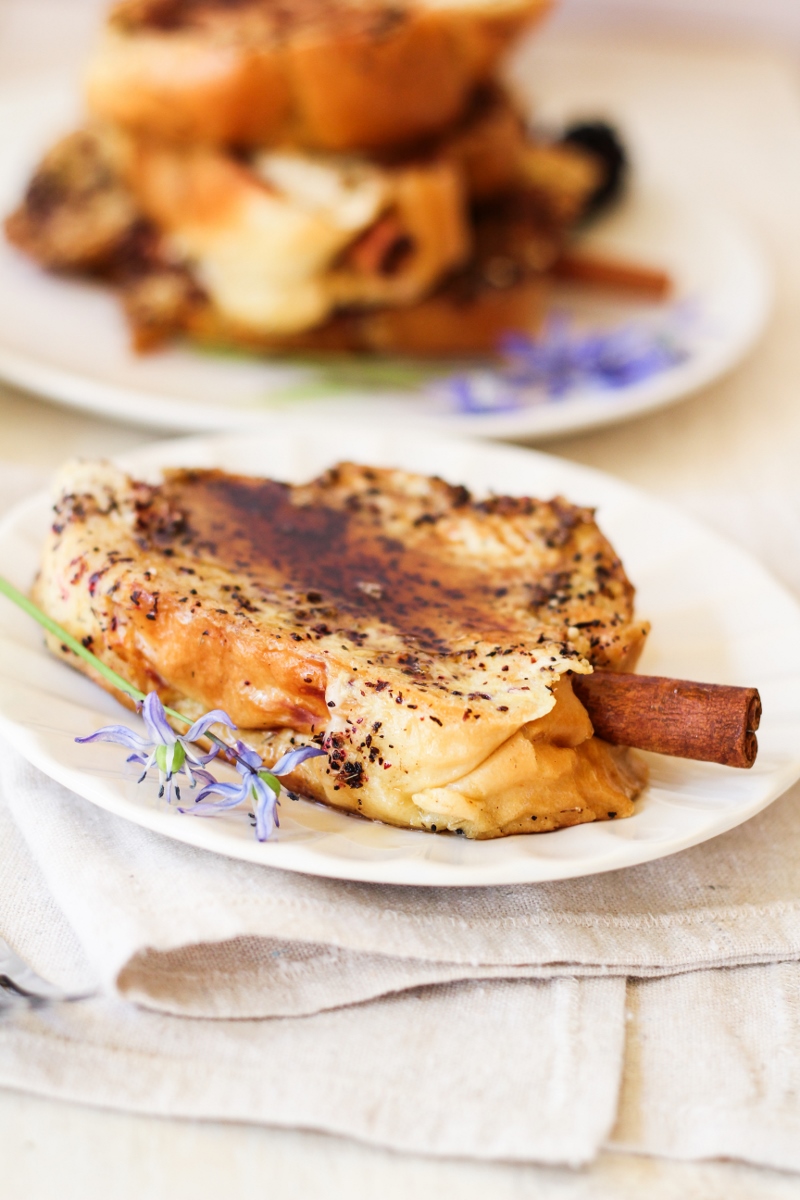
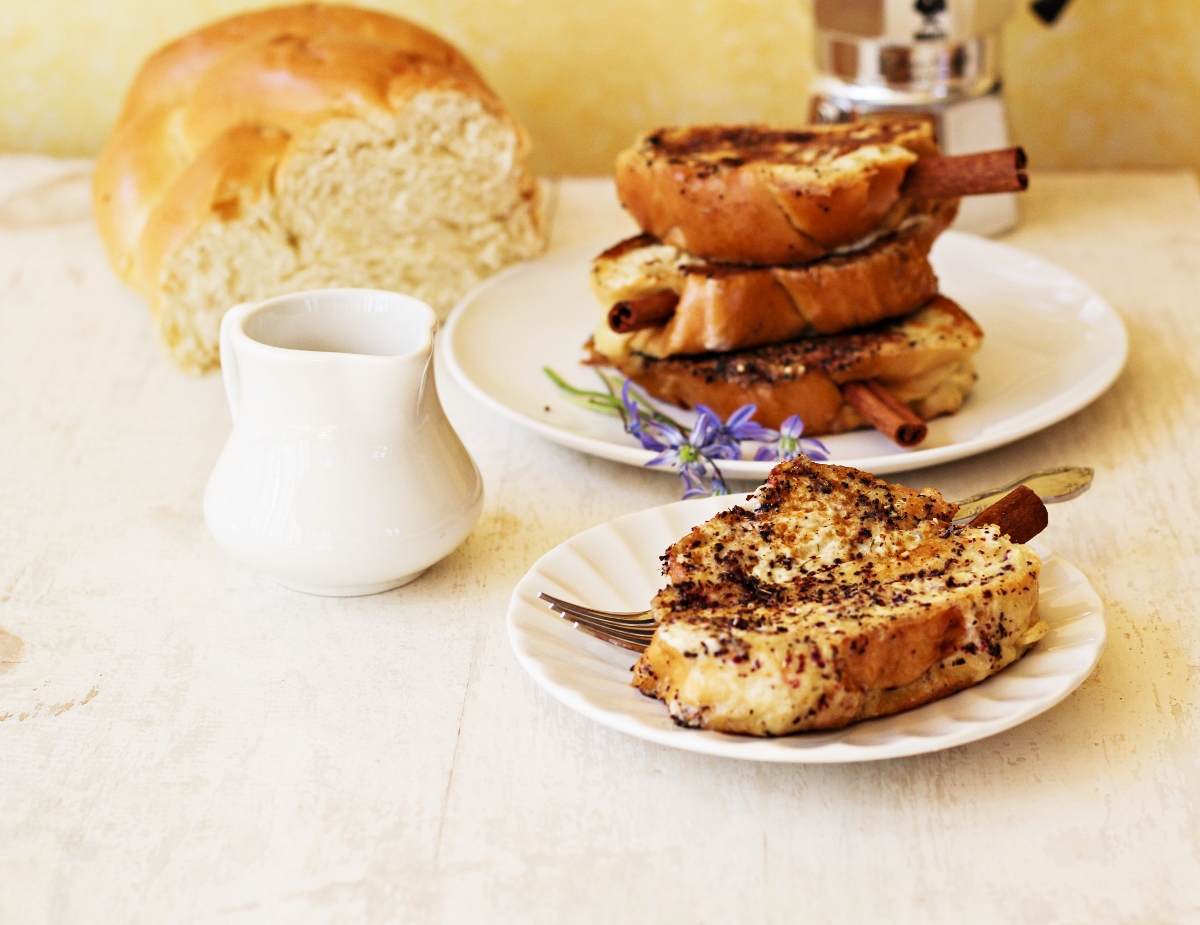
Cinnamon Brioche French Toast Skewers {Katie at the Kitchen Door}

I’m home! We had a great trip – lots of eating, walking, photographing, exploring small villages and oohing and ahhing at all the famous monuments. We even managed to spend a little bit of time, you know, relaxing. Ten days was just long enough, and so far I’m enjoying being home just enough to offset post-trip depression. I will definitely have food stories to share, but I have lots of thoughts and notes and photos to sort through first. In the meantime, I wanted to share this somewhat overdue book review of Try This At Home, the new(ish) cookbook from Top Chef winner Richard Blais that I’ve been meaning to write about since it came out in February.

Cinnamon Brioche French Toast Skewers {Katie at the Kitchen Door}

Try This At Home is a challenging and exciting cookbook. In contrast to many of the books I tend to gravitate towards, its focus is not on seasonal vegetable-based cooking (e.g. Vegetable Literacy, The Chef’s Collaborative), nor is it a photography-driven travel-cum-recipe regional book (e.g. Venezia in Cucina, Every Grain of Rice, The Latin Road Home). Instead, its appeal lies in the new-to-me, modernist techniques and creative twists that it brings to familiar recipes like hamburgers and ice cream. Both during Top Chef and at his restaurants, Blais is known for using molecular gastronomy to elevate classic dishes into something unexpected and exciting. This may sound like a skill that would be difficult to translate into a book designed for home cooks, but Try This At Home makes it surprisingly accessible.

There are certainly recipes that will challenge the home cook, like Spaghetti Carbonara made with Chicken-Flavored Agar-Agar Noodles, but there are many more that require no special tools or ingredients, only an open mind about how flavors work together. Some of his ideas are so creative yet so simple that my reaction is not intimidation, but something more along the lines of “What?! That’s awesome, I’m doing that immediately.” A good example? Freezing blue cheese sauce into ice cream and serving it with a hot steak. So simple, yet if you did that at a dinner party, your guests would be amazed. It’s a book that expands your imagination and you will definitely learn a thing or two from it.

Cinnamon Brioche French Toast Skewers {Katie at the Kitchen Door}

When things do get a bit more complicated, Blais calls it like it is by designating these recipes as “2.0” takes on the simpler version. For example, the Sweet Tea Ice Cream recipe is creative but easy to do at home with a standard ice cream maker; it gets taken to the 2.0 level with the addition of dry ice in the freezing process. If this next level of cooking appeals to you, there are some tools and special ingredients that you may find yourself searching out after reading this book. Some items I’m considering purchasing are an iSi Siphon for creating foams and mousses, a pressure cooker (especially since so many of the recipes call for the delicious sounding Pressure-Cooker Braised Bacon), and maybe someday, a sous vide machine. Before I make any major purchases, though, I’m going to keep testing out the equipment-free recipes – the Vidalia Onion Rings with Beer Mustard, the Lemon Curd and Black Pepper Roasted Chicken, and the Sticky Pudding with Scotch Sauce are all on my shortlist.

I did try out one of these simpler but creative recipes to share with you here – these Cinnamon Brioche French Toast Skewers. It’s a basic french toast recipe except for three clever changes: one, adding dried hibiscus and lavender to the butter in the frying pan or griddle, two, adding the Moroccan spice blend ras el hanout to the batter, and three, skewering the french toast on cinnamon sticks, making a super-fun treat for kids (or maybe even grown-ups at a weekend brunch party). They didn’t have any hibiscus or lavender at my Wholefoods, so I ended up sprinkling a few sachets of Tazo’s Passion tea into the pan (it’s largely hibiscus-based) and I LOVED the effect it had. The dried flowers coated the french toast and gave it a sophisticated and floral tang that was unexpected but so delicious. I would absolutely make it this way again.

The bottom line: Try This At Home is a fun and creative introduction to some of the techniques of molecular gastronomy, made accessible through the use of simple and easy to find kitchen tools and well-loved flavor combinations. Some of Blais’ recipes are challenging, but many of them are simply new ideas that could be executed by any motivated home cook. I’d recommend it to experienced cooks with an urge to explore new methods and new flavors.

Disclaimer: A review copy of Try This At Home was provided to me free of charge by Clarkson Potter, but I was not otherwise compensated and all thoughts are my own.

Cinnamon Brioche French Toast Skewers {Katie at the Kitchen Door}

Cinnamon Brioche “French Toast” Skewers

Reprinted with permission from Try This At Home. Serves 4.

I made this French toast for a very sophisticated audience when I did a cooking segment on the PBS Sprout kids’ program The Sunny Side Up Show, where I appeared with the resident star, a squawking chicken puppet named Chica. The recipe is standard egg-dipped French toast, but I cut slices of day-old brioche into long rectangles and use cinnamon sticks to skewer them, so the overall effect is of French-toast-on-a-stick.

  • 4 large eggs
  • 1 cup whole milk
  • 1 vanilla bean, split, seeds scraped out, and seeds pod reserved
  • 1 teaspoon kosher salt
  • 1 teaspoon ras el hanout (Moroccan spice blend; optional)
  • Four 2-inch-thick slices brioche
  • 12 cinnamon sticks
  • 2 tablespoons unsalted butter, plus (optional) more for serving
  • 2 dried hibiscus flowers, crushed (optional) [Katie’s note: I used two sachets of Tazo Passion tea in place of the hibiscus and lavender flowers to wonderful effect]
  • 1⁄2 teaspoon dried lavender flowers (optional)
  • Pure maple syrup, warmed, for serving
  1. Preheat the oven to 300°F. Place a cooling rack over a baking sheet and set aside.
  2.  In a shallow dish, whisk the eggs, milk, vanilla seeds, salt, and ras el hanout together.
  3. Cut the crusts from the brioche slices and cut each slice crosswise into 3 strips. Insert a cinnamon stick into one end of each strip. Dip each piece of bread in the egg mixture, letting it soak for at least 5 seconds on each side, and transfer to the cooling rack to drain.
  4. Heat a pancake griddle or electric skillet over medium-low heat. Add the butter, the vanilla pod, and hibiscus and lavender flowers, if using, and cook until the butter is melted and bubbling. Add half of the soaked bread pieces and cook, turning once, until golden, 2 to 3 minutes per side. Transfer them to the rack-lined baking sheet and keep warm in the oven while you cook the remaining bread.
  5. To serve, stack 3 skewers on each of four plates. Spread a little more butter on them, if desired, drizzle warm syrup over them, and serve.
  • « Previous Page
  • Page 1
  • …
  • Page 29
  • Page 30
  • Page 31
  • Page 32
  • Page 33
  • …
  • Page 57
  • Next Page »

Primary Sidebar

Subscribe!

Get creative recipes and menu ideas delivered straight to your inbox.

Most Popular

A House // Sweet Potato and Coconut Milk Soup with Brown Rice and Lentils

Monthly Fitness Goals: July // Homemade Spinach Wraps with Chopped Greek Salad

A New Job // Classic Seven-Layer Bars
Butternut Squash Carbonara with Fried Sage and Caramelized Onions
Happy Birthday, Trevor! // Peanut Butter Fudge

Cookbook Review and Giveaway: Home Made Winter

Drizly

Please note!

Full disclosure: if you purchase anything at Amazon using the above links or any other links to Amazon on this site, I will receive a small commission. Just so you know!

Copyright© 2018 · Cookd Pro Theme by Shay Bocks

View Mobile Site
This site uses cookies: Find out more.