• Skip to primary navigation
  • Skip to content
  • Skip to primary sidebar
  • Home
  • Recipes
  • Features
    • Cookbook Reviews
    • Ingredient of the Week
    • Sunday Dinner
    • Fitness Goals
  • Travel
  • About
    • Privacy Policy
    • Cookie Policy
  • Work With Me

Katie at the Kitchen Door

Globally-inspired, seasonal recipes

Blog Page

Ingredient of the Week: English Peas // Green Pea Fritters with Herbed Creme Fraiche

0 June 25, 2013 Cookbook

Ingredient of the Week: English Peas // Green Pea Fritters with Herbed Creme Fraiche

Ingredient of the Week: English Peas // Green Pea Fritters with Herbed Creme Fraiche

I was reminded the other night of the difference between a mediocre English pea and a perfect one. The bag of peas I had picked up at the farmer’s market was just so-so – the peas were fresh, but not particularly sweet, and starchy even though they were small. As I shelled them I wondered if perhaps I had built them up as a favorite ingredient in my memory more than I should have. Really, these run of the mill vegetables were what I had spent months anticipating? Then, last night we went to Andover to take care of this week’s gardening needs. Of course, as soon as I got off the train in town it started pouring, then thundering, and then hailing. It was not an ideal situation. Instead of gardening we sat inside and listened to the storm while eating tacos made from the El Paso kit I found in the cupboard. Around 8 the lightning moved far enough into the distance that we decided to brave the remaining weather, so we ran out into the humid garden, the darkness deepening by the minute, and rushed through our chores. It was dirty, and dark, and the mosquitos were vicious, but I managed to grab a few handfuls of peas, favas, lettuce, and rhubarb to take home. On the drizzly drive back I was frustrated – we put so much work and money and time into this garden and here it was, mid-June, and all we had was a measly half-full bag of veggies to show for it, while the deer were having a free-for-all with our baby fruit. What was the point?
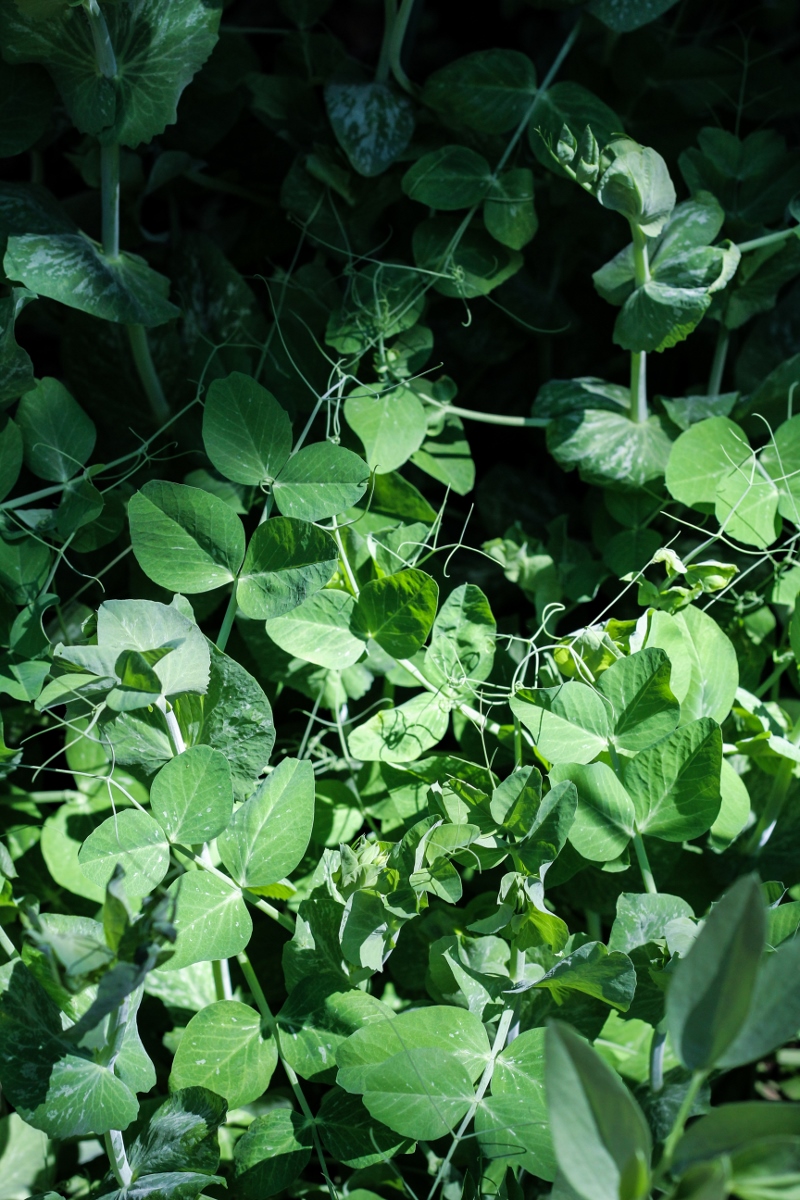
A mess of peas

Back in Somerville, I washed the veggies and began putting them away. On a whim, I cracked open one of the pea pods and popped the peas into my mouth. I was immediately overwhelmed by the sweetness. How different from the peas I had bought! I’m sure the farmer’s market peas were initially just as sweet, but after coming off the vine they deteriorate quickly. Although the garden is still frustrating, the peas were positive reinforcement that all of our work is paying off, at least as measured by quality.
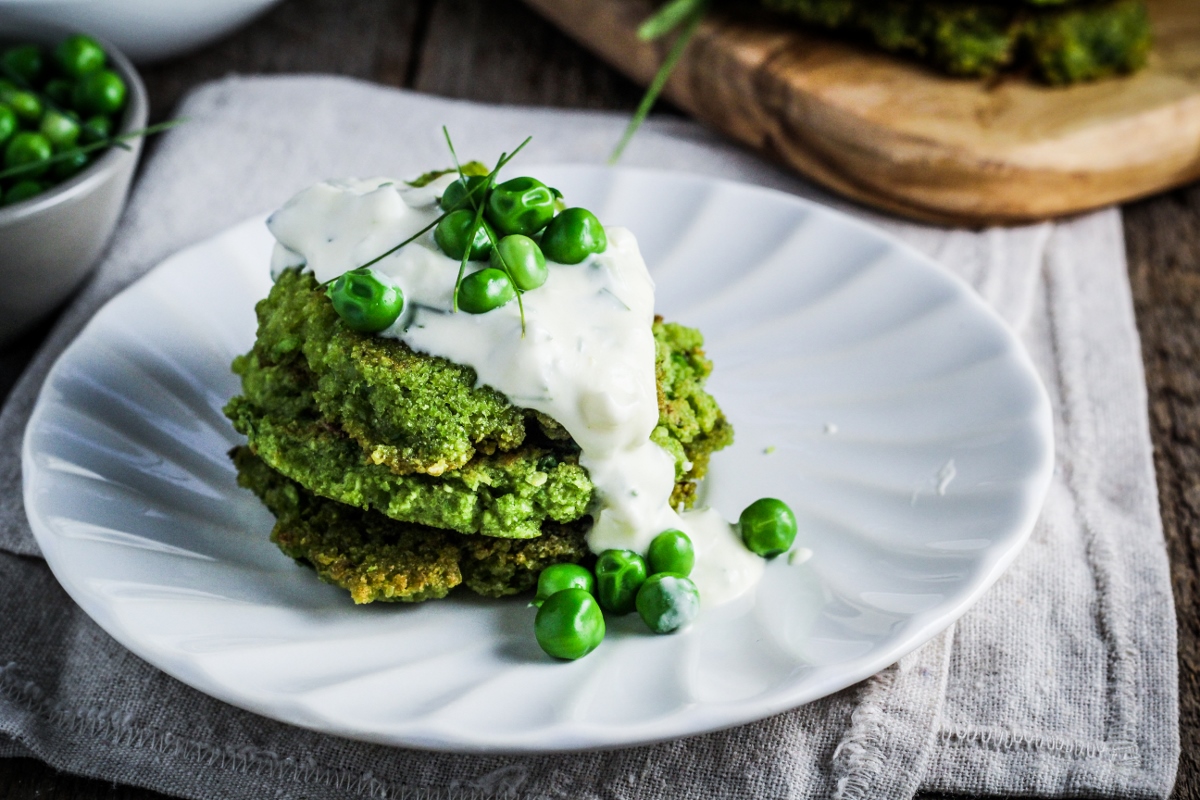
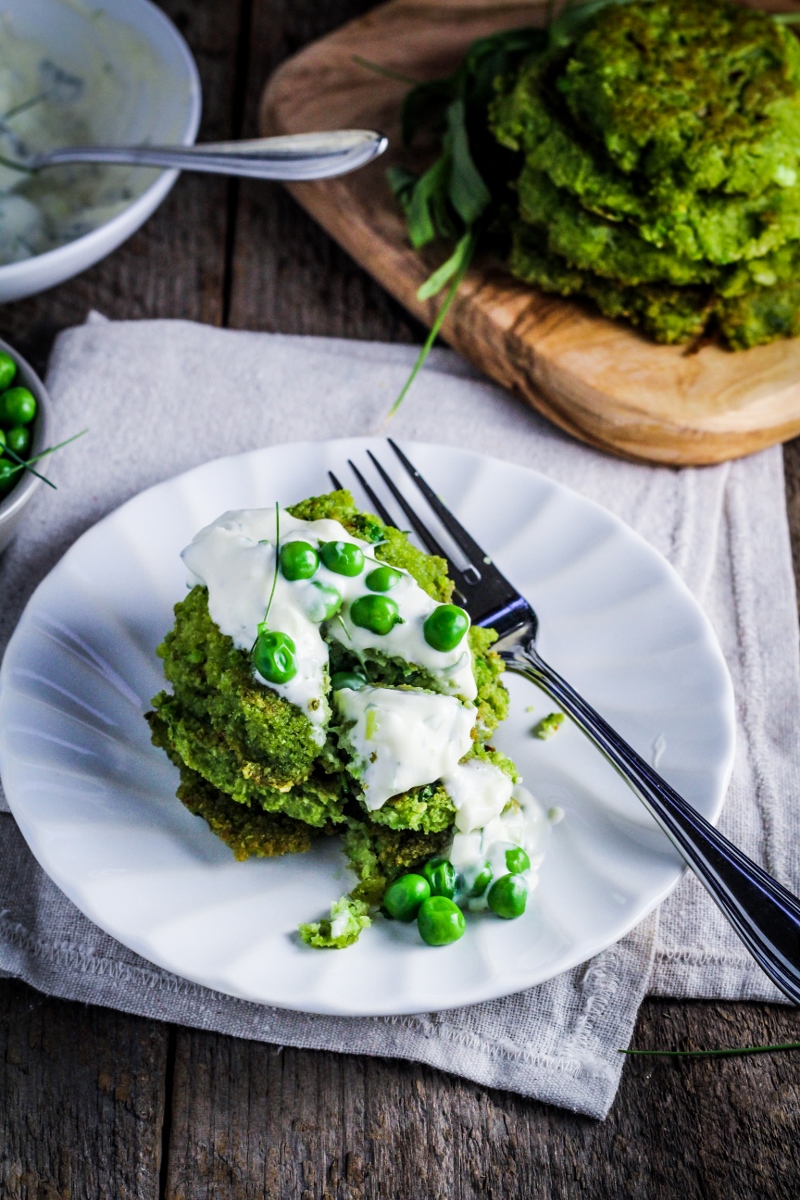
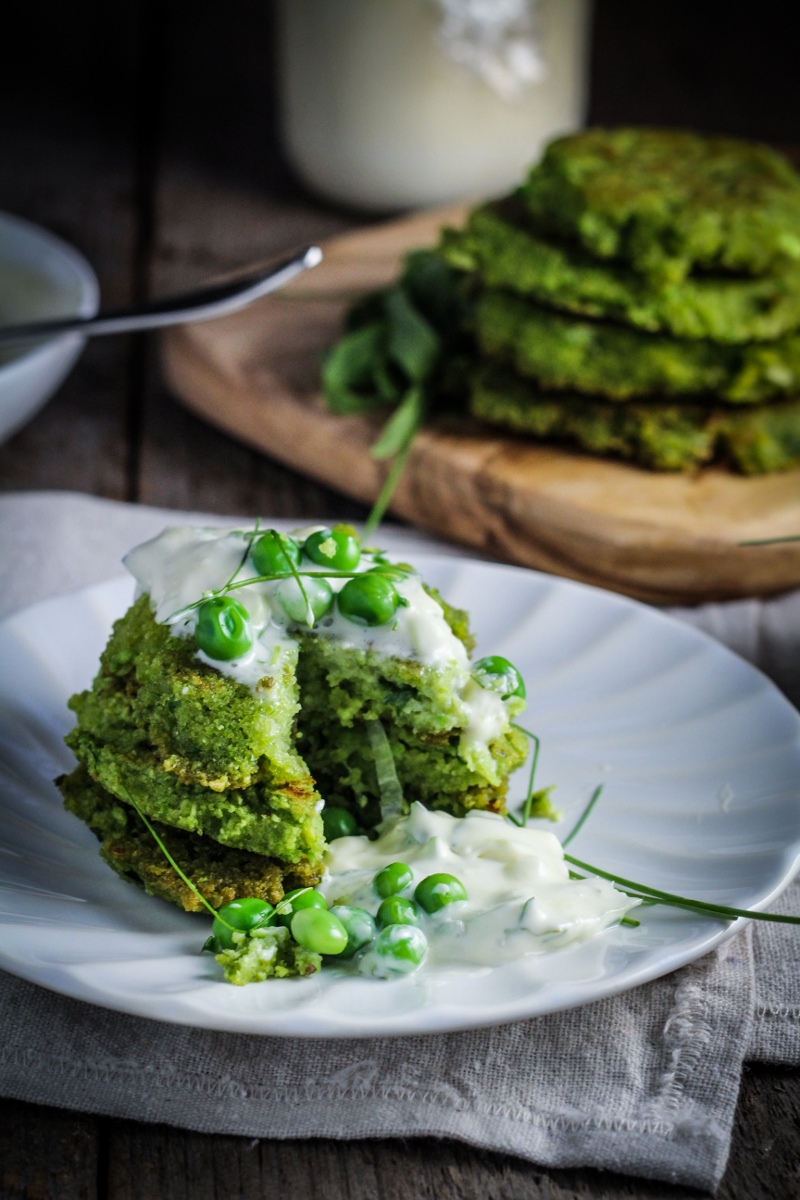
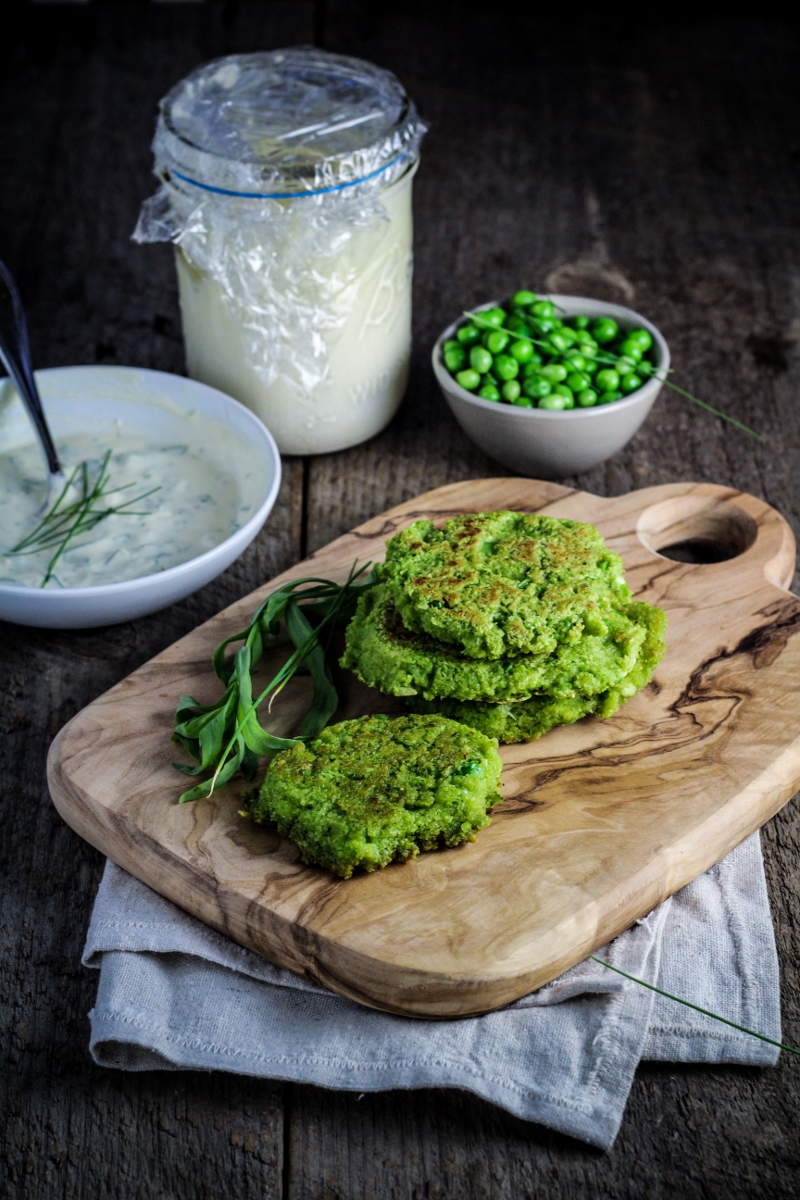
Ingredient of the Week: English Peas // Green Pea Fritters with Herbed Creme FraicheNow, after that story I’m being a little bit unfair and sharing a recipe that actually wouldn’t suffer too much from starchy peas (I’m saving what I made with our garden peas for Thursday’s post!). This recipe for green pea fritters uses both fresh and dried peas in what is basically a take on falafel. It’s from Deborah Madison’s Vegetable Literacy, and I was pleased with how easy, healthy, and flavorful these were. I love the use of tarragon in the fritter batter – something about tarragon just makes peas taste more like peas, a discovery I made when trying to create one of my favorite meals from Prague (that is a really old post – please don’t judge me too much!). The herbed creme fraiche is essential in making these fritters really sing, so don’t skip it. And, if you haven’t tried making creme fraiche from scratch, you should – all you do is stir together 1 cup of heavy cream and 2 TBS of yogurt or buttermilk, cover it, leave it in warm place, and 24 hours later tah-dah! Creme fraiche, for a fraction of the price you’d pay in the store.

To summarize: peas are really good right off the vine and they make gardening worthwhile. Make these fritters with some fresh peas. Make your own creme fraiche, it’s easy and cheap. Come back tomorrow for more pea recipes.
Ingredient of the Week: English Peas // Green Pea Fritters with Herbed Creme Fraiche

Green Pea Fritters with Herbed Creme Fraiche

Recipe adapted slightly from Vegetable Literacy. Makes 12 small fritters (serves 4).

  • 3/4 c. green split peas (dried)
  • 1 clove garlic, peeled and coarsely chopped
  • 1 c. shelled fresh peas, divided, from about 1 lb. of pea pods
  • 2 TBS chopped tarragon, divided
  • sea salt
  • 1/4 tsp baking soda
  • 3 scallions, white and green parts only, thinly sliced, divided
  • freshly ground pepper
  • 1/3 c. creme fraiche
  • 1 tsp minced chives
  • olive oil or ghee, for frying
  1. The day before making the fritters, place the green split peas in a bowl and cover with water. Cover loosely with plastic wrap and let sit on the counter overnight to soften.
  2. The next day, drain the green split peas and puree them in a food processor until smooth. Add the garlic, and 1/2 c. of the fresh peas and pulse until the peas are well broken up. Add 1 TBS of the chopped tarragon and a sprinkle of sea salt and pulse a few times to combine.
  3. Scrape the mixture into a bowl. Stir in the baking soda and 2/3 of the sliced scallions. Season the fritter batter to taste with salt and pepper.
  4. Bring a small pot of salted water to a boil. Blanch the remaining 1/2 c. of fresh peas in the boiling water for 1-2 minutes, until bright green, then immediately drain and run under cold water. Set aside.
  5. Stir together the creme fraiche, remaining 1 TBS of tarragon, remaining scallions, and the chives. Season to taste with salt and pepper. Set aside.
  6. Heat a film of olive oil or ghee in a large frying pan over medium heat. Drop spoonfuls of the fritter batter into the pan, pressing down on the batter to make rounded fritters about 1/2 an inch thick. Cook for 2 minutes a side, flipping when golden brown. Drain cooked fritters on a paper towel lined plate. Repeat until all fritter batter is used.
  7. Serve the fritters warm with a generous drizzle of the creme fraiche and a spoonful of the blanched peas on top.
Ingredient of the Week: English Peas // Smashed Pea, Dill, and Feta Crostini

6 June 24, 2013 Cookbook

Ingredient of the Week: English Peas // Smashed Pea, Dill, and Feta Crostini

Ingredient of the Week: English Peas // Smashed Pea, Dill, and Feta Crostini {Katie at the Kitchen Door}

I have another ingredient of the week for you all! And… it’s peas. The podded, shelling kind, also known as English peas. I hope you like this series and I’m not boring you to death with the same ingredient every day (please, leave a comment if I am) – it’s so much fun for me to get creative thinking of ways to use one ingredient, and it’s certainly effective in making me feel as though I’m getting the most out of seasonal produce. If you missed the first week (starring rhubarb!) and are curious about how this series came about, you can read the intro here. But then come back and get excited about this humble but sweet green vegetable.

I always think of peas as an early spring vegetable, and I start checking for them in the markets as early as March. I really should know better, since I grow peas in my own garden and they’re barely above ground in March. The truth is, in New England, shelling peas really aren’t widely available until mid-June – the first time I saw them in any sort of quantity was last week at the farmer’s market. It can be an excruciating wait, but once the peas are ready it seems as if something else is ripe every week following that. They’re a true sign that summer is arriving.

Ingredient of the Week: English Peas // Smashed Pea, Dill, and Feta Crostini {Katie at the Kitchen Door}

Trevor was skeptical of whether or not peas were really interesting enough to dedicate an entire week to. His point, which is fair, was that peas are usually a side ingredient, not the main ingredient. To that end, I’m going to try and avoid recipes with the phrase “with peas.” We want peas to be the star, not something tacked on to the end. Peas are typically used in fairly common ways – mixed into pasta, served as a side dish with butter, pureed into a soup, or as part of a green spring vegetable salad. All of these are delicious, but I’m going to try and think outside of the box this week. I’m not promising leaps and bounds out of the box, but hopefully I’ll at least push on the edges a little.

Ingredient of the Week: English Peas // Smashed Pea, Dill, and Feta Crostini {Katie at the Kitchen Door}

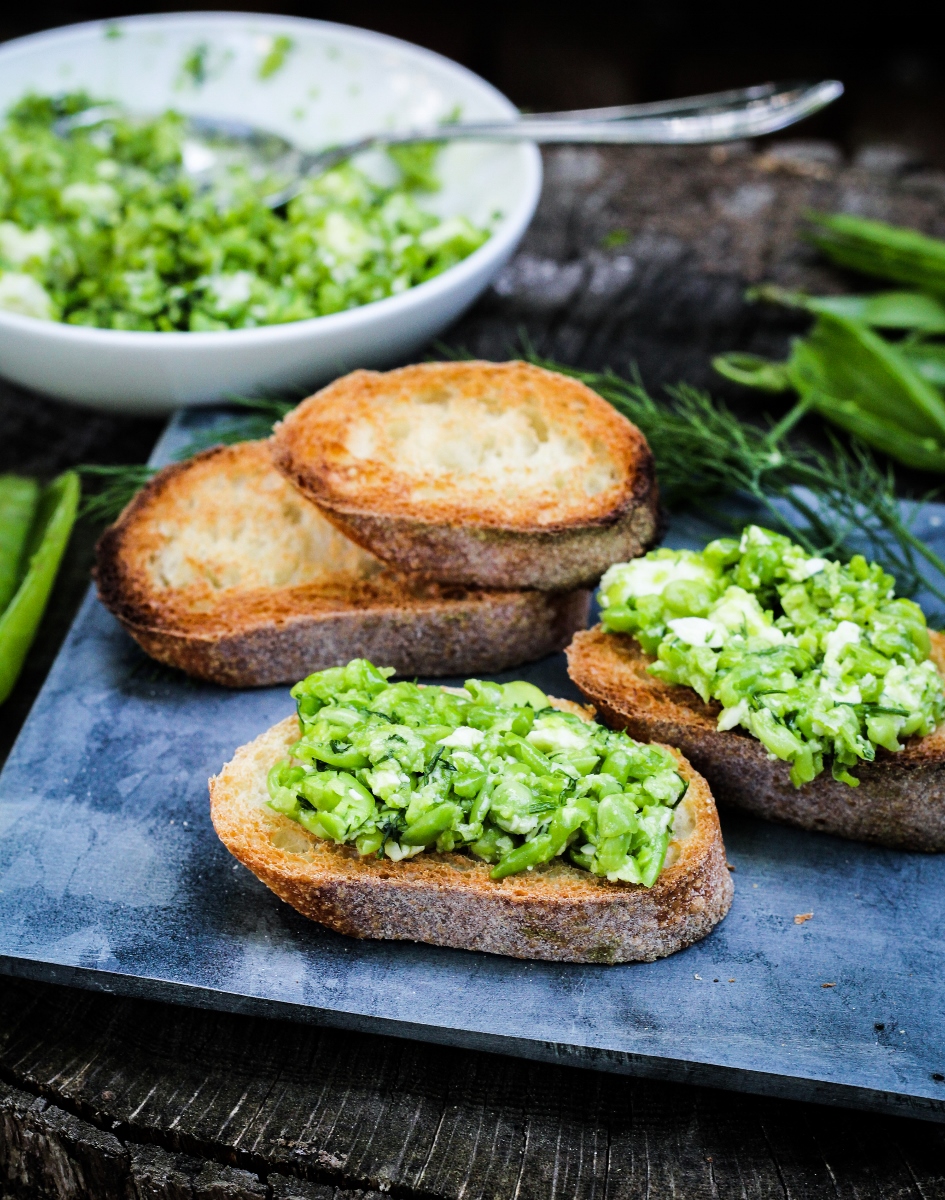
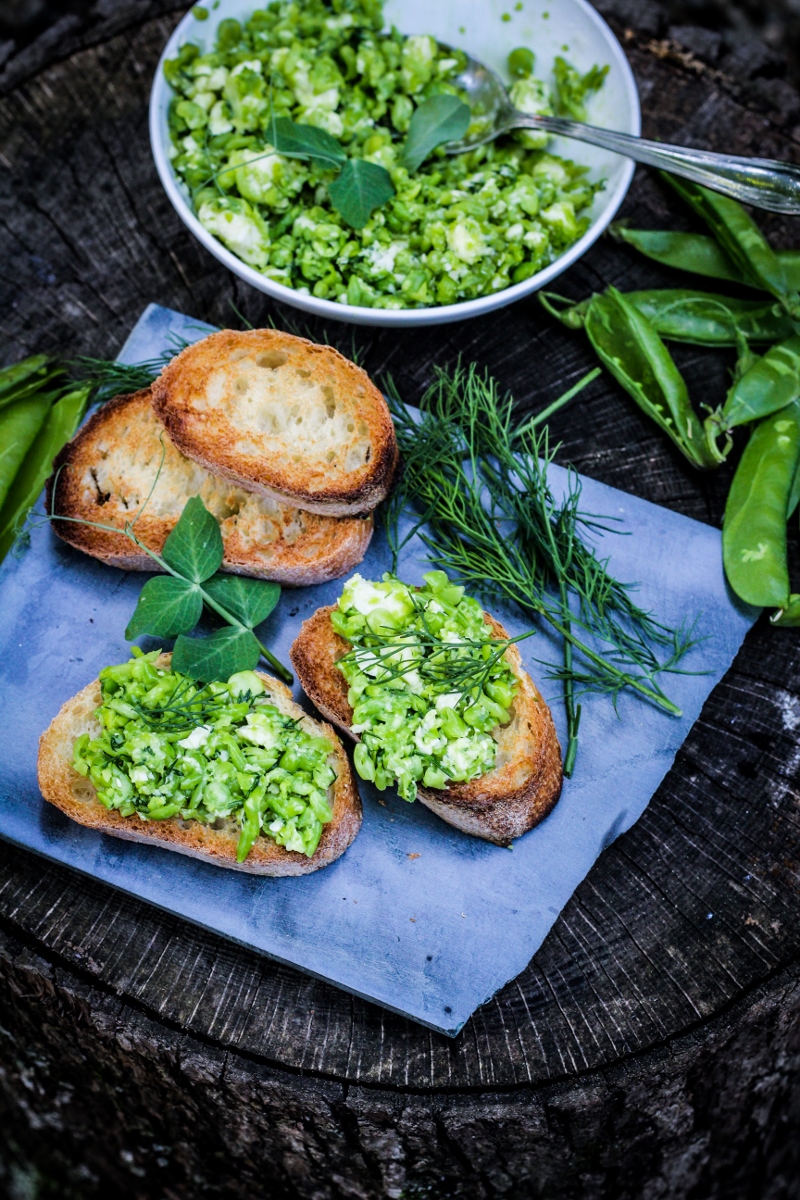
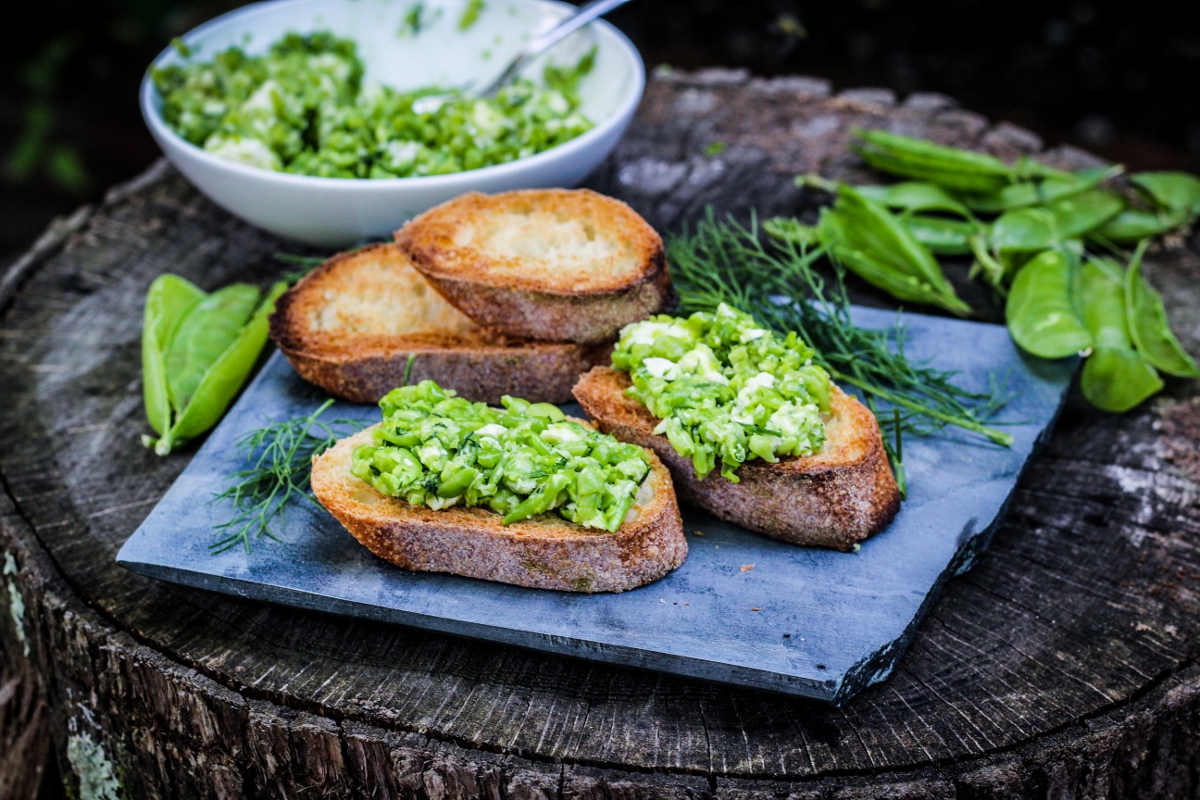
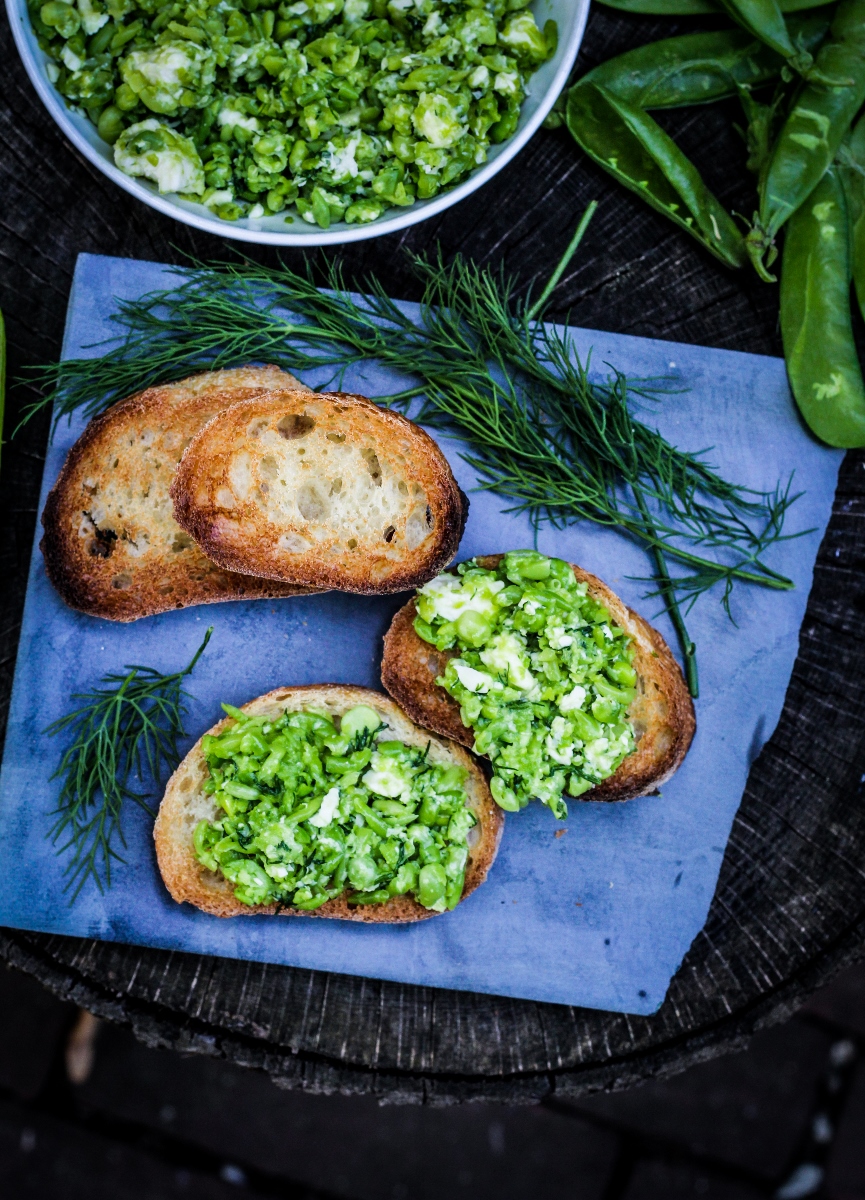
These little crostini come from a book that’s a favorite source of inspiration for me – Maria Elia’s The Modern Vegetarian. One of the things that I really like about the book are the three mini-section that focus exclusively on the textures of one ingredient. In textures of peas, she includes five recipes – fresh pea stock, sweet pea custards, pea, basil and mint soup, pea jelly, and these smashed pea, dill and feta crostini. The idea is sort of that you make them all together and serve them at once to highlight the contrasts possible with a single ingredient. I considered doing that, but a pound of peas really doesn’t go very far – I’ll have to stock up again before I try the others. But the crostini are very, very good. Lots of flavors all mingled up – sweet, salty, lemony, herbal. I could have easily wolfed down the whole batch in 5 minutes. As it was, I paced myself and shared them with Trevor, sitting outside eating dinner and drinking agua frescas as the heat finally subsided for the day. A beautiful summer evening, with beautiful summer food.

Ingredient of the Week: English Peas // Smashed Pea, Dill, and Feta Crostini {Katie at the Kitchen Door}

Smashed Pea,  Dill, and Feta Crostini

Recipe adapted from The Modern Vegetarian. Serves 4 as an appetizer.

  • 1 garlic clove
  • 2 TBS fresh dill, finely chopped
  • sea salt
  • 5 oz. shelled fresh peas, about 1 cup (from about 1 lb. of peas in their pods)
  • 2 TBS olive oil
  • 1/3 c. crumbled feta cheese
  • 2 TBS freshly grated Parmesan cheese
  • 1 TBS lemon juice
  • 8-10 slices baguette
  1. Place the garlic, dill, and a pinch of sea salt in a mortar and pestle and pound until they form a paste. Scrape into a small bowl and set aside.
  2. Add half of the peas, 1 TBS of the olive oil, and a small pinch of salt to the mortar and pestle and pound to form a paste (you want it to be mostly smooth, but a few chunks of peas is good). Add to the bowl with the garlic. Repeat with the remaining peas and olive oil. Stir the smashed peas and the garlic together until evenly combined. Mix in the feta, Parmesan, and lemon juice, and taste for seasoning, adjusting salt or lemon if necessary.
  3. Toast the slices of bread in a toaster, on a griddle pan, or under the broiler until golden brown. Immediately spread the toast with the pea and feta mixture and serve.
Summer Bucket List // Strawberry-Lime Agua Fresca

1 June 23, 2013 Drink

Summer Bucket List // Strawberry-Lime Agua Fresca

Strawberry Lime Agua Fresca {Katie at the Kitchen Door}

It’s official – it’s summer. The sun is up early and the promise that a summer morning holds is so tangible in the earliest hours, when the light is golden and filtered through the leaves, the streets are quiet, and the breeze is fresh with overnight dew. Well before the droopy, heat-baked hours of the afternoon, the morning is energizing and opens the world up, and I daydream of late afternoon beach picnics, cool dips in the lake, panoramic mountain-top views, and drippy ice cream cones. Most days, I instead have to go sit in a climate-controlled office all day, and on those days I try to make the most of my early morning runs, park bench lunch breaks, and evening walks home. But on the days when I don’t have to don a suit, I want to be outside embracing the season as much as humanly possible. And so, I write this bucket list. I never get to everything, but I like to write it down and do my best.

Strawberry Patch

Some of the things on last year’s bucket list are making a second appearance this year. Of the five things that were left on my list last year, I have since done two of them – planning a trip (and I’m already working on next year), and just this past week I made it out to the Harbor Islands for a company-sponsored day of service (spending three hours weeding and pruning trees and planting flowers felt more like how I like to spend my free time than service – I’ll take it). Grilling is sticking around for this year, and I already have at least one day planned at the Cape… but I’d like it to be more than that if possible. Of course there’s also some new things, because goals evolve. And so:

  1. Go camping. I got a tent for Christmas this year, and I want to use it. Rain or shine. I sometimes think of myself as this super-athletic, outdoorsy, idealistic version of myself that I’m really not at all, given that I haven’t gone camping in years. But I can change that! I just have to get Trevor on board.
  2. Go to the beach. Summer used to be synonymous with the beach for me. Besides the two weeks we spent on the Cape, we’d also regularly make the journey to Crane’s Beach in Ipswich, often in the second half of the day after the morning crowds had dispersed. I love swimming, I love being in the ocean, I love walking on the sand. I had a few hours of beachy happiness in Italy, but I want to make that happen more than once, if possible.
  3. Ballet camp. I’m already signed up for this one, so that’s half the battle, but I really want to make sure I go – and make the most of it. The plan is that for two weeks in August I’ll be doing four hours a day of dance after work. I’m prepared to be exhausted, but I’m really excited about the opportunity to do something with so much focus. And hopefully get a little svelter in the process.
  4. Spend time with my brother. My little brother just graduated from Cornell, and in August he’ll be headed out to Seattle. I’m excited about visiting him there, but before he leaves, I want to make sure we got some quality sibling time while we’re both on the same coast. Starting with drinks this Wednesday.
  5. Learn video. Video seems like it may be the way blogging is headed, and it’s a little intimidating, I’d like to start learning. My new camera has decent video capabilities, and you have to start somewhere – why not the beginning. Also, my friend Tracy has promised that she’s going to make me a YouTube star. So we’ll see how she does on that.
  6. Grilling on my own. Grilling. Fire. It’s still so scary. I’ve got to get over this one and do it by myself. So far I managed to kind of light the grill on my own, but then Trevor took over. See these steaks as evidence.
  7. Preserve our harvest. I really, really hope we have enough of a harvest to merit preserving – I would 100% consider our garden a success if it happens. So far, it looks like we’ll have plenty of peaches and blackberries (knock on wood), although the stupid deer are starting to go for the peaches. A good reason to eat more venison. If I’m eating homemade blackberry jam next January I will be the happiest.
  8. Practice driving. I used to be a decent driver. You know, not great, but I drove all the time and I was fine on long trips to and from Maine and Vermont and the like. But over the past three or four years, I’ve almost completely stopped driving, partly because I don’t have my own car, partly because Trevor prefers to drive when we go somewhere together, but also partly because I’ve convinced myself that I can’t do it. And I do not want to be some 30-year old woman with a mental block that keeps me from getting in the car, so I have to start reversing that mindset. Now. With practice.

Strawberry Lime Agua Fresca {Katie at the Kitchen Door}

There are a few other big things on the horizon that aren’t exactly of the bucket list sort – for example, starting July 1st, I’ll be moving to a new apartment to share with Trevor, a big and exciting and kind of scary change for both of us. There is also a possibility that I might be doing some travel for work, but I don’t want to jinx it by getting overly excited until it’s a sure thing. All told, it’s shaping up to be a busy summer, but hopefully in a good way.

Strawberry Lime Agua Fresca {Katie at the Kitchen Door}

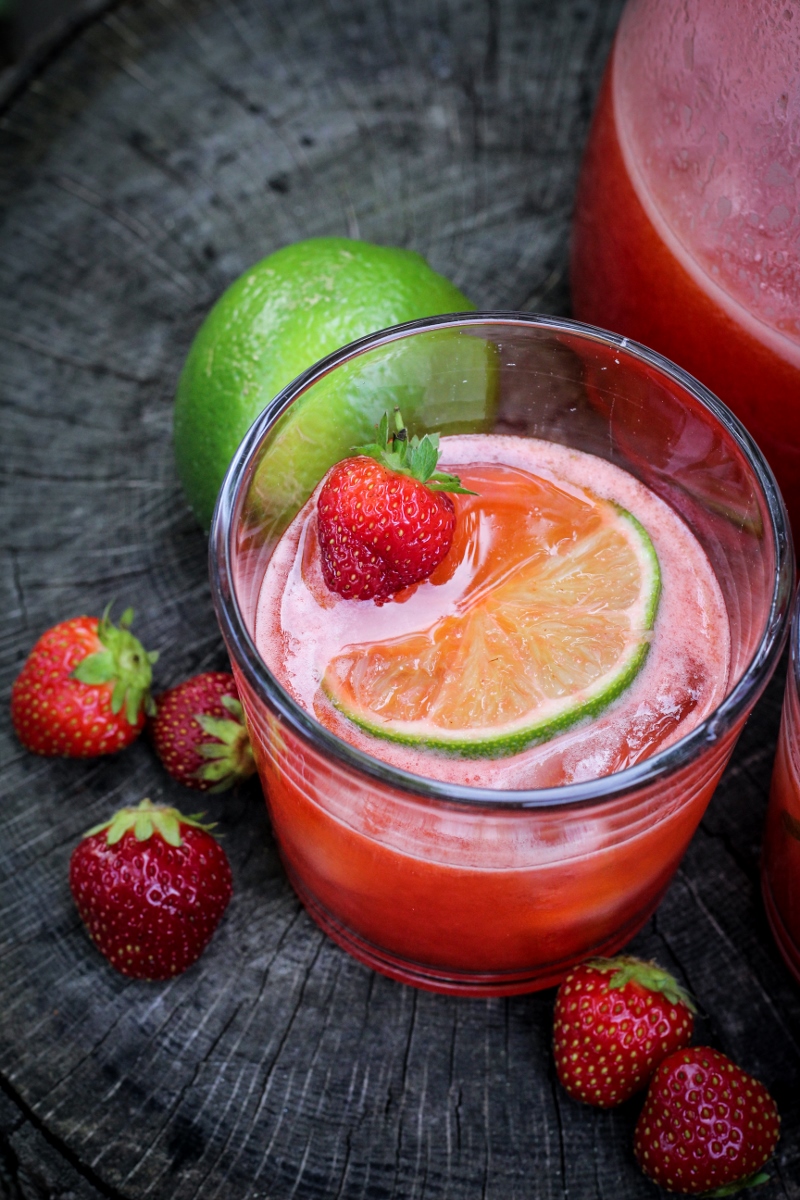
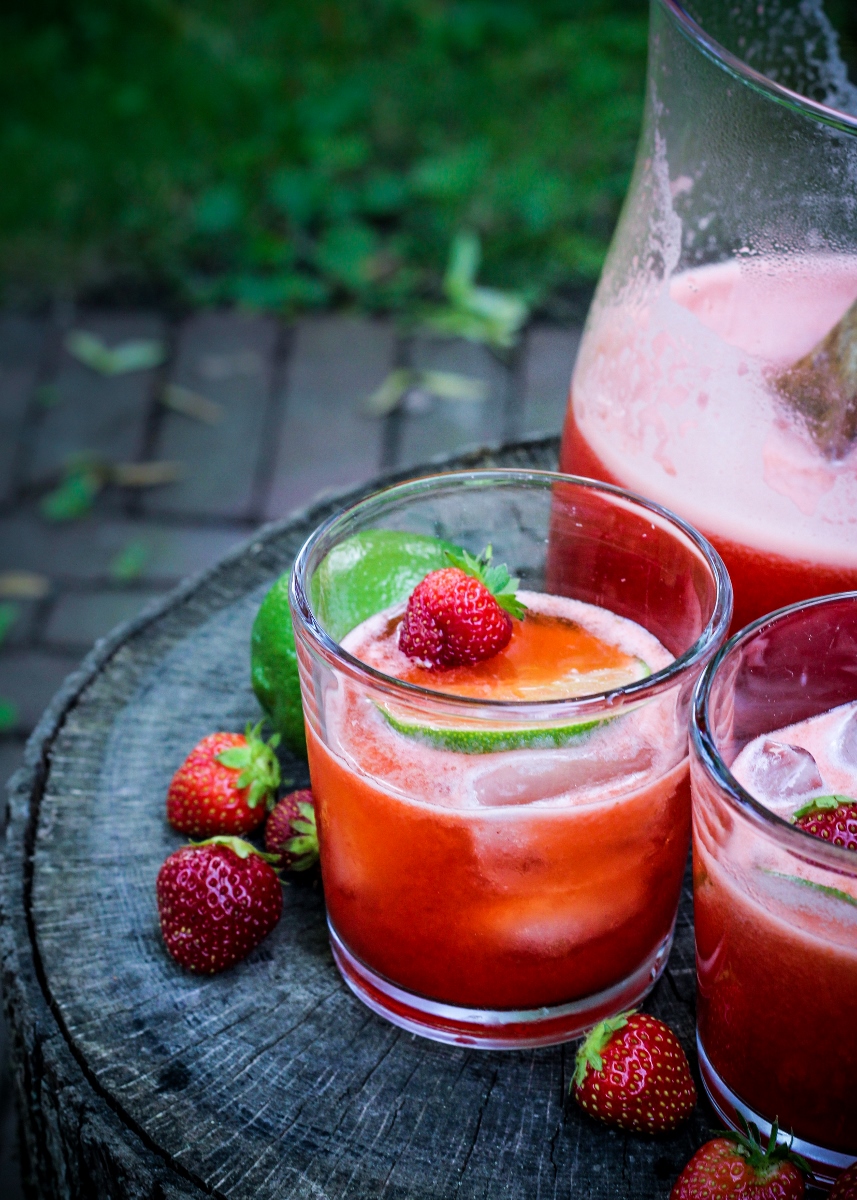
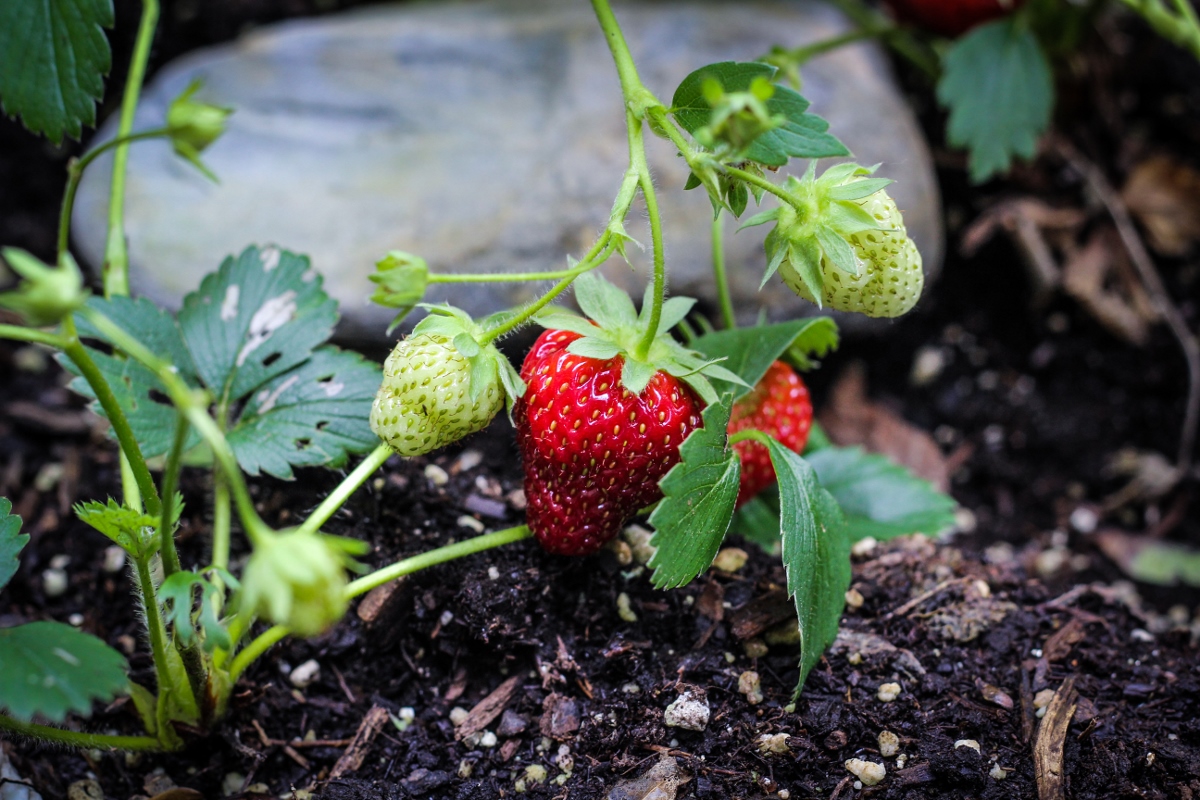
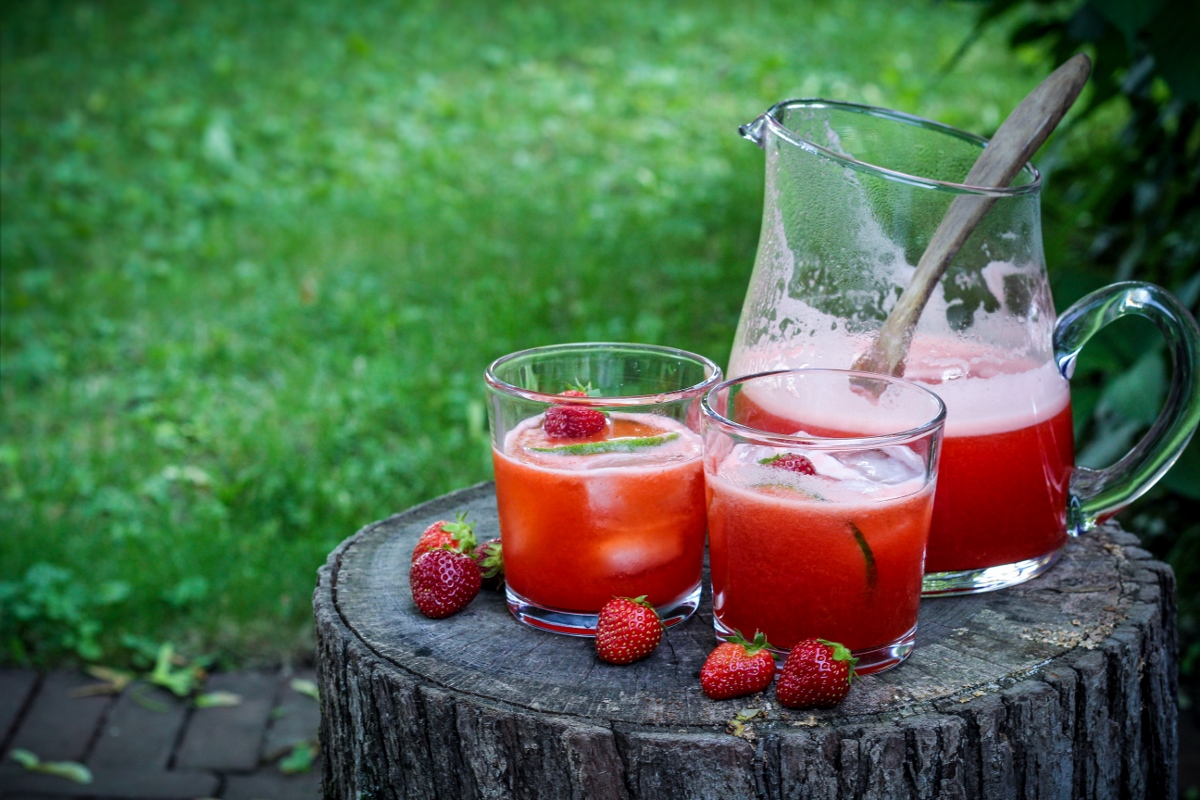
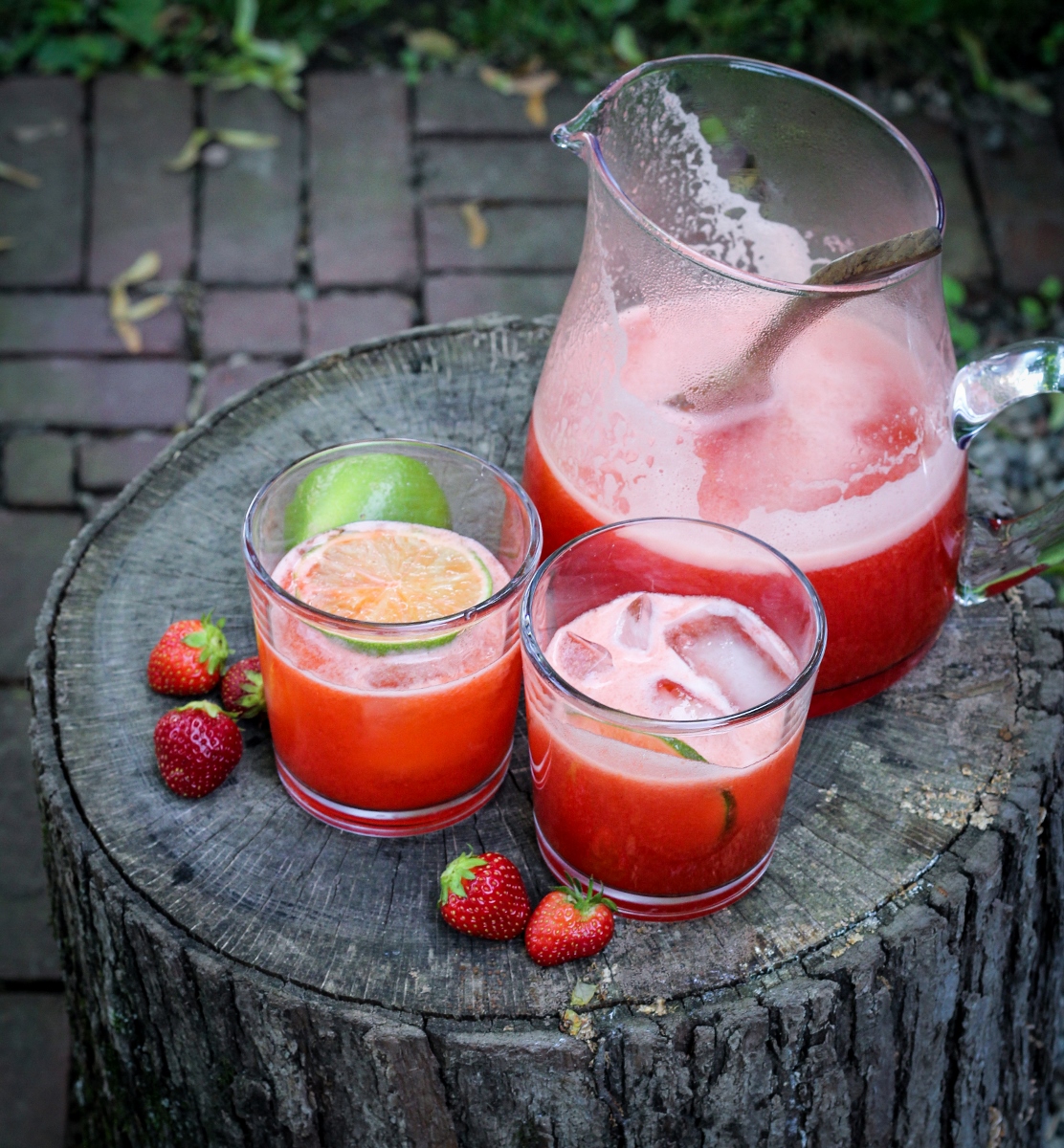
To celebrate this list, I’ve made Strawberry Lime Agua Frescas, because the fact that the farmer’s market is flooded with strawberries this week is a sure sign of summer. Also, it’s quite warm in the Northeast, and I don’t feel like consuming much of anything that isn’t a cold liquid. Three of these strawberries are from my garden, but that’s not quite enough to do anything with other than eat in the yard, staining your fingers red, so I picked some others up at the Davis Flea this morning. They’re very good, red all the way through and sun-sweet. This agua fresca is not too sweet and extremely refreshing – the perfect thirst quencher. Of course, if you wanted to make it a little bit more adult, I’m sure a shot of tequila wouldn’t be bad at all.

Here’s to summer!

Strawberry Lime Agua Fresca {Katie at the Kitchen Door}

Strawberry Lime Agua Fresca

Recipe from Tacos, Tortas, and Tamales. Makes about 6 cups.

  • 1 lb. fresh strawberries, hulled
  • juice from 2 limes (about 1/3 cup)
  • 1/3 c. sugar
  • 4 c. water
  • ice
  1. Add strawberries, lime juice, sugar, and water to a blender and blend until completely pureed and smooth. Pour through a strainer into a large pitcher, pressing the fruit pulp to get as much juice out if it as possible. Skim the foam off the top of the pitcher and discard. Taste the juice and add more lime or sugar to taste if necessary. Cover the pitcher and refrigerate until chilled. Stir before serving, then serve over ice, with a slice of lime and a fresh strawberry for garnish.
Curried Leek and Zucchini Soup

3 June 20, 2013 Cookbook

Curried Leek and Zucchini Soup

Curried Leek and Zucchini Soup {Katie at the Kitchen Door}

This post was supposed to be a review of this new cookbook, but pretty much everything I tried to do in the kitchen tonight went awry. The plan was to make a quick soup and a hearty loaf of bread, both mainstays in the book, but the plan was not to be achieved. All the fuss started with the bread – even though I carefully weighed out all the ingredients, that dough was not going to become “smooth and elastic” by the power of my two hands alone. Not ever. After about 40 minutes of fruitless kneading, I dumped 2 extra cups of flour into the bowl, worked it in, and called it a day. Since I had already gone way off book, I pretty much disregarded the rest of the instructions for the bread after this point as well. It’s baking now – it smells good, but I’m imagining the texture will be less than perfect. I just don’t have the patience (or upper body strength, apparently) for bread baking. Perhaps I should continue to leave that and other long term cooking projects to the very patient Trevor.

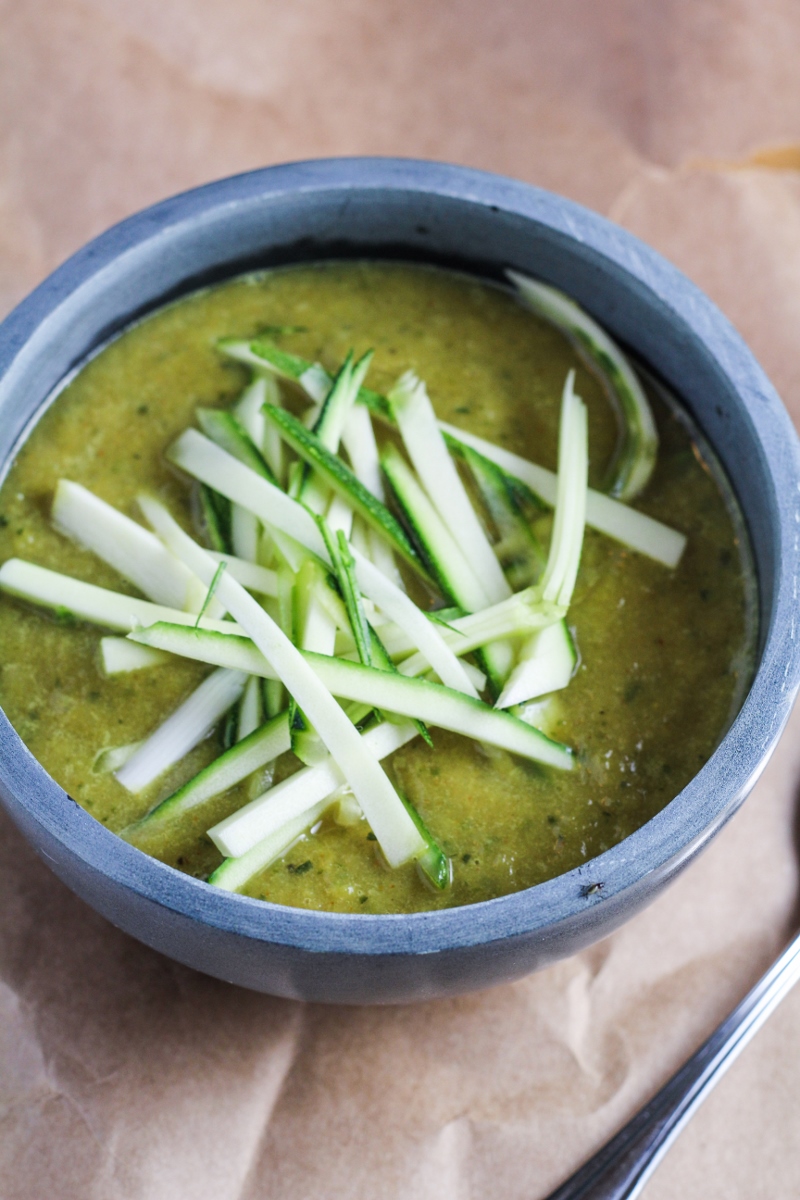
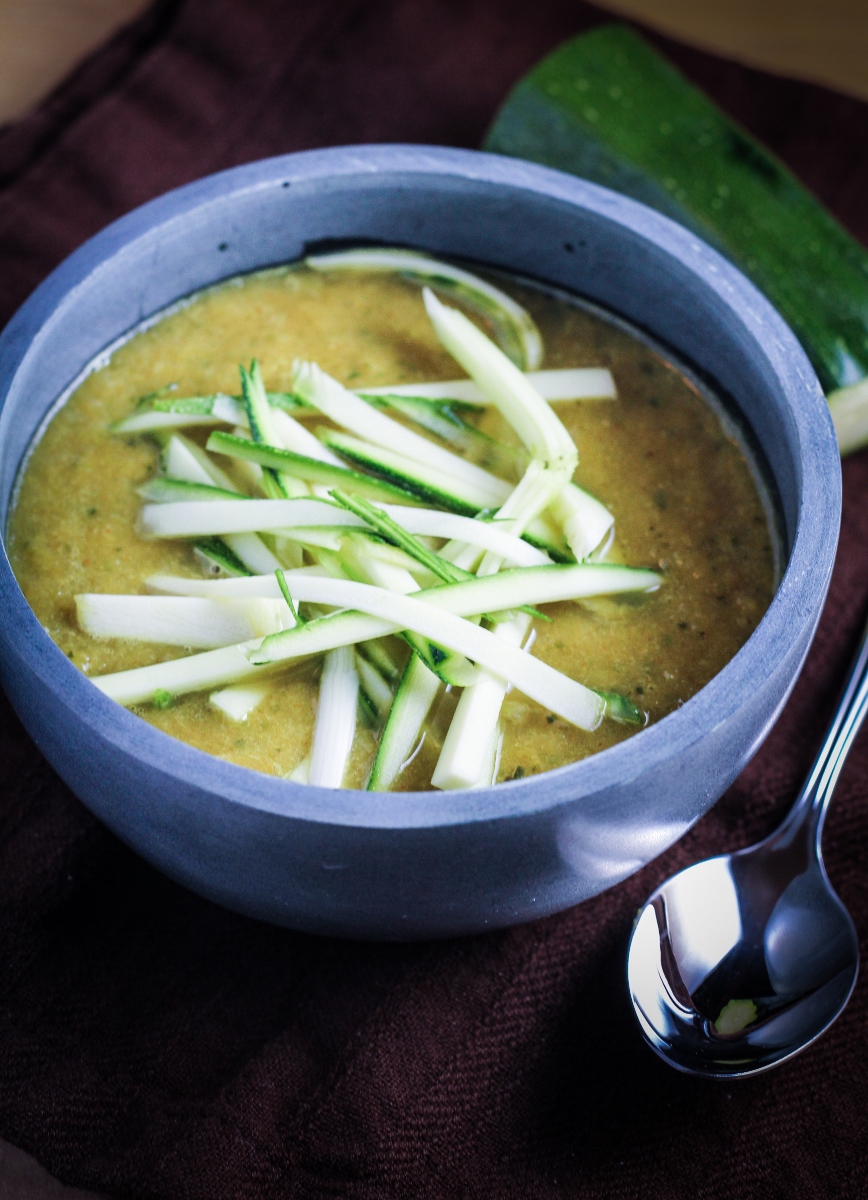
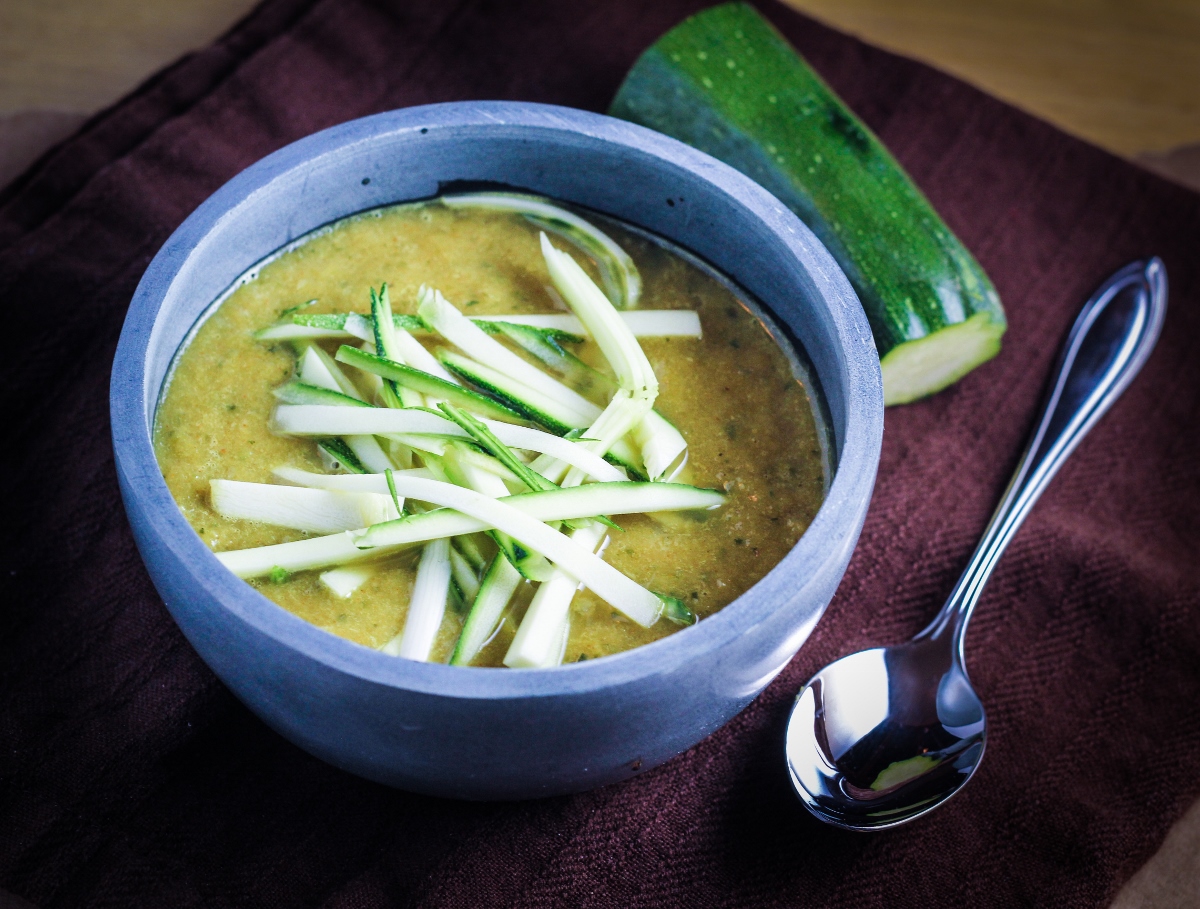
Having washed my hands of the bread (literally, it took about 5 minutes to get all the dough out from between my fingers, and I still have little crusty bits stuck to my arm hairs. TMI, I know. But ouch.) I moved on to the soup. Since I was already frustrated, when I read that the soup was a “add all the ingredients at once and cover with water” sort of recipe, I decided that I didn’t want to follow those instructions either. I wanted a soup with leeks cooked in a fragrant curry butter, with the richness of chicken broth backing up the veggies. So that’s what I made. I still had lots of struggles with various kitchen implements – I tried to use a mandoline for the first time to make zucchini ribbons, and I couldn’t even figure out how to operate it, despite the three pages of instructions. Then I went to blend the soup and my immersion blender splattered hot soup all over my clean shirt (and clean kitchen). I almost threw the pot at the sink in frustration. But then I took the first bite of this soup, and man! It was so good! For only five ingredients – butter, leeks, zucchini, curry powder, and chicken broth – it was wonderfully flavorful and rich and smooth, with just the right amount of heat and spice. I loved it. And I felt somewhat redeemed for having struggled so much with the execution of everything. And I knew that I still had something worthwhile to share with you.

Curried Leek and Zucchini Soup {Katie at the Kitchen Door}

Curried Leek and Zucchini Soup

Adapted from Le Pain Quotidien. Serves 2.

  • 2 TBS butter
  • 1 large leek (about 1 lb), root and green parts removed, rinsed and sliced into rounds
  • 3/4 tsp curry powder
  • 2 medium zucchini
  • 3 cups chicken broth
  • salt to taste
  1. Melt the butter in a large pot over medium heat. Add the sliced leek and the curry powder and saute for 2-3 minutes. Chop 1 and 1/2 of the zucchinis into 1 inch pieces, reserving the remaining half a zucchini for garnish. Add the chopped zucchini to the pot and saute until leeks are tender, about 3-5 minutes longer.
  2. Add the chicken broth to the pot and bring to a boil. Keep at a low boil until veggies are tender, about 10-15 minutes. Remove from heat, and puree using an immersion blender. Taste for seasoning.
  3. Cut the remaining half of a zucchini into long thin strips. Use these as garnish on the warm soup.
Ricotta Bavarese with Red-Wine Poached Rhubarb

0 June 17, 2013 Cookbook

Ricotta Bavarese with Red-Wine Poached Rhubarb

Ricotta Bavarese with Red-Wine Poached Rhubarb {Katie at the Kitchen Door}

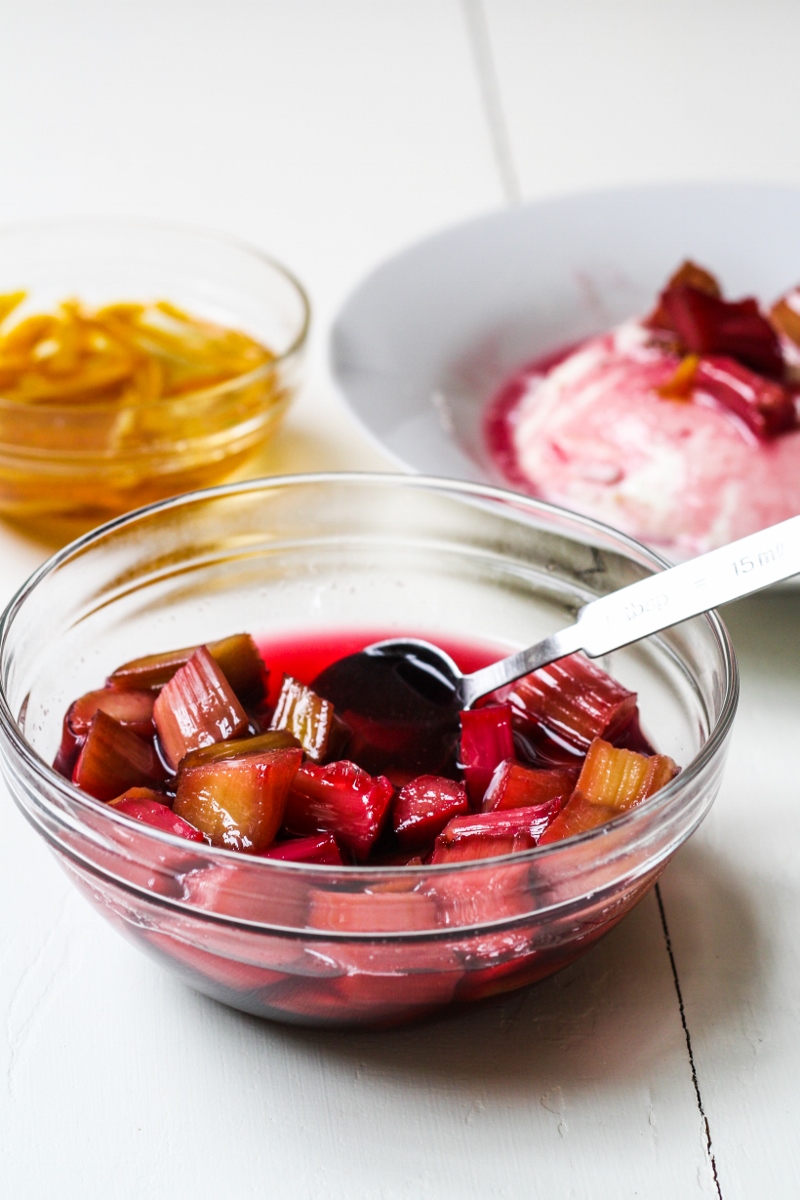
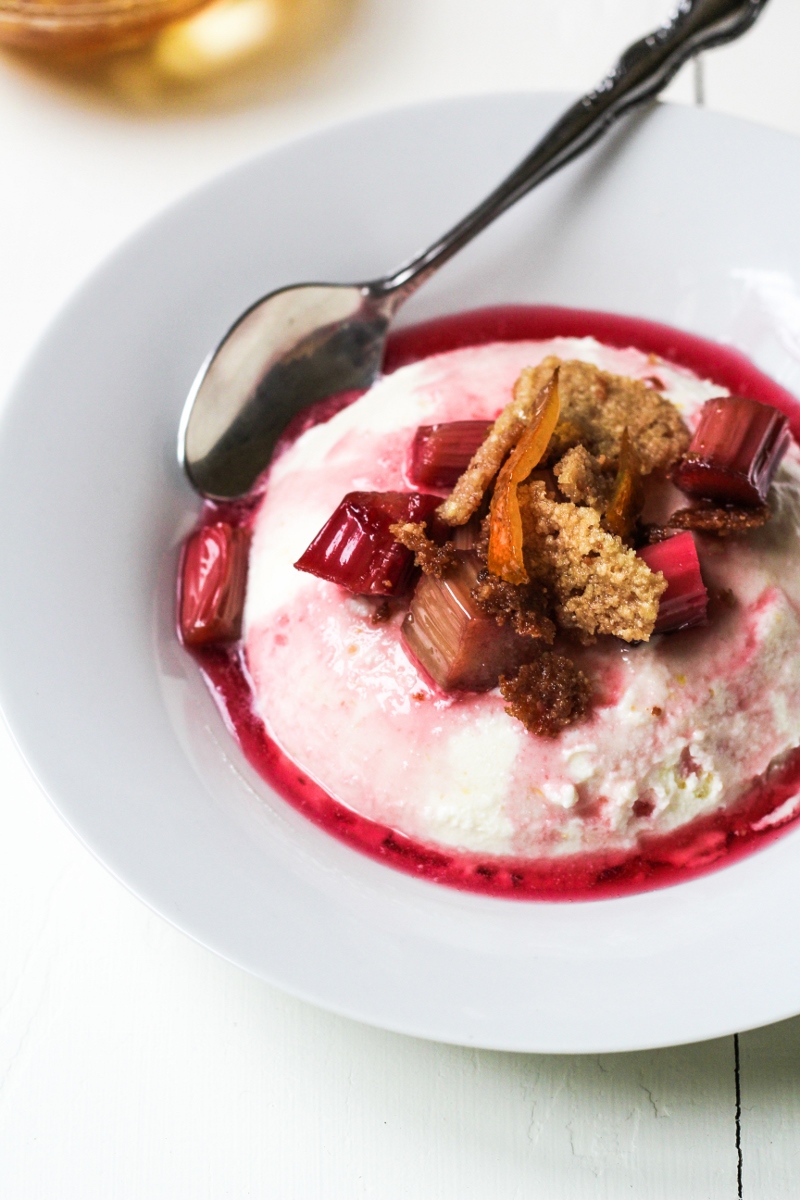
I hope it’s been long enough since rhubarb week that you won’t mind if I post another rhubarb recipe – because this one is really, really good. It’s from the SPQR cookbook, in which everything is fancy and inspiring and makes me want to go back to Italy, stat.

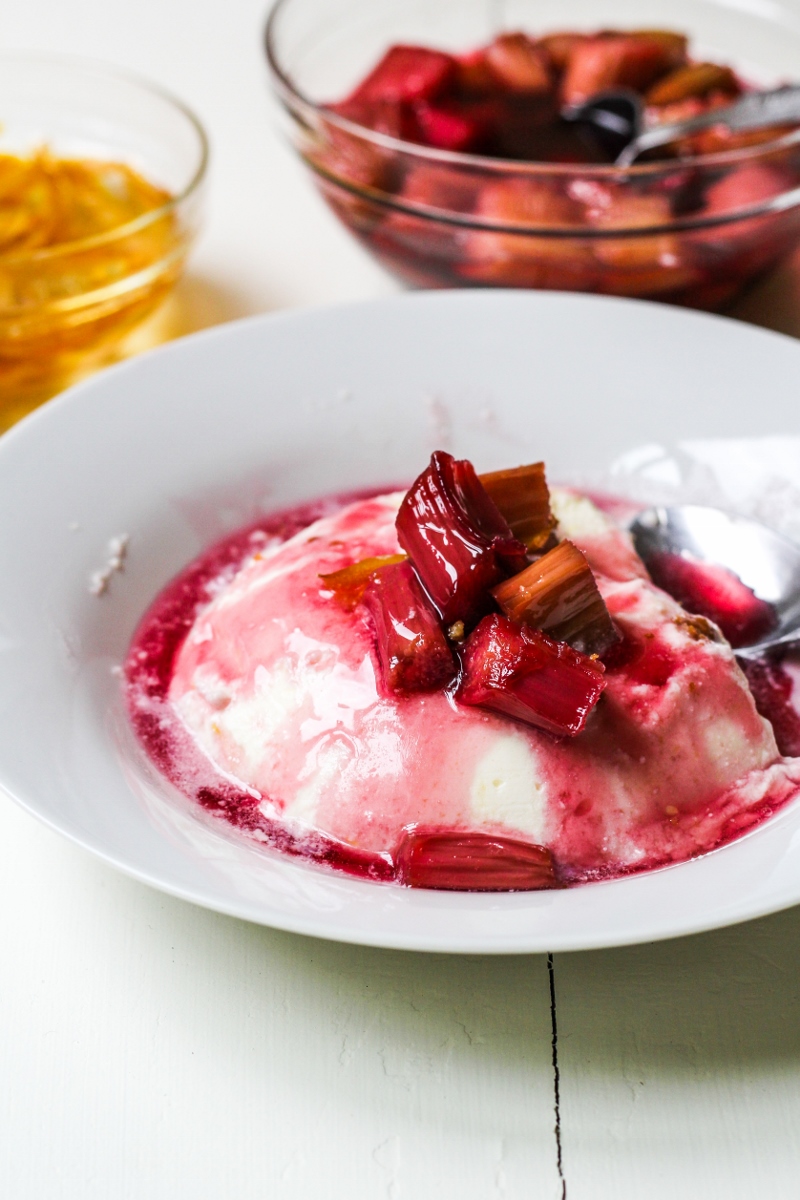
I’m going to be up front here – this is one of those recipes that you should only attempt if you really enjoy cooking. It’s complicated. It has about a billion parts. Nothing is particularly difficult (perhaps with the exception of frothing an egg over a double boiler, I mess that one up sometimes), but you’ll need patience, and someone to help with the dishes. All of the components can be made a few days in advance, so if you do one part at a time it might not seem so bad. But regardless of how you choose to make it (if you choose to make it), the result is so, so worth it. Unmolding the frozen bavarese, spooning the brilliantly colored red and orange fruits over the top, and crumbling the addictively nutty biscotti crisp over the whole thing, you’ll be impressed with yourself. And when you take a bite, you’ll be even more impressed. The flavors work wonderfully together, it’s all sweet and juicy and creamy and crumbly and completely worthy of your finest company. Those folks over at SPQR really know what they’re doing.

Red-Wine Poached Rhubarb {Katie at the Kitchen Door{

A few notes: one, the butter, brown sugar, and biscotti crisp is so good that you will not be able to stop eating the leftovers. Consider yourself warned. Two, I actually prefer the bavarese at fridge temperature as opposed to freezer temperature, but experiment with the degree of frozenness that you like. Three, the red wine poached rhubarb, which in the original recipe was verjus poached rhubarb, is amazing as is, and would be good on other creamy things, like your morning yogurt (I won’t judge). Four, this whole thing was supposed to have powdered olive oil on top. I tried to make it. I even ordered the special tapioca maltodextrin powder online. But it didn’t work. Honestly, I don’t think this dessert needs any more elements. It’s ready to go.

Ricotta Bavarese with Red-Wine Poached Rhubarb {Katie at the Kitchen Door}

Ricotta Bavarese with Red-Wine Poached Rhubarb

Recipe adapted slightly from SPQR: Modern Italian Food and Wine. Serves 6-8.

For the bavarese:

  • 2 c. drained ricotta
  • 3/4 c. sour cream
  • 1 sheet gelatin
  • 1/4 c. orange juice
  • 1 lemon (juice and zest)
  • 1 c. heavy cream
  • 6 TBS sugar
  • 1/2 tsp vanilla extract
  • 1 egg
  1. Bring a large pot of water to a simmer over medium-low heat. In a large, heatproof bowl (big enough to place over the simmering water without touching the water itself), whisk together the ricotta and the sour cream. Place the bowl over the water and whisk until the ricotta curds are broken up and the mixture is smooth. Remove the bowl and set aside.
  2. Soak the gelatin in ice water until softened. Place a new bowl over the simmering water and add the orange juice and 1 TBS of the lemon juice. Squeeze out the excess water from the gelatin sheet and add it to the juices. Stir over the simmering water until dissolved, then remove from heat and set aside.
  3. In a large bowl, beat the heavy cream and 4 TBS of the sugar until the cream holds medium peaks. Stir in the vanilla extract. Stir the orange juice mixture into the ricotta, then fold the ricotta into the whipped cream. Set aside.
  4. In a third heatproof bowl, whisk together the egg and remaining 2 TBS of sugar. Place over the simmering water and whisk vigorously until the egg is pale yellow and frothy. Remove from the heat and turn the pot of water off.
  5. Immediately fold the whipped egg into the ricotta-cream mixture. Grate lemon zest directly over the bowl and stir to combine. Pour the ricotta-cream into 8 4-oz ramekins or 8 large silicone muffin cups, cover tightly, and freeze until ready to serve.

For the rhubarb:

  • 1/4 c. red wine
  • 1/2 c. water
  • 3/4 c. sugar
  • 1 TBS lemon juice
  • 7 oz. rhubarb, trimmed and cut on an angle into 1/4 inch pieces (about 2 cups total)
  1. In a medium saucepan, stir together red wine, water, sugar, and lemon juice. Bring to a boil over medium heat, stirring until sugar is dissolved. Once dissolved, lower heat and add the rhubarb. Poach the rhubarb for 3 minutes, just until rhubarb starts to soften. Remove the rhubarb with a slotted spoon and set aside. Return the syrup left in the pot to a boil and boil until syrupy about 7-10 minutes. Pour the syrup over the rhubarb and refrigerate until needed.

For the biscotti crumble:

  • 1 c. crushed biscotti (150 grams)
  • 1/4 c. brown sugar
  • 1/2 c. melted salted butter (1 stick)
  1. Preheat the oven to 325°F. Line a baking sheet with parchment paper.
  2. Pulse the biscotti and the brown sugar in a food processor until mixture is finely ground. Drizzle in butter and pulse to combine. Spread thinly on the lined baking sheet and bake for 10-15 minutes, until mixture is firm and beginning to crisp around the edges. Let cool completely then break into chunks.

For the orange confitura:

  • 1 orange
  • 1/2 c. sugar
  • 1/4 c. water
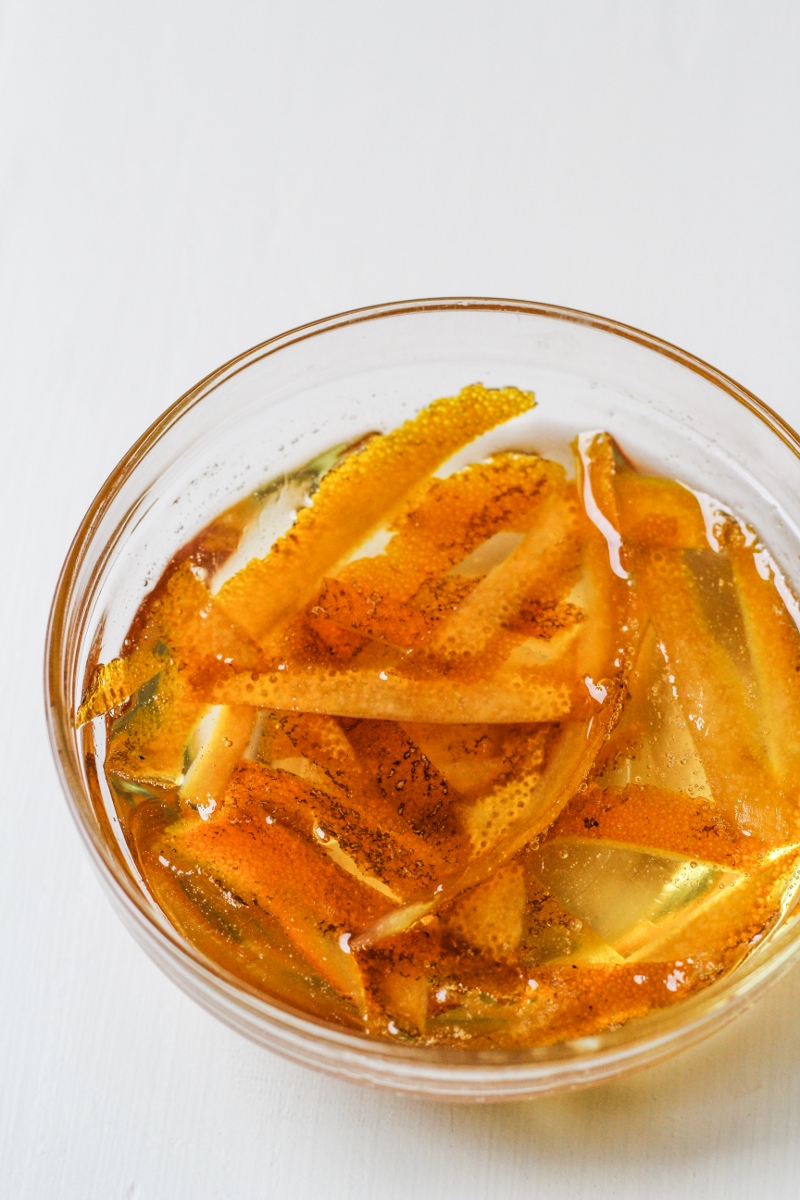
  1. Bring a small pot of water to a boil over medium heat. Use a vegetable peeler to cut the peel away from the orange in long strips. Slice into thin lengths, then add to the boiling water. Blanch for two minutes, then drain and run under cold water until cool. Pat dry.
  2. Bring the sugar and the water to a simmer over medium heat in a small saucepan. Add the blanched orange peel and simmer until lightly candied, about 6-8 minutes. Cool the peel in the syrup and refrigerate until needed.
  3. Cut the orange away from the pith into supremes, and set aside.

To serve:

  1. Unmold the bavarese into bowls (you may need to soften them for 15 seconds in the microwave for them to pop out of their bowls, a hot knife run around the edges can help too). Spoon the chilled rhubarb over the top. Place a few slices of candied orange zest, some crumbled biscotti, and a few segments of fresh orange on top. Serve immediately. You may also serve the bavarese slightly defrosted – they will still taste wonderful but won’t look as smooth.

Candied Orange {Katie at the Kitchen Door}

Italy Part 2: The Maremma // Carbonara Pizza

4 June 15, 2013 Food

Italy Part 2: The Maremma // Carbonara Pizza

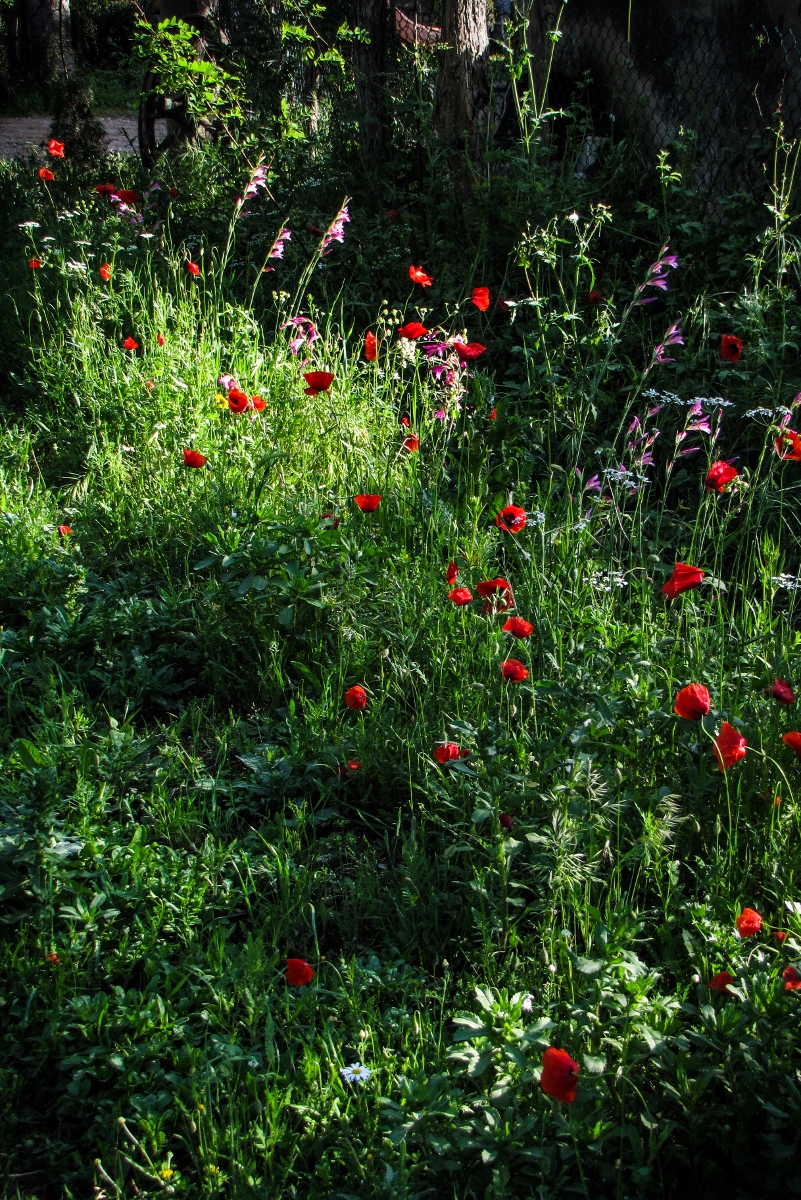
Wildflowers in TuscanyCarbonara Pizza {Katie at the Kitchen Door}

Last week was a bit of a whirlwind. A stressful whirlwind. Work was busy enough that by the time I got home every night, I wasn’t good for much beyond pouring myself a glass of wine and zoning out in front of the TV, so I didn’t do a lot of cooking, or, needless to say, blogging. Next week promises to be equally as busy, but for now I’m checking out to enjoy the weekend. And a stressful week, while not conducive to blogging, is certainly ripe for reminiscing about a recent vacation, so I’m here (finally!) with pictures and stories from the second half of our trip to Italy in April. (For the first part, click here.)

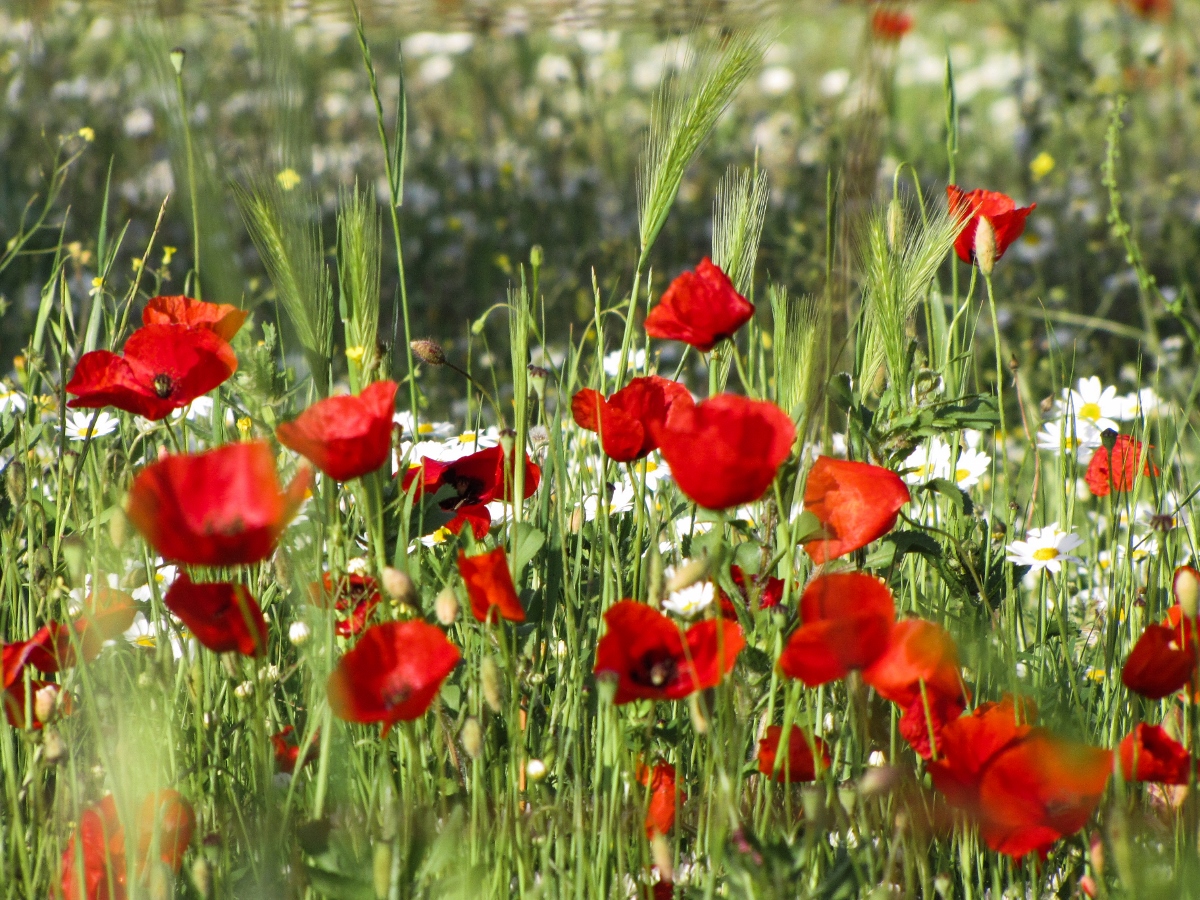
Poppies in the Maremma, Tuscany

San Galgano, Maremma, Tuscany

1) Poppies near our B&B; 2) The abandoned abbey at San Galgano

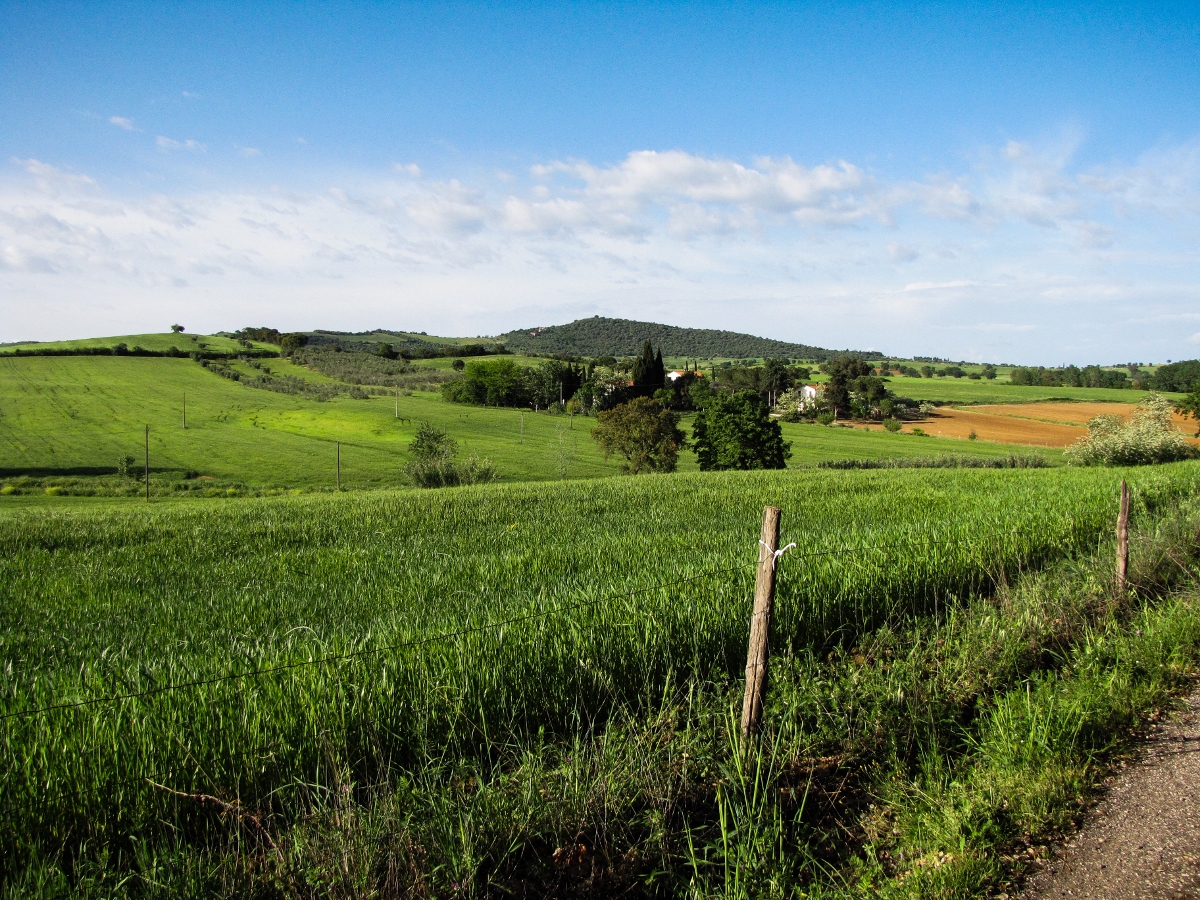
Although I very much enjoyed wandering the streets of Florence and Rome, the part of our trip I was most looking forward to were the four days we had planned in a rural region of Tuscany called the Maremma. In general, I’m more of a wilderness lover than an urbanite, and the same holds true when I’m traveling. What initially attracted me to the Maremma was a big green spot on google maps – the Maremma Regional Park. A little internet digging and I was sold on the lush, green region, located halfway between Rome and Florence, with its promise of beautiful coastline, natural hot springs, agriturismos, wild horses, and plenty of open spaces to explore.

Maremma, Italy

Tuscany

Tuscan Chicken

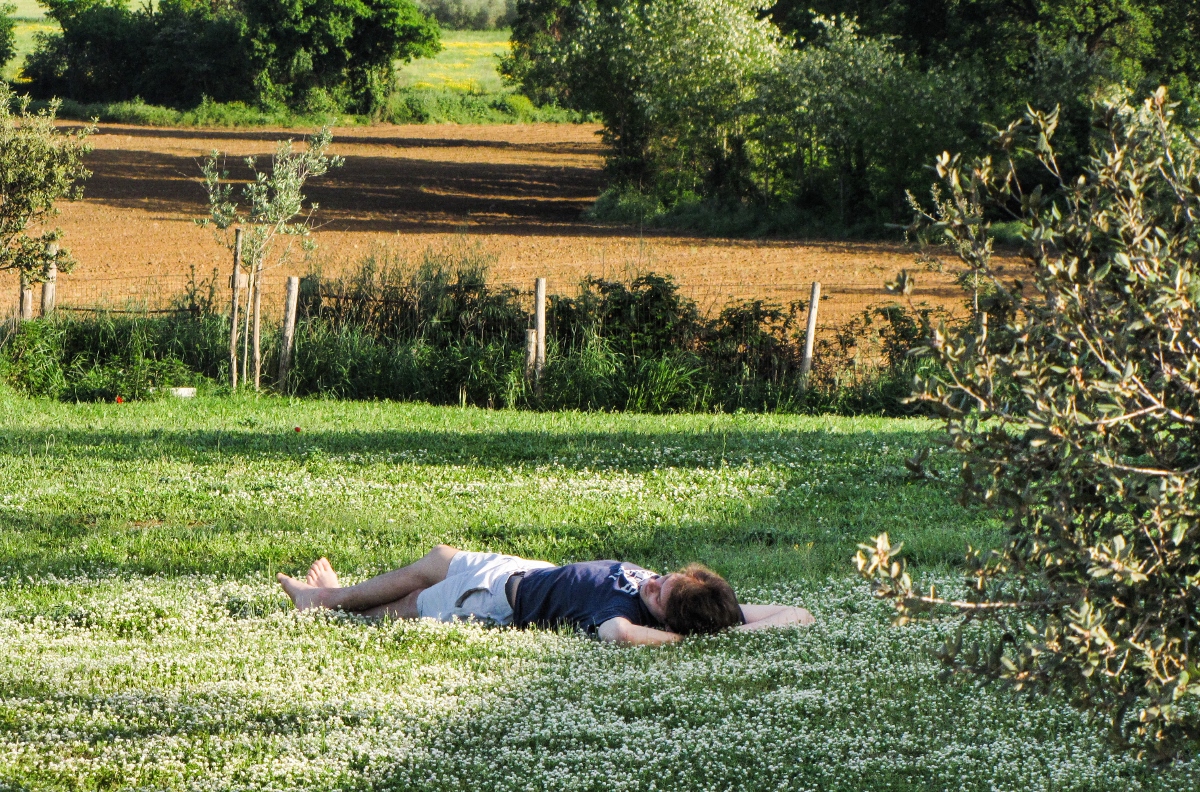
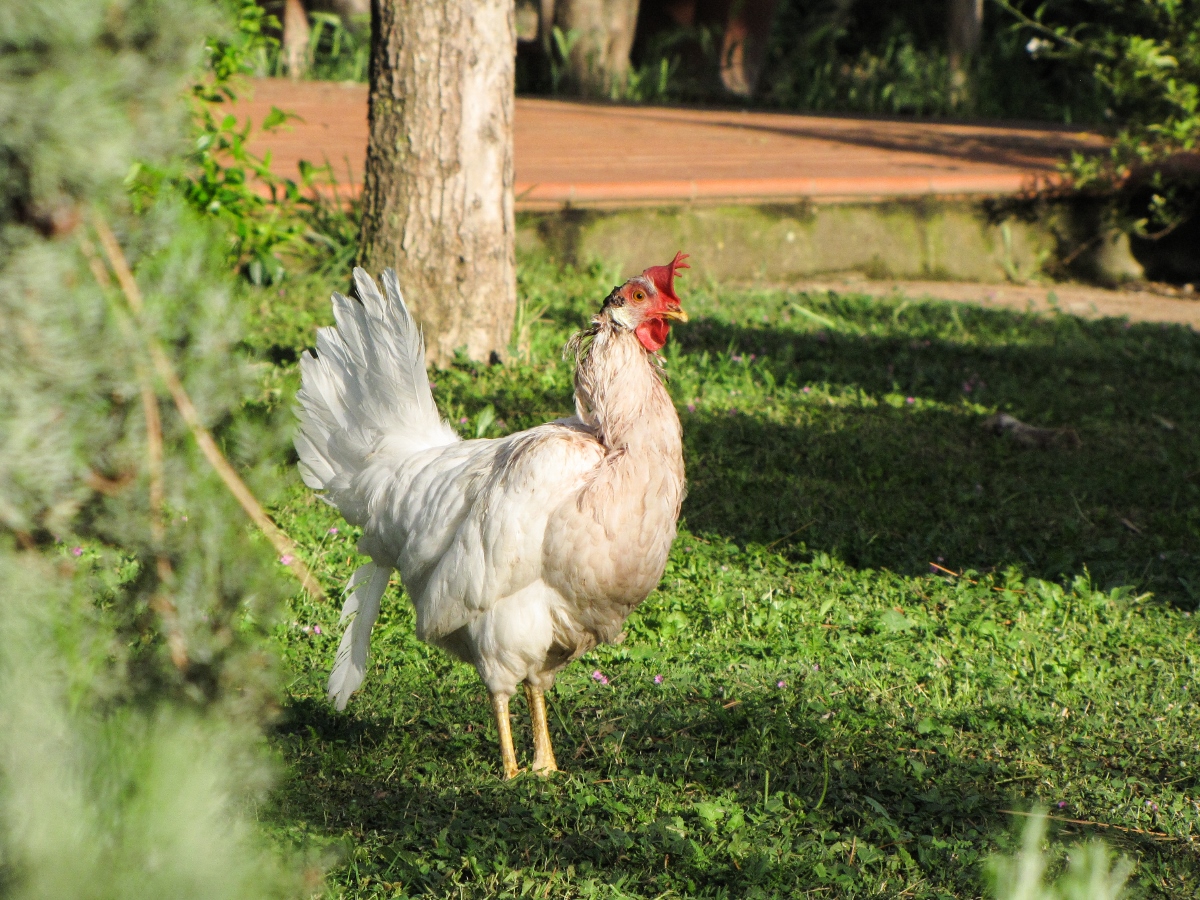
1) A view from the road leading to our B&B; 2) Trevor napping outside our apartment; 3) One of Norbert and Grazia’s chickens, whose eggs we enjoyed every morning

There are a lot of small inns, agriturismos, and B&Bs in the region, but I couldn’t have been happier with the one we chose – B&B At Home In Maremma, located centrally in the region only a 20 minute drive from the coast. We were the only guests, and our hosts, Norbert and Grazia, were immensely helpful and friendly. As soon as we pulled into the driveway and stepped outside, after 15 glorious minutes driving through rain-drenched fields of poppies and olive groves, they both welcomed us with a cold beer, stories about their time in Grosetto, and suggestions for our stay. We chose to stay in our own stand-alone apartment, with a private patio and it’s own fig and olive trees – although we didn’t spend much time actually in the apartment, it was a perfect home base. And the breakfasts that Grazia made for us each morning were amazing – on the first night, when she suggested that we might be tired of sweet Italian breakfasts and offered to make us bacon and eggs, we jumped at the chance to eat farm fresh eggs every morning. By the third morning of sunny side-up eggs cooked in a cup of prosciutto, served with fresh juice, rolls, chocolate cake, and espresso, we were pretty much the fattest, happiest little travelers. Although I did need to take a few weeks off prosciutto after this trip.

Terme di Petriolo (Natural Hot Springs), Maremma, Italy

Massa Marittima, Maremma, Tuscany

Massa Marittima, Maremma, Tuscany

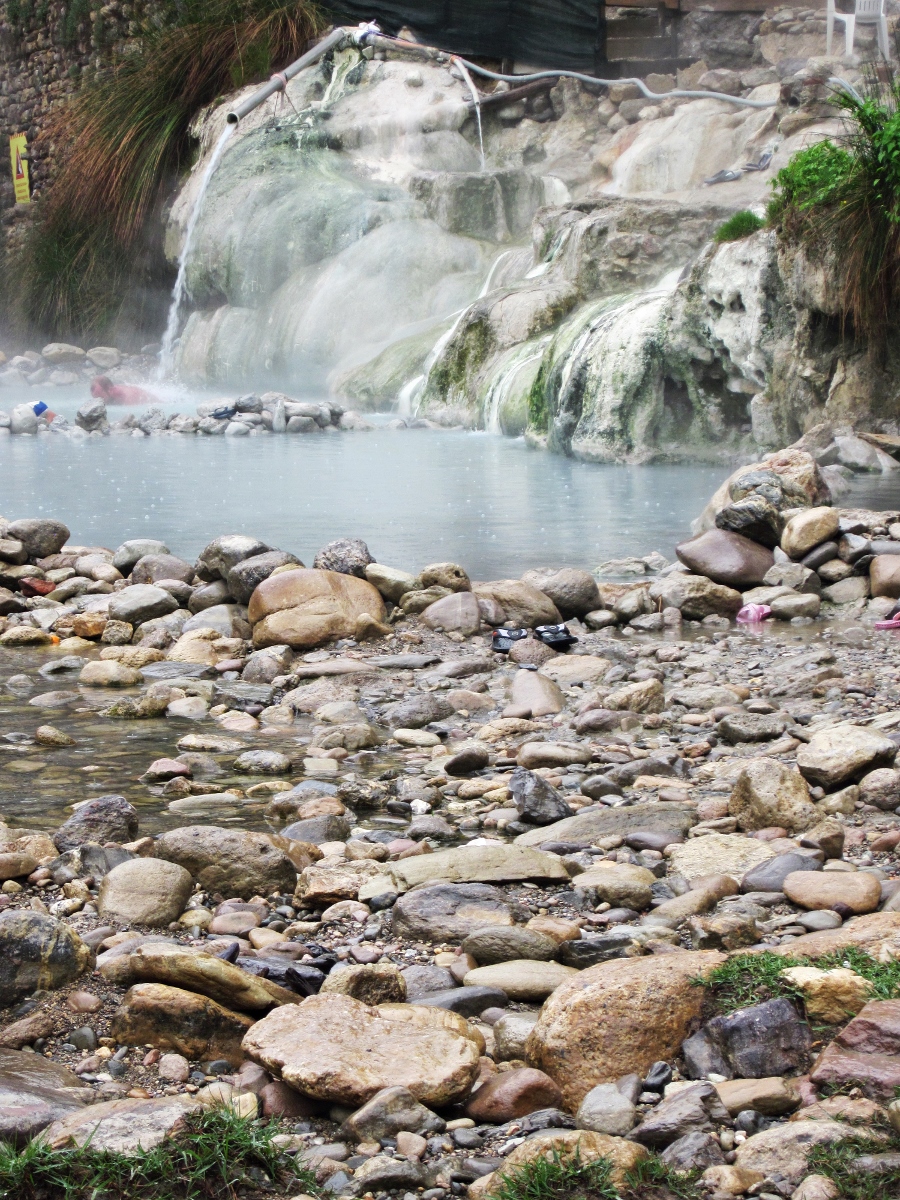
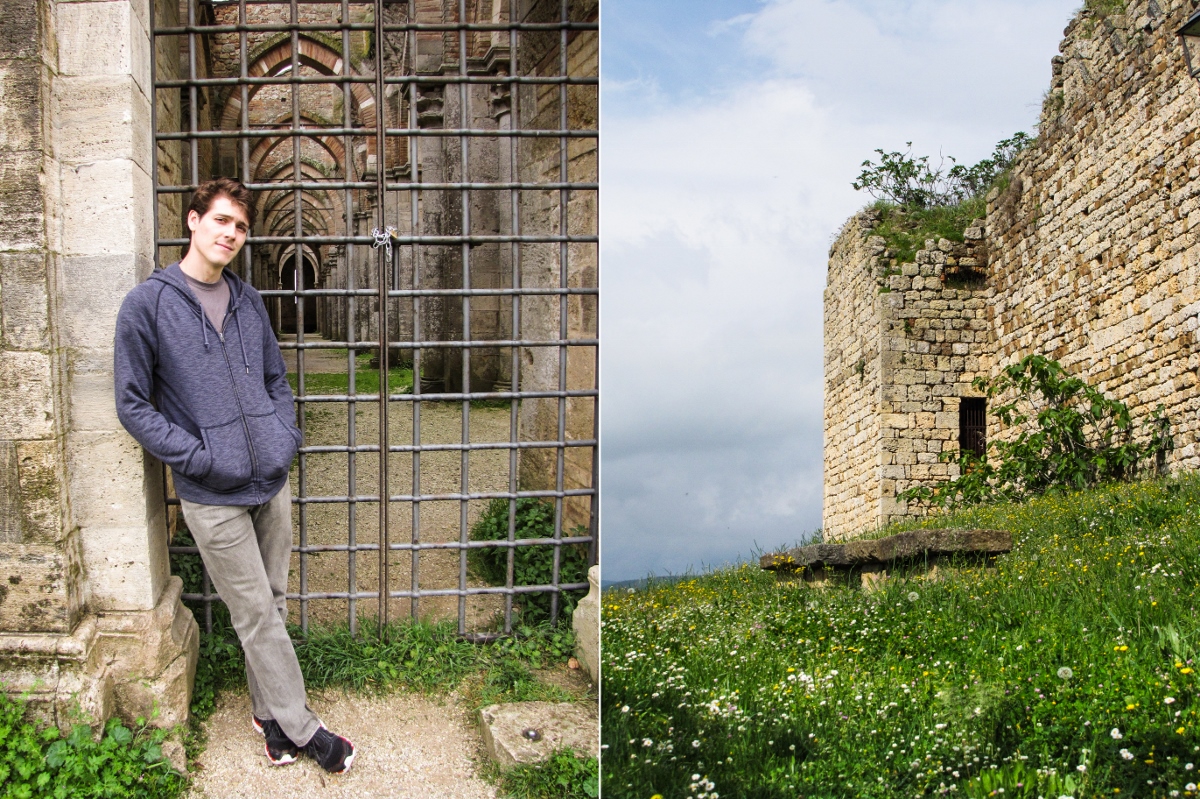
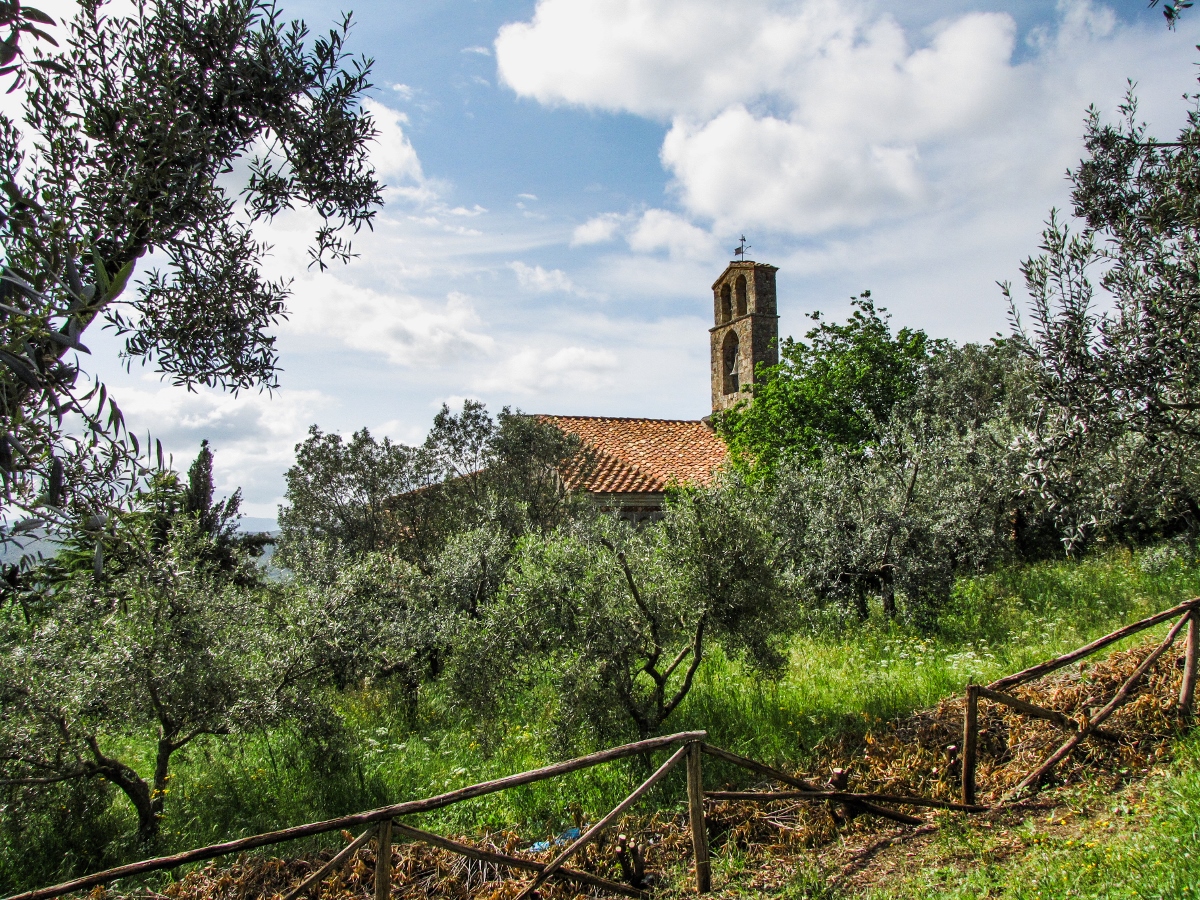
1) The natural hot springs at Petriolo; 2) Trevor standing beside the abandoned abbey of San Galgano; 3) The sun finally comes out while walking the wall at Massa Marittima; 3) An olive grove surrounded church at Massa Marittima

Our first morning we were disappointed to awake to rain, but decided to make the most of the day anyway and marked out a loop on our map. The first stop were the Terme di Petriolo, natural hot spring pools formed beside a river. We spent a relaxing hour lying in the steaming springs, plunging into the icy cold river from time to time, sitting side by side with some Italians who seemed to have nothing better to do on a rainy Thursday. (The Italians made me feel transparently white. Trevor confirmed this to be true). Sitting in the hot water while the cold rain plodded down around us was a wonderful way to spend a rainy morning – and free, too! After we were adequately soaked, we got back in the car and headed to San Galgano, an abandoned abbey, where there was also circular chapel where San Galgano used to live. And get this – there was a real-life sword in the stone there. Very cool. Or “a very mystic place” as Norbert told us. Our last stop of the day was the city of Massa Marittima, where we enjoyed a late lunch with a lot of German tourists, did some souvenir shopping, and walked the path along the city wall just as the sun peeked out from behind the clouds. I love walking along city walls – they’re always so beautiful and wild. Dinner that night was at an amazing place called Chicco Magico – and it was the highlight of the entire trip for me – but it’s such a good story, I’m saving it for it’s own blog post. Just to be a tease.
Maremma Regional Park, Italy

Maremma Regional Park, Italy

Maremma Regional Park, Italy

1) The view from our hike; 2) The ruined medieval abbey in the middle of the trail; 3) Trevor enjoying the beach; 4) The Mediterranean sea

 Our second full day we had reserved for a trip to the Maremma Regional Park. It was a bit complicated to get inside, but we eventually made it to the trailhead and started a pretty, but steep hike up the coastal hills. There were only a handful of views, but looking out across the treetops to see ruined towers hovering above the sea was a pretty unique experience. Half way through the hike, we reached a ruined medieval abbey in the middle of the trail, and spent some time poking around that before forging on to the beach. After a crowded bus ride (that also included about 50 German retirees decked out in full mountaineering gear), we made our way a few minutes down the road to the beach that is located within the park. Although there were a few moments of panic as we frantically tried to communicate to the parking guard that we didn’t know how to get a parking ticket, we eventually figured it out and found a spot on the sand. Trevor relaxed and I dove into the water. I was probably the only person above the age of 6 who was swimming, but to someone from New England it was so amazingly warm, even in early May. I love the ocean. I could swim and bob and body surf all day, and I’m so glad I got to go in at least once so far this summer! That night we were pretty beat, so we picked up some bread to go with the last of our venison prosciutto and ate on our patio – where we were joined by every cat within a mile, all very keen to get in on the feast.

Maremma Regional Park, Italy

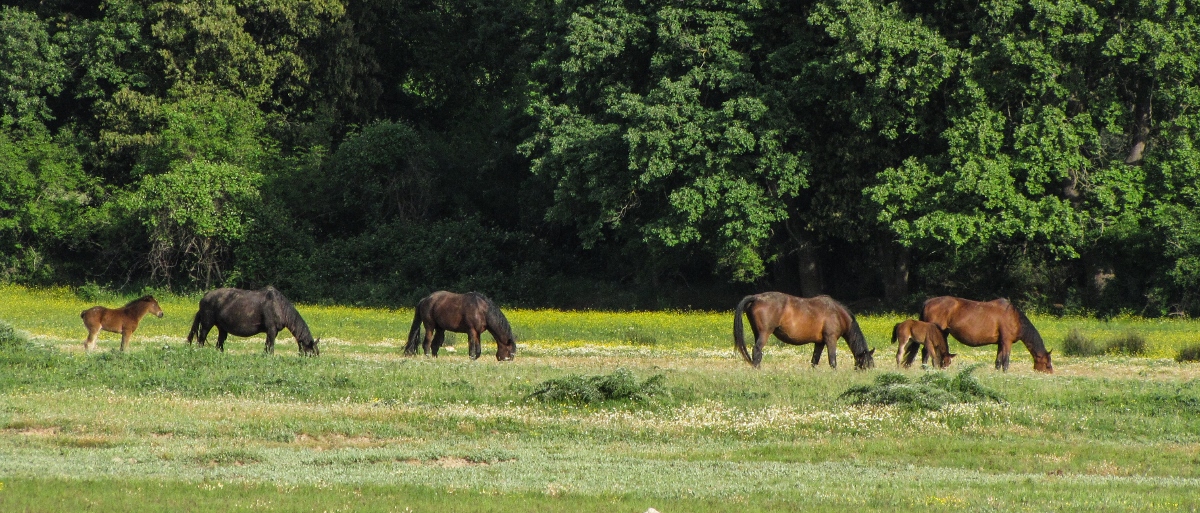
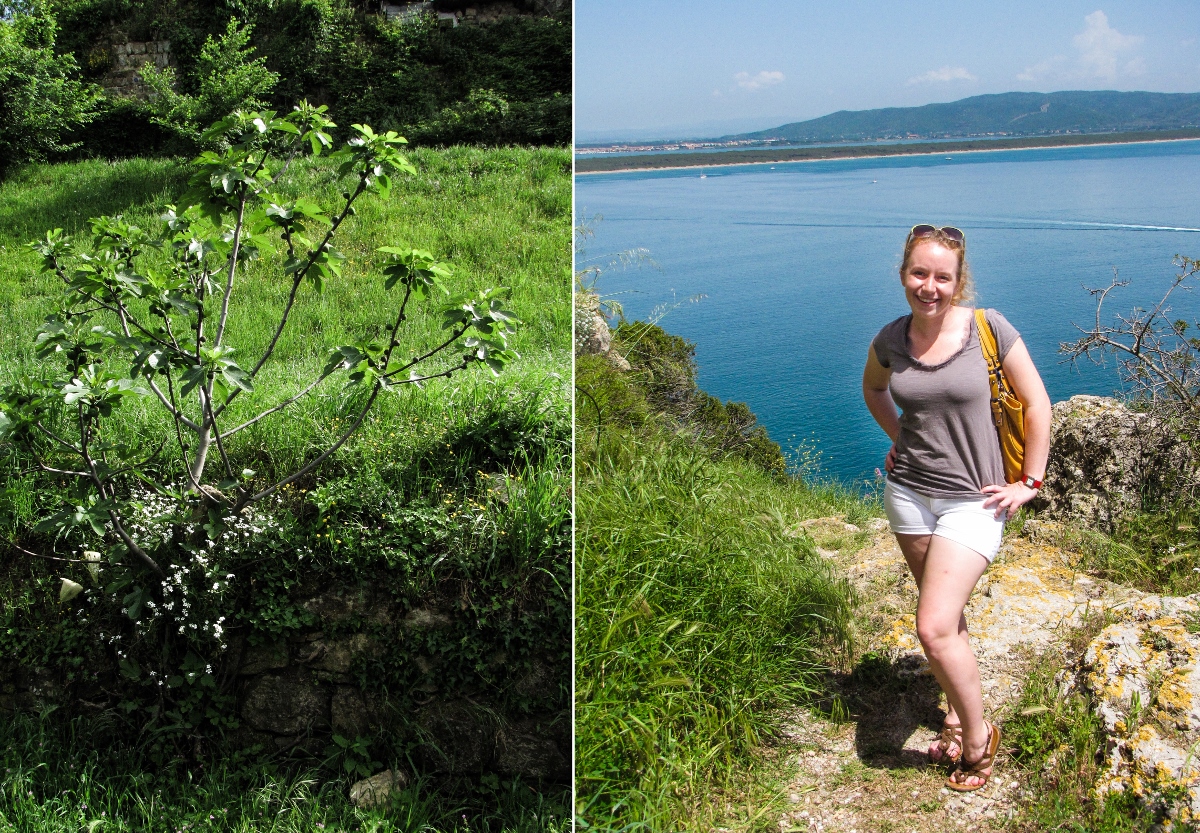
1) Horses on the way out of the regional park; 2) A wild fig growing on the wall at Massa Marittima; 3) Me standing outside the wall of Porto Ercole

On our last day we had to drive back to Rome, but didn’t need to return the car until 6pm, so we decided to take it slow and stop in Monte Argentario. I was initially unimpressed with the somewhat touristy town of Porto Ercole, but we followed our instinct and walked up a crumbling staircase to find ourselves hiking on a cliff around the old fort. The views were amazing, and as we continued down, we spotted a few rocky beaches that it looked like we could get access to. And we could. They were very neat – lots of pockmarked igneous boulders to climb on – but neither of us felt like getting salty before our drive back to Rome, so we stayed out of the water. After a quick (overpriced) lunch in a pirate themed restaurant (well, actually, everything in the town seemed to be pirate themed) we hit the road back to Rome.

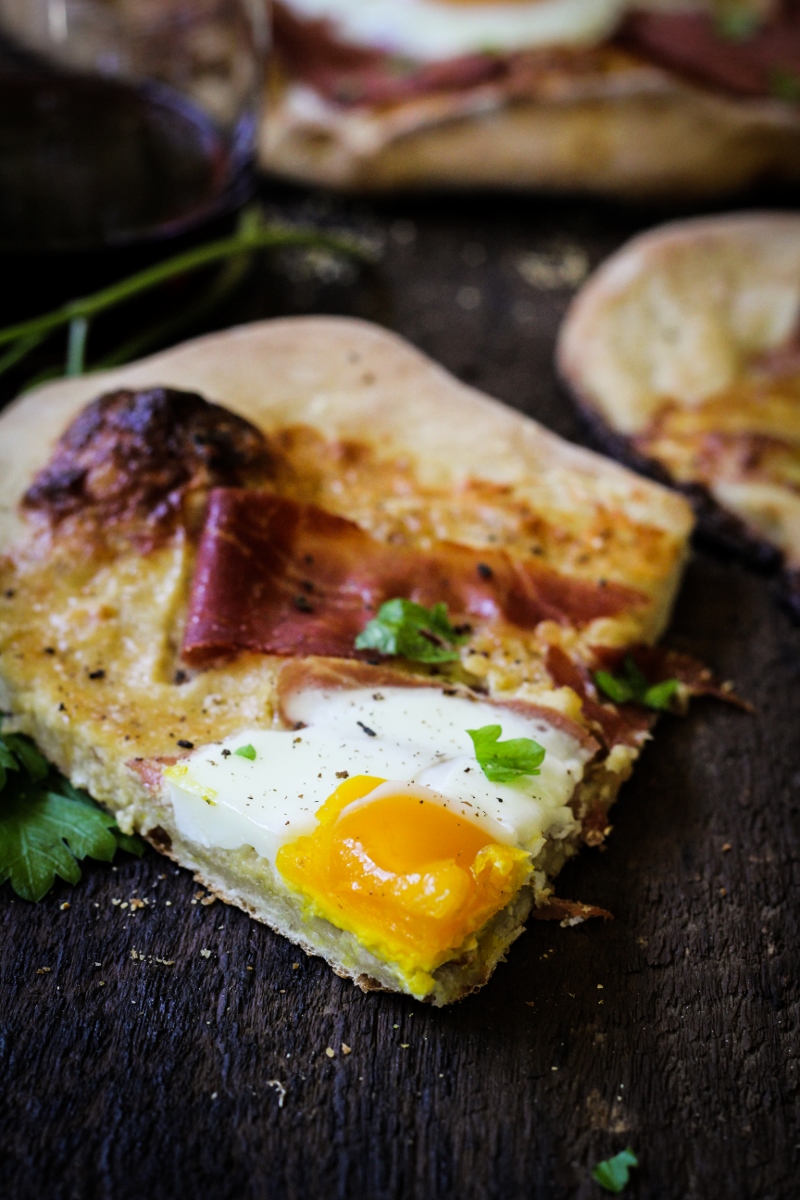
And that was our trip to Italy! But most of you probably didn’t come here to read all about my vacation – you came because you saw a picture of that pizza. Carbonara pizza was the first thing I ate upon arriving in the Maremma, so that’s what I’ve recreated here. As soon as we arrived, Norbert and Grazia made reservations for us at this little pizza place in the tiny town of Istia d’Ombrone for dinner that night. We were both quite tired, but this pizza hit the spot after a day of public transportation, waiting around the rental car lot, and driving in the rain. After dinner we walked around the tiny walled town in the glow of the lamplight, only passing two other people as we walked.

Carbonara Pizza {Katie at the Kitchen Door}

I wasn’t sure exactly how to go about making a carbonara pizza, but I knew it had to have prosciutto (rather than bacon or pancetta), since we ate so much of it during our trip, and I knew I wanted the base sauce itself to be as close to a true carbonara sauce as possible. I have to say, I like my version of this pizza even better than the one we had on our trip – the sauce came out perfect, packed with oniony, cheesy, prosciutto-y, garlicky flavor, and with the extra strips of crisped prosciutto and a just-set egg on top of the bubbly, chewy crust, I couldn’t stop myself from eating a third slice even after I was full.

Carbonara Pizza {Katie at the Kitchen Door}

Carbonara Pizza

Serves 4.

  • 1 TBS butter
  • 1/2 c. finely minced onion (about 1/2 medium onion)
  • 1/4 lb. thinly sliced prosciutto, divided (about 8-10 slices total)
  • 4 cloves garlic, peeled and finely minced
  • 1/2 c. heavy cream
  • 4 eggs, divided
  • 1 c. freshly grated parmesan cheese, divided
  • cornmeal (for dusting pan)
  • 1/2 recipe pizza dough
  • 1/3 c. freshly grated pecorino romano
  • freshly ground black pepper
  • 2 TBS finely chopped fresh parsley
  1. Preheat the oven to 450°F.
  2. Melt the butter in a frying pan over medium heat. Add diced onion and stir to coat with butter. Finely dice half of the prosciutto (about 4 slices) and add to the pan with the onions and butter. Saute, stirring occasionally, until prosciutto is crisp and onions are golden brown, about 6-8 minutes. Add minced garlic and saute 1 minute longer, then stir in heavy cream. Cook for 1 minute, then remove from heat.
  3. In a medium heatproof bowl, whisk together 2 of the eggs and 1/2 cup of the grated parmesan. Slowly pour the hot cream sauce into the eggs, whisking the eggs vigorously as you do so to prevent scrambling. Once all the cream has been added, whisk the mixture for 30 seconds, then set aside.
  4. Sprinkle a small amount of cornmeal on 2 baking sheets. Flour your work surface and a rolling pin and roll out the pizza dough into two small (or one large) crusts. Place one on each baking sheet. Spread the cream sauce on top of the crusts up to 1/2 an inch from the edge. Don’t spread the sauce so thickly that it runs over the edge – you may have a few tablespoons left over.
  5. Mix together the remaining 1/2 c. parmesan cheese and the pecorino cheese. Sprinkle half of the mixture over each crust. Layer a few strips of the remaining prosciutto on top of the cheese. Carefully crack one egg into the center of each pizza. Bake the pizzas for 12-15 minutes, until crust is golden brown and egg is set. Sprinkle the hot pizzas with freshly ground black pepper and the parsley.
Savory Cheddar-Pecan Cookies with Sriracha Pepper Jelly

0 June 9, 2013 Food

Savory Cheddar-Pecan Cookies with Sriracha Pepper Jelly

Savory Cheddar-Pecan Cookies with Sriracha Pepper Jelly {Katie at the Kitchen Door}

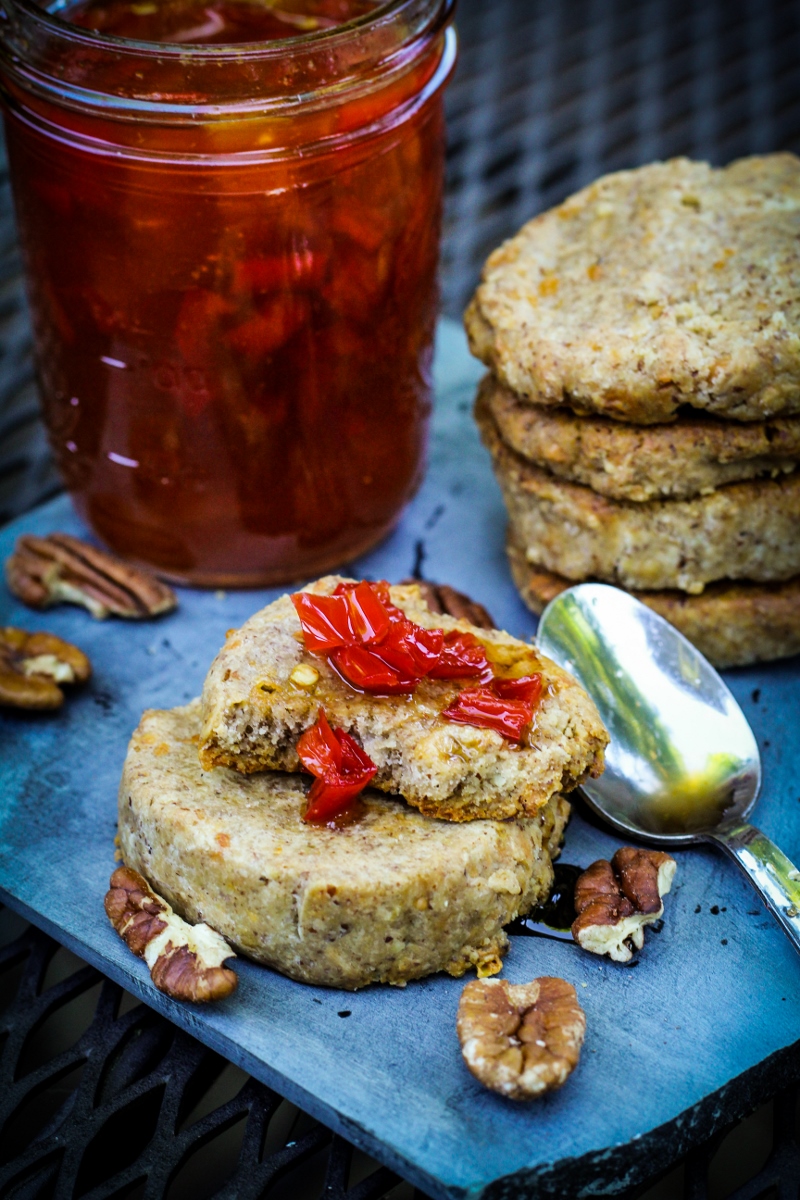
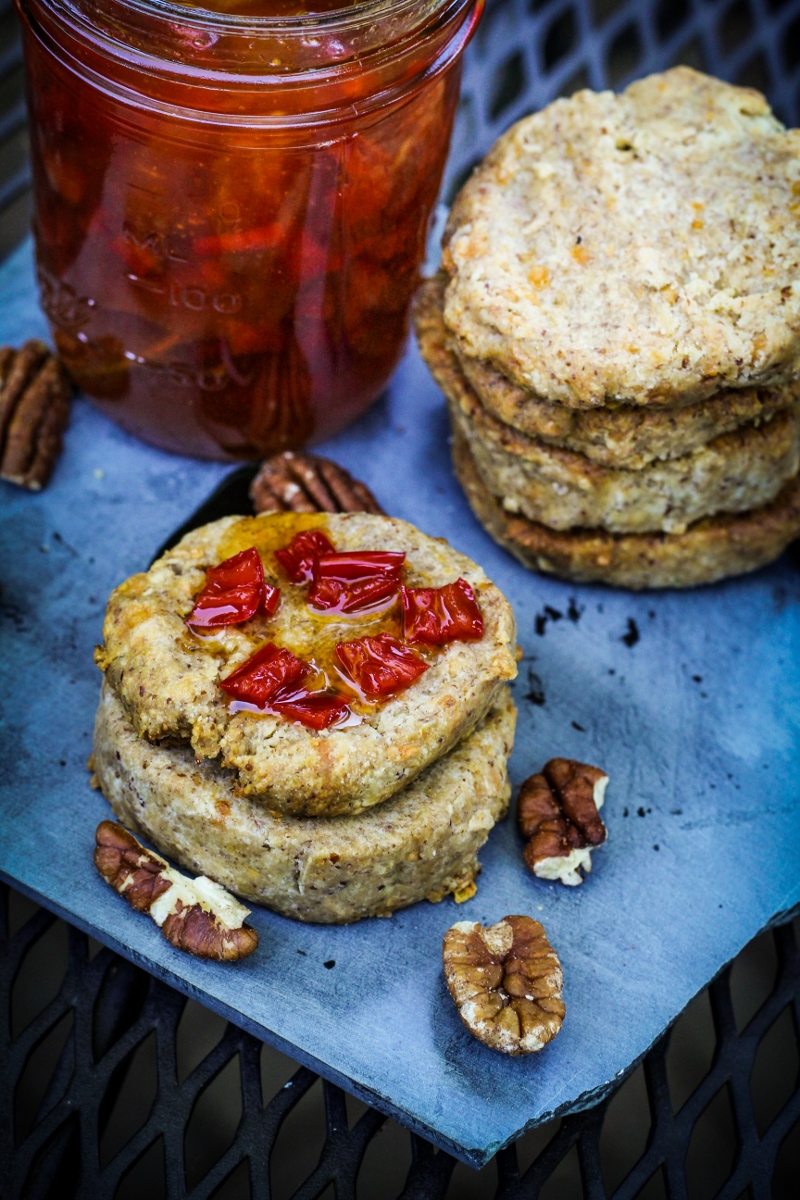
I have one more treat from The Southern Vegetarian that I’d like to share with you – savory cheddar pecan cookies, served with a spicy sriracha pepper jelly. The first time I flipped through the book, these were the thing that most caught my eye. The combination is quite Southern, and also so crave-ably moreish that I couldn’t resist making a batch with all the bits and bobs of cheddar that had built up in my fridge. The cookies taste a lot like cheese straws, and they would be the perfect little appetizer for a cocktail party.

If you don’t have any cocktail parties on the horizon (aka, you’re me), I also happen to think that these are the perfect thing to nibble on with a glass of wine while curled up and watching TV. Which brings me to the reason I’m posting these today: tonight is quite possibly the most important TV event all year, the Game of Thrones finale. Brace yourself for full dorking out: last week’s episode was nuts!! I legitimately have been thinking about it all week long (and I know the internet in general has been having a grand old time with it). I’m actually anxious about tonight’s episode (although I did get this Game of Thrones themed beer to make me feel better), which makes me feel a bit foolish, but HBO/George R.R. Martin are really killing it. And even worse, after tonight’s episode, I have to wait an entire 10 months for the next season. At least this year we’ll have three seasons to re-watch instead of just two. And no, I don’t read the books: honestly, I’m afraid it would ruin the show for me. Please don’t judge me for just writing that.

And since I’ve already gone down the path of admitting embarrassing facts about myself, you might also find me eating a plate of these during The Bachelorette tomorrow. No shame.

Savory Cheddar-Pecan Cookies with Sriracha Pepper Jelly {Katie at the Kitchen Door}

Savory Cheddar-Pecan Cookies

Adapted slightly from The Southern Vegetarian. Makes about 16 cookies.

  • 1 c. whole pecans, toasted
  • 1 c. flour
  • 1/4 tsp black pepper
  • 1/4 tsp salt
  • 1 c. shredded sharp cheddar cheese
  • 2 TBS butter, cut into 4 pieces
  • 6 TBS water, chilled
  1. Place the toasted pecans, flour, salt, and pepper in a food processor and run until finely ground. Empty into a bowl.
  2. Add the cheddar cheese and the butter to the bowl. Use a pastry cutter or a fork to blend the ingredients until the cheese is broken up and the dough is slightly crumbly. Add the cold water 1 TBS at a time, pulling the dough in from the edges with a fork between additions, until the dough just comes together when squeezed.
  3. Gather the dough into a ball and roll into a log about 7 inches long. Wrap in plastic wrap and place in the freezer for 30 minutes (to harden it before slicing). If you’re freezing the dough for longer than this, you will need to thaw it slightly before slicing.
  4. Preheat the oven to 350°F. Slice the chilled dough into 1/4 inch slices, placing on a parchment lined baking sheet. Bake for 25 minutes or until lightly browned, then transfer to a rack to cool. Store in an airtight container.

Sriracha Pepper Jelly

Adapted from The Southern Vegetarian. Makes 1/2 pint.

Note: The original recipe says that the natural pectin in the lemon helps the jelly gel without any added pectin, but made this way, my jelly was definitely more of a sauce. If you’d like a thicker jelly, add 2 tsp pectin to the other ingredients before bringing to a boil.

  • 1 c. turbinado sugar
  • 1/4 c. rice vinegar
  • 1 red bell pepper, de-stemmed, seeded, and minced
  • 1 TBS sriracha
  • peel of 1 lemon (use a vegetable peeler)
  • 2 tsp pectin (optional, see headnote)
  1. In a small saucepan, whisk together sugar, vinegar, red pepper, sriracha, lemon peel, and pectin. Place over low heat. Stir constantly as you gradually increase the heat to bring the mixture to a boil. Once the mixture is boiling, boil for 2 minutes, then remove from heat. Pour the jelly into a clean, pre-warmed half-pint jar. Let cool, stirring occasionally to re-distribute the chopped pepper. Keep refrigerated for up to a month.
Book Club: The Southern Vegetarian // Crispy Eggplant Sandwiches with Roasted Garlic Ricotta Spread

0 June 6, 2013 Cookbook

Book Club: The Southern Vegetarian // Crispy Eggplant Sandwiches with Roasted Garlic Ricotta Spread

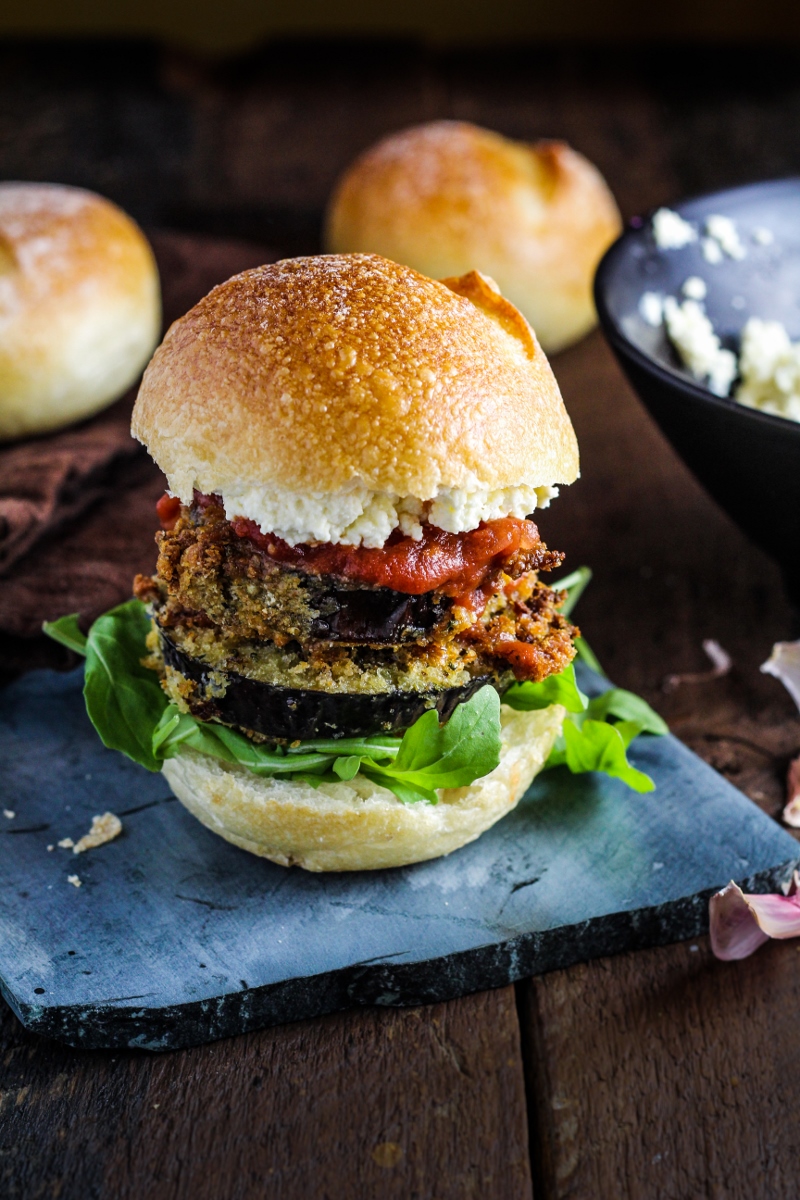
Crispy Eggplant Sandwiches with Roasted Garlic Ricotta Spread {Katie at the Kitchen Door}

Justin Fox Burks and Amy Lawrence, the folks behind The Chubby Vegetarian, do some seriously creative things with vegetables. Think Baked Potato Skins with Smoked Coconut Bacon, BBQ Eggplant, Tomato Pie and Pimento Cheese, and  Italian-Style Eggplant Sausages to get your mind moving in the right direction. The Chubby Vegetarian was one of the first blogs I stumbled upon back in the day and it is continually a source of inspiration, so when I saw that they were publishing a book, The Southern Vegetarian, I knew that I’d have to check it out.

The food served up in The Southern Vegetarian is loaded with classic, All-American appeal. Not every recipe is particularly Southern – sloppy Joes, meatballs, and bran muffins all fall pretty solidly into the general American food category in my mind – but the ones that are bring me straight back to the rich, saucy, flavorful dishes I enjoyed while living in North Carolina. Except, all the meat has disappeared – and I don’t think you’ll miss it. Need proof? How does this menu sound to you: Bourbon with Basil and Lemonade Granita, Okra Fritters with Creole Mushroom Sauce, Vegetarian Red Beans and Rice with Andouille Eggplant, and Grilled Peach Ice Cream? Southern through and through, packed with spice and flavor, and fruits and vegetables are doing all the hard work. Plus, as you flip through the book thinking about whipping up a menu like this, you’ll find a photograph with every single recipe – always a good thing!

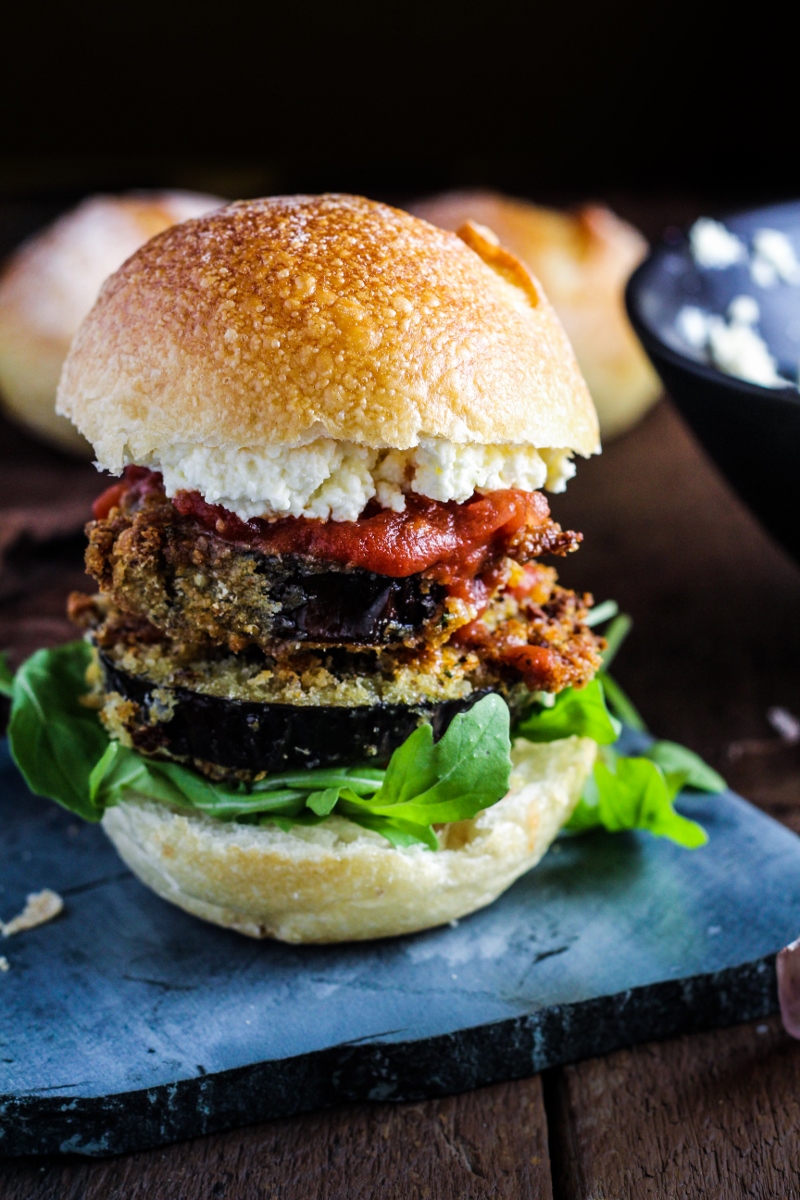
Crispy Eggplant Sandwiches with Roasted Garlic Ricotta Spread {Katie at the Kitchen Door}

Unlike many of the vegetarian cookbooks I find myself gravitating toward, The Southern Vegetarian is not about keeping vegetables raw or barely processed and making them the only thing on the plate – i.e., you’re not going to find a lot of veggie and whole grain salads or gluten-free vegan raw breakfast bowls. Much more frequently, you’ll find that vegetables have simply infiltrated a dish where you would be expecting meat, and all the other rich flavors are still in play. In some cases, this means using tofu, seitan, and other meat substitutes as a replacement for the main component of a classic dish, like using seitan in a Vegetarian “Chicken” Pot Pie. Since I’m not a vegetarian, but simply enjoy cooking with vegetables, this is not my favorite type of recipe – if I want chicken pot pie, I’m just going to have chicken pot pie. However, other times, the way they accomplish meat replacement is genius, like using sausage spices to give eggplant that same smoky flavor, or using liquid smoke, hot sauce, and Worcestershire to make a convincing vegetarian gumbo.

Homemade Roasted Garlic Ricotta {Katie at the Kitchen Door}

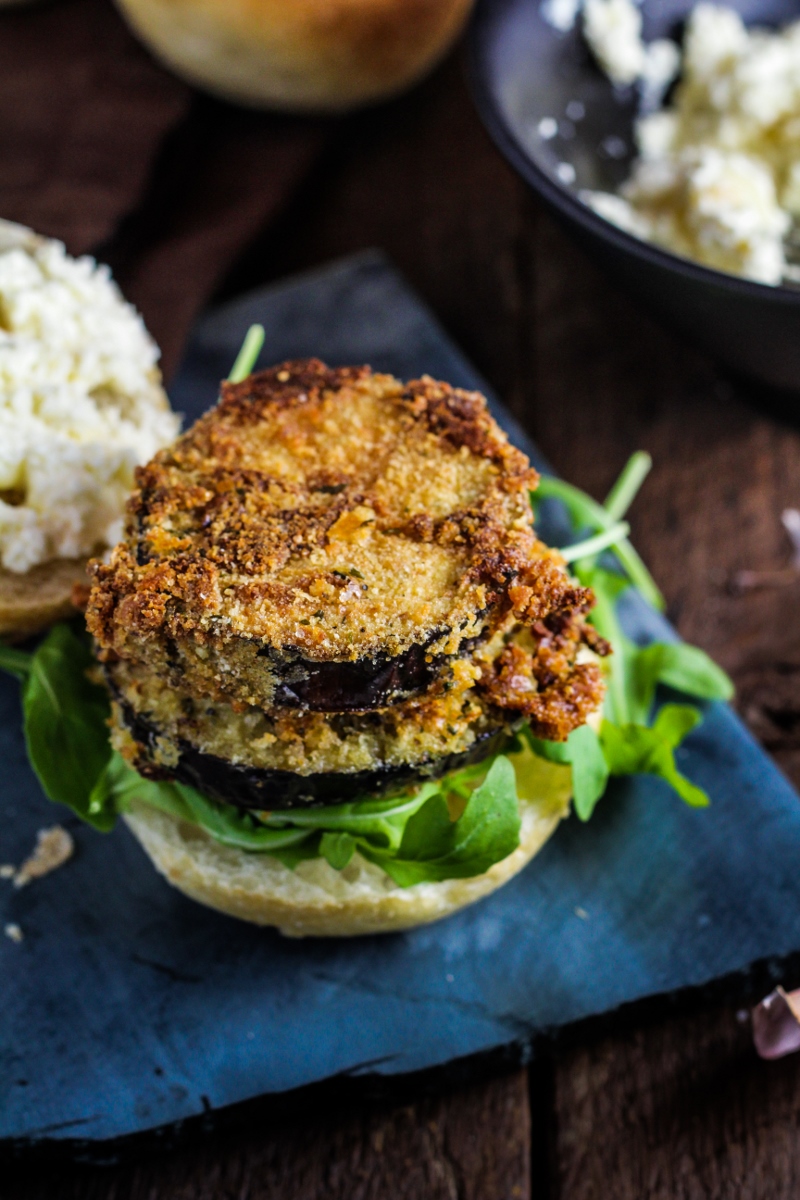
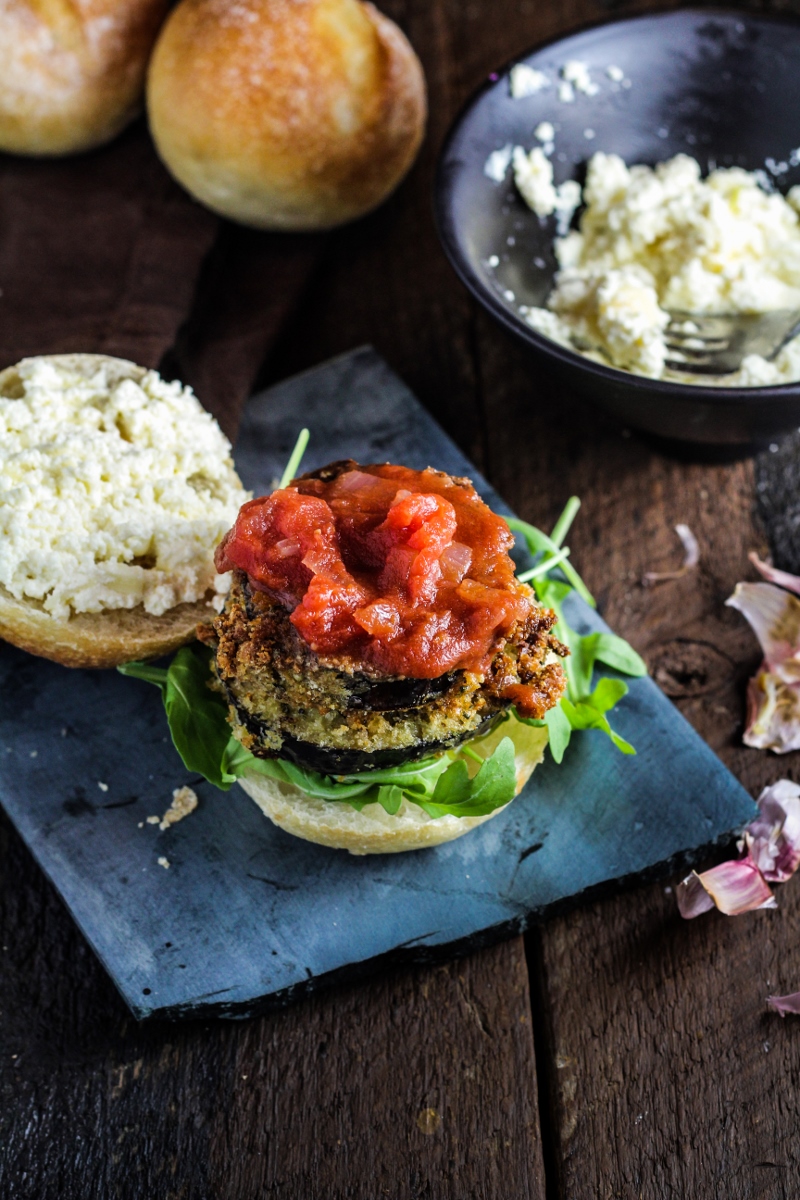
Although they aren’t particularly Southern, I made these crispy eggplant sandwiches as a test recipe and they were seriously delicious, in a very satisfying, comfort food sort of way. I also made some (much more Southern) savory cheddar-pecan cookies with spicy pepper jelly, which were great as well, but for now let’s focus on the sandwiches. I chose to go the super homemade route with these – homemade tomato sauce, homemade breadcrumbs, even homemade ricotta (out of necessity!) – and they came out amazing, but I have the feeling they’d be just as good using mostly store-bought ingredients. And if that were the route you chose, you’d have an easy, satisfying, flavorful and balanced dinner to serve in under forty minutes. The eggplant really does get quite crispy, and the roasted garlic and ricotta spread makes the meal feel richer than it really is. As a bonus, making this recipe taught me a new, quick way to roast garlic – dry roast individual cloves in a hot skillet while still in their papery skins. Worked like a charm!

Crispy Eggplant Sandwiches with Roasted Garlic Ricotta Spread {Katie at the Kitchen Door}

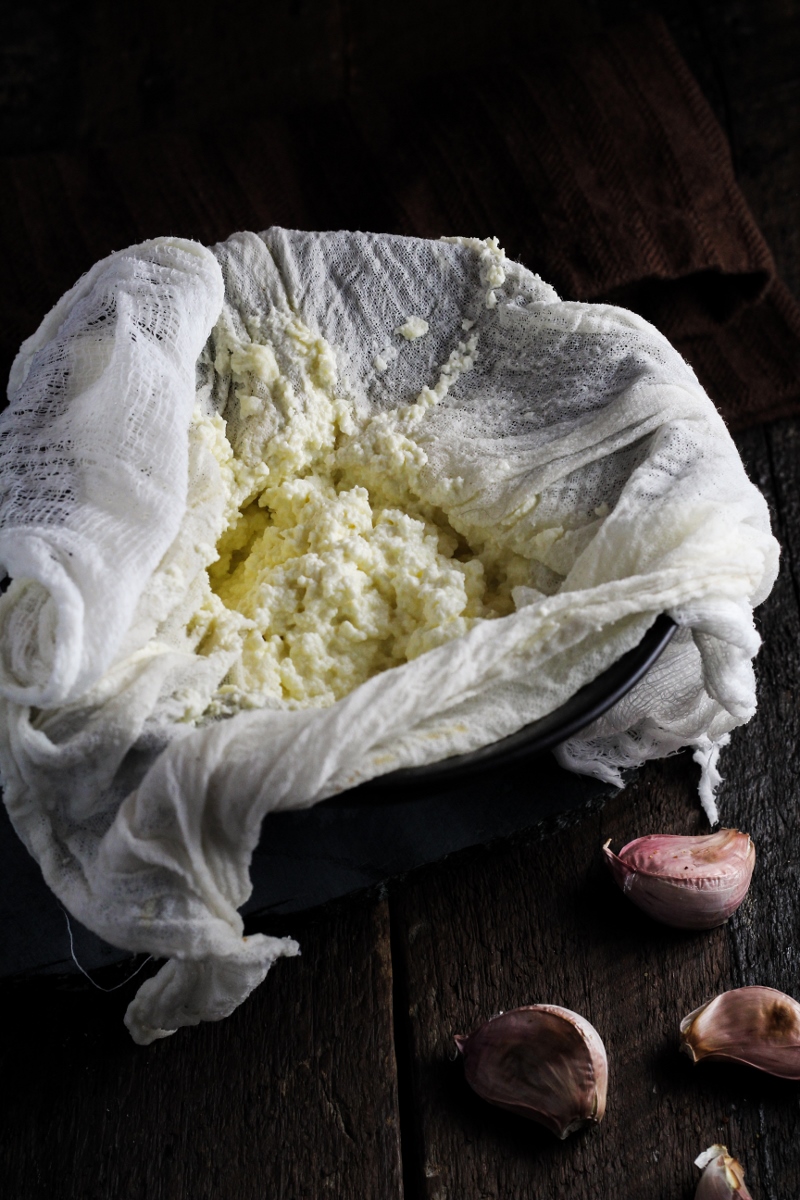
A quick note about the ricotta – when I opened the fancy high-end ricotta I had in the fridge while making this recipe, I gave it a whiff and quickly tossed it in the trash. Going back to the store wasn’t an option, but I happened to have all the ingredients you need to make ricotta (milk, heavy cream, vinegar, and salt) on hand, so I decided to go for it. It came out better than the cheap stuff I get at the store but not as good as the expensive stuff I get out the store – it was sweet and mild but a teeny bit rubberry. Although making ricotta from heavy cream and milk feels a little bit wasteful (ricotta is usually a byproduct of making a different cheese – it is made from the leftover acidified whey), it was definitely a great quick fix.

The bottom line: The Southern Vegetarian turns vegetables into serious omfort food. The recipes included here are rich, saucy, and flavorful, and will be definite crowd pleasers, especially in true vegetarian households. Non-vegetarians looking to increase their vegetable intake will also find recipes of interest, but they may not appreciate the classic meat recipe “re-dos” as much as vegetarians will.

Disclaimer: I received a review copy of The Southern Vegetarian from Thomas Nelson. I was not otherwise compensated and all opinions are my own.

Crispy Eggplant Sandwiches with Roasted Garlic Ricotta Spread {Katie at the Kitchen Door}

Crispy Eggplant Sandwiches with Roasted Garlic Ricotta Spread

Adapted slightly from The Southern Vegetarian. Serves 4-5.

  • 3 c. torn pieces of fresh French bread
  • 1 TBS Italian seasoning mix (or 1 tsp dried parsley + 1 tsp dried oregano + 1/2 tsp garlic powder + 1/2 tsp salt)
  • 1 medium globe eggplant
  • salt and pepper
  • 1/2 c. flour
  • 2 large eggs, beaten
  • olive oil
  • 4-5 ciabatta rolls
  • 1 c. arugula
  • 1 c. warm tomato sauce (homemade or store bought)
  • 1/2 c. freshly grated parmesan cheese
  • 1 c. roasted garlic and ricotta spread (see below)
  1. Preheat the oven to 375°F. Place French bread pieces and Italian seasoning in a food processor and pulse until the bread has broken down into fine crumbs. Pour onto a dinner plate and set aside.
  2. Wash the eggplant and remove the stem ends. Slice into 1/2 inch thick slices. Sprinkle each slice with salt and pepper.
  3. Set up two bowls next to the breadcrumb plate – one with the flour and one with the beaten eggs. Dredge each eggplant slice in the flour, tapping off the excess, then dip in the eggs, then coat with breadcrumbs. Place on a baking tray. Drizzle with a small amount of oil (about 1/8 of a teaspoon per slice).
  4. Bake eggplant for 15 minutes, then flip each slice over and drizzle the opposite side with olive oil. Bake for another 15 minutes then remove from the oven. Coating should be golden brown and crispy.
  5. To assemble the sandwiches, place a handful of arugula leaves on top of the bottom bun, then cover with 2-3 slices of eggplant. Drizzle a spoonful of the warm tomato sauce on top of the eggplant and sprinkle 2 TBS of parmesan cheese on top. Spread the garlic and ricotta mixture on the top bun, then close the sandwich and serve.
Homemade Roasted Garlic Ricotta {Katie at the Kitchen Door}

Roasted Garlic Ricotta Spread

Recipe adapted slightly from The Southern Vegetarian. Makes about 1 cup.
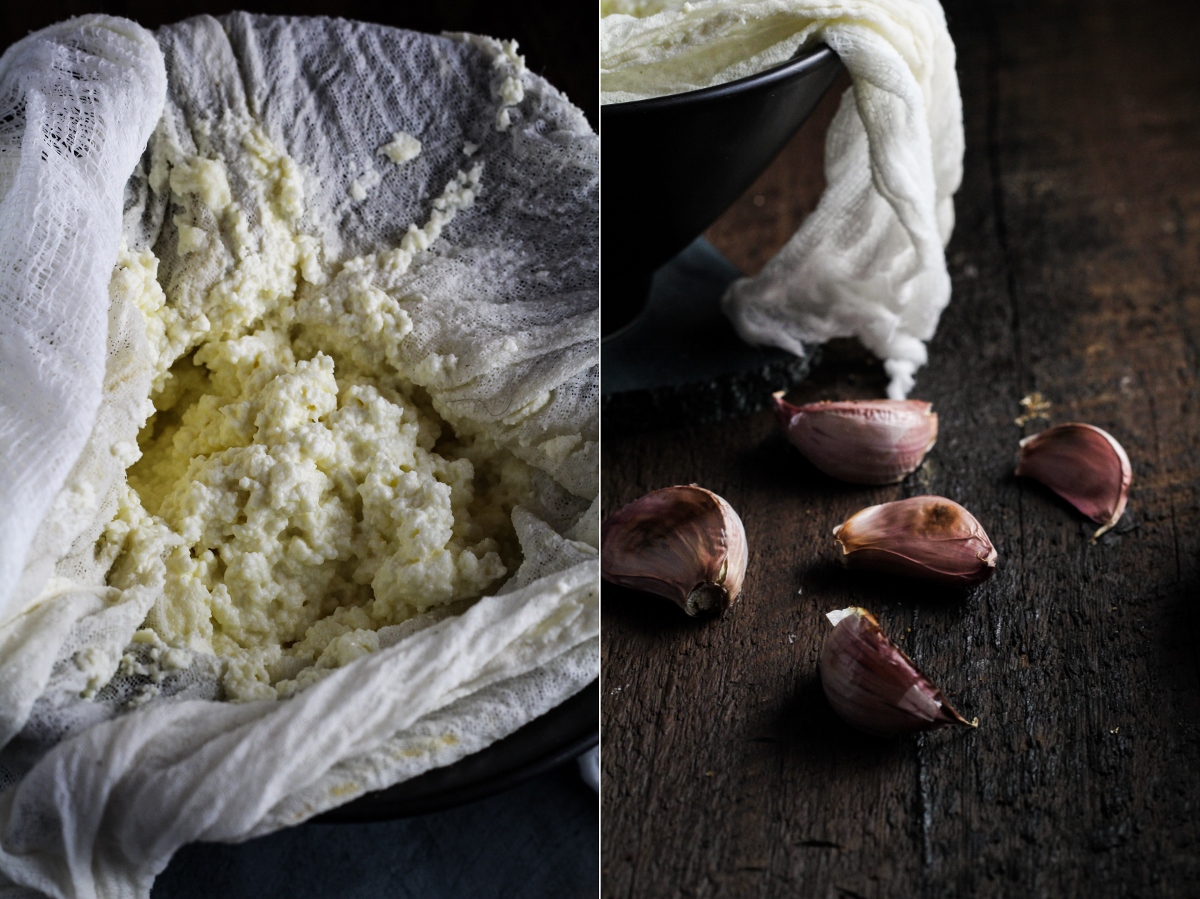
  • 5 cloves of garlic, skin left on
  • 1 c. whole milk ricotta, homemade (see below) or store bought
  • 1/4 c. freshly grated parmesan cheese
  1. Place the garlic cloves with their skin on in a dry skillet over medium heat. Toast, flipping occasionally, until skins have started to blacken and garlic is fragrant, about 10-15 minutes. Let them cool, then remove the skins – the inside of the clove should be soft and roasted.
  2. In a small bowl, mash the roasted garlic cloves with a fork, then mix with the ricotta and the parmesan. Taste for seasoning and serve.

Easy Homemade Ricotta

Adapted from Anne Burrell via The Food Network. Makes about 1 cup.

  • 2 c. skim milk
  • 1 c. heavy cream
  • 1 TBS distilled white vinegar
  • 3/4 tsp kosher salt
  1. Mix the milk, heavy cream, vinegar, and salt together in a large saucepan. Bring to a simmer over medium heat, stirring infrequently just to ensure that nothing is sticking to the bottom or sides of the pot. Once the milk has reached a simmer, simmer for 1-2 minutes – curds will form continuously as you simmer the milk.
  2. Place a sieve or strainer lined with damp cheesecloth over a large bowl. Pour the curds and whey into the strainer, and let drain for 15 minutes. After it has drained and cooled to a point where it is comfortable to touch, gently squeeze out any remaining whey from the ricotta. Unmold from the cheesecloth and serve, or store in the fridge.
Ingredient of the Week: Rhubarb // Rhubarb-Ginger Bars

1 May 31, 2013 Current Feature 2

Ingredient of the Week: Rhubarb // Rhubarb-Ginger Bars

Rhubarb Ginger Bars {Katie at the Kitchen Door}

Rhubarb Ginger Bars {Katie at the Kitchen Door}

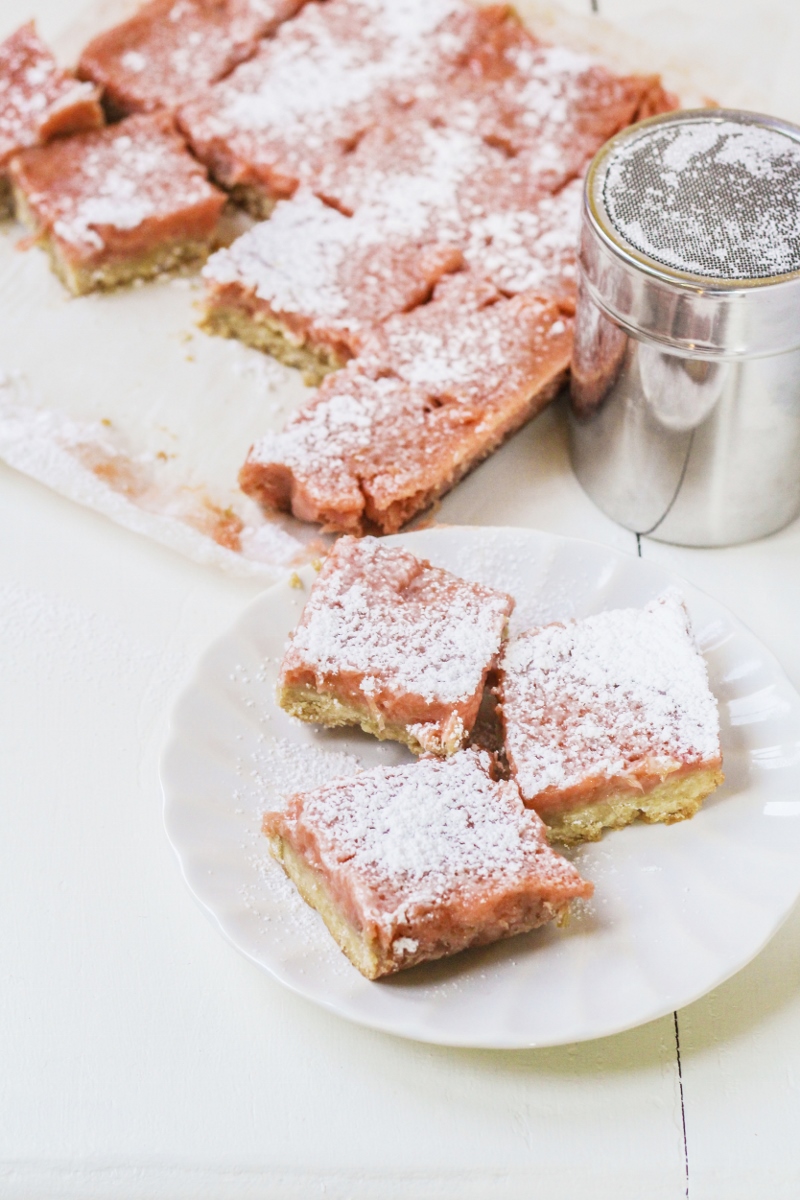
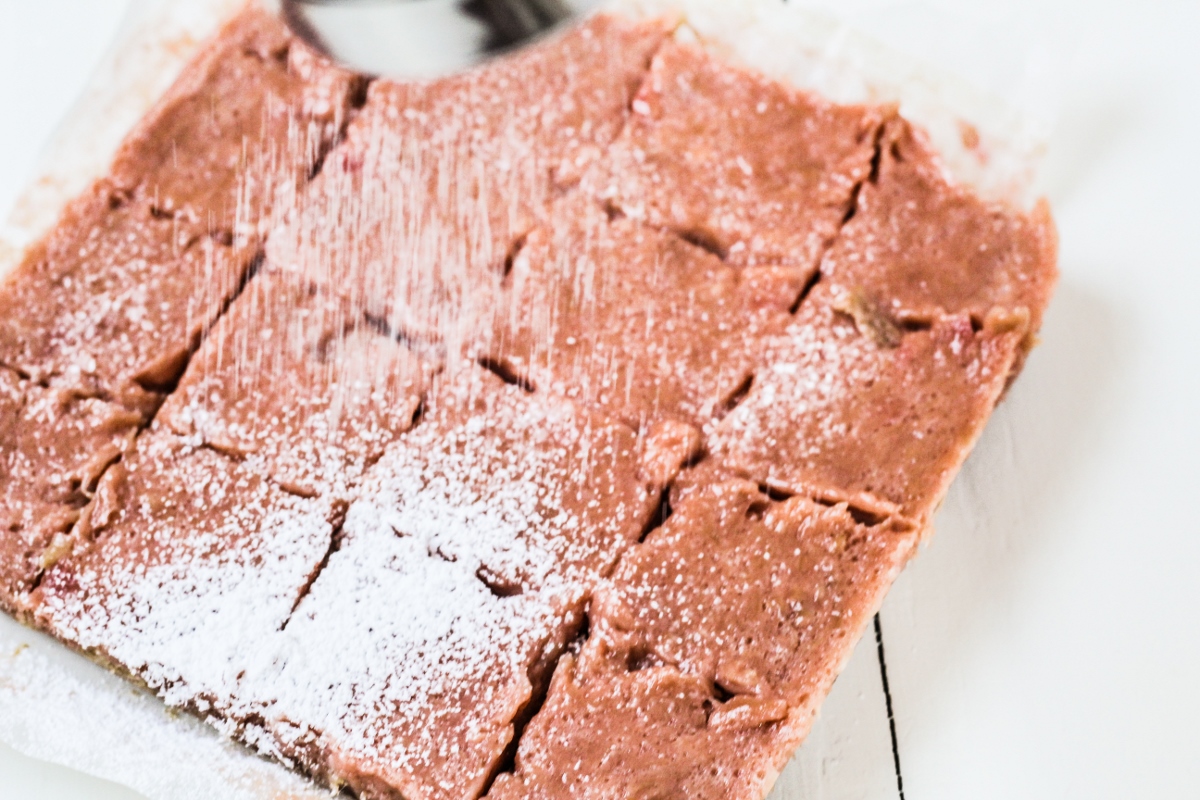
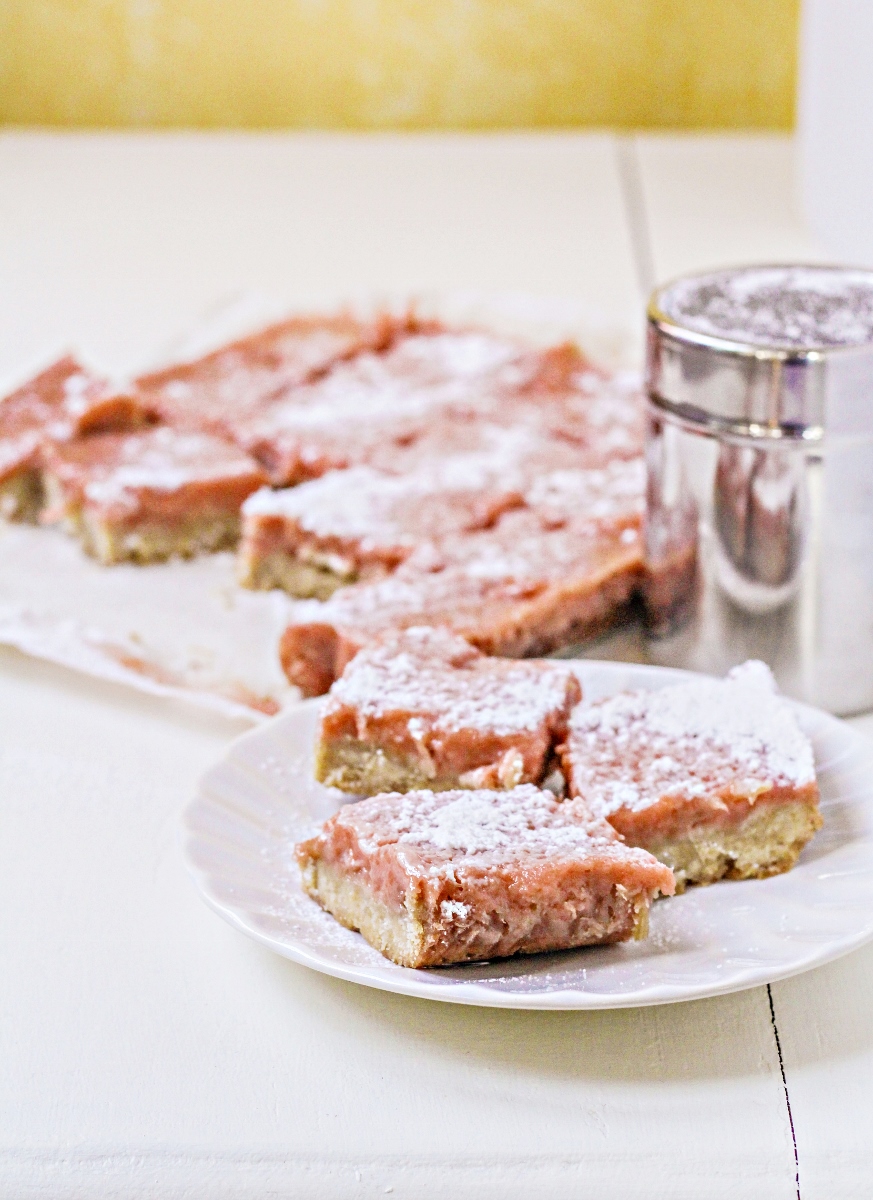
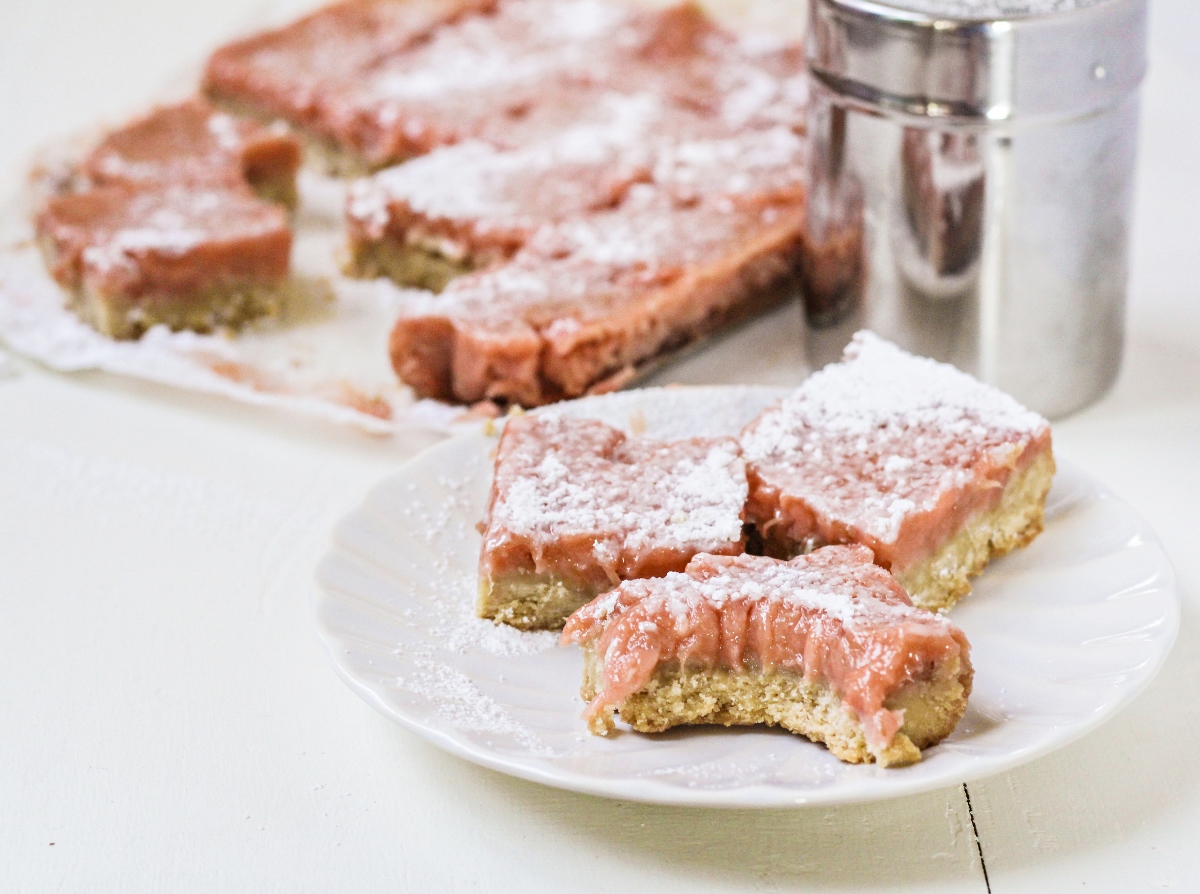
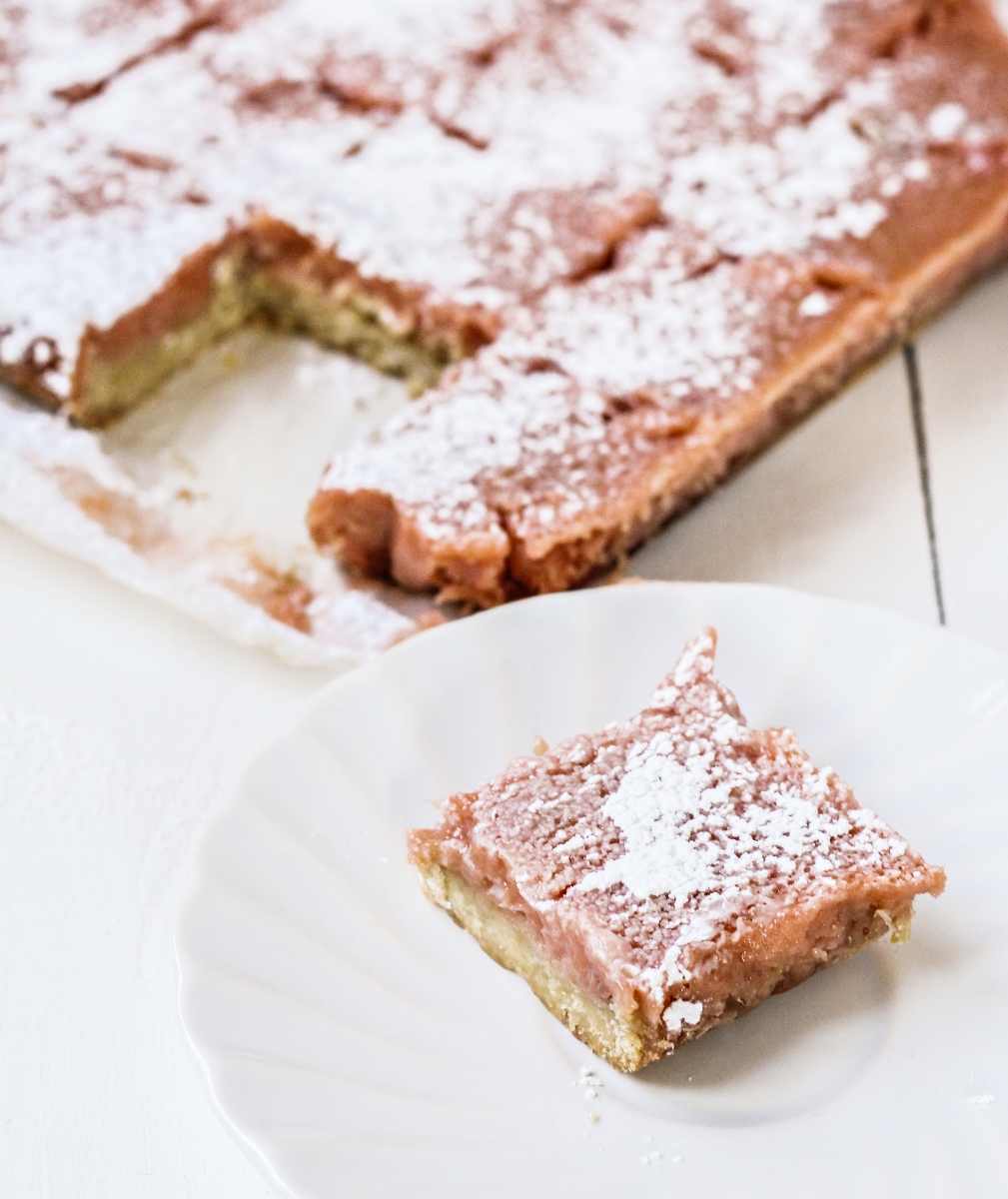
Originally, I was planning on making last night’s recipe the last one I posted for rhubarb week. But once I started looking, I just couldn’t stop finding recipes I wanted to make! Then, in an email exchange with Linda, she mentioned the rhubarb ginger crumb bars she was planning on posting soon, and I immediately remembered these amazing rhubarb ginger bars I made a few summers ago. I had to share them. They have a ginger-flavored shortbread crust that’s buttery and crumbly, and a tangy, pink filling reminiscent of lemon squares (which are one of my favorite desserts). They stay a little soft on top, so they’re not the easiest to transport, but that didn’t stop me from bringing some to work in a tupperware – a squished rhubarb bar still tastes absolutely delicious.

Rhubarb Ginger Bars {Katie at the Kitchen Door}

Rhubarb Ginger Bars {Katie at the Kitchen Door}

So this is the last (and in my opinion, the best) official recipe of rhubarb week – but if I’m being honest, I’m only stopping because I ran out of rhubarb. I’m hoping to replenish my stocks at the garden this weekend to make a special dessert for Sunday dinner, but I promise I’ll give you guys a little bit of a break and mix things up around here – we’re moving on to Southern food, some more inspiration from our Italy trip, and a few new summer cookbooks. Until then, have a great weekend!

Rhubarb Week Part One: Rhubarb-Prosecco Spritzer
Rhubarb Week Part Two: Rhubarb Custard Fool
Rhubarb Week Part Three: Recipe Round-up from Around the Blogs
Rhubarb Week Part Four: Persian Rhubarb and Beef with Rice

Rhubarb Ginger Bars {Katie at the Kitchen Door}

Rhubarb-Ginger Bars

Adapted slightly from Two Spoons. Makes about 16 bars.

  • 1 stick salted butter, room temperature
  • 1/3 c. light brown sugar
  • 1 c. flour
  • 1/2 tsp ground ginger
  • 2 c. chopped rhubarb (about 4-5 medium sized stalks)
  • 10 TBS sugar, divided
  • 3 eggs
  • 2 TBS lemon juice
  • 1 TBS cornstarch
  1. Preheat the oven to 350°F. Line an 8×8 inch baking pan with parchment paper. In a small bowl, beat together room temperature butter and brown sugar until mixture is smooth. Stir in flour and ground ginger. Dough will be slightly crumbly. Press into the prepared pan and place in freezer until oven is preheated. Bake crust for 20 minutes, then remove from oven.
  2. In a medium saucepan, combine rhubarb and 5 TBS of the sugar. Heat over medium heat, stirring frequently, until rhubarb is soft and juices are syrupy, about 5-7 minutes. Remove from heat and puree in a food processor. Let cool so it’s no longer hot to the touch.
  3. In a medium bowl, whisk together eggs and remaining 5 TBS of sugar until thick and pale yellow. Whisk in lemon juice, then stir in cooled rhubarb puree. Sift in cornstarch and whisk to combine. Pour rhubarb puree over crust.
  4. Lower oven temperature to 320°F. Bake rhubarb bars for 20-25 minutes, until filling is set. Refrigerate until cold and serve chilled.
Ingredient of the Week: Rhubarb // Persian Rhubarb and Beef with Rice

6 May 30, 2013 Beef

Ingredient of the Week: Rhubarb // Persian Rhubarb and Beef with Rice

Persian Beef with Rhubarb and Rice {Katie at the Kitchen Door}

So we’ve had a little rhubarb cocktail, we’ve folded it into a whipped custard for dessert, and we’ve looked at all the amazing things other bloggers are cooking up with it – now let’s talk a little more about rhubarb as a plant and as a culinary ingredient. Since it’s one of the earliest “fruits” ready for harvest, rhubarb is usually heralded as a spring ingredient, but really it keeps growing all summer, and certainly stays tasty through September. I use “fruit” in quotations since it’s not technically a fruit, although in the U.S. it’s regulated as such, but a member of the knotweed family, which also includes sorrel and buckwheat.

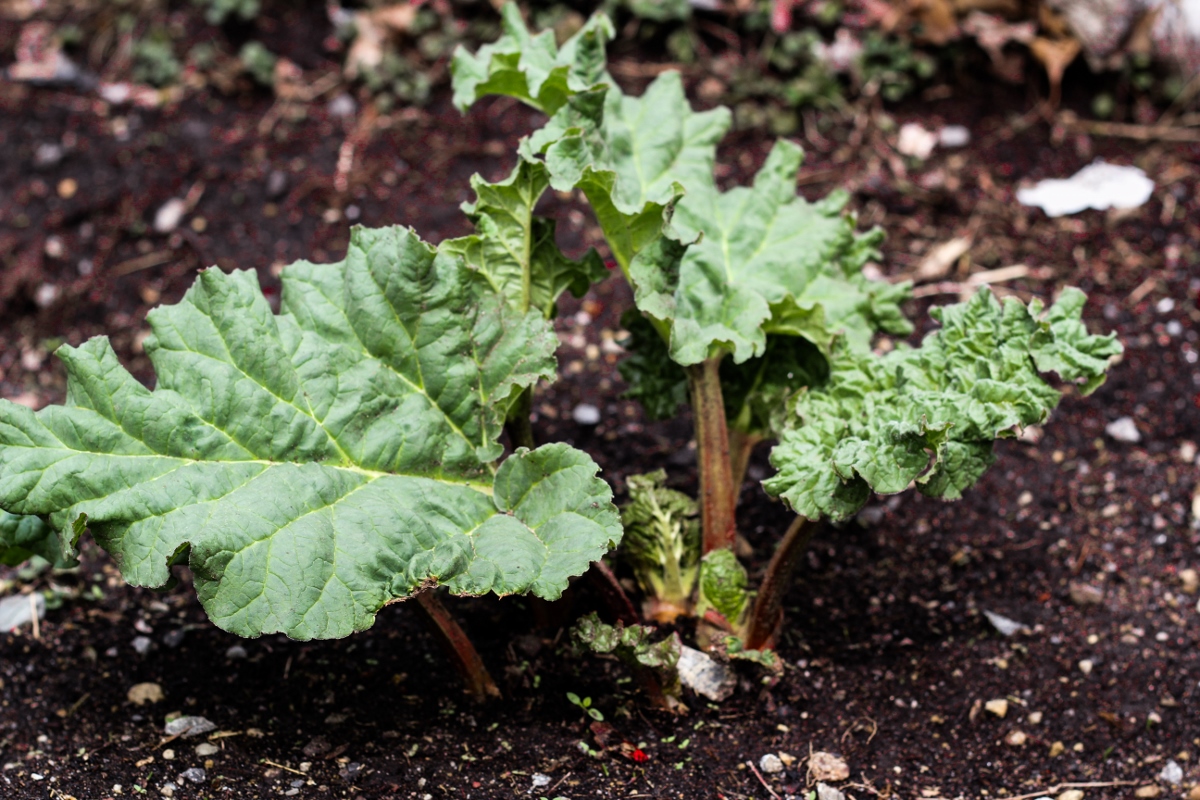
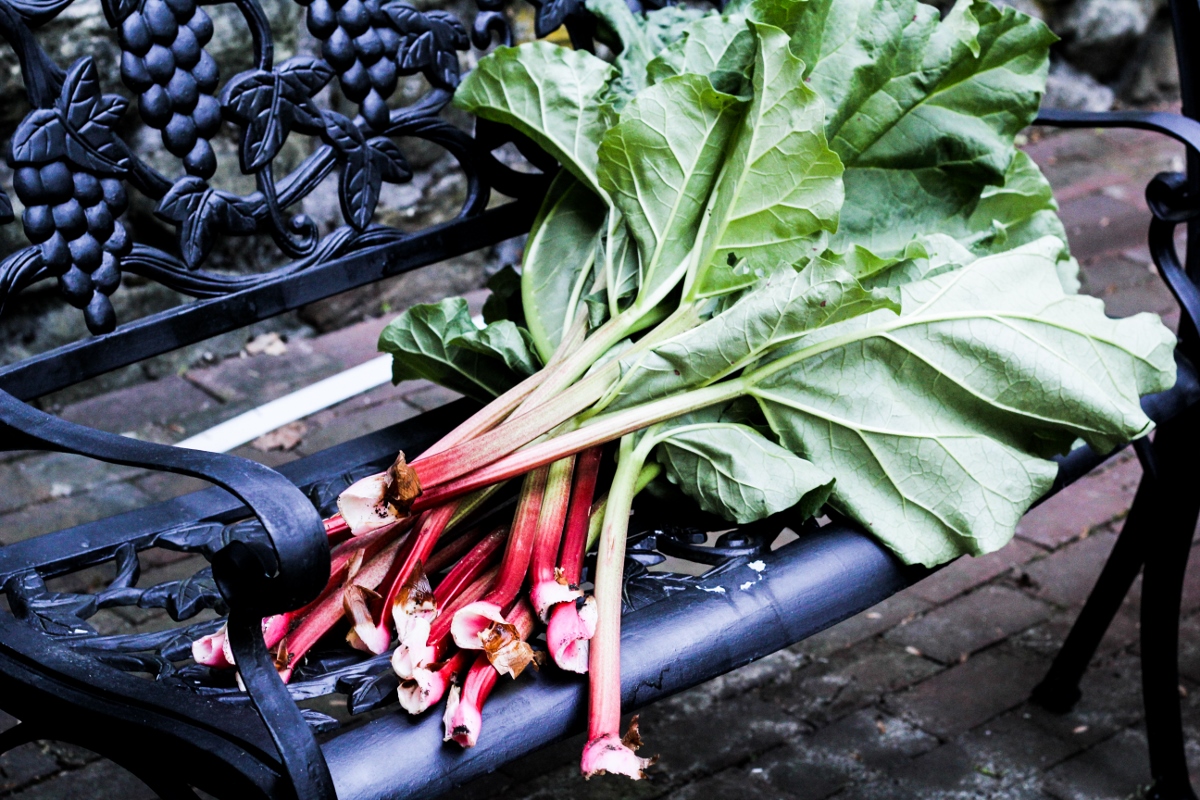
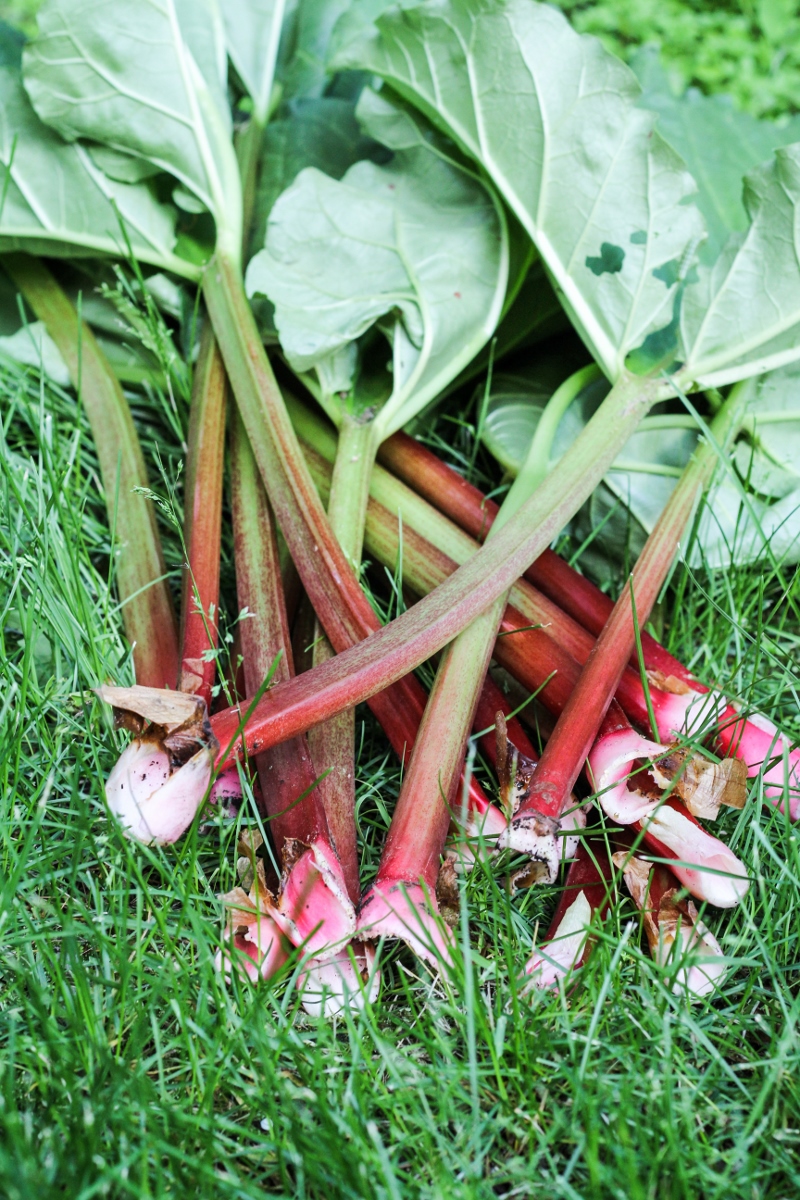
In cool climates, growing rhubarb is surprisingly easy. It pops out of the ground in early March, and quickly proceeds to become a huge leafy giant. Some varieties always stay green, while others ripen over time to that gorgeous deep red most people expect. Usually, the stalks we harvest in our garden are red partway through but still greenish towards the top – this is totally fine, and they still taste delicious. To harvest rhubarb, reach your hand down to the base of a stalk, inserting a finger a little way into the ground right against the stem, and give a little twist-and-tug to pull the rhubarb stalk up from its base. It should come out fairly easily. Make sure you cut off and discard the leaves – they’re poisonous (to both people and some bugs – it has even been used in insecticides!).

Rhubarb Plant

Rhubarb Harvest

In the United States in particular, rhubarb is known for it’s use in sweet dishes, and I would venture to guess that most people don’t really encounter it beyond its appearance in strawberry-rhubarb pie. So well loved are rhubarb pies that rhubarb is also known simply as “pie plant.” Beyond the classic strawberry-rhubarb pairing, rhubarb also goes well with cinnamon, orange, honey, and cream, all of which are typically thought of as sweet ingredients. However, if you dig back into rhubarb’s history, you’ll find recipes from its places of origin – China, Russia, Mongolia, and other parts of Central Asia – that use these pairings in savory dishes. I was fascinated to learn from Vegetable Literacy that before sugar was plentiful, rhubarb was actually used as a detoxifier and curative herb. It was during this same general time period that rhubarb was considered a luxury good, included in lists of trade goods side by side with rubies, diamonds, silks, and satins.

Rhubarb Harvest

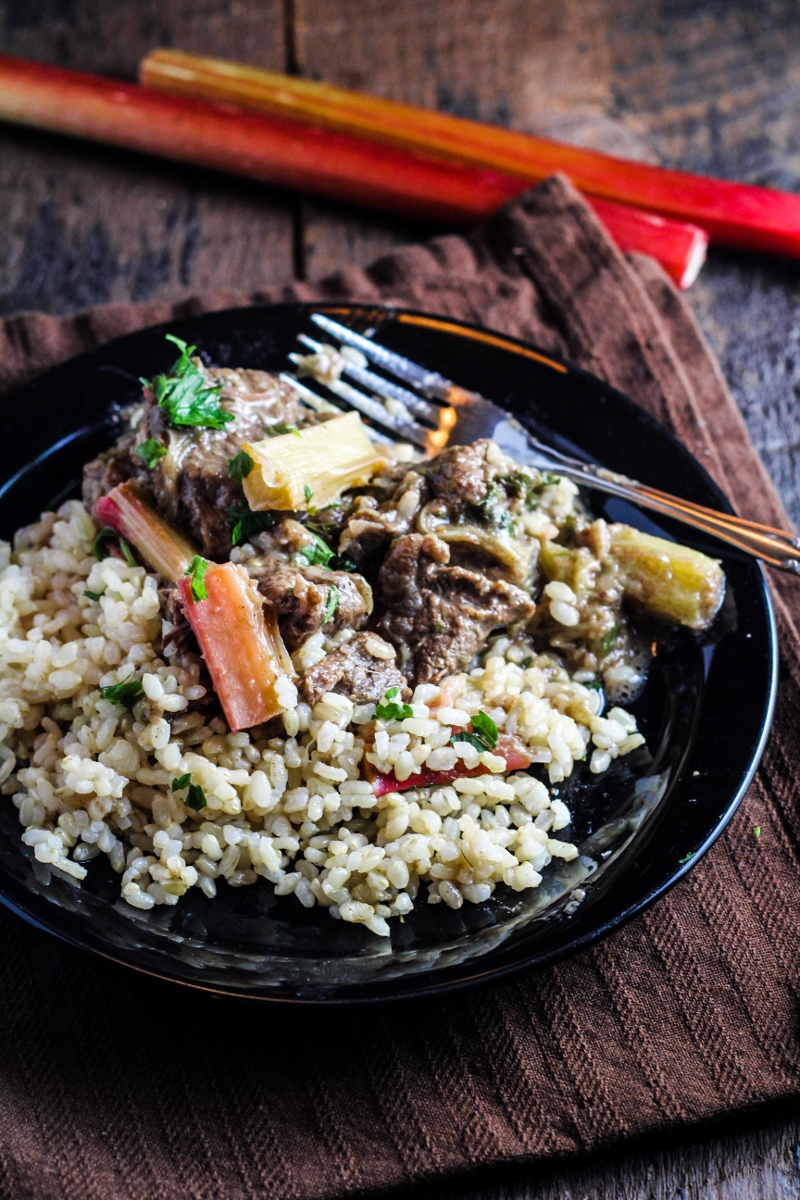
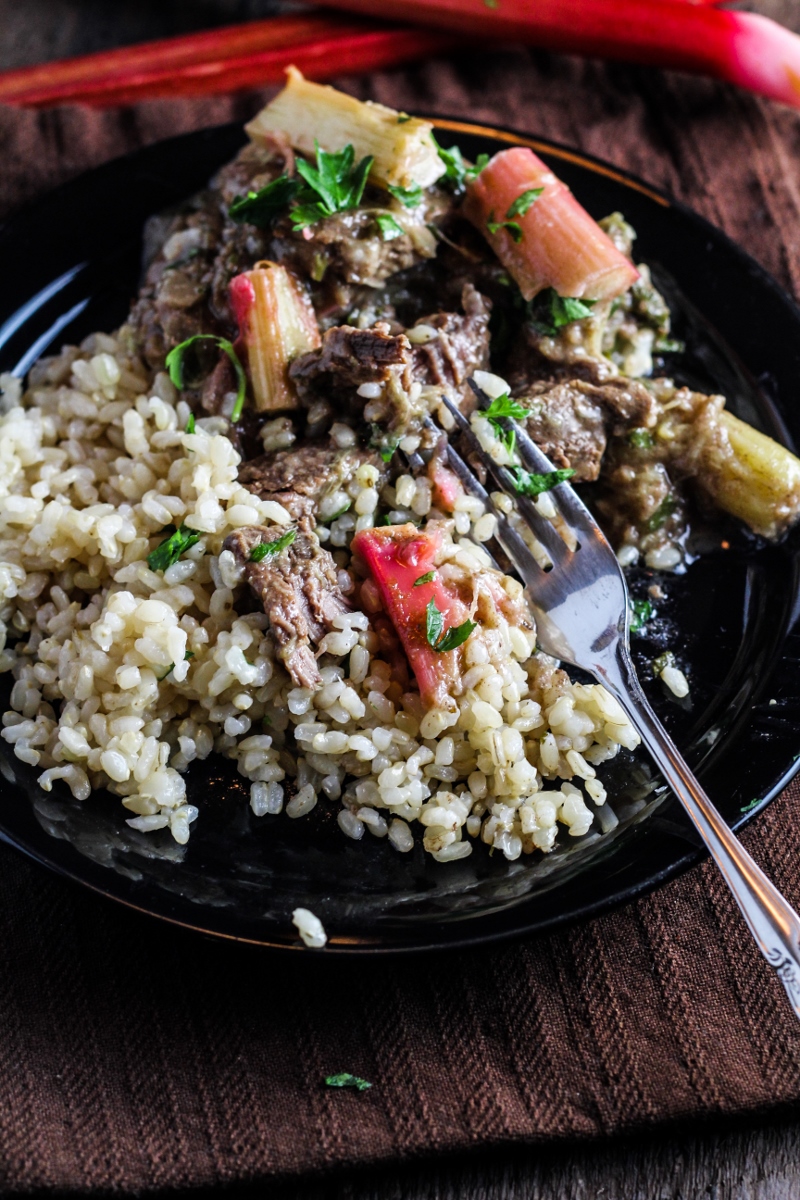
Inspired by all this history, I decided to try out one of these savory rhubarb recipes, this Persian Rhubarb and Beef with Rice. While Persia/Iran isn’t technically part of Central Asia, it’s right on the border and certainly shares some culinary heritage with the region. Although this is admittedly not the most photogenic of recipes, I really enjoyed the flavors at play in this dish. It’s quite sour, but I thought the rhubarb gave it a lot of depth and character. That being said, as written, I found that the ratio of rhubarb to beef was a little high for my taste, so I’ve shared it here with a little less rhubarb than the original called for. This recipe is a bit adventurous and might not be the best thing to serve a picky eater, but if you like Middle-Eastern food and intense flavors (or you have a bumper crop of rhubarb), definitely give it a try.

Please note: Some of this information came from Vegetable Literacy, a cookbook that also provides a bit of a garden/history/culinary education! I also used information from Wikipedia.

Rhubarb Week Part One: Rhubarb-Prosecco Spritzer
Rhubarb Week Part Two: Rhubarb Custard Fool
Rhubarb Week Part Three: Recipe Round-up from Around the Blogs
Rhubarb Week Part Five: Rhubarb-Ginger Bars

Persian Beef with Rhubarb and Rice {Katie at the Kitchen Door}

Persian Rhubarb and Beef with Rice (Khoresht-e Rivas)

Adapted from The New Book of Middle Eastern Food. Serves 2-3.

  • 3 TBS butter
  • 1 onion, peeled and finely chopped
  • 1 lb. lean stew beef, cubed
  • salt and pepper
  • 1/2 tsp cinnamon
  • 1/4 tsp allspice
  • 3/4 c. short grain brown rice
  • 2/3 lb. fresh rhubarb stalks, cut into 2 inch lengths
  • juice of 1/2 lemon
  • 1/2 c. chopped flat leaf parsley
  1. Heat 2 TBS of the butter in a large saucepan over medium heat until melted. Add the onion and saute until golden, stirring frequently, about 5 minutes. Add the beef, season with salt and pepper, and brown on all sides. Add the cinnamon and allspice and stir to coat the beef – cook 1-2 minutes longer, until fragrant.
  2. Add water to cover the beef and simmer for 1 1/2 hours, until meat is tender. Check water periodically and add more to keep beef covered and prevent burning. When it is nearing serving time, allow most of the water to evaporate so that the sauce is thick.
  3. While the beef is cooking, prepare the rice. Add the rice and 1 1/2 c. of cold water to a small saucepan and bring to a boil over medium-high heat. Immediately reduce heat to low, cover saucepan, and simmer rice, covered, until all water is absorbed and rice is tender, about 30-40 minutes. Remove from heat and fluff with a fork.
  4. Ten minutes before you are ready to serve the meal, heat the remaining 1 TBS butter in a medium frying pan over medium heat. Add the sliced rhubarb and cook until beginning to soften, about 3 minutes, then sprinkle with lemon juice and cook 1 minute longer. Remove pan from heat and add rhubarb to beef. Stir in chopped parsley. Cook entire mixture for 2 minutes longer, then remove from heat and serve over rice.
  • « Previous Page
  • Page 1
  • …
  • Page 28
  • Page 29
  • Page 30
  • Page 31
  • Page 32
  • …
  • Page 57
  • Next Page »

Primary Sidebar

Subscribe!

Get creative recipes and menu ideas delivered straight to your inbox.

Most Popular

A House // Sweet Potato and Coconut Milk Soup with Brown Rice and Lentils

Monthly Fitness Goals: July // Homemade Spinach Wraps with Chopped Greek Salad

A New Job // Classic Seven-Layer Bars

Butternut Squash Carbonara with Fried Sage and Caramelized Onions

Happy Birthday, Trevor! // Peanut Butter Fudge

Cookbook Review and Giveaway: Home Made Winter

Drizly

Please note!

Full disclosure: if you purchase anything at Amazon using the above links or any other links to Amazon on this site, I will receive a small commission. Just so you know!

Copyright© 2018 · Cookd Pro Theme by Shay Bocks

View Mobile Site
This site uses cookies: Find out more.