• Skip to primary navigation
  • Skip to content
  • Skip to primary sidebar
  • Home
  • Recipes
  • Features
    • Cookbook Reviews
    • Ingredient of the Week
    • Sunday Dinner
    • Fitness Goals
  • Travel
  • About
    • Privacy Policy
    • Cookie Policy
  • Work With Me

Katie at the Kitchen Door

Globally-inspired, seasonal recipes

Blog Page

Grits and bacon, anyone?

0 April 2, 2012 Breakfast

Grits and bacon, anyone?

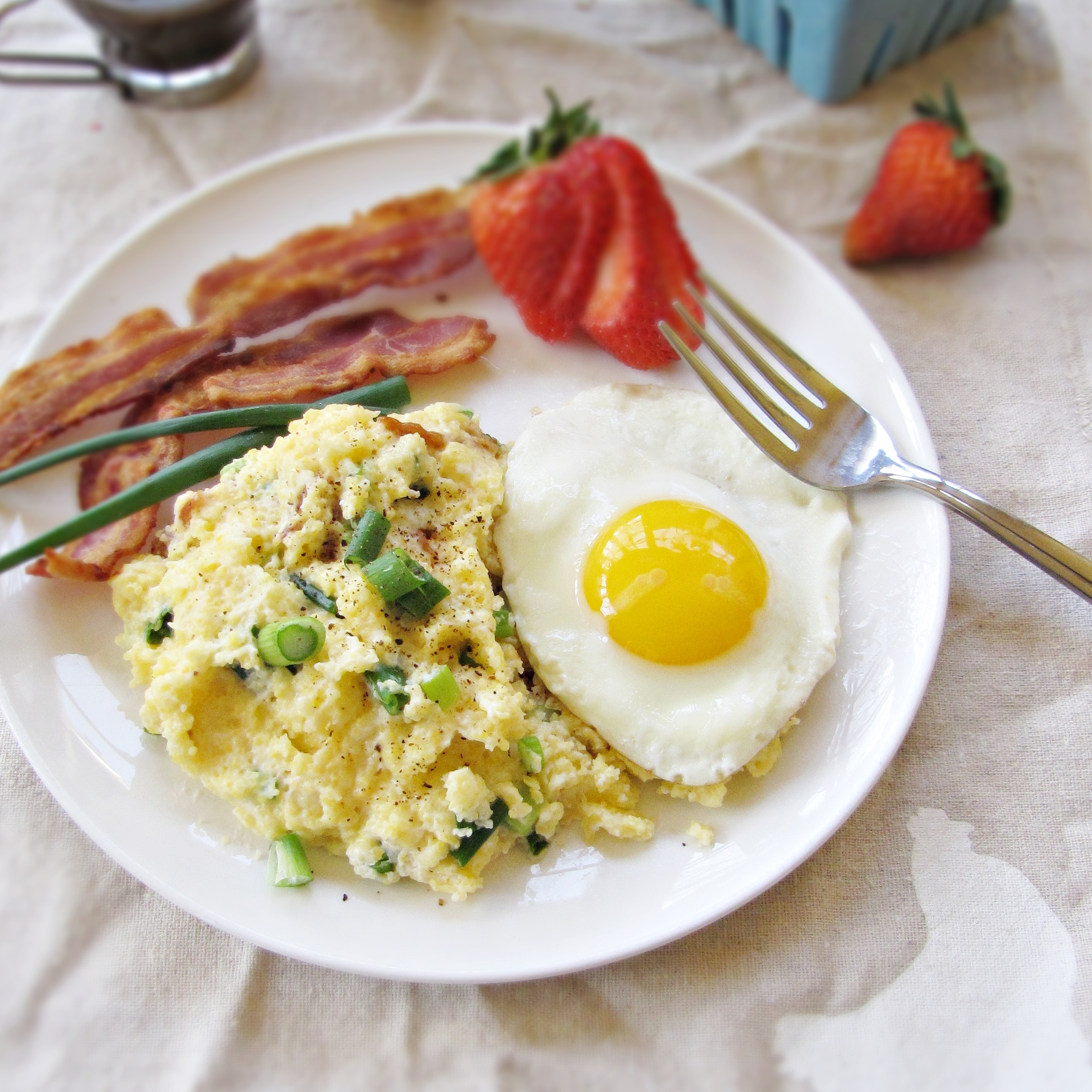
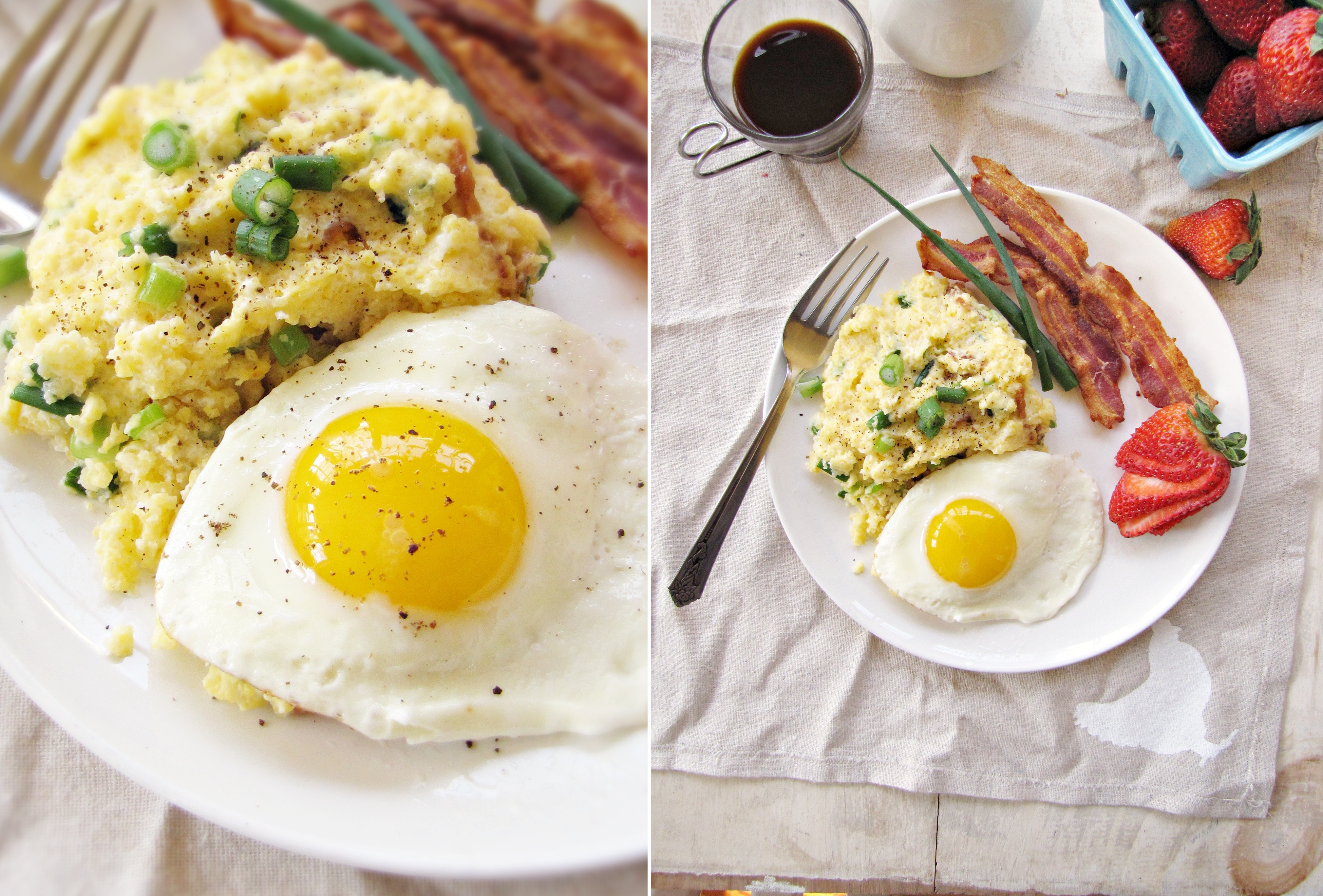
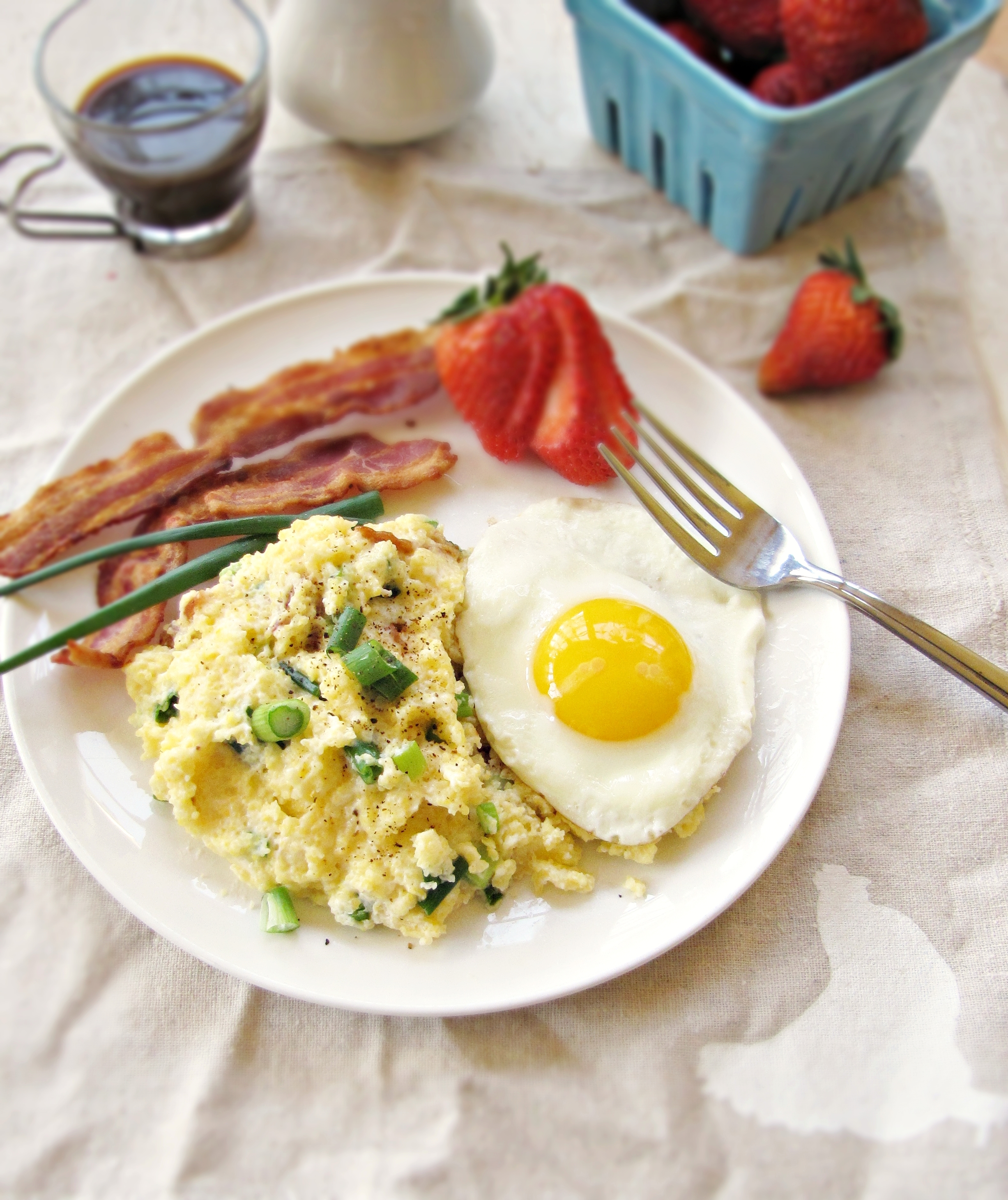
As promised, here’s the last recipe I’m sharing from Radically Simple: creamy scallion-bacon grits.  Does that sound irresistible to anyone else?  Because it did to me.  I didn’t grow up eating grits – in fact, good ol’ Cream of Wheat (doused in butter, and with enough sugar sprinkled on top to form a crackly sugar-crust) has been my hot breakfast of choice for most of my life – but grits have been in vogue lately, what with all the attention being given to Southern Food, so I decided to try my hand at them.  And it was so worth it.  Goat cheese + scallions + bacon crumbles + butter + grits + plenty of fresh black pepper?  Too good!

While this was not a healthy breakfast by any stretch of the imagination, goat cheese and scallion filled grits, crispy bacon, sunny side up fried eggs, and freshly brewed espresso is a pretty killer way to start your morning.  Especially if it’s a sunny, Sunday morning in April and you get to cook side-by-side with someone you like a whole lot, stirring the grits while he crisps the bacon, and sneaking the occasional sideways kiss.  If you then happen to get fed roast leg of lamb and chocolate cake by your parents in celebration of Palm Sunday/Passover and sit by the fire drinking red wine, you might just call it a great day.
 

Hope you all had a great Monday – the hardest day of the week is over!

For those interested, here’s my review of Radically Simple – it’s a great cookbook!

Creamy Scallion Bacon Grits with Runny Eggs

Adapted loosely from Radically Simple.  Serves 2.

  • 1/2 c. instant grits
  • 2 1/4 c. water
  • 2 TBS butter
  • 3 oz. grated cheese of your choice (original recipe calls for parmesan, we used goat cheese)
  • 4 slices cooked bacon, crumbled
  • 1 bunch scallions, sliced
  • salt and pepper
  • 2 eggs
  1. Combine grits, water, and butter in a medium-sized pot and heat over high heat, until it comes to a boil.  Reduce heat to medium, and cook, stirring constantly, until grits are thick and creamy, about 5 minutes.  Remove from heat, and stir in cheese, cooked bacon, and scallions.  Season generously with salt and pepper, and set aside.  If you prefer, you can use regular grits, which take longer to cook but may turn out creamier – just follow the cooking instructions on the package, then stir in the cheese, bacon, and scallions.
  2. In a large frying pan, fry eggs over low heat until they have reached your desired stage of doneness.  Spoon grits onto 2 plates and top each with a fried egg.  Grind more fresh black pepper on top and enjoy!
Greatist Collaboration: Quinoa Puttanesca

0 March 30, 2012 Pasta

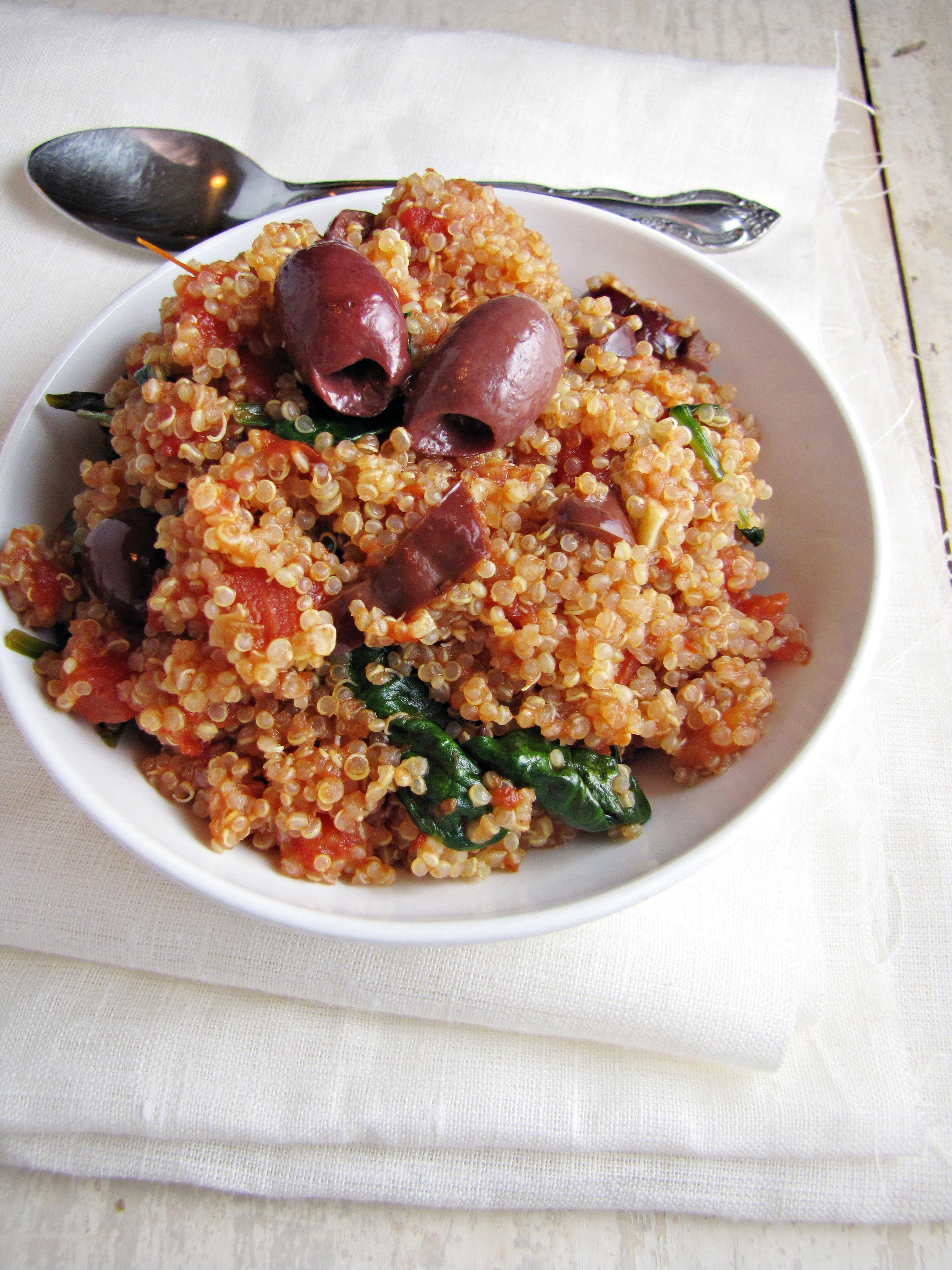
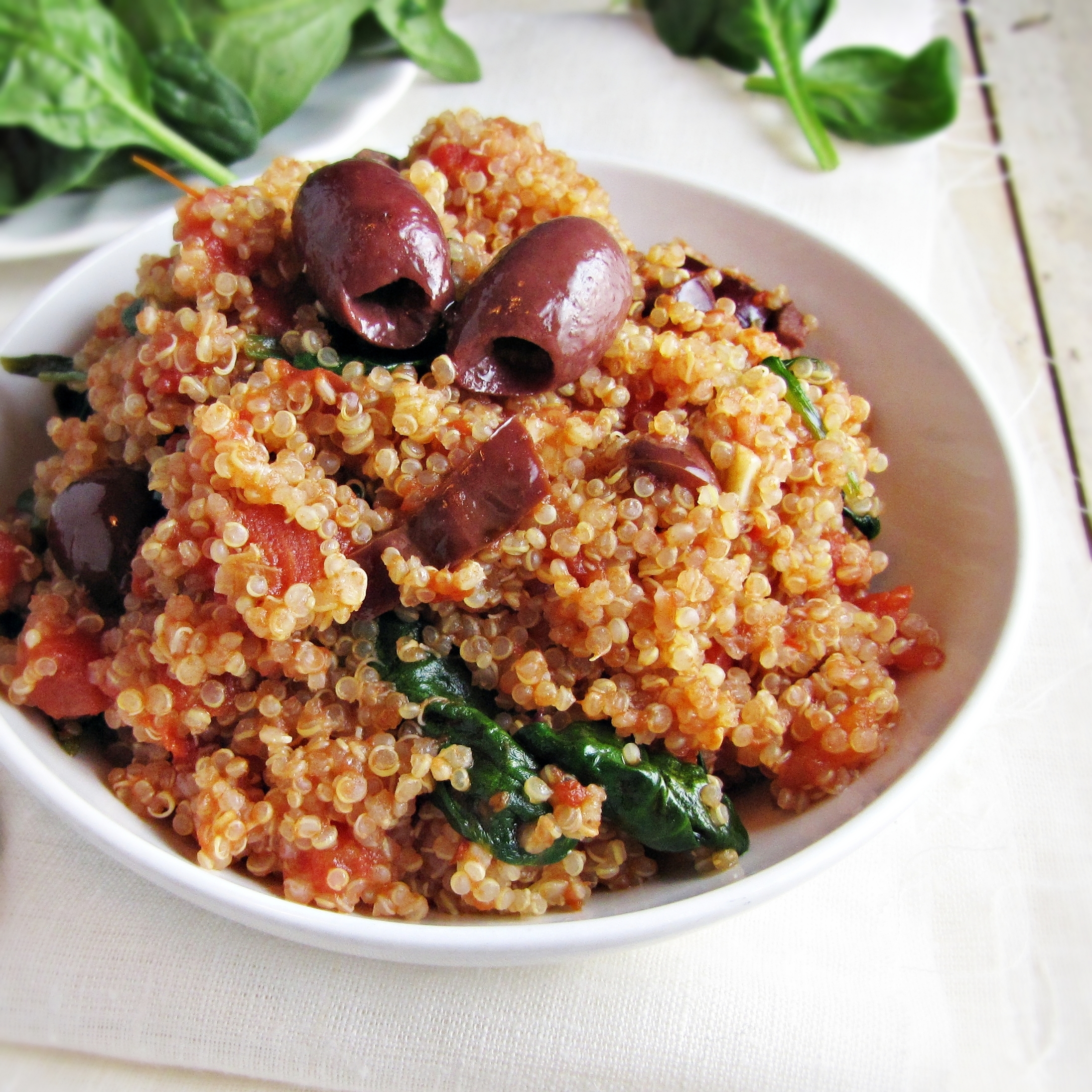
Greatist Collaboration: Quinoa Puttanesca

Sitting at my desk on Monday, thinking deeply about insurance and strategy and research like I’m paid to do, I had an epiphany: “Tomato-quinoa arancini! With olives!”  Some of you might point out that this has nothing to do with insurance, and you would be correct, but I’ll take inspiration anytime, anyplace.

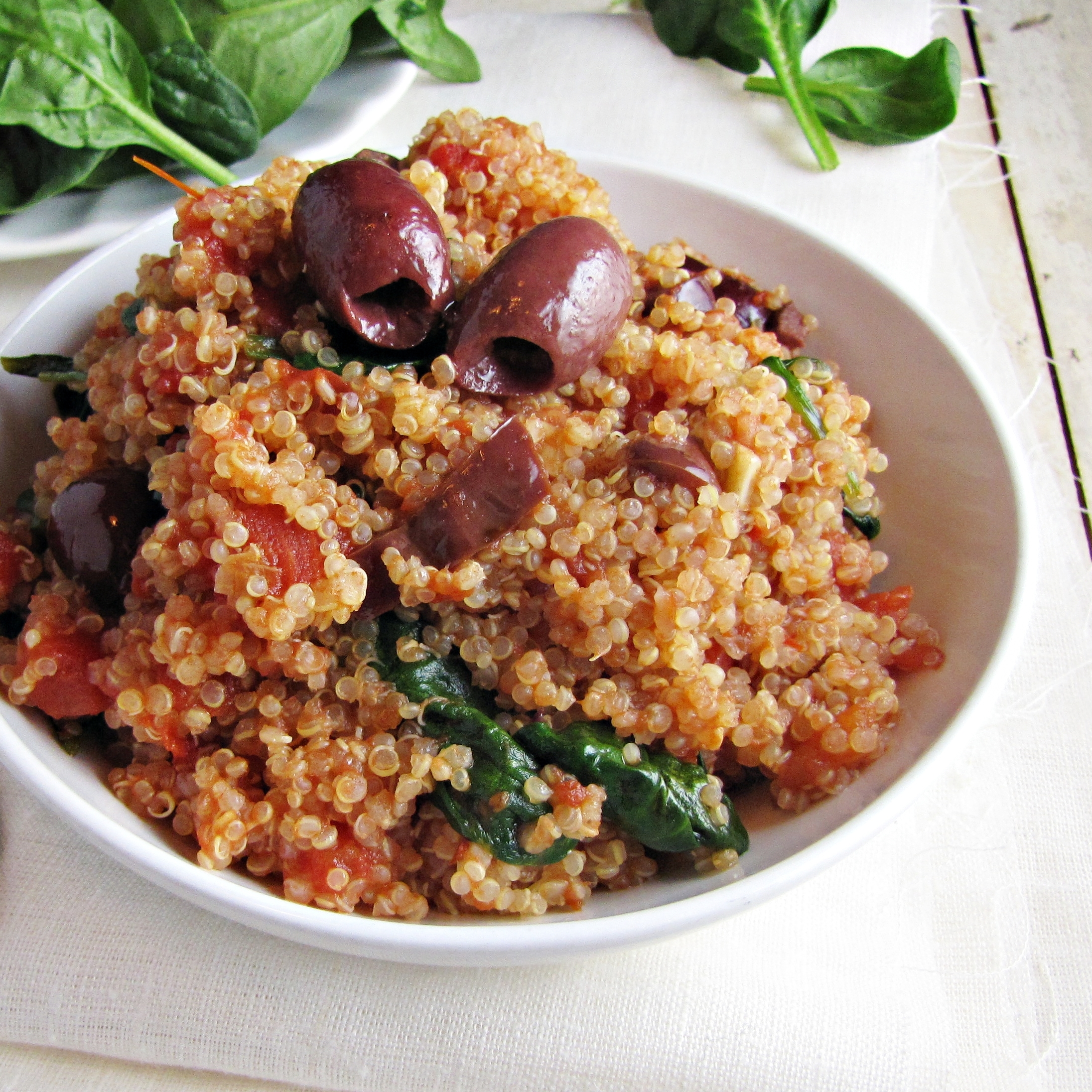
Now, I’ll be up front with you: I didn’t actually end up making quinoa arancini.  But it was a jumping off point for what just might be the most successful and flavorful recipe I’ve ever come up with myself – quinoa puttanesca.  Obviously, I didn’t come up with puttanesca sauce, nor am I the first person to have replaced spaghetti with the healthier quinoa in a classic Italian dish, but the proportions, timing, etc.?  My doing.  And I’m pretty proud.


The thought process that took me to this moment of triumph was as follows: “I need a recipe for my Greatist post this week.  Hmmmm.  I have a lot of cooked quinoa in the fridge because I’m vaguely following the Self Drop 10 plan this week and practically all the recipes call for quinoa.  Like these quinoa-banana pancakes.   And this quinoa edamame salad with carrot-ginger dressing.   So I should definitely use quinoa for Greatist.  Mmm, I haven’t had spaghetti sauce in ages.  Tomato-quinoa arancini!  With olives! [See above.]  Yeah, I should definitely use up those olives.  But tomatoes plus olives makes me think of anchovies, why is that?  Oh, puttanesca!  That could work.  But it can only have 8 ingredients to fit within Greatist requirements…”

And so on, and so forth.  I’m obviously no James Joyce, so I’ll spare you the rest of my stream of consciousness, at least for now.  In the end, with only seven ingredients – quinoa, tomatoes, kalamata olives, garlic, anchovies, red pepper flakes, and spinach – this recipe totally rocked.  It’s packed full of flavor and richness, while still being healthy.  I mean, it has two superfoods in it (although, let’s be honest, almost everything seems to be a “superfood” these days), no dairy, and no gluten, and the only real source of fat is the olives, so it’s healthy fat.  Plus, it’s easy and satisfying and just the right amount of spicy.  Head on over to Greatist to check out the recipe!

Cookbook of the Month: Radically Simple

0 March 28, 2012 Cookbook

Cookbook of the Month: Radically Simple

This month’s cookbook of the month is Radically Simple by Rozanne Gold.  I love this cookbook – it’s 100% true to its title, and in my mind, simple food that manages to generate “radical,” bold, exciting flavor is pretty much the goal of home cooking.  As Rozanne quotes in her introduction: “In cooking, as in all the arts, simplicity is the sign of perfection” – Curnonsky.

Rozanne’s definition of simplicity is three-fold; it encompasses the number of ingredients, time, and technique.  A recipe doesn’t necessarily need to be simplistic in all three areas to be “simple” – it’s more about the balance between them all.  It is impressive that nearly all of the recipe instructions are stated in 140 words or fewer – when cookbooks so frequently elaborate the details of a three-part recipe over a series of 5 pages, the clear, minimalist instructions are refreshing.  The style of the book also mimics its theme, with clean, minimally styled (but lovely) photographs scattered throughout, and a strong focus on the content of the recipes – not a lot of storytelling going on here.  I think perhaps a good word to describe this book is useful –   it’s inspiring and informative without any fluff.  I can actually see this being an excellent cookbook for my friends that don’t cook much, or the ones that don’t think they’re good at it.  The ingredient lists are short enough to be non-intimidating, the techniques are basic, and the recipes are universally appealing.

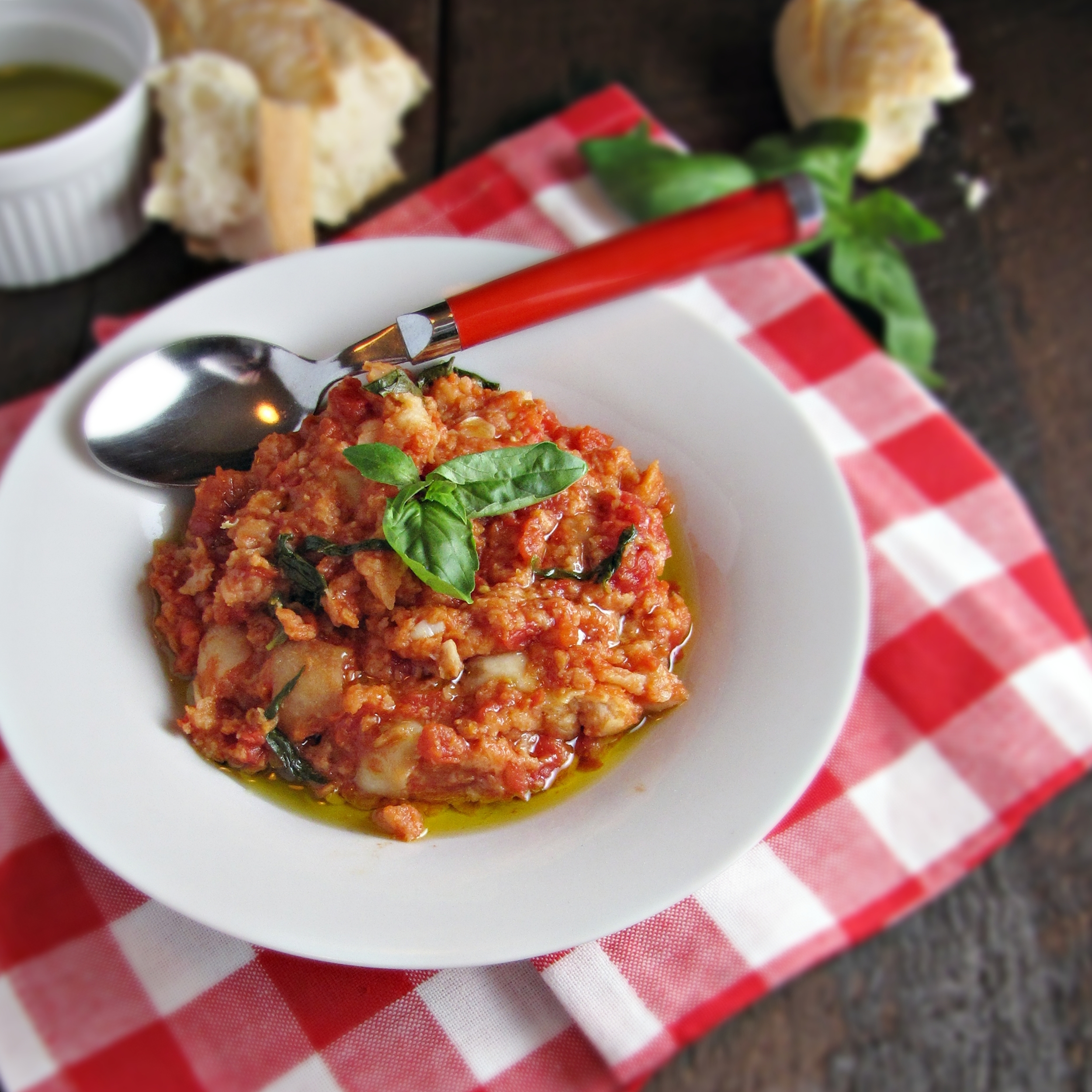
And the outcome of the recipes?  So far, I’ve been very pleased with everything I’ve tried.  In fact, I’ve been pleased enough to make some of the recipes multiple times, which is something of a rarity in my kitchen.  I shared two other recipes from Radically Simple this month: pea and wasabi soup, and lemon buttermilk ice cream.  Other recipes I’ve tried and enjoyed include campanelle with caramelized onions, peas and mint; onion soup with apple cider and thyme; and pappa al pomodoro (tomato-bread soup), which is featured here.  All of them were delicious, and I have a lot more recipes bookmarked.  Have I convinced you that I love this book yet?

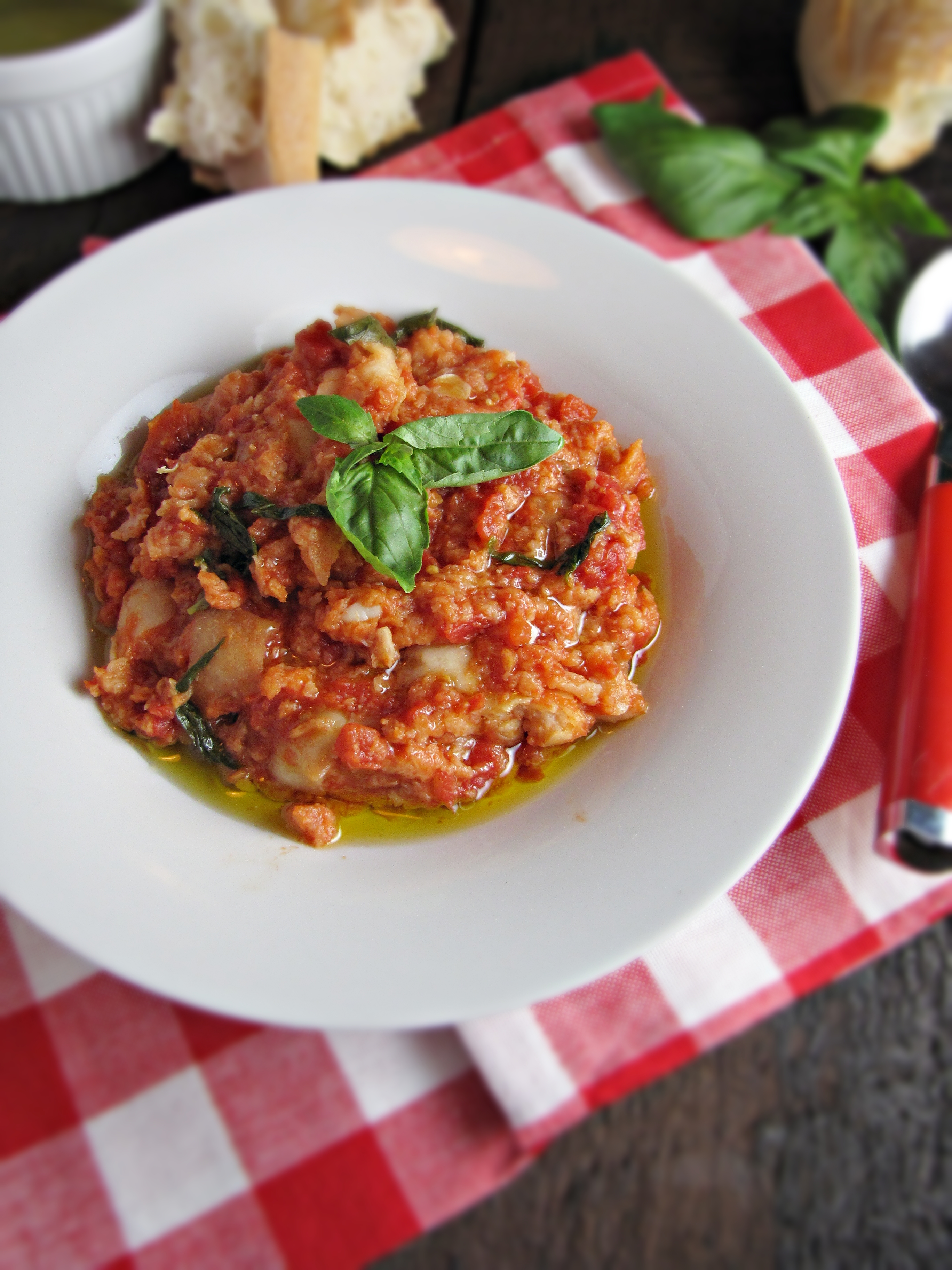
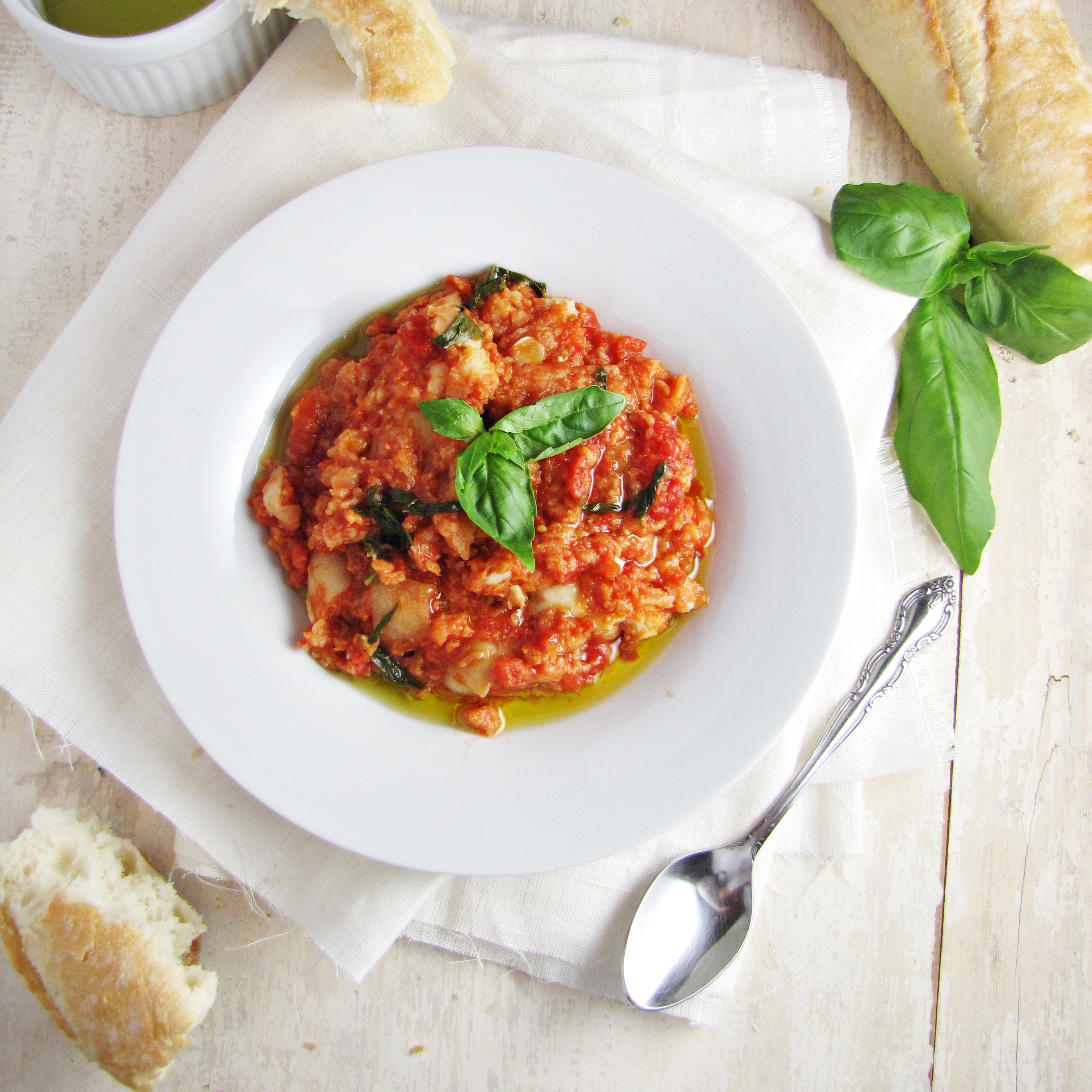
When I first saw the recipe for pappa al pomodoro I got really excited.  Soup that’s made from tomatoes, basil and… french bread?  Count me in!  I proceeded to make this on a chilly summer evening and be utterly satisfied.  It’s only cooked for about 15 minutes in total, so all of the flavors – garlic, tomato, basil, pecorino, red chili flakes – sing their own notes to great combined effect.  It’s kind of like eating a bowlful of pizza, except in an appetizing way.  Comfort food at it’s finest.  Serve this nice and hot, with a drizzle of olive oil and a small sprinkle of cheese, and prepare to be happy.  And stay tuned for a final recipe of Rozanne’s this weekend (spoiler alert: it includes grits and bacon), as well as another tomato-ey comfort food recipe for my Greatist post on Friday!

Pappa al Pomodoro

Adapted slightly from Radically Simple.  Serves 3 as a main.

  • 2 TBS olive oil, plus more for drizzling
  • 5 large garlic cloves, sliced
  • 28-oz. can crushed San Marzano tomatoes
  • 1 c. water or chicken stock
  • 1/2 standard-sized baguette, torn into pieces (about 4-5 c. of bread pieces)
  • 1/2 c. chopped fresh basil
  • 1/8 tsp red pepper flakes
  • 1/2 c. pecorino romano or parmesan cheese

Heat olive oil in a large pot.  Add garlic and cook for 2-3 minutes, until softened.  Add the tomatoes and the water/stock to the pot and bring to a boil, then reduce the heat and let simmer for 5 minutes.  Add the bread pieces, and cook, stirring, for 5-8 minutes, until bread is very soft.  Remove from heat, and stir in basil, red pepper flkaes, and cheese.  Serve hot with a drizzle of oil and extra grated cheese.

Happiness, Alone-ness, and Lemon-Broccoli Pasta

4 March 23, 2012 Pasta

Happiness, Alone-ness, and Lemon-Broccoli Pasta

When you picture yourself happy, what do you see?

And I don’t mean this in a melodramatic, how-do-you-really-want-to-live-your-life way.  And I don’t mean to imply that I am unhappy and thinking about the “if onlys” all the time.  What I mean is, when you’re having a crappy day at work, or you miss the bus and get stuck walking home and it’s sleeting, or you’re feeling uninspired and bored, what is the image that pops into your mind?  The very first one, before you actively construct a daydream?

When I picture myself happy, I am usually alone.  Is that weird?  Alone, but not lonely.  Alone, but knowing that the people I love the most are very close.  So close that I can go see them whenever I want, or even call out to them and have them arrive.  But still, that first image that pops into my mind – it’s just me.  And I was wondering – are there people who picture themselves as truly happy when they’re at the center of a circle of friends?  Or dancing with all eyes on them at a wild party?

Someone once told me that the difference between an introvert and an extrovert was this: “Both an introvert and an extravert can have fun at a party, but the introvert needs to recover from the party before the next one and the extravert sees the party itself as the recovery and fuel for the next event.”  When I heard this, it made so much sense to me.  I like being with my friends, I like going to parties, I like meeting new people, and I don’t consider myself socially awkward… but I frequently need down-time.  More than most of my friends seem too.  The term “introvert” has so many negative connotations to it in our culture, but I’m decidedly on that end of the spectrum.  I actually found this Wikipedia article about it pretty interesting at a basic level.  And it brings up so many more questions – what else does that aspect of personality correlate to?  Does it correlate to religiousness because introverts are more reflective?  Does it correlate to athleticism because extraverts are more likely to be active or out with others for more of the day?  Do introverts get along better with other introverts, or better with those who are more outgoing?  Obviously you could get too focused on this one aspect of human personality when there are so many facets, but it’s interesting to think about.  And good to realize that although the US tends to celebrate and encourage extraversion, there’s value across the spectrum – people just have physiological differences in their personalities.

Back to my happiness vision: I am by myself.  I am always outside.  Light is always important – it is usually early morning or late afternoon.  I am always somewhere rural, and somewhere quiet, and somewhere green.  I might randomly envision myself picking peas on a summer afternoon. Or holding a cup of tea and watching a quiet harbor.  Or simply sitting somewhere vast and beautiful and open.  The overwhelming feeling that I am experiencing is peacefulness.  It’s quite nice

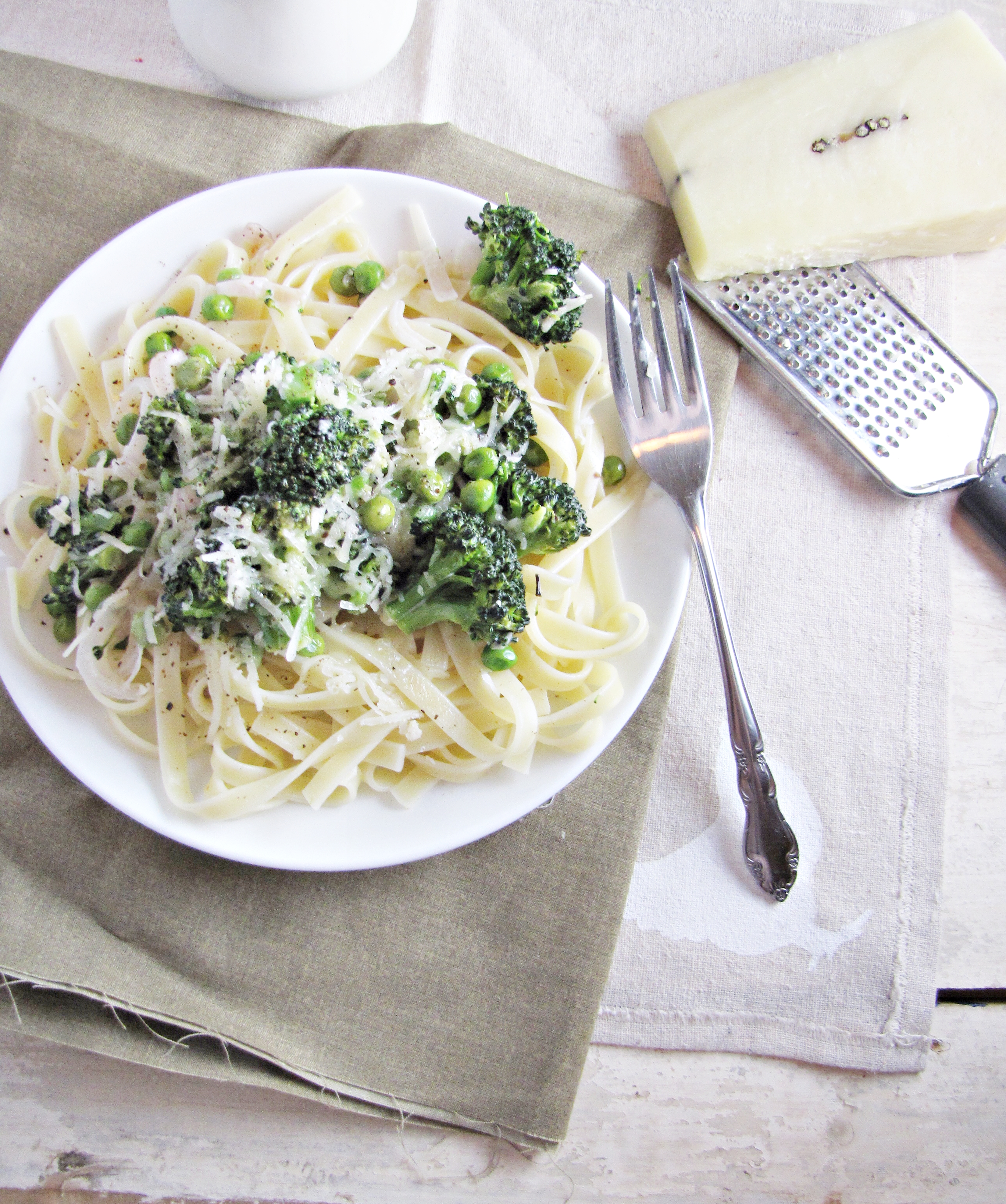
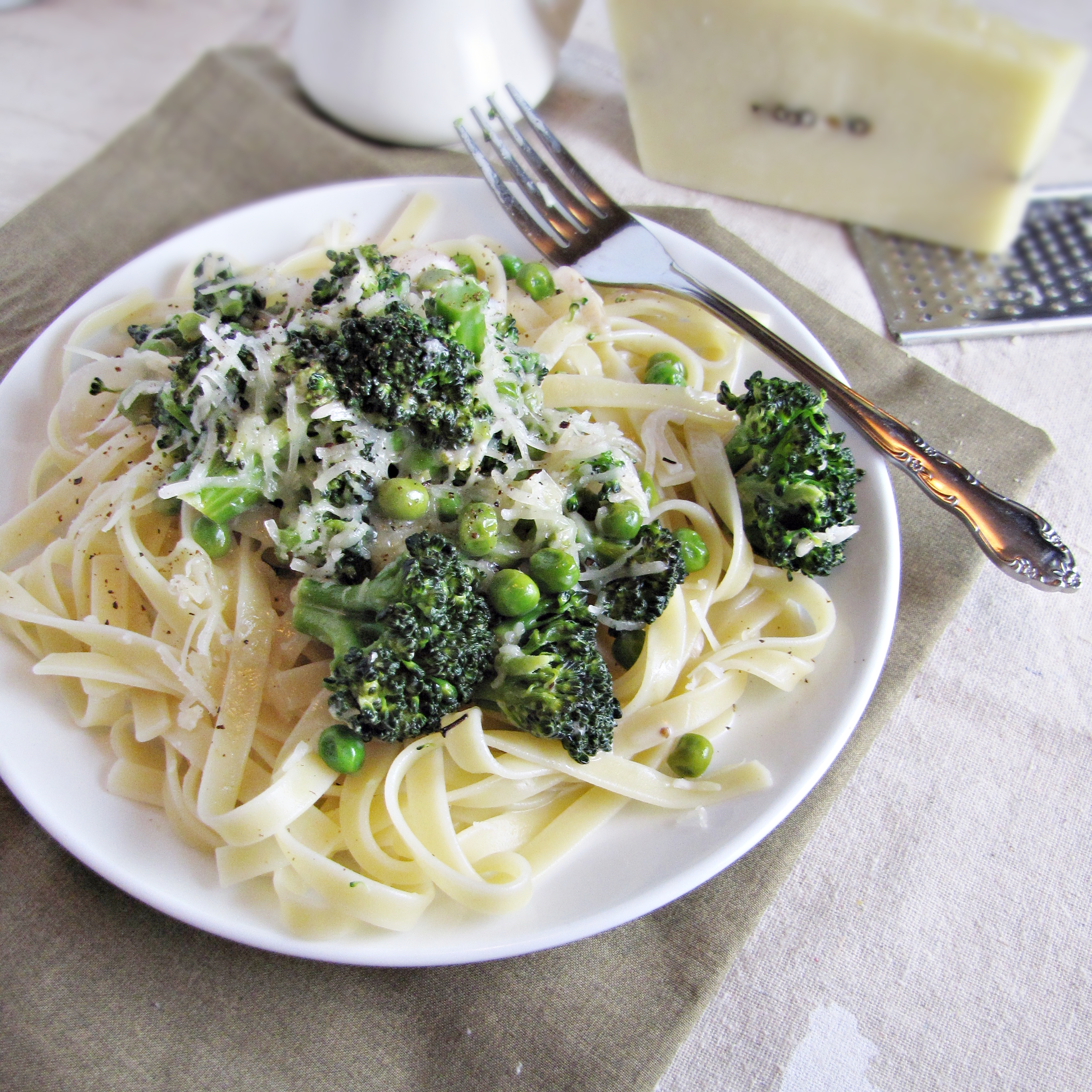
Anyhow, I was just musing on that, and thought I’d share – along with a recipe that for whatever reason resonates with me when I think of being happy and by myself.  Maybe it’s the simplicity of it.  Or the fact that it’s really easy to make a single serving, with no forethought or planning involved.  Or that the fresh veggies remind me of being outside doing wholesome things.  Or maybe I just really like cream and parmesan cheese, and so that makes me happy.  No matter, whether you’re an introvert or an extrovert, you’re cooking for a crowd or just for yourself on a random weeknight, this is sure to please.  And yes, it’s basically a variation on this recipe with kale, but I’m making it with broccoli these days, so I thought I’d re-share.  I hope everyone enjoys their weekends!  I’m headed to Blog Better Boston on Saturday, and I’m looking forward to seeing some of you there!

Creamy Lemon Fettucine with Peas and Broccoli

Serves 2-3.

  • 1 TBS butter
  • 1 large shallot, sliced into half circles
  • 1/4 c. heavy cream
  • juice from 1 lemon (3 TBS)
  • 1/3 c. grated pecorino romano
  • 2 medium heads broccoli, cut into bite-sized florets
  • 1 1/2 c. frozen peas
  • fresh black pepper
  • 1/2 lb. fettucine
  1. Bring a large pot of salted water to a boil.  When it reaches a boil, add broccoli florets, and cook for 2-3 minutes, until stems are tender when pierced with a fork.  Use a slotted spoon or skimmer to remove broccoli and set aside.  Add pasta to boiling water and cook until al dente.
  2. In a large pan, melt butter, and sautee shallot over medium heat for 3-4 minutes.  Add peas, cooked broccoli, cream and lemon juice to pan and stir to incorporate.  Turn heat to low, and cook for 3-4 minutes, allowing the flavors to meld.  If cream starts to bubble, turn down heat.  Just before pasta is ready add the romano cheese to the sauce and stir until melted, then grate black pepper over the sauce.  Remove from heat.  Plate pasta then spoon the sauce and vegetables on top.  Finish with additional grated pecorino romano.
Meyer Lemon and Buttermilk Ice Cream

5 March 21, 2012 Cookbook

Meyer Lemon and Buttermilk Ice Cream

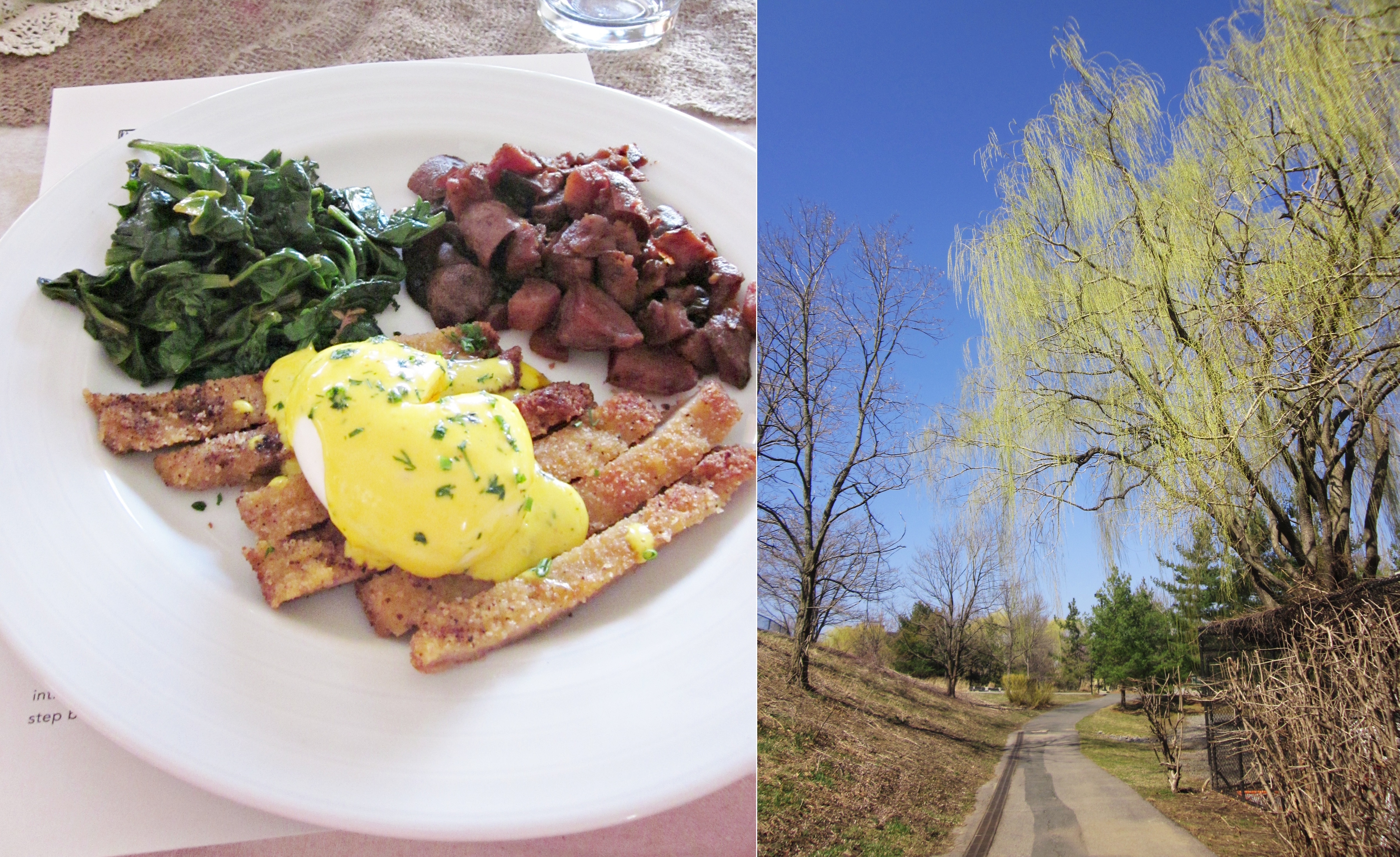
This past Sunday was good for me.  Actually, 70 degree days in March are pretty much always good for me, and probably everyone else as well, but this one felt particularly rejuvenating.  It started off with a Boston Brunchers‘ brunch hosted by The Farm School, which was a. totally delicious, and b. inspiring.  Many of you know that I kind of really want to be a farmer some day, as evidenced by cheesemaking, lemon-tree growing, and random farm visiting.  Since I’ve been feeling a little bit… I don’t know, bored?  Uninspired?  Angsty? … in recent weeks, a morning of listening to some pretty cool people talk about a pretty cool program that they’re obviously excited to be involved in was exactly what I needed.  The candied maple bacon, maple-mead glazed pork belly, soft-boiled egg with dill hollandaise on pork schnitzel, and maple bread pudding didn’t hurt either (yes, it was a very maple and pork-product filled event).

I wish we had gotten to hear a little bit more detail about some of their programs, but from the testimonials of our host (whose children have all attended their camps and who has been a CSA member for almost 10 years), what they’re doing is awesome.  Really awesome.  And their pigs taste delicious, which is my own personal testimonial to their work.  If you have school-aged kids, their summer camp program sounds like a totally wholesome and educational alternative (or addition) to more traditional camps.  Personally, I’ve added their year-long learn-to-farm program to my ten-year plan.  (I’m actually being serious.  It comes in between getting my MBA and buying a farmhouse to renovate.)  They also run a veggie and meat CSA, and you can even pick out your vegetables, market-style, at their pick-up location in Fresh Pond (Cambridge).  Pretty cool stuff, IMHO.

So,  this was a good start to the morning.  Then, I walked outside and realized that it was possibly the best weather of all time.  So I met Trevor in the park, where we spent a few peaceful hours people-watching and sun-bathing and arguing about whether our hypothetical farm-dog would be allowed in the house or not (it won’t) and what ironic hipster name we can name our farm (jury’s still out on that one).  It was just wonderfully relaxing and worry-free and kind of perfect.

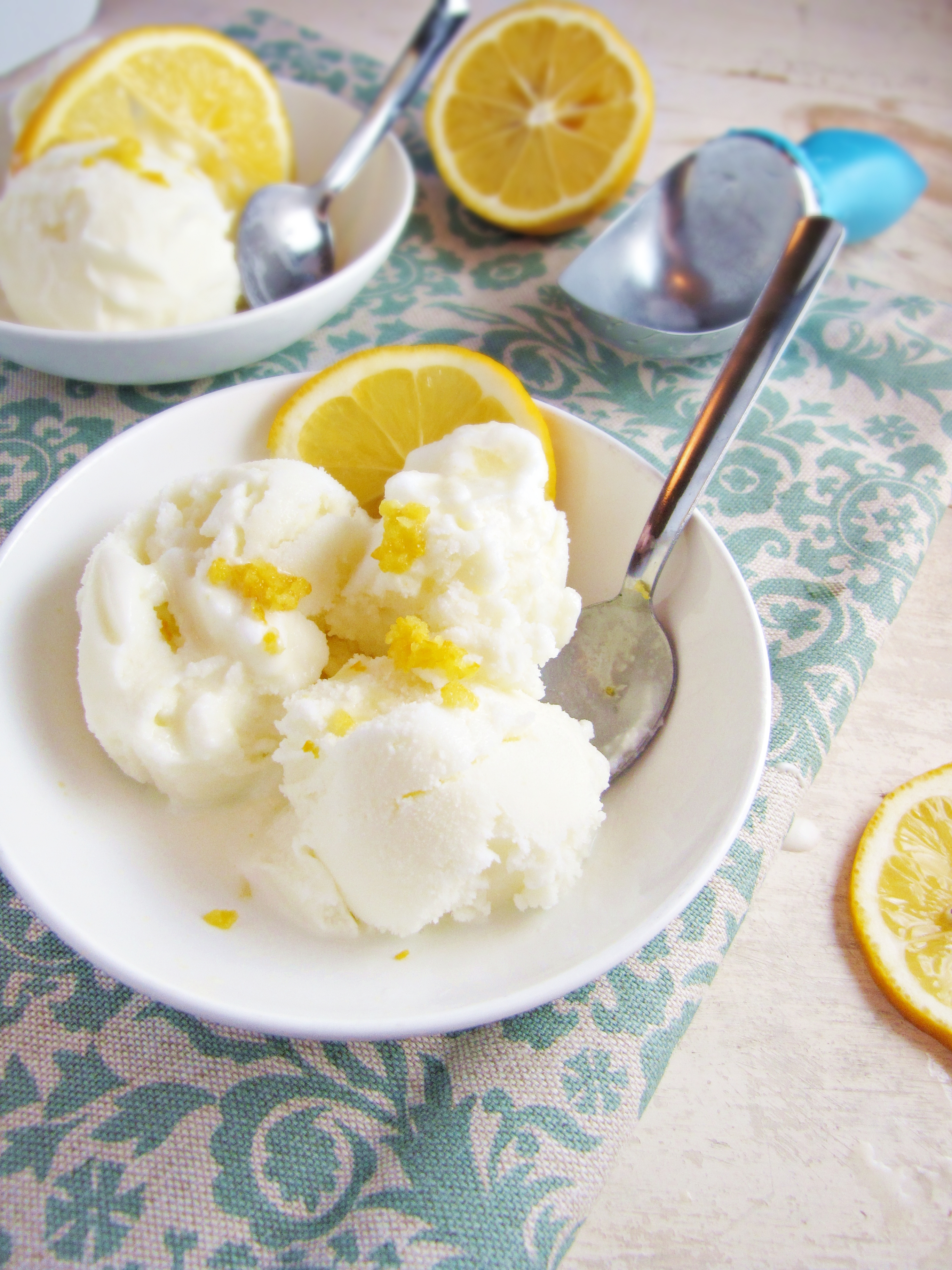
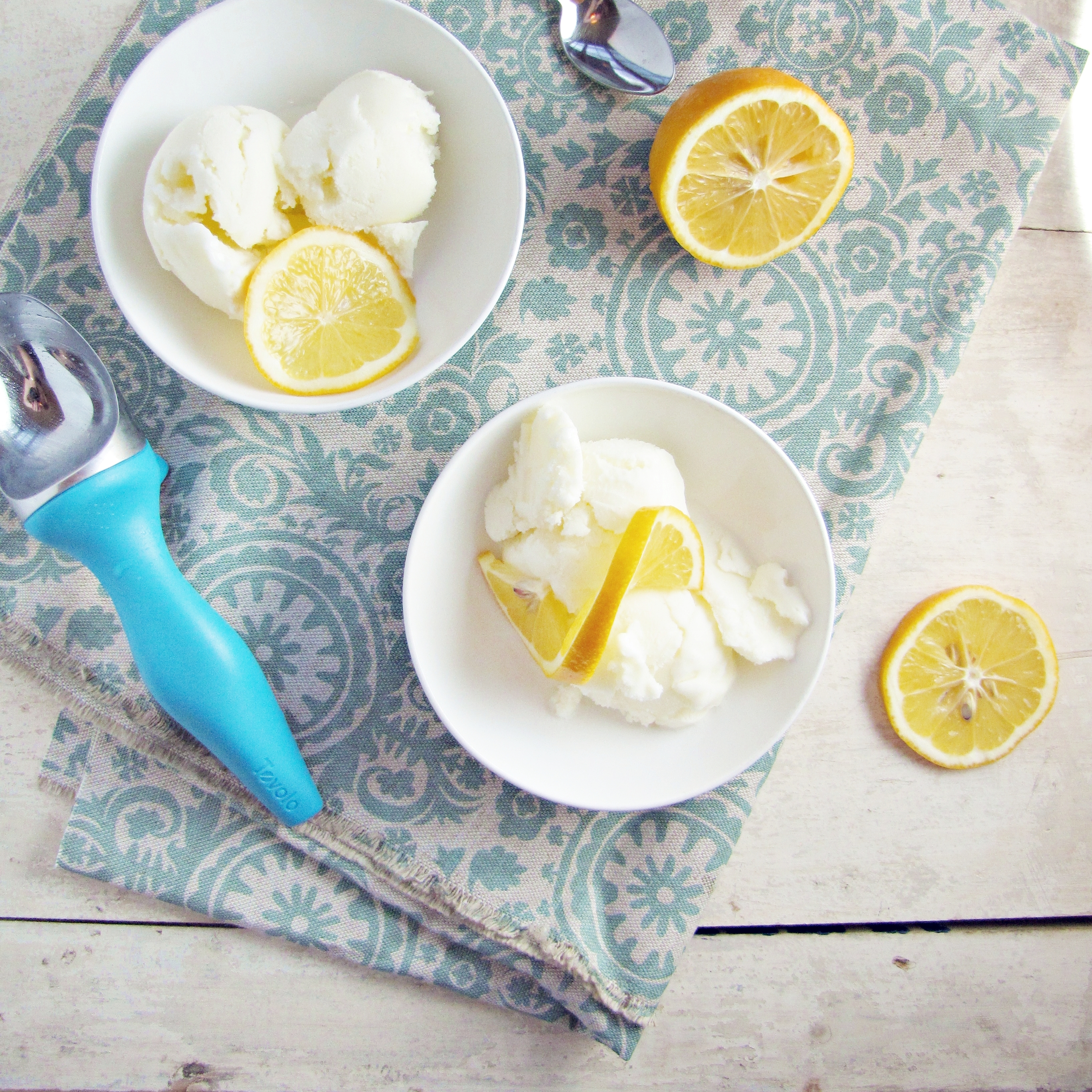
As I was walking back from the park, feeling all happy and relaxed and everything, I really wanted some ice cream.  Like, really.  But, in an uncharacteristic move, I walked right past JP Licks, into my house, and made myself a cranberry-blackberry smoothie instead.  How disciplined am I???  But I decided that since we’re having such beautiful weather this week, and I just picked the (only) two meyer lemons from my tree, I’d make some ice cream of my own.  This ice cream is another recipe from/inspired by Radically Simple, March’s cookbook of the month, and it really is wonderfully easy.  All it takes is some buttermilk, cream, lemon juice, and sugar – mix, chill, then freeze.  No cooking a custard, no complicated techniques, just simple, refreshing, creamy-lemony ice cream.

Disclaimer: I should note, with regard to The Farm School brunch, that they made us brunch free of charge (all from their own products!), but that we were not required to review the event or their program, and all opinions here are my own.

Lemon-Buttermilk Ice Cream

Loosely adapted from Radically Simple.  Makes 1 quart.

Note: I changed the proportions a bit from the original Radically Simple recipe to reflect this other recipe I’d seen, reducing the sugar to 1 1/2 c. and replacing half the buttermilk with cream based on what I had in the fridge.  The original recipe calls for 2/3 c. lemon juice, 2 c. sugar, and 4 c. buttermilk, if you want to try it that way!

  • 2/3 c. freshly squeezed lemon juice (from 4-7 medium lemons)
  • 2 c. buttermilk
  • 2 c. heavy cream
  • 1 1/2 c. sugar
  1. In a large bowl, whisk together sugar and lemon juice until sugar is dissolved, pour in buttermilk and cream, whisking briskly to incorporate into lemon juice.  Cover bowl and chill for several hours, then freeze according to ice cream maker.
Greatist Collaboration: Pea and Wasabi Soup

0 March 16, 2012 Soup

Greatist Collaboration: Pea and Wasabi Soup

March is a funny month.  It can be fickle, and torture you with day after day of cold gray rain.  Or it can be lovely, full of surprisingly warm days and sunshine that feels like a blessing on bare skin after so many months bundled up.  Daylight savings brings an extra hour of light to the evenings, tempting us outside after work, but the tradeoff of returning to dark mornings can making getting out of bed a struggle.

March is mainly a month of waiting, and of preparation.  We sense the arrival of spring on the horizon, and begin to shed our winter dust – sweaters get put in trunks, windows get opened, closets are cleaned out.  Spring cleaning is not just a saying, it’s something we feel the urge to do – to get our affairs in order and be ready to start fresh in the new season.  Even in religions, March is typically a time of preparation – the season of Lent, when Catholics prepare for the resurrection, almost always occurs in March.  Holi, the Hindu festival of colors, also falls in March, and celebrates the coming of spring and the departure of winter.

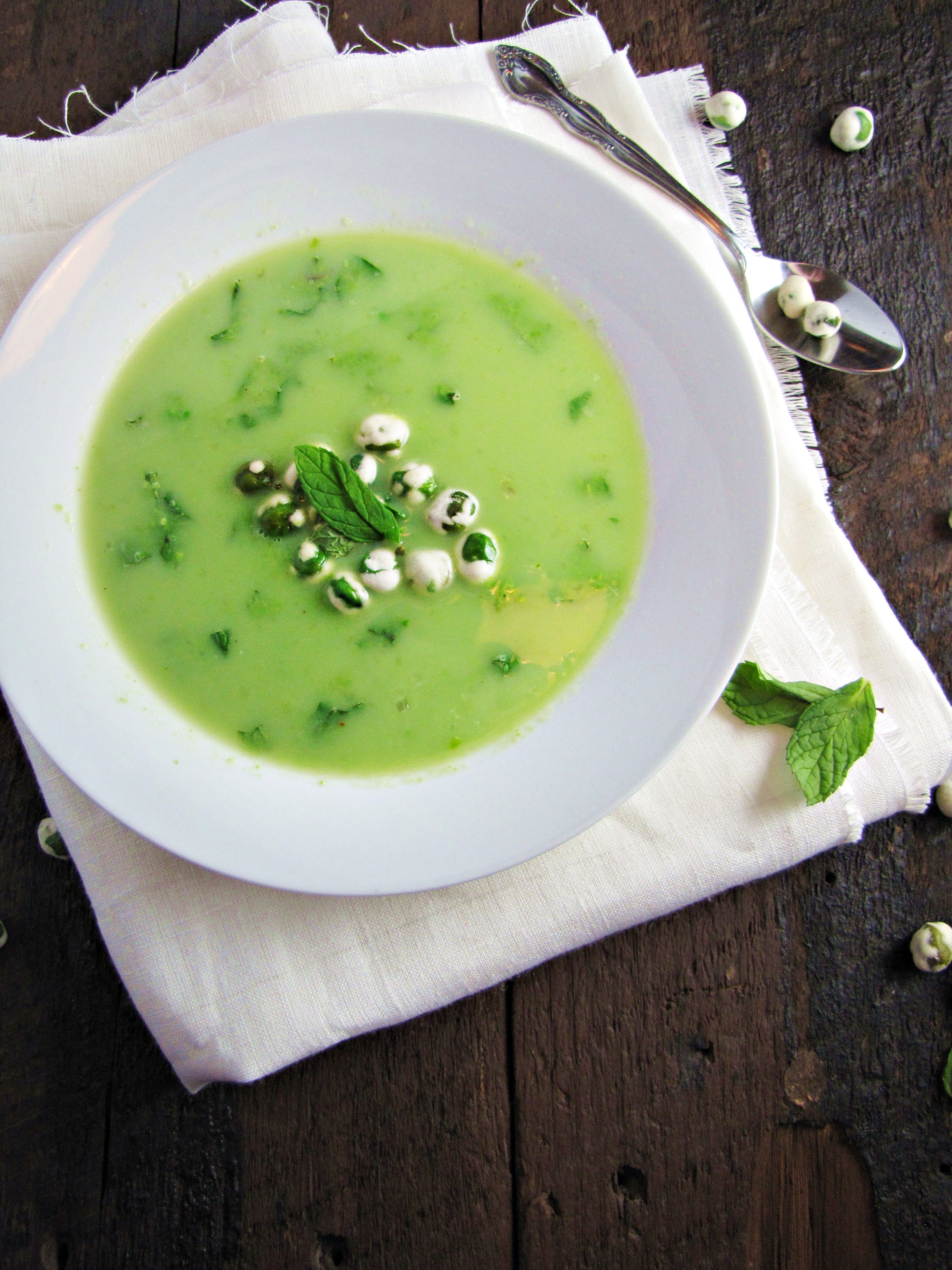
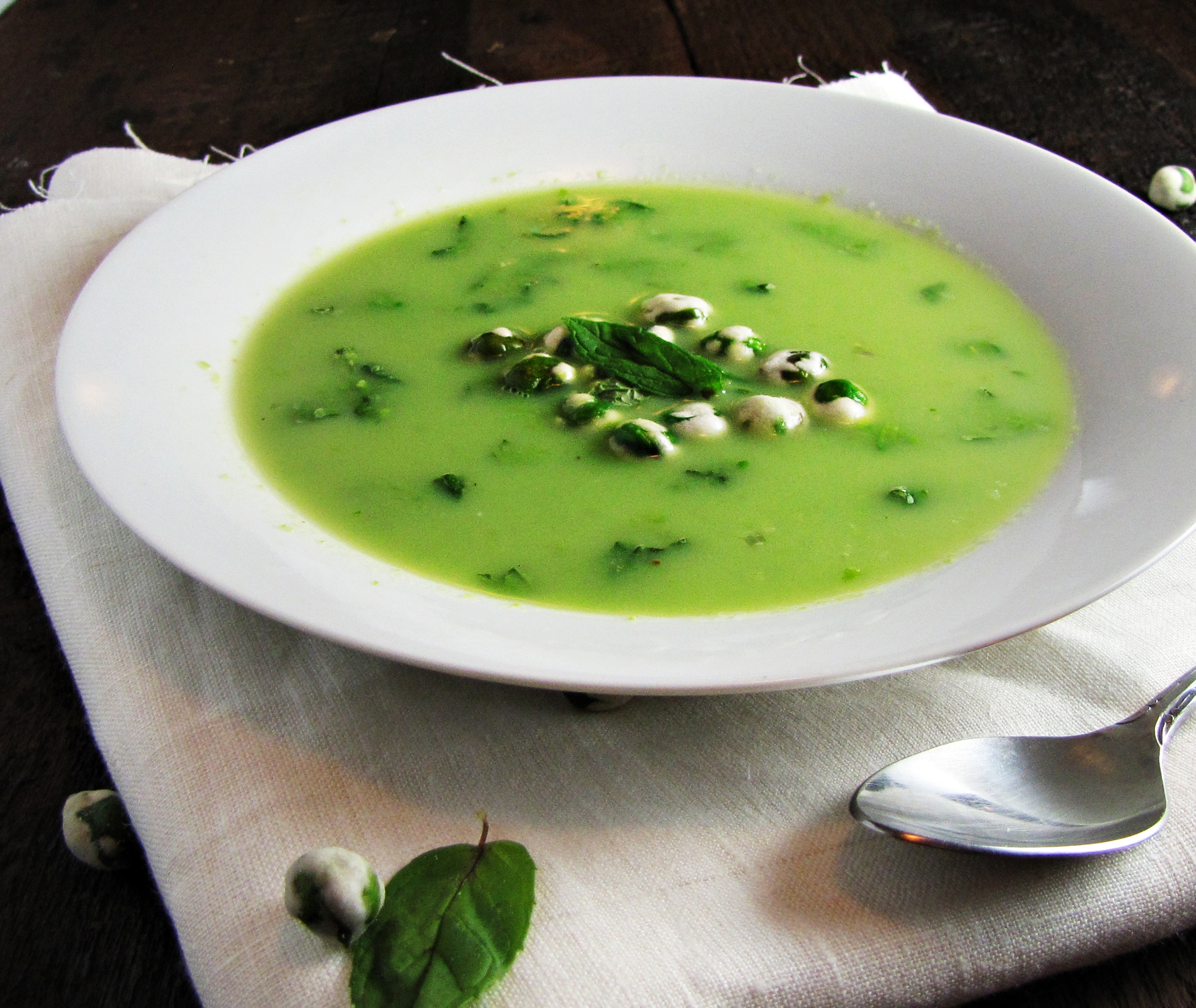
Waiting, preparation, cleaning – to me this all calls for simplicity, including in our food.  Of course, I think there’s something to be said for simple food at pretty much anytime of the year, but the first batches of tender, green, spring produce (peas! asparagus! fava beans!) are worth showcasing on their own, simply prepared, just because they are such a radical and welcome departure from the heavy, starchy, foods that carry us through winter.  As I was sorting through my cookbooks this week, it seemed to me particularly appropriate to focus my March cooking on recipes from Rozanne Gold’s Radically Simple, a book packed with stunningly photographed recipes, most of which have fewer than 10 ingredients.  It truly lives up to it’s title.  I’ll be sharing a few more recipes from this book later this month, but I thought the book was very much in line with what the people over at Greatist are trying to accomplish – simple, healthful recipes that are still packed with flavor – so I wanted to choose this week’s collaboration recipe from it.  I settled on this pea and wasabi soup because, well, because I love pea soup, but also because peas are one of the first spring vegetables to arrive, and a sure sign that spring is actually here.  Plus, the wasabi and buttermilk in this recipe really dress it up.  I know it’s still a bit early for fresh peas in New England – I used frozen ones this time around – but they’ll be here soon enough!

Head on over to Greatist for the full recipe!

Other Greatist posts (healthy, easy recipes with fewer than 8 ingredients and under 30 minutes active time):

  • Feta and Lentil Tabbouleh – Recipe, and Post
  • Kalamata, Lentil, and Mushroom Veggie Burgers – Recipe, and Post
Healthified Carrot and Apple Muffins

7 March 12, 2012 Breakfast

Healthified Carrot and Apple Muffins


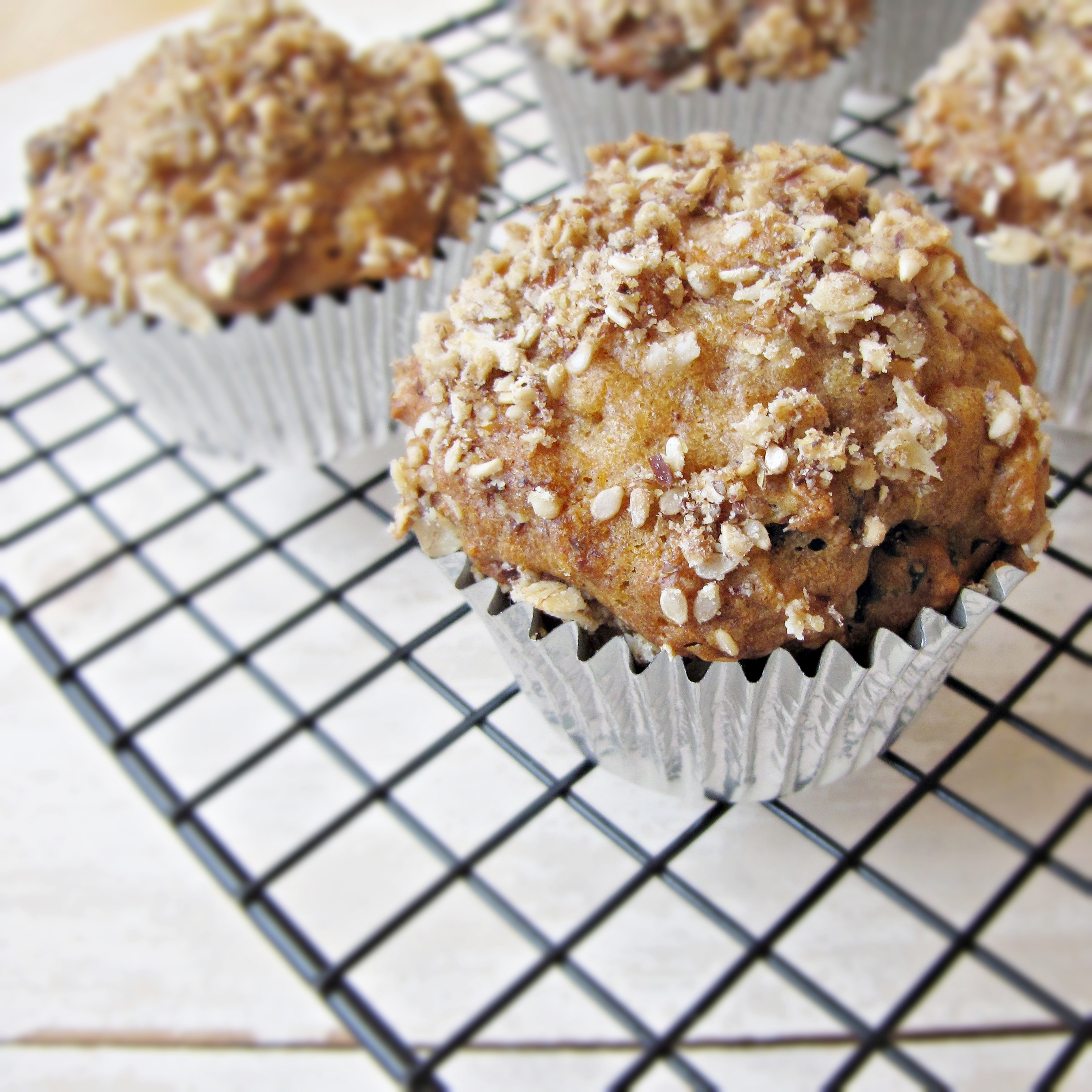
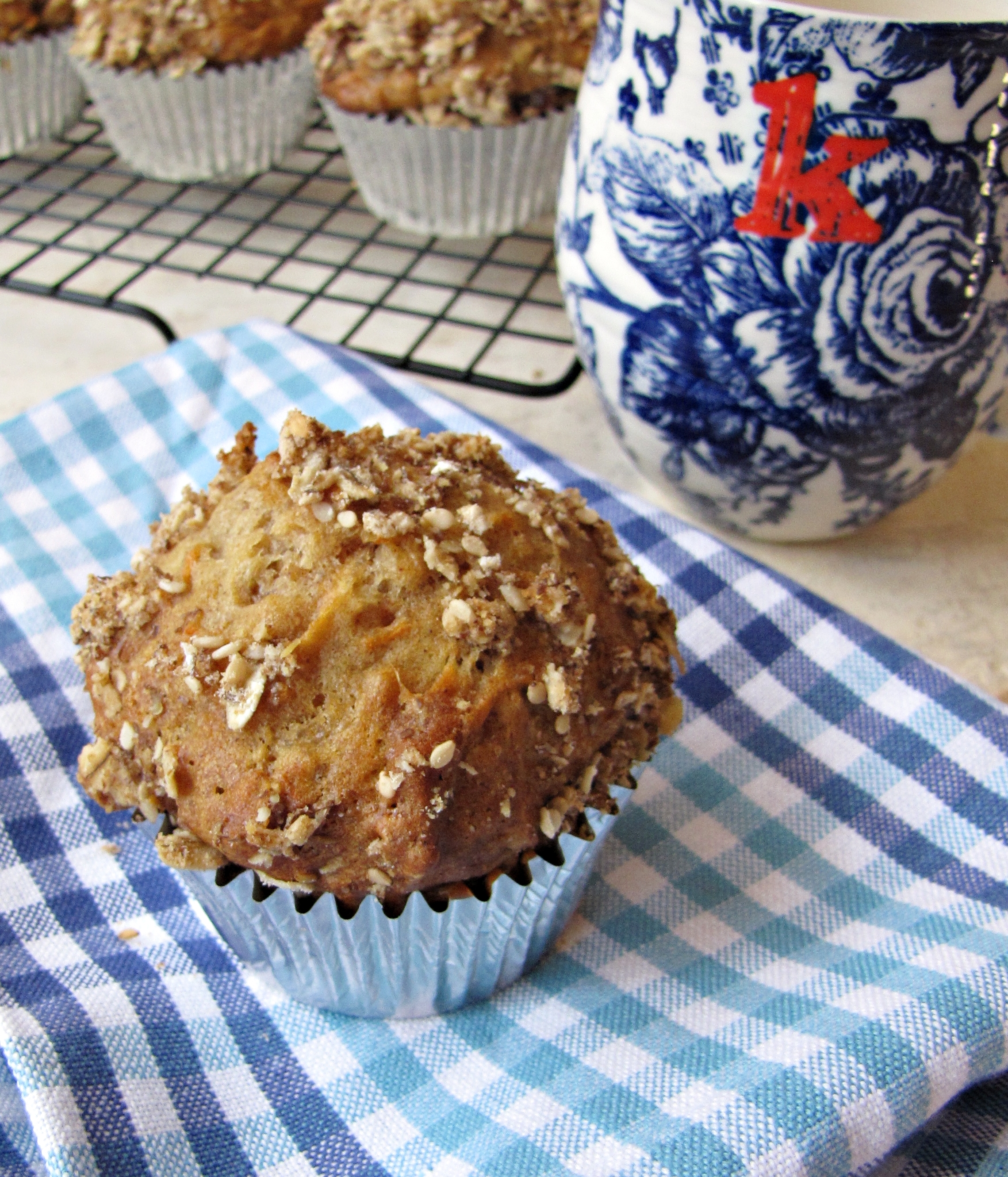
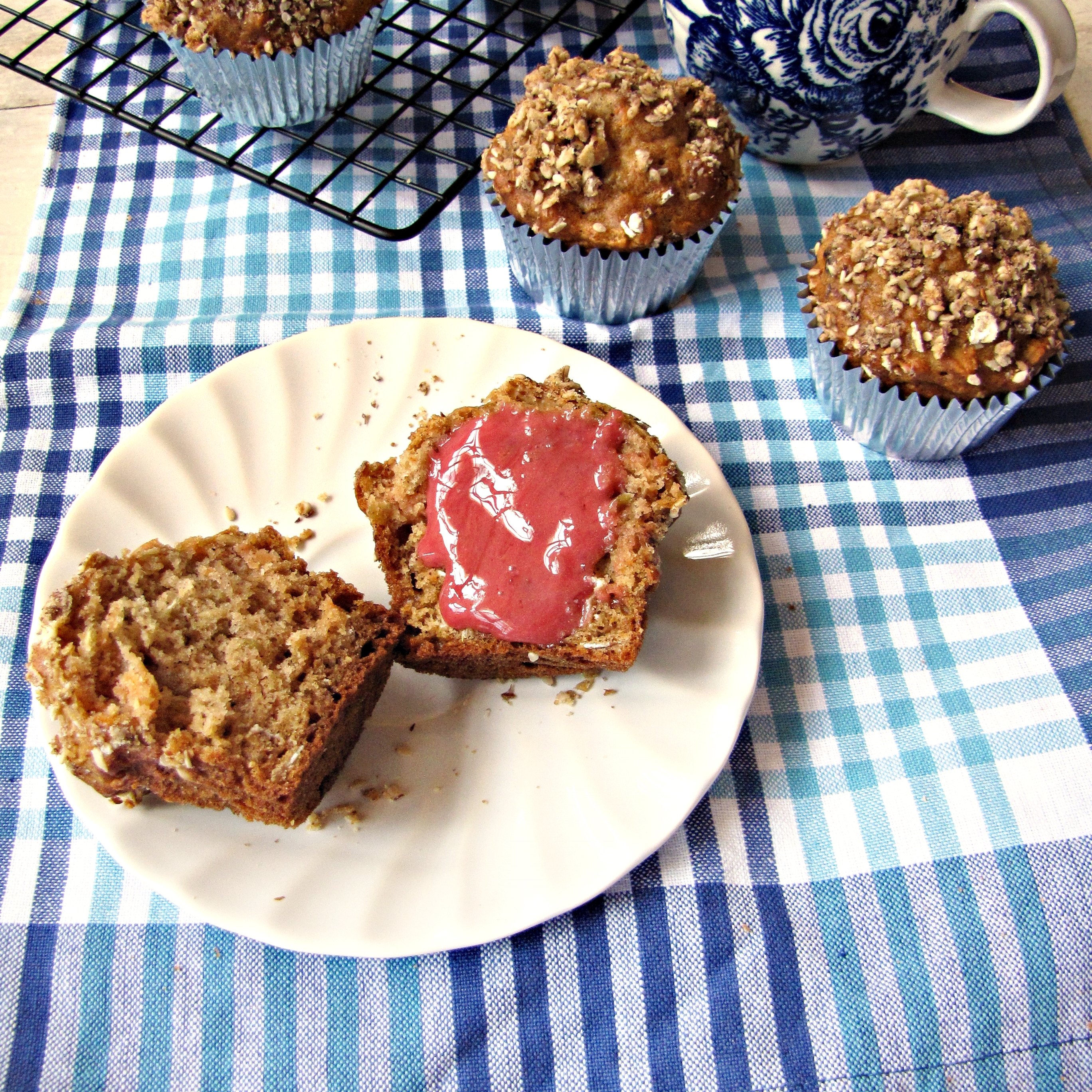
I haven’t shared a ton of baking recipes recently.  Not much since Christmas anyway.  I think the last two baked goods I wrote about here were these plum squares and these cinnamon pumpkin rolls (way back in the beginning of December!).  This is partly because I haven’t been baking a ton (much to my coworkers’ chagrin), and partly because I’ve been trying to focus on healthy recipes of the sort you might be inspired to whip up for dinner on a weeknight.  Come to think of it, I was also out of town for 11 days in February, including most of the weekend days, which certainly cut into time I might otherwise have spent enabling my cookie habit.  But I truly love to bake – particularly on a sunny weekend morning like this past Sunday – and so I am here with these healthy carrot and apple muffins from Anja’s Food 4 Thought.

If you’re into healthy but interesting food and you haven’t checked out Anja’s blog, I highly recommend it.  Whenever I visit, I find myself bookmarking another handful of recipes to try – like broccoli, almond and tahini salad, quinoa-granola bars, or  zucchini-chickpea-feta fritters.  Maybe we just like the same foods, but I think almost everything she posts sounds totally delicious and intriguing – and there are a lot of foods out there that don’t hold a ton of appeal for me.  Anyway, check it out.

These muffins, which have only 230 calories per pop with a good amount of vitamins (and decent protein and fiber), surprised me with their moist, light, sweet flavor.  I mean, I’ve never made healthy muffins that really tasted good before.  Like, think the opposite of bran muffins.  (Not a big fan of bran).  These are full of good-for-you ingredients, like apples, carrots, dried fruit, greek yogurt, sesame seeds, and oats, and use olive oil and maple syrup to replace the more typical butter and sugar.   It’s a little bit time consuming to prepare all the parts, but I think they would just be good without the nutty-crumble topping, if you’re feeling lazy.  One of these muffins and a cafe au lait was an excellent, and almost guilt-free start to my week.

Carrot and Apple Muffins

Makes 15 standard muffins.  Adapted from Anja’s Food 4 Thought.

For the muffins:

  • 2 eggs
  • 1/2 c. maple syrup
  • 1/2 c. olive oil
  • 6 oz. greek yogurt
  • 2 tsp vanilla
  • 3 medium carrots, peeled and grated
  • 2 medium apples, peeled and grated
  • 1/2 c. dried fruit (raisins, cranberries, cherries)
  • 1/2 c. quick cooking oats
  • 2 c. whole wheat flour (I subbed AP with fine results)
  • 2 tsp baking soda
  • 1/4 tsp ground nutmeg
  • 1/2 tsp ground cinnamon
  • 1 tsp ground ginger
  • 1/2 tsp salt
For the topping (I adjusted to use what I had in the cupboard):
  • 1 TBS cold butter
  • 1 TBS brown sugar
  • 1 TBS flour
  • 2 TBS oats
  • 2 TBS sesame seeds
  • 1 TBS ground flaxseed
  1. Preheat oven to 375°F, and line standard-sized muffin pan with muffin cups.  In a medium bowl, whisk together eggs, maple syrup, olive oil, yogurt, and vanilla.  Set aside.  In a large bowl, stir together all dry ingredients (oats through salt) until thoroughly mixed.  Pour wet ingredients into dry and mix until all ingredients are evenly moistened.  Stir in grated carrots, grated apples, and dried fruit.
  2. In a small bowl, use a pastry cutter or fork to press together butter, sugar, and flour until crumbly.  Add oats, sesame seeds, and flaxseed, and press together until they form a uniform crumbly mixture.
  3. Fill each muffin cup almost to the top with batter.  Sprinkle a spoonful of the topping over each muffin.  Bake for 20-22 minutes, until domed and golden, and a toothpick inserted into the center of a muffin comes out clean.
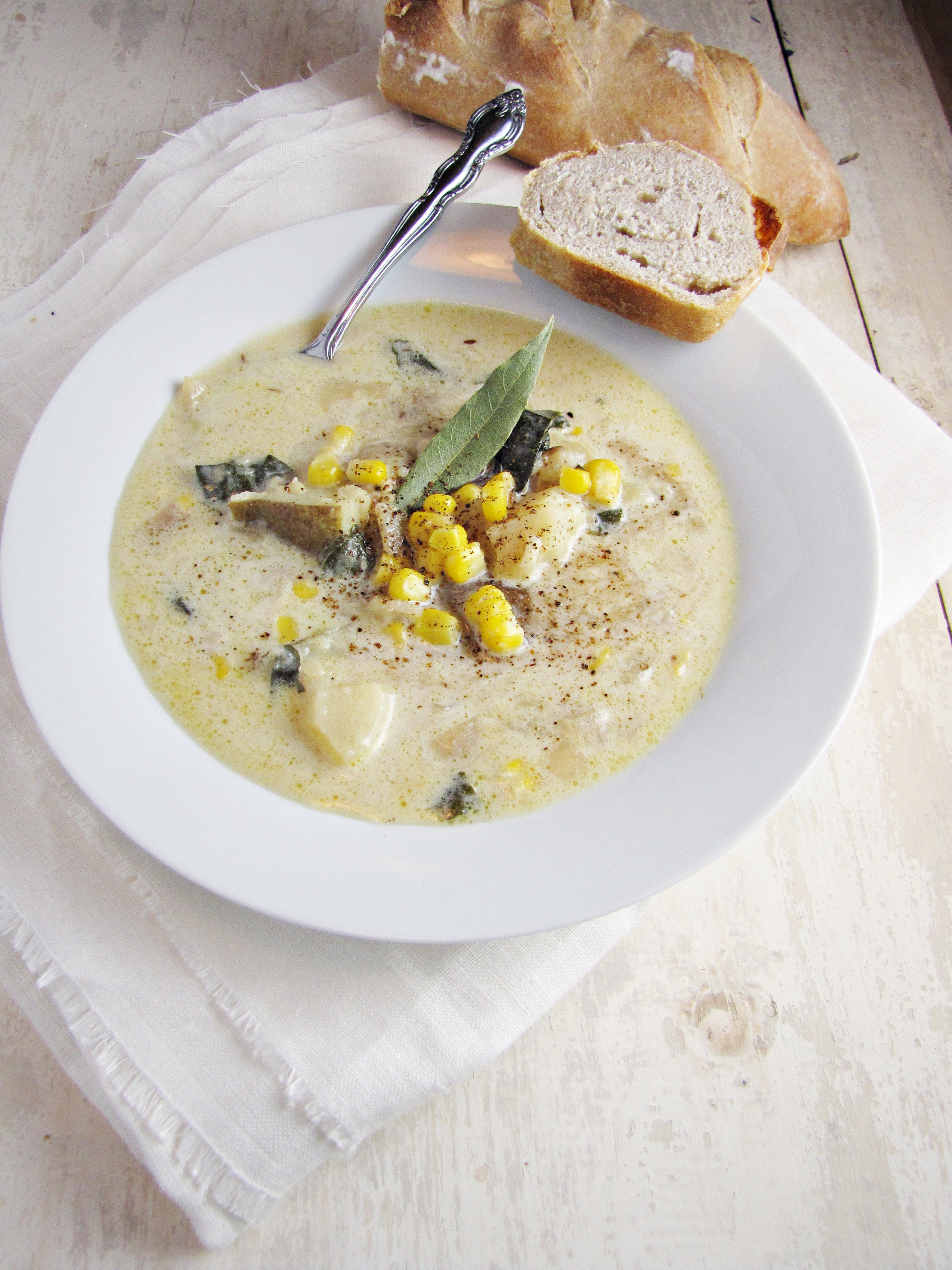
Corn and Potato Chowder

12 March 5, 2012 Fall

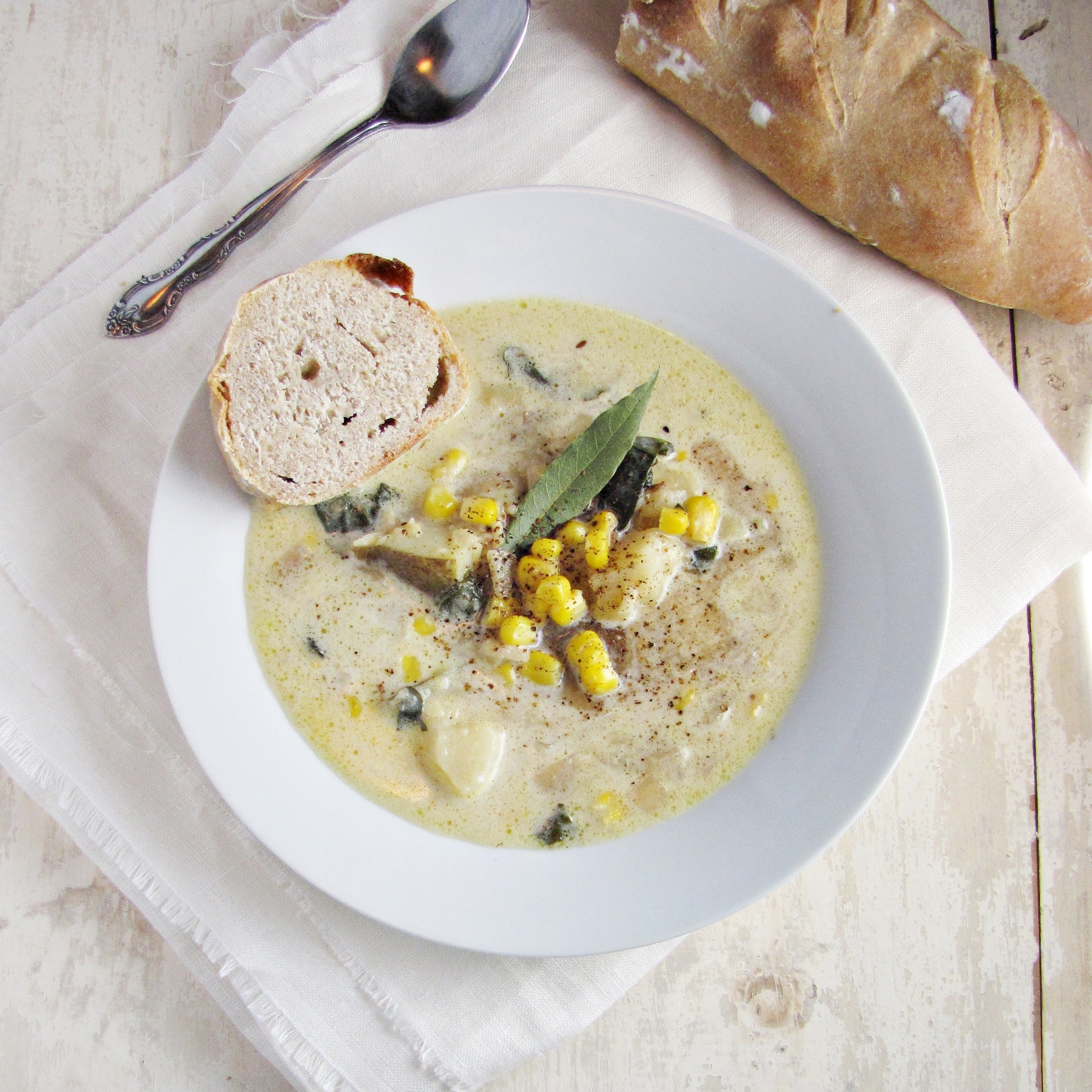
Corn and Potato Chowder

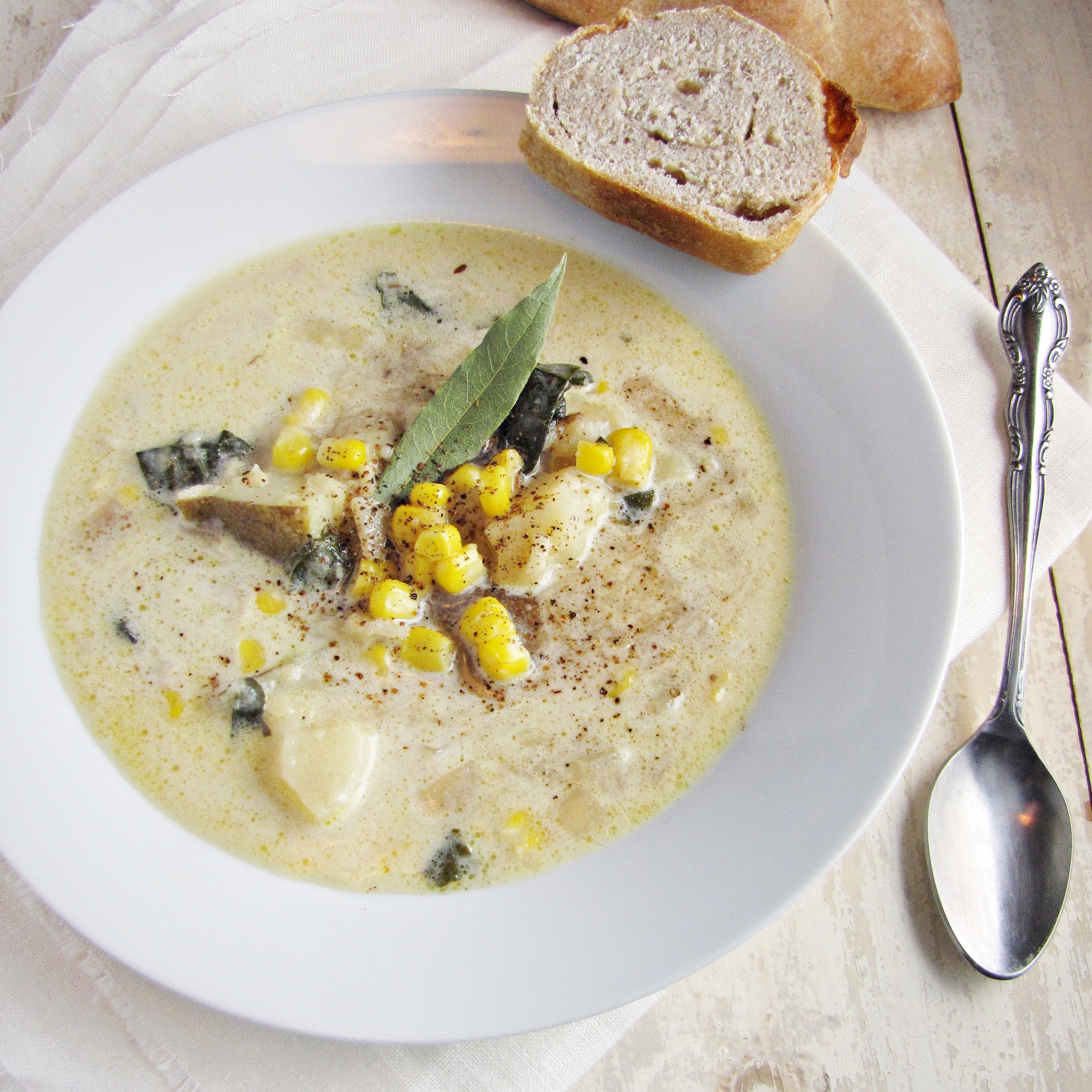
There aren’t many recipes that I make regularly.  I could totally love a recipe and only make it once just because there are so many other recipes out there that I want to try.  Even when it comes to the basics – pancakes, muffins, spaghetti sauce – I’m always trying new variations on a theme, because a part of me is always looking for that perfect recipe (although I’m pretty sure I’ve found my perfect fruit-muffin recipe).  However, there are a few notable exceptions to my tendency to always cook something new, including my mom’s kale soup, this simple spaghetti in lemon cream sauce, smitten kitchen’s totally pancetta-y spaghetti with chickpeas, Joanne’s incredible pork and black-eyed-pea chili, and this chowder. (Notice a theme here?  Not too many salads…)

This chowder is one of my all-time childhood favorites.  My mom used to make it regularly during the fall and winter, and I always had at least two bowls and two thick slices of fresh-out-of-the-oven anadama bread and went to bed very, very full.  It was one of the first recipes I requested from her after moving into my own apartment, and while I don’t indulge in chowder all winter, I do make it a couple of times a year.  My parents also use to serve this at our annual cross-country dinner, and it was a huge crowd-pleaser.  On Friday nights before races, my team would all gather at someone’s house for carbo-loading and camaraderie, and my family was typically the only one to buck the spaghetti and garlic bread trend and serve something different.  We’d pile 18 or so girls around a bunch of tables stuck together the long way, and eat bowl after bowl of soup with fresh bread and laugh and sing our cross-country songs and talk about beating Exeter and who was cute on the boys’ team and we’d finish the night up with bowlfuls of my dad’s famous apple crisp.  Just the scent of this chowder makes me think of cold, dark nights filled with laughter, be it with my parents and brothers or my teammates, and of going to bed warm and exhausted.

As I was going through my fridge this weekend, trying to figure out a way to use up all the bits and bobs that seem to have accumulated over the past few months, I realized that I had everything I needed to make this chowder (and that it would clear up a significant amount of space in the fridge).  Although it doesn’t traditionally call for kale, I had a few leaves hanging around so I decided to throw them in to up the nutritional value of this soup a bit.  I also used a random assortment of cheeses – a bit of monterey jack, some of that weird orange Mexican shredded cheese mix, half a cup of freshly grated pecorino – and a mixture of skim milk and heavy cream, and the soup still turned out just as perfect as always.  The distinctive flavor in this soup comes from the whole cumin seeds that get added at the beginning – if I didn’t know what was in it, I might not be able to identify the flavor as cumin, but somehow it works perfectly.  Make this the next time you need a satisfying, warming break, and share it with family or friends to ensure an adequate amount of conversation and laughter accompanies it.  It’s that kind of meal.

More like this…

Harissa-Butter Roasted Corn Soup with Chorizo

Harissa-Butter Roasted Corn Soup with Chorizo

Corn Chowder with Paprika-Grilled Shrimp

Corn Chowder with Paprika-Grilled Shrimp

Vegetarian Chili

Vegetarian Chili


Like what you just read? Subscribe to Katie at the Kitchen Door in the box on the right, on Feedly or Bloglovin‘, or follow along on Facebook, Twitter, Pinterest, Instagram, or Google+. Thanks for reading!

Corn and Potato Chowder

Serves 4-6.  Adapted from Horn of the Moon.

  • 1 onion, diced
  • 1 TBS cumin seed
  • 2 TBS butter
  • 3 large yukon gold potatoes, scrubbed and diced
  • 4 c. chicken stock
  • 2 bay leaves
  • 1 bunch of kale, stems removed and leaves chopped (optional)
  • 2 c. frozen corn
  • 2 c. shredded cheese (a mix of whatever you have on hand is fine – we typically use monterey jack and cheddar)
  • 1 c. milk (use skim milk for a lighter chowder, or a mix of half milk and half cream for a heavier chowder)
  • 1 tsp. flour
  • freshly ground black pepper
  1. In a large stockpot, saute onion in butter over medium heat until onion turns translucent, about 3-4 minutes.  Add cumin seed and cook, stirring, for another 1-2 minutes, until cumin is fragrant.  Add potatoes, stock, bay leaves and kale if using and bring to a boil.  Reduce to a simmer and simmer, covered, for 20 minutes, or until potatoes are tender when pierced with a fork.
  2. Stir in frozen corn and cook for 3 minutes.  In the meantime, mix milk or cream with flour until mixture is smooth, then add to the soup, stirring constantly.  Remove from the heat and stir in the shredded cheese, stirring until melted.  Ladle into bowls and garnish with freshly cracked black pepper.
Greatist Collaboration: Mushroom and Olive Veggie Burgers

0 March 2, 2012 Recipe

Greatist Collaboration: Mushroom and Olive Veggie Burgers

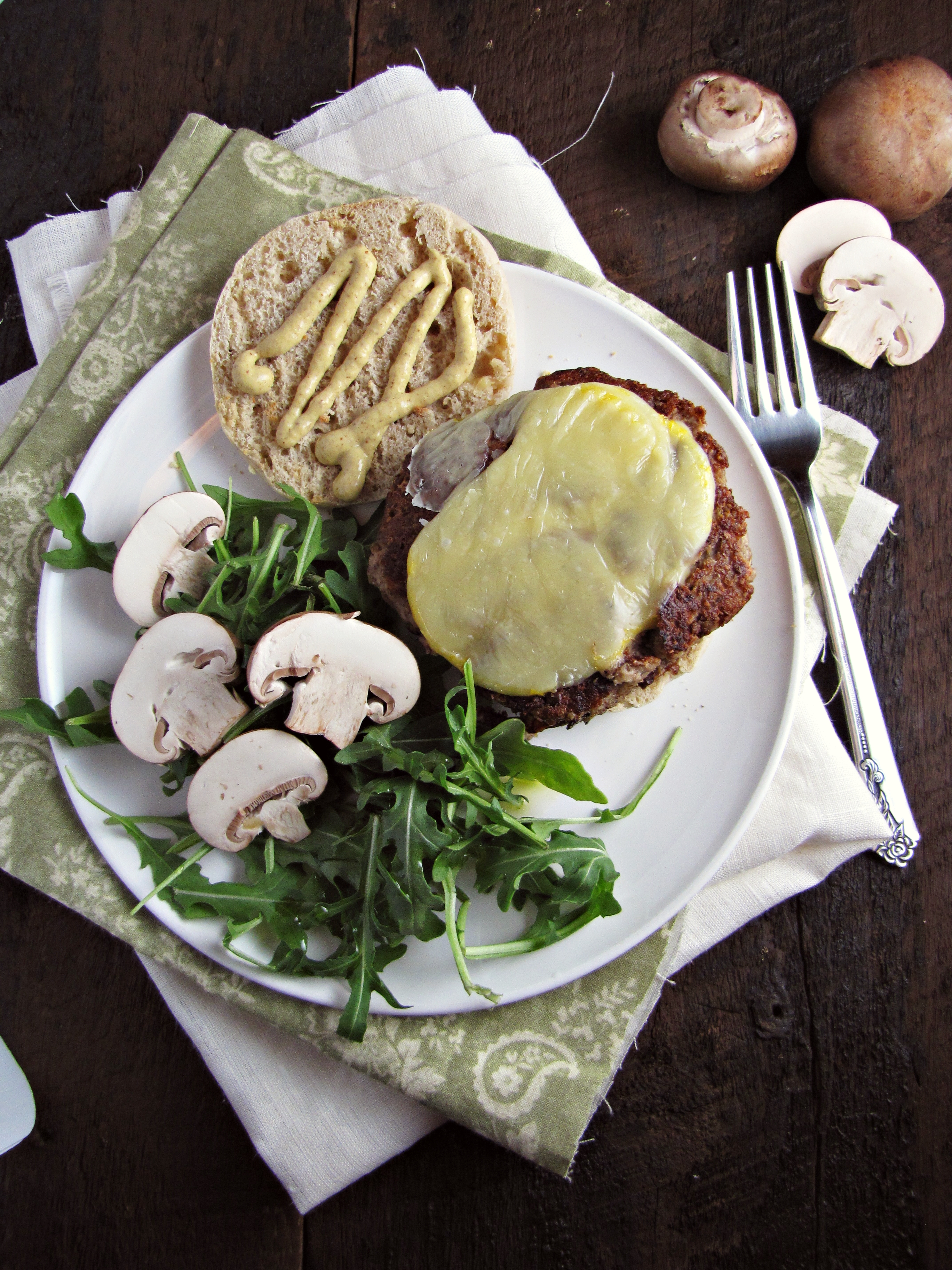
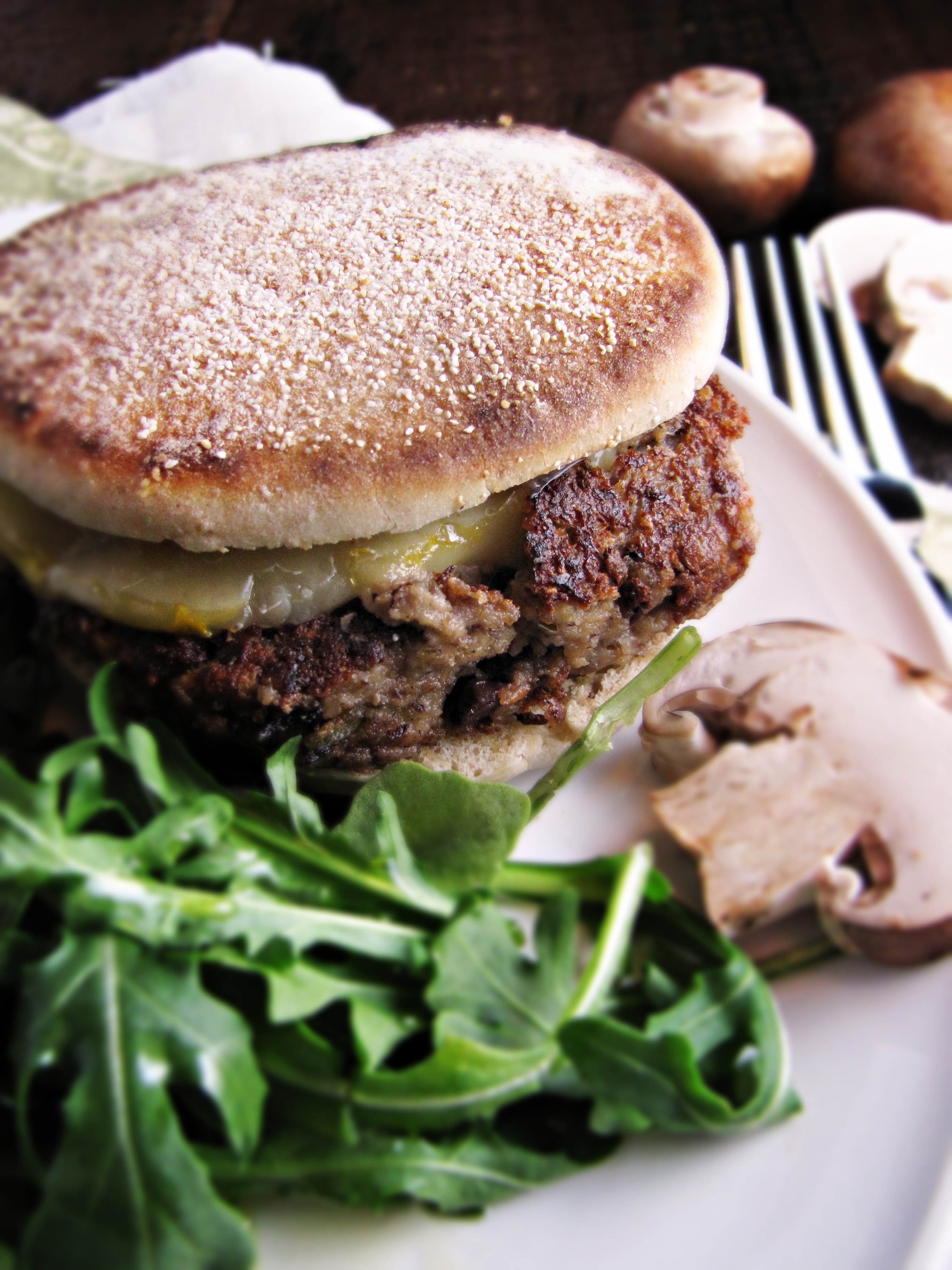
For my second Greatist post, I bring  you veggie burgers.  Don’t groan.  Veggie burgers have a reputation for being dry, flavorless, and generally awful, but homemade veggie burgers can be really delicious, and quite easy to boot.  These patties are very moist and very tasty, with kalamata olives (salty), sauteed mushrooms (earthy), lentils (meaty), and ricotta cheese (sweet) all adding their unique flavor to the mix.

If you missed my first post for Greatist, click on over here to check out what we’re doing.  The gist of it is this – every other Friday I’ll post a fast (3o minutes or less of active time), simple (8 or fewer ingredients), and healthy (they are a health and fitness site after all!) recipe over there, and write about it here.  I’m totally into this collaboration, in part because it challenges me to come up with easy, accessible recipes – something that I know a lot of people out there are looking for.  Since I’ll be continuing this collaboration for a while, definitely let me know of any suggestions or requests on recipes to remake as quick and healthy, and I’ll do my best to fit them into the parameters!  In the meantime, click here for the recipe.  And sorry for the short post today!  I’ll be back with more soon, and I just purchased a waffle iron this week so …. waffles.  Just saying.

P.s. See that oozy melted cheese on top?  That’s our edam.  We made it.  And it melts like real cheese.  We also made the feta (it was as mild and creamy as ricotta) that I used in the burger itself.  NBD.

Cookbook of the Month: Roast Figs Sugar Snow

0 February 28, 2012 Cookbook

Cookbook of the Month: Roast Figs Sugar Snow

February’s cookbook of the month is Roast Figs Sugar Snow, a book that focuses mainly on the foods that those of us in Northern climes crave during the winter months.  While we haven’t exactly had a fierce winter this year, I wanted to review this book before another year went by – I don’t find myself wanting to roast a pheasant or gorge on cheesy pumpkin tarts in the middle of summer.  The collection of recipes in this book is one of the most intriguing I’ve found, bringing me back to the book again and again – there’s Russian cheese pancakes, French pumpkin matefaims, Northern Italian farro and smoked duck salad, Austrian plum squares, and Scandinavian cookies.  Most countries that experience a true winter are represented in the book, and it makes for a great cross-section of flavors and cultural influences.  The downside of a cookbook focusing on winter foods?  Most of the recipes are extremely rich – there’s a lot of butter, cream, and cheese going on in this book.  Now, this isn’t a bad thing in and of itself, because, really, who doesn’t love butter, cream, and cheese?  But, say you wanted to plan a winter-themed menu from this book – perhaps Onion and Cider Soup with Melting Camembert, followed by Poulet Suissesse, with a plate of Plum Squares to finish it off – you’re guests might be leaving less-than-well.
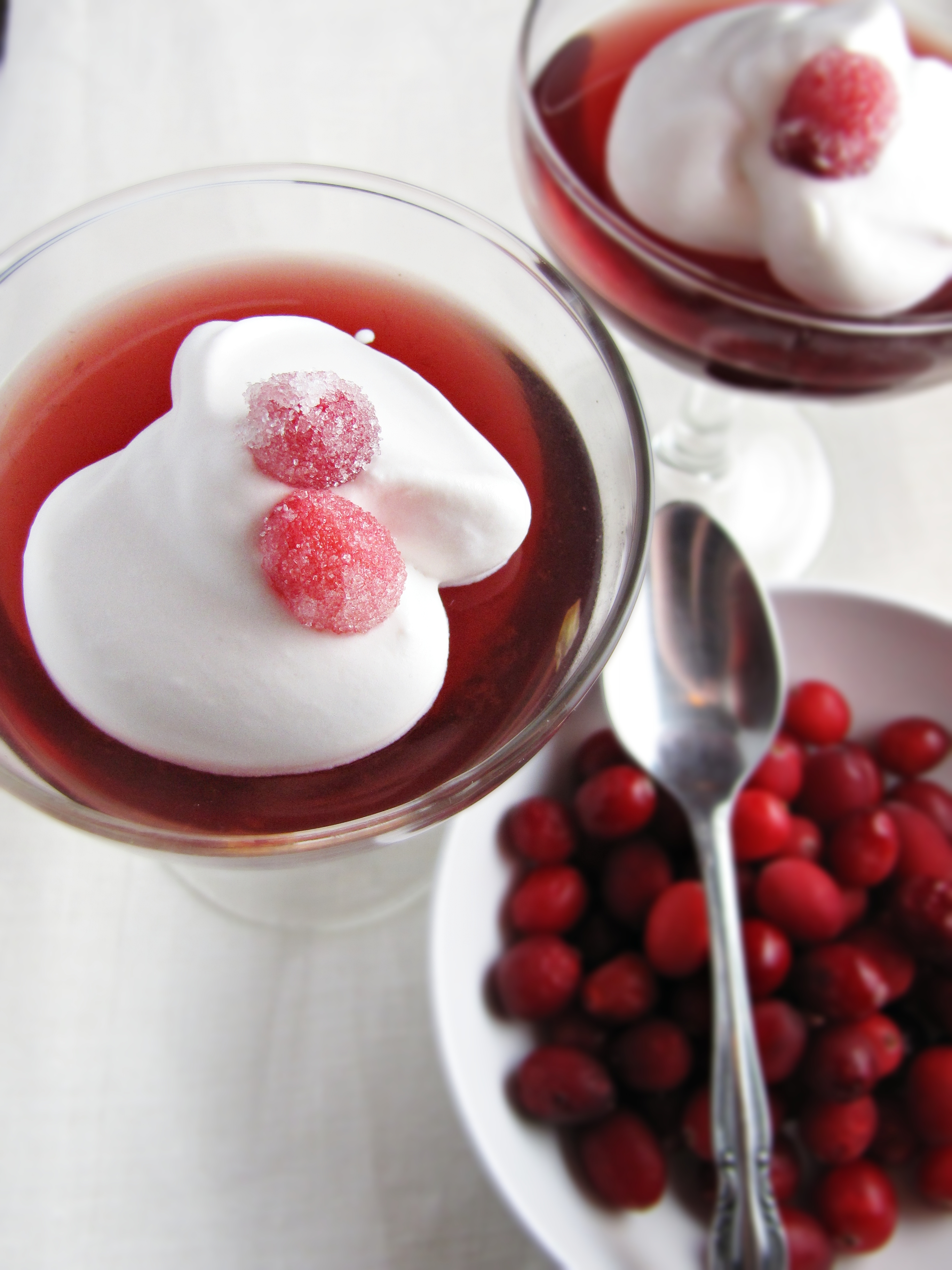
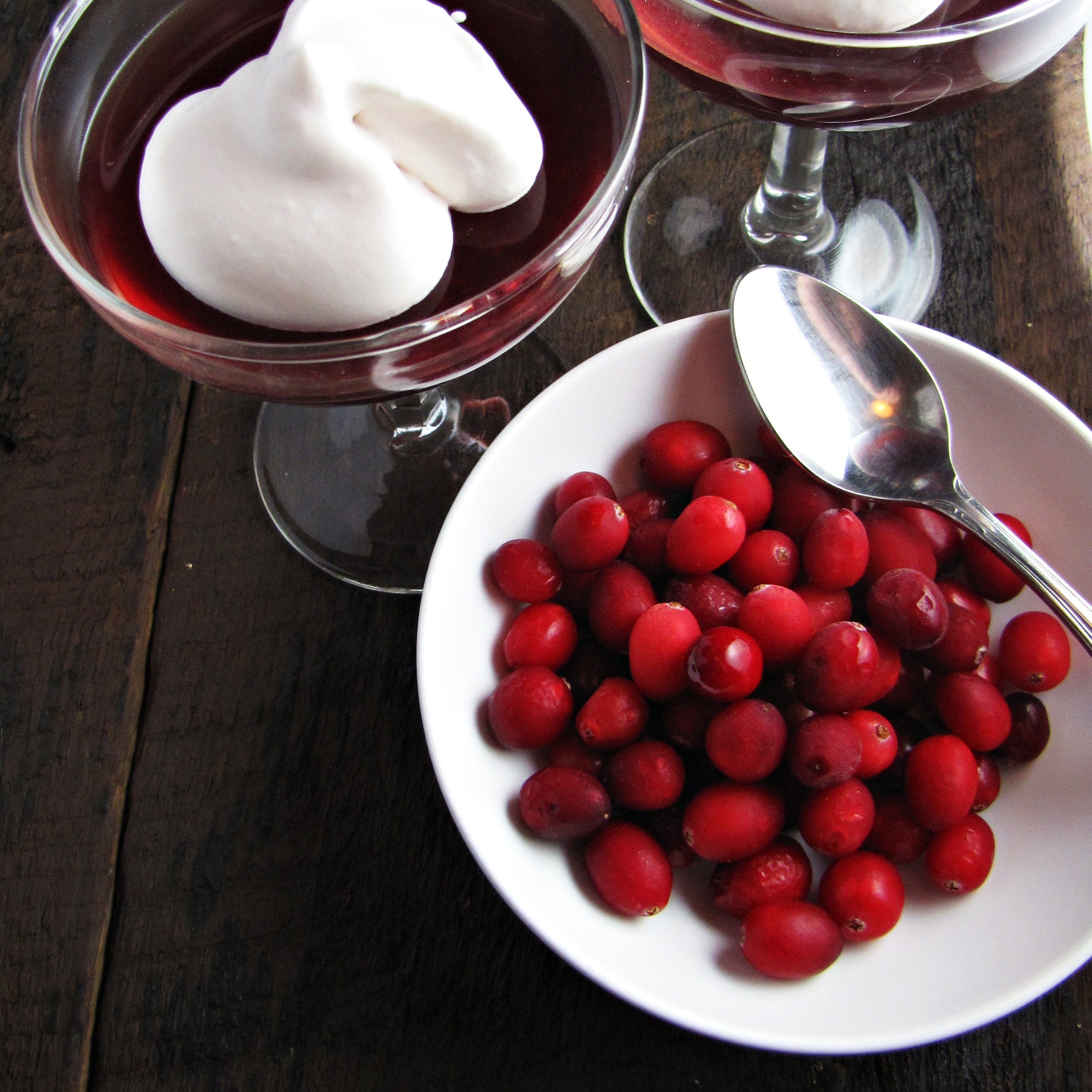
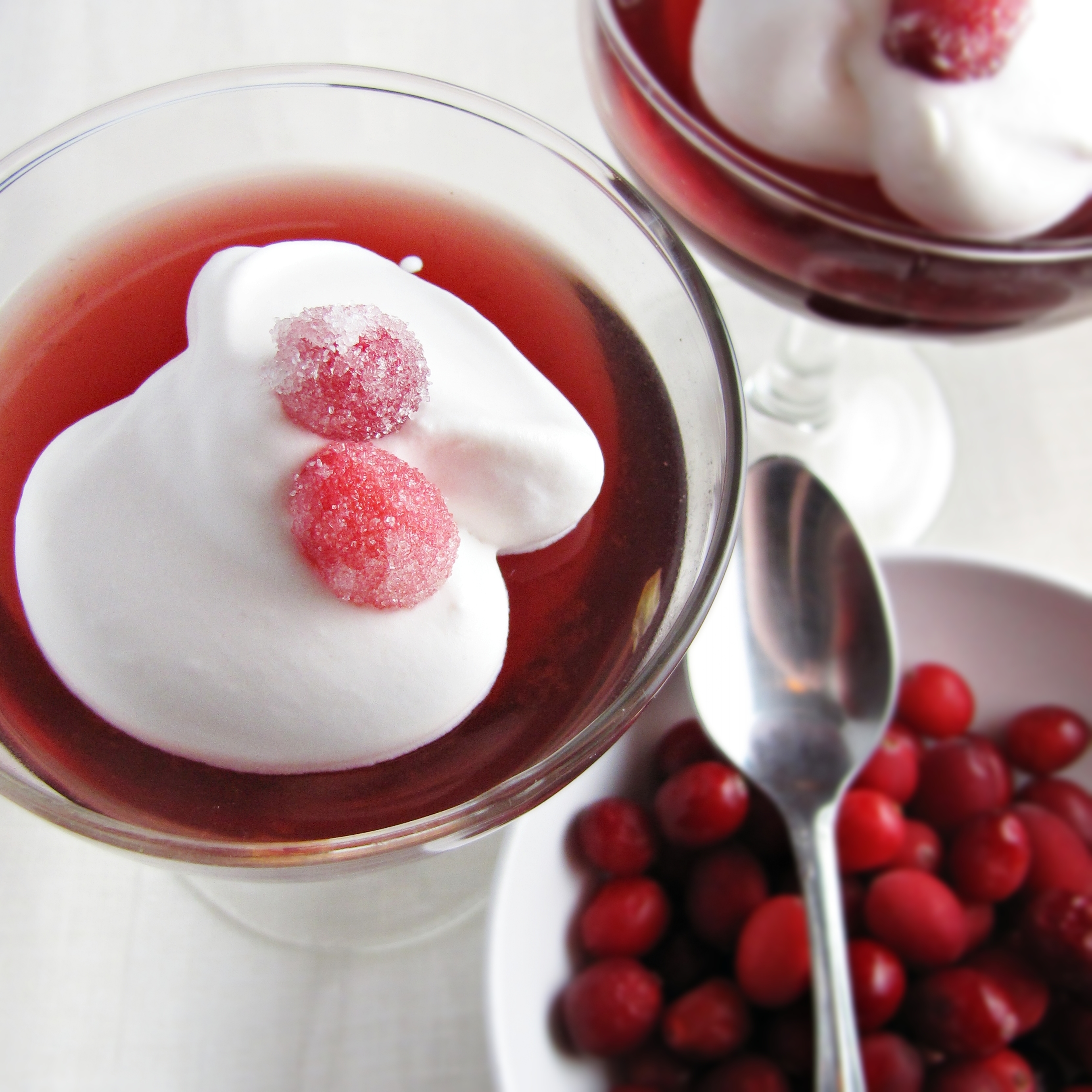
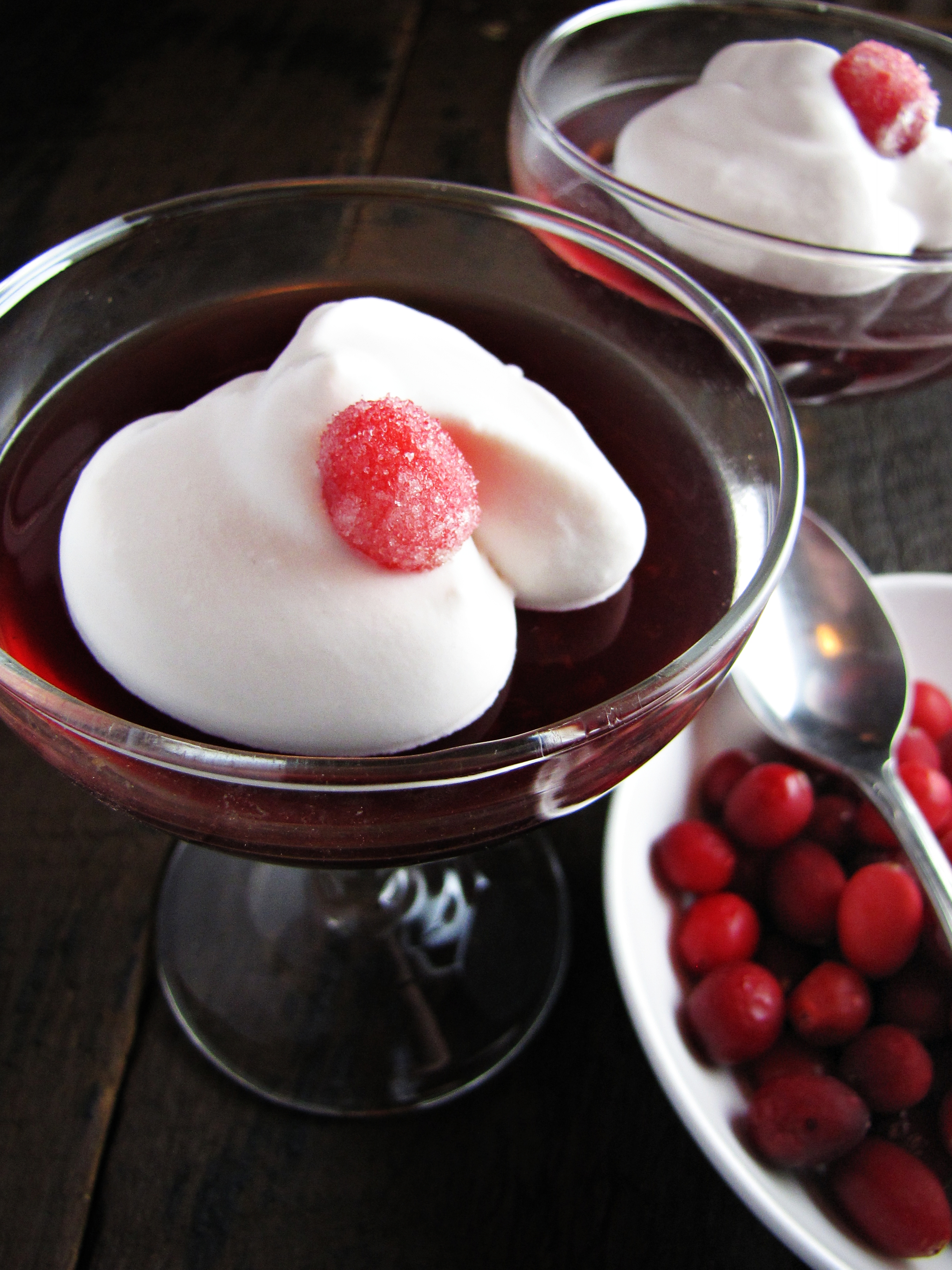
I’ve only tried a handful of recipes from this book – I think 5 in total – but the ones I have tried have varied a bit in quality.  Nothing has been bad, but only 2 of the recipes have been truly special, and both of them happen to be desserts.  The Cafe Sperl Plum Squares I made last week were the perfect balance of sweet and tangy, and the recipe pictured here – Port and Cranberry Jellies with Port Syllabub and Frosted Cranberries – was exquisite.  However, the Poulet Suissesse – a chicken dish cooked in a rich sauce of creme fraiche, parmesan and gruyere – was too rich without the flavor payoff I was looking for, and both the Red Cabbage with Cranberries and the Roast Squash and Lentil Salad with Goat Cheese were about what I was expecting – good, but nothing particularly new or interesting.  This is not a book I’m going to give up on though – most of the recipes are too alluring.  High on my list are the Melting Leg of Lamb with Juniper Berries, the Toasted Ginger Cake with Wine-Poached Cranberries, and the Roast Pheasant with Quince, Blackberries, and Honey.  That is, if I ever find pheasant or quince anywhere near me.

A bit more on the Cranberry-Port Jellies featured here: think of these as the most elegant, grown-up, and subtle jello shots you’ll ever eat.  Or, if you’re not a jello shot person (how could you not be a jello shot person?!), think of them as your favorite sore-throat treat but boozy and sophisticated.  Both the jellies and the syllabub – basically a loose whipped cream – contain port, giving the whole dessert a heady, musky, flavor, which contrasts perfectly with the fresh bursts of the sweet-sour frosted cranberries (use way more than pictured here, they really bring the dish together).  This dish takes planning ahead – 6 hours for the jellies to set, 1-2 hours for the cranberries to dry – but it’s well worth it.  The actual work that goes into making and assembling these is minimal.  And with only 1/2 c. of sugar added to the jellies, they’re a relatively light dessert, especially for this  book.  Worth trying.  And, overall, the book is worth checking out, especially if you’re in a cozy-cooking sort of mood.


Port and Cranberry Jellies with Frosted Cranberries

Recipe from Roast Figs Sugar Snow, by Diana Henry.  Serves 8

For the jellies:

  • 2 c. cranberry juice
  • 1 3/4 c. ruby port
  • peel of 1 orange (white pith removed to the best of your ability)
  • juice of 1 orange
  • 1 stick cinnamon
  • 1/2 c. sugar
  • 2 TBS powdered gelatin (about 2 of the packets they sell in most US grocery stores)

For the berries:

  • 2 c. fresh cranberries
  • 1 egg white
  • 1-2 c. sugar (you won’t use it all but need volume for process to work)

For the syllabub:

  • 2/3 c. heavy whipping cream
  • pinch cream of tartar
  • 1 TBS confectioner’s sugar
  • 2 TBS ruby port
  1. Make the jellies: combine the cranberry juice, port, orange peel, orange juice, cinnamon, and sugar in a saucepan and heat over medium heat until it comes to a boil, stirring to dissolve the sugar.  Reduce heat to low, and simmer for 5-10 minutes to infuse flavors.  While juice is simmering, sprinkle gelatin over 1/4 c. cold water in a small bowl, and leave for a minute to firm up.  Add 1/2 c. of warm (not too hot! let it cool for a minute out of the pot before adding) juice mixture to the gelatin, and stir to dissolve, then pour whole mixture back into pot and stir well.  Remove from heat, and pour into 8 glasses.  Cover and refrigerate for 6 hours, or until firm.
  2. 1-2 hours before serving, briefly whisk the egg white in a medium bowl, until slightly frothy.  Add the cranberries and stir gently to coat with egg white.  Let cranberries drip over bowl for a minute, then transfer in batches to a plate with the sugar.  If the cranberries are too wet when moved or there is not enough sugar on the plate, the sugar will simply dissolve.  Roll the cranberries in the sugar until well coated, then set aside on a plate or tray to dry for 1 to 2 hours.
  3. Just before serving, whip heavy cream until beginning to grow in volume, then sprinkle with cream of tartar and sugar, and whip until it is thick and very slightly holds it’s shape.  It should not be too stiff, but should fall in folds when poured from spoon.  Gently whisk in port.  Spoon syllabub over jellies, then sprinkle with frosted cranberries.  Leftovers will keep refrigerated for a few days, although syllabub will lose some of it’s structure.
  • « Previous Page
  • Page 1
  • …
  • Page 42
  • Page 43
  • Page 44
  • Page 45
  • Page 46
  • …
  • Page 57
  • Next Page »

Primary Sidebar

Subscribe!

Get creative recipes and menu ideas delivered straight to your inbox.

Most Popular

A House // Sweet Potato and Coconut Milk Soup with Brown Rice and Lentils

Monthly Fitness Goals: July // Homemade Spinach Wraps with Chopped Greek Salad

A New Job // Classic Seven-Layer Bars

Butternut Squash Carbonara with Fried Sage and Caramelized Onions

Happy Birthday, Trevor! // Peanut Butter Fudge

Cookbook Review and Giveaway: Home Made Winter

Drizly

Please note!

Full disclosure: if you purchase anything at Amazon using the above links or any other links to Amazon on this site, I will receive a small commission. Just so you know!

Copyright© 2018 · Cookd Pro Theme by Shay Bocks

View Mobile Site
This site uses cookies: Find out more.