• Skip to primary navigation
  • Skip to content
  • Skip to primary sidebar
  • Home
  • Recipes
  • Features
    • Cookbook Reviews
    • Ingredient of the Week
    • Sunday Dinner
    • Fitness Goals
  • Travel
  • About
    • Privacy Policy
    • Cookie Policy
  • Work With Me

Katie at the Kitchen Door

Globally-inspired, seasonal recipes

Blog Page

Marx Challenge: Sweet Fregola Fritters

0 November 27, 2011 Breakfast

Marx Challenge: Sweet Fregola Fritters

It’s that time again!  Vote for me in the Marx Food fregola challenge here!
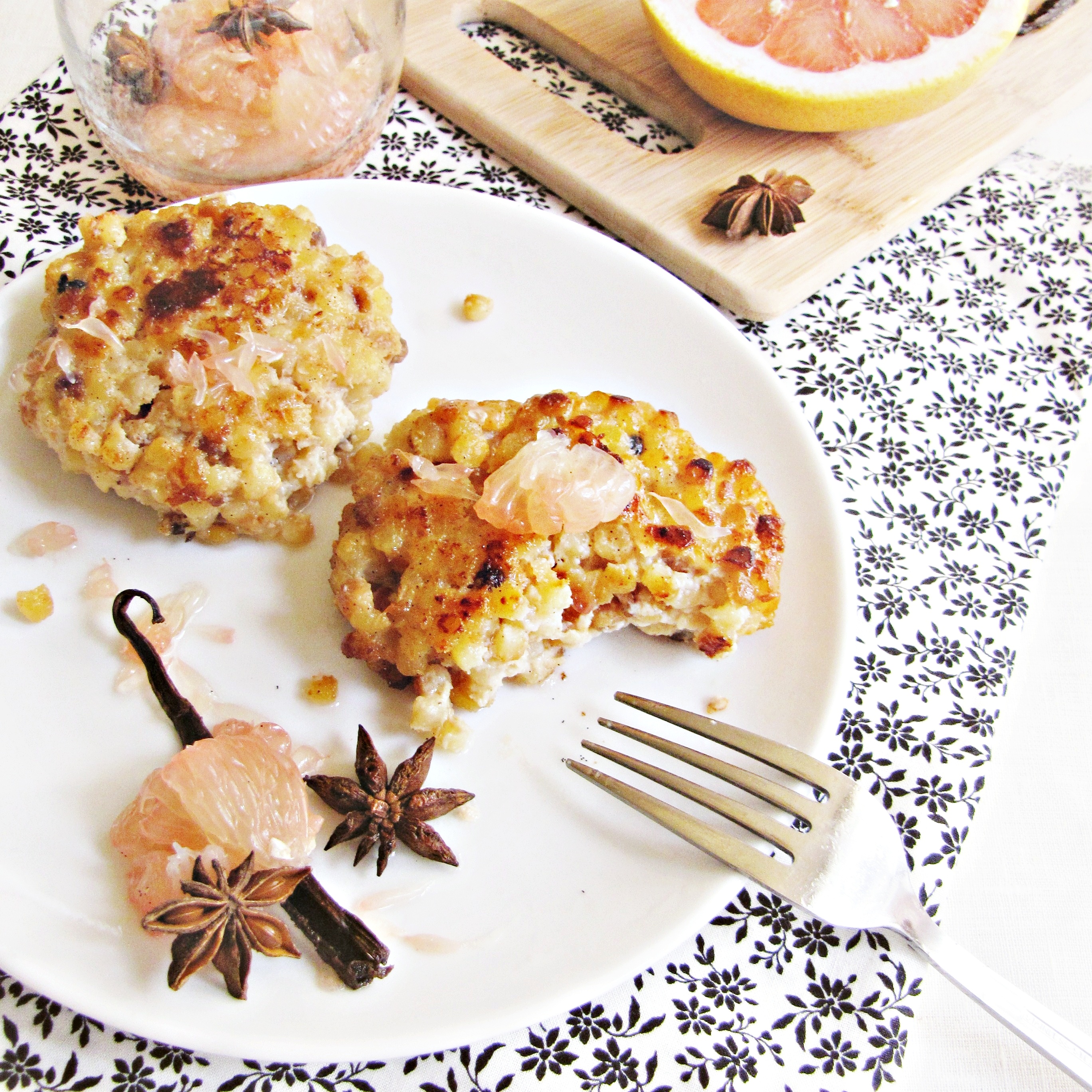
In the past two years I’ve participated in several recipe development challenges hosted by Marx Foods, an online company that sells specialty meats (think alligator, kangaroo, and frog), truffle products, mushrooms, unique pantry goods, and lots of other culinary goodies.  The first challenge I participated in was the four-part “Ridiculously Delicious” challenge they hosted last winter, for which I made dill and feta stuffed cucumber cups, spicy cherry-chocolate souffles, and a trio of wasabi-centric recipes using fresh wasabi.  Then, this summer, I participated in the dried chile challenge, and made a smoky-sweet adobo and corn frittata, which I very much enjoyed.  And now it’s time for another challenge!  This time around the challenge is to make a sweet recipe using fregola – an ingredient I’d never even heard of until this month.  I have yet to win one of these challenges, but maybe this will be my lucky recipe.
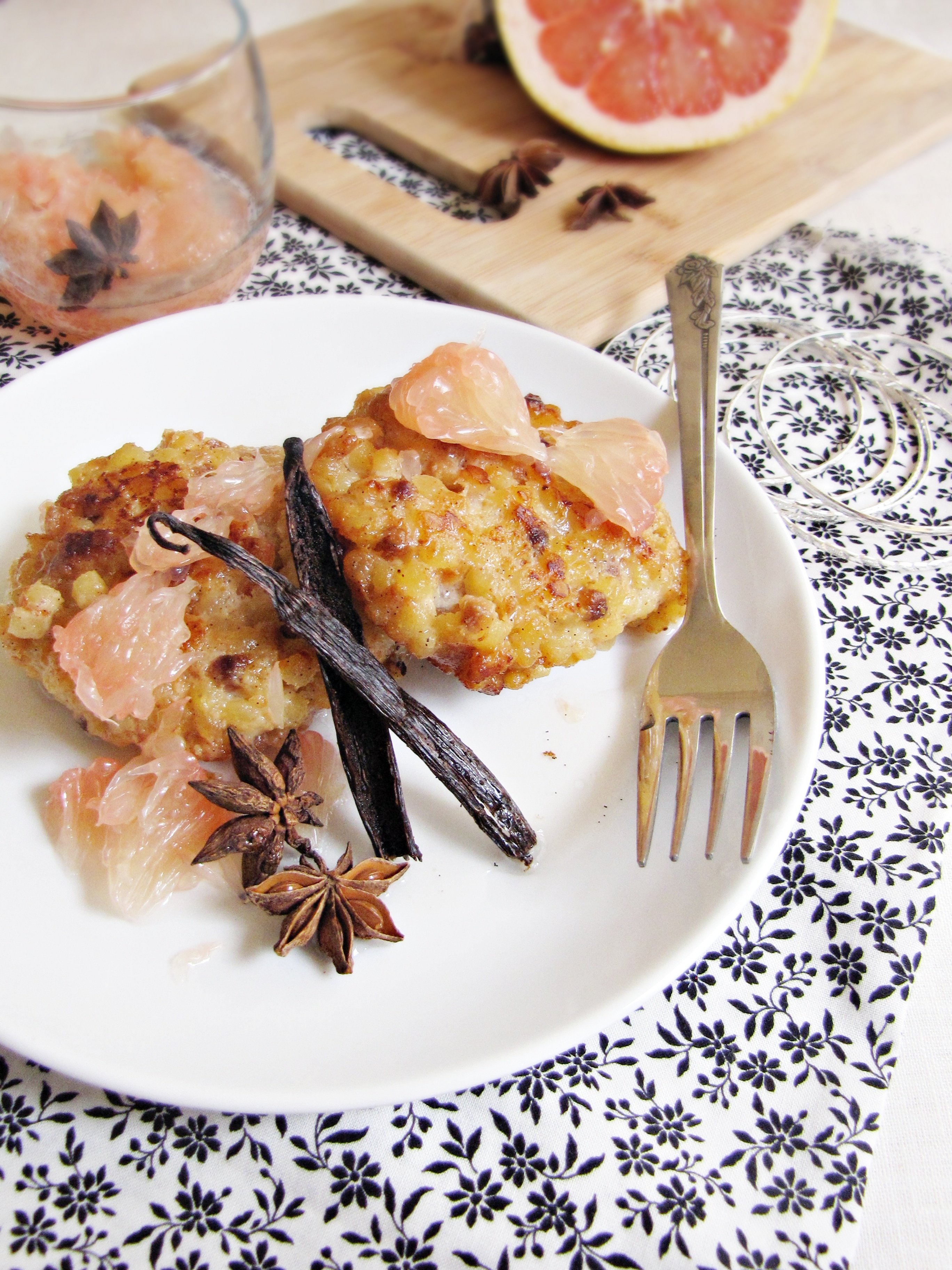
Fregola is a toasted Italian pasta, similar in size and shape to Israeli couscous.  I could eat couscous all day every day, so I was super excited to try another version of it.  To be honest, I didn’t like the fregola as much as I like regular old couscous – it’s very chewy and has an almost tapioca-like consistency – but it was still an interesting new addition to my kitchen.  Along with the sample of fregola, Marx sent a handful of other goods to inspire a sweet fregola creation – whole vanilla beans, star anise, and saffron.  The contestants were required to use at least one of the extra ingredients along with the fregola.  Almost immediately upon signing up for this contest I knew that I wanted to create a fregola fritter, something that played on arancini – the delicious cheesy fried risotto balls made with leftover risotto which I seem to be eating a lot of lately.  So I made a fregola pudding using milk, cinnamon, nutmeg, honey, and vanilla, and then, after a brief rest in the fridge, fried it up into fritters.  To cut the grease and add another level of flavor, I made a batch of Gourmet’s grapefruit and star anise salad.  My mom and I make this salad every year on Christmas morning, and it’s my favorite part of Christmas breakfast without fail.  Even when there’s vanilla bean coffee cake, maple-turkey sausage patties, and pomegranate mimosas – that should tell you something about how delicious it is.  It was the perfect complement to the slightly sweet, chewy fritters, and the syrup soaked right into them.  I’ll be enjoying the leftovers for breakfast for the next few days (and not even feeling that bad about it – thank you, grapefruit).  I think this is the original recipe that I’m most proud of – I guess there’s something to be said for keeping it simple.
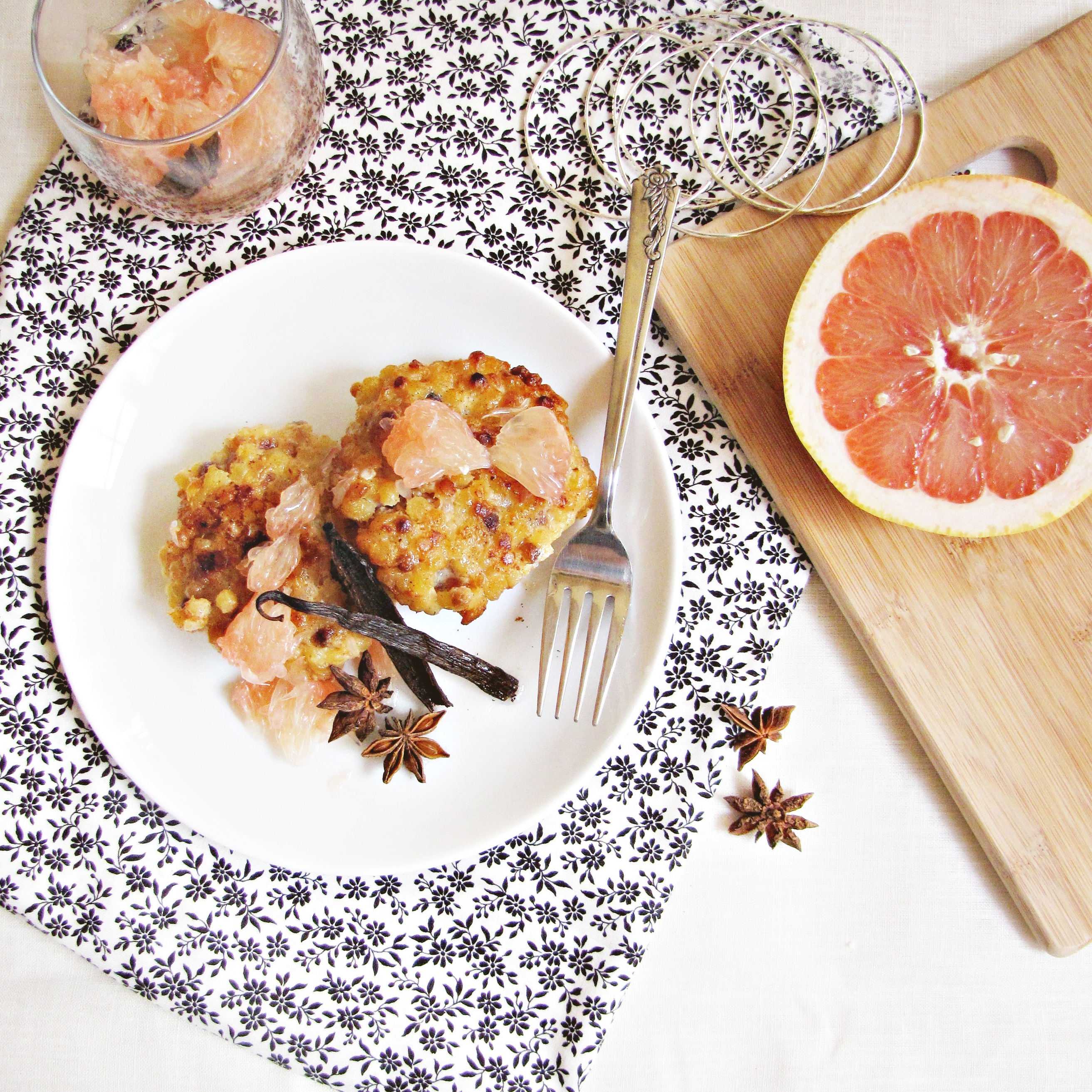
Sweet Fregola Fritters with Star-Anise and Grapefruit Compote

Grapefruit compote recipe from Gourmet.  Makes 5 large fritters.

  • 1 c. fregola
  • 3 c. milk
  • 1/2 tsp cinnamon
  • 1/8 tsp nutmeg
  • 1/4 c. honey
  • 1 vanilla bean
  • canola oil for frying
  • 2 grapefruits
  • 1/4 c. water
  • 1/4 c. sugar
  • 3 whole star anise
  1. In a large saucepan mix together fregola, milk, cinnamon, nutmeg, and honey.  Scrape out seeds from vanilla bean and add to the mixture along with the pod.  Bring to a gentle simmer and cook, stirring frequently (be sure to scrape any milk skin off the bottom to prevent from burning) for 20-30 minutes, until pasta has just a bit of chewiness left and milk has boiled down to create a thick fregola pudding.  Remove the vanilla bean pod and refrigerate mixture for 1 hour, or until cool.
  2. In a small saucepan, dissolve sugar in water, and add the star anise.  Bring to a gentle boil and cook for 5 minutes to create a thin syrup.  Peel the grapefruits and remove their segments, placing in a medium bowl.  Squeeze any excess grapefruit juice into bowl as well.  Add the star anise syrup to the grapefruit mixture and set aside.
  3. Heat a 1/2 inch of canola oil in a large saucepan over medium-low heat.  When oil is hot, form the fregola pudding into 5 patties about 3 inches in diameter and 1 inch thick, and gently fry for 5 minutes on each side, until golden brown.  Fregola mixture should stay firmly together when formed into patties by hand.  Drain fritters on a paper towel and serve warm, with the grapefruit compote served on the side.
Cookbook of the Month: Modern Vegetarian Kitchen

0 November 23, 2011 Cookbook

Cookbook of the Month: Modern Vegetarian Kitchen

I know it’s the day before Thanksgiving and everyone else is probably writing about Thanksgiving food… but I’m not.  I am actually making things to bring to Thanksgiving this year – specifically this roasted beet and carrot salad with goat cheese dressing, and this pear and celery salad, but they aren’t actually in existence yet and so I can’t take any pretty pictures or tell you how they were.  What I can do, however, is tell you about November’s Cookbook of the Month – Peter Berley’s Modern Vegetarian Kitchen.

Compared to most cookbooks that I tend to grab off the bookstore shelves – generally the flashy, hot-off-the-press ones that I’ve seen popping up all over the internet – this cookbook is ancient.  Published in 2000 by Peter Berley and Melissa Clark, it’s not toted as a culinary classic, but since it has flawless reviews on Amazon, I decided to take a look.  Sometimes I find that cookbooks written more than 10 years ago are already out of date – food trends seem to vary as quickly as other trends – hey, remember pogs? furby? how about silly bandz? – and recipes that were hip and new in 2000 have either gone out of style or become culinary staples.  In some instances, this book fell into the no-longer-that-interesting category for me – the vegetable chapter, for example, was sorely uninspiring, with only one recipe (for caramelized fennel) catching my eye amidst the pages of recipes for roasted root vegetables, sauteed garlicky greens, and steamed new potatoes.  However, other chapters were jam packed with great ideas, like the pasta chapter – recipes for chickpea flour pasta with zesty leek and tomato sauce, white bean ravioli in herbed vegetable and saffron broth, whole wheat pasta with creamy walnut-portobello sauce, and chestnut pasta with porcinis, pumpkin and leeks all surprised me with their originality.  This book also has strong Asian influences throughout, with a lot of sesame and seaweed used, but that influence is not overwhelming and is balanced by French, Indian, and German touches.  One of the books strongest points is its commitment to truly cooking from scratch – it includes recipes for several creative vegetable stocks, homemade curry powders, sourdough starters, and 5 or 6 kinds of homemade pasta, using wholesome and readily available ingredients.  It is also packed with recipes, and would be a great starter book for someone just starting down the vegetarian path and looking for both staples and a few more creative recipes.  I should also note that, as someone who eats meat with relish and just happens to cook mostly vegetarian because I find it more interesting and economical, that I whole-heartedly avoid any recipe that calls for tofu, seitan, or tempeh, so I’m not rating the book on that front, although it includes plenty of recipes for using those particular ingredients.  All-in-all, it’s a solid, if slightly outdated, vegetarian tome that I’m likely to cook from again – I’ll give it 4 out of 5 stars.

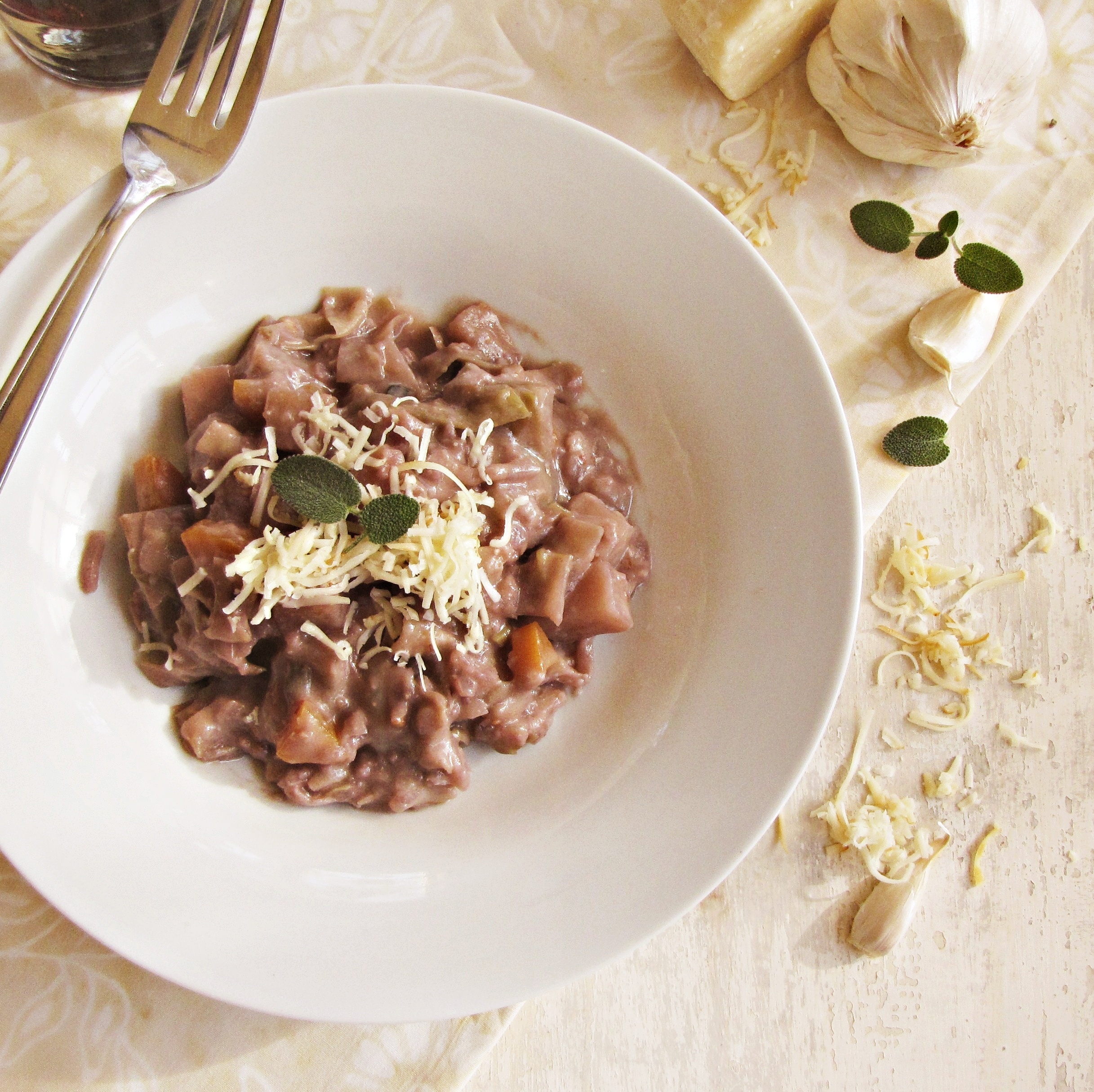
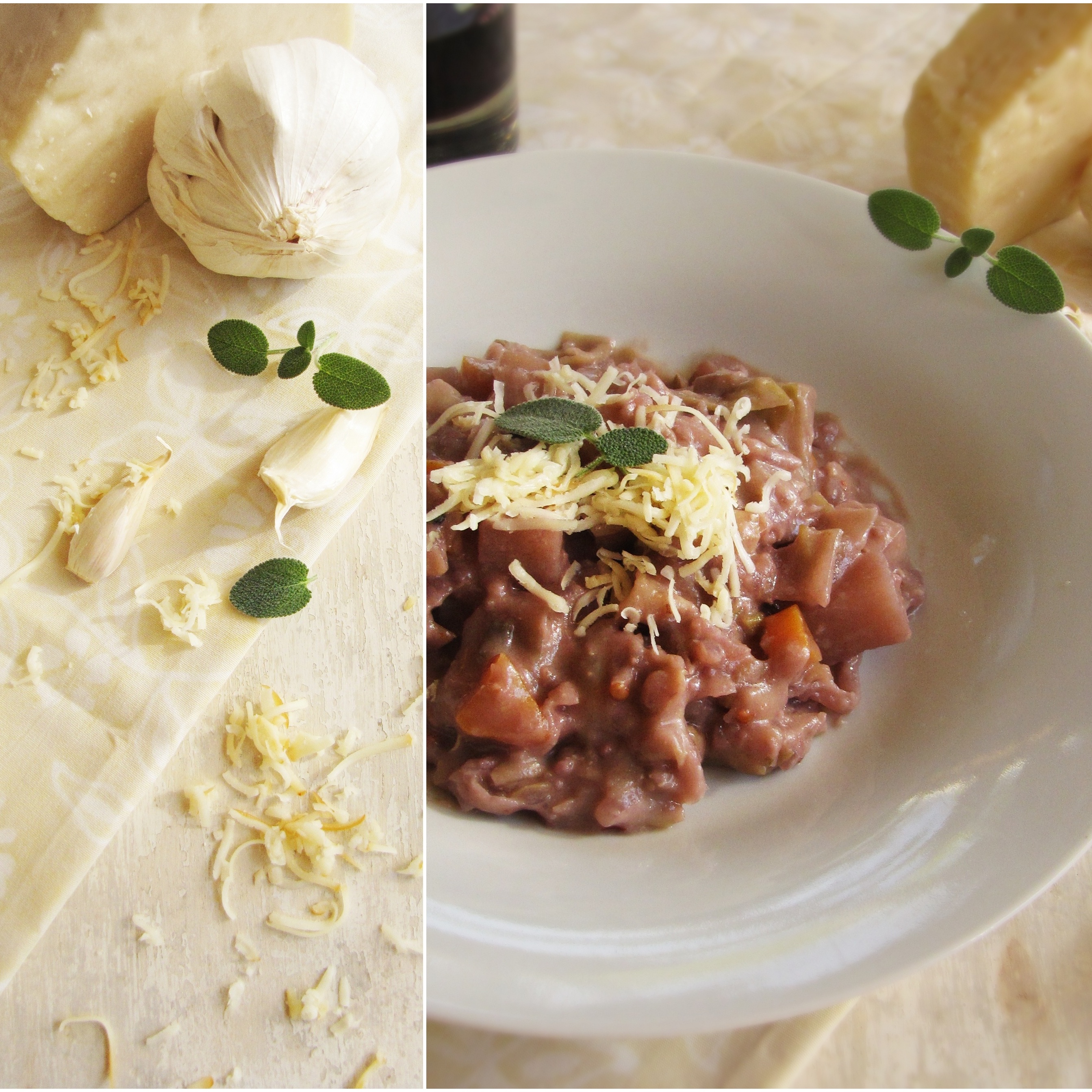
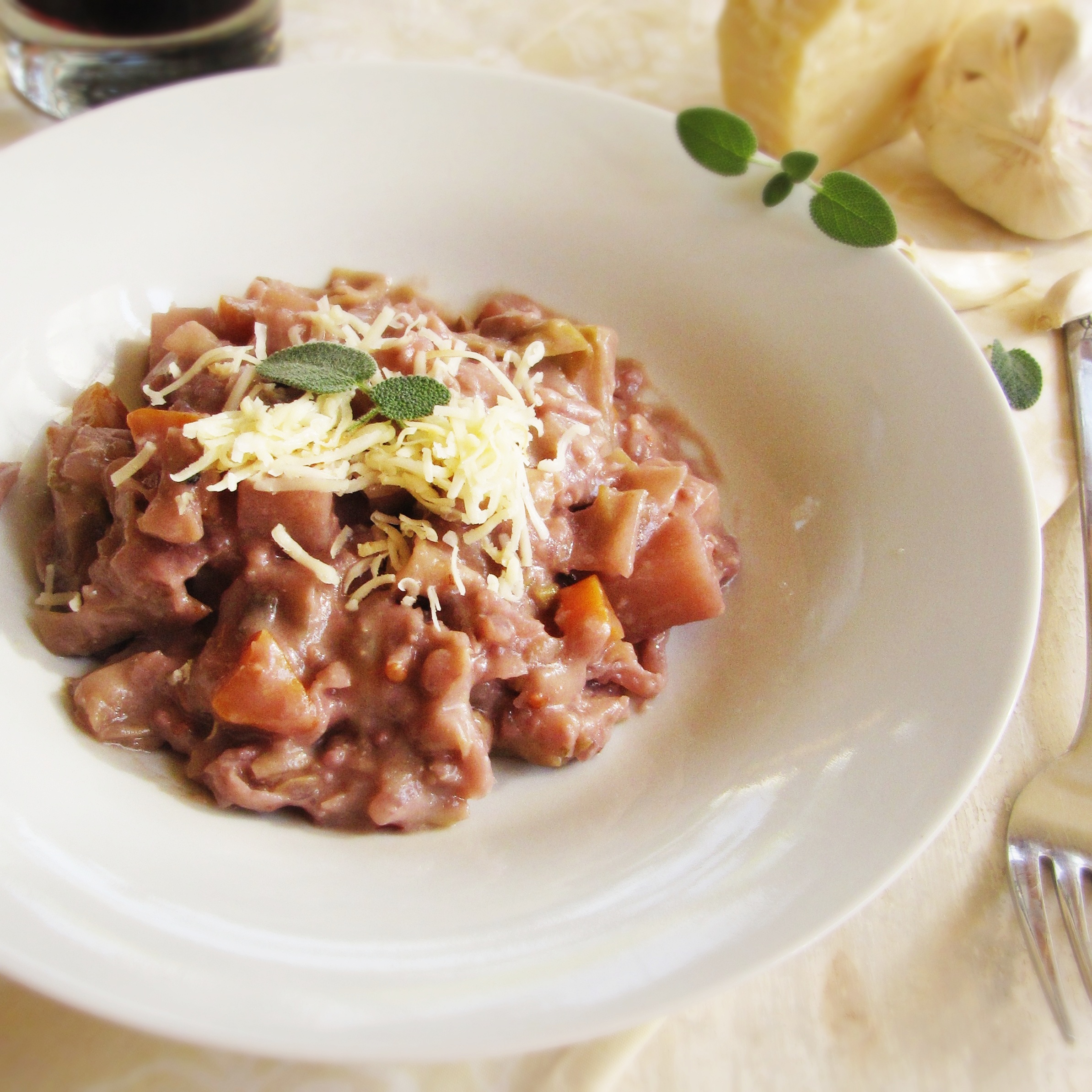
I’ve already shared two recipes adapted from this book – these sesame-cranberry-maple cookies (incredible!) and these white bean ravioli.  The recipe I’m sharing today is one for pizzoccheri, a traditional Swiss dish.  Unfortunately, I somehow managed to only copy down the ingredient list before preparing this, and totally neglected to write down the actual instructions.  I realized this just after I had prepped my vegetables and heated up my pot.  Not having the book around for reference, all I had to work with was a story from the header of the recipe about a Swiss host mother making this dish nightly by making a big vegetable soup, with red wine, then boiling buckwheat noodles in the soup, and finishing it with cheese.  It sounded straightforward enough, so I just went for it, and it turned out great!  I now have a copy of the book in front of me again, and it turns out that the brief description was all I needed – I came up with almost exactly the same recipe that was printed.  That being said, this does not seem to be the traditional recipe for pizzoccheri.  A quick google search will reveal that it’s generally a dish with similar ingredients, but layered and baked with buckwheat noodles like a lasagna, rather than served as a sauce.  I’ve never tried the traditional version, but I loved this one.  I actually preferred the dish without the buckwheat noodles, although I did make them by hand, and think that the sauce can stand alone as a meal – like a thick, hearty stew.  I’m printing the recipe the way I made and enjoyed it (i.e. without the pasta) rather than how it is originally written, since that’s the way I ate it.  If you want a more authentic glimpse into the recipes in this book, check out the cookie or ravioli recipes listed above, or grab a copy for yourself.  It’s only $15 on Amazon, and in my opinion well worth the amount of material it contains.

Pizzoccheri

Quite loosely adapted from Modern Vegetarian Kitchen, by Peter Berley.  Serves 4.

  • 2 TBS salted butter
  • 1 red onion, thinly sliced
  • sea salt
  • 2 c. chopped green cabbage (1 small head)
  • 1 russet potato, washed and cut into 1 inch cubes
  • 1 carrot, peeled and cut into 1 inch cubes
  • 6 garlic cloves, sliced
  • 6 sage leaves, minced
  • pinch red pepper flakes
  • 1 c. red wine
  • 1 c. water
  • 1/2 c. grated smoked gruyere
  • salt and pepper to taste
  1. Melt the butter in a large saucepan over medium heat.  Add the onion and a pinch of salt and cook until onions are very tender.  Add cabbage, potato, carrot, garlic, sage, and red pepper flakes and cook for 3-4 minutes.  Add red wine and water and turn heat down so that stew is simmering gently.  Cook, uncovered, for about an hour, adding more water as necessary to keep vegetables just covered, until all vegetables are tender and sauce has reduced and thickened to an applesauce-like consistency.  Turn off heat and stir in grated cheese, then season with salt and pepper.  Serve hot, either alone, with a thick slice of fresh bread, or on pasta.
White Bean Ravioli

0 November 20, 2011 Cookbook

White Bean Ravioli

It feels like ravioli season to me.  I don’t know that anyone ever named November ravioli month, but it would seem appropriate to do so.  It’s time for comfort food – it’s getting cold, the days are getting shorter, and all sorts of things that are delicious in raviolis – butternut squash, sage, chestnuts, mushrooms – are coming into season.  A bowl of steaming ravioli with a thick, tangy sauce seems about as comforting as comfort food can get.

I enjoy making pasta by hand, but I don’t do it that frequently.  To me it is only worthwhile when I’m filling the pasta with something interesting – the difference between the flavor of the $2 boxed fettucine and my hand cut fettucine is just not worth the time, but the difference between the flavor of pre-packaged tortellini and homemade ones is well worthwhile.  When I do break out the pasta roller for ravioli, I tend to make a lot at once and throw a few meals worth in the freezer.  It even goes by pretty quickly with help from a friend who’s willing to work for his dinner.

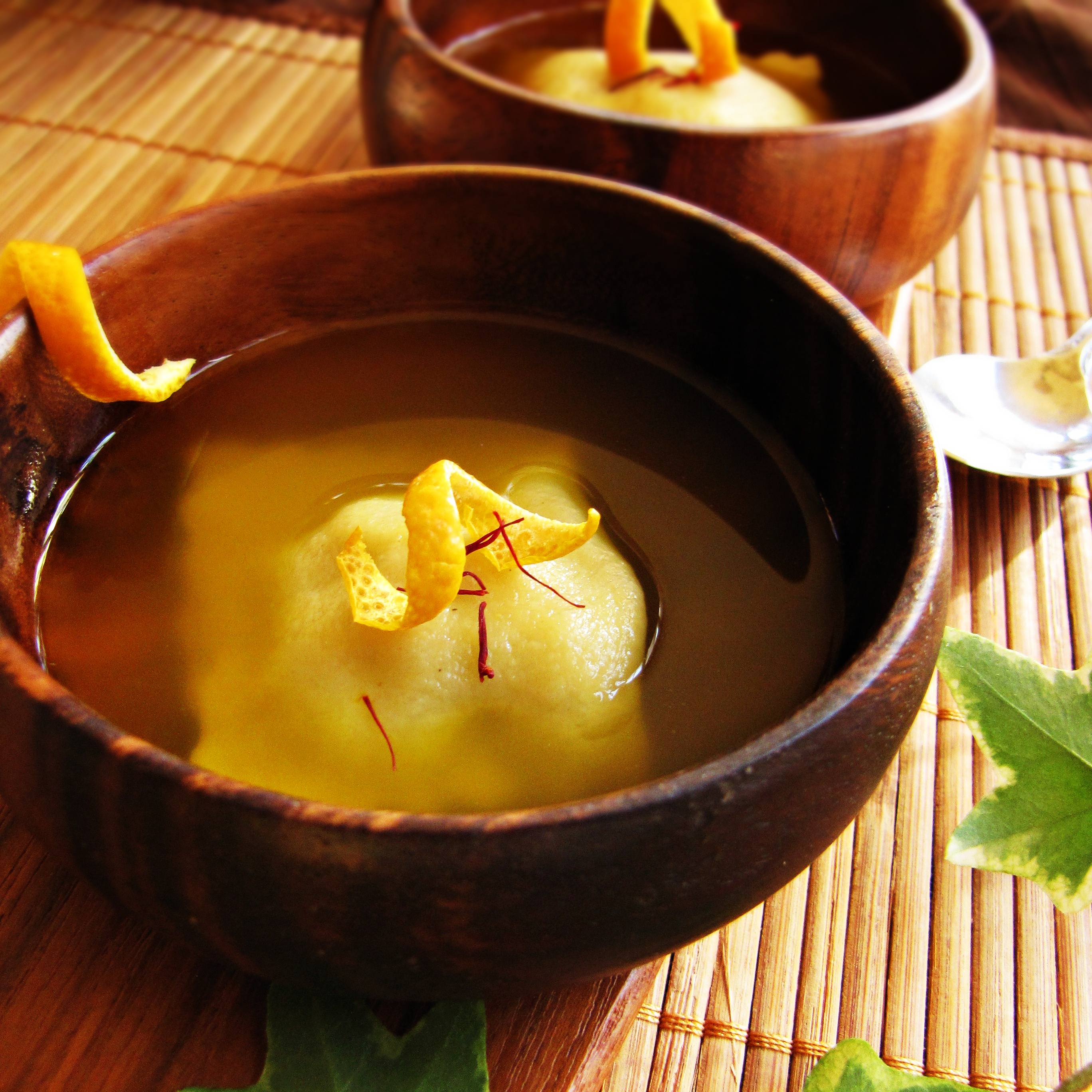
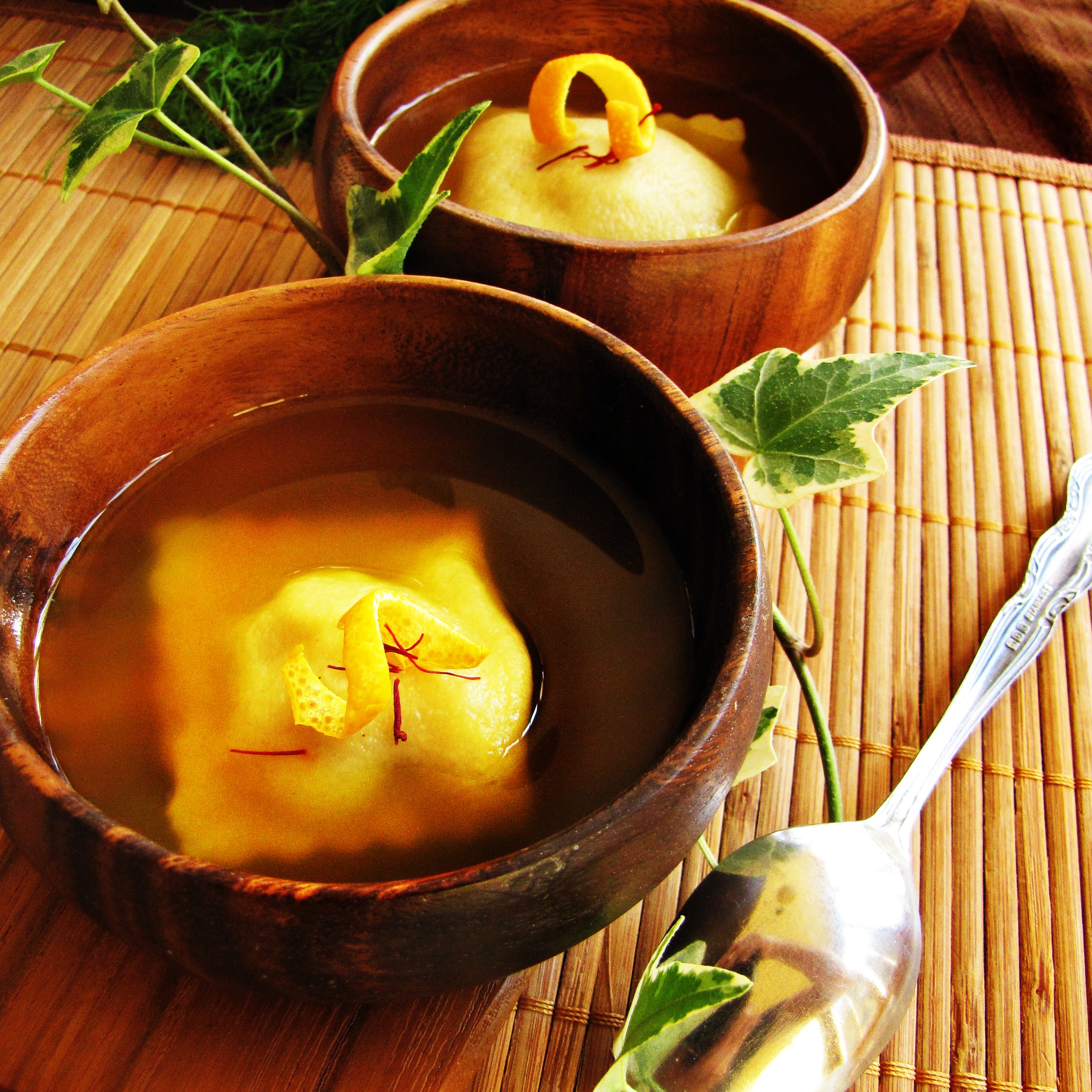
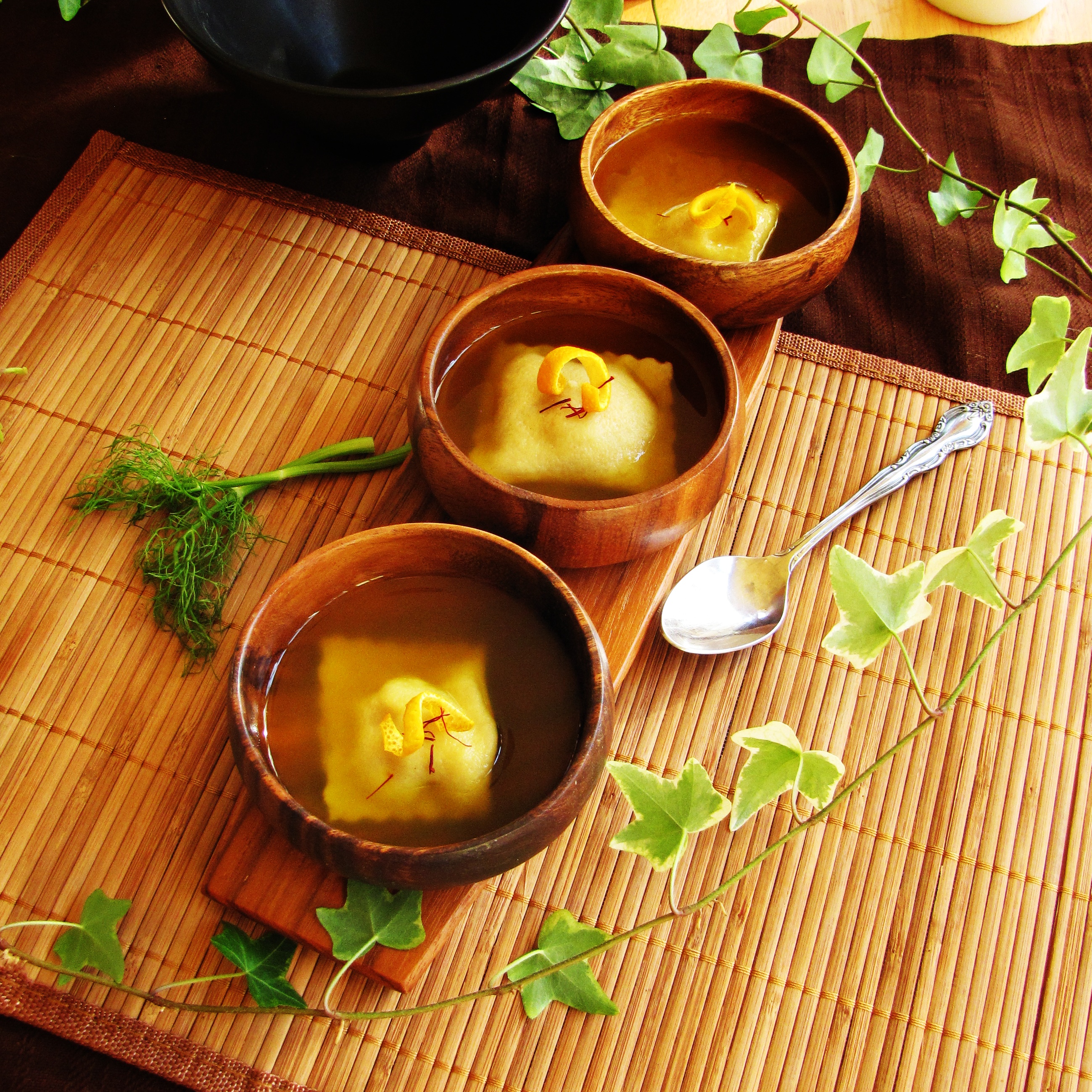
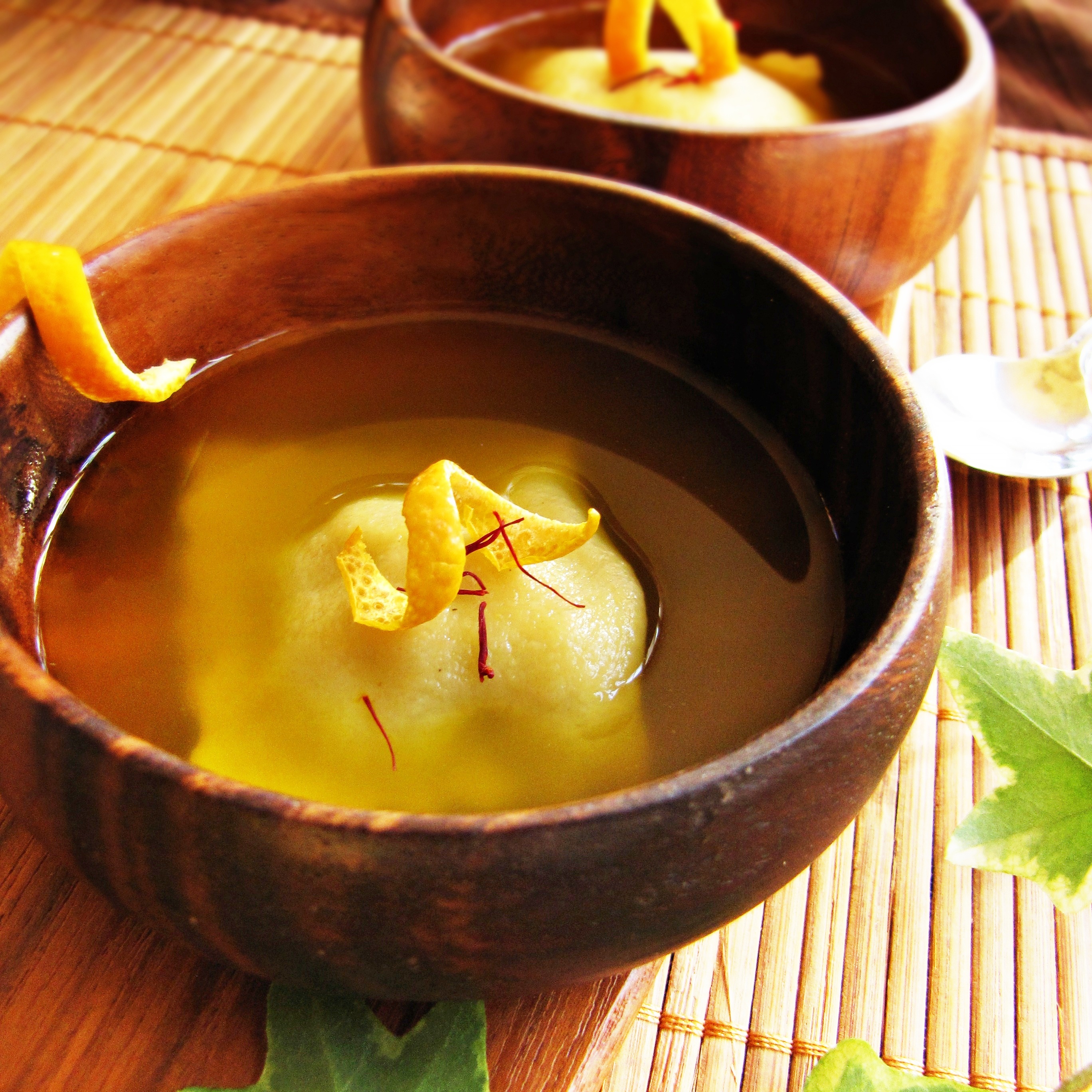
This particular recipe is another one from Peter Berley’s Modern Vegetarian Kitchen, and stuffs a classic semolina pasta dough with a white bean and sage filling, then serves the pasta in a light saffron-infused vegetable broth.  I did make a few significant changes to the broth, choosing to cook all of the vegetables together and then remove them all, leaving a clear broth, rather than leaving the carrot and fennel pieces in the soup, as the recipe calls for.  I enjoyed both parts of the recipe, and would make the broth again for an elegant presentation, or perhaps even as the base for a soup, but probably not if I was just going to eat the ravioli themselves – I think they might be better suited to a thick tomato sauce.  I might even take these the greek route, and add a small amount of feta cheese to the bean mixture, although they were also delicious with just the beans as a filling.  I did end up adding some of our homemade cheese to about half of the ravioli to a positive effect.  Yes, I said homemade cheese.  You can have the full story when we’ve got a little bit of a better handle on the whole cheesemaking process, but if our most recent attempt is any indicator, there may be some super delicious cheeses in our future.  With or without cheese, I enjoyed these bean filled ravioli, and I’m looking forward to the few dozen I have stashed in my freezer for the next month!

Looking for more ravioli?  Try these beet ravioli with goat cheese, these pumpkin stuffed ravioli served in a coconut curry sauce, or these delicate mint-flecked ravioli filled with sweet peas.

White Bean Ravioli in Orange-Saffron Broth

Adapted from Modern Vegetarian Kitchen.  Makes about 4 servings

For the pasta:

  • 1/2 c. semolina flour
  • 1/2 c. AP flour
  • 1/4 tsp salt
  • 1 egg
  • 2 TBS warm water
  • 1/2 TBS olive oil

For the filling:

  • 1 TBS olive oil
  • 1/4 c. finely chopped onion
  • 2 tsp minced garlic
  • 2 tsp finely chopped fresh sage
  • pinch red pepper flakes
  • 1 c. Great Northern beans, cooked (from 1/3 dried beans, soaked and cooked)
  • 1 tsp red wine vinegar
  • salt
  • pepper

For the broth:

  • 6 c. cold water
  • 1 onion, chunked roughly
  • 1 stalk celery, chunked roughly
  • 1 carrot, chunked roughly
  • 1 fennel bulb, chunked roughly
  • 2 tsp tomato paste
  • 8 garlic cloves, peeled
  • 8 leaves fresh sage
  • 2 tsp fennel seeds
  • 1/4 tsp saffron threads
  • 2 3-inch strips of orange peel
  • 1 bay leaf
  • 10 whole peppercorns
  1. Make the pasta dough: in a large bowl, whisk together the semolina flour, AP flour, and salt.  Make a well in the middle of the flour and crack egg into well.  Beat egg lightly in the well, then add water to the well.  Use a fork to slowly pull the flour on the outside into the wet center, trying not to disturb the well for as long as possible.  Continue doing this until the dough is an even consistency.  The dough will be fairly dry, but should stay together when pressed.  If it does not, add 1 TBS of water.  Pull dough together into a loose ball, drizzle with olive oil, then wrap in plastic wrap and let rest for 30 minutes.
  2. Make the filling: heat a medium pan over medium-high heat.  Add the olive oil, onion, garlic, and sage, and cook for 5-7 minutes, until beginning to brown.  Remove from heat and add to cooked beans, along with vinegar, salt, pepper, and red pepper flakes.  Mash the mixture with a potato masher until it is mostly smooth with a few bean chunks.
  3. Roll out the pasta according to pasta maker instructions, starting on the largest setting and working your way down.  Cut the resulting pasta sheets into 2-inch by 4-inch rectangles, and place a teaspoon of the bean filling on one side of each rectangle.   Use your pinkie finger dipped in cold water to brush the edges of the dough with water, then fold opposite side of dough over, pressing along edges to seal ravioli.  Work in batches – the dough will dry out quickly if it is left as sheets for long.  It will take longer to dry out when pressed in a ball.
  4. Make the broth: place all the ingredients in a large stockpot and cook at a simmer for 1 hour, adding 1-2 cups more water if necessary as the water evaporates.  Strain the broth through a colander, catching the broth in a bowl and discarding the cooked vegetables and herbs (or eating them).  Season the broth to taste and set aside.
  5. Cook the ravioli in a large pot of salted gently boiling water.  They should cook in approximately 2 minutes.  Serve ravioli in a warm bowl of broth, garnished with orange zest.
100!

0 November 17, 2011 Dessert

100!

This is my 100th post!  How excellent is that?  In my opinion, pretty excellent.  This seems like the appropriate time to speak sagely about blogging and what it means to me and how it has changed my life, but I’m not really in the mood for that today – maybe I’ll save it for hitting the 2 year mark.  However, I do think that having written 100 posts calls for a celebration, so I spent Sunday making myself (and Trevor, ardent blog supporter) a nice dinner with a yummy, blog-worthy treat for dessert.  To my other ardent blog supporters – I would have made you dinner too if you lived as close as Trevor does, don’t worry.  Dad.

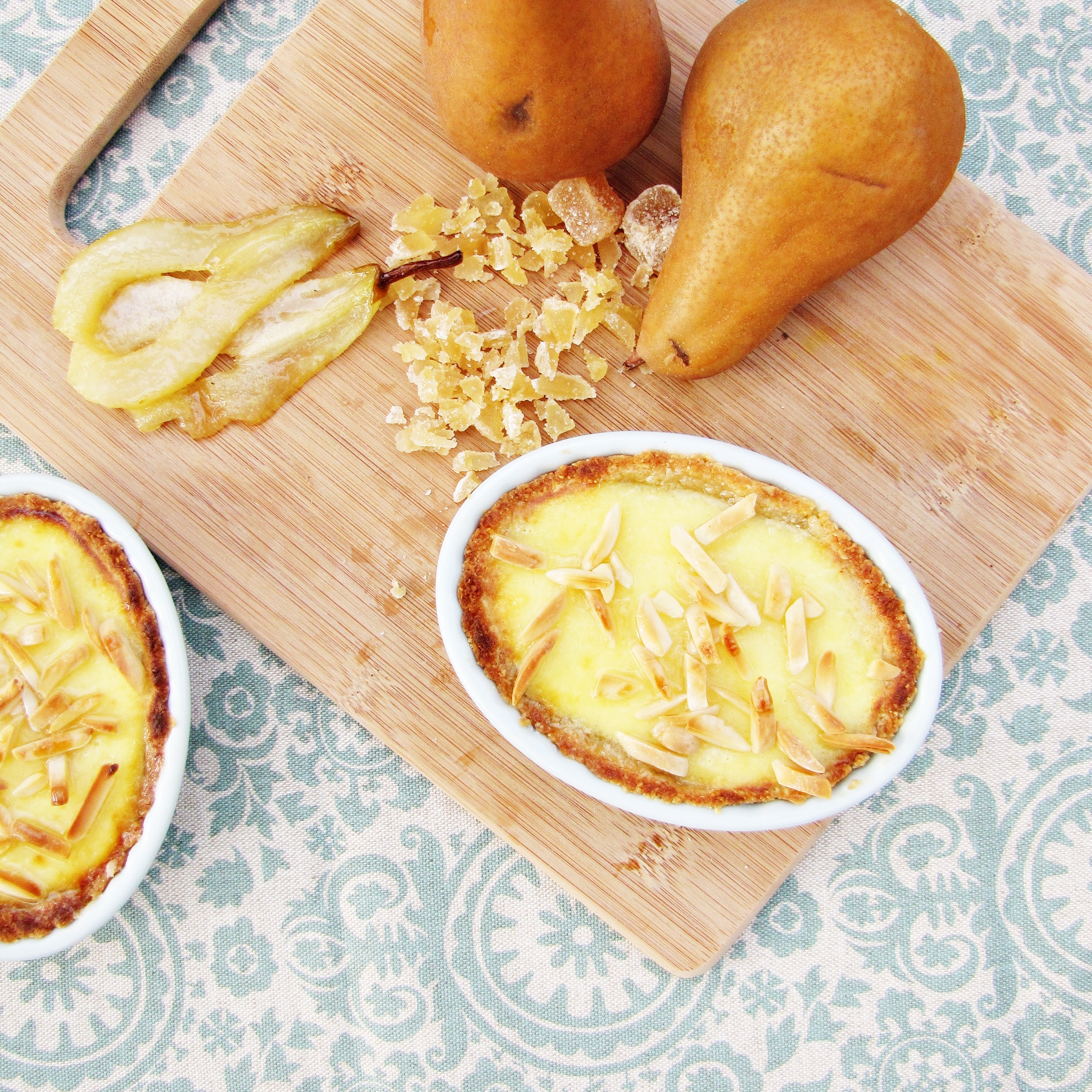
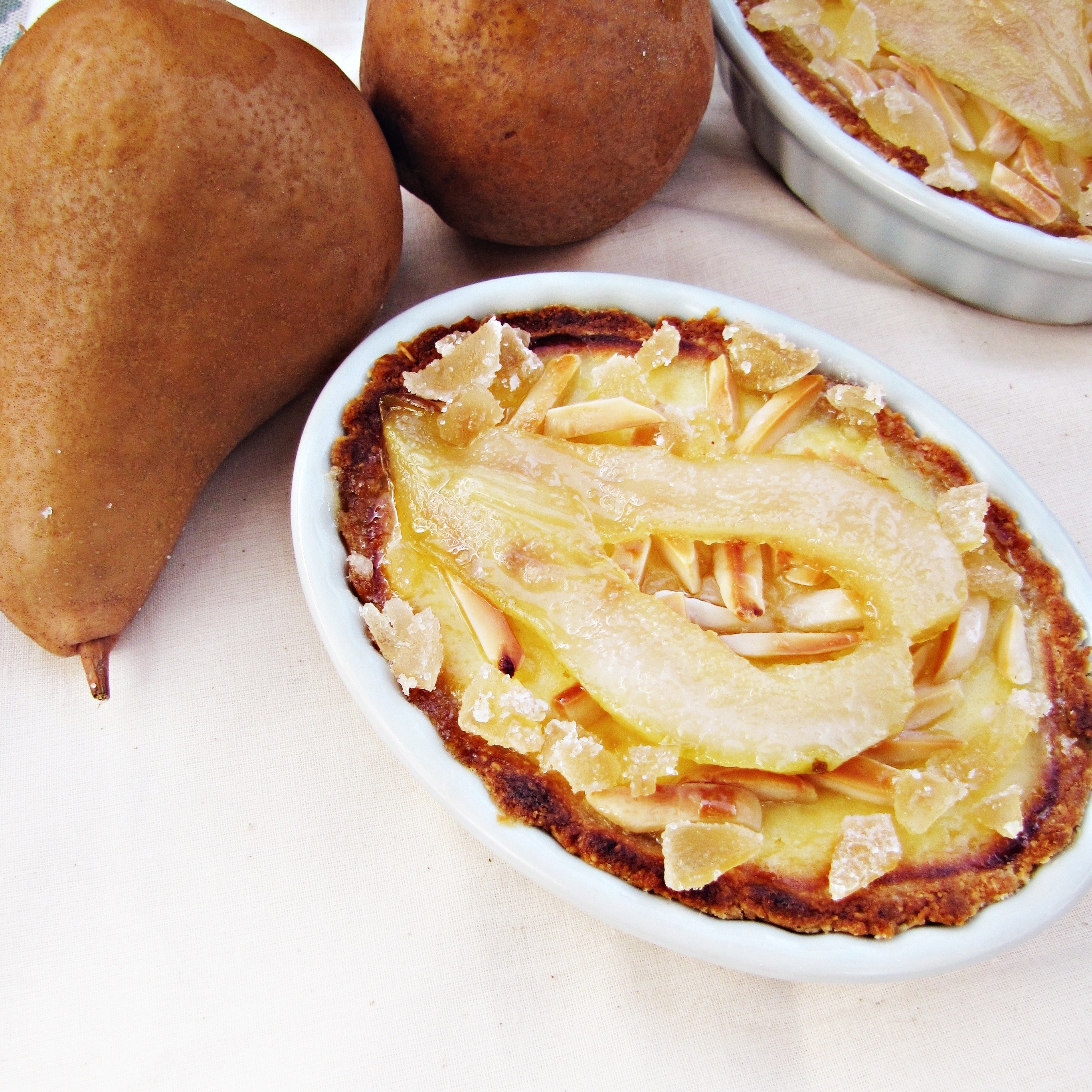
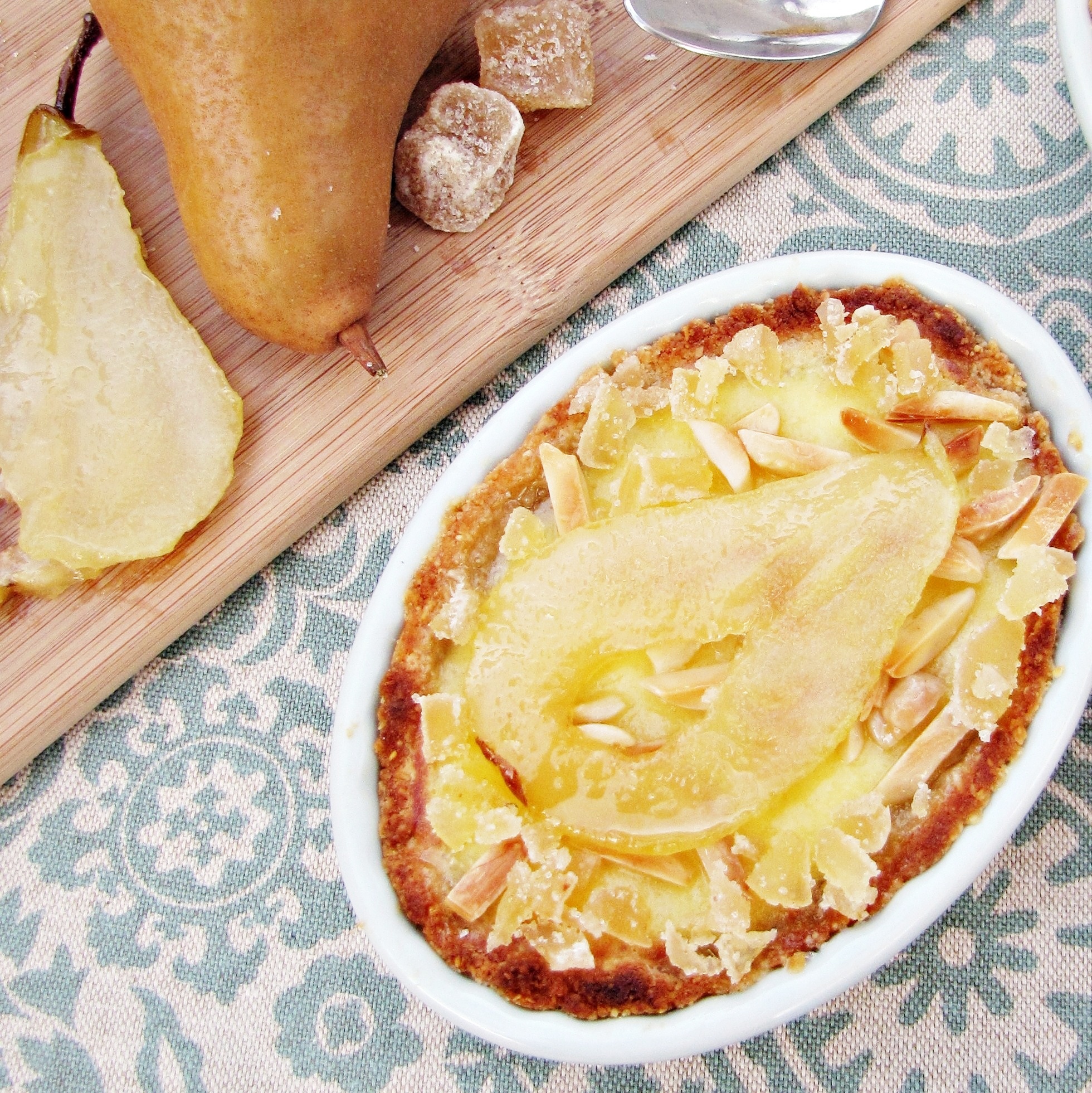
Saturday I visited the Somerville Winter Farmer’s Market for the first time and was so overwhelmed by the quality and variety of produce that I got a little of everything, including a few things that I didn’t need and had no plan for but couldn’t resist.  These pears included.  Once I arrived home I quickly decided that they would be the star of my celebratory dessert.  I went with a ricotta, pear, almond, and ginger tart adapted from this recipe.  It seemed autumn-y and festive and appropriate.  I’ve made a lot of ricotta-based desserts this year – I keep picking them out because somehow they feel healthier to me – but I’m usually disappointed by them.  Although I like the texture of ricotta in some dishes, I don’t love it in dessert.  This recipe was an exception.  I think the addition of sour cream and heavy cream to the custard base smoothed out some of the graininess associated with ricotta, without taking away from the ricotta’s flavor.  The final tartlets had a great mix of flavors and textures – a crunchy almond crust, sweet ricotta custard, caramelized pears, and spicy, chewy bites of ginger.  The only change I would make next time is to increase the amount of pear used – I’m imagining a sort of caramelized pear chutney for the top rather than a single slice of pear.  Give this recipe a try if you’re looking to mix it up a little, or trying to impress someone.  Happy 100 to me!

Pear, Ricotta, and Almond Tartlets

Recipe adapted from Know Whey.  Serves 4.

For the crust:

  • 2/3 c. almond flour
  • 1/2 c. flour
  • 3 TBS sugar
  • 3 TBS cold butter
  • 1/8 tsp salt
  • 2 TBS cold heavy cream
  • 1 TBS cold water

For the filling:

  • 1 c. ricotta
  • 1 tsp almond flour
  • 1 tsp flour
  • 1 egg
  • 2 TBS heavy cream
  • 1 TBS sour cream
  • 1/4 c. sugar

For the topping:

  • 1 pear, peeled and sliced
  • 1 TBS butter
  • 1/4 c. sugar
  • 4 1-inch cubes crystallized ginger, finely diced
  • 1/3 c. slivered or sliced almonds
  1. Prepare crust.  In a medium bowl, mix together almond flour, flour, sugar and salt.  Cut in cold butter and press with a fork or a pastry cutter until the mixture is crumbly with pea-sized lumps.  Add the chilled cream 1 TBS at a time, mixing with a fork between additions.  Press the dough together into a ball – if it just stays together, it is ready, if it is still too loose to hold to itself, add the extra tablespoon (or two if necessary) of cold water to get it to firm up.  Press the dough into individual creme brulee ramekins, so that it is about 1/4 inch thick all the way around and up the side.  Freeze the ramekins for 10 minutes.
  2. Preheat the oven to 350°F.  In a medium bowl, mix together ricotta, almond flour, flour, sour cream, heavy cream, sugar, and egg, until the batter is an even consistency.  Set aside.
  3. Heat 1 TBS of butter in a medium saucepan over medium-low heat.  Add 1/4 c. of sugar and let sit until it begins to turn golden brown.  Add pear slices and cook until pear is tender and pear syrup has thickened slightly.  Remove from heat and set aside.
  4. Blind bake the prepared ramekins with tart dough for 7 minutes, until just starting to turn golden.  Divide the ricotta mixture evenly between the ramekins and bake on a cookie tray for 15-20 minutes, until custard is beginning to firm up and turn slightly golden.  Remove from oven, and change oven setting to broil.  Brush the tops of the custards with pear syrup.  Sprinkle almonds over the top of custards and broil on high for two minutes, until almonds and crust are golden-brown.  Remove from oven and top with diced ginger and pear slices.  Refrigerate until ready to serve.  Serve cold.
Stowe, VT and Maple-Sesame-Cranberry Cookies

0 November 13, 2011 Dessert

Stowe, VT and Maple-Sesame-Cranberry Cookies

Now that I’m back from my first real business trip – which was hectic and busy and fun and interesting and a serious crash course in Spanish, what with participants from Venezuela, Argentina, Chile, Colombia, and Brazil – I’m here with a trip report and pictures from my mini-vacation to Vermont last weekend.  I’m probably being an idealist, but I have visions of Vermont as being beautiful in every season – green and bucolic in summer, crisp and splendidly colorful in the fall, quiet and snowy in the winter, and breathtakingly fresh in the spring.  I have some foundation for these ideas – I used to go to summer camp on Lake Champlain, and it was always gorgeous and idyllic.  More recently, I visited a friend at Middlebury in late spring, and I’ve never enjoyed a drive as much as the one through those mountains, nor seen quite as many daffodils in one place.  Now I can confirm that the fall is just as crisp and wholesome and nice as I imagined, leaving only winter for me to investigate.  If I like winter, I might just have to move there.

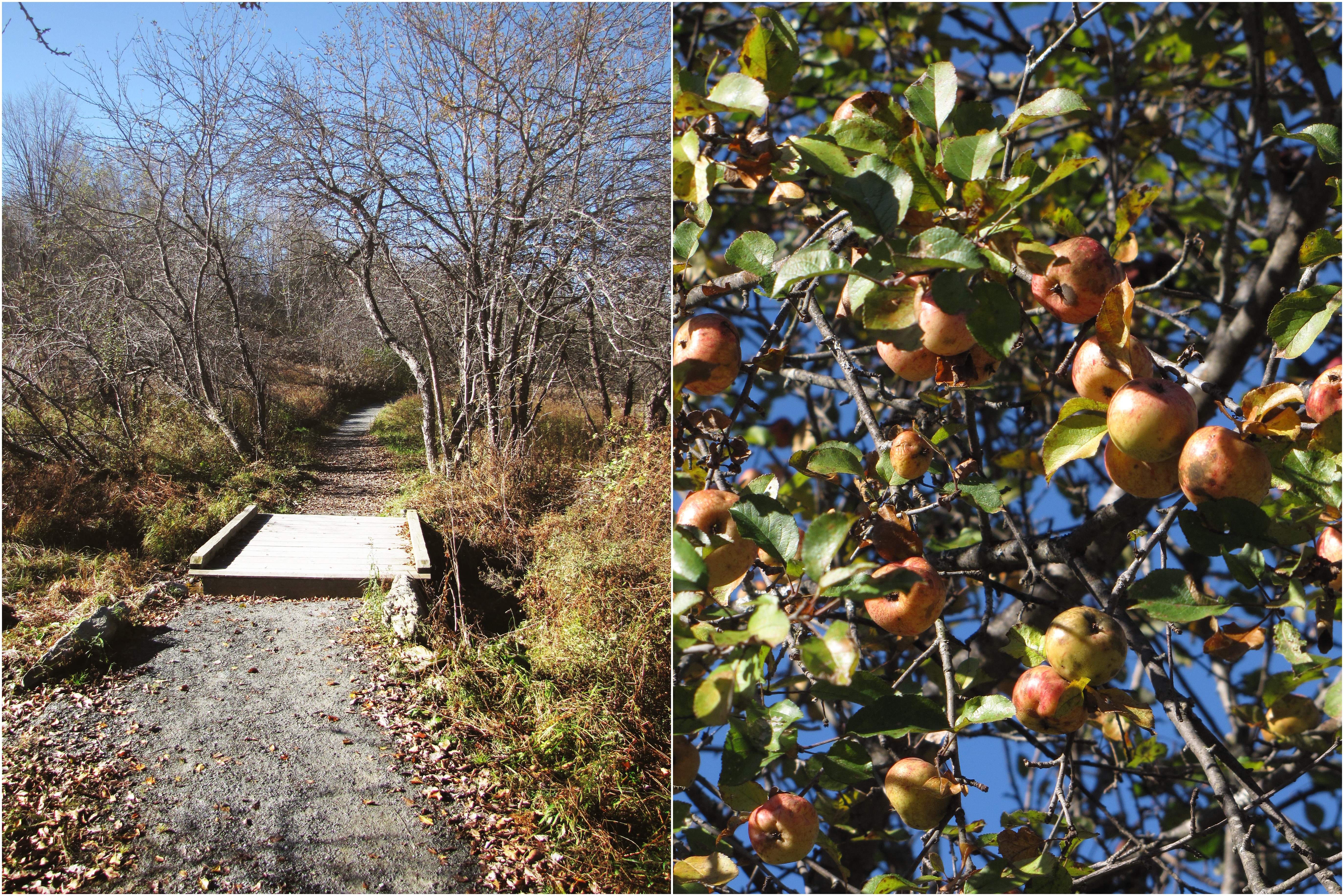
Stowe is a very quiet place in November – the leaf-peepers are gone, and the skiers have yet to arrive.  A few trees have straggling bursts of orange, but most leaves have faded to brown and begun to fall.  Frost covers everything in the mornings, but the sun can still be warm enough at midday to forego the winter jacket.  I loved it.  We drove up Friday afternoon and after getting settled in our hotel, we got a casual dinner at Piecasso, a local pizza place that made really good pizza (loved the crust), but just OK hamburgers (duh, Katie.  But, I only went the hamburger route because I had train station pizza at lunch).  Then early to bed – the biggest, best, most comfortable bed ever.  We stayed at the Green Mountain Inn, and had an absolutely wonderful experience.  A large part of this was due to the king-sized bed, gas fireplace, and fireside Jacuzzi tub combo, but we also enjoyed pretty much every other aspect of the hotel.  Highly recommended if you’re planning a trip up that way.

Saturday, we went for a frigid but absolutely gorgeous run on Stowe’s 5-mile riverside recreation path.  Everything was covered in beautiful frost even well after the sun had risen.  We passed a picturesque herd of dairy cows and crossed wooden bridges and it was basically the exact experience I was looking for.  After the run we had breakfast (real maple syrup on everything!) at The Gables Inn and did a little thrifting in a local “stuff” store – I got blog props, of course, but Trevor found the greatest old architectural magazine.  Old, like, 1880s old, and full of detailed black and white sketches of houses and staircases and it’s totally awesome.  We spent the afternoon (as well as Sunday morning) doing some of the foodier things that Vermont has to offer – touring the Magic Hat brewery in Burlington, sampling the cider at the Cold Hollow Cider Mill, picking up Lake Champlain chocolates, and trying every single one of Cabot’s cheddars.  Other than the brewery tour, I was kind of disappointed with the “factory” stores – they were very cut and dry and touristy, and mostly focused on selling their products at higher than retail price rather than demonstrating how they were made or even explaining the process.  I guess what I was really looking for was a more farm-to-table experience, and I probably shouldn’t have expected as much as I did from such big-box names.  I was tempted by the enormous bins of apples outside the cider mill on sale for 50 cents a pound.  50 cents a pound!  That’s a pretty good deal.  But, since I was leaving Monday morning and I haven’t finished my last batch of apples, I refrained.

Sunday we slept in and then had a lovely brunch at our hotel, then headed out.  On the way we stopped for a walk at the Waterbury reservoir, a beautiful, quiet spot with great views of the mountains over the water.  The area used to be farmland, and many of the trees were still covered in apples, with that great scent of slightly fermented apples hovering over the ground.  It was a good sendoff for our drive back to Massachusetts.

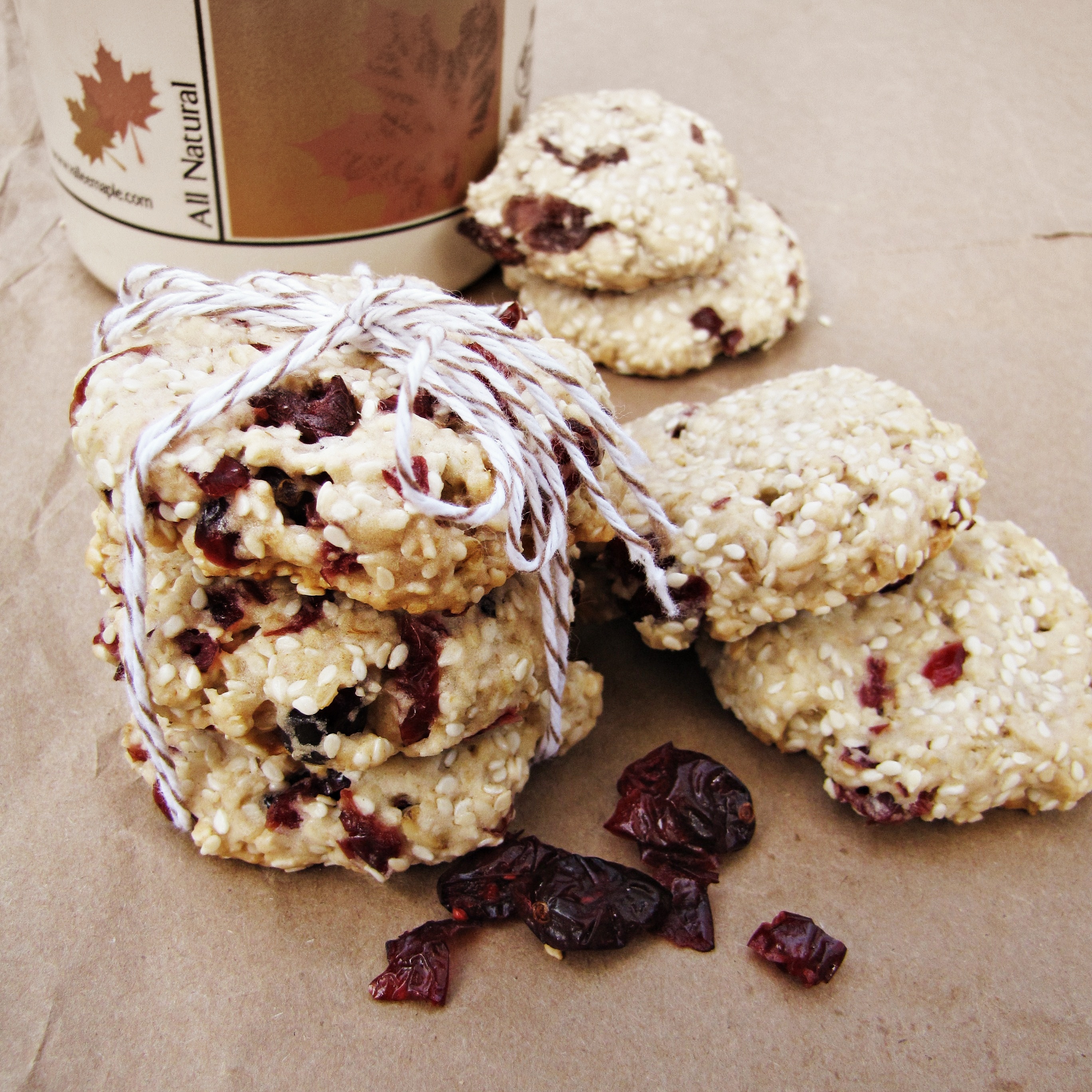
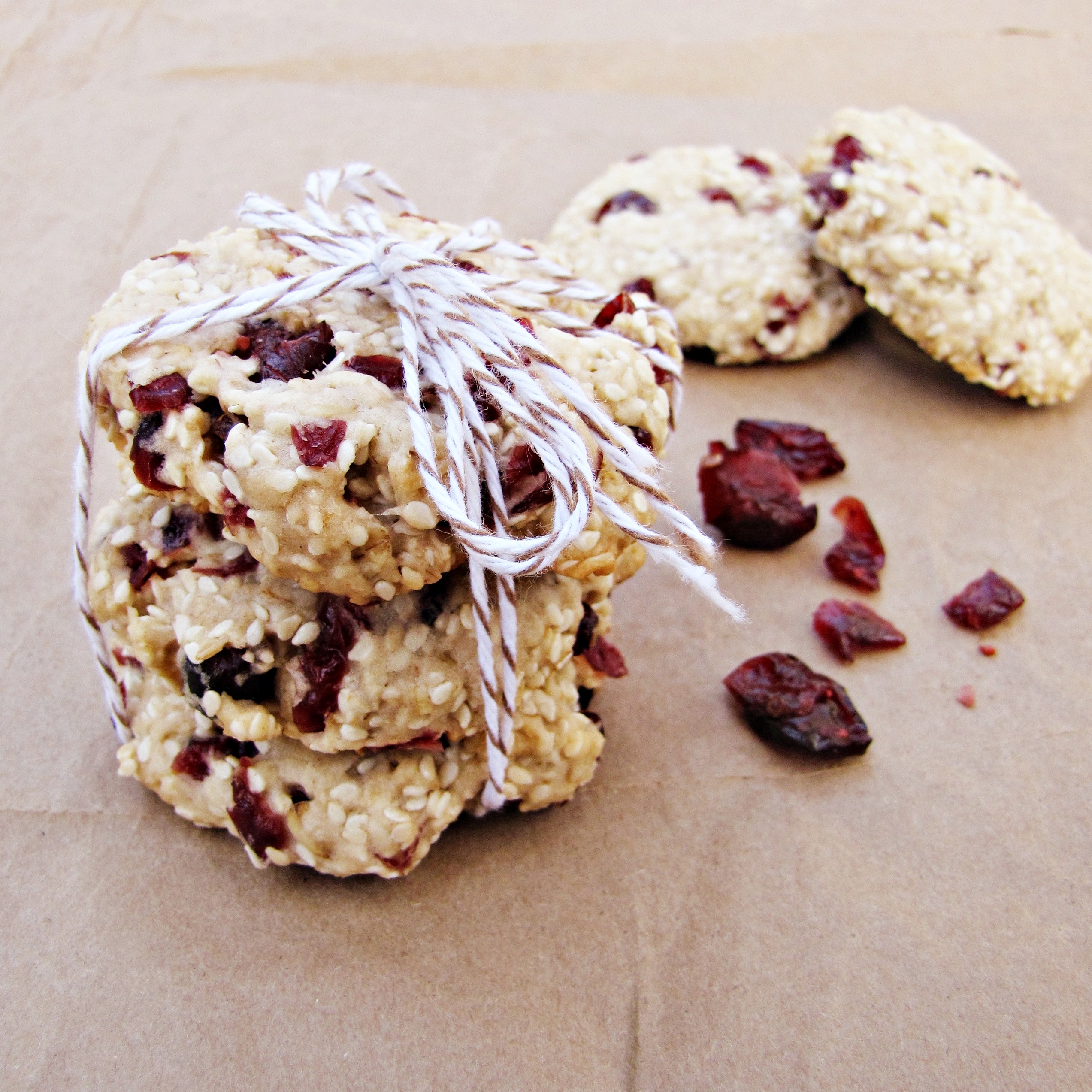
And now for the food – maple syrup is probably the most quintessential Vermont ingredient, so I knew this post had to include it somehow.  However, it is also one of the most expensive condiments I know of.  The lowest price I saw on it was $15 a quart, in a gas station close to our hotel, which is where I ended up buying some.  I’m sure you can get it more cheaply direct from a sugarhouse, but since it’s not sugaring season (maybe we’ll go back for it!) I figured this was my best bet.  Maple syrup in hand, I started going through maple-laden recipes I have bookmarked, but a lot of them called for a large amount of syrup and I just couldn’t bring myself to part with 2 cups of the precious stuff barely a week after I had gotten it.  As a happy medium, I went with these cookies, which are from Peter Berley’s Modern Vegetarian Kitchen.  As I mixed up the batch I was a little bit skeptical – no eggs, no sugar, no leavening, and only half a cup of flour?  Not your typical cookie.  But, as I pulled them from the oven and bit into one I was pleasantly surprised – they were some of the best cookies I’ve made in recent months.  Crunchy, dense, and both sweet and savory they make a great snack, and are particularly good dipped in a little bit of orange tea.  As an added bonus, they’re fairly healthy – although they are not low calorie (160 per cookie), the bulk of the calories in them are coming from the sesame seeds, which provide a massive dose of several minerals, as well as calcium, healthy protein, and fiber.  I think these may become my more wholesome and natural alternative to power bars for the near future.  Lastly, they can easily be made vegan with the simple substitution of olive oil for the melted butter, which is even recommended by the author.  They’re easy to whip up, so pick up some sesame seeds in bulk (try wholefoods) and give them a try!

Sesame-Cranberry Cookies

Adapted from Peter Berley’s Modern Vegetarian Kitchen .  Makes 9 cookies.

  • 1/2 c. sesame seeds
  • 1/2 c. flour
  • 1/2 c. oats
  • 1/2 c. dried cranberries, coarsely chopped
  • pinch of salt
  • 3 TBS maple syrup
  • 3 TBS melted butter (could substitute olive oil for vegan cookies)
  • 1 tsp vanilla
  1. Preheat oven to 350°F.  Soak cranberries in hot water in a bowl for 10 minutes.  Meanwhile, pulse flour, oats, and salt together in a food processor until oats are finely ground.  Transfer to a bowl and mix in sesame seeds.  In a separate bowl, whisk together melted butter, maple syrup, and vanilla until combined, then pour wet ingredients into dry and whisk together.
  2. Drain most of the water from the cranberries and add the cranberries to the dough.  Mix together until it forms a thick dough.  If the dough is too dry to press together, add a small amount of the cranberry soaking liquid to the dough to moisten it.  Form the dough into small balls and then flatten into 2 inch disks and place on baking sheet.  Bake for 15-17 minutes, rotating halfway through for even cooking, until cookies are just beginning to turn golden brown.  Great straight out of the oven and several days later!
Quinoa and Brussel Sprout Primavera

0 November 11, 2011 Fall

Quinoa and Brussel Sprout Primavera

Before leaving for Miami I thought that going a full week without access to a kitchen was going to be horrible.  That I would come back dying for something freshly prepared with my own two hands.  That I would feel gross and weighed down by too-hearty breakfasts and unhealthy dinners.  For most people, a week of fully-paid-for restaurant food would be a cause for celebration, not concern, but I was seriously worried.  Turns out I was being a little bit ridiculous.  The breakfasts are a little bit on the heavy side, but seeing as it’s a buffet, it’s totally within my control.  The buffet lunches actually have a surprising number of fresh and interesting dishes – yesterday they had three separate dishes incorporating three of my favorite foods –  pesto, chickpeas, and avocados – and today spinach ravioli and a chorizo bar.  Last night, we had an incredible dinner at Red Fish Grill – I was really stunned by how much flavor each of the ingredients in my salad had (super sharp and creamy blue cheese, slightly smoky and slightly sweet candied pecans, smoky smoky smoky bacon, and crisp-tart apples) and the key lime pie was perfect.  Literally, perfect.  Plus, having a gym a 60 second walk from my bed and my “office” right downstairs decidedly increases the frequency of my visits to the gym.  So, really, not much to complain about here.

Still, I do sort of miss the act of cooking.  It’s one of my favorite ways of unwinding on weeknights.  Occasionally on weekends when the cooking I’m doing is for the blog and I’m racing against the daylight, it gets stressful, but I still enjoy it.  And it’s certainly nice to have homemade food for lunch every day (well, most days… sometimes it’s nice to just get pizza).  Since starting work, as you might have noticed, I’ve been concentrating a little more on quick and healthy recipes – recipes that I can make before I leave in the morning, and that counteract the serious increase in eating out that I’ve experienced since moving to the city … and having an income.  This recipe is one of my favorites for fulfilling both those purposes – with the added bonus that I find it absolutely delicious.  The idea for this comes from Let’s Dish, but I’ve tailored it to my own tastes – which is sort of what the original recipe encourages you to do, anyways.

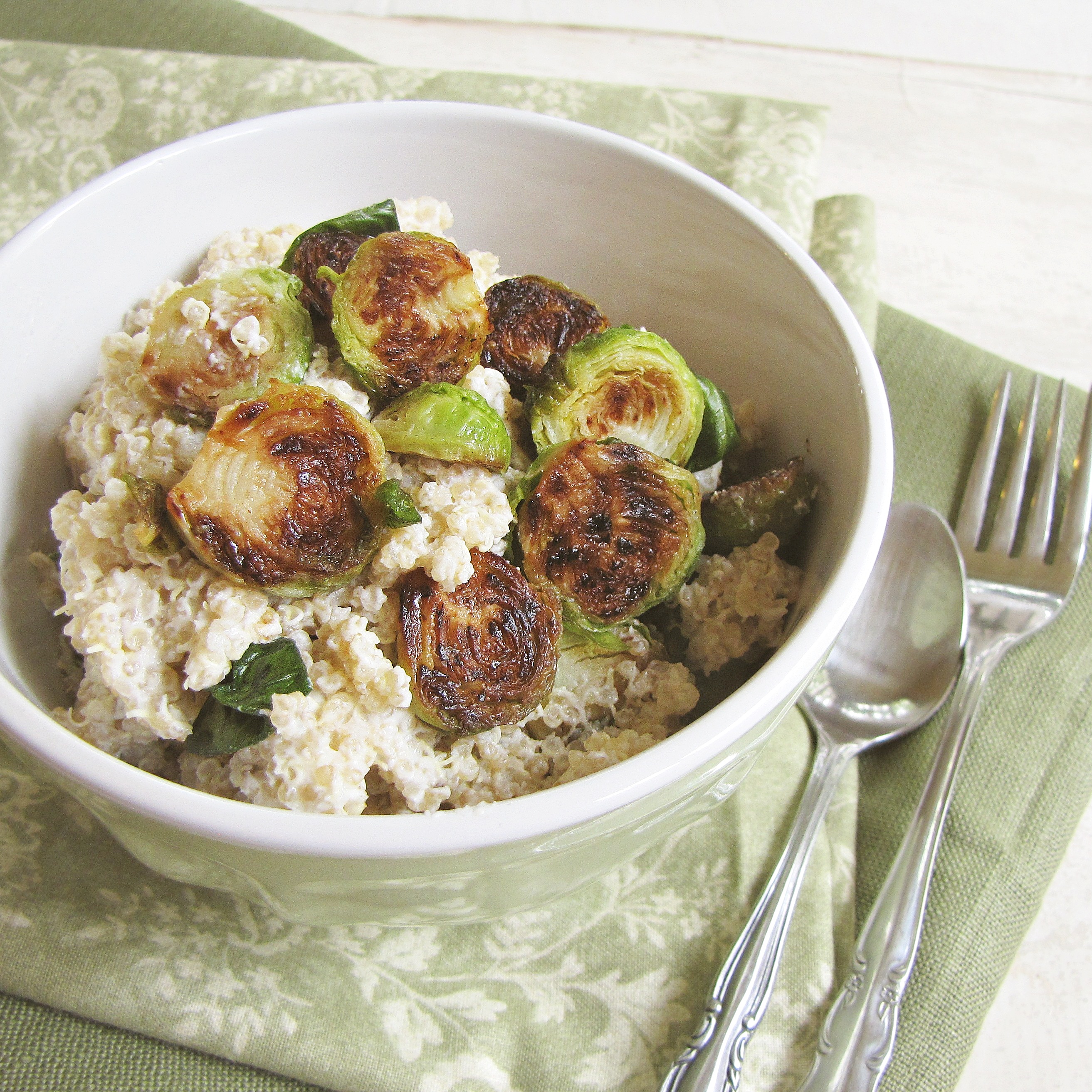
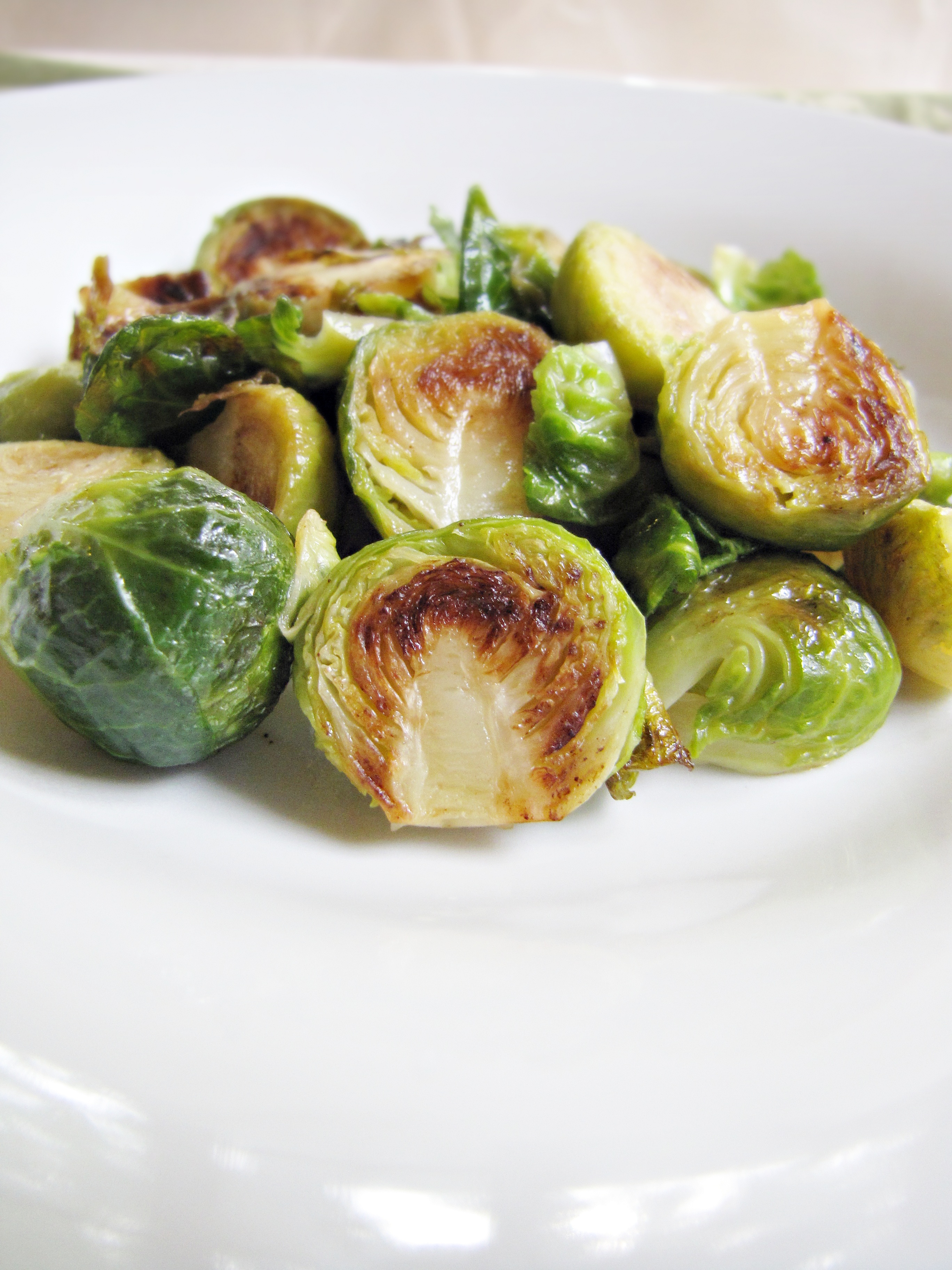
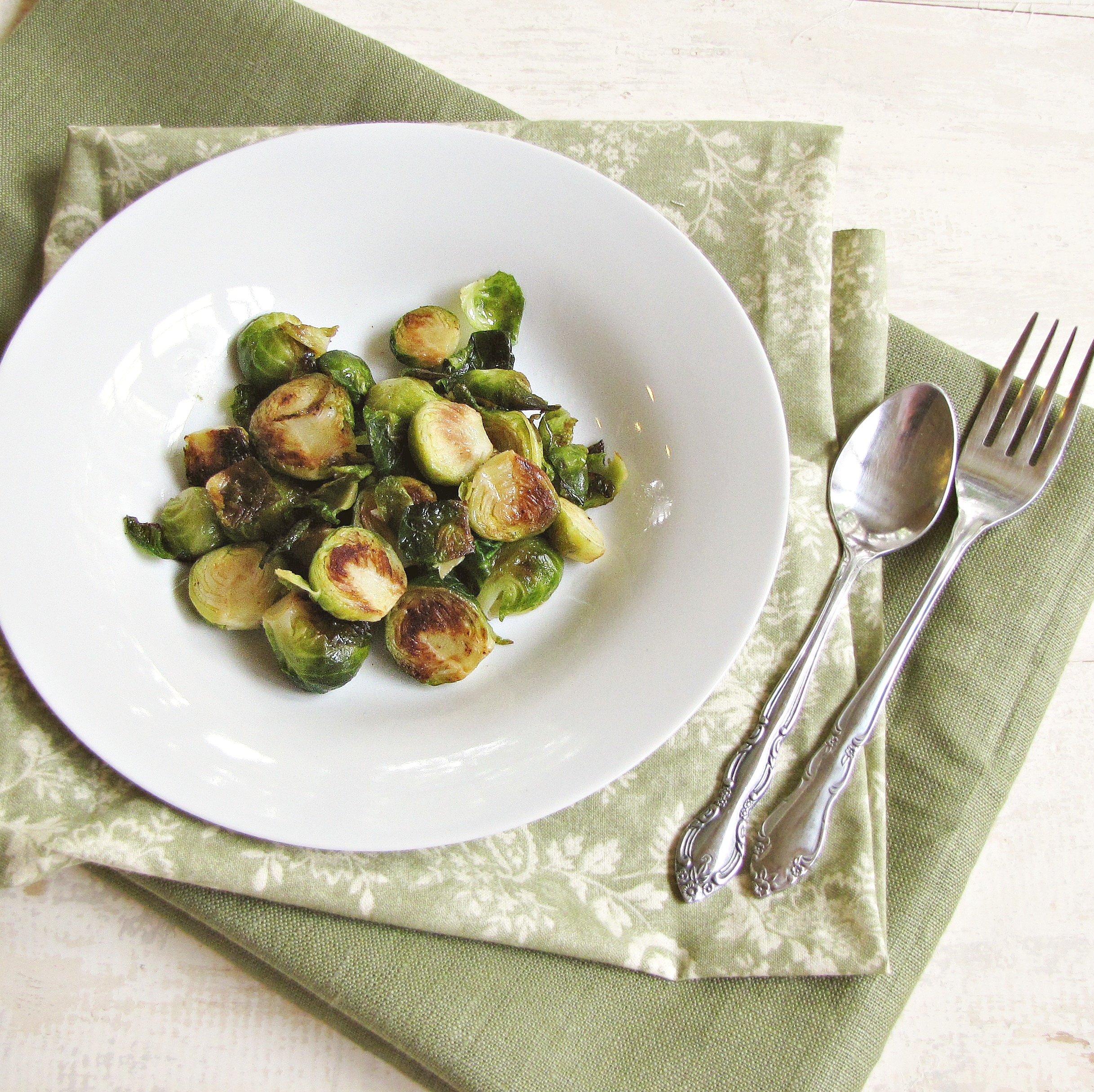
This recipe was also the first way that I tried brussel sprouts, about 2 months ago.  Brussel sprouts have never been on my family’s table, because my mom absolutely hates them.  I think it’s because she was forced to eat them in a very unpleasant, boiled soggy, flavorless form as a kid, and swore never to force her own children to eat them.  I’m the complete opposite though, and absolutely love them, enough to have made them several times since first trying them.  I always blanch them in water or broth before caramelizing them with butter, half because I love the flavor the caramelization gives them, and half because that ridged golden brown effect makes them so pretty!  For this dish, I then toss them with hot quinoa, a bit of cream cheese, a sprinkling of parm, and whatever other vegetables happen to be in my kitchen at the time, briefly sauteed with garlic – I’ve included carrots, green beans, asparagus, and onions, but the brussel sprouts are so far the only mandatory vegetable.  I brought this along to Vermont with us, but we didn’t have a microwave in our hotel room, and it’s really best heated up.  Also, cooking the quinoa in chicken broth seriously ups the flavor because it absorbs so much of it – water is OK, but definitely inferior.  If you don’t like brussel sprouts, give the original recipe a try with whatever vegetables you do like, and enjoy a quick, healthy lunch!

Quinoa and Brussel Sprout Primavera

Adapted from Let’s Dish.  Serves 2.

  • 1 c. quinoa
  • 2 c. chicken broth
  • 3 oz. cream cheese
  • 3 c. fresh brussel sprouts, washed and halved
  • 2 c. other vegetables, cut into small chunks (optional)
  • 2 cloves garlic, sliced
  • 3 TBS butter
  • parmesan cheese, for topping
  1. Bring chicken broth to a low boil.  Immediately upon boiling, add halved brussel sprouts and blanch by cooking for 2 minutes, then removing with a slotted spoon and rinsing in cold water.  Add quinoa to boiling chicken broth and turn heat down to medium.  Cook qunioa for around 15 minutes, until it has absorbed all the broth and the “tails” of the quinoa grains have unfurled.
  2. While quinoa is cooking, heat half the butter in a large saucepan over medium heat.  Add the garlic slices and cook for 1 minute, until golden.  Add the brussel sprouts and let cook without disturbing for 2-3 minutes, then flip sprouts so that both sides can brown.  Remove brussel sprouts when they are golden-brown in places, and set aside.  Add remaining butter to pan along with other vegetables, if using.  Cook veggies until they are just a bit more tender than when fresh, about 2-7 minutes depending on the vegetables.  Toss brussel sprouts, vegetables, and quinoa together.  Stir in cream cheese until melted throughout.  Top with parmesan cheese and season with salt and pepper, if needed.  Serve hot.

Apple and Honey Madeleines

4 November 6, 2011 Dessert

Apple and Honey Madeleines

I’ve been wanting to visit Vermont for a long time, but I tend to be the kind of person who procrastinates planning something because I want it to be perfect.  I want to pick the perfect date, when the weather will be just right, and I have the perfect trip itinerary planned.  This sometimes results in spectacular trips on a very tight budget – like the time I spent an entire semester planning a two week trip to France and it ended up being exactly what I wanted as well as totally manageable on a college budget.  More frequently, however, it ends up with me not actually taking the trip at all.  Every once in a while, however, I’ll get so frustrated with my own planning dependency that it will inspire a burst of spontaneity, like last week, when I saw, purchased, and booked a groupon trip to Stowe, VT in the span of an hour on Thursday afternoon, and we were in the car on the way a week later.  I’m a little bit proud of myself.  Another side-benefit of spontaneous travel – I have much lower expectations for how things will go when I have only a vague plan, and therefore tend to relax and enjoy myself a little bit more than when I’m stressed about fitting everything in.  And just relaxing is exactly what I did this weekend.  It was great.

I’ll have a full trip recap for you next week, as Trevor and I found a lot of great places, many of them food related, but I’m headed to Miami for work early tomorrow morning, and I’m not sure I’ll have time to gather my thoughts and go through my photos until I get back next weekend.  In the meantime, I have a few treats that I brought to Vermont with us, to help cut down on our food expenses – a quinoa and brussel sprout dish that I’ll post later this week, and these roasted apple, honey, and vanilla madeleines.

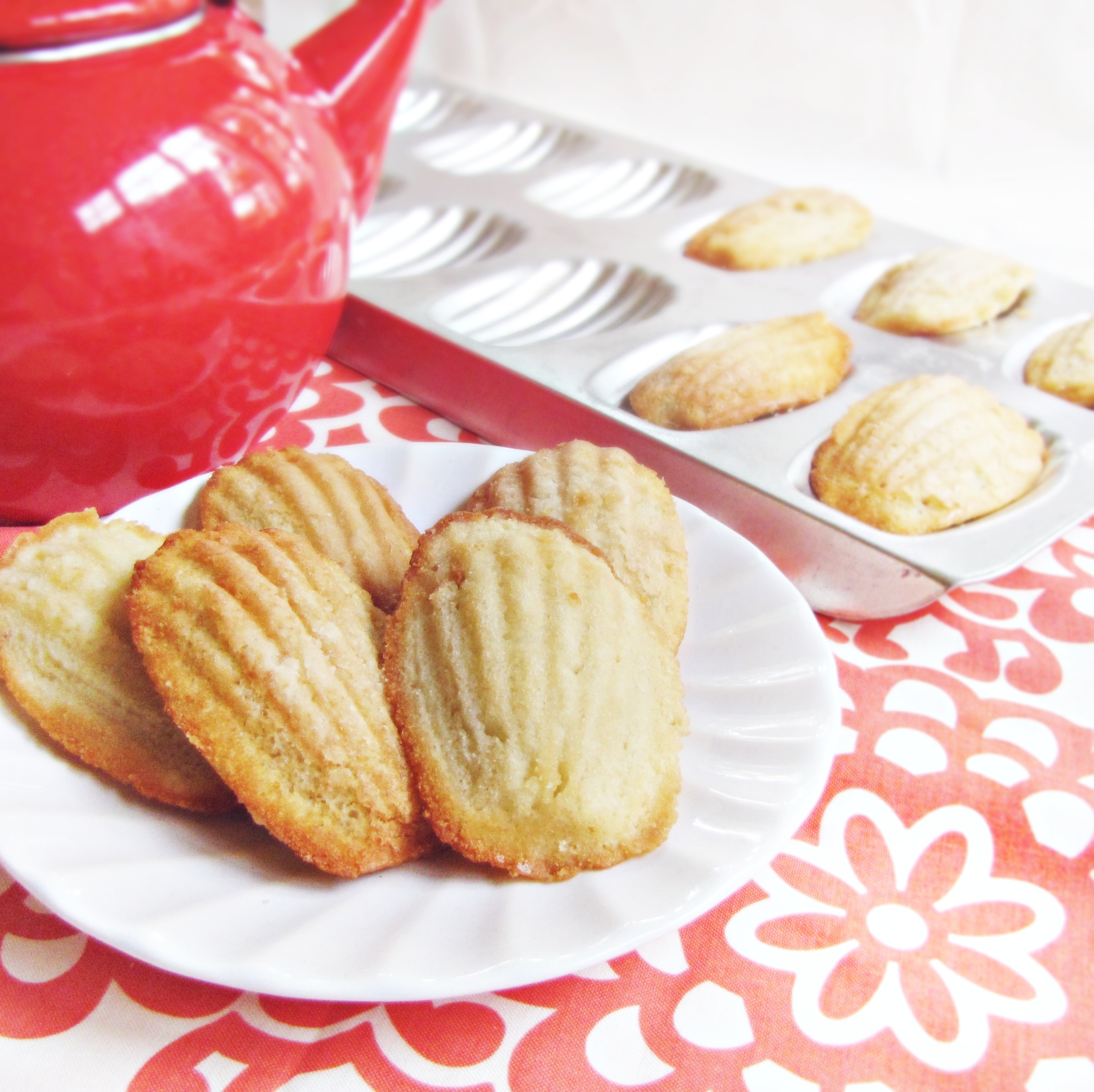
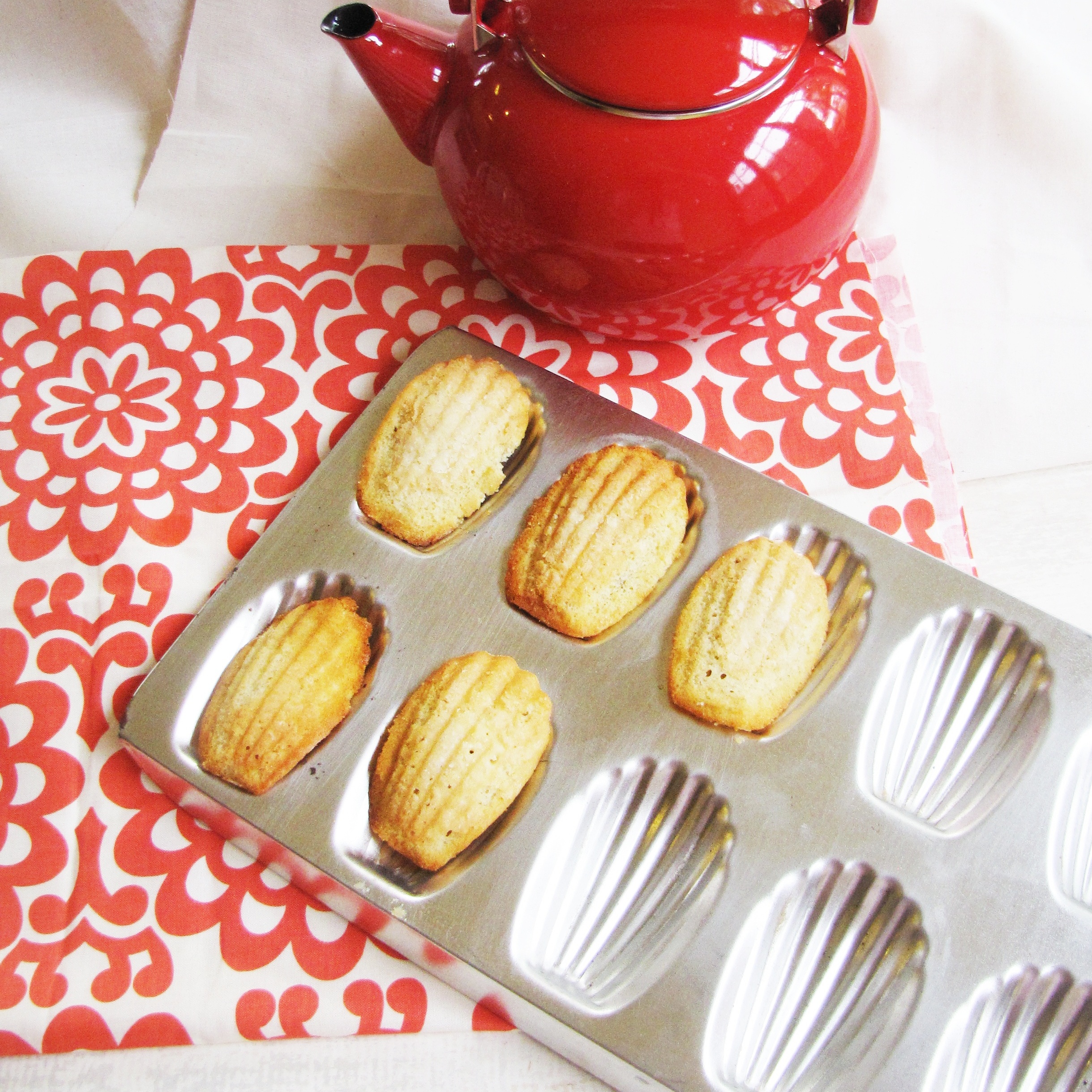
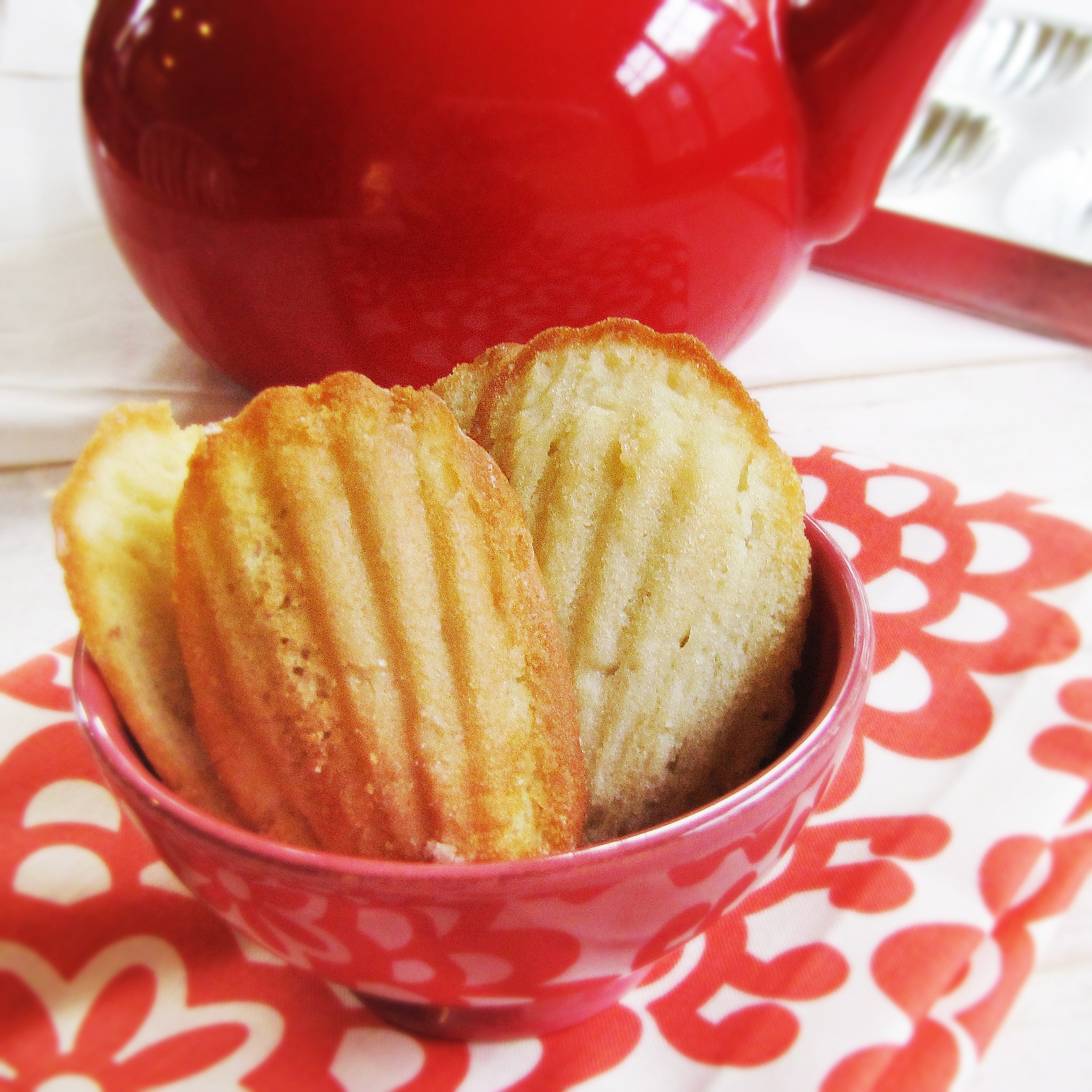
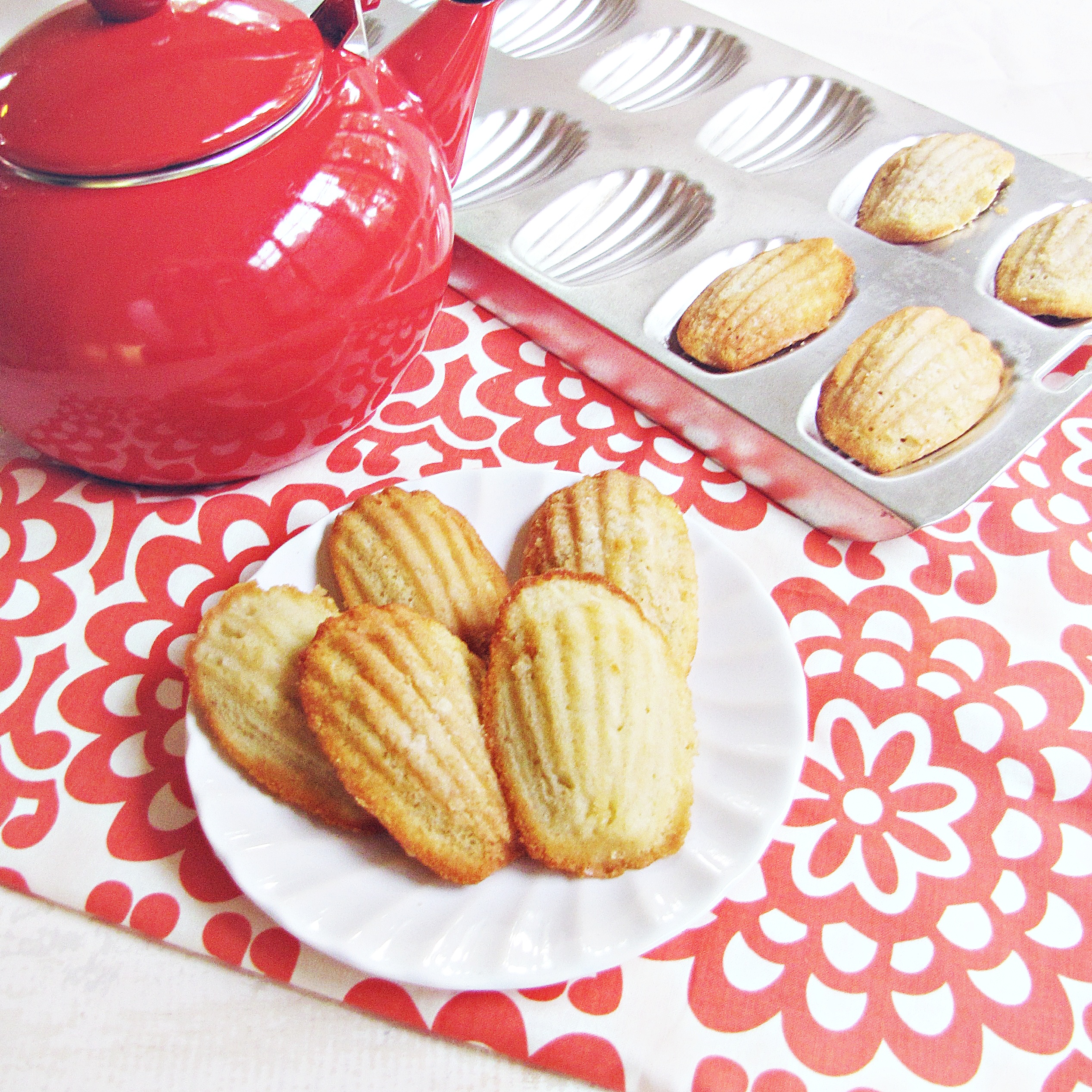
Trevor was the one to introduce me to madeleines a few years ago.  They’re one of his favorite treats, but I’ve been slow to agree.  I’ve made a few batches, but never really saw the appeal – not that I disliked them, I just didn’t love them.  This batch was different.  Maybe my tastes have changed, or I’ve become a better baker, but I think the most likely reason is that this is just a great recipe.  The flavor of these is complex, with the vanilla, honey, and apple flavors all shining through independently, but what’s really great about these is the perfect texture.  They’re moist and spongey, with just the right amount of give when you bite into them.  My only complaint about these is that they were quite sticky on the outside – every time I picked one up, I would end up with a large number of madeleine crumbs on my hands.  This seemed to be remedied by a day in the fridge – the interior was still moist and great, but the outside dried out a little bit and made them less sticky.  All in all, they were a great snack for after lunch, after dinner… and even Sunday morning breakfast in bed. :-)

Apple and Honey Madeleines

Recipe adapted from Cooking Melangery and Cannelle et Vanille.  Makes 24 madeleines.

  • 2 small apples
  • 1/2 tsp vanilla extract
  • 2 tsp turbinado/cane sugar
  • 8 TBS butter, divided
  • 3/4 c. flour
  • 1 tsp baking powder
  • 3 eggs
  • 1/2 c. sugar
  • 2 TBS honey
  1. Preheat oven to 400°F.  Peel, core, and dice apples, and place apple chunks in a baking dish with vanilla, cane sugar, and 1 TBS butter.  Roast in preheated oven for 20 minutes, until completely tender.  Puree in food processor.  Set aside 1/2 cup of puree for madeleines – remaining apple puree can be saved for another use.  Turn off oven.
  2. In a small saucepan, melt remaining 7 TBS of butter over low heat, then cook until it begins to brown and give off a nutty aroma.  Pour through fine-meshed sieve into small heatproof bowl and let cool slightly, discarding milk solids in the sieve.
  3. Sift together flour and baking powder in a small bowl.  In a separate, larger bowl, beat eggs vigorously until pale yellow and thick.  Add the sugar and honey and continue to beat vigorously until thick, for about 2-3 minutes.  Add the flour to the egg mixture and gently stir together.  Stir in 1/2 cup of roasted apple puree and 6 TBS of the melted butter.  Use the remaining 1 TBS of melted butter to grease the madeleine pans (set aside any extra for the next batch), being sure to brush butter in all the ridges.  Flour the madeleine pans and tap out any excess.  Set prepared pans aside, and refrigerate madeleine batter for half an hour.
  4. Preheat the oven to 375°F.  Spoon the chilled madeleine batter into the molds, filling almost to the top, then transfer to the oven and bake for 11-12 minutes.  Remove the madeleines from the oven, and let cool 1 minute, then remove from pans and set on cooling rack.  Rinse cooled madeleine pans, then re-butter and re-flour before adding more batter.  Continue until all madeleines are baked.
Boozy Brownies for My Newly Old Brother

2 November 2, 2011 Dessert

Boozy Brownies for My Newly Old Brother

Last week my little brother turned 21.  So obviously, I had to send him alcohol related things.  Because 21 is your last important birthday.  And by important, I think I probably mean fun, as I imagine your 50th birthday feels pretty important but not necessarily that fun.  Or maybe it’s actually a blast.  I wouldn’t know – I’m just gearing up for 23.  But the point is, 21 is a big one.  And it’s a big one because of the boozing.  Although I don’t think I personally know anyone who didn’t drink before turning 21, it doesn’t make it any less exciting when it becomes official.  You can walk into a bar and order a beer, or a kamikaze, or a shot of tequila, and no one can stop you.  It’s kinda cool.  At least, it’s really cool at first, and then it just becomes a sorta nice extra freedom – like, I can buy a bottle of wine whenever I want, or order a beer with a hamburger, and it’s no big deal.  Really, I don’t know why the drinking age is so high to begin with, but I think I’ll avoid getting into that just now…

Anyway.  Back to Ryan.  Ryan and I are only a year and a half apart, and we’re buds.  Our buddiness goes through phases – we were totally buds at ages 1 and 3, when I slapped my mother for making him cry while changing his diapers.  We were OK buds from ages 4-9, when we shared a room with pink, flowery wallpaper and I drew imaginary lines to demarcate whose side was whose – mine was the side with the door, obviously.  We were not such good buds when I was trying to be cool in middle school and he was just a 5th grade baby, although I secretly loved playing pokemon with him once I got home.  No shame.   And we became really good buds once I got my license and I drove us to school every day – 20 minutes of uninhibited, unchaperoned conversation every day for 2 and 1/2 years can make people pretty close.   Now it’s harder to stay tight – he’s at Cornell, and busy playing frisbee and programming computers and being a little bit fratty, and I’m here, busy working and blogging and trying to stay balanced.  But I’m not worried that we’ll ever be those awkward, estranged siblings who never quite figure out how to interact as adults – we get along too well when we actually are together.

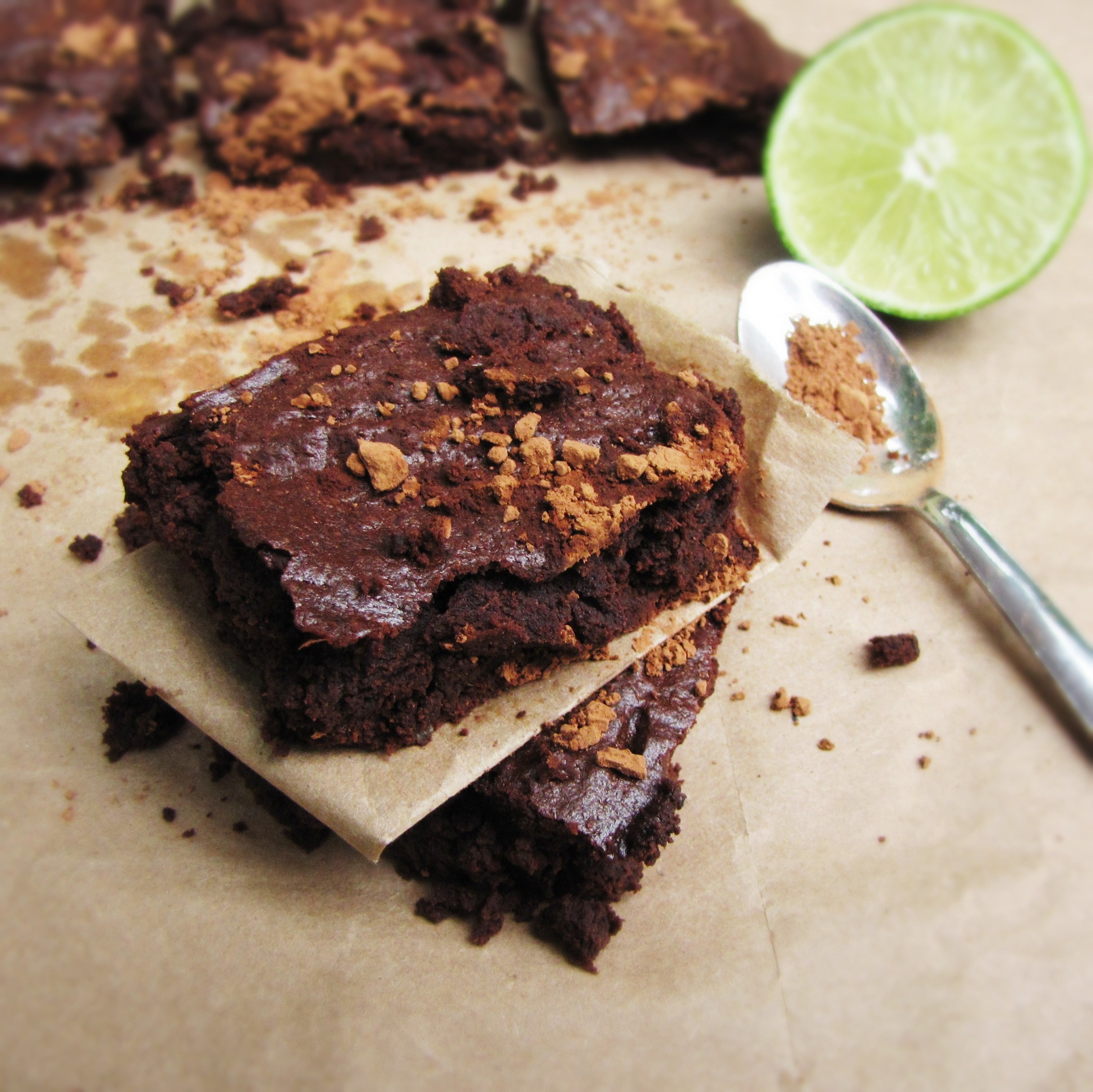
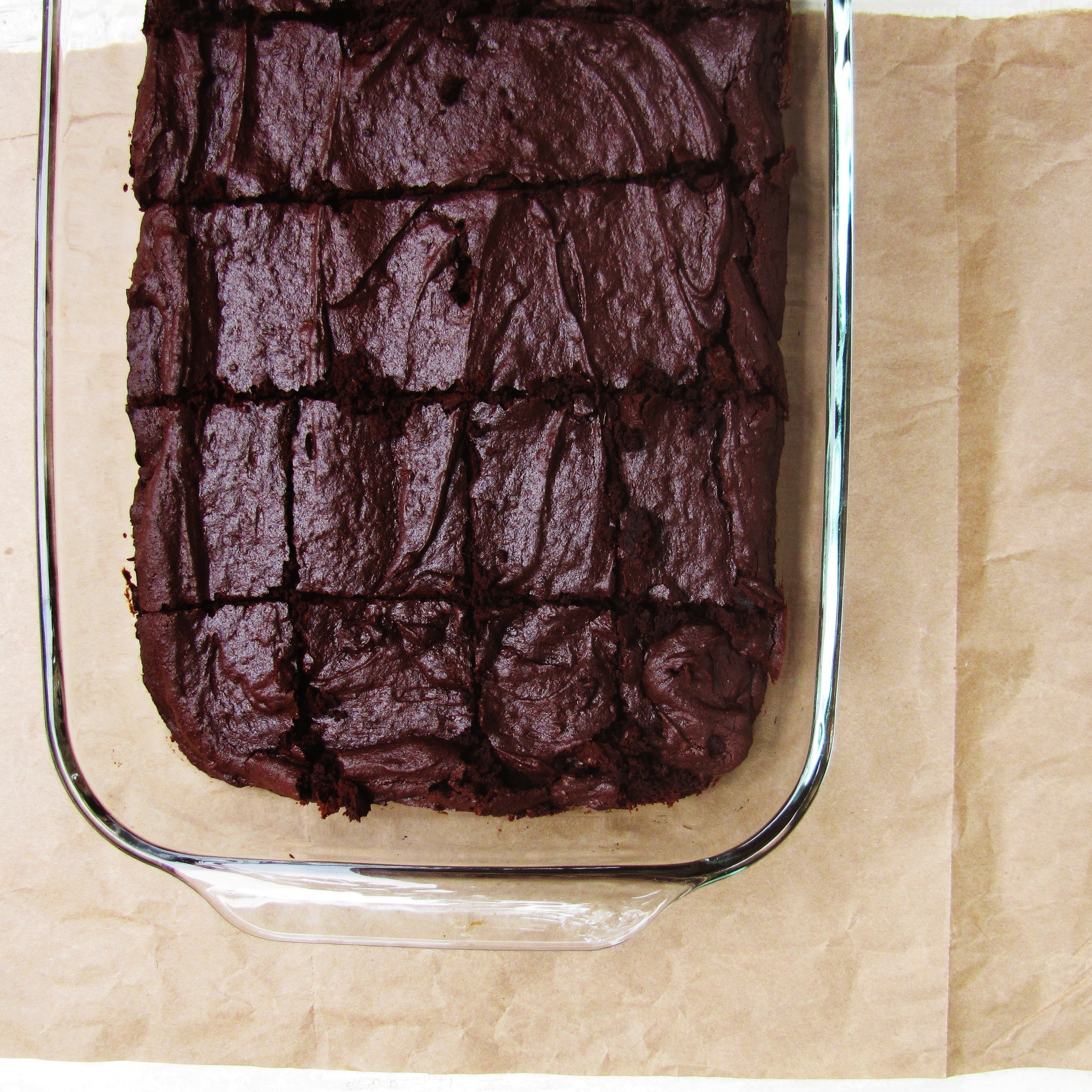
Although I haven’t actually heard how his birthday went, due to our extremely poor communication skills when we’re not in the same room (for which I’m giving you 70% of the blame, Ryan), I know he survived, I’m assuming he had a good time, and I know he got my package.  Which contained, among other things, Dark and Stormy brownies.  Lately I find myself drinking a lot of Dark and Stormies – a combination of Gosling’s dark rum, Gosling’s ginger beer, and lime juice.  They’re spicy, flavorful, and moody – they somehow seem very appropriate for this time of year (or maybe I just think that because of the name).  Either way, I have had a recipe from Ideas in Food for these brownies bookmarked for a long time.  If you’ve never checked out Ideas in Food, I’d definitely recommend it.  They are a husband and wife team that generates some of the most interesting and creative material on food I’ve seen, anywhere.  Sometimes I’m sort of turned off by some of their suggestions, as they really push the boundaries of traditional uses for ingredients, and sometimes I wonder how on earth no one else came up with some brilliant idea of theirs earlier, but I’m always totally intrigued by their work.  Part of the fascination for me is the techniques they use – a lot of them are high tech and inaccessible to the casual chef, but a handful of them are totally doable as well as great ideas.  They also have a cookbook, which I haven’t checked out yet but it’s high on my list.  Anyway, these brownies were the first actual recipe of theirs that I tried.  The flavor of the brownies was amazing.  Perfect.  So powerful.  However, the texture was decidedly weird.  They were moist and dense, both pluses, but also very crumbly.  They barely stayed together when I took them out of the pan, and they had a dense, cocoa-y mouthfeel.  Not totally unpleasant, but not very transportable, and not the brownie I was looking for.  The incredible flavor of the brownies came from simply pulsing fresh ginger and lime peel (they suggest lime oil, but I couldn’t find any) with the sugars in a food processor, and of course, adding a bit of rum.  Pretty transferrable techniques, so I decided to apply them to a brownie recipe with a better texture to get the flavor-texture combo I was looking for.  I bet you could even use these tricks to doctor up a batch of boxed brownies, sacrilegious as it may sound.  If you try it, definitely let me know the results.  And Ryan, I hope they stayed in one piece for you and that you enjoyed them – if not, I’ll make you some new ones when you get home.  Happy 21st!
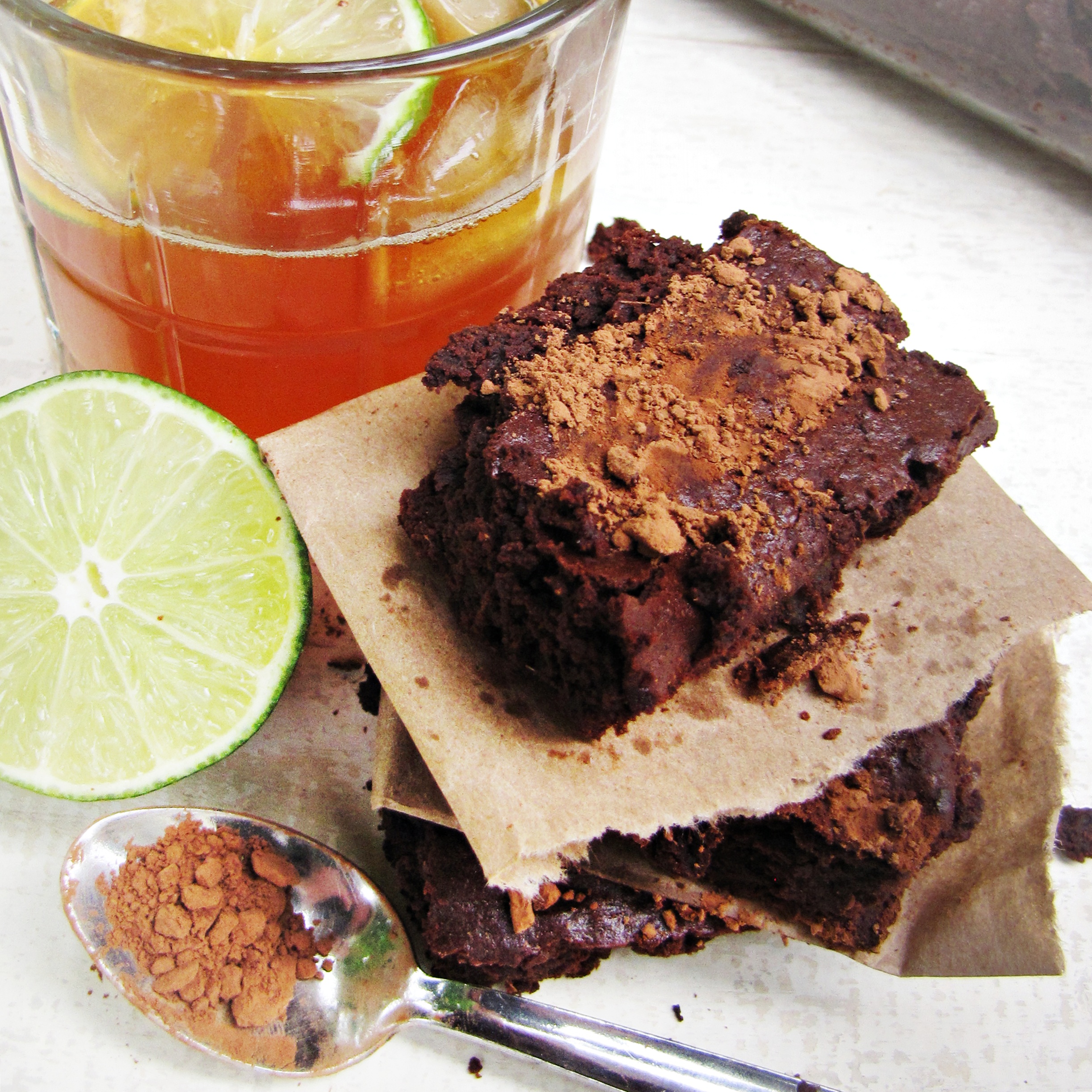
Dark and Stormy Brownies

Inspired by Ideas in Food.  Brownie recipe adapted from Crustabakes.

  • 7 oz semisweet baking chocolate
  • 1 stick salted butter
  • 3 TBS cocoa
  • 3 eggs
  • 3/4 c. sugar
  • 1/2 c. brown sugar
  • zest/peel of 1 lime
  • 3 inches fresh ginger, peeled and cut into large chunks
  • 2 TBS Gosling’s dark rum
  • 1/2 tsp salt
  • 1 c. flour
  1. Preheat oven to 350°F.  Grease a 9×13 inch baking pan.  Set aside
  2. In a small saucepan, gently melt the chocolate and butter together over low heat, stirring all the while.  Alternatively, you can do this in a bain-marie or double boiler – the point is to keep the chocolate from burning or overheating while you melt it, but you can do this carefully without using a double boiler.  Whisk the cocoa powder into the melted chocolate and stir until smooth.  Remove from heat and set aside.
  3. Place sugars, peeled ginger, and lime peel/zest into a food processor, and pulse until the ginger and lime are cut very fine and evenly dispersed throughout the sugar.  In a large bowl, whisk together eggs, ginger-lime-sugar, rum, and salt until combined.  Whisk in warm chocolate mixture and stir to combine.  Finally, fold in flour, stirring gently until just incorporated.  Spoon the batter out over the prepared pan.  Bake for 25-30 minutes, then check for doneness – a toothpick inserted into the center should have a few moist crumbs attached to it.  PLEASE NOTE:  I previously made these brownies in an 8×8 pan and thought they were overdone at 37 minutes, as well as too thick.  I think they would be better in a 9×13 for a shorter cooking time, but 25-30 minutes is really my best guess at cooking time.  It may be worth it to start checking them at 20 minutes, although I doubt they’ll be done that quickly.

Cookbook of the Month: The New Portuguese Table

0 October 27, 2011 Cookbook

Cookbook of the Month: The New Portuguese Table

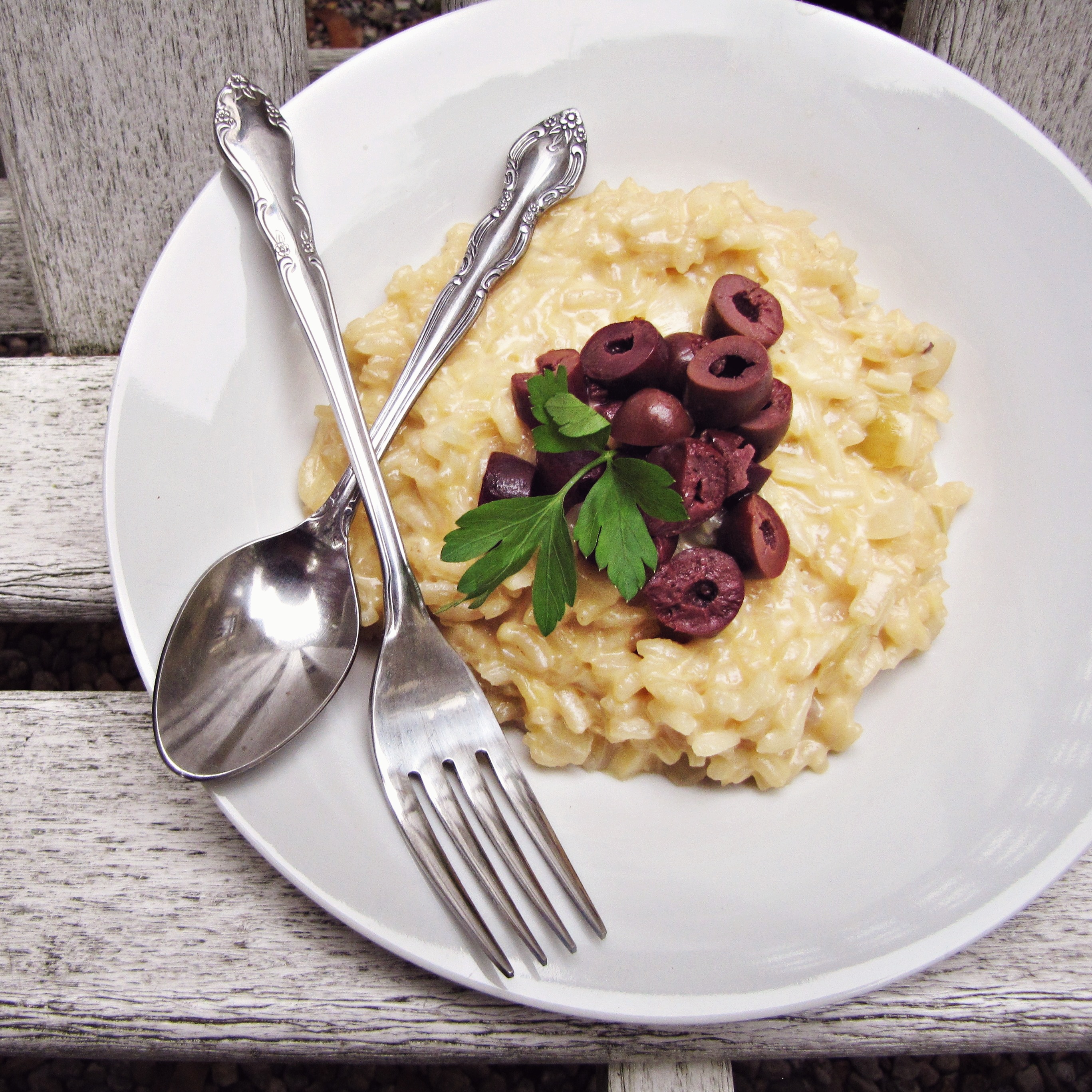
Hey, two months in a row!  Look at me, fulfilling promises and everything.  This month’s cookbook is David Leite’s “The New Portuguese Table,” a fairly recent compendium of traditional Portuguese recipes with a modern twist.  I’ve been really looking forward to cooking from this book, as it won a James Beard award in 2010 and has a solid 5 star review on Amazon, with only one negative review in the bunch.  I made three recipes from this book in the past few weeks – cilantro bread soup with poached eggs, white beans and sausage, and black olive risotto – and I hate to say it but I’m not as enthused about the recipes in this book as everyone else seems to be.  The white beans and sausage were good, but not that original – I thought it tasted like regular old chili.  (Full disclosure, I used kidney beans instead of cannellini beans, because I just couldn’t find dried cannellini beans.  I went to four stores looking for them.  So the bean substitution probably added to the chili effect.  However, kidney beans and cannellini beans are actually pretty close in flavor, and genetically related, so the major differences caused by the substitution were probably texture and appearance, and not so much flavor.  Also, did you know that kidney beans and cannellini beans are poisonous?  Thanks, wikipedia.  You are so full of knowledge.)  The cilantro soup I did not like at all – its only redeeming factor was the croutons made from Trevor’s delicious homemade bread – and I ended up dumping most of the recipe out, as well as not finishing the bowl I brought to lunch the next day.  And it takes a lot for me to throw out food that I really wanted to like.  Maybe I was expecting too much from such a simple recipe, but it was definitely a disappointment.  On the other hand, this black olive risotto – super awesome.  Like decadent grown-up mac’n’cheese with a twist.  I made it twice in one week, and taking the time to make two risottos in one week is big for me.
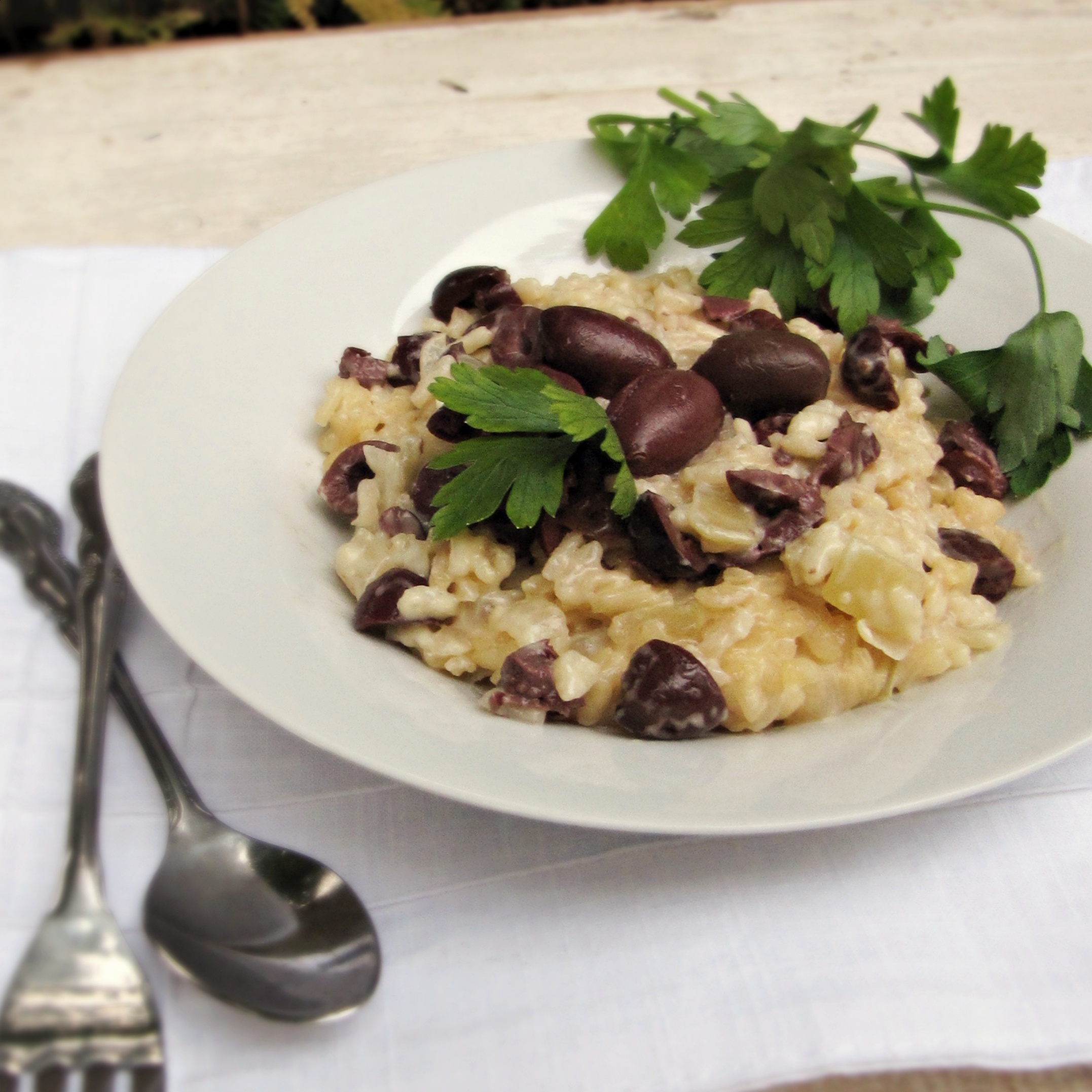
Let me elaborate: this recipe takes your standard risotto ingredients – arborio rice, chicken stock, onion, white wine, and parmesan – adds two special ingredients – black olives and mascarpone – and becomes something super comforting, super creamy, and super delicious.  Trevor’s one semi-negative comment on it was that it lacked depth of flavor, which I do sort of agree with – it hits you with creamy, cheesy, and olive-y pretty hard.  But I’m OK with that.  That’s kind of what I’m looking for in a comfort food.  And this is definitely comfort food.  So the risotto recipe is a keeper.  But the other recipes I tried?  I probably won’t go to the trouble of making them again.  That doesn’t mean I’ve completely given up on this cookbook – I still have a few recipes I’d like to try, like the green olive dip and the rosemary custard – but I will approach future recipes with a more critical eye.  The cookbook itself is very attractive and well laid out, and most of the recipes included sound interesting – many of them are totally new to me, which is always something I look for in an ethnic cookbook.  Overall, I’d give this book 3 and 1/2 stars, with room for improvement if the two not-so-good recipes I tried were just flukes.

Black Olive Risotto

Serves 3.  Adapted from David Leite’s “The New Portuguese Table”

  • 1 1/2 c. arborio rice
  • 1 TBS olive oil
  • 1 small yellow onion, diced
  • 5 c. chicken stock
  • 1/2 c. dry white wine
  • 2/3 c. freshly grated parmesan cheese
  • 1/3 c. mascarpone cheese
  • 1/2 c. pitted kalamata olives, sliced
  • 3 TBS minced fresh parsley
  1. In a large, wide saucepan, heat the olive oil over medium heat.  Add the onion and cook until translucent and beginning to brown.  In the meantime, heat stock over medium heat.  Add dry rice to pan with onions and cook for 1-2 minutes, until edges of rice are translucent.  Then add white wine all at once and cook, stirring constantly, until it is absorbed.
  2. Add  ladleful of hot stock to the rice and stir constantly until it has been completely absorbed, about 2 minutes.  Continue adding stock one ladleful at a time and stirring until completely absorbed until the rice is just tender – you should use most of the stock.  If you run out of stock before the rice is cooked, use hot water.  When rice is tender.  Add parmesan cheese, mascarpone cheese, and sliced olives, and stir until cheeses are melted and risotto is creamy.  Remove from heat and serve hot with fresh parsley sprinkled on top.
Curried Apple Couscous

0 October 22, 2011 Fall

Curried Apple Couscous

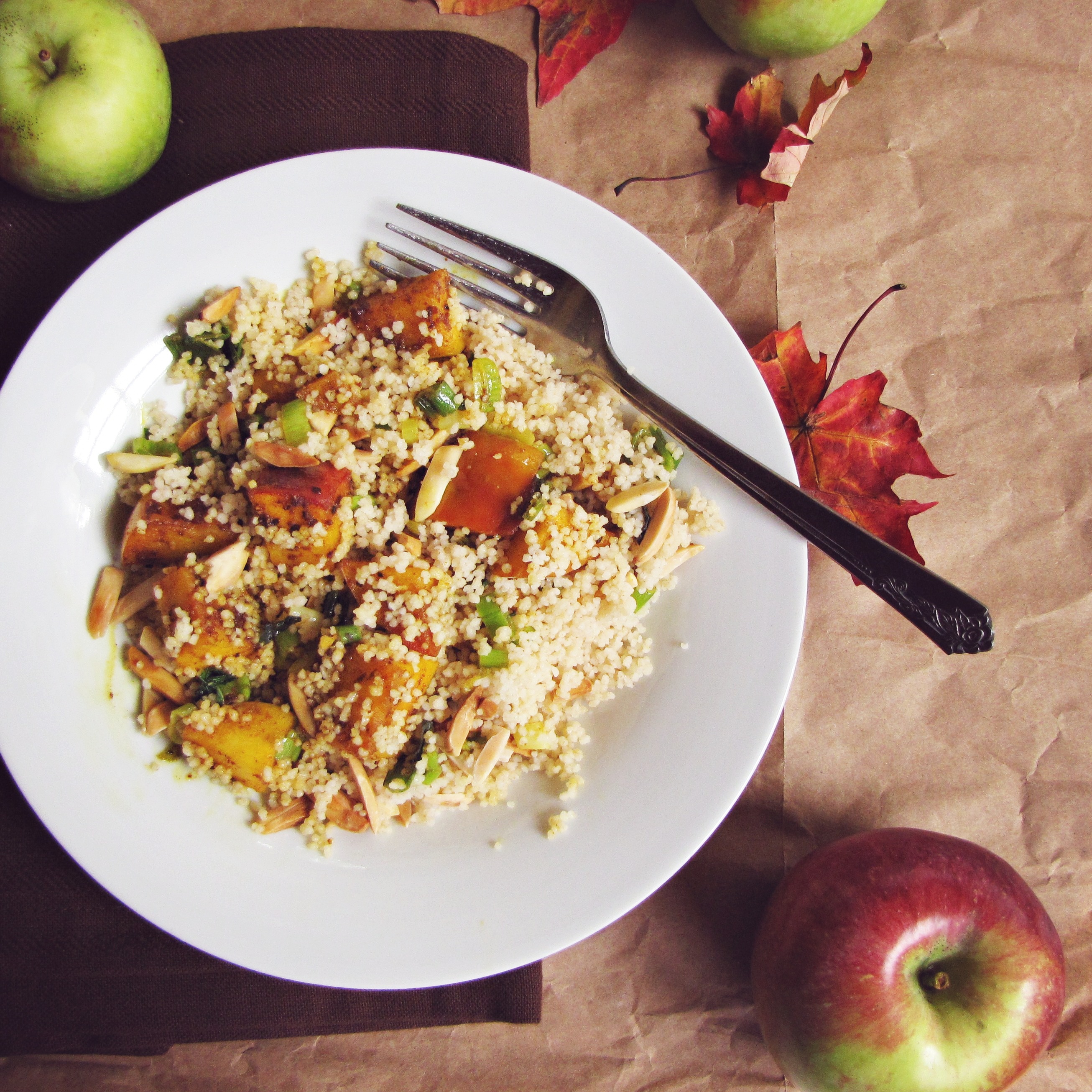
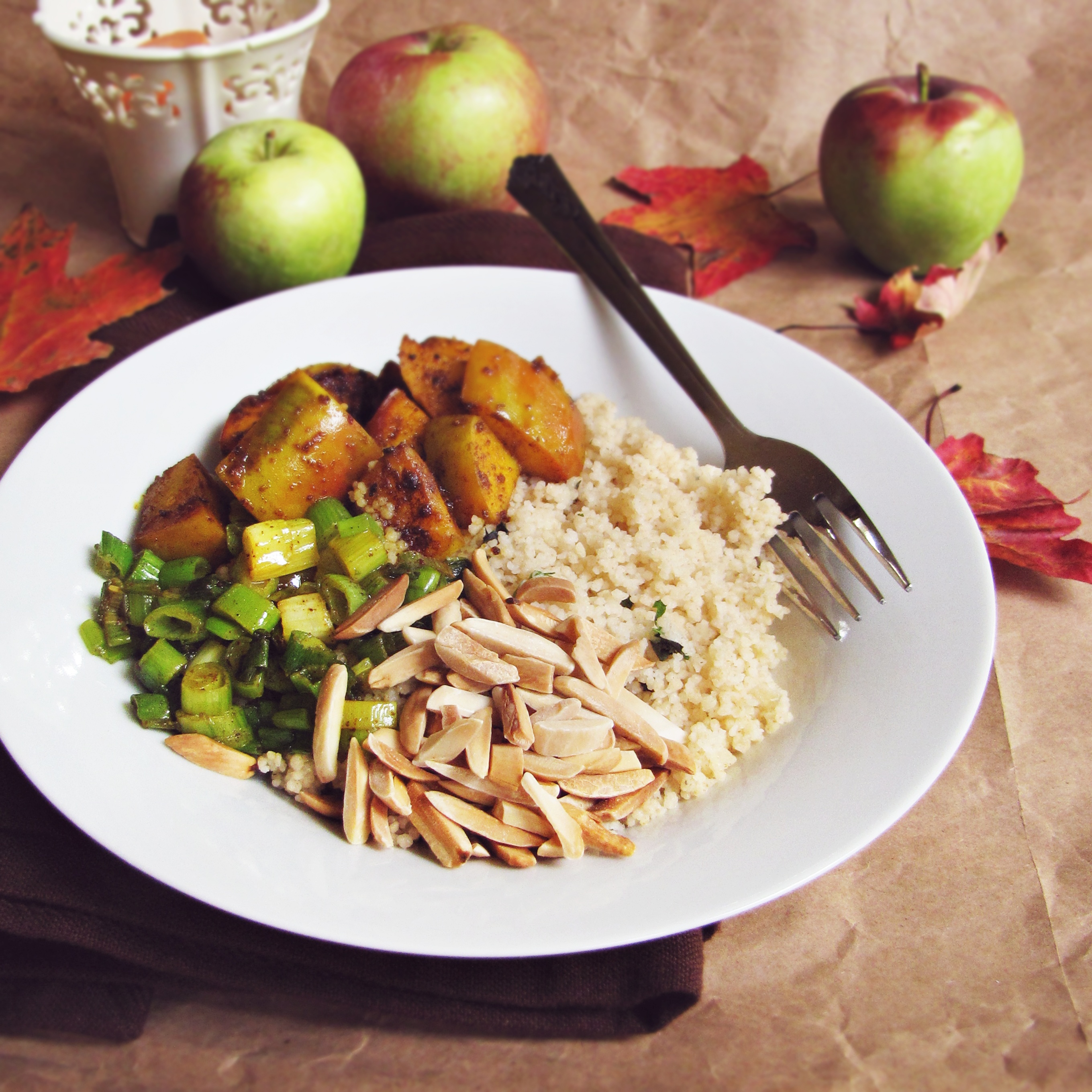
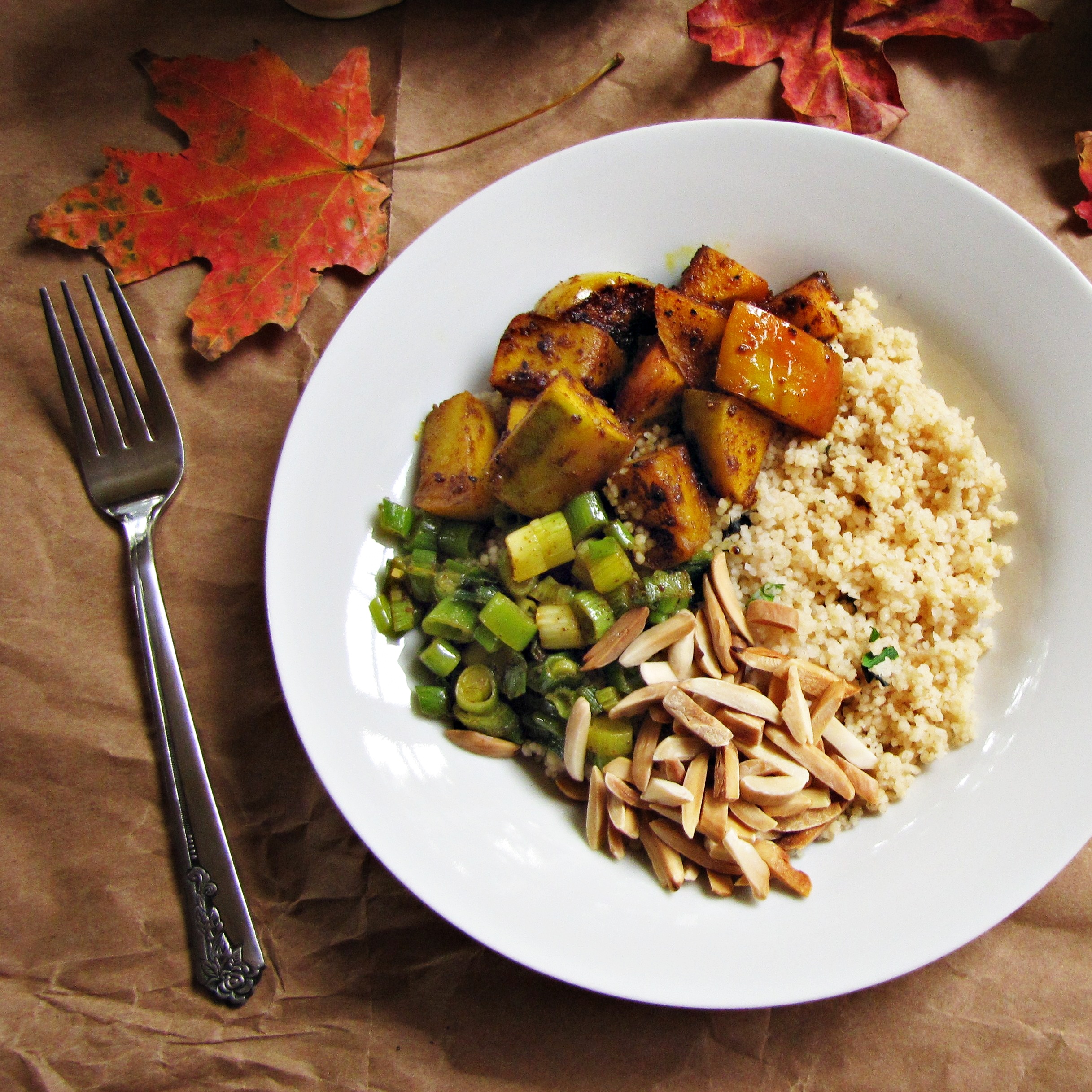
Apple picking is a great activity.  It’s fun, it’s wholesome, it’s New Englandy, it’s outside, it promotes local food, and if you go with someone you secretly don’t like you can throw apples at them and write it off as “all in good fun.”  (I didn’t actually go with anyone I don’t like, but I can imagine doing this.  Especially to my brothers, who I actually like, but it’s always fun to throw things at your siblings.  Sorry, tangent.)  If you live somewhere where there are good apples, you should go – the flavor of a store-bought apple, even a local, organic store-bought apple, pales in comparison with the flavor of one fresh off a tree.  However, be prepared to make a lot of apple-y things afterwards.  Lately, it seems like everyone I know is trying to figure out what to do with all their apples.  The standard story is this: “we went apple picking and it was so much fun that we picked a whole bushel.  And now we have 78 apples for 2 people.”  Once they’ve had a few crisps, pies, and bowls of applesauce, they want to branch out.  So I thought I’d share one of my favorite non-pie apple recipes: curried apple couscous.

This is one of the first recipes I ever made, and I still make it all the time.  It comes from 101 cookbooks, which also happens to be the first food blog I ever read.  Couscous has always been one of my very favorite foods – I think it’s a combination of the texture and the ease of cooking which makes me like it so much.  I almost never go to the trouble of cooking couscous in a pot – the beauty of couscous is that all you need to cook it is boiling water.  So I heat up the tea kettle, pour the boiling water over a bowlful of dry couscous, eyeballing the amount I think I need, cover the bowl with a small plate to let it steam – and voila!  Delicious hot lunch with no dishes to wash.  I’m happy.  This recipes takes a touch more effort, but it’s still quick enough to throw together and get the dishes done in ten minutes, which is the time limit for me if I’m going to make something for lunch before work in the morning.  It’s also not unhealthy (although I won’t say it’s truly a health food because of the butter and processed grains), and the contrast of flavors and textures is perfect.  You can vary the ingredients based on what you have in the fridge, add cheese, change the nuts, and it will probably still be good.  Right now I’m imagining a curried pear version with goat cheese and walnuts.  But since everyone’s currently in “use up all your apples” mode, I’d try this version first.

Curried Apple Couscous

Adapted slightly from 101 Cookbooks.  Serves 1.

  • 1 apple, cut into 1/2 inch cubes
  • 2 TBS butter
  • 1 TBS curry powder
  • 2 scallions, sliced into rounds
  • 1/3 c. slivered almonds, toasted
  • handful of fresh mint, chopped
  • 3/4 c. couscous
  • about 1 1/4 c. boiling water
  • coarse sea salt
  1. Heat 1 1/2 TBS butter in medium pan over medium heat.  When melted, add curry powder and cook for one minute, stirring, until butter foams.  Turn down heat to medium-low and add apples.  Cook for about 5 minutes, stirring frequently, until apples are softened.  Remove apples from pan and set aside.  Add remaining 1/2 TBS butter to pan, along with scallions.  Cook for 2 minutes, then set aside with apples.
  2. Place the couscous and chopped mint in a heatproof bowl.  Pour boiling water over to cover by about 1/2 inch.  Place a plate or other cover on top of the bowl and allow couscous to steam for 5 minutes.  Remove the plate and fluff with a fork.  Test for tenderness.  If couscous is still hard, or there is too much water left in the bowl, microwave for 30 seconds to complete the cooking/evaporate some of the water.  Mix in curried apples, scallions, and toasted almonds.  Sprinkle with coarse sea salt to taste.  Serve warm or cold.
  • « Previous Page
  • Page 1
  • …
  • Page 45
  • Page 46
  • Page 47
  • Page 48
  • Page 49
  • …
  • Page 57
  • Next Page »

Primary Sidebar

Subscribe!

Get creative recipes and menu ideas delivered straight to your inbox.

Most Popular

A House // Sweet Potato and Coconut Milk Soup with Brown Rice and Lentils

Monthly Fitness Goals: July // Homemade Spinach Wraps with Chopped Greek Salad

A New Job // Classic Seven-Layer Bars

Butternut Squash Carbonara with Fried Sage and Caramelized Onions

Happy Birthday, Trevor! // Peanut Butter Fudge

Cookbook Review and Giveaway: Home Made Winter

Drizly

Please note!

Full disclosure: if you purchase anything at Amazon using the above links or any other links to Amazon on this site, I will receive a small commission. Just so you know!

Copyright© 2018 · Cookd Pro Theme by Shay Bocks

This site uses cookies: Find out more.