• Skip to primary navigation
  • Skip to content
  • Skip to primary sidebar
  • Home
  • Recipes
  • Features
    • Cookbook Reviews
    • Ingredient of the Week
    • Sunday Dinner
    • Fitness Goals
  • Travel
  • About
    • Privacy Policy
    • Cookie Policy
  • Work With Me

Katie at the Kitchen Door

Globally-inspired, seasonal recipes

Blog Page

Na Zdravi!

May 23, 2010 Recipe

Na Zdravi!

The Czech Republic is known for one thing above all others – beer.  And there’s a reason for that – green signs proudly announcing Staropramen or Pilsner Urquell hang outside every pub in the country, finding a $2 pint of fresh golden lager is stunningly easy, and the country’s citizens and their visitors consistently drink more beer per capita than any other country in the world.  But there’s more to this country’s drinking tradition than pivo.

In the early fall, there is burčak, a young, still fermenting wine that is cloudy and deliciously sweet.  Say you’ve taken the train out of the city for the day, to visit some 14th century ruin crumbling in the forest.  Disembarking from the train, you follow the dirt road that runs parallel to the tracks, following signs that say hrad, castle.  Outside of a small wooden house a woman stands with two huge vats of liquid, one a murky purple and the other the color of applesauce.  Burčak, the sign says, 30 crowns per liter.  You greet her, give her a handful of coins equivalent to $1.50, and in return she takes a huge plastic bottle and fills it to the brim with the sweet, bubbly nectar.  You continue down the road, taking swigs of the delicious drink, enjoying the crispness of fall.

It is later in the year, and the weather has gotten colder, closer, and grayer.  The cobbled streets and red roofs are still enchanting, but you crave warmth, camaraderie, and you begin to understand how drinking could become so important in a place like this.  One particularly cold and gray day you are hiking in Moravia, and the fog is so thick and wet and cold that you are soaked through with chill.  Through the mist a tiny wooden pub appears, and inside the yellow light and foreign shouting envelopes you with warmth.  You order medovina and find yourself holding a glass mug of steaming honey mead.  The hot fumes sting the inside of your nose, and when you take a sip, the slow spread of honeyed warmth throughout your chest dissolves the cold.

And now it is Christmas, and in the city square a giant tree sparkles.  Smells of roasting pork, candied nuts, and potato pancakes drift out of the wooden booths that fill the square.  It begins to snow, and the only sound is that of other people milling through the square, laughing.  It is your last night, and so you head to the nearest booth and order svařak, hot mulled wine.  You inhale the spicy sweetness that steams from the small Styrofoam cup.  Slowly sipping the pungent wine, you stand in the center of the square and look up – up at the night sky filled with silent snow, up at the giant tree twinkling with light, up at the proud spires of the cathedrals, up at the world you’ve come to cherish so much.  To no one in particular you raise your cup and toast, na zdravi! To you, Prague.
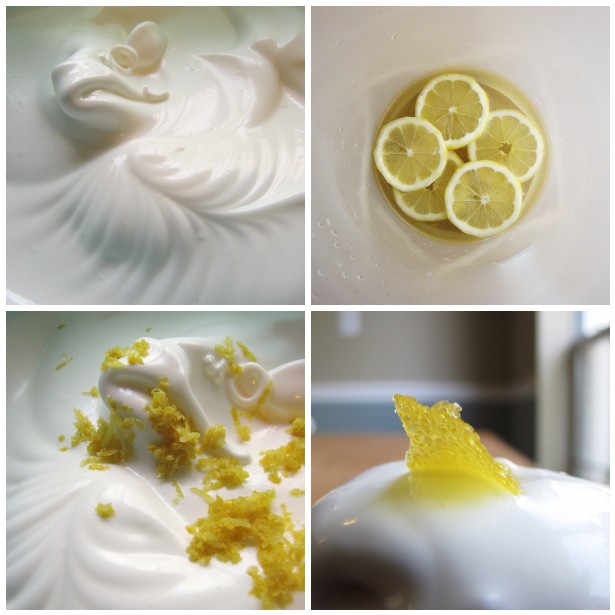
Svařak (Hot Mulled Wine)

Recipe adapted from Expats.cz

  • .75L (1 bottle) red wine (use something cheap and fruity)
  • 1-2 cinnamon sticks
  • 5-8 whole cloves
  • 1 small lemon, sliced
  • sugar, to taste

Heat wine, cinnamon sticks, and cloves in a large pot over medium heat.  Do not allow to boil, as the alcohol will burn off.  Flavor with sugar and lemon slices after the wine has reached the desired temperature.  You can also heat sugar with the wine and spices for a sweeter drink.  If you are lucky enough to be in the Czech Republic, you can’t do better than using the svařak seasoning packets sold in nearly every grocery store!

This post has been entered into the Grantourismo and HomeAway Holiday-Rentals travel blogging competition.

In the fall, there is burčak, a young, still fermenting wine that is cloudy and deliciously sweet.  Say you’ve taken the train out of the city for the day, to visit some 14th century ruin buried crumbling in the quiet forest.  Disembarking from the train, you follow the dirt road that runs parallel to it, most likely following signs that say hrad, castle.  Outside of a small wooden house a woman stands with two huge vats of liquid, one purple and one the color of applesauce.  Burčak, the sign says, 30 crowns.  You greet her, give her a handful of coins equivalent to $1.50, and in return she takes a 1-liter plastic bottle and fills it to the brim with the sweet, bubbly nectar.  You continue down the road, taking swigs of the delicious drink, enjoying the crispness of fall.It is later in the year, and the weather has gotten colder, closer, and grayer.  The cobbled streets and red roofs are still beautiful and comfortingenchanting, but you crave warmth, camaraderie, and you begin to understand how the heat of drinking could become so important in a place like this.  One particularly cold and gray day you are hiking in Moravia, the Western region of the country.  The and the fog is so thick and wet and cold that you are soaked through and shiveringwith chill.  Through the mist a tiny wooden church pub appears, and inside the yellow light and Russian chantingforeign shouting brings you to a different century altogetherenvelopes you with warmth.  Reluctantly, you make your way back through the cold and find yourself inside a wooden pub,You order medovina, and find yourself holding a glass mug of steaming medovina, honey mead.  The hot fumes sting the inside of your nose, as you lower your face over the cup, and when you take a sip, the slow spread of honeyed warmth throughout your chest dissolves the cold chases all the cold straight away.

And now it is Christmas, and in the city square a giant tree sparkles.  Smells of roasting pork, candied nuts, and potato pancakes drift out of the wooden booths that fill the square.  It begins to snow, and the only sound is that of other people milling through the square, laughing.  It is your last night, and so, you head to the nearest booth and order svařak, hot mulled wine.  You slowly inhale the spicy sweetness that steams from the small Styrofoam cup.  Sipping it slowly, you stand in the center of the square and look up, up at the night sky filled with silent snow, up at the giant tree twinkling with light, up at the proud spires of the cathedrals, up at the world you’ve come to cherish so much.  To no one in particular you raise your cup and toast, na zdravi!  To you, Prague.
Sweet Potato Challenge

May 20, 2010 Uncategorized

Sweet Potato Challenge

I’m doing a cleanse.  It’s called “the empty pantry cleanse for those without vehicles,” and it is generally not completed by choice.  The ingredients allowed in this particular cleanse are carrots, canned beans, lentils, dry grains, and flour/butter/eggs/vanilla/other baking ingredients that rarely disappear completely in a one person household.  So, you might argue that this cleanse is a lot less strict than the lemon juice and cayenne pepper “Master Cleanse,” but it also takes a whole heck of a lot more creativity than it does to mix the same four ingredients together for every meal for 2 weeks.  (Why on earth would someone think that was a good idea?)

Since malnourishment makes me prone to whining to Trevor (as does over-nourishment and a regular level of nourishment), he knows all about the depleted state of my kitchen.  And so, mid-whine, he challenged me.  You see, I left out one, very key, ingredient that I still hold in my fridge – two sweet potatoes.  Sweet potatoes are sort of a miracle food.  They can be the star of something sweet, or something savory.  Pair them with black beans and avocado and you’ve got southwestern comfort.  With chickpeas and cumin and you’re happily on your way to a middle-eastern delight.  With gorgonzola and sage and Italy is yours for the taking.  With marshmallows and brown sugar and you’ve probably created the quintessential American holiday dish.  So basically, if you’ve got sweet potatoes, you probably shouldn’t be complaining that you’re going to shrivel up and die before your boyfriend arrives with your parents’ gas-guzzling monster car that they are very kindly letting you borrow for the summer in a week.  Besides, real cleanses (see: Glamour, Self, Women’s Health) use them all the time.

The specifics of Trevor’s challenge where this: use the sweet potatoes and the carrots in a tart that doesn’t have an egg filling (i.e. quiche is cheating.)  Don’t use recipes.  Make it delicious.  Don’t tell anyone I’m associated with this (muahaha).

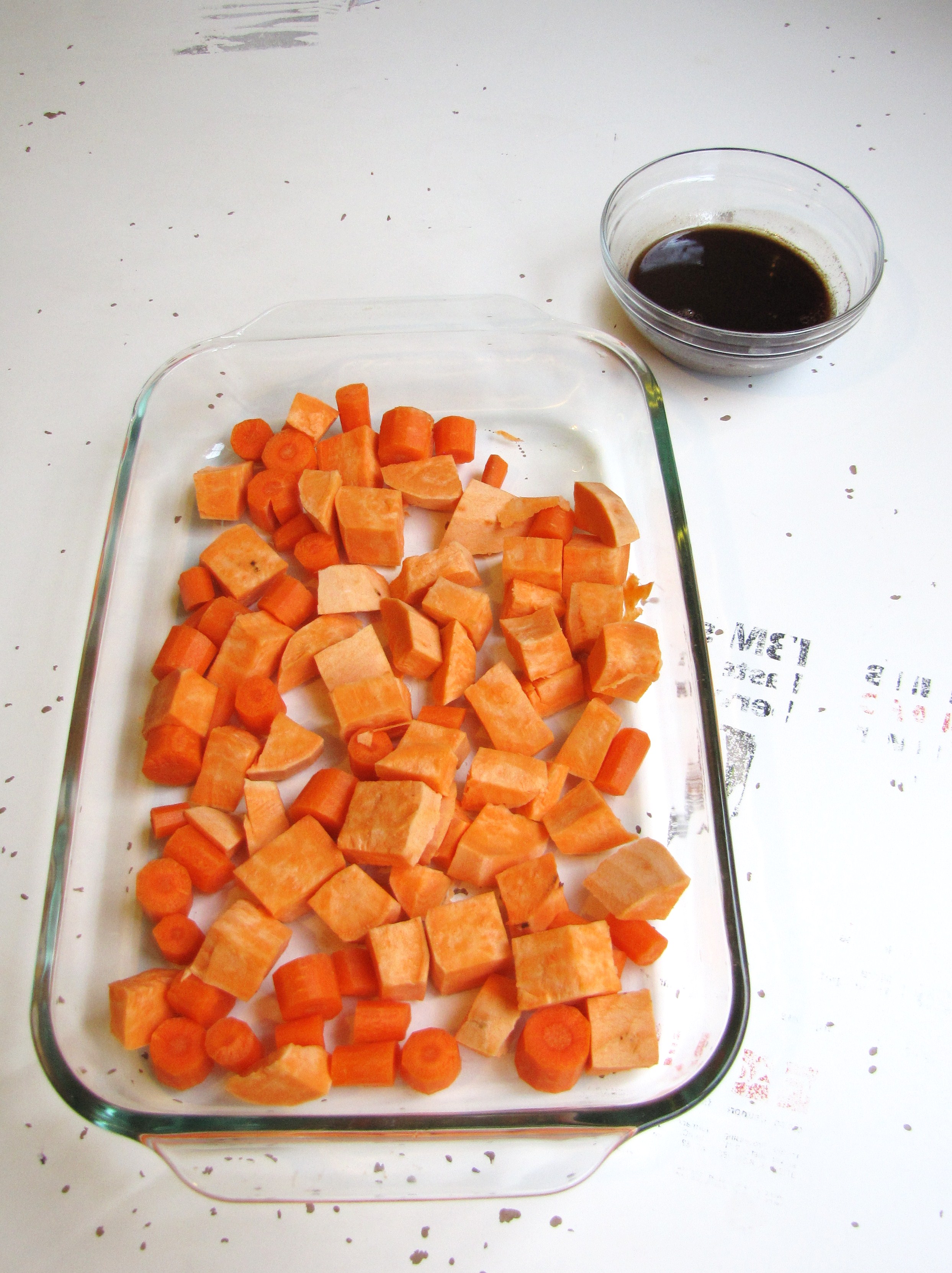
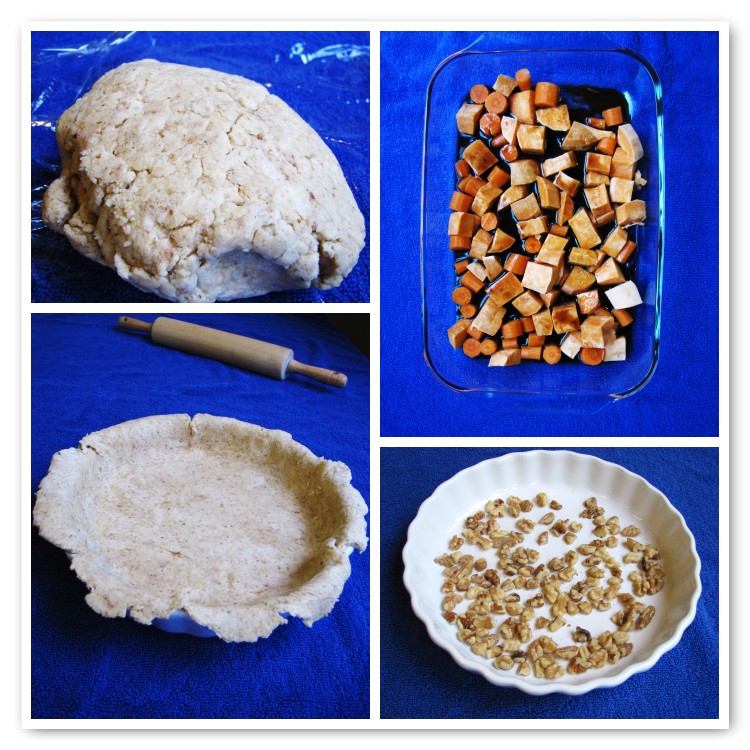
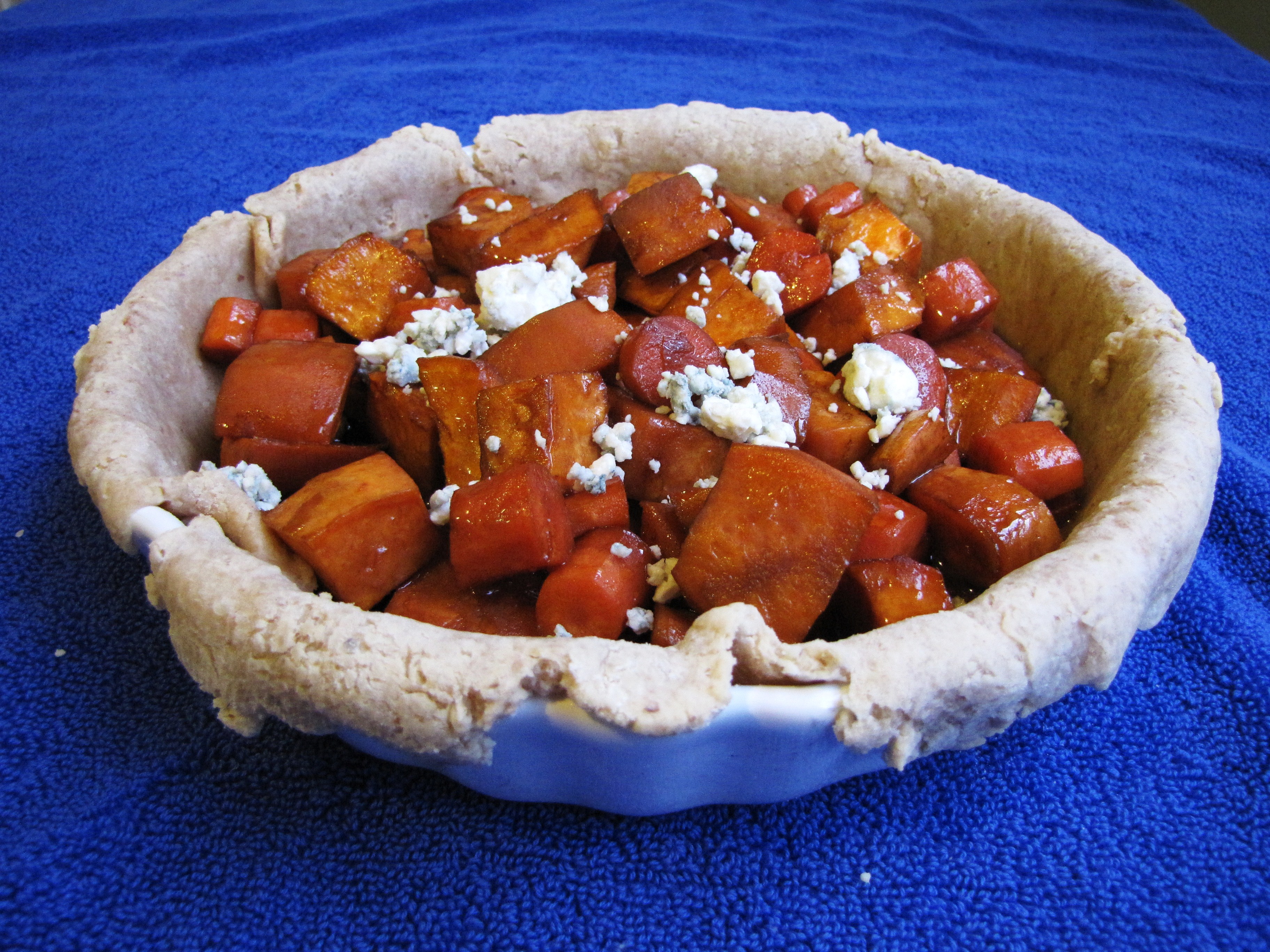
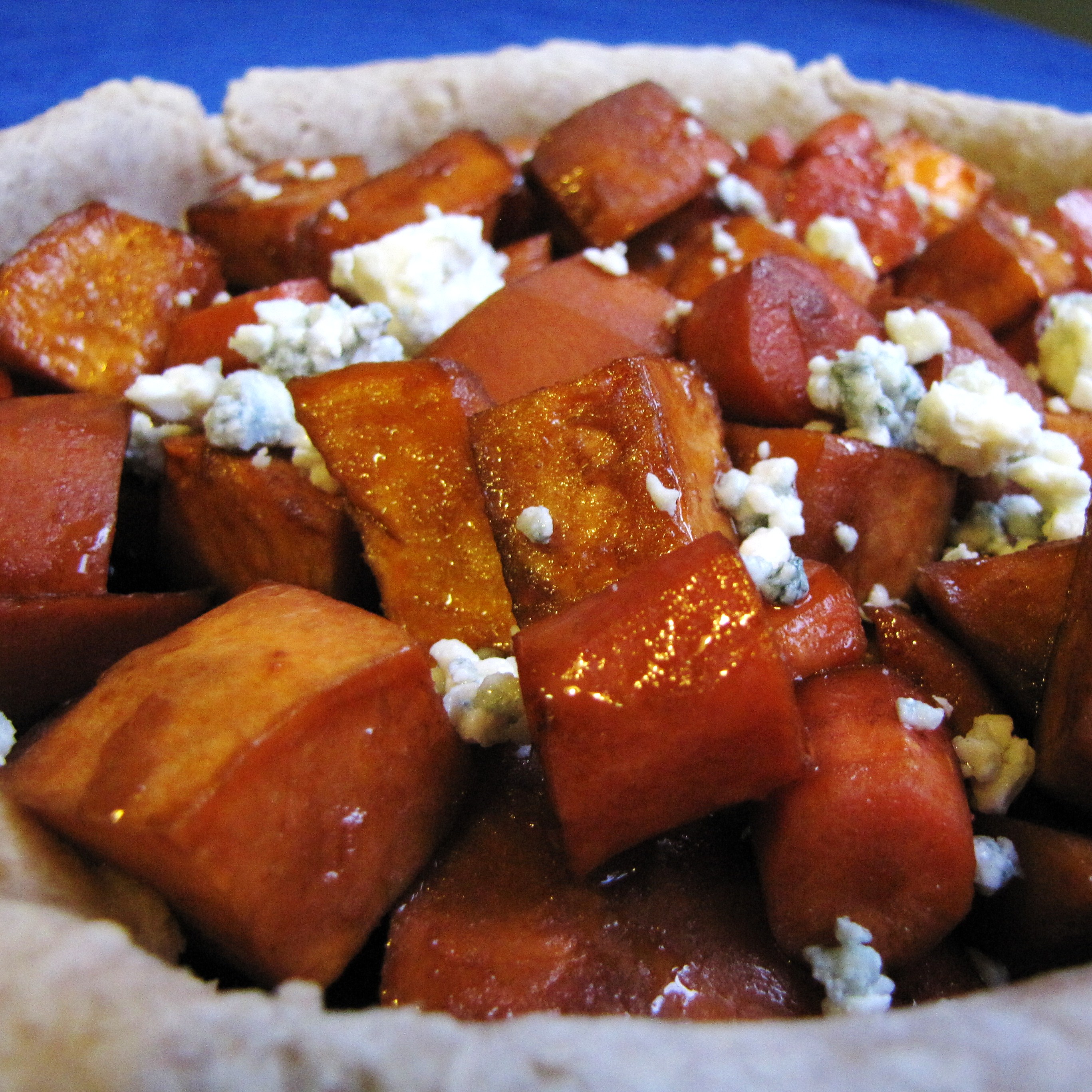
This is what I came up with: diced carrots and sweet potatoes glazed with a balsamic reduction, roasted, and baked into a walnut tart shell along with some gorgonzola cheese.  And how do I feel about it?  I am eating it.  It tastes good and is very flavorful.  I’m moderately convinced it’s good for me.  I would eat it again, although I think I would make it as a pot pie instead.  I wish the walnuts had come through more, so I might play with that next time.  And the last minute addition of a gorgonzola-brown-sugar topping really kicked it up a notch.  You should try it and let me know what you think.

To end on a fully positive note, I would like to admit that it’s actually been sort of a fun challenge, cooking with such a limited inventory.  Tuesday brought about a warm and spicy black bean soup, Wednesday produced this pea and barley risotto, today featured this tart, of course, and tomorrow… will probably involve half a can of refried beans and some canned peaches, but hey, I’ve done pretty well.

If you try this, or have any thoughts on possible modifications, let me know!

Balsamic Sweet Potato and Walnut Pie

(Original recipe.  There’s carrots in it too, but I couldn’t bring myself to put carrot and pie in the same sentence.)

For the crust:

  • 1/2 c. walnut pieces
  • 1 c. flour
  • 1/2 tsp salt
  • 1/2 tsp cinnamon
  • 3 TBS butter, cut into pieces and chilled
  • 6-8 TBS cold water
  1. Preheat oven to 400°F.
  2. Toast walnut pieces in pan over medium heat, or in preheating oven in pie dish for 5-7 minutes, until fragrant.
  3. In a food processor, pulse together flour, toasted walnuts, salt, and cinnamon, until blended.  Add cold butter and pulse into mixture is mealy, with pea-sized chunks.
  4. Transfer flour mixture to large bowl, and add chilled water 1 TBS at a time, stirring gently with a fork after each addition.  Add water until dough comes together to form a loose ball.
  5. Wrap dough in plastic wrap and chill for at least half an hour.
  6. Roll dough out to 1/4 inch thick on lightly floured surface.  Transfer crust to pie plate, and bake for 10-15 minutes.  No need for foil and pie weights; the walnuts make the crust dense enough that it doesn’t bubble.

For the filling:

  • 1/3 c. balsamic vinegar
  • 1/3 c. red wine
  • 1 TBS honey
  • 1/2 tsp. kosher salt
  • 1 TBS butter
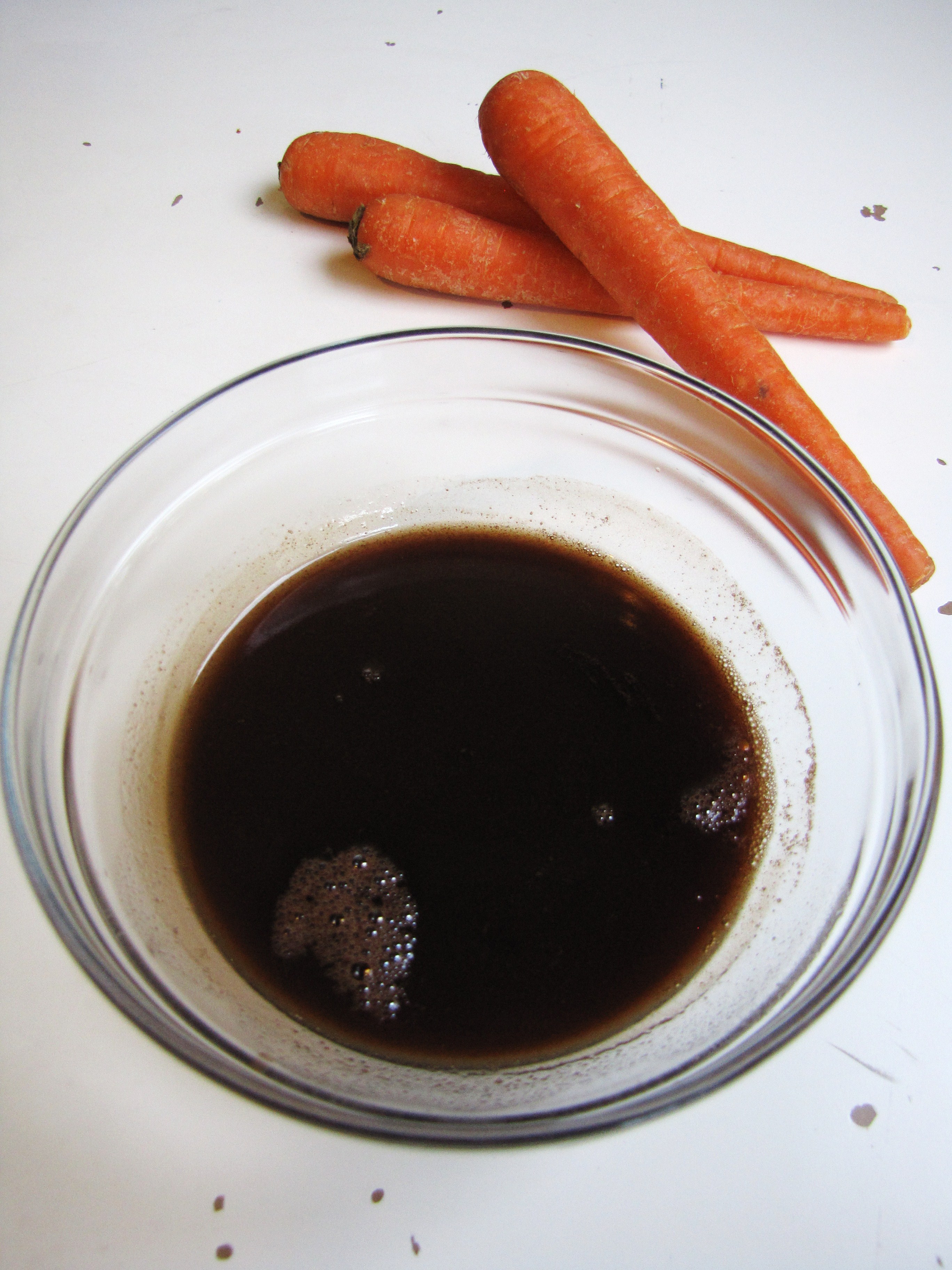
  • 7-10 medium-large carrots, peeled and cubed
  • 1-2 sweet potatoes, peeled and cubed
  • 2 TBS olive oil
  • 1/3 c. gorgonzola cheese crumbles
  • 2 TBS brown sugar
  1. In a small saucepan over medium-high heat, bring vinegar, red wine, honey, and salt to a boil.  Simmer, stirring frequently, for 8-12 minutes, until it has reduced to about 1/2 c. and is slightly thicker.  Add butter, continue to cook for one minute, and remove from heat.
  2. Place prepared sweet potato and carrot chunks in a large roasting pan.  Drizzle with olive oil and vinegar reduction.  Stir to coat.
  3. Roast vegetables (400°F, from pie crust step) for 45-60 minutes, until fully tender, stirring halfway through to prevent burning.
  4. When vegetables are done, remove and place in pie crust, draining excess liquid (don’t put the extra vinegar in your pie or it will disintegrate).  Sprinkle with gorgonzola and brown sugar, and return to oven for 5-10 minutes, or until cheese and brown sugar have melted.
Peanut Butter Birthday

May 13, 2010 Dessert

Peanut Butter Birthday

Wednesday, May 12, 2010, is not today.  It was yesterday, and it was Trevor’s 21st birthday.  However, due to the annoying college tradition of final exams, said birthday had to be ceremonially transferred to tonight, when, if all goes according to plan, it will be celebrated to the nth degree.  You see, not only is Trevor very awesome and worthy of celebrating, I also feel that my birthday was not celebrated to the appropriate extent, mainly because I was sober throughout the entire 24 hours of April 18, 2010.  Fairly to extremely unacceptable.  And so, I am doing a bit of birthday pilfering.  Selfish, perhaps, but excusable, IMO, and approved by the true birthday child.  (Side note: it is not actually possible to celebrate my birthday enough – it should be at least a month long event, preferably two.  This fact can be readily confirmed by my mother.)

In light of all this joyous aging, I am, duh, baking a cake.  The cake came into hypothetical being 10 days ago while skyping, when I casually said, “maybe I’ll bake a cake for your birthday,” and Trevor’s eyes got very wide.  “Peanut butter cake?”  I ventured, to which there was some enthusiastic nodding and even more eye widening.  I would like to make it clear at this point that Trevor actually does communicate verbally at a very high intelligence level, but has been characterized as a mute but very excited 7 year old boy for the sake of my writing style.  Thank you Trevor, you’re very patient and I would like to publicly admit that you’re better at scrabble than me.

And so peanut butter cake it was.  I searched the good old internet which contains more recipes than I thought possible and found that there are basically two blogosphere accepted options for peanut butter cake.  The first is Smitten Kitchen’s chocolate peanut butter cake, which is actually a chocolate cake with peanut butter filling and peanut butter frosting which is then drizzled with chocolate peanut butter glaze.  Decadent, visually appealing, rave reviews across the board.  The second option is Bon Appetit’s peanut butter cake, which is truly a peanut butter cake with a chocolate peanut butter filling.  Also decadent, visually appealing, and well-received.  The decision was agonizing.  So agonizing, in fact, that exactly 19 hours before my statistics final I decided that it was absolutely necessary that I bake samples.  So I made tiny portions of both cake batters, and combined them with peanut butter, melted chocolate, chocolate chips, and each other in ten different cupcakes.  The truth is clearly that I hate statistics (but I got a B+!) and that I must have some subconscious hatred/sabotage plan for my roommate’s waistline.  Or maybe just my own.

Anyhow, the result of this baking frenzy were ten cupcakes that were all different.  Meaning that I had to eat a portion of each cupcake to see which one would be the chosen one.  And then eat another bite of each to make sure.  Et cetera, et cetera, et cetera.  They disappeared in chunks the same way brownies do when I make the mistake of leaving the knife in the pan instead of pre-cutting them.  (This happens every time I make brownies; it is not a mistake.)

And they were all good!  Life is so difficult with me sometimes.  Really, it is.  The chocolate was super moist, got better a day later, and had that slight tang that devil’s food cake has.  I don’t even like chocolate cake and I loved it.  The peanut-butter was drier, but it tasted just like a really good peanut butter cookie in the form of a cake, which was really my initial goal.  Trevor’s a sucker for peanut-butter – favorite ice cream, favorite cookie, favorite meal, favorite color, etc. – and so I knew it had to be in the cake.  I briefly toyed with a marbled cake but the flavors didn’t stand out from one another in the cupcake, or a layer of each, but the textures were to different for it to be coherent.  At this point, Trevor is probably so tired of hearing about all the possible forms this cake might take that he doesn’t want it anymore.  I’m not very good at surprises.

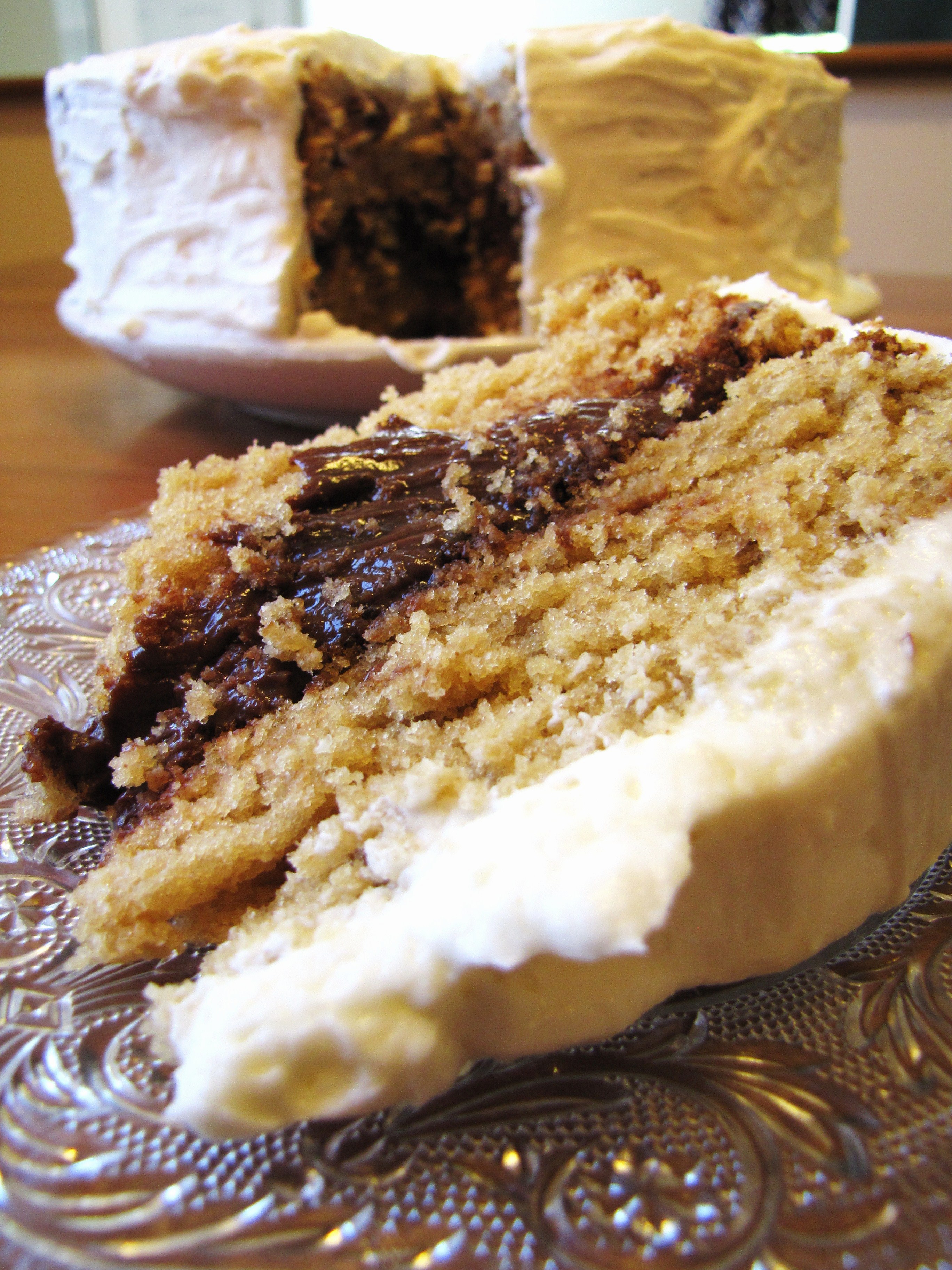
Anyway, I made the peanut butter cake.  I agonized a little bit over the frosting too, but I won’t go into it.  In the end I followed the original recipe fairly closely, reducing the filling amount and adjusting the flour and buttermilk amounts as suggested by the majority reviewer voice on epicurious.  The only concerns I have left are how it will taste after 21 beers, and where I can hide it from the myriad of drunk frisbee players that will be roaming the streets of Medford tonight.  Now you may be wondering, “isn’t it a waste to spend more than a week thinking about baking and then actually baking a cake that will most likely be consumed in handfuls during a drunken midnight kitchen raid?”  No, not really.  That’s kind of the point of turning 21 anyway.

So, happy birthday boyfriend!  (And me, because I would like to remind everyone again that it is almost always the right time to celebrate your own birth.  End of selfish.)  I hope you have a wonderful night, and year, and I love you.  Tu es mon étincelle.

Peanut Butter Cake with Chocolate Filling

Adapted from Bon Appetit

For the Filling

  • 1 c. half and half
  • 3/4 c. heavy cream
  • 1/4c. + 2 TBS light brown sugar
  • 1/2 c. peanut butter
  • 9 oz bittersweet chocolate

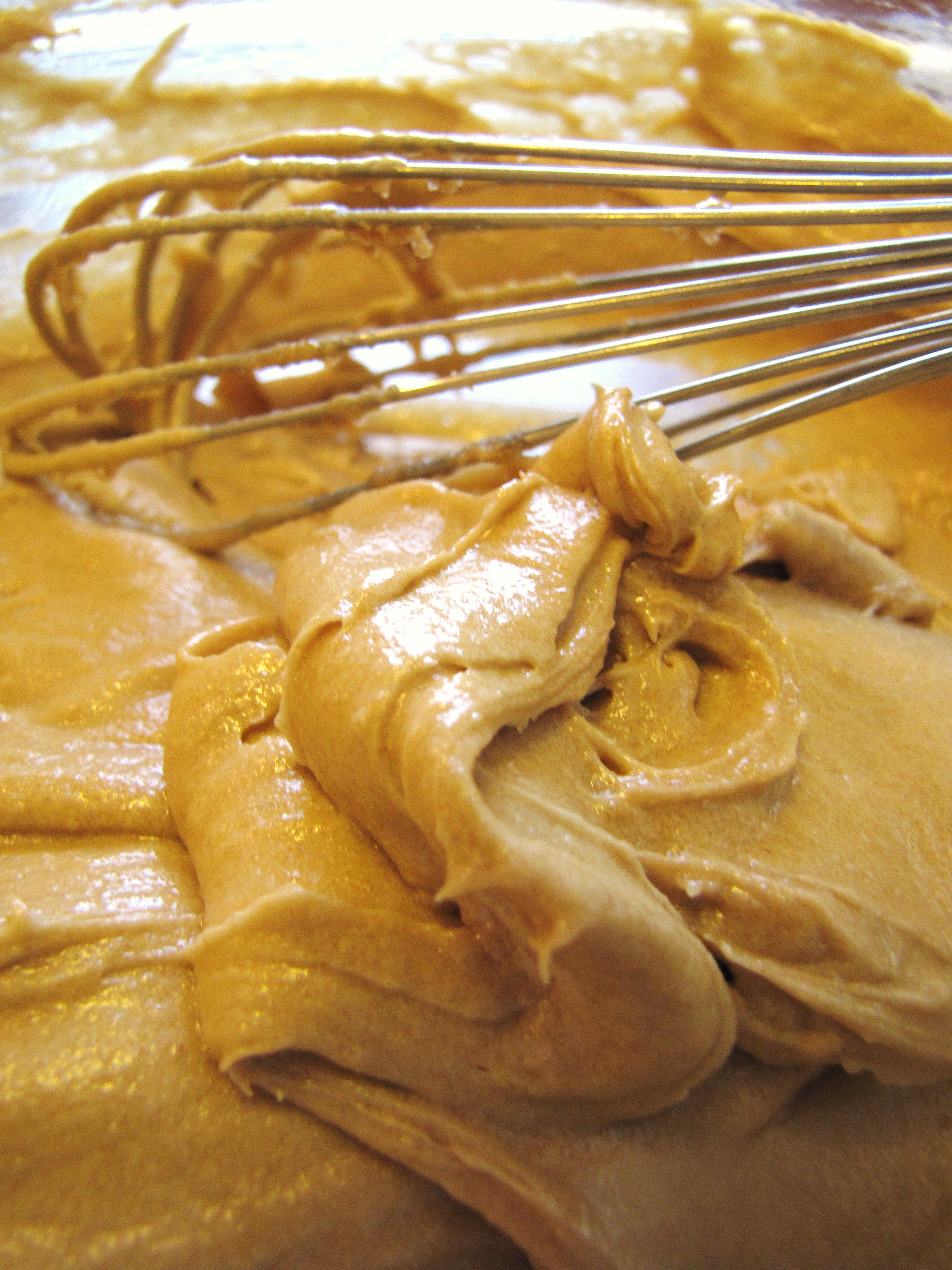
Bring half and half, cream, and brown sugar to simmer over medium heat, whisking constantly.  Once simmering, remove from heat, and whisk in chocolate until mixture is smooth.  Allow to stand for one minute, then whisk in peanut butter until mixture is smooth.  Chill for 2-4 hours.

For Frosting

  • 12 oz. cream cheese, room temperature
  • 2 c. powdered sugar, divided
  • 6 TBS butter, softened
  • 1 tsp vanilla
  • 3/4 c. heavy cream, chilled
  1. With an electric mixer, beat cream cheese, 1 1/4 c. powdered sugar, butter, and vanilla until smooth.
  2. Beat heavy cream and remaining 3/4 c. of powdered sugar until medium-firm peaks form.
  3. Fold whipped cream into cream cheese mixture until evenly combined.  Chill for at least 2 hours.

For the Cake

  • 2 c. all purpose flour
  • 1 tsp baking soda
  • 1 tsp baking powder
  • 1/2 tsp salt
  • 10 TBS butter, softened
  • 2/3 c. peanut butter
  • 2 1/2 c. light brown sugar (1 lb.)
  • 4 eggs
  • 1 1/3 c. buttermilk
  1. Preheat oven to 350°F.  Butter two 9-inch cake pans.
  2. In medium bowl whisk flour, baking powder, baking soda, and salt together to combine.
  3. In large bowl whisk peanut butter and butter together until smooth.  Add sugar and beat until smooth.  Add eggs 1 at a time and incorporate into batter.
  4. Add flour mixture and buttermilk to peanut butter in 3 additions, alternating and ending with a buttermilk addition.
  5. Pour batter into pans, distributing evenly.  Bake for 25-30 minutes.  Let cool in pan for 5 minutes, then remove from pan and let cool completely before assembly.

Assembly

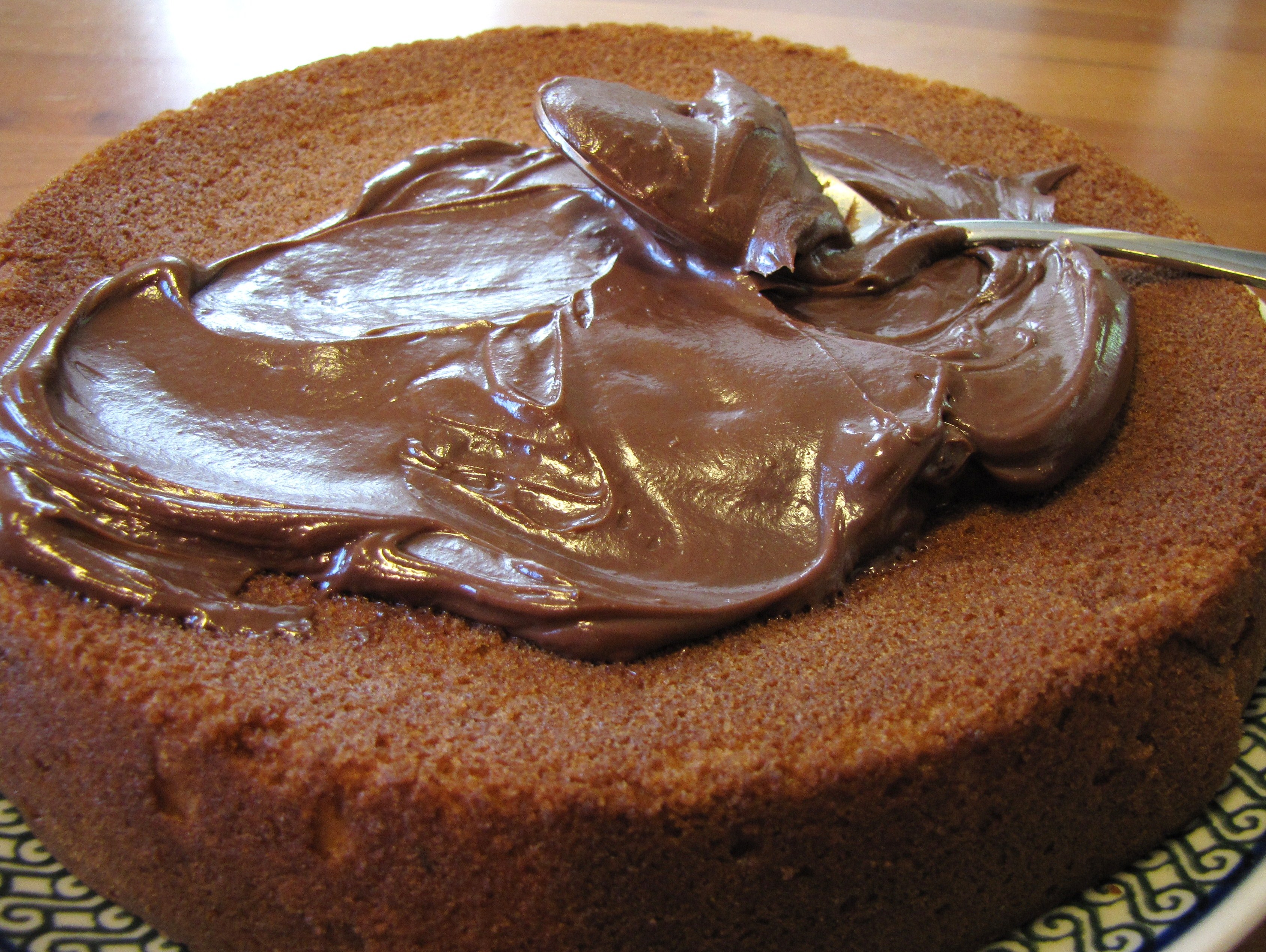
On a wide plate or cake platter, place the first layer of cake.  Spread with layer of chocolate filling.  Place second layer on top of chocolate filling, pressing gently.  Frost cake with cream cheese frosting.  Chill cake until 1 hour before serving.

A Summer Pizza – Rosemary, Grapes, and Chevre

May 10, 2010 Recipe

A Summer Pizza – Rosemary, Grapes, and Chevre

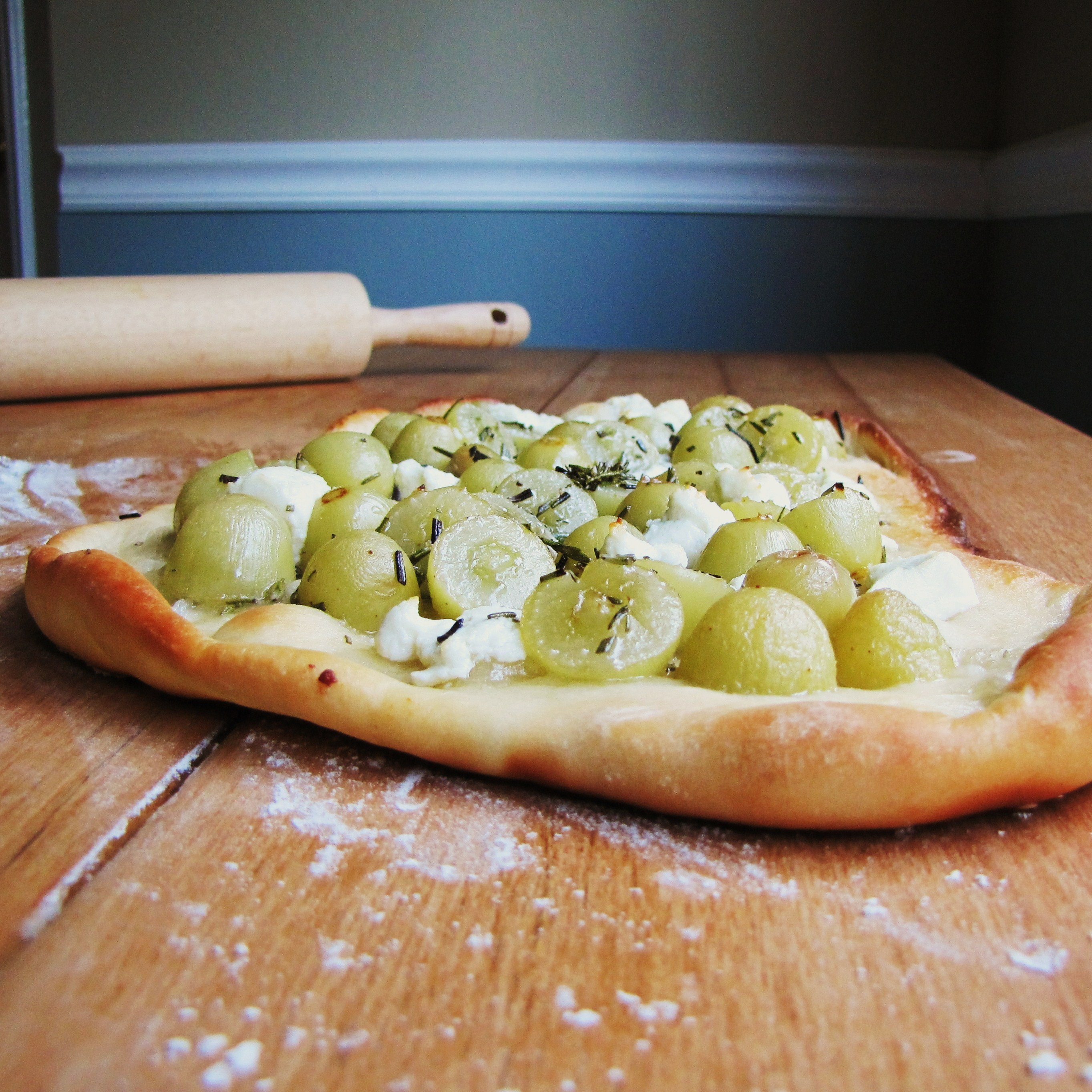
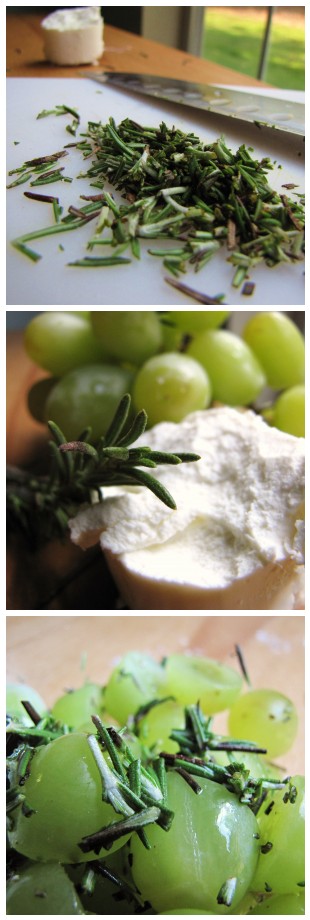
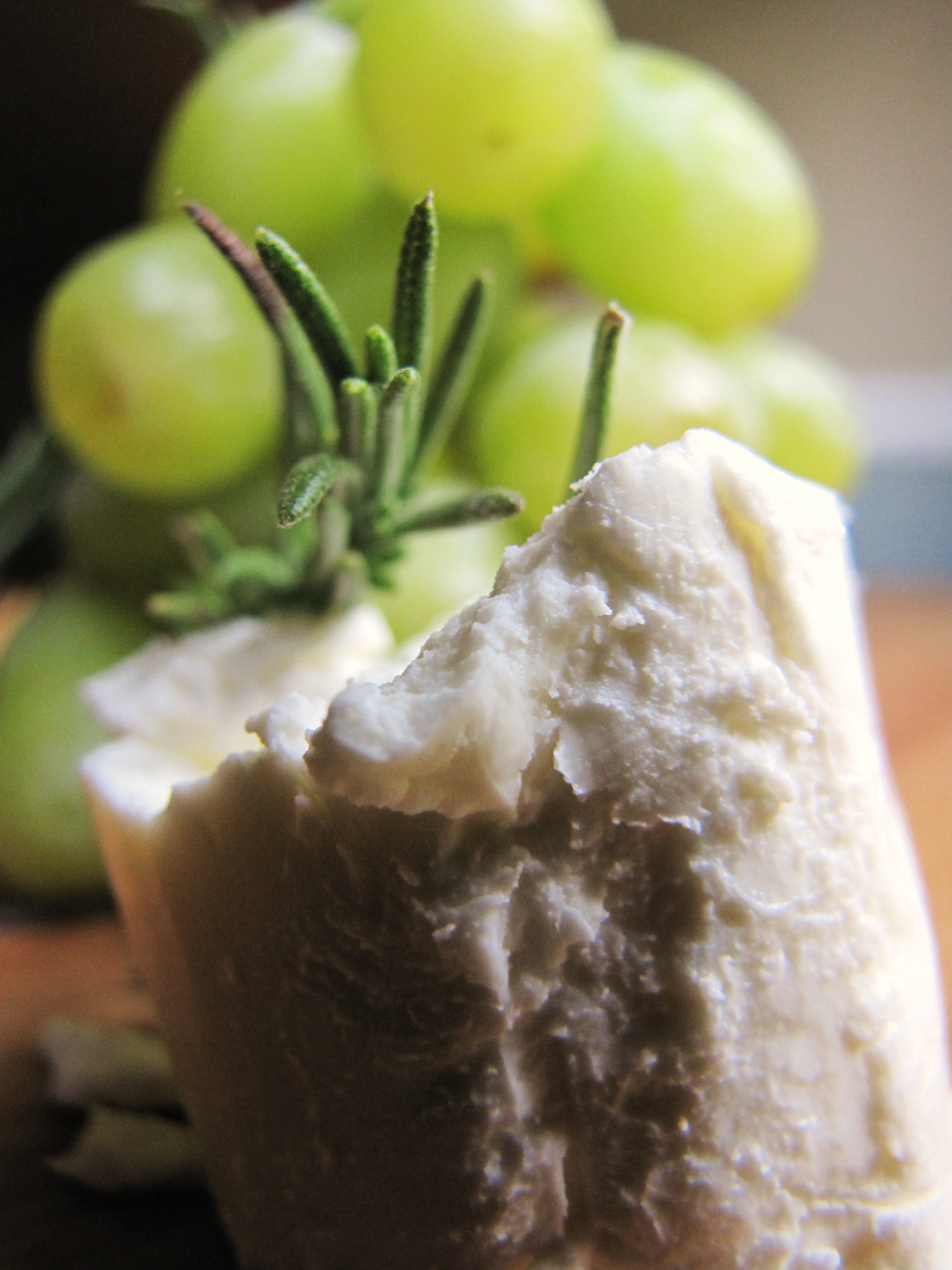
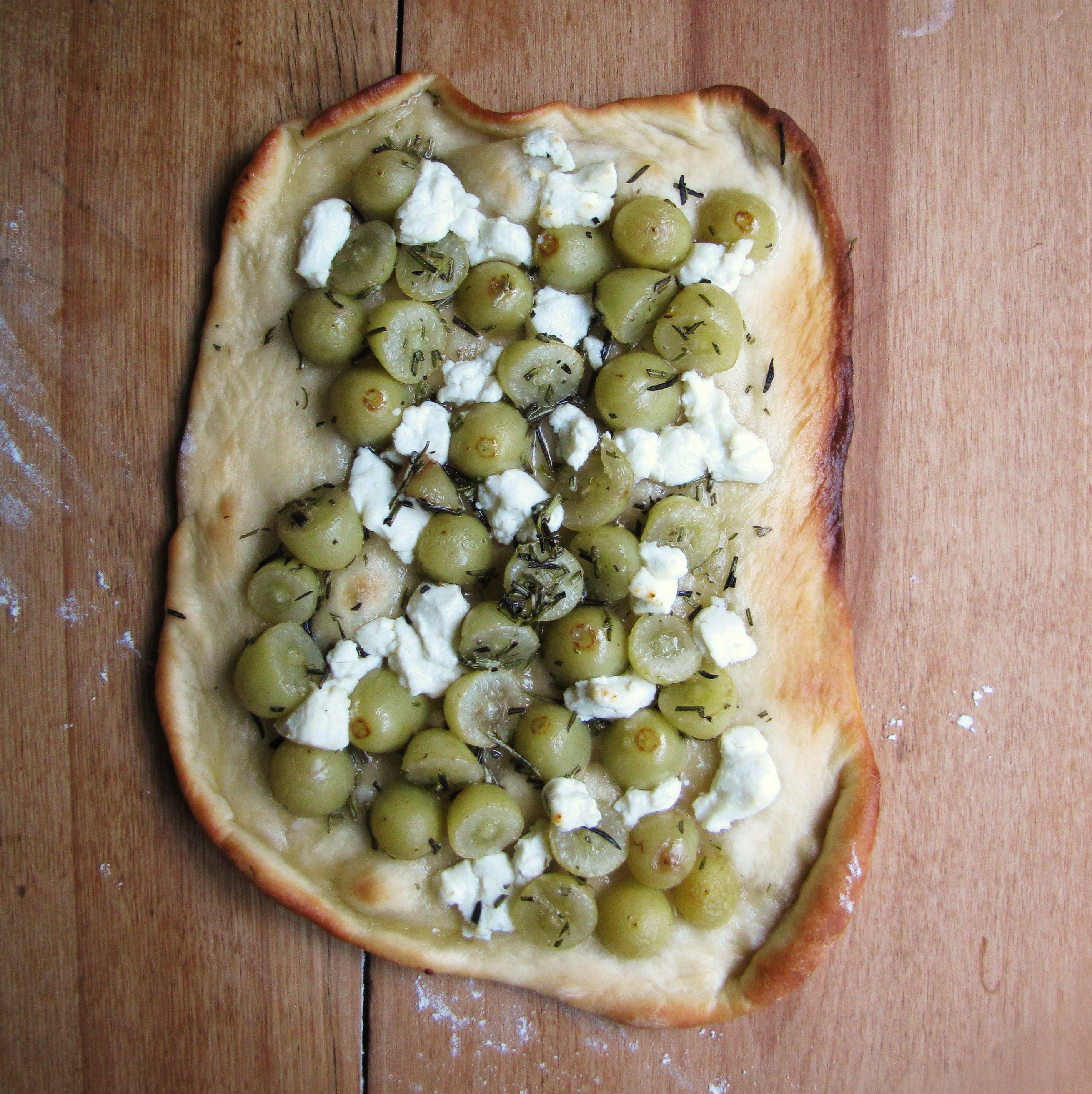
This pizza isn’t really a pizza. It’s more like an elegant, France-inspired summer appetizer that just happens to take the form and name of a pizza.  The stars of this pizza are surprising – pungent rosemary is mixed with fresh, juicy grapes and baked onto a flatbread with creamy goat cheese.  The result is top notch – warm, creamy, sweet, and earthy all at once.

When I decided to write about this pizza I was going to tell you a story about rosemary, a story about a dreamy day spent in Southern France climbing a hillside covered in wild rosemary to watch the sunset over the Mediterranean.  It’s a beautiful story, but I realized that it just doesn’t go with this pizza.  It’s a story for a different day.  So you’ll have to be content with the pizza for now and someday I’ll find the right words and the right flavors to convey that beautiful day in Cassis.

The story that does go with this pizza could be a number of things, and it could belong to anyone.  It’s a Saturday in the end of May, and dusk is just falling, filling the neighborhood with a purply-gray calm.  You’ve spent the day running around barefoot playing like you’re still 12, and the soles of your feet are black and rough.  The fact that it’s summer and it’s nighttime fills you with a childish, uninhibited energy.  You fire up the grill, throw this pizza together on top of naan, and in 10 minutes you have a cheesy and sweet grilled pizza that finishes the day perfectly.  Suddenly you are very tired and you fall contently into bed with the warm night breeze coming through the window.

Alternate version:  It’s a Saturday in the end of May, and you’re sitting on the porch swing watching the light grow yellower as the sun begins to set.  You drink a chilled glass of white wine and feel supremely light and at ease.  You go into the kitchen, turn on the oven, roll out some dough, and in ten minutes you have an elegantly flavored, light dinner that will go perfectly with your second glass of wine.  You return to the porch, and continue to sit and eat and drink and rest as the gentle evening breeze plays with the edges of your sundress and drifts through your hair.

Forgive my romanticism; it’s inescapable.  Go ahead and choose your own story.  But make this pizza.

Rosemary, Grape, and Chevre Pizza

Adapted slightly from Cookie via Epicurious

  • 1 recipe of pizza dough, or 2 pre-made naans
  • 2-3 cups of green grapes, washed and halved
  • 5-6 oz goat cheese
  • 2 TBS rosemary, chopped finely
  • 2 TBS olive oil
  • 2 tsp kosher salt
  1. Preheat oven to 450°F (if using dough).
  2. Mix grapes, 1 TBS olive oil, and rosemary together in a medium bowl.
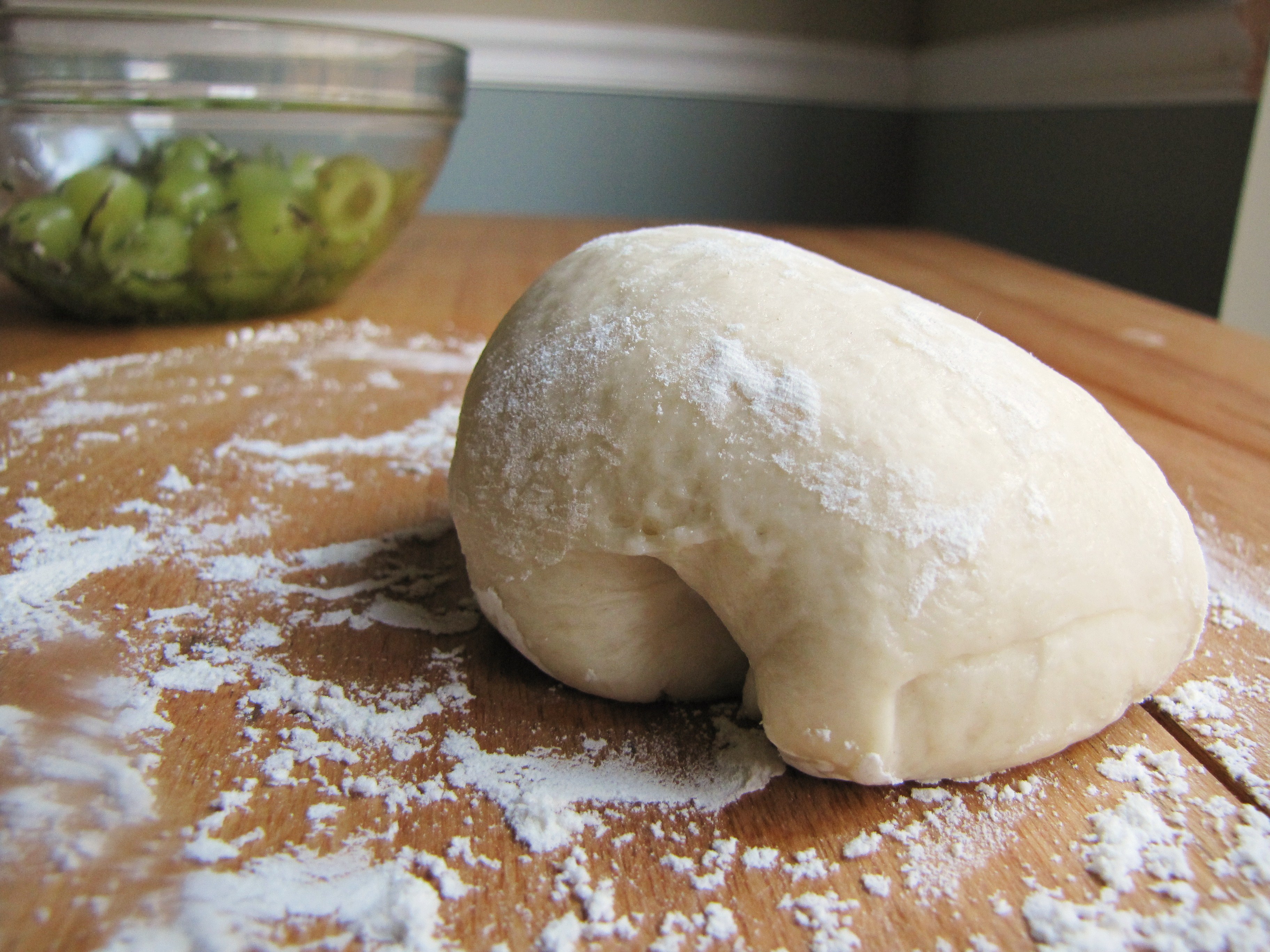
  3. Roll out pizza dough.  Brush dough (or naans) with remaining tablespoon of oil.  Sprinkle kosher salt on top of oil.
  4. Top dough/naans with grape mixture.  Crumble goat cheese over grapes.
  5. If using dough, bake for 9-12 minutes, removing when edges of crust and goat cheese begin to brown.  If using naan, simply broil for 5 minutes.

(I make this pizza in the oven, but if you wish you can use naan or pre-baked your crusts, then top with grapes and cheese and place on grill for 5 minutes)

Lemongrass, Edamame, and Winning

May 3, 2010 Recipe

Lemongrass, Edamame, and Winning

The internet gods have been smiling down on me.  Sometimes, when I don’t feel like exercising, or doing my homework, or socializing, or doing my finances and realizing all of the things that I can’t buy, I enter contests.  Like, I hunt them down and enter them.  OK, maybe its not that extreme, but its sort of fun to daydream about places you’ve never been and books you don’t have when there’s the tiniest hint of real possibility there.  And this weekend, within the time span of 12 hours, I was the lucky winner of not one but two contests.  Me.  Winning.  On the internet.  Even better than winning the party.  And who do I have to thank for this wealth of good luck (besides the internet gods of course)?  Number 1, Pam at Project Foodie, for hosting a wonderful cookbook giveaway while running their annual James Beard Cookbook Awards nomination guide.  I will now be pastry-ing with much greater expertise with the help of The French Culinary Institute.  And number 2, thank you to Georgina at Culinary Travels for hosting a fun mortar and pestle giveaway, which I am very excited to be the winner of.   One day, this blog will be big enough that I’ll be able to host my own giveaways.  That’s mah goal.  But let’s be honest, I’d be just as happy winning stuff forever.

So with that little internet gratitude spiel out of the way, let’s get down to business.  Business this week involves not eating so much damn chocolate and purchasing only the things on my grocery list, which does not include a 6 pack of klondike bars and a box of red velvet cake slices.  Business this week involves things like edamame and bean sprouts.  And lemongrass, which is my food-I’ve-never-had-before of the week.  (Last week was artichokes, the week before that was radishes.  You miss out on a lot when you’re a white bread kid.)  Business this week involves using all that time I have from not taking finals to run and cook protein and veggie rich meals… I mean to study.  Business this week involves a lot of motivation from self.com.  Yes, you got it, it’s a week of healthy(-er than usual) living.  Please hold me accountable.

So about that lemongrass.

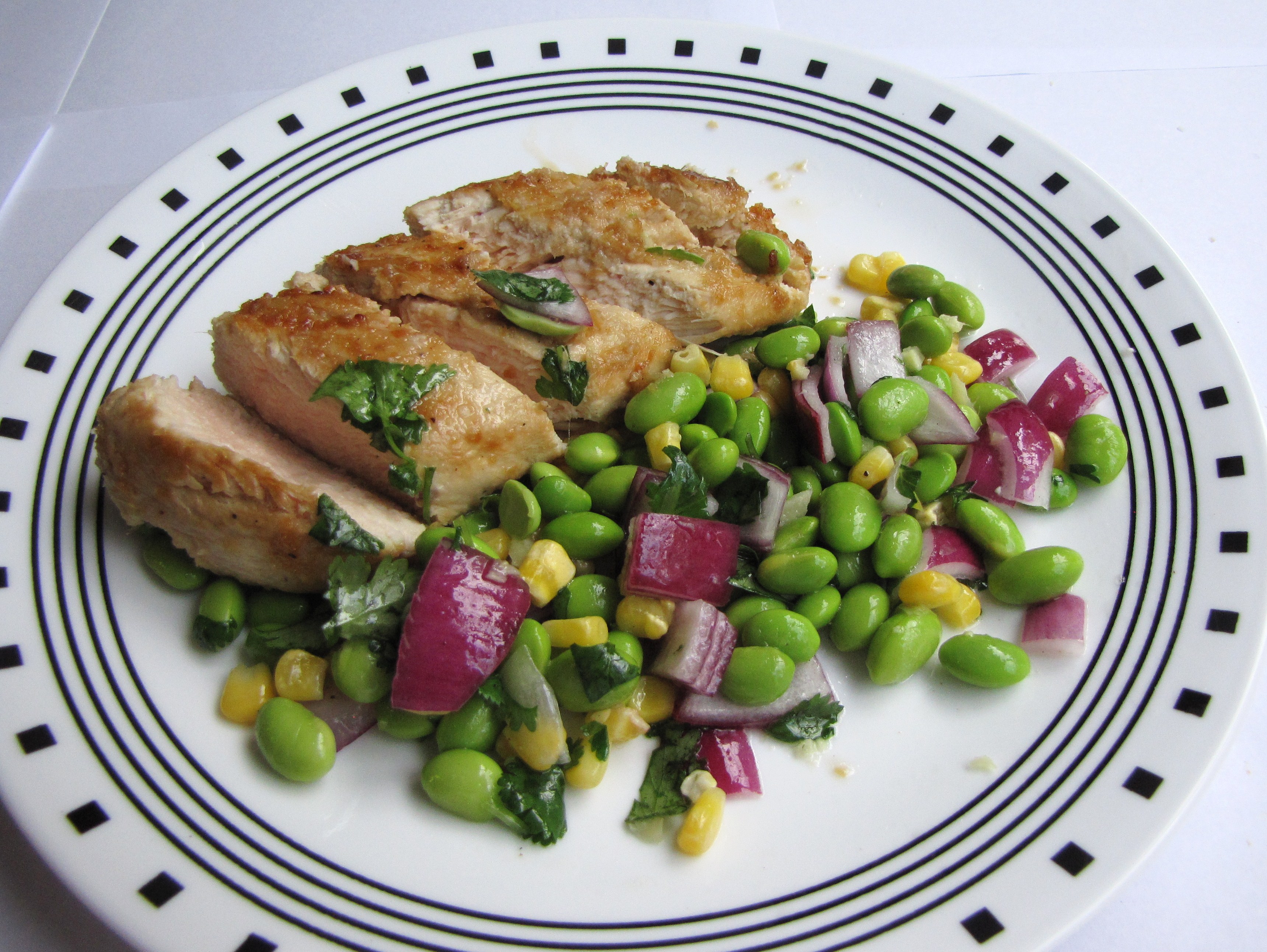
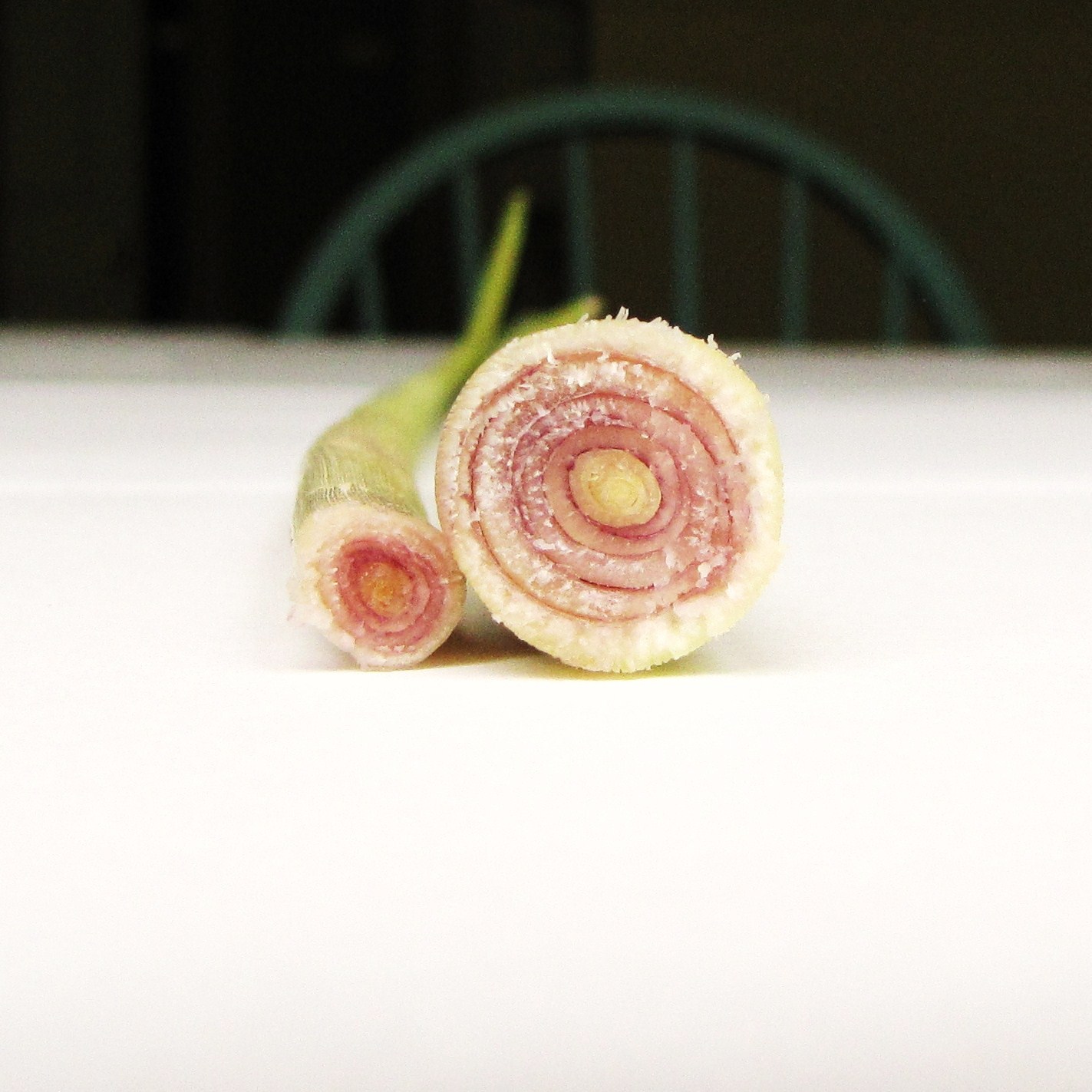
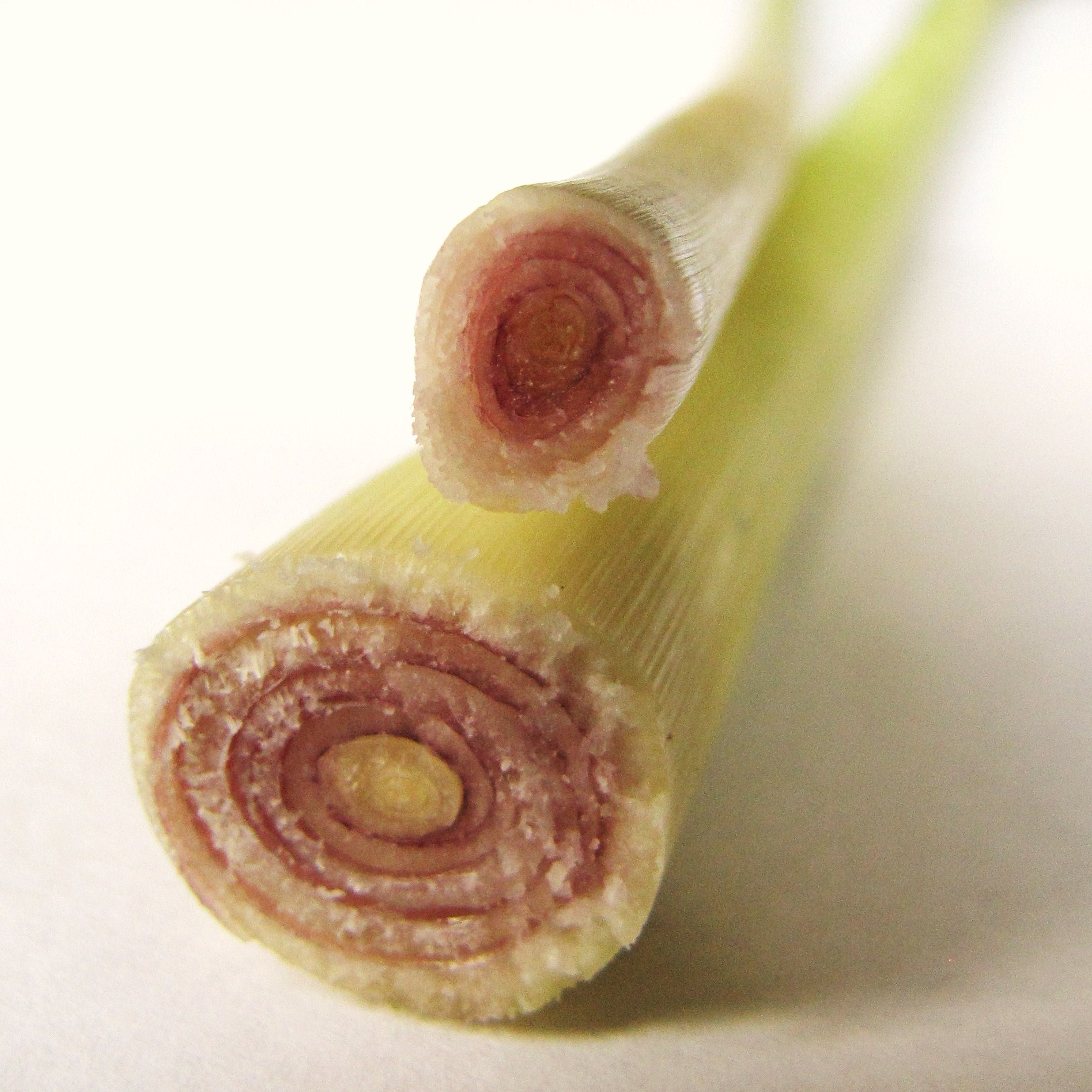
Lemongrass is a tall, grass-like plant native to India, and is most often associated with Thai cuisine.  It is used like an herb to flavor curries, soups, and to make tea, and it smells incredible.  Plus, it has cancer-fighting properties.  Big win for lemongrass.  Lemongrass is playing its part in my kitchen this week as the co-star of a lemongrass-ginger chicken dish.  The chicken came out sweet, a little bit punchy, and very tender.  I would make it again but not in a huge hurry.  The marinade smelled and tasted delicious on its own though, so I might use it as a dressing or sauce for a curry dish or stir fry.  There are possibilities here.

And the edamame?

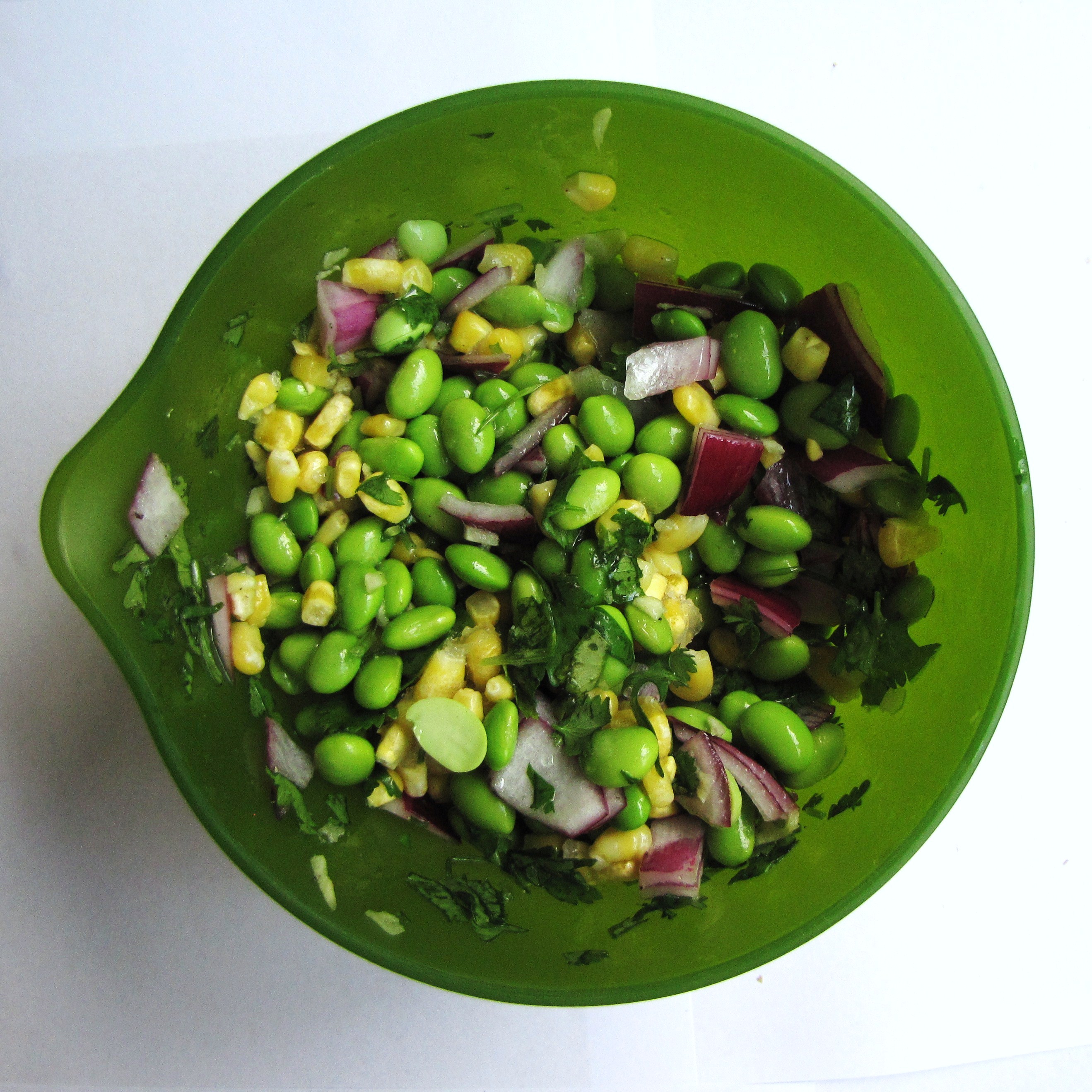
Edamame, soybeans that are harvested while they’re still young and green, have a myriad of health benefits.  They’re a complete protein and are high in fiber, meaning they’re extremely filling, but a half cup serving only contains 120 calories.  They’re full of vitamin C, and they’re good for your heart, your bones, your kidney, your cholesterol, and probably everything else too.  I used them in a light salad recipe that was a great surprise – it was fresh, bright, filling, and packed with flavor and texture.  I will now be making it all the time, and since it only takes 5 minutes and a handful of ingredients, I recommend you try it too.  Its really good.  Like, really.

So thus began my healthful week.  I may have accidentally maybe also baked and possibly consumed a strawberry-rhubarb crumble to follow the edamame and chicken meal, but I’m blaming that entirely on the rock-bottom strawberry prices.  And the fact that strawberries happen to taste delicious when baked in sugar and lemon juice and covered with crumbly buttery topping.  Which isn’t my fault.  But I’ll try not to let it happen again… this week.

Lemongrass-Ginger Chicken

Adapted very slightly from SELF

  • 4 skinless boneless chicken breasts
  • 3 stalks fresh lemongrass
  • 2 medium shallots, peeled and quartered
  • 1 inch piece of fresh ginger, peeled
  • 1/4 c. canola oil
  • 1/4 c. fresh lime juice
  • 2 TBS brown sugar
  • 1 TBS soy sauce
  • 1 tsp ground coriander
  • 1 1/2 tsp kosher salt
  • 1 tsp black pepper
  1. Prepare the lemongrass: peel the tough outer leaves of the stalk off so that the softer, yellow part is exposed.  Remove the bulb by cutting about an inch off of the bottom of the stalk.  Discard bulb.  Slice remainder of stalk into 1 inch pieces, stopping after 3/4 of the stalk has been removed.  Discard the top 1/4 of the stalk (green, leafy), or save and use as garnish or to flavor soups/curries.  Don’t eat the top part of the stalk.  See about.com for picture guide to preparing lemongrass.
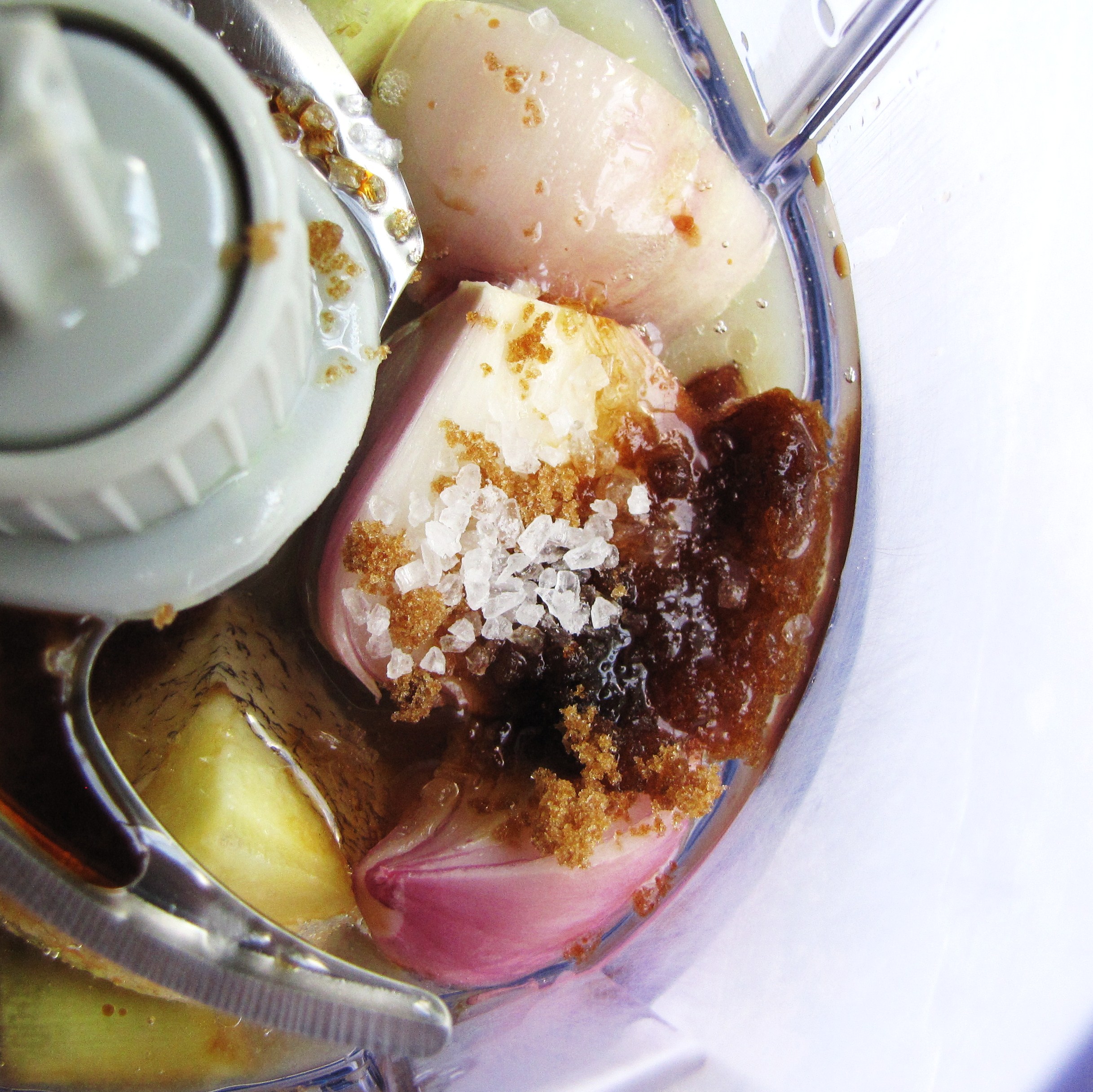
  2. Place prepared lemongrass, shallots, ginger, canola oil, lime juice, brown sugar, soy sauce, coriander, salt, and pepper in blender or food processor.  Blend/process until smooth.
  3. Place chicken in large ziploc bag.  Pour marinade over chicken and close bag.  Gently shake/squeeze bag to coat chicken thoroughly with marinade.  Place chicken in fridge for at least 1 and up to 6 hours.
  4. Remove chicken from fridge.  Heat a small amount of canola oil over medium-high heat in large frying pan.  Place chicken breasts in pan and cook for 2 minutes on each side.  Reduce heat to medium and continue to cook chicken until it is cooked through, about 6 minutes per side.

Edamame and Corn Salad

Adapted from SELF

  • 1 c. frozen corn
  • 1 c. frozen edamame
  • 1/2 large red onion, diced
  • 3 TBS chopped fresh cilantro
  • 1 TBS olive oil
  • 1 1/2 TBS fresh lemon juice
  • 1 inch piece fresh ginger, peeled and finely chopped
  • 1 tsp kosher salt
  • 1/2 tsp black pepper
  1. Cook edamame according to package instructions.  Let cool slightly.
  2. Mix all ingredients in medium bowl, tasting as you go and adjusting proportions accordingly.
  3. Refrigerate and serve cold.
Overdue Granola

April 22, 2010 Recipe

Overdue Granola

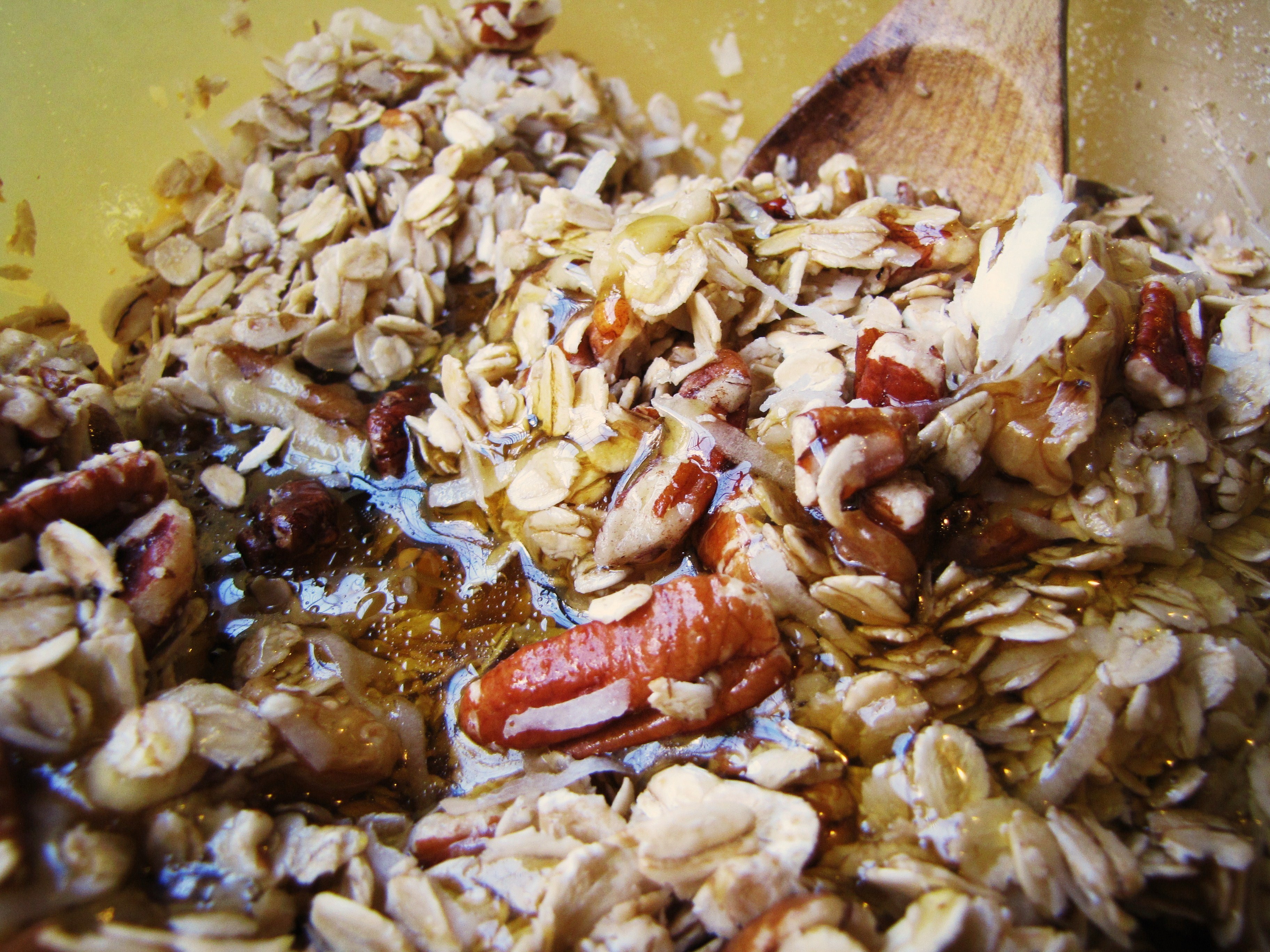
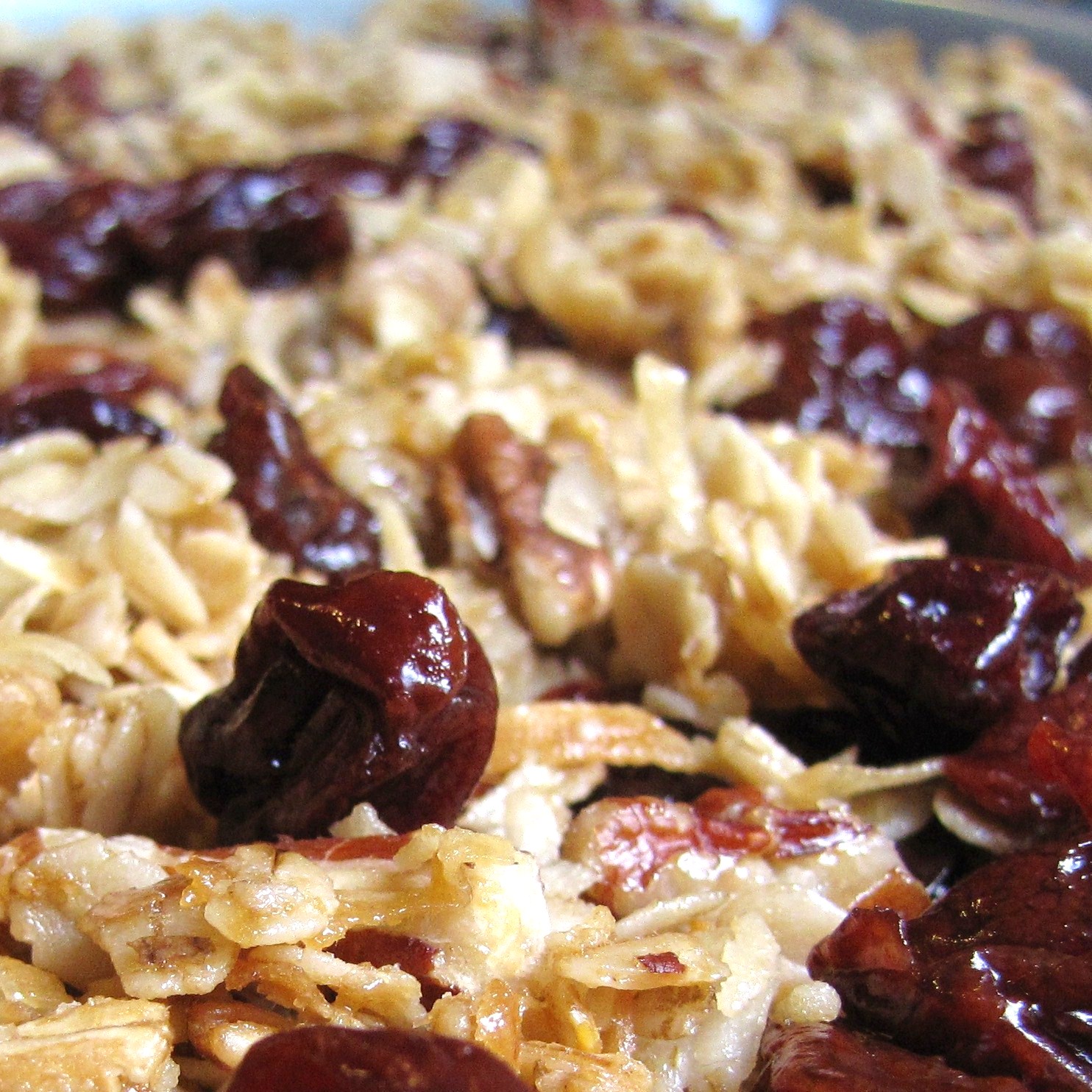
I have a confession to make.  I made and photographed this granola on April 8th.  Yes, that was two full weeks ago.  Yes, there is still some granola in my cupboard (and  yes I plan on eating it because I am a college student and college students don’t believe in food going bad).  I even had this whole post planned about my mom, and how she makes this incredible granola that my dad thinks she should sell, and how she just came to visit me and we had a fabulous time hiking in Western North Carolina… but then what happened was I got too busy actually doing the hiking in Western North Carolina (and the sitting in our private hot tub afterward).  And then I got home and had five major engineering assignments to complete in as many days.  And then suddenly Trevor was here and we were celebrating my 21st birthday with a pitcher of sangria in the Duke Gardens and although we did make some delicious things – french toast with cinnamon syrup, farfalle salad with pesto and kalamata olives, lemon squares, and, uh, duh, sangria – I was not about to spend that precious three days attempting to get the lighting on those lemon squares perfect.  And then finally I sat down last night to write about the stupid granola and I was suddenly overwhelmingly excited about falafel.  Life.  It happens.

But now you know all of the things I was going to say!  To recap: mom is awesome, hiking is awesome, birthdays are awesome, Trevor is awesome, granola is awesome.  Everything else you need to know is in the recipe below.  Oh, and even if you don’t make this granola, make your own granola.  It’s about 8 billion times better than anything you can get at the store.  Even than what you can get in the grain bins at Wholefoods.  Promise.

Granola

  • 2 c. oats
  • 1/2 c. sweetened, flaked coconut
  • 1 c. nuts (chopped if desired)
  • short 1/2 c. canola oil
  • full 1/2 c. honey
  • 1 c. dried fruit
  1. Preheat the oven to 300°F
  2. Mix together oats, coconut, and nuts in a large bowl.  Measure oil and stir in.  Measure honey in same cup (makes the honey slide out more easily) and stir in until evenly coated.  The more honey you use, the bigger your granola clumps will be.  You should use slightly more honey than oil.
  3. Spread granola evenly on a baking sheet with sides.  Bake for 12 minutes, remove from oven, and stir to keep from burning.  Return to oven and continue baking for 12 minutes.
  4. Remove from oven, and put back in bowl.  Stir in dried fruit and let cool.  Store in ziploc baggies.

*I almost always use dried cherries as my fruit and walnuts and pecans as my nuts, but you can use anything.  I’m really of the opinion that the cherries are essential though.

One Word Wonders

April 21, 2010 Middle-Eastern

One Word Wonders

I realized that one of the things that is so appealing to me about Middle Eastern and Greek foods is the names.  Tabbouleh.  Falafel.  Mujadarrah. Melomakarona.  Tzatziki.  Baklava.  They’re just these great, exotic words that roll deliciously around your mouth.  And, where many contemporary American recipes read something like Mini-Rack of Lamb with Nutty Beluga Lentils and Sauteed Garlic Spinach or Frisee and Endive Salad with Warm Brussel Sprouts and Toasted Pecans, these exotic sounding words are just that – words.  One single word that conjures up a complete flavor profile and emotion all at once, rather than the “sum of parts” tactic that the long, ingredient-listing naming convention employs.  I like that conciseness.  I like hearing “baklava” and getting this complete association something along the lines of “honey flaky nutty crunchy yum pastry sunny sticky.”  Not that the long names aren’t useful – you can build up the flavors and textures and even temperatures listed in your mind until you’ve reached your idea of the final product, and in some ways it allows more room for imagination.  But I think overall I’m really more partial to the use of a single, perfect word.

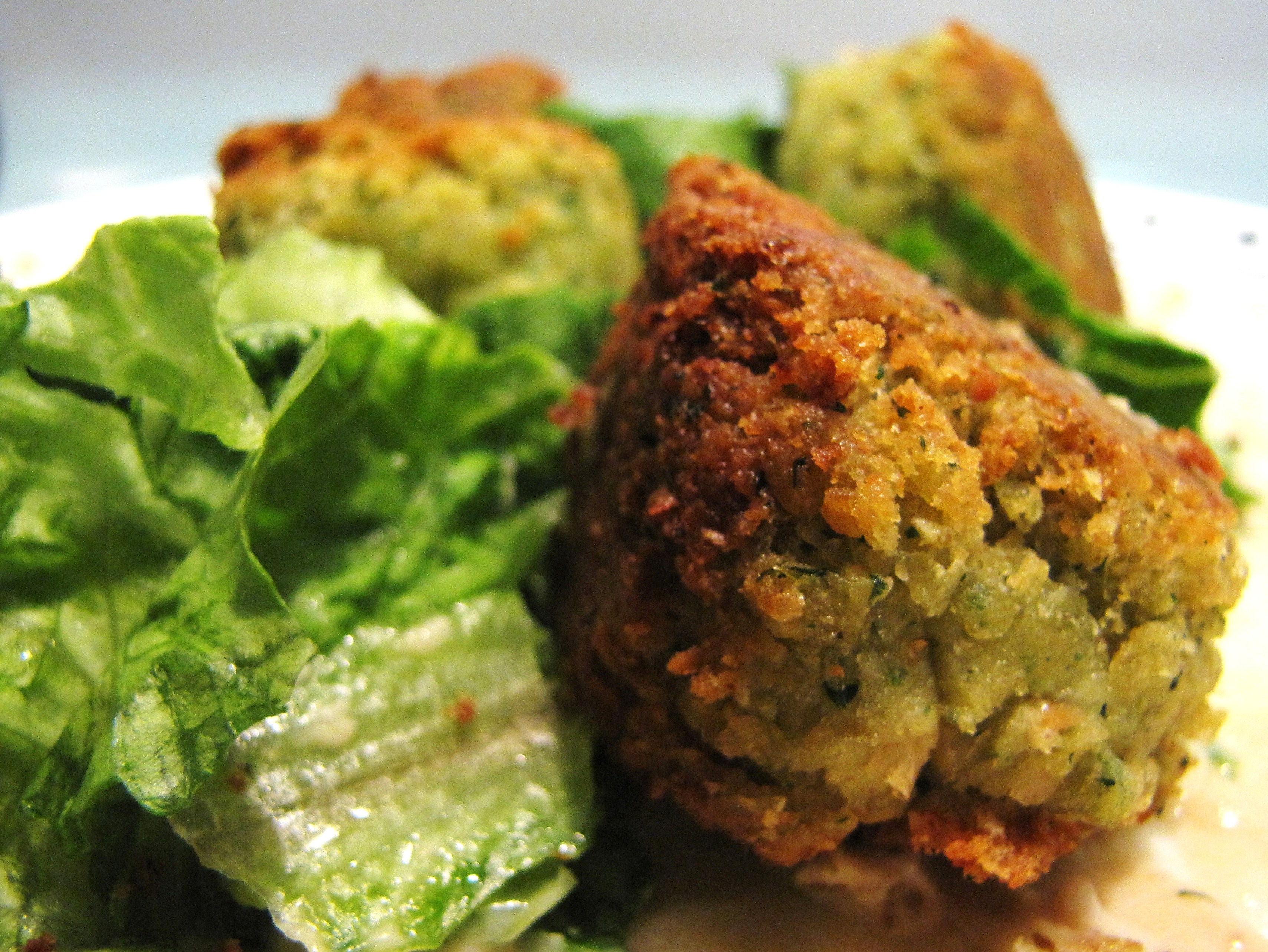
Falafel is a word that has many associations for me.  I hear it and I see tiny window counters with brightly colored signs popping out of ancient cobbled walls.  I feel a warm paper wrapper in my hands, heavy with food.  I hear the crunch of lettuce and fried batter with a background of fast, loud interjections in a musical language that I don’t understand.  And most importantly I taste warm, crispy chickpeas and bright, tangy tzatziki and crunchy, pickled turnips and soft, floury pita.  Oh yum.  Street falafel.

Although I no longer live in a world where street falafel is available, thankfully falafel is very easy to make.  If someone who has only been cooking for about a year can have staples, falafel is one of my staples.  I.e.  I’ve made it 3 times in the last 3 months: once for a dinner with Justin (that time I went all out and made Deb’s homemade pita which was SO good, if a bit labor intensive), once with Trevor for his dad and step-mother (for a dinner during which I drank one entire bottle of red wine from a juice tumbler to save it from certain death by way of the kitchen sink), and once today, when I suddenly decided that it was the only thing I could imagine eating.

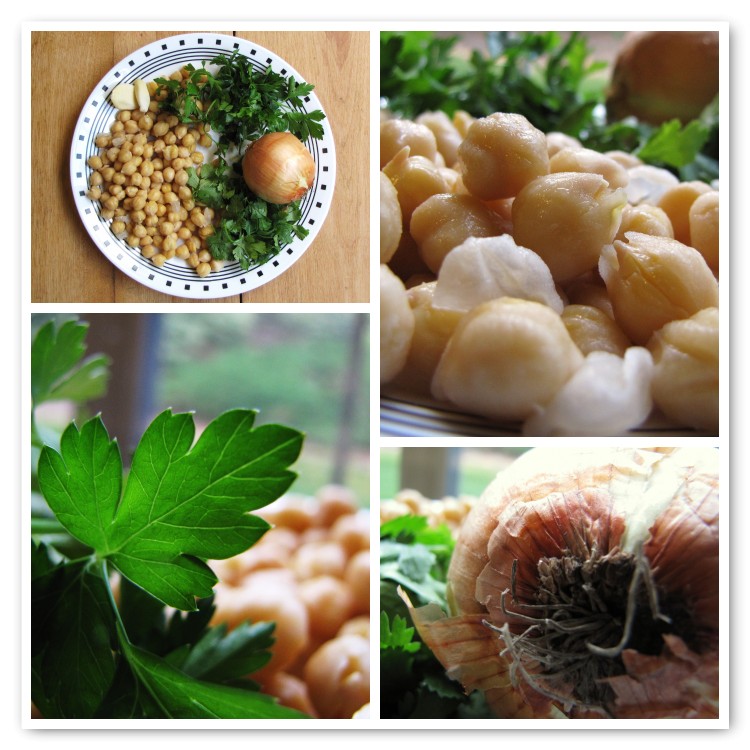
I only have a few tips for getting crispy-on-the-outside-but-soft-on-the-inside falafel. One, you want there to be some chunks in the falafel dough, so process the onions, garlic, herbs, and spices very finely before adding the chickpeas.  Then you can pulse the mixture with the chickpeas just until the dough is mostly smooth with a few larger chickpeas pieces.  Two, dry all of your ingredients off to the best of your ability before processing them.  This will help the dough to stick together while it’s being fried. Three, you don’t need to fry these in 3 inches of oil to get crispy brown falafel, as the original recipe suggests.  However, do make sure that the bottom of the frying pan is substantially covered.  And four, the refrigeration step is optional.  I’ve done it both ways, and while the falafel balls do stay together better if you refrigerate them first, if you’re starving and can’t wait the final product won’t suffer much if you just plop them in the pan as soon as they’re blended.

Falafel

Adapted slightly from “The Foods of Israel Today” via epicurious

  • 2 c. cooked chickpeas (or canned chickpeas, drained)
  • 2-4 cloves garlic
  • 1/2 medium onion, quartered
  • 1/2 c. loose parsley leaves
  • 1/2 c. loose cilantro leaves
  • 1/4 tsp red pepper flakes
  • 2 tsp cumin
  • 1 – 2 tsp salt
  • 1 tsp baking powder
  • 4 – 6 TBS flower
  • vegetable oil for frying
  1. Place the onions, garlic, parsley, cilantro, red pepper flakes, cumin, and salt in a food processor.  Blend until finely minced.
  2. Add chickpeas, patted dry, to the food processor, and blend using short pulses, until the mixture is mostly smooth with some larger chickpea pieces.
  3. Turn dough out into a bowl and stir in baking powder and flour.  You have added enough flour when the dough forms a ball without sticking to your hands.  Cover dough and refrigerate for at least 1 hour.
  4. Cover bottom of large frying pan with oil and heat for 2-3 minutes over medium-high heat.  Working in batches, form small balls of dough and drop into hot oil.  Allow to fry for 3-4 minutes, then turn balls to expose fried part and continue frying.  Keep frying until you have fried most of the falafel surface.  Remove from pan and drain on paper towels.  Serve warm in a pita stuffed with lettuce, tomatoes, pickled turnips, and tzatziki.
A Kosher Easter Dinner

April 6, 2010 Dessert

A Kosher Easter Dinner

Due to the 93° weather and the thick layer of yellow pollen covering everything, including  me on my walk to school every morning, I am not celebrating spring in quite the same way I was last weekend.  I could celebrate a thunderstorm.  I could celebrate the pool opening.  I could celebrate the discovery of running clothes with built in air-conditioning.  Spring’s not cutting it anymore though.

I did, however, have several things to celebrate recently.  Last night Duke won the NCAA Men’s Championship for the first time since 2001 and it was a great game.  (We did not, however, get school off, as had been cruelly rumored.)  And, of course, Easter.  That’s a big one.  It always makes me a little sad not being with my family on Easter weekend, so I decided to have a little dinner party for all my friends who didn’t have plans.  Tuns out 75% of them were Jewish.  :-)

It wasn’t really on purpose, but the entire meal ended up being Kosher.  Which I found a little but funny.  But it was really, really a delicious meal.  See, when you can’t use flour, you end up using a lot more butter, cream, eggs, and cheese (although I guess you could go the other way and use a lot more vegetables … oh well).  And regardless of your cooking ability, butter, cream, eggs, and cheese make pretty much everything taste good.  The amount of leftovers of all this delicious dairy-full food that we have (had) is either great news or really bad news.  Withholding the verdict.

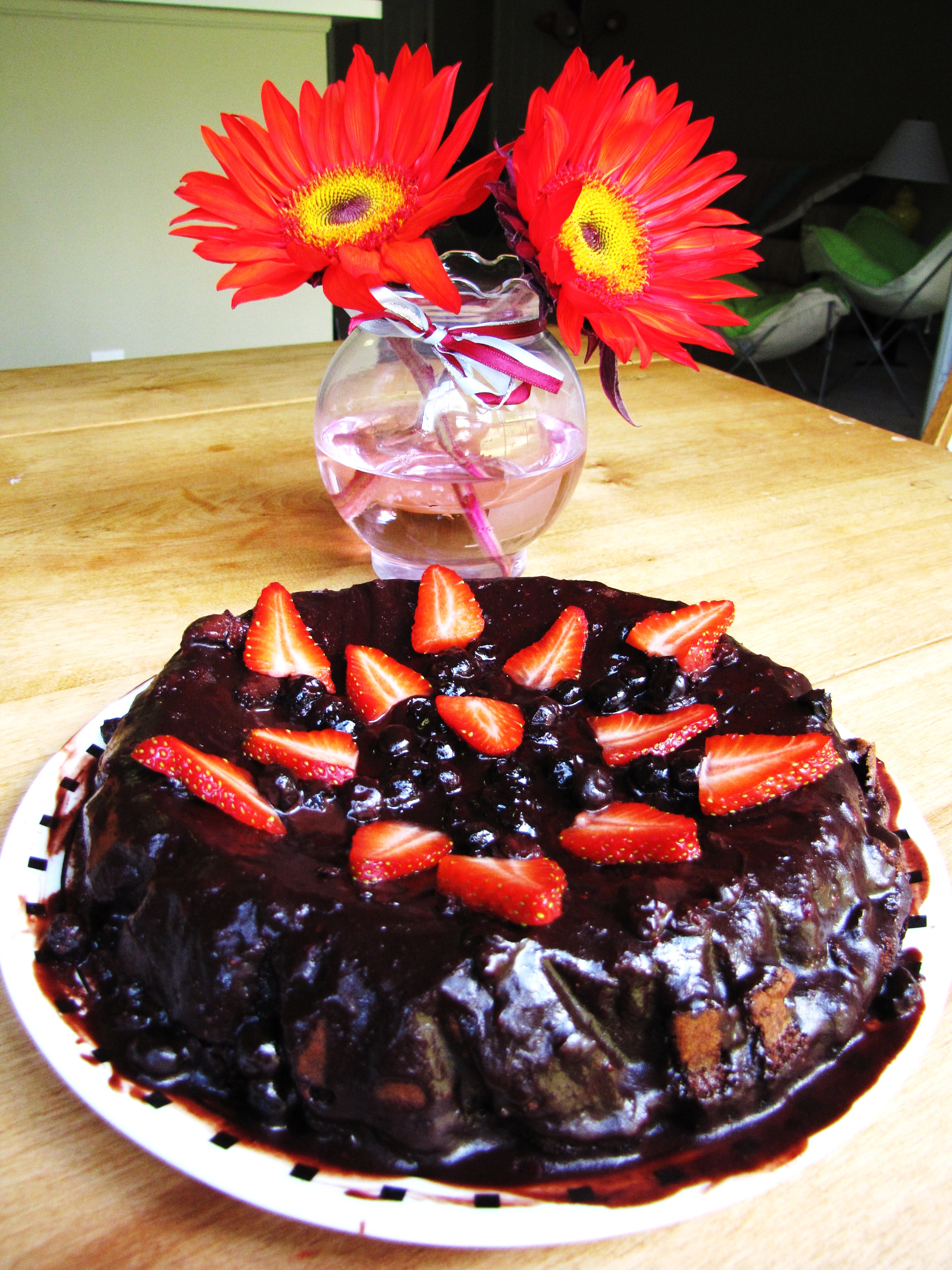
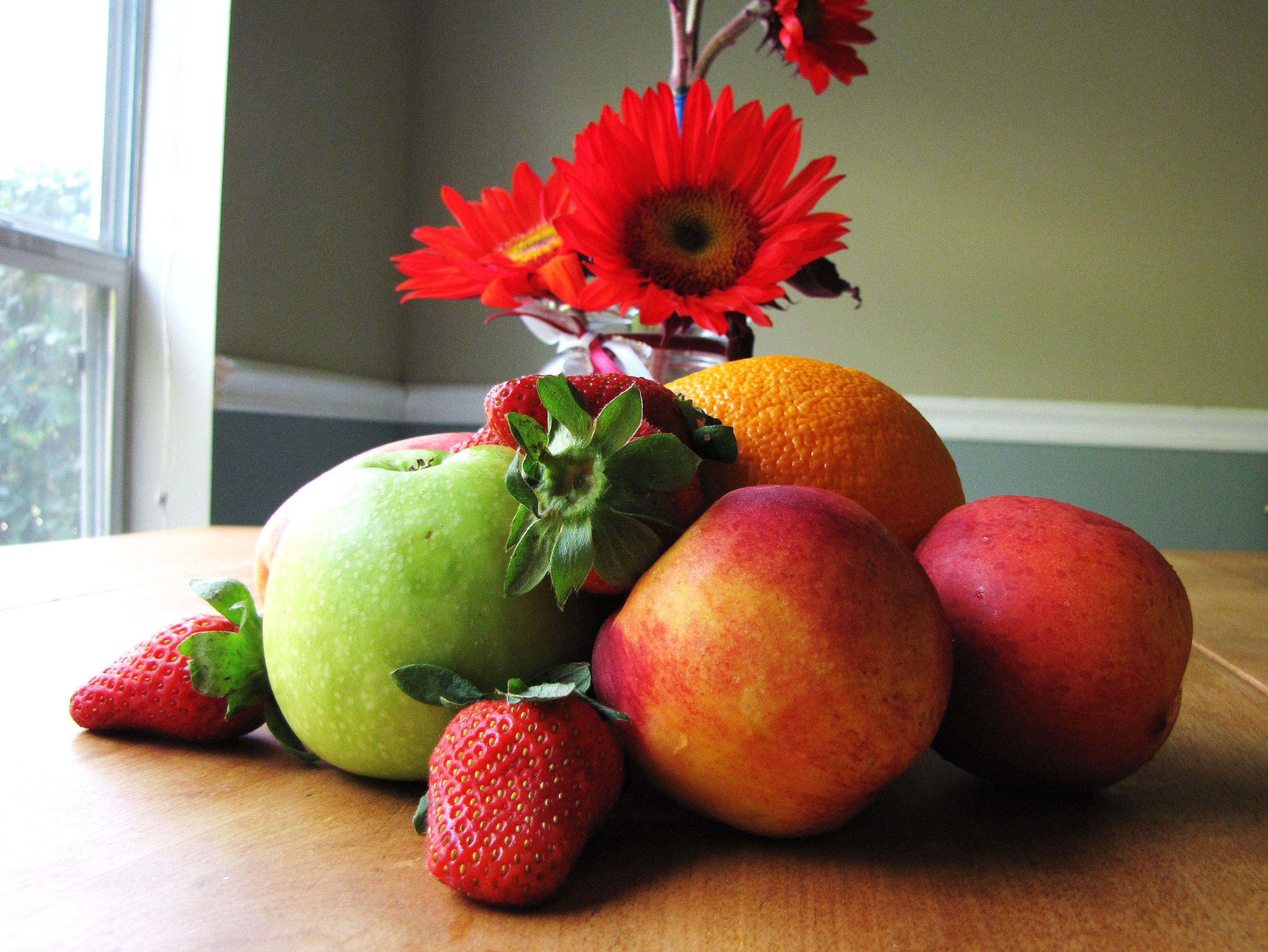
So, what did we eat?  Fruit salad with the most perfectly ripe nectarines, an egg casserole full of feta cheese, sun-dried tomatoes, and basil, scalloped potatoes, an Easter staple, updated with sage and thyme, and a flourless chocolate torte, which is really the main subject of this post.

This torte, it is really good.  And it is really bad for you.  But one slice (and you can easily get 16 slices out of one torte) satisfies my deepest chocolate cravings, voiding the need for me to continually reach my hand into the chocolate chip bag that I keep open just inside the cabinet for some unknown, slightly sadistic reason.  I’ve made it several times and it comes out well no matter what mistakes I make while making it.  This time, my largest round pan was a little too small and it took about 15 minutes longer to bake than it usually does.  Not a problem, right?  Generally, unless you put the cake in exactly 42 minutes before you had to leave for church on Easter Sunday and you’re forced to choose between an underdone cake and being 20 minutes late to Mass.  I chose the cake; I’m offering a piece up to God in apology

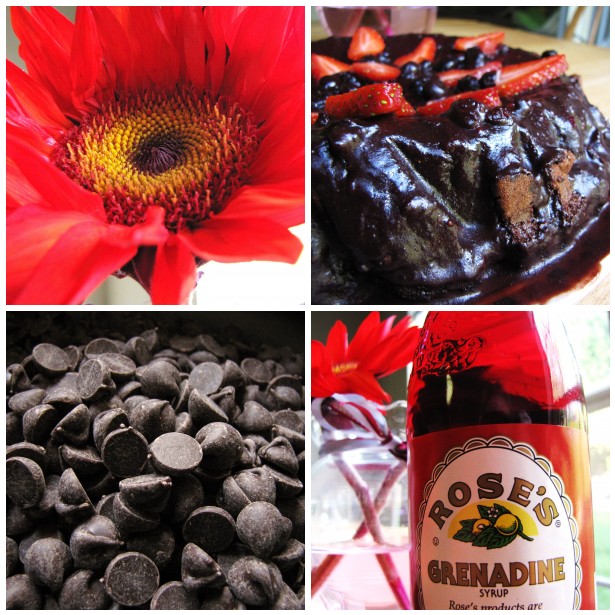
I’ve adapted the cake recipe very slightly from Bon Appetit, and pretty much make up the glaze as I go depending on how much time I have.  The first time I went all out and made the coulis ahead of time and then did the glaze the next day and it was way more effort than it was worth.  Especially since the coulis recipe made about 3 cups and then the glaze only called for 2 tablespoons.  So now I just throw some frozen fruit, chocolate chips, sugar, and a pat of butter in a pan, mash the fruit and chocolate together, and dump it on the cake.  Unceremonious, perhaps, but it tastes great.

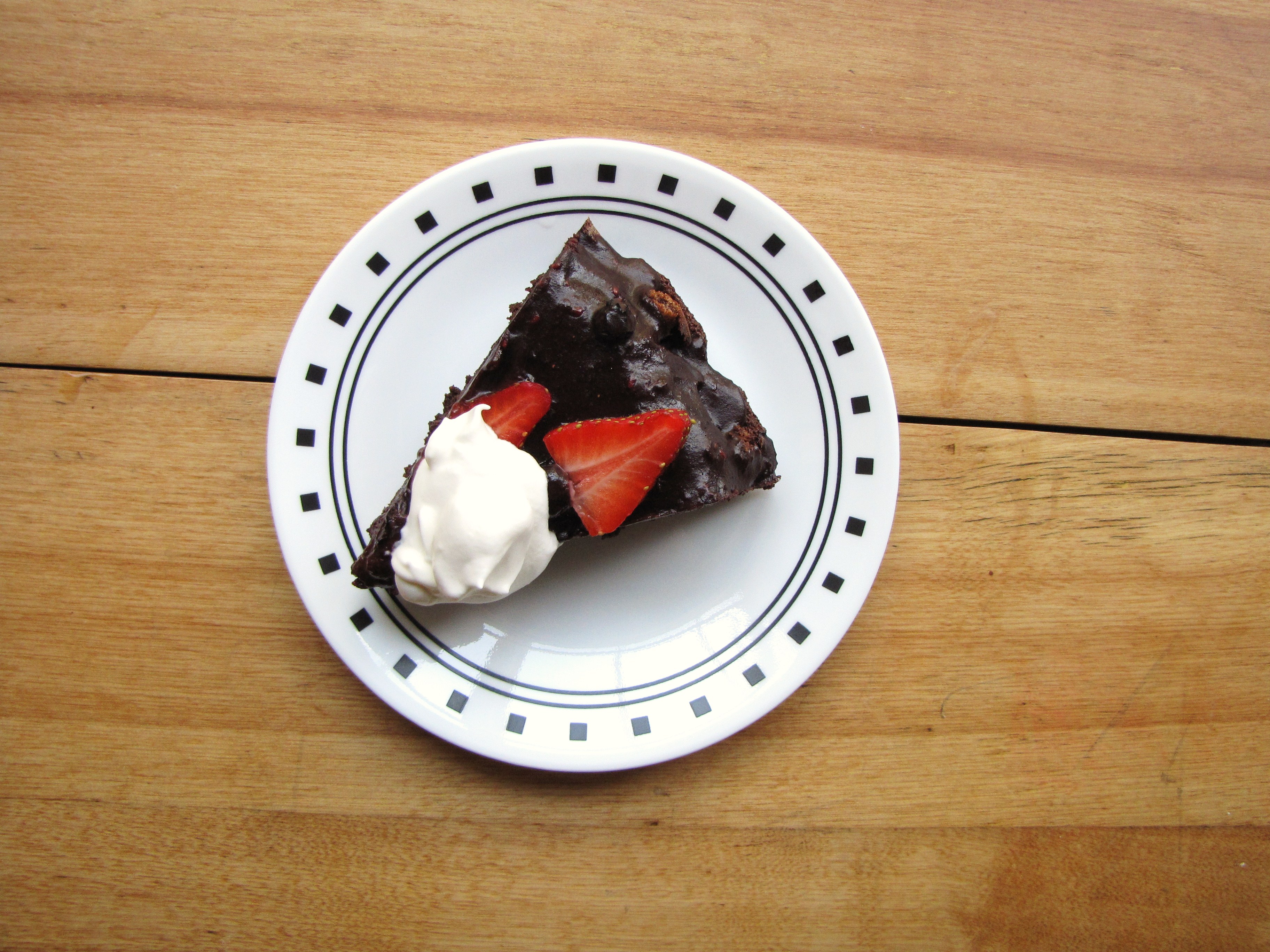
Two serving suggestions: it’s the best straight out of the fridge and a dollop of whipped cream really pulls all the flavors together.  So enjoy!  And next time I’ll try and write about something that’s not dessert.

Dark Chocolate Torte with Raspberry Glaze

Adapted from Bon Appetit, April 2006

For the cake:

  • 1 2/3 c. semisweet chocolate chips
  • 3/4 c. salted butter
  • 1/4 c. cocoa powder
  • 1 tsp. cinnamon OR instant espresso powder
  • 5 large eggs
  • 1 c. sugar
  1. Preheat oven to 350°F.  Line 9 inch round pan, preferably a springform, with parchment paper (the paper is essential for presentation if not using a springform pan.  If presentation doesn’t matter, just butter and flour the pan and leave the torte in there to serve).
  2. Melt chocolate chips and butter in a medium saucepan over medium heat, stirring regularly, until smooth.  Whisk in cocoa, remove from heat, and let cool for10 minutes.
  3. Using an electric mixer, beat eggs and sugar together on medium speed until thick, 4-6 minutes.  Fold cooled chocolate into egg and sugar mixture, blending well.
  4. Pour batter into prepared pan, and bake until dry and beginning to crack on top, about 40-50 minutes.  Toothpick test should come out with some moist crumbs, but not wet.
  5. Let torte cool in pan for about an hour, then invert onto serving plate (removing sides first if using a springform pan).  Let cool completely.

For glaze:

  • 1 c. frozen raspberries or other frozen berries
  • 3 T sugar
  • 2 T water
  • 3/4 c. chocolate chips
  • 2 T butter
  1. Stir fruit, sugar, and water in saucepan over medium heat, until syrupy, mashing berries with spoon.  Add chocolate and butter, and stir just until smooth.  Remove from heat.
  2. Allow glaze to cool 10 minutes, than pour over top of cake.  Spread on top and push over sides.  Put cake in fridge until glaze is set, about 30 minutes.  Serve cold, with whipped cream.
Celebrating with Lemons

March 27, 2010 Dessert

Celebrating with Lemons

Color has returned to the world!  And with it comes the promise of never-ending sunshine, bare feet in wet grass, pitchers of ice-cold lemonade, road trips with the windows down, drippy ice cream cones, gauzy sundresses, fresh cherries in a bowl on the counter, and all the other beautiful gifts of summer.  Since the above list contains some of my favorite things in the world, I have decided that a small celebration involving me, my kitchen, and lemons is in order.

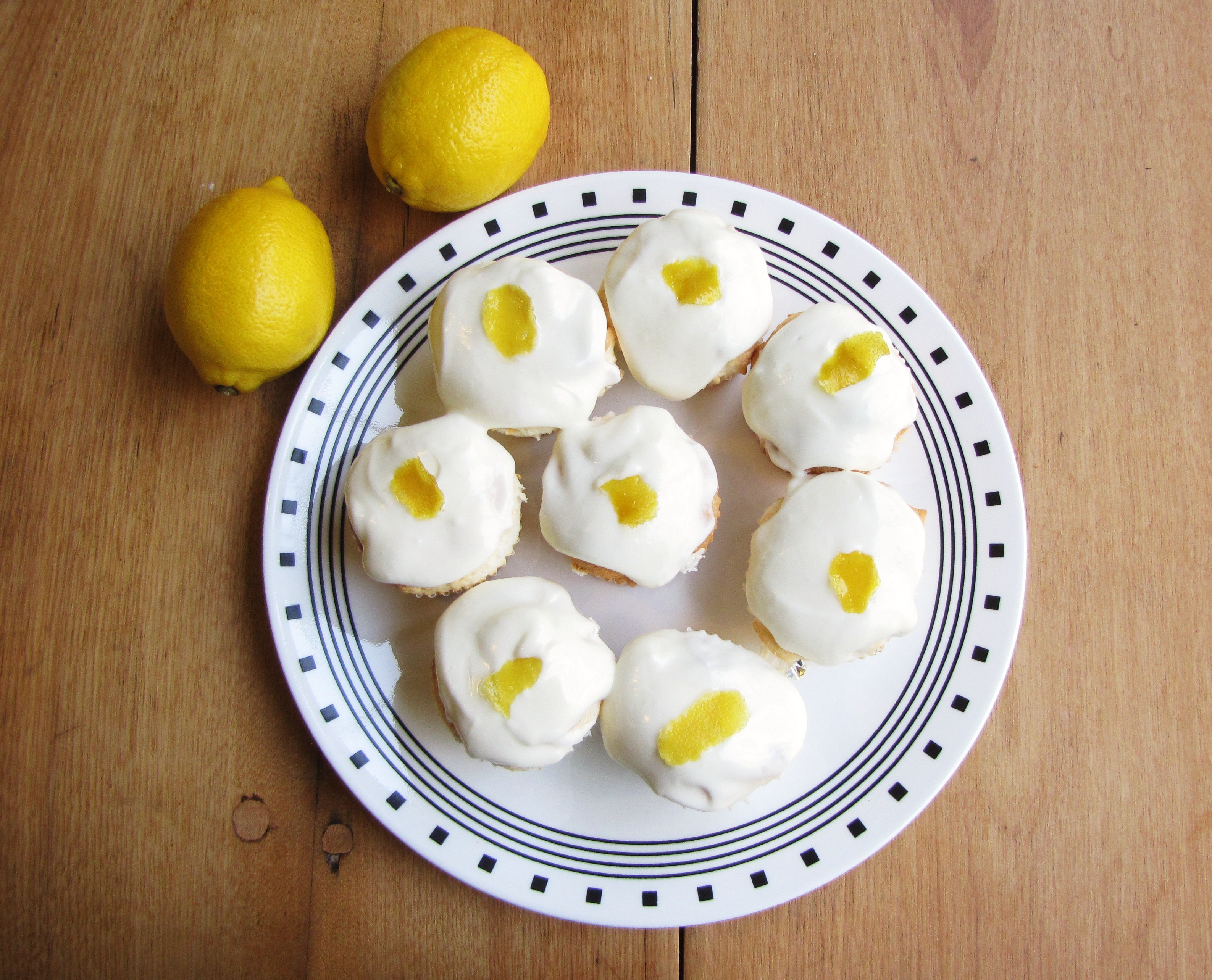
I spent Monday night browsing Tartelette and La Tartine Gourmande fantasizing about what sort of beautifully and elegant spring dessert I wanted to make the next weekend and drooling over their beautiful pictures of their summers at childhood homes in Southern France.  One day I will have been born in Southern France and spend my summers at my ancestral home making tarts from the fresh currants in my garden and sipping cassis at my ancient stone table while looking out over the fields of lavender from underneath an olive tree… until then I will read and re-read Peter Mayle’s A Year in Provence and watch Russell Crowe do what, rightfully, I should be doing in A Good Year.   (Actually I highly recommend both the novel and the film – they are literary/cinemographic floo powder to France.)  I toyed with the idea of an elegant version of strawberry shortcake, because strawberries are on sale everywhere right now, or perhaps a trifle-like dish with strawberry and raspberry mouses between layers of almond flavored angel food cake, or maybe a blackberry and mascarpone tart…  And then Tuesday morning, it hit me – all I’d ever wanted was lemon cupcakes with a tart lemon frosting and little bits of candied lemon peel.  Love at first thought.  Maybe this was my brain’s way of saving me from disappointment – whipping cream by hand – as I would have needed to for almost any light and fluffy dessert I was craving – is something I just do not have the patience for.  I tried it, once, in Prague, and after 20 minutes of whisking I had three quarters of a cup of droopy whipped cream and a very sore forearm.  I folded some chocolate into it and it was still delicious, but believe me, I did not share that mousse-like creation with anyone.  (“Who will help me eat this chocolate mousse?” said the Little Red Hen…)

So lemon cupcakes!  The decision was made.  Spring would be celebrated with little tart mouthfuls of lemony goodness.  And now the search for a recipe was on.  Did I want fluffy cupcakes or pound cake-esque cupcakes?  A buttercream or something lighter?  A lemon curd filling, or no?  Did you know there were so many things to think about when making cupcakes?  Yeah, me neither.  I decided fairly quickly that I wanted to try the cream cheese frosting, just because I always feel slightly sick when eating a buttercream that I made myself – if I don’t actually see the three sticks of butter go into the mixer, I’m fine, but if I put them there myself there’s no escaping them.  And cream cheese is slightly better than butter, right?  Right?  I’m going with it.  And in sort of the same vein of thinking, I decided on the angel food cake version, mostly because I’d really like my shorts to continue to fit (start fitting again?) and because fluffy light lemon cupcakes just sound divine.

I have to admit one thing though.  I bought a hand mixer.  Yes, after that little “whipped desserts are too hard I’m making cupcakes!” tangent, I just bought one anyway.  It was $9.99.  The price was right.  I could whip anything now.  But I’m still making cupcakes.  Albeit with the mixer.  Whatever!

A few notes: the frosting came out exactly exactly how I wanted it, with the perfect balance of lemony tang and sweetness, but it was pretty runny.  I wasn’t willing to sacrifice flavor for consistency, so I let my cupcakes be a bit drippy, but I’d recommend sticking the frosting in the fridge for around an hour before using it.  Also, there was enough frosting to frost about 30 cupcakes (I only made 12)… so be aware of that I suppose.  Not that there’s any harm in leftover frosting.  The cake recipe was good – the consistency was just right – but there was hardly any lemon flavor in the cupcakes, even though I added extra lemon juice and zest.  Next time I might try adding the juice of an entire lemon, but I’m not sure what it would do to the batter consistency.

All that being said … cupcakes!

Lemon Angel Food Cupcakes

For the candied lemon peel:

  • 1 lemon
  • 1/3 c. sugar
  • 1/3 c. water
  • granulated sugar
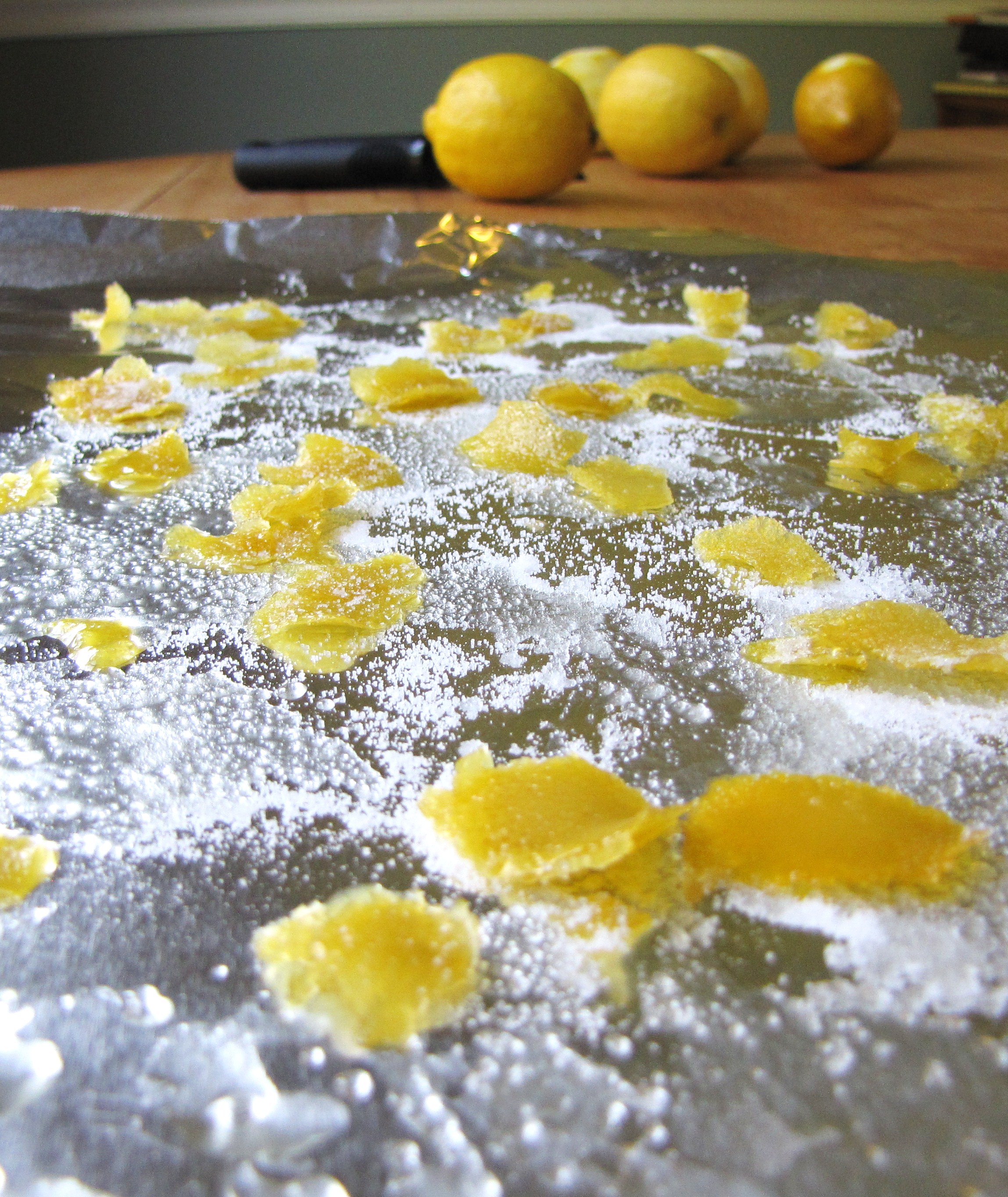
  1. Thoroughly wash the lemon.  Using a vegetable peeler, carefully peel strips of the lemon zest off of the lemon.  Avoid getting any of the white part (the pith) with your peel strips as it has a very bitter flavor and may ruin the final product.
  2. In a small saucepan, make the simple syrup: bring the water and sugar to a gentle simmer.  Add the lemon peel and simmer, stirring constantly, until peel is shiny and translucent, about 5 minutes.  Remove the peel from the syrup and place on wax paper.  Let cool slightly, then roll in granulated sugar.

Great demo here.

For the cupcakes: (adapted very slightly from Baking Bites.)

(Makes 12 cupcakes)

  • 5 large egg whites
  • 3/4 c. sugar, divided
  • 1/2 c. cake flour
  • pinch cream of tartar
  • pinch of salt
  • 1 tsp vanilla
  • zest of 1 lemon
  • juice of 1/2 lemon (about 3 tsp)
  1. Preheat oven to 350°F.  Line muffin tin with 12 baking cups.
  2. Separate eggs while cold, placing egg whites, completely yolk free, in large mixing bowl.  Allow to come to room temperature.
  3. Meanwhile, sift together 1/4 c. sugar and 1/2 c. cake flour.
  4. Beat room temperature egg whites on high until they become foamy.  Add cream of tartar and salt and continue to beat on high.  While beating, gradually add remaining half cup of sugar to the whites.  Beat until soft peaks form.
  5. Mix vanilla, lemon zest, and lemon juice into whites.
  6. In 2 or 3 batches, gently fold flour/sugar mixture into whites, mixing just to combine.
  7. Spoon batter into cups.  Cups should be full.  Bake cupcakes for 16-18 minutes.  When they are done, tops will be golden brown and cupcakes will be slightly springy to the touch.

For the frosting:

  • 1 8 oz. package of cream cheese, room temperature
  • 1 1/3 c. powdered sugar
  • juice of 1 lemon

Beat cream cheese on medium until soft.  Gradually add powdered sugar and lemon juice while continuing to beat.  Frosting will be creamy and slightly runny when done.  (For stiffer frosting, increase amount of powdered sugar.)  Refrigerate before using.

*Final notes:  To make the peel, cupcakes, and frosting, you need two lemons – the zest of 1 for the peel, the zest of the other for the cupcakes, the juice of one for the frosting, and the juice of the other for the cupcakes.  Lemons without their peel will not last as long in the fridge, so if you make extra peel, be sure to use the lemons within a few days.

http://marxfood.com/how-to-candy-citrus-peel/
Miluju tě, Prahou.

March 17, 2010 Beef

Miluju tě, Prahou.

I love you, Prague.
I miss it.  Flying seems to be the perfect breeding ground for nostalgia – remembering waking up to watch the sun rise over Paris from your tiny oval window, kissing your boyfriend goodbye for the hundredth time as the taxis whiz past, stepping down onto the tarmac and being overwhelmed by the thick, humid air of some magical tropical place.  During my flight back to Durham on Monday night that nostalgia took the form of a remembered vision of snow-covered spires receding out the window as I headed back to the States, melancholy at leaving my temporary home, but bubbling with the excitement of seeing Trevor and my family again.  It’s been exactly 3 months since I got back, and even though spring is jumping all over North Carolina, I think I’m allowed to dedicate a little space to the cold and beautiful city that was so good to me.

Most of all, I miss the trams, and I miss the details of my morning commute.  Walking briskly around the block to the tram stop, head tucked against the cold.  Waiting quietly with the other Czechs for the shiny red number 12 to pull up, then climbing in and sitting in the warm compartment, always slightly or more than slightly odorous from so many bodies.  Snaking along the river while looking out the glass and across to the city, watching the spires and the cupolas slowly shift as we moved past.  And then getting off the tram, stepping back into the brisk air, walking across the bridge each morning and looking out towards the Charles Bridge.  Every day the skyline is the same, the same as it has been for centuries, and yet it feels different and new and wonderful.  Then, suddenly, you’re in the heart of the city, trying to cross the street in the fleeting three seconds that the light is with you, avoiding trams and buses and cars and horse-drawn carriages all at once.  The smooth-walled buildings tower over the narrow, cobbled streets, busy with tourists headed into Old Town Square, but if you enter the grocery store just before the square you’ll find yourself in line with 20 other Czechs, picking up their fresh spinach pastries.  A few more blocks, warm, flaky pastry in hand, and you’re in Malé Nàměstí , stepping into the centuries old building where you go to school.  I’m not sure how anything as simple as going to school could be more exhilarating.

I miss so many other things too.  Running for hours in the nearly empty park.  Riding to the end of the tram line and finding myself in a different world, one full of pine forests and rock towers.  Walking home from the grocery store in the afternoon, thrilled about some new food word I’d learned.  The weight of crowns in my hands.  The way the butcher on the corner across from my apartment smelled.  Having friends sit around our kitchen table every night just to talk and laugh.  Stopping for svařak – hot mulled wine – and candied almonds on the way home from school.  The few times my Czech exchanges were simple enough that no one knew I was American.  Five hour bus rides to forgotten corners of the country, where I could traipse through farmland and climb among sandstone towers and order meat by the platter.  Feeling like I could go anywhere by myself for almost no cost.  Going to the opera for $5.  Hot chocolate the consistency of pudding at Cafe Louvre.  The excitement of discovering something new.  Sunset over the castle.  Going out on trips just to take photographs.  Eating goulash in smoky pubs.  I could go on indeterminately…

But I’ll refrain, and leave you with the goulash, because if you’ve made it through my poetic waxing, that is what I have for you: an attempt at Czech goulash.  The kind that you find in smoky pubs.  That is served with fluffy bread dumplings and Pilsner Urquell.  That is so good on a cold afternoon.  I wanted to have it.  I’ll say up front that my attempt was really just that, and the result was not exactly what I was searching for, but is definitely a good starting point.  I cooked based on the average of several recipes, some in English, some in Czech, and didn’t measure or time, so the recipe I will share is only a good approximation.  From what I’ve read, the flavors that make Czech goulash distinctively Czech are that of marjoram and coriander, so be sure to include those if seeking the flavor you had in Prague.  Also, use sweet Hungarian paprika – I used a different variety and could taste the difference.  I had a bottle going sour on the counter, so I added a little red wine to my gravy, but this isn’t traditional so I’ve omitted it from the recipe here, although I did like what it added to the overall flavor.  And with all that said…

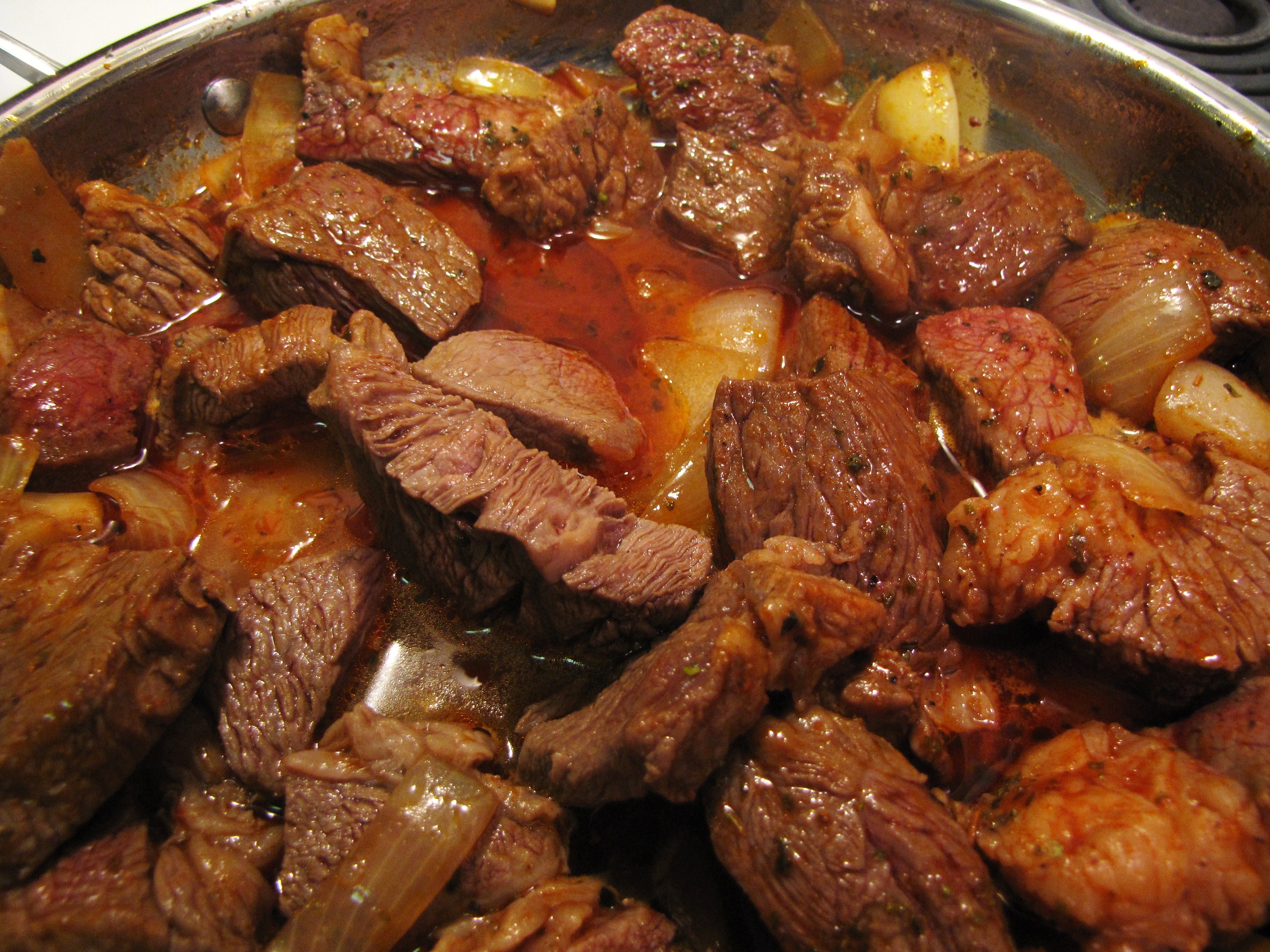
Czech Goulash

  • 1lb. beef, cubed (chuck or stew beef)
  • 1 onion, roughly chopped
  • 3 T butter
  • 2-3 T sweet Hungarian paprika
  • 1-2 tsp marjoram
  • 1-2 tsp coriander
  • 1-2 tsp black pepper
  • 2 cloves garlic, minced or 1-2 tsp garlic powder
  • 1 c. water
  • 2-3 T flour
  • salt to taste
  1. Melt butter in dutch oven over medium-high heat.  Sautee onions in butter until beginning to soften.
  2. Add beef and paprika to butter and onions, brown beef on all sides.
  3. Add marjoram, coriander, black pepper and garlic, and stir well.
  4. Add water and reduce heat to a simmer.  Cover and cook until meat is tender, 10-15 minutes.  Check meat for doneness.
  5. Uncover and allow sauce to reduce to desired amount.  Add flour 1 tablespoon at a time and stir, allowing sauce to thicken before adding more flour.  Stop adding when sauce reaches desired consistency.
  6. Season with salt.  Do this after sauce has reduced to avoid over-salting.

Goulash is usually served with bread dumplings, not potatoes, as the airy bread slices soak up the sauce very well.  Any light bread will do.  It is also sometimes served with pickled red cabbage…. two recipes I’ll be looking into!  Dobrou chut!


  • « Previous Page
  • Page 1
  • …
  • Page 53
  • Page 54
  • Page 55
  • Page 56
  • Page 57
  • Next Page »

Primary Sidebar

Subscribe!

Get creative recipes and menu ideas delivered straight to your inbox.

Most Popular

A House // Sweet Potato and Coconut Milk Soup with Brown Rice and Lentils

Monthly Fitness Goals: July // Homemade Spinach Wraps with Chopped Greek Salad

A New Job // Classic Seven-Layer Bars

Butternut Squash Carbonara with Fried Sage and Caramelized Onions

Happy Birthday, Trevor! // Peanut Butter Fudge

Cookbook Review and Giveaway: Home Made Winter

Drizly

Please note!

Full disclosure: if you purchase anything at Amazon using the above links or any other links to Amazon on this site, I will receive a small commission. Just so you know!

Copyright© 2018 · Cookd Pro Theme by Shay Bocks

This site uses cookies: Find out more.